ChatGPT
 Google AI
 Grok
Grok Claude
Learning how to play Hallelujah on piano is a magical experience for beginners. This song combines emotion with simplicity, making it ideal for anyone starting their piano journey. With a clear hallelujah piano tutorial and steady practice, you can play confidently while enjoying the soothing melody.
Familiarity with the song helps you understand its structure. Recognizing repeated patterns in the hallelujah piano melody allows beginners to anticipate notes, build muscle memory, and feel more in control. This approach turns practice sessions into a joyful learning experience.
Understanding the Song “Hallelujah” Before Playing It
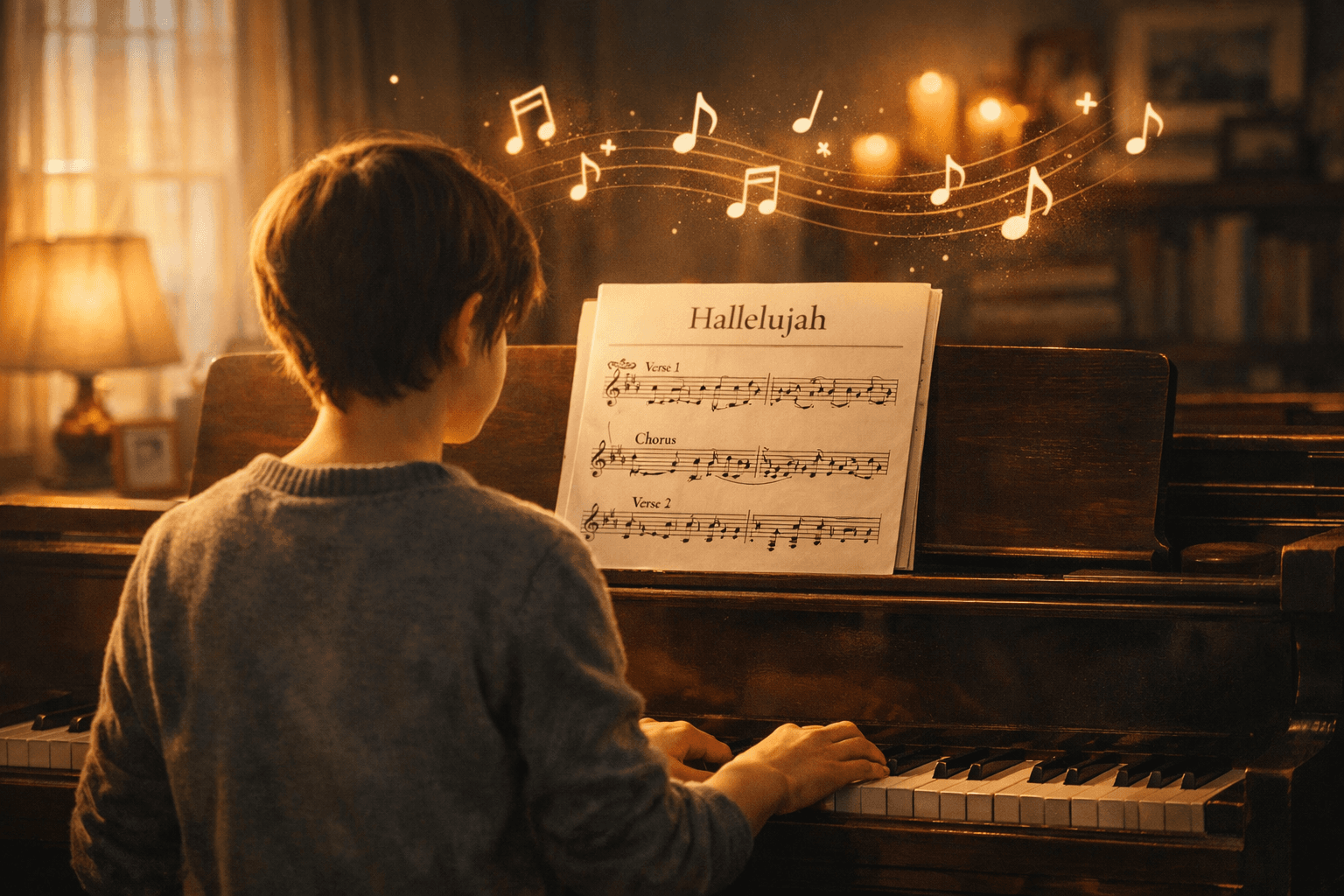 The emotional structure of Leonard Cohen Hallelujah piano arrangements emphasizes feeling over speed. Beginners can focus on dynamics and phrasing instead of rushing through notes. Soft, expressive playing makes the song more moving and enjoyable.
Repeating patterns make the hallelujah piano song for beginners accessible. Learning the structure first builds confidence. When learners understand the flow of verses and chorus, their first attempts already sound musical, giving a rewarding start to their piano journey.
Why “Hallelujah” Is One of the Most Popular Piano Songs
Its simple yet expressive melody is easy for new players. Many beginners enjoy the familiarity and emotional resonance of hallelujah piano chords, creating music that feels powerful with minimal effort.
Musical Style and Mood of “Hallelujah”
 The song has a slow, steady tempo. Learning the mood is more important than speed. Dynamics bring emotion to each phrase, making the music come alive for beginners practicing hallelujah piano hands together.
Soft phrasing and careful note emphasis allow beginners to focus on right hand melody for Hallelujah while understanding harmony. Feeling the song emotionally enhances every practice session and builds musical sensitivity.
Original Key vs Beginner-Friendly Keys
The original key, often Hallelujah piano in G♭ major, can be complex. Beginners benefit from simpler keys like C or G major, allowing smoother hand movement and easier note recognition.
Simplified keys help learners focus on technique. Understanding white and black keys on piano becomes easier, which builds confidence in playing melody and chords together without frustration.
Piano Setup and Preparation for Playing “Hallelujah”
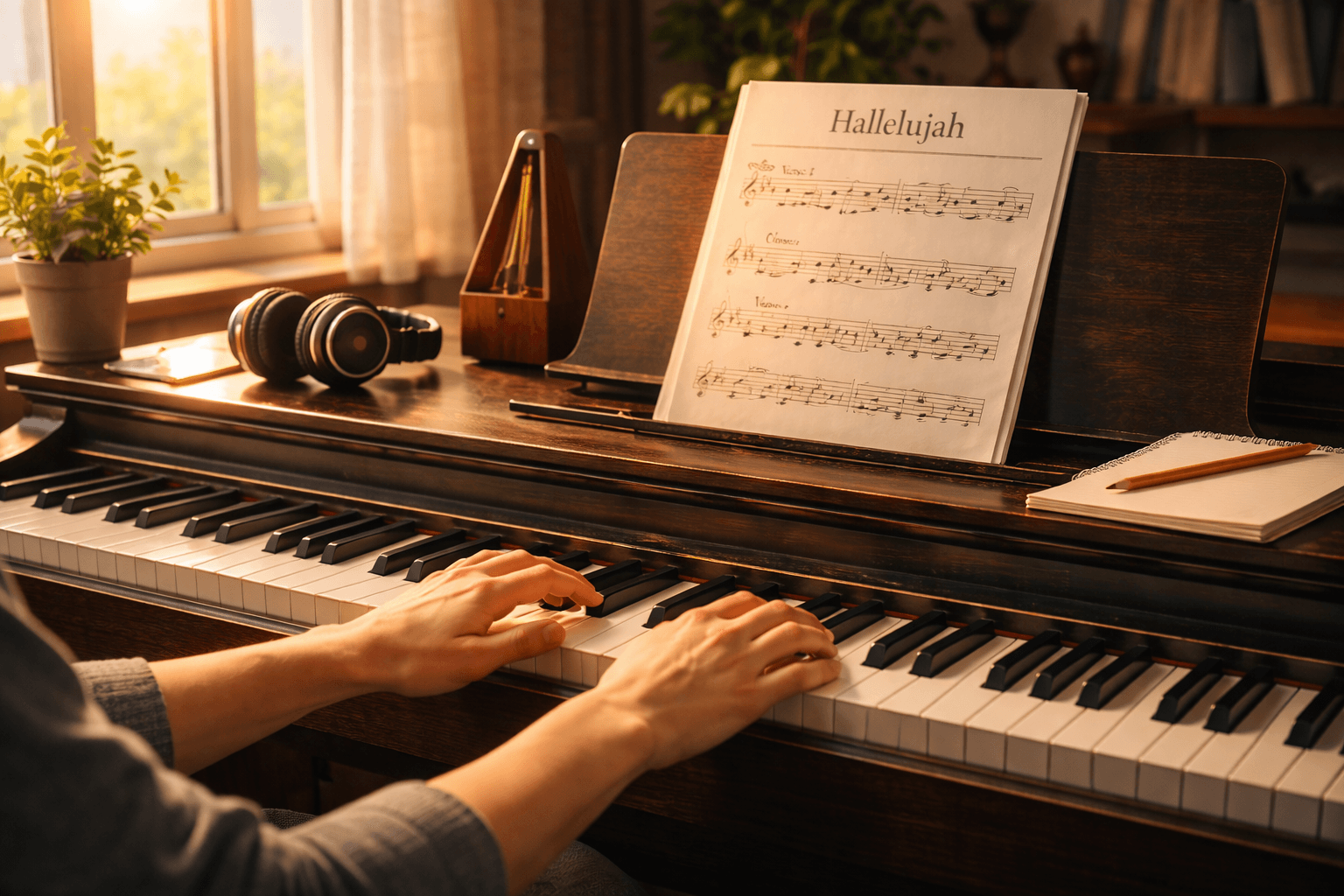 Comfortable posture and hand position are critical for beginners. Proper wrist alignment and finger curve prevent strain while playing hallelujah piano finger positions accurately.
Choosing the right piano, whether acoustic or digital, impacts your practice quality. Using recommended octaves and light pedal usage improves sound clarity and helps learners enjoy simple chords and notes for Hallelujah effectively.
Correct Sitting Posture and Hand Position
Sit upright with relaxed shoulders. Keep wrists level and fingers curved. Proper posture makes it easier to maintain hallelujah piano bass notes smoothly and prevents tension during longer practice sessions.
Breaking Down the Melody of “Hallelujah” on Piano
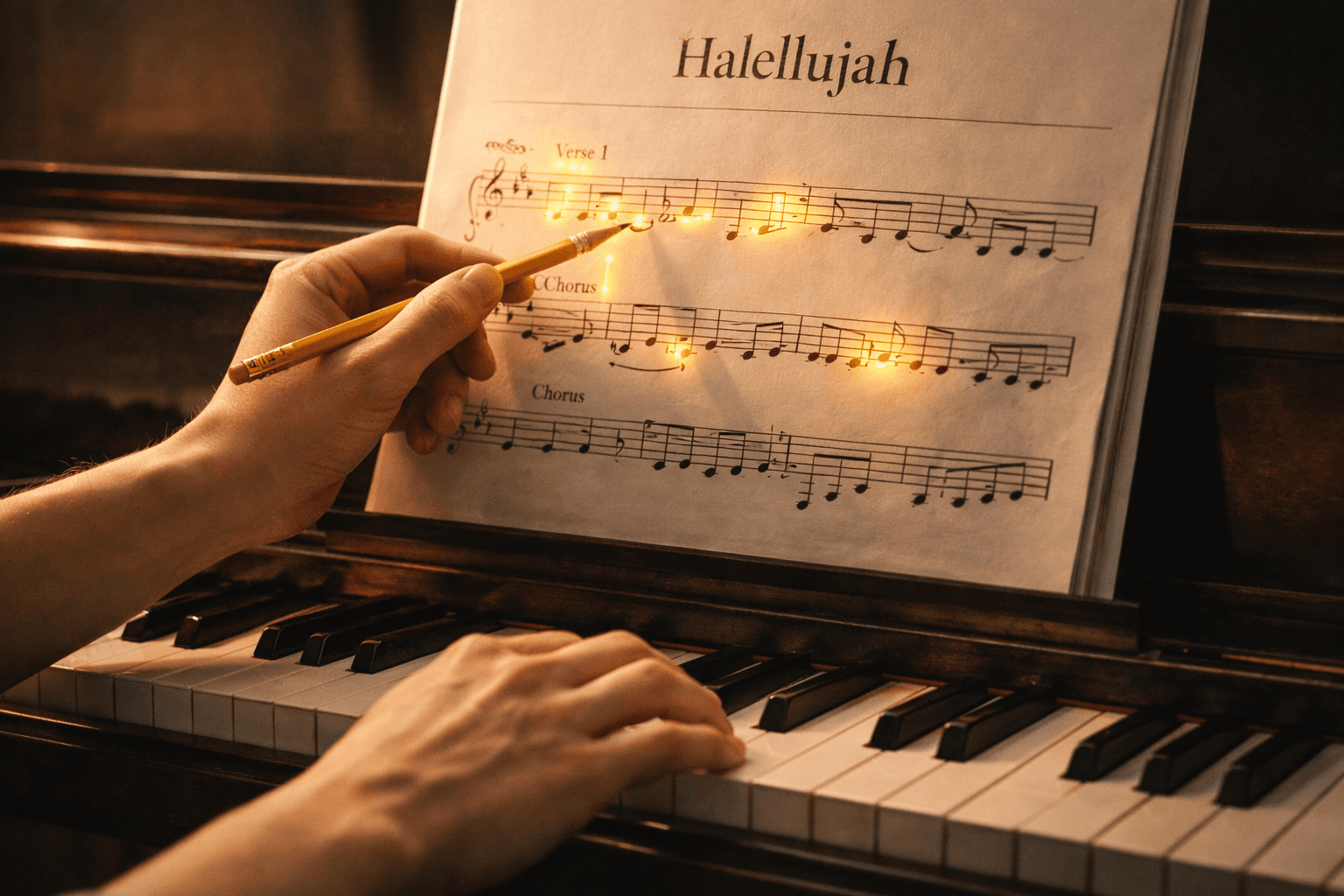 The hallelujah piano melody flows gently across phrases, making it perfect for beginners. Stepwise notes and repeated patterns allow easy memorization and smooth practice sessions.
Listening closely to the melody helps anticipate changes. Recognizing verse and chorus structures ensures beginners can play hallelujah piano confidently without guessing or stopping frequently.
Identifying the Main Melody Line
The main melody moves mostly step by step, with few jumps. This makes it easier for learners to follow hallelujah right hand piano notes and internalize patterns quickly.
Right-Hand Notes and Fingering for “Hallelujah”
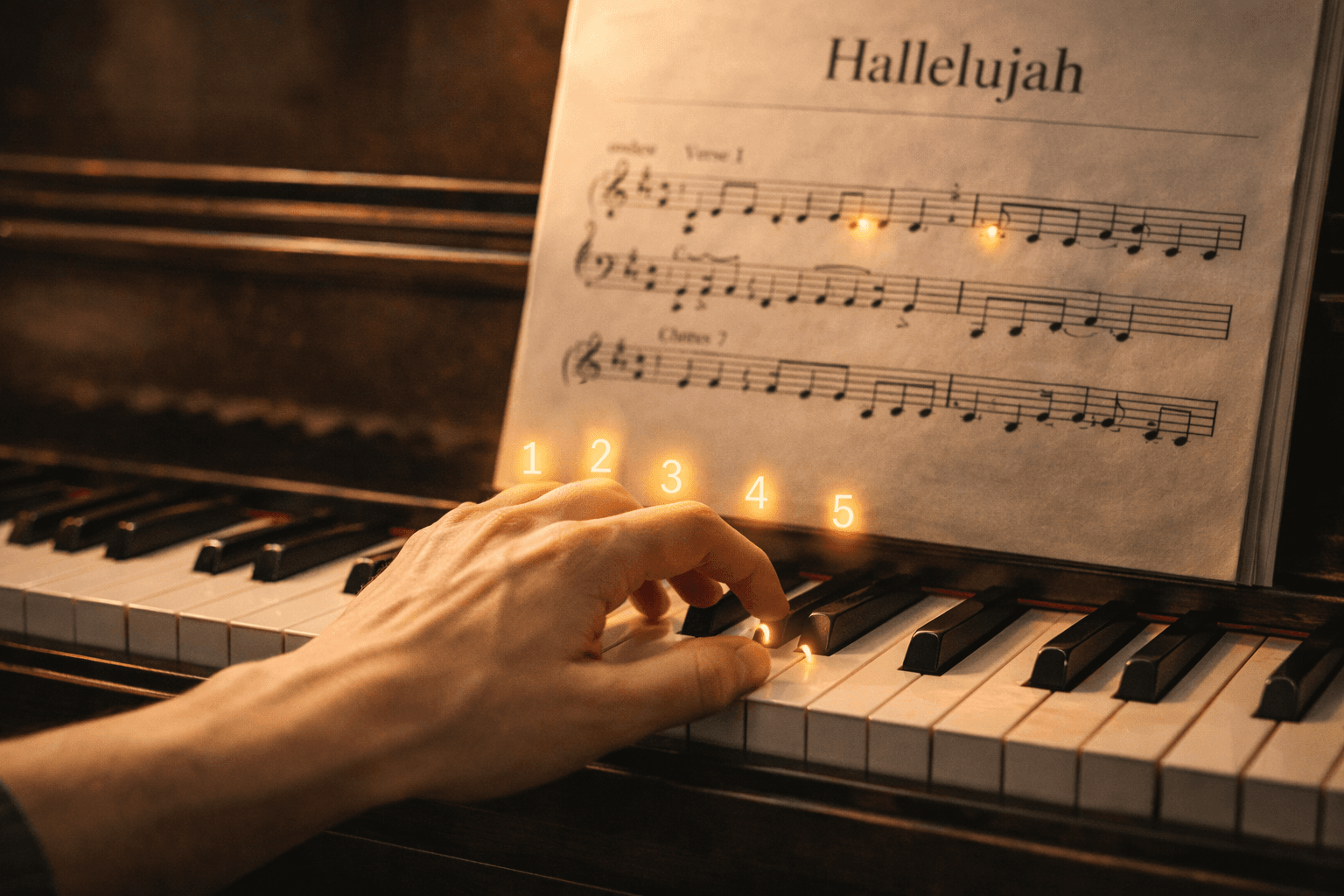 The right hand carries the melody, and correct hallelujah piano finger positions are essential. Stepwise motion, repeated notes, and natural finger transitions allow beginners to play smoothly.
Practicing right-hand phrases slowly and repeatedly builds accuracy. Counting beats aloud ensures steady tempo, which improves playing melody and harmony together over time.
Recommended Fingerings for Smooth Playing
Finger transitions should feel natural. Avoid stretching awkwardly. Proper fingering creates fluid movement across notes and supports confident hallelujah piano step by step learning.
Left-Hand Notes, Chords, and Accompaniment Patterns
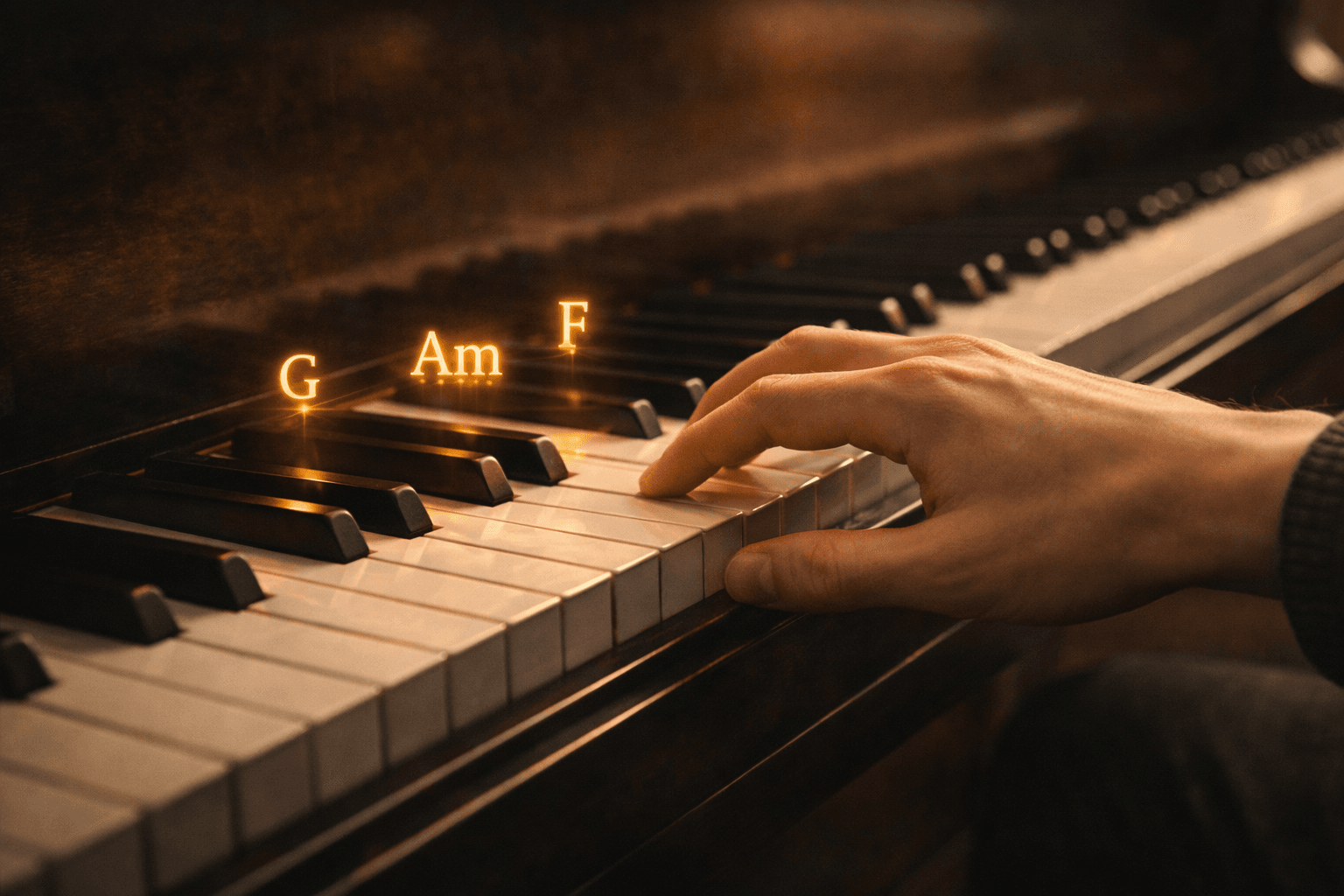 The left hand provides harmony through hallelujah piano chords and bass notes. Beginners can start with single bass notes, move to broken chords, and then block chords.
Practicing hands separately ensures coordination. Gradual combination builds piano muscle memory techniques, allowing beginners to eventually play hallelujah piano hands together accurately.
Understanding the Chord Progression
The chord progression supports emotional flow. Practicing basic chords first allows learners to feel harmony while playing hallelujah left hand piano notes with clarity.
Playing Hands Together: Step-by-Step Coordination
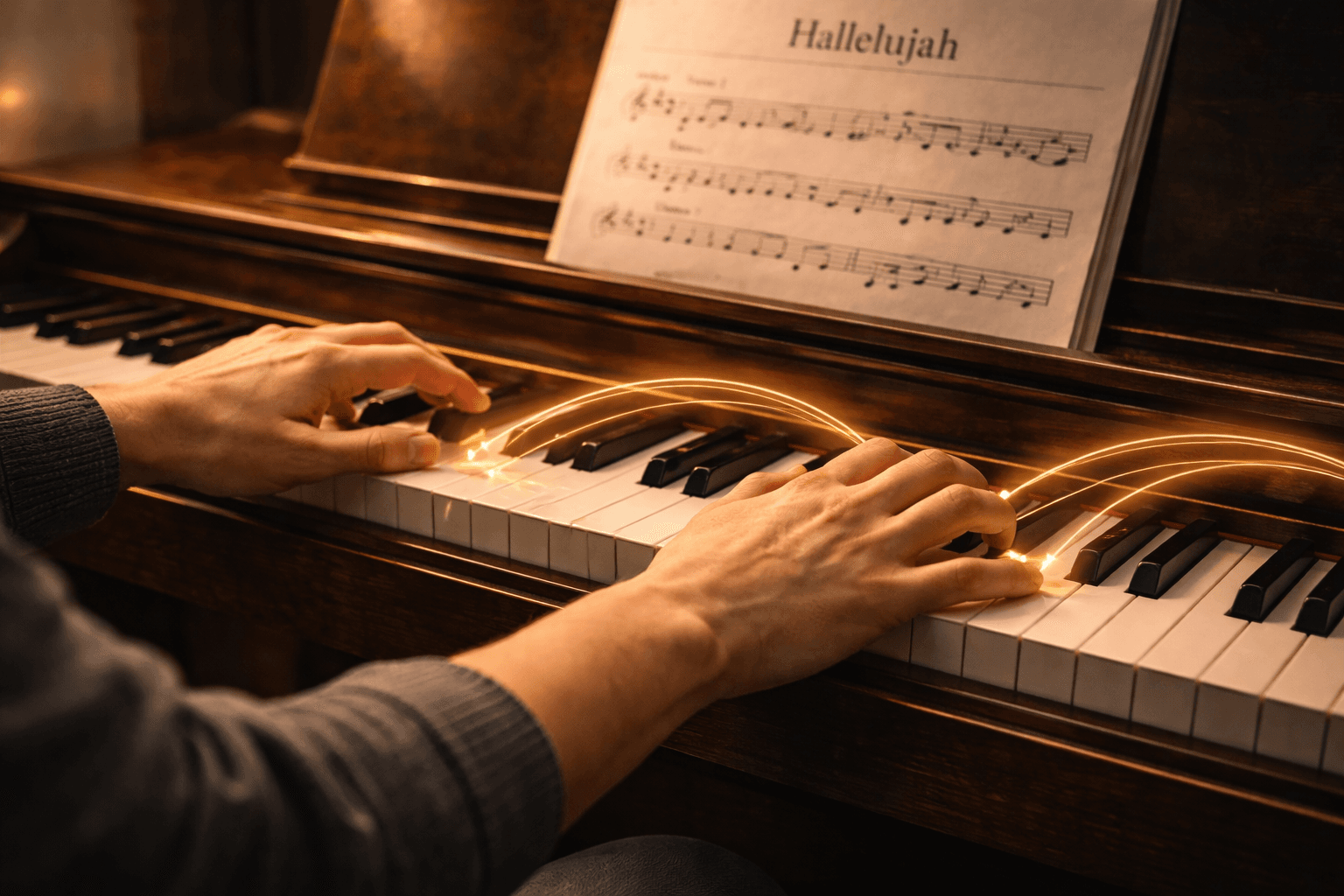 Combining hands can be challenging. Start slowly to ensure rhythm and timing are correct. This method builds piano synchronization tips and reduces frustration.
Gradually increase speed once hands feel comfortable. Using a metronome and maintaining steady tempo helps beginners practice combining hands on piano confidently and efficiently.
Slow Tempo Practice Strategy
Slow tempo strengthens precision. Gradual speed increase improves accuracy while learning step by step piano guidance for both hands.
Using Rhythm, Timing, and Expression Correctly
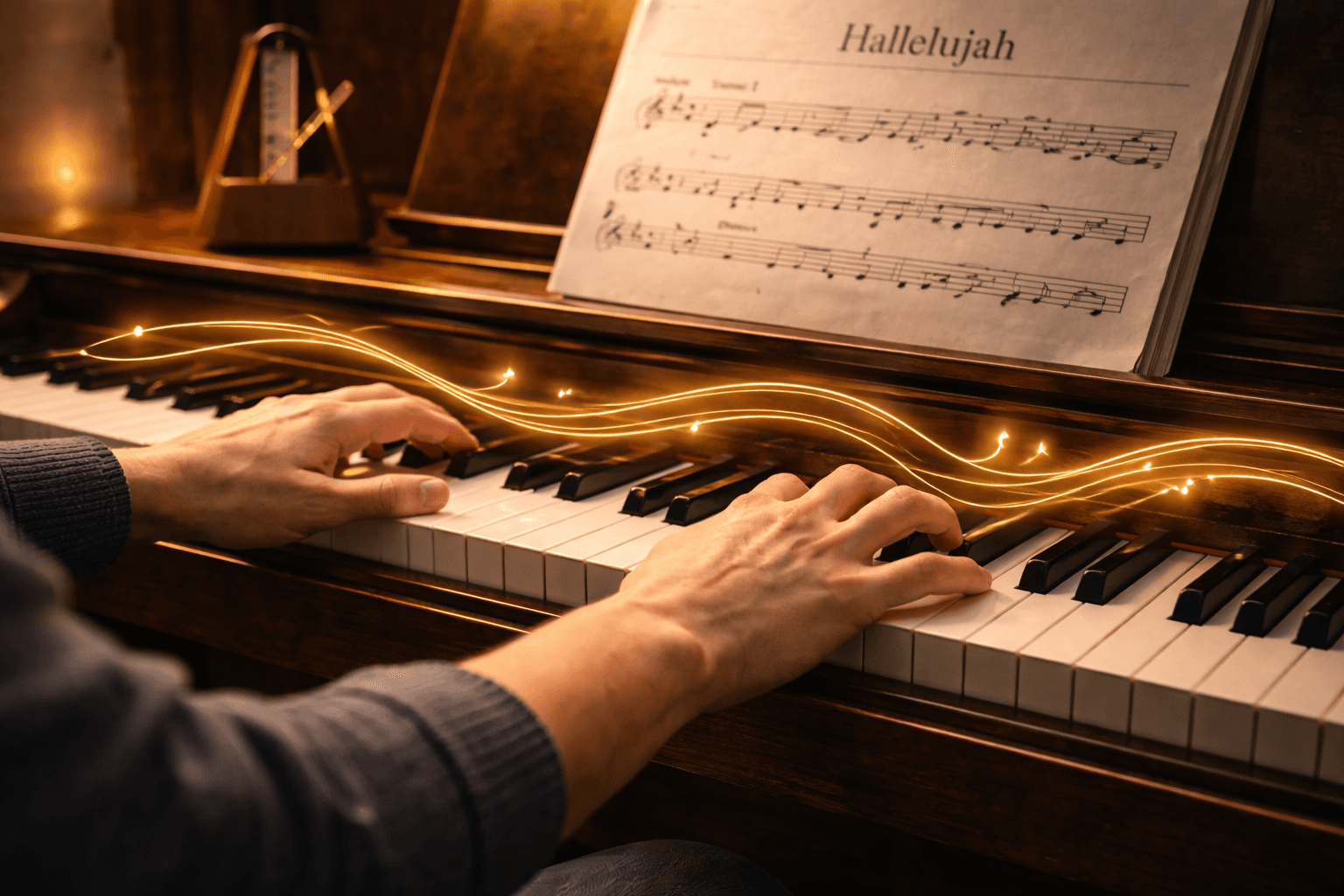 Rhythm and timing shape the song’s feel. Beginners must keep steady beats while controlling dynamics. Soft and loud passages create expressive phrases in hallelujah piano arrangement.
Proper sustain pedal use adds warmth without blurring notes. Mastering timing ensures beginners can keep rhythm on piano while expressing emotion effectively.
Adding Expression Without Overplaying
Control dynamics carefully. Subtle phrasing enhances musicality. Proper expression makes beginner friendly Hallelujah piano song sound professional and emotional.
Beginner-Friendly Practice Techniques for Faster Progress
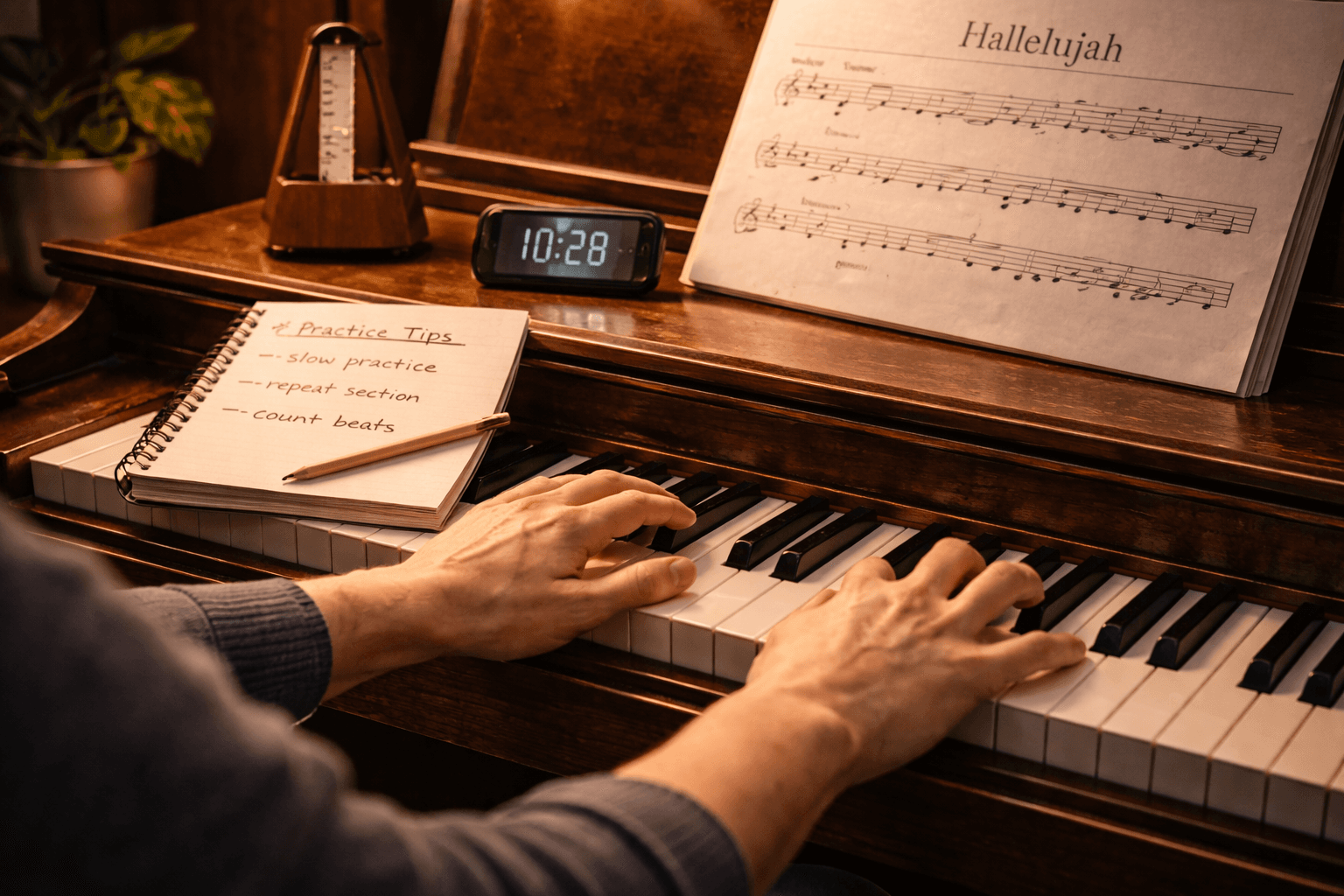 Short, focused sessions are more effective than long hours. Practicing slowly, looping difficult phrases, and counting beats aloud builds hallelujah piano practice tips and muscle memory.
Tracking progress through recordings or notes encourages improvement. Observing small gains boosts confidence and strengthens the piano song confidence building process.
Targeted Practice for Difficult Sections
Break challenging phrases into chunks. Repeat with focus. Purposeful repetition improves fluency and helps beginners learn Hallelujah on piano step by step efficiently.
Common Problems While Learning “Hallelujah” and How to Fix Them
 Hand coordination often challenges beginners. Mental practice and visualizing finger movement improve piano synchronization tips.
Remembering notes improves with pattern recognition. Singing melody internally enhances memory. Practicing hands separately first ensures smoother playing melody and harmony together.
Struggling with Hand Coordination
Practice slowly and separately. Gradually combine hands for seamless hallelujah piano hands together performance.
How Long Does It Take to Learn “Hallelujah” on Piano?
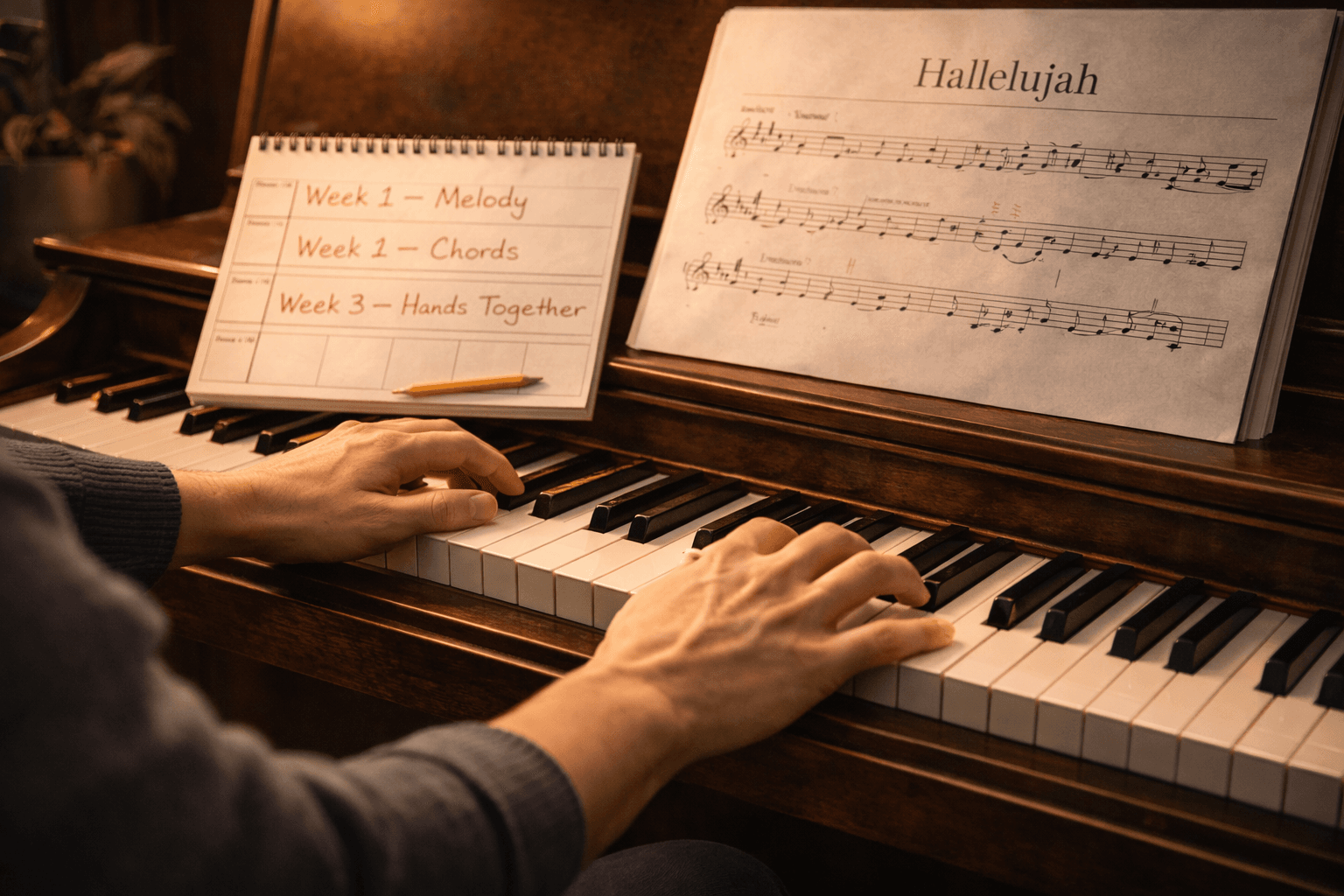 Absolute beginners usually spend three to four weeks mastering melody and simple chords. Intermediate learners may focus on refinement and expression over two weeks.
Consistency is key. Daily short sessions accelerate progress. Prior musical experience affects learning pace and helps learners play hallelujah piano confidently sooner.
Timeline for Absolute Beginners
Week one focuses on melody. Week two adds left-hand chords. Week three combines hands slowly to build fluency and confidence.
Tips to Perform “Hallelujah” Confidently
Playing without looking at your hands improves confidence. Muscle memory techniques make performance smoother. Controlled breathing reduces nervousness during live or recorded sessions.
Recording yourself and evaluating each take ensures steady improvement. Each session helps beginners play hallelujah piano confidently while maintaining musical expression.
Overcoming Nervousness While Playing
Mental rehearsal, deep breathing, and visualizing success reduce anxiety and improve performance for every beginner piano learning experience.
Learning “Hallelujah” Online with Art Gharana
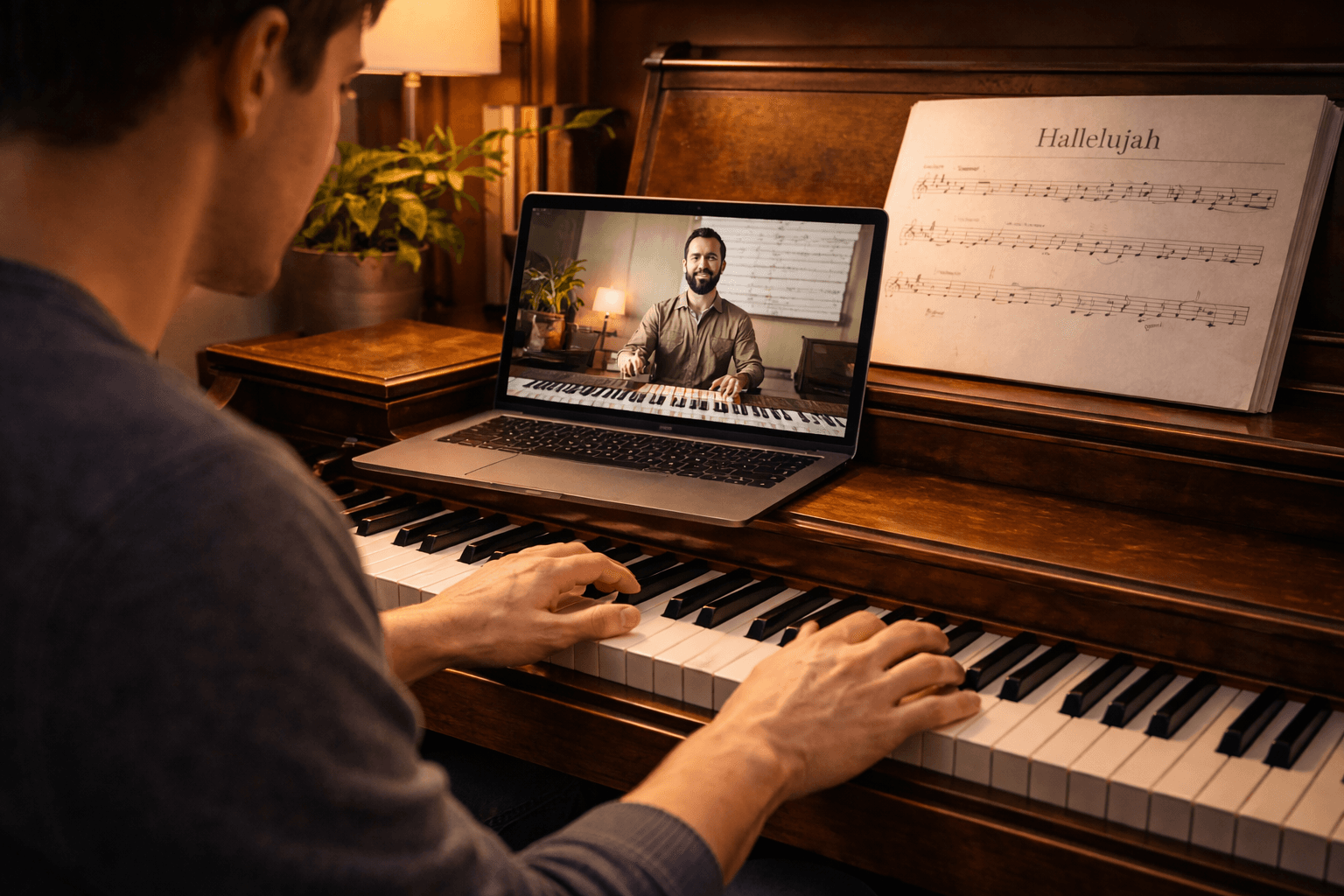 Structured online lessons provide step-by-step guidance. Art Gharana offers beginner-friendly teaching, personalized feedback, and a clear hallelujah piano learning guide for faster progress.
Concept-based teaching ensures learners understand music theory and can transfer skills to other songs. Stepwise guidance supports easy hallelujah piano version practice efficiently.
How Art Gharana Helps You Learn Songs Faster
Step-by-step guidance with targeted exercises accelerates skill building. Personalized feedback ensures accuracy, improving confidence and fluency in hallelujah piano step by step.
Expanding Your Piano Skills After “Hallelujah”
After mastering Hallelujah, learners gain hand coordination, chord understanding, and emotional phrasing. Choosing songs of similar difficulty builds skill gradually.
Daily practice habits and consistent routines maintain progress. Advanced skills from hallelujah piano arrangement transfer to more complex music naturally.
Skills You Gain From Learning This Song
Musical expression, chord awareness, and fluid hand coordination are enhanced. These skills make every new hallelujah piano lesson easier and more rewarding.
Final Thoughts: Enjoy the Journey of Playing “Hallelujah”
Learning how to play Hallelujah on piano step by step is more than mastering notes. It builds patience, joy, and confidence. Focus on progress, enjoy each phrase, and keep exploring new songs to grow your piano skills consistently.
FAQ’s
Q1: How long does it take to learn Hallelujah on piano?
A1: Beginners can learn the melody in 2–3 weeks, while hands-together practice may take 4–5 weeks.
Q2: Can absolute beginners play Hallelujah on piano?
A2: Yes, with a simplified key and step-by-step guidance, beginners can play confidently.
Q3: What key is best for beginners to play Hallelujah?
A3: C major or G major is easiest, while the original is in G♭ major.
Q4: Should I practice hands separately or together first?
A4: Start with hands separately, then gradually combine them for smooth coordination.
Q5: Do I need a piano or can I use a keyboard?
A5: A digital keyboard works well, especially with weighted keys for realistic feel.