ChatGPT
 Google AI
 Grok
Grok Claude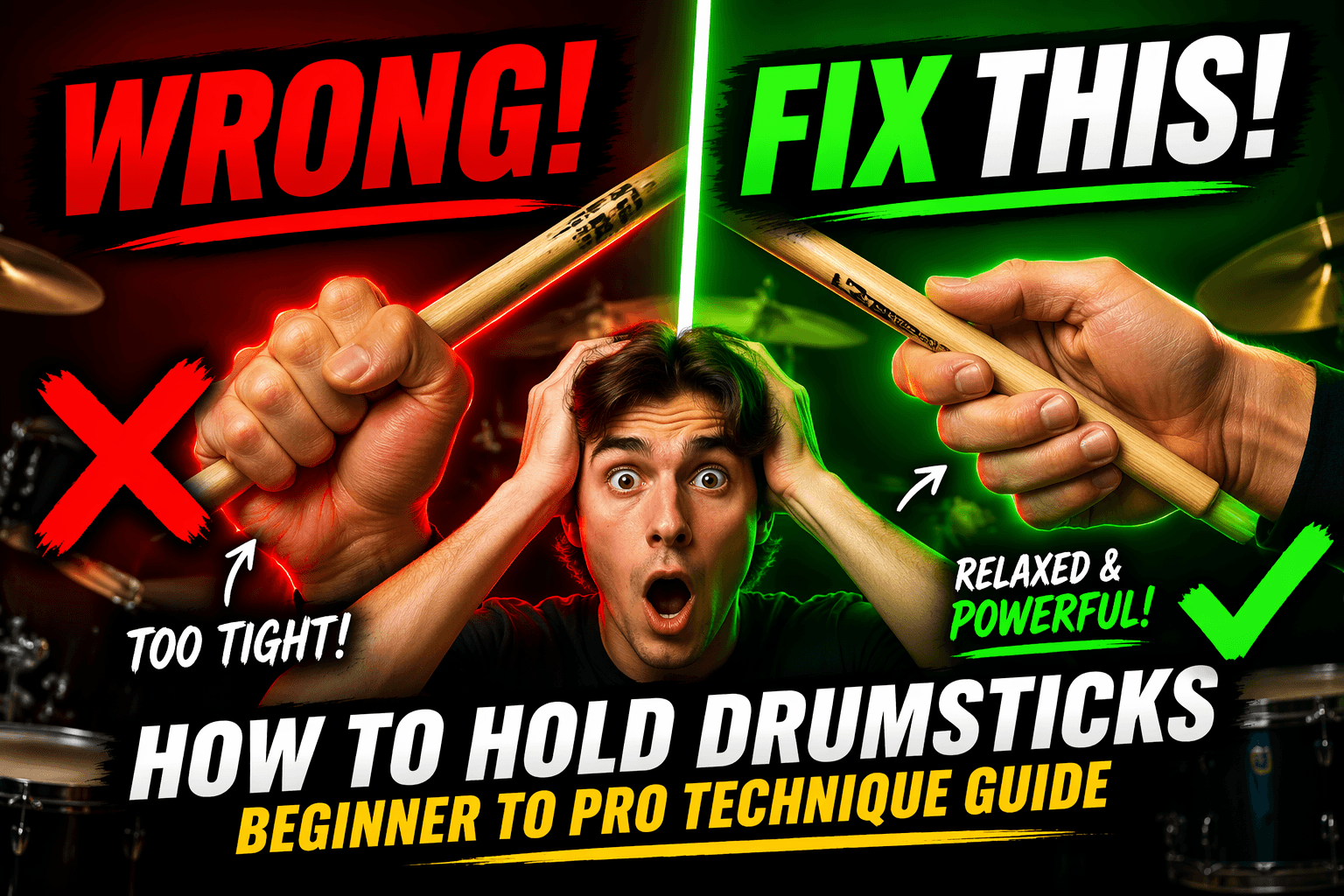
Mastering how to hold drumsticks is the foundation of every drummer’s journey, whether you are starting with beginner drum lessons or aiming for professional-level performance. Understanding the drumstick grip technique ensures you develop consistency, speed, and precision while reducing fatigue and injury risk. Learning the proper way to hold drumsticks can transform your drumming experience, making even complex rhythms feel natural.
Understanding the Basics of Drumstick Control
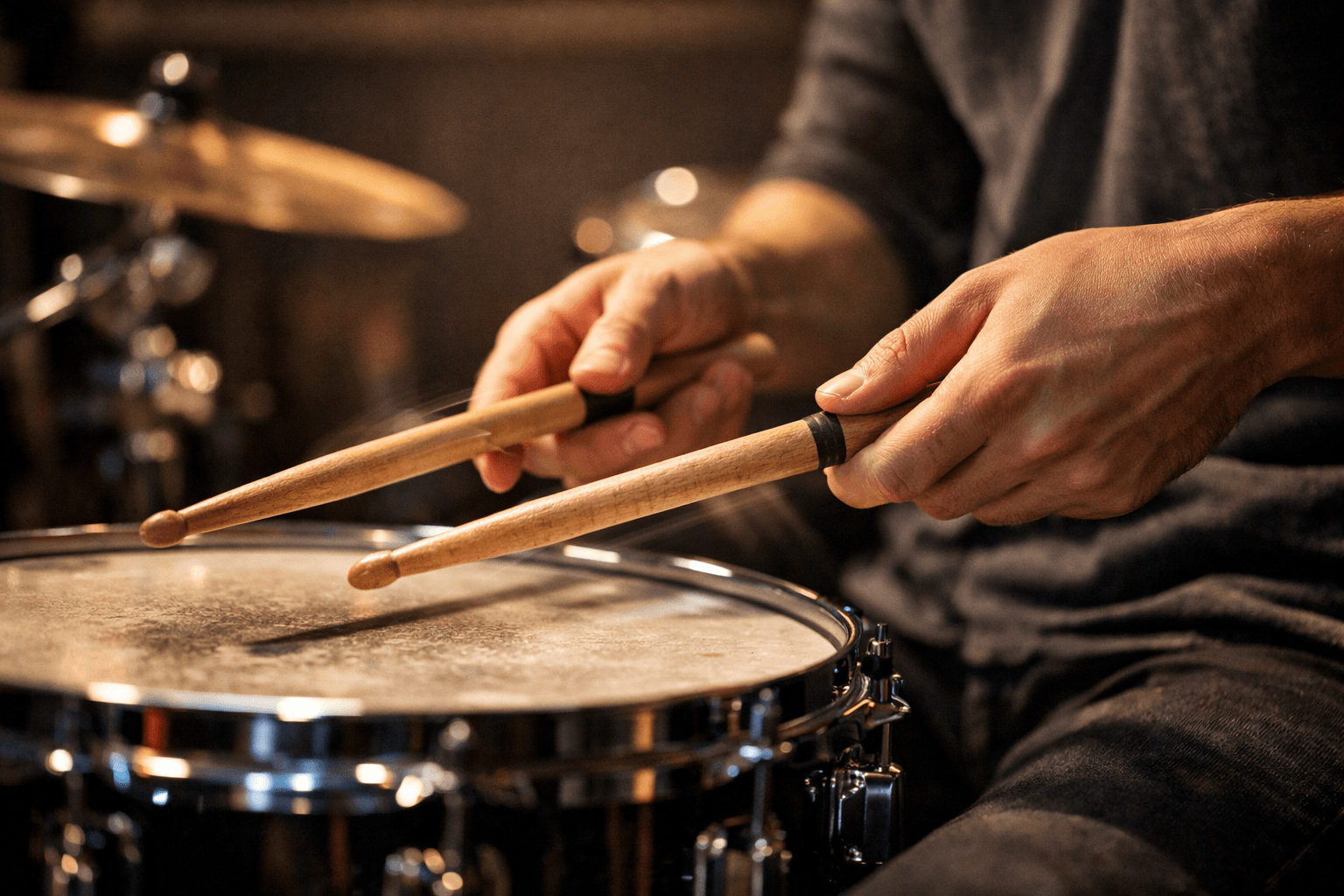 Grasping how to hold drumsticks correctly is essential for developing long-term skill and confidence behind the drum kit. Proper drumstick hand positioning not only improves your timing but also directly influences tone, speed, and musical expressiveness, allowing drummers to explore more advanced techniques with ease.
Why Proper Drumstick Technique Matters for Every Drummer
A correct drumstick grip technique is crucial because it enhances rhythm accuracy and ensures consistent sound output across different drums and cymbals. Drummers who neglect proper hand positioning often struggle with endurance, speed, and precision, demonstrating why holding drumsticks properly forms the cornerstone of all effective drumming practices.
How Grip Influences Tone, Speed, and Accuracy
Your grip impacts everything from volume control to rapid stick movement; the right drumstick balance point allows natural stick rebound and smooth dynamic shifts. Whether you are practicing rudiments or performing a drum fill, mastering drumstick control techniques ensures each strike produces the intended tone without sacrificing speed or clarity.
The Role of Relaxation in Drumming Performance
A relaxed grip is as important as proper hand placement, with tension reducing fluidity and increasing wrist strain. Adopting a relaxed grip drumming technique allows for better rebound, efficient energy transfer, and improved endurance during extended practice or performance sessions. Relaxed hands help maintain precision while executing faster rhythms without fatigue.
Benefits of Learning the Correct Drumstick Grip
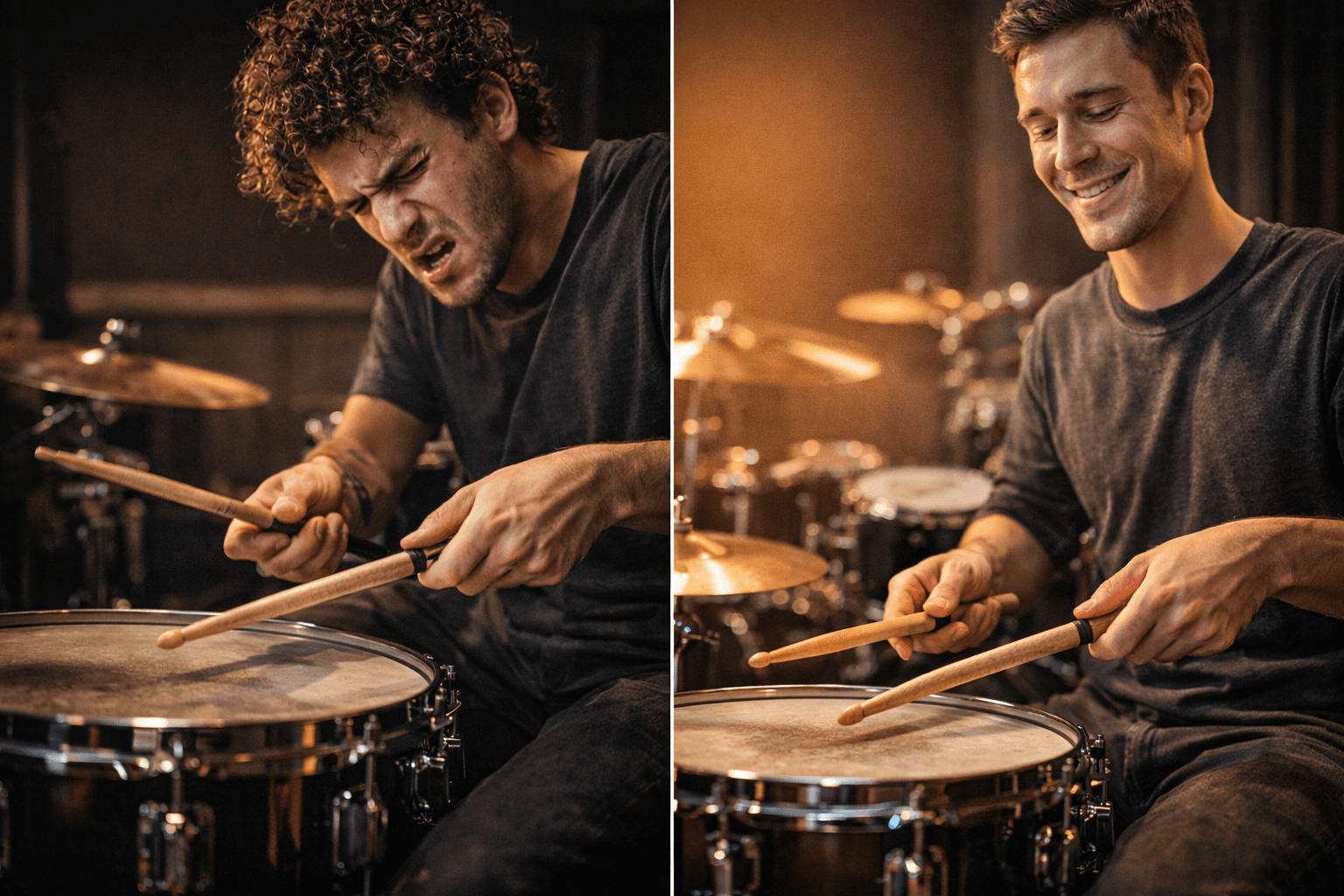 Knowing the proper way to hold drumsticks offers multiple advantages, including preventing injuries and optimizing your drumming potential. Drummers who follow structured guidance in drumstick grip practice often progress faster and maintain better control while performing a variety of styles and rhythms.
Improving Sound Consistency on Drums
Correct hand positioning ensures even stick pressure on drum heads, producing a uniform sound across snare, toms, and cymbals. Practicing drumstick grip techniques and observing drumstick rebound technique helps beginners develop tonal consistency and the confidence to explore advanced patterns.
Avoiding Wrist Strain and Muscle Fatigue
Proper drumming posture combined with correct wrist technique for drumming minimizes strain and overuse injuries. Maintaining grip pressure in drumming at a natural, relaxed level prevents fatigue, allowing beginners and professionals alike to practice longer sessions with fewer risks.
Building Better Rhythm and Control
Learning drumstick control is essential for tight grooves, accurate fills, and versatile musicality. Exercises for improving drumstick control enhance finger dexterity, hand coordination, and stick rebound technique, which are critical for mastering rudiments and building professional-level performance skills.
Popular Drumstick Grip Styles Used by Drummers
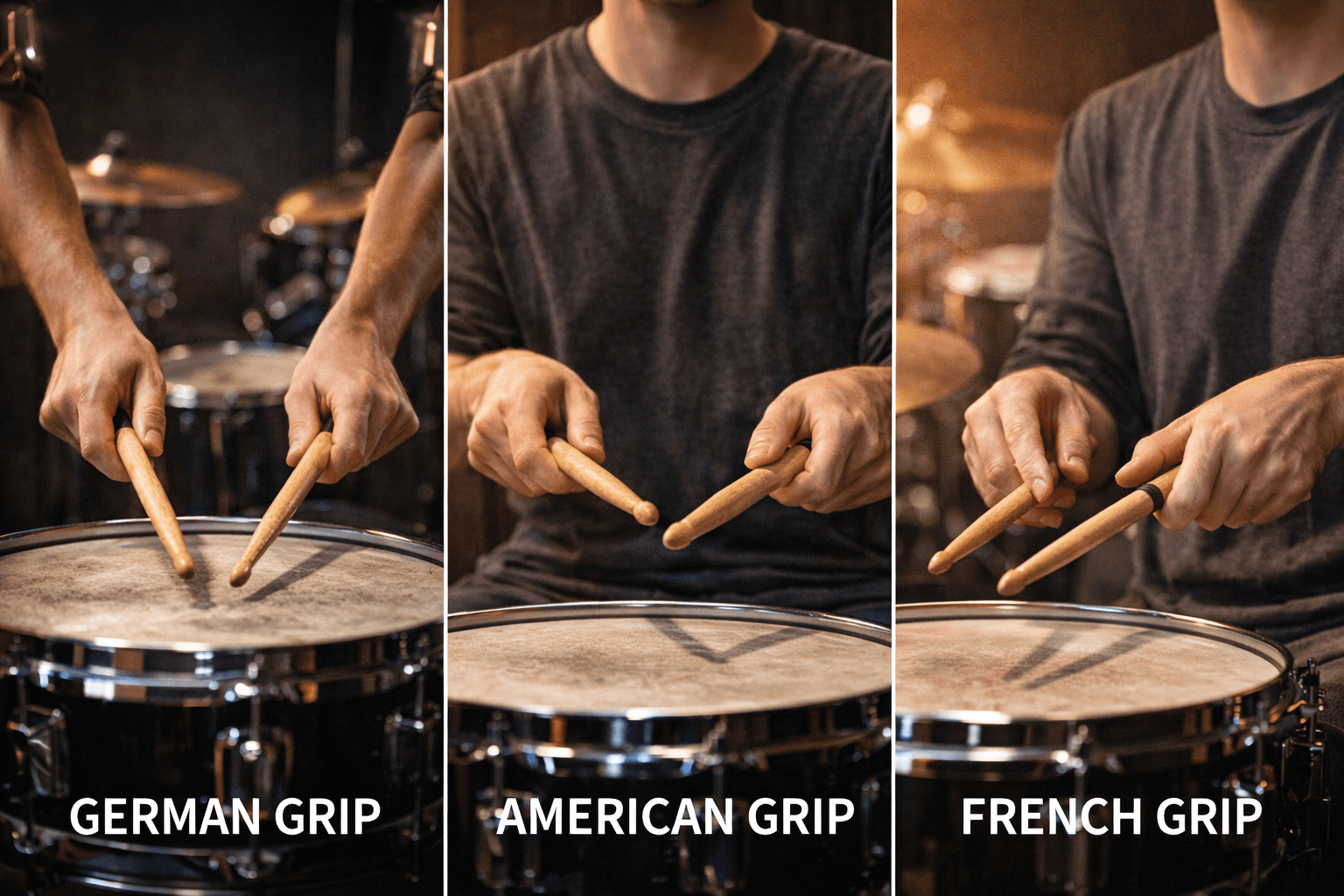 Drummers employ various drumstick grip styles to match different musical genres and playing techniques. From rock and pop to jazz and orchestral percussion, selecting the right grip can dramatically influence your tone, speed, and comfort during both practice and live performance.
Overview of Matched Grip Technique
Matched grip drumming is the most widely used technique, where both hands hold the sticks in the same manner. This style promotes balance, power, and flexibility, making it ideal for beginners exploring drum fills, rolls, and multi-drum coordination. Matched grip also simplifies learning drum hand positioning and stick rebound efficiency.
American Style Grip and Its Versatility
The American drumstick grip is versatile, blending finger control with natural arm motion. It is commonly used in rock and contemporary styles where both power and speed are needed. Drummers employing this style often find it easier to switch between drumstick finger control and larger wrist-driven strokes without compromising tone or dynamics.
German Style Grip for Power and Volume
German drumstick grip emphasizes full-arm movement, providing maximum volume and endurance for hard-hitting drumming. Ideal for orchestral, marching, or heavy rock contexts, this grip allows drummers to sustain energetic performance with controlled stick rebound and minimal wrist strain, making it a preferred choice for demanding sessions.
French Style Grip for Speed and Finger Control
The French drumstick grip prioritizes finger movement, enabling rapid strokes and agile rolls. It is often favored in jazz or fast-tempo drumming where intricate patterns and delicate dynamics are essential. Mastering this grip develops drumstick control exercises that focus on rebound, balance, and minimal arm movement.
Traditional Grip and Its Origins in Jazz Drumming
Traditional grip drumming emerged from early military and jazz drumming, with one hand holding the stick underhand while the other uses matched grip. This style remains essential in jazz, orchestral, and marching drum performances. Understanding its historical context enhances appreciation for proper drumstick hand position and stylistic expression.
How to Choose the Right Grip Style for Your Playing Style
Selecting a grip involves considering musical genre, hand size, and personal comfort. Beginners should experiment with drumstick grip styles to identify the most natural fit, while practicing techniques for learning drumstick control to develop versatility and adaptability for all drumming situations.
For a comprehensive guide on starting drums, visit Art Gharana’s Online Drum Classes to learn proper drumstick grip technique and practice exercises designed for beginners.
Step-by-Step Method to Hold Drumsticks Properly
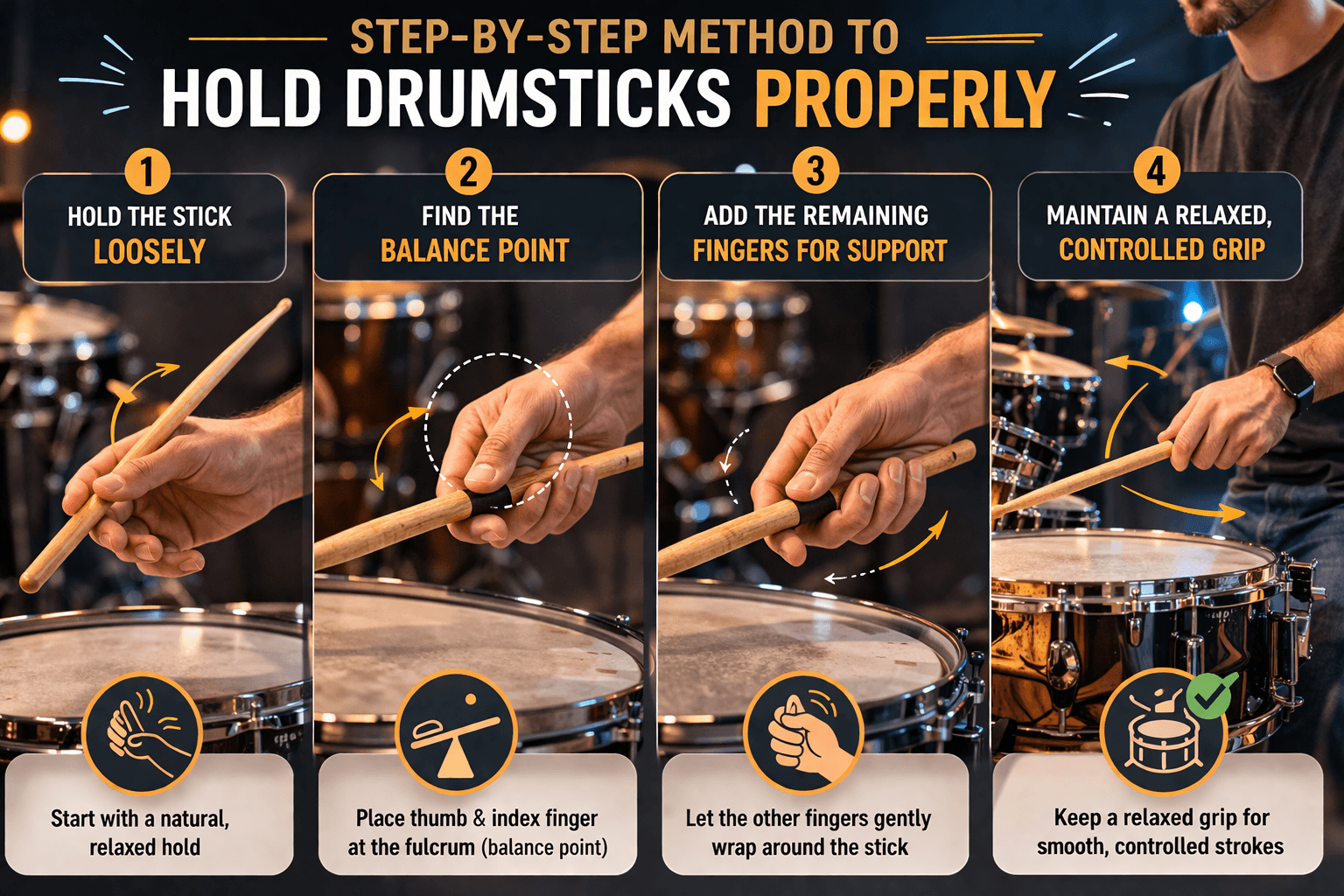 Learning how to grip drumsticks properly requires attention to balance, finger placement, and relaxed wrist movement. Each step, from choosing your stick to positioning your fingers, directly affects rebound, control, and endurance, making drumstick technique for beginners far more effective and enjoyable when executed correctly.
Selecting the Right Drumsticks for Beginners
Choosing the appropriate drumsticks impacts your ability to maintain a proper grip and perform consistent strokes. Beginners benefit from lighter sticks with a medium tip, which offer balanced drumstick fulcrum point control and allow easier manipulation for learning beginner drumstick exercises and rudiments.
Identifying the Natural Balance Point of the Stick
The drumstick balance point is where the stick naturally pivots between the thumb and index finger. Finding this point allows drummers to utilize stick rebound technique efficiently, maintain dynamic control, and develop drumstick control techniques without over-relying on arm strength.
Placing Your Thumb and Index Finger Correctly
The thumb and index finger form the fulcrum for controlled motion, which is critical for stick rebound and speed. Proper placement prevents tension, improves drumming hand coordination, and ensures that every stroke maintains consistent pressure, tone, and accuracy across the drum kit.
Positioning Your Remaining Fingers for Support
The other fingers provide stability while allowing flexibility for faster rolls and accents. Correct drum hand positioning enhances finger dexterity, supports relaxed grip drumming technique, and develops finer drumstick finger control for complex rhythms.
Maintaining a Relaxed Yet Controlled Grip
A grip that is firm enough to control the sticks but relaxed enough to allow free motion is essential. Balancing grip pressure in drumming with correct wrist movement in drumming reduces fatigue, improves endurance, and helps beginners master drumstick bounce technique efficiently.
Common Drumstick Grip Mistakes Beginners Make
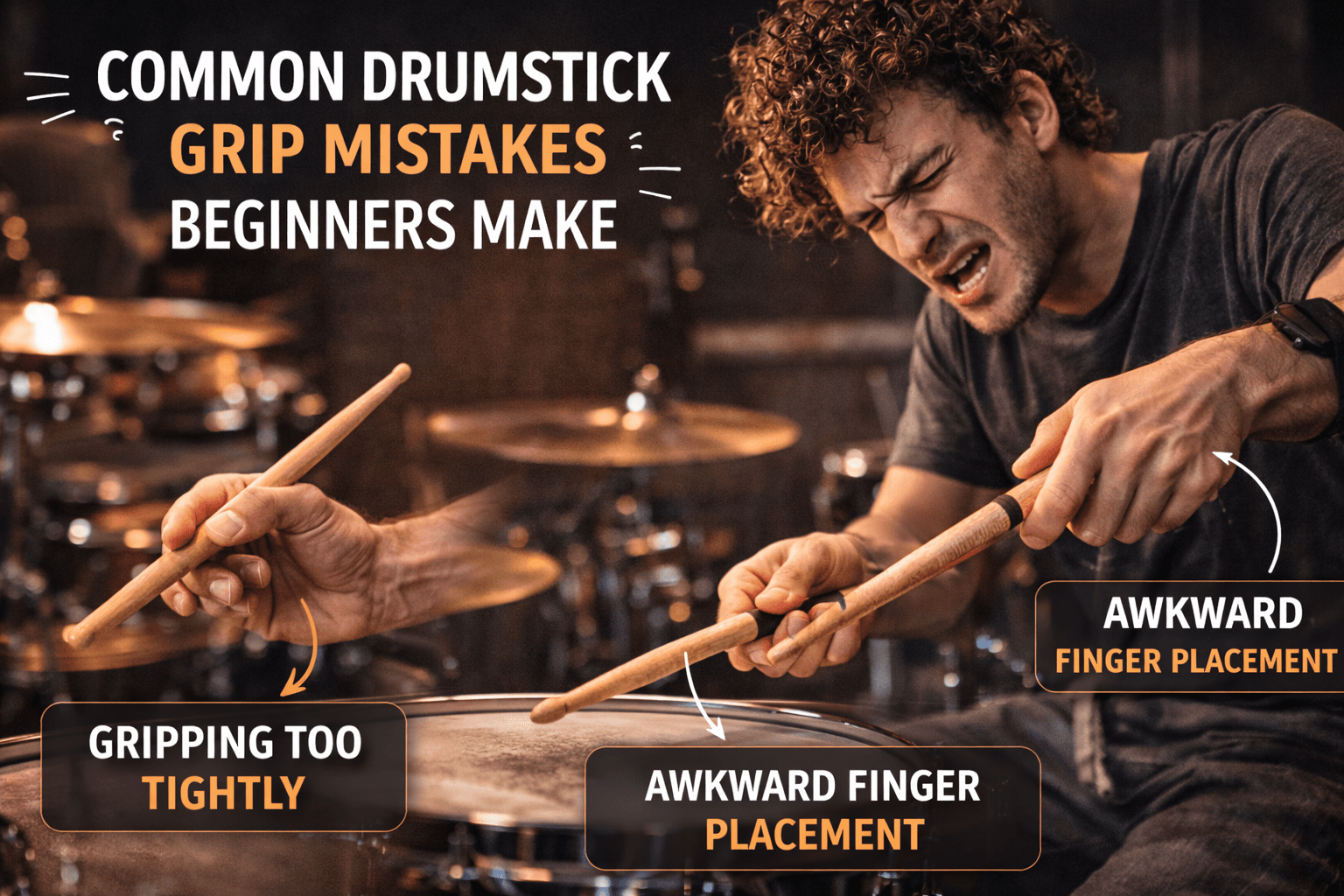 Avoiding mistakes early ensures faster progress and prevents injuries. Many new drummers struggle with drumstick grip mistakes such as excessive tension, incorrect fulcrum placement, or uneven finger positioning, which can negatively impact sound, speed, and overall technique.
Holding the Drumsticks Too Tightly
Gripping sticks too tightly limits rebound, reduces fluidity, and increases wrist fatigue. Drummers practicing relaxed grip drumming technique experience better control, smoother dynamics, and less risk of overuse injuries, allowing longer and more productive sessions.
Gripping Too Far from the Fulcrum Point
Holding the sticks far from the drumstick fulcrum point reduces efficiency, slows down hand speed, and diminishes control. Beginners should focus on proper drumstick hand position to maximize rebound and maintain consistent tone throughout exercises or performance.
Poor Thumb and Finger Placement
Incorrect alignment of fingers and thumb leads to uneven strokes, decreased speed, and tension. Practicing drumstick grip practice with attention to finger placement develops drumming hand coordination and builds a foundation for advanced techniques such as stick rebound technique and fast rolls.
Excessive Wrist Tension While Playing
Tense wrists compromise both endurance and fluidity. Maintaining a relaxed wrist and focusing on wrist technique for drumming allows for better drumstick control exercises and prevents injury while supporting dynamic strokes and drumstick pressure control.
Practice Techniques to Improve Your Drumstick Control
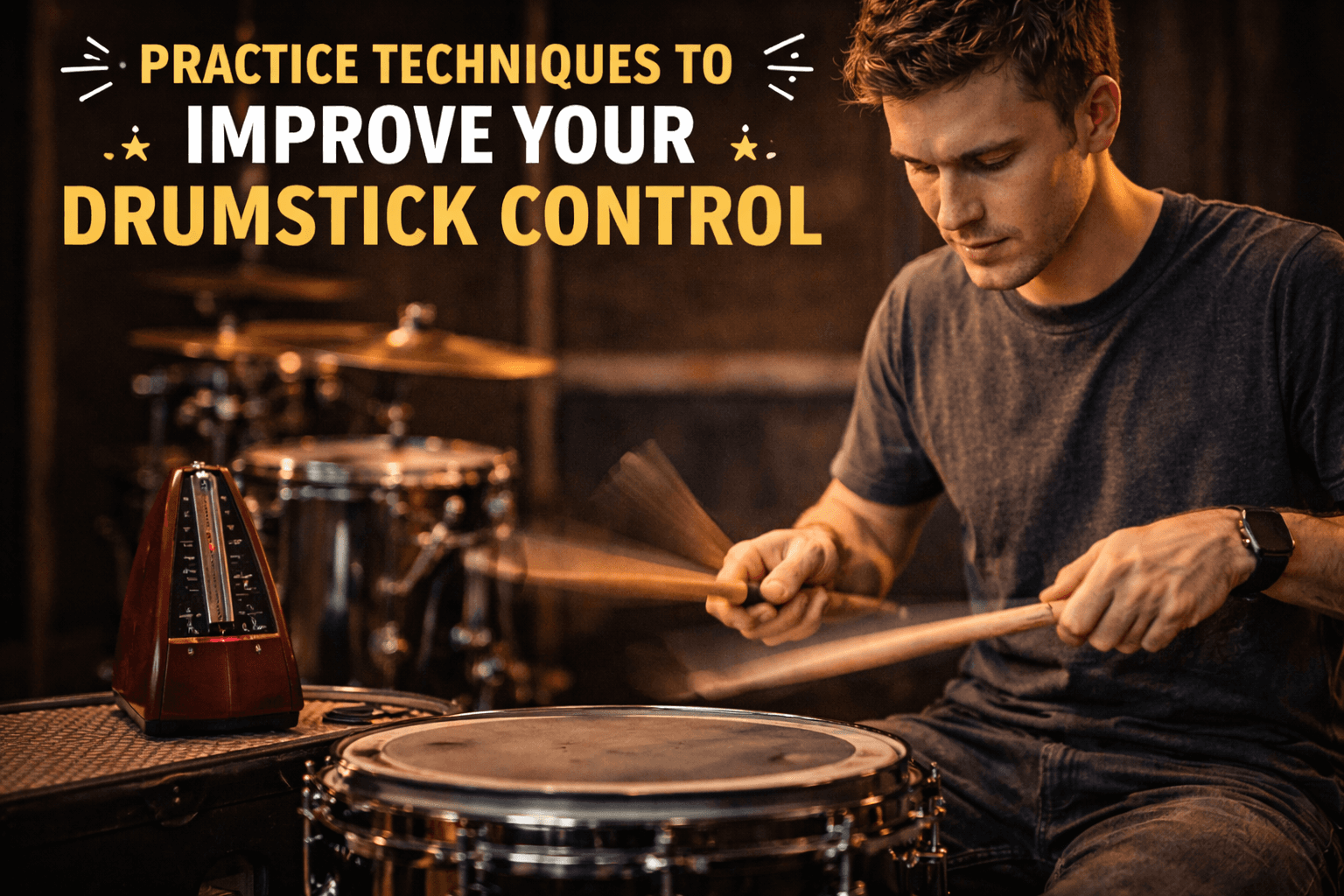 Developing drumstick control techniques requires structured exercises that build strength, speed, and endurance. Focused drills improve rebound, finger coordination, and grip pressure, helping beginners refine their drumstick grip technique while building the confidence needed for complex rhythms.
Simple Exercises to Develop Grip Strength
Practicing slow, controlled strokes, finger taps, and light rebounds strengthens the hand muscles. Incorporating these beginner drumstick exercises into your routine enhances endurance, teaches drumstick bounce technique, and improves consistency across different drums and cymbals.
Practicing Rudiments for Better Stick Control
Rudiments like paradiddles, flams, and double strokes teach stick independence and timing. These drumstick grip practice drills are essential for developing drumming technique fundamentals, refining drumstick finger control, and improving speed without losing accuracy.
Developing Speed Without Losing Control
Gradually increasing tempo with metronome exercises ensures proper control while building speed. Maintaining grip pressure in drumming and practicing drumstick control exercises prevents sloppy strokes, strengthens coordination, and prepares beginners for intermediate and advanced rhythms.
Warm-Up Drills Every Drummer Should Practice
Warm-ups like slow rolls, light rebound exercises, and wrist stretches condition your muscles for practice. Following drumming endurance technique routines helps beginners adopt a proper drumming posture, prevents fatigue, and develops consistent drumstick control techniques for all skill levels.
For a full guide on beginner drum lessons, including essential tips to master grip and hand positioning, visit Beginner Drum Lessons: Essential Tips.
Learning Drums the Right Way with Art Gharana
 Mastering how to hold drumsticks correctly becomes easier with structured guidance and professional mentorship. Art Gharana offers online and in-person lessons designed to teach beginners and intermediate players proper drumstick grip technique, drum hand positioning, and drumstick control techniques, helping drummers develop speed, accuracy, and musical creativity from the start.
Structured Drum Lessons for Beginners and Intermediate Players
Art Gharana’s curriculum provides a progressive approach for drumstick technique for beginners while emphasizing correct posture and wrist technique for drumming. These lessons ensure that students learn fundamental rhythms, drumstick finger control, and proper grip while building confidence in executing complex patterns with consistent tone.
Personalized Guidance from Experienced Music Mentors
One-on-one mentorship allows students to correct drumstick grip mistakes and receive tailored advice on drumstick pressure control and stick rebound technique. Expert instructors guide learners through drumming hand coordination, teaching subtle adjustments in hand positioning to enhance speed, precision, and endurance for every style of drumming.
Online Drum Classes Designed for Flexible Learning
Art Gharana’s online drum classes enable learners to practice drumstick grip practice at their own pace. Through interactive lessons, students master beginner drumstick grip, drumstick balance point, and matched grip drumming while maintaining proper drumming posture and developing the muscle memory needed for advanced rhythms.
Building Rhythm, Technique, and Musical Creativity
Combining structured exercises with creative exploration helps drummers improve drumstick control exercises while experimenting with dynamics, tempo, and groove. Developing drumstick finger control and drum hand positioning encourages expressive drumming, preparing learners to confidently play diverse styles, including jazz, rock, and contemporary arrangements, with precision and flair.
Frequently Asked Questions About Holding Drumsticks
Understanding common concerns helps beginners avoid frustration and develop correct habits. These FAQs address essential aspects of how drummers hold drumsticks, emphasizing correct grip, posture, and exercises to improve technique.
1. What is the easiest drumstick grip for beginners?
The matched grip, where both hands hold the sticks the same way, is generally the best drumstick grip for beginners. It allows students to focus on drumstick control techniques, maintain a relaxed grip, and develop drumstick bounce technique without compromising speed or accuracy.
2. How tight should a drummer hold the sticks?
Beginners should apply firm but relaxed grip pressure in drumming to maintain control while allowing natural rebound. Excessive tension can hinder drumstick finger control and reduce endurance, whereas a relaxed approach supports drumming hand coordination and smooth, consistent sound production.
3. How do you find the fulcrum or balance point on a drumstick?
The drumstick fulcrum point is located between the thumb and index finger where the stick naturally pivots. Identifying this balance point improves stick rebound technique and enables drummers to execute fast rolls, rudiments, and controlled accents, forming the foundation of proper drumstick holding technique.
4. Can incorrect drumstick grip cause injuries?
Yes, poor drumstick grip technique can lead to wrist strain, tendonitis, or forearm fatigue. Practicing relaxed grip drumming technique, focusing on proper drumstick hand position, and maintaining correct wrist movement in drumming helps prevent injuries while building long-term stamina.
5. How long does it take to develop proper stick control?
Developing mastery of holding drumsticks properly depends on consistent practice, proper exercises, and guidance. With daily practice and structured routines such as drumstick grip practice and drumstick control exercises, beginners typically see noticeable improvement in drumstick balance point, speed, and rebound technique within a few months.
To learn the proper drumstick grip technique and explore exercises for beginners, check out Beginner Drum Lessons: Essential Tips and start developing drumstick control exercises for effective practice.