ChatGPT
 Google AI
 Grok
Grok Claude
The D major guitar chord is one of the most fundamental and commonly used chords in guitar playing. Whether you're a beginner just starting out or an intermediate player looking to refine your technique, mastering the D chord is essential for your musical journey.
In this comprehensive guide, we'll explore everything you need to know about the D major chord, including finger positions, common variations, playing tips, and how to use it in popular chord progressions.
What is the D Major Chord?
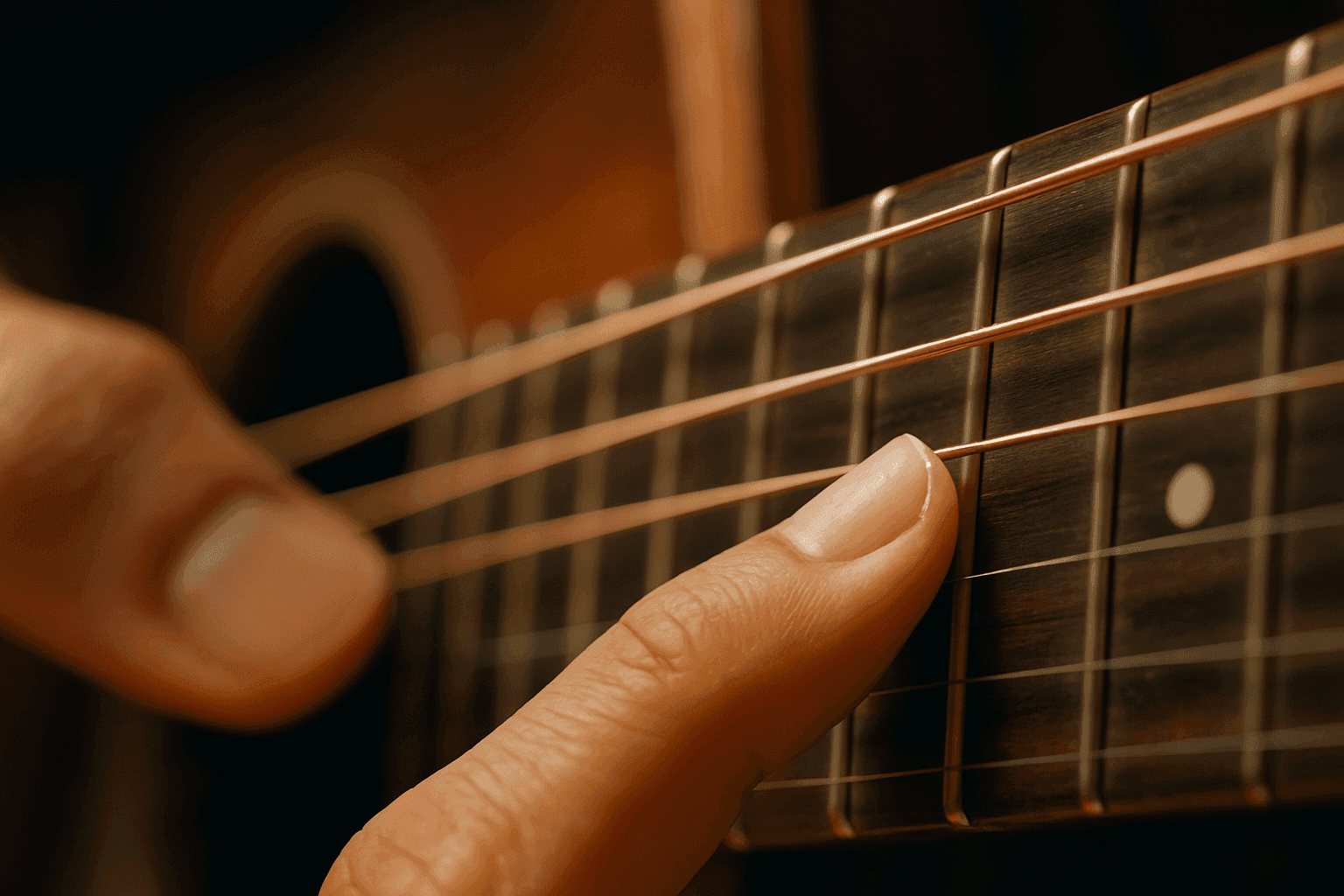 The D major chord consists of three notes:
- D (root note)
- F# (major third)
- A (perfect fifth)
These notes create a bright, uplifting sound that's perfect for countless songs across various genres.
D Major Chord Diagram – Open Position
 The most common way to play the D major chord is in open position. Here's how:
Finger placement:
- Index finger (1st finger): 2nd fret, 3rd string (G string)
- Middle finger (2nd finger): 2nd fret, 1st string (high E string)
- Ring finger (3rd finger): 3rd fret, 2nd string (B string)
Strings to play:
- X (mute) the 6th string (low E)
- X (mute) the 5th string (A string)
- Play strings 4, 3, 2, and 1
How to Play the D Major Chord
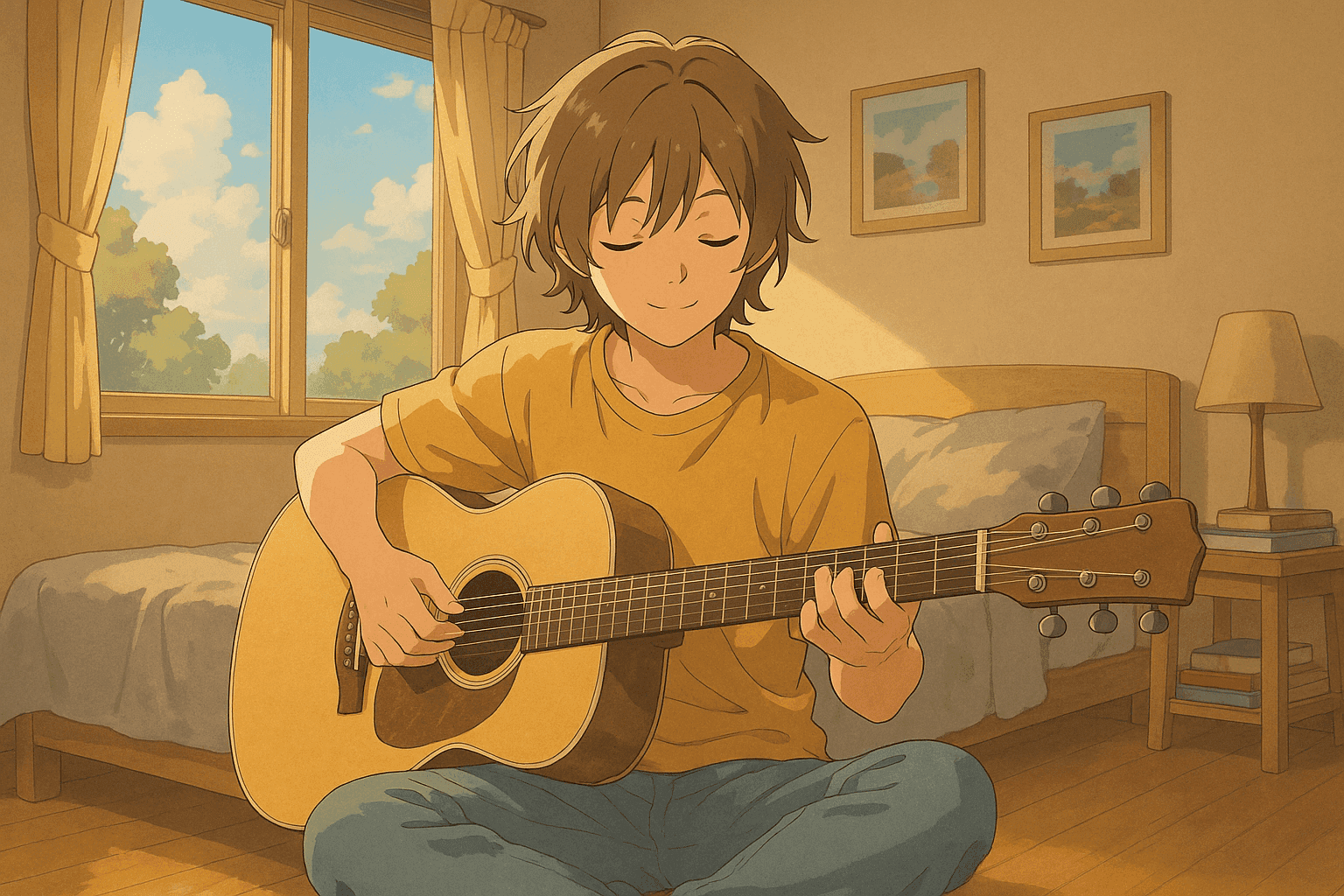
Step-by-Step Instructions:
- Position your index finger on the 2nd fret of the G string (3rd string)
- Place your middle finger on the 2nd fret of the high E string (1st string)
- Put your ring finger on the 3rd fret of the B string (2nd string)
- Leave the D string (4th string) open – this is your root note
- Strum only the bottom four strings (strings 4-1), avoiding the low E and A strings
Common Mistakes to Avoid:
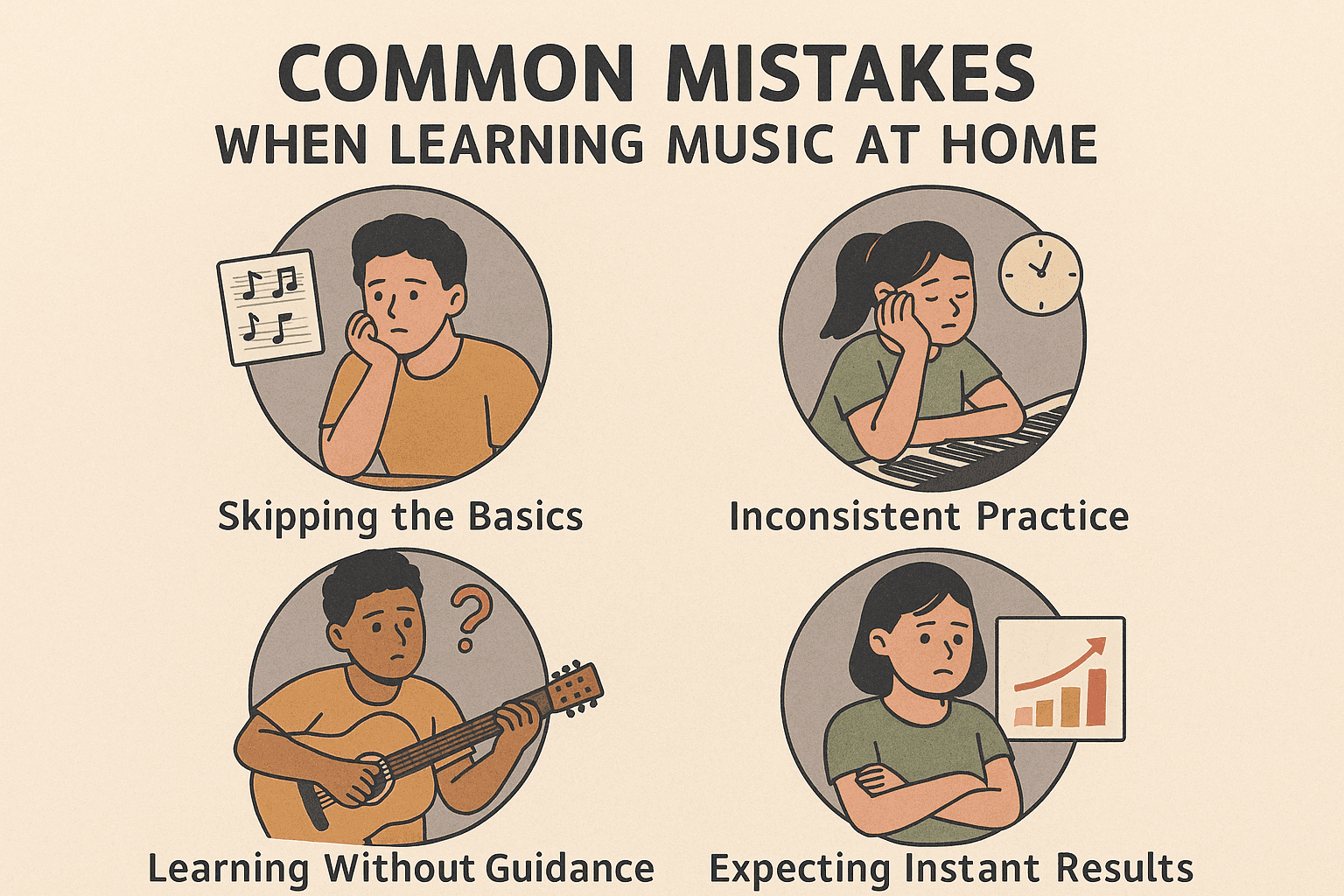
- Accidentally playing the low E or A strings – These notes don't belong in the D major chord and will make it sound muddy
- Not pressing down firmly enough – This causes buzzing or muted strings
- Fingers touching adjacent strings – Make sure your fingers are curved and only touching the strings they should
D Major Chord Variations
D Major Barre Chord (5th Fret)
For a fuller sound, you can play the D major as a barre chord:
- Barre all strings at the 5th fret with your index finger
- Place your ring finger on the 7th fret of the A string
- Place your pinky on the 7th fret of the D string
- Place your middle finger on the 6th fret of the G string
D Major Barre Chord (10th Fret)
Another barre chord option:
- Barre all strings at the 10th fret with your index finger
- Form an E-shape chord with your remaining fingers
Dsus4 and Dsus2
Dsus4:
- Replaces the F# with G
- Creates a suspended, unresolved sound
- Common finger position: 0-3-2-3-x-x
Dsus2:
- Replaces the F# with E
- Creates an airy, open sound
- Common finger position: 0-3-2-0-x-x
Tips for Mastering the D Major Chord

- Practice the finger positioning slowly – Accuracy first, speed later
- Use a metronome – Start slow and gradually increase tempo
- Practice chord transitions – Move between D and other open chords like G, A, and Em
- Check each string individually – Pluck each string one at a time to ensure clarity
- Keep your fingers arched – This prevents accidentally muting strings
- Position your thumb – Keep it on the back-center of the neck for support
Common Chord Progressions with D Major
The D major chord appears in countless popular songs. Here are some common progressions:
D - A - Bm - G
This progression is used in many pop and rock songs.
D - G - A
A classic three-chord progression perfect for beginners.
D - A - G
Another simple but effective progression.
D - Em - G - A
Popular in folk and country music.
Songs That Use the D Major Chord
Here are some popular songs to practice:
- "Wonderwall" by Oasis
- "Knocking on Heaven's Door" by Bob Dylan
- "Free Fallin'" by Tom Petty
- "Horse with No Name" by America
- "Take Me Home, Country Roads" by John Denver
Frequently Asked Questions
Why do we skip the low E and A strings?
The low E and A strings contain notes (E and A) that aren't part of the D major triad. While A is the fifth of D major, starting from the D note on the 4th string gives the chord its proper bass note and voicing.
What's the difference between D major and D minor?
D major uses F# (major third), while D minor uses F (minor third). This single note difference changes the mood from bright and happy (major) to darker and sadder (minor).
Can I play D major with different fingerings?
Yes! Some players use different fingerings based on comfort or what chord comes next. Experiment to find what works best for you.
How long does it take to master the D chord?
For most beginners, with consistent practice (15-20 minutes daily), you should be comfortable with the D chord within 1-2 weeks.
Conclusion
The D major guitar chord is an essential building block for any guitarist. By following this guide and practicing regularly, you'll master not only the basic open position but also various chord shapes and progressions that use the D chord.
Remember, the key to success is consistent practice and patience. Start slowly, focus on clean execution, and gradually build up your speed and confidence. Happy playing!