ChatGPT
 Google AI
 Grok
Grok Claude
What Is the C Minor Chord?

Mastering the C minor chord on piano unlocks a powerful tool for emotional expression. This chord, often appearing in brooding or introspective music, carries a darker tone compared to many major chords. Understanding the C minor triad and its place in the C minor key gives you the foundation to use it effectively. The C minor piano chord uses the same white and black keys you already know, yet the shift from major to minor brings fresh character. To deepen your skills and explore advanced techniques, you can check out piano scales and advanced techniques.
In the broader context of music theory for beginners, the C minor chord formula (root, minor third, perfect fifth) makes it a reliable starting point for both practice and composition. Learning the chord in root position helps with finger placement piano chords, and knowing how to identify it helps you “see” chords on the keyboard. The interplay between the white keys on piano and the black keys on piano makes the C minor chord shape and hand positions visually and physically distinct.
The notes in a C minor chord
The C minor chord notes consist of C (the root), E♭ (the minor third), and G (the perfect fifth). These three notes together form the minor triad structure that distinguishes the chord’s unique sound. When you press C, E♭, and G simultaneously, you produce the characteristic “sad but resolute” tone of the chord.
How the C minor chord is built (music theory explanation)
The building blocks of the C minor chord follow a clear pattern: start at root (C), move up a minor third (to E♭), then up a major third (to G). That interval pattern (m3 + M3) is what creates every minor triad. In other words, knowing the intervallic structure means you can replicate the chord construction in any key. The fact that the third is lowered (compared to major) is exactly what causes the contrast — this is the difference between major and minor chords.
C minor on the piano keyboard – visual layout
On a standard piano keyboard you’ll find the root C just to the left of the set of two black keys. E♭ is the black key immediately above D (the white key between the two black keys group). G is the white key located above the group of three black keys. The combination of white-black-white in that particular pattern reinforces the visual of the C minor piano chord shape. When you practise left hand piano chords and right hand piano chords, noticing how the black key sits slightly higher than adjacent white keys trains your muscle memory and helps with finger placement piano chords.
How to Play the C Minor Chord on Piano

Playing the C minor chord correctly involves more than striking three keys together. You must establish solid piano hand positions, keep your fingers relaxed, and use the correct fingering to optimise sound and speed. When practising, think of the chord as a unit and allow your fingers to settle naturally on C, E♭, and G without tension. Watching how your hands move across the piano chords chart can help you internalise the location and shape of this chord.
As you advance, incorporate the C minor scale context and explore how the chord fits into broader harmonic patterns. Practising it in root position builds comfort; later you’ll shift to C minor chord inversions and progressions. Emphasising the finger placement piano chords will improve your transitions between chords and your fluency when playing songs or improvising.
Step-by-step guide to playing C minor in root position
- Locate the key C on the keyboard — the white key just to the left of the two black keys group.
- Place your right-hand thumb on C, middle finger on E♭, and little finger on G.
- For the left hand, place your little finger on C, middle finger on E♭, and thumb on G.
- This configuration ensures correct right hand piano chords and left hand piano chords usage.
- With this placement, you’re playing the **C minor root position** and forming the chord cleanly.
Finger placement and hand position tips
- Keep your wrist relaxed, fingers curved but not tense, and allow your fingertips to press the keys rather than flattening them.
- The black key (E♭) sits slightly above the level of adjacent white keys, so your hand should adjust subtly to accommodate that difference.
- Viewing the shape of the chord on the keyboard and thinking of the **piano chord shape** helps solidify your hand memory.
- Practise slowly at first, focusing on even sound and smooth transitions.
Common mistakes beginners make with C minor
- Mis-identify E♭ and hit the wrong black key or confuse it with D♯.
- Press keys unevenly, causing unbalanced sound.
- Keep wrist too rigid, limiting movement when shifting to new chords.
- Rely solely on sight when playing instead of developing a tactile feel for the chord.
C Minor Chord Inversions Explained

Once you’re comfortable with playing the base C minor chord, you should explore its inversions. Inversions are simply reorganisations of the same three notes — C, E♭, and G — but they change the bass note, which alters the harmonic feel and makes transitions more fluid. Chord inversions explained is a key part of harmonic knowledge, because using them gives your playing a smoother, more professional sound.
Using inversions helps avoid large leaps in bass or melody and keeps the harmonic flow steady. This is especially useful in the C minor key, where progressions often call for movement that would otherwise feel abrupt if you stayed in root position only. For piano learners, practising the C minor chord inversions trains your muscle memory and expands the number of chord shapes you can access quickly.
What are inversions and why they matter
- Inversions refer to taking the root position of a chord and placing a different note (third or fifth) in the bass.
- For the **C minor chord**, that means playing E♭ or G as the lowest note instead of C.
- This matters because it changes how the chord connects to the next one, making progressions smoother and more varied.
- The concept of root, third, fifth notes becomes tangible when you practise inversions and realise how the same chord can feel very different.
How to play C minor first inversion (C–E♭–G → E♭–G–C)
- Place E♭ as the lowest note, then G, then C.
- Right hand: thumb on E♭, middle finger on G, little finger on C.
- Left hand: thumb on C, middle finger on G, little finger on E♭.
- This version of the chord often appears in chord sequences because the **C minor first inversion** provides a smooth link between chords.
How to play C minor second inversion (C–E♭–G → G–C–E♭)
- Play G at the bottom, then C above it, and E♭ at the top.
- Right hand: thumb on G, middle finger on C, little finger on E♭.
- Left hand: little finger on G, middle finger on C, thumb on E♭.
- The **C minor second inversion** is especially useful when you want to keep your bass line moving smoothly without jumping too far.
When to use inversions in songs and chord progressions
- Use inversions when shifting from one chord to another in a way that keeps your hands close together.
- For instance, when you move from the **C minor chord** to A♭ major or G major in the key of C minor, choosing the right inversion minimises hand motion.
- This detail matters in **piano chord progression practice**, and using inversions adds professional polish.
- Practising with both root position and inversions gives you versatility.
C Minor Triad – What’s the Difference Between a Triad and a Chord?
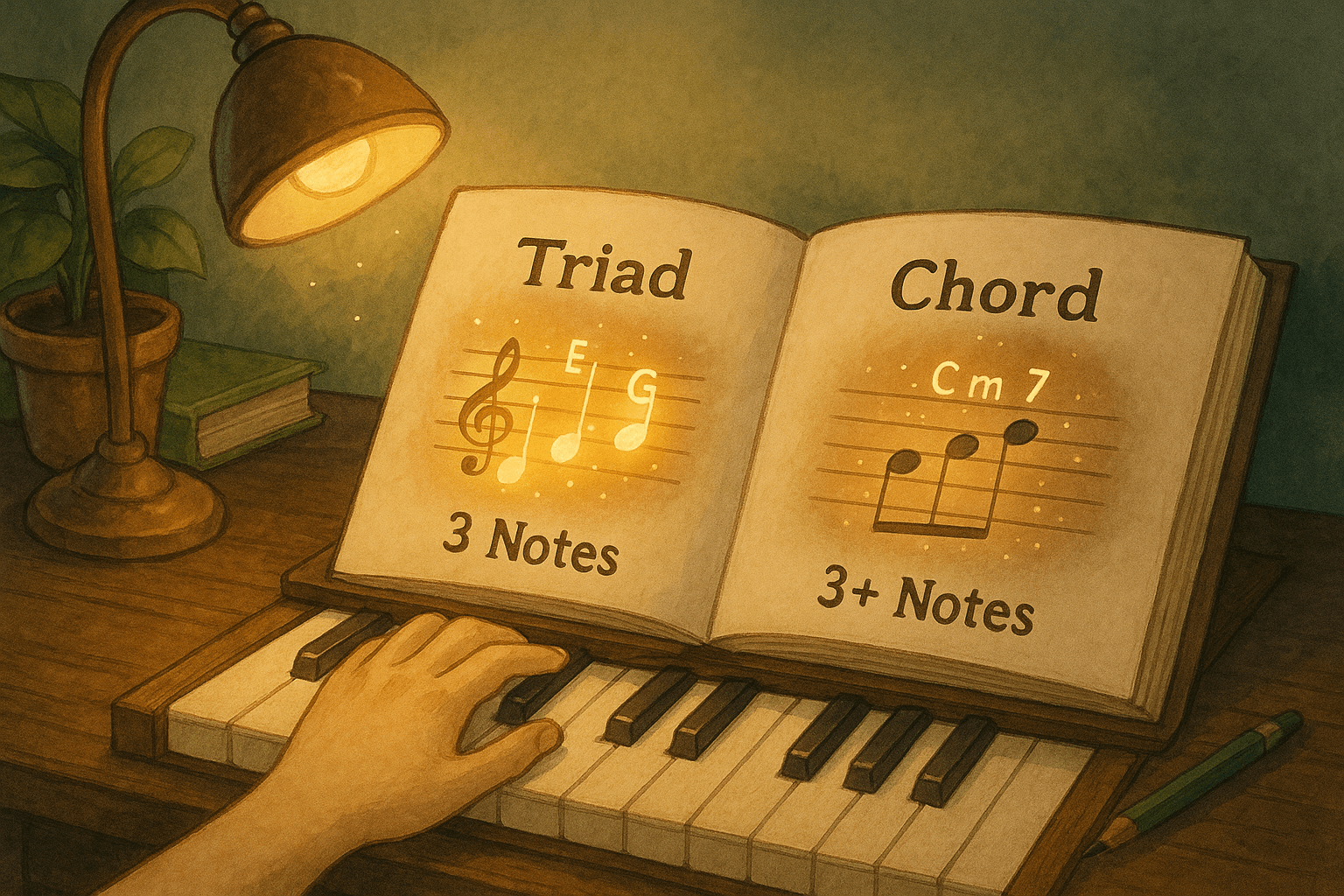
A triad is a chord made of three notes stacked in thirds: root, third (major or minor), and fifth. Every triad is a chord, but not every chord is a triad. For example, the C minor triad is exactly the same as the C minor chord when only three notes are used. When you add a seventh or ninth note you move beyond a simple triad into extended chords. Recognising this difference helps when reading sheet music or understanding chord symbols such as Cm7 or Cm9.
When you broaden your understanding of the C minor chord to include this concept you gain insight into how more complex chords are built. The minor triad structure underpins many chords in jazz, pop and classical music. So once the C minor triad is comfortable for you, expanding into richer harmonies becomes much more accessible.
Understanding triads vs. full chords
- A triad uses three notes.
- Full chords often add one or more notes (such as the seventh, ninth or other extensions).
- When you see Cm you know three notes; when you see Cm7 you know four.
- For example, the **C minor chord notes** C-E♭-G form the triad; if you add B♭ you get C minor seventh.
How triads help you build more complex harmonies
- By mastering the triad of C minor you lay the groundwork for advanced harmonies like Cm9 or Cm11.
- When you understand how the **C minor chord** is formed (root, minor third, fifth) you can add other notes logically in **thirds**.
- For instance you might add B♭ (minor seventh) or D (major ninth) to get a richer chord.
- This knowledge aids your ability to compose, improvise and interpret complex pieces.
Common Chord Progressions in the Key of C Minor

The C minor chord progression plays a central role in the key of C minor. Because the C minor key has a key signature of three flats (E♭, A♭ and B♭) the chords within that key share a colour and emotional character. Among the most frequently used progressions are i-VI-VII (Cm–A♭–B♭), i-iv-VII (Cm–Fm–B♭) and i-VI-III–VII (Cm–A♭–E♭–B♭). These sequences help you understand how the C minor chord functions with other chords in the same key.
The emotional tone of C minor often lands in the realm of introspection, longing or dramatic resolve. That mood is shaped by the minor third interval and the minor key itself. When you practise piano chord progression practice involving the C minor chord, you’ll find many musical examples carry that emotional undertone. Familiarising yourself with the common progressions in the key (for instance those listed above) makes it easier to spot the C minor chord progression in songs and compose your own.
Popular progressions using C minor (e.g., Cm–Ab–Bb, Cm–G–Cm)
- Cm–A♭–B♭ (i–VI–VII): Brooding yet hopeful
- Cm–Fm–G (i–iv–V): Tension then release
- Cm–A♭–E♭–B♭ (i–VI–III–VII): Richer harmonic movement
Emotional character of C minor in music
When the C minor chord appears it often signals a mood shift. The use of E♭ instead of E creates a feeling of melancholy or introspection compared to major chords. This is part of what gives the minor triad structure its emotional power. Musicians often turn to C minor when they want to evoke drama, reflection or heart-ache. Familiarity with this piece helps you use the chord intentionally.
Famous songs in the key of C minor
- Beethoven’s Symphony No. 5
- Adele’s “Someone Like You”
- Imagine Dragons’ “Demons”
Tips for Practising the C Minor Chord
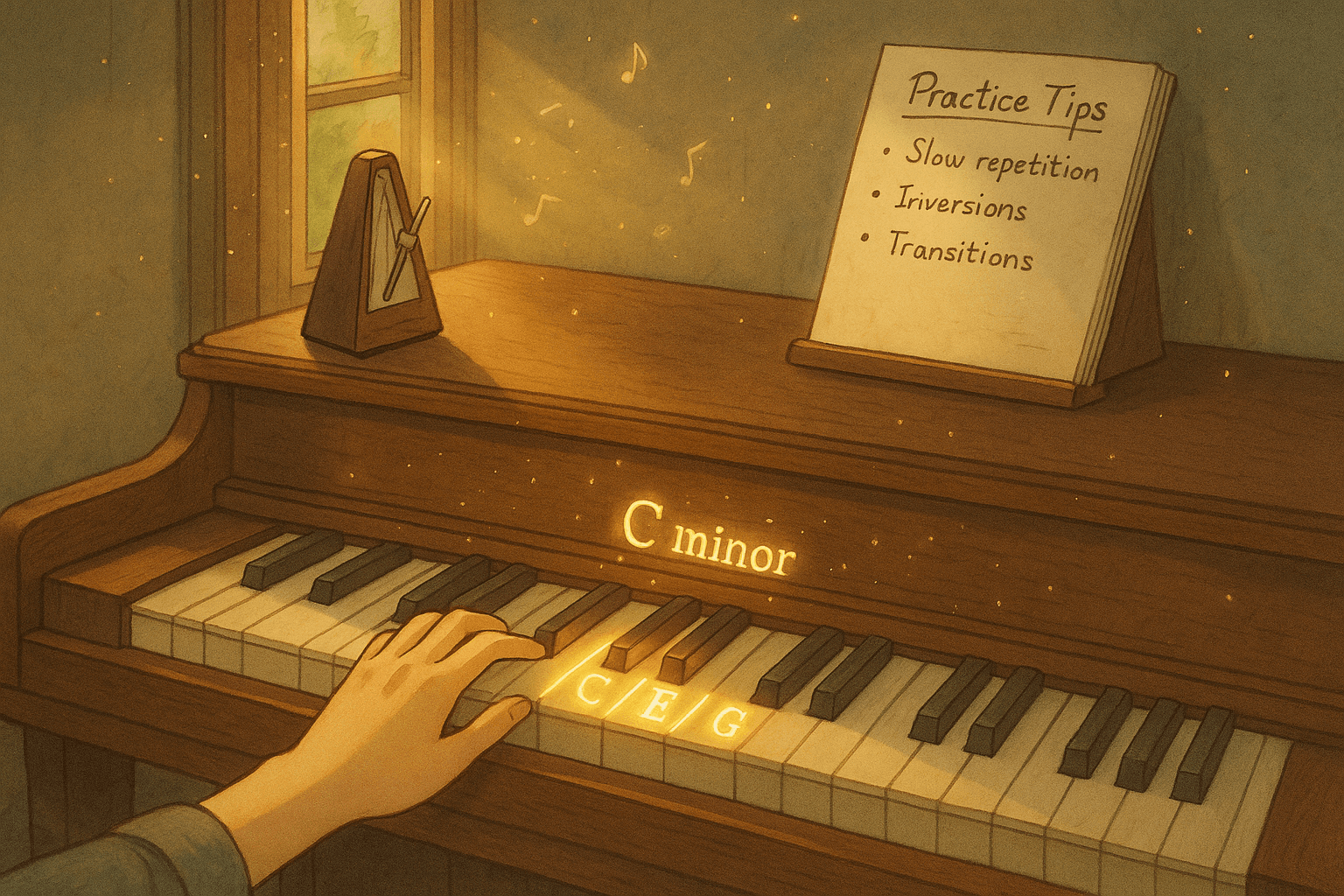
Regular and mindful practice of the C minor chord makes the difference between simply knowing it and truly playing it with confidence. Begin each session with slow, deliberate pressing of C, E♭ and G in root position. Then move into the inversions and progressions you’ve learned. Habitual and focused piano chord practice helps embed the C minor chord shape in your muscle memory.
Furthermore, combining the chord with other chords, varying rhythm and dynamics, and using a metronome improves your timing and coherence. It’s not just about a chord in isolation; it’s about how you transition into and out of the C minor chord smoothly. This process of developing muscle memory and hand coordination underpins your ability to play more advanced pieces. To get personalized guidance and structured practice, you can book a trial class.
Warm-up exercises and drills
- Play C–E♭–G together, then lift and play again.
- Alternate to the first inversion (E♭–G–C) and second inversion (G–C–E♭) slowly.
- Incorporate scales like the C minor scale around the chord to build context.
Using a metronome for rhythm accuracy
- Set a slow tempo, for instance 60 beats per minute, and play the C minor chord on each click of the metronome.
- Then introduce inversions or move into a progression at the same tempo.
- As you gain stability, gradually increase tempo.
Combining C minor with other chords smoothly
- Move from C minor into chords like A♭ major, F minor or G major.
- Pay attention to how your hands move on the keyboard and look for the most economical motion.
- Over time these transitions become natural and comfortable.
Play and Learn C Minor with Flowkey (or Other Learning Apps)

Learning the C minor chord becomes much easier when you use interactive tools such as the Flowkey app or Skoove. These apps give visual cues for finger placement, show how the chord sits on the keyboard, and often include guided lessons with the C minor chord and its inversions. When you use these tools you can receive immediate feedback and reinforce correct right hand piano chords and left hand piano chords patterns.
These apps often include fun exercises that help you “learn piano chords” by ear, watch the chord visually, and practise at your own pace. By integrating technology into your routine, the C minor chord becomes not just theoretical but something you can see, hear, and feel. The combination of modern tools and traditional practice accelerates your progress.
How Flowkey helps with learning C minor chords
- Displays the keyboard on-screen, highlights C, E♭ and G, and shows correct fingering for both hands.
- Provides exercises where you practise the C minor chord in root position and then shift to inversions.
- Visual reinforcement makes it easier for your brain and fingers to sync up.
Guided lessons and interactive features
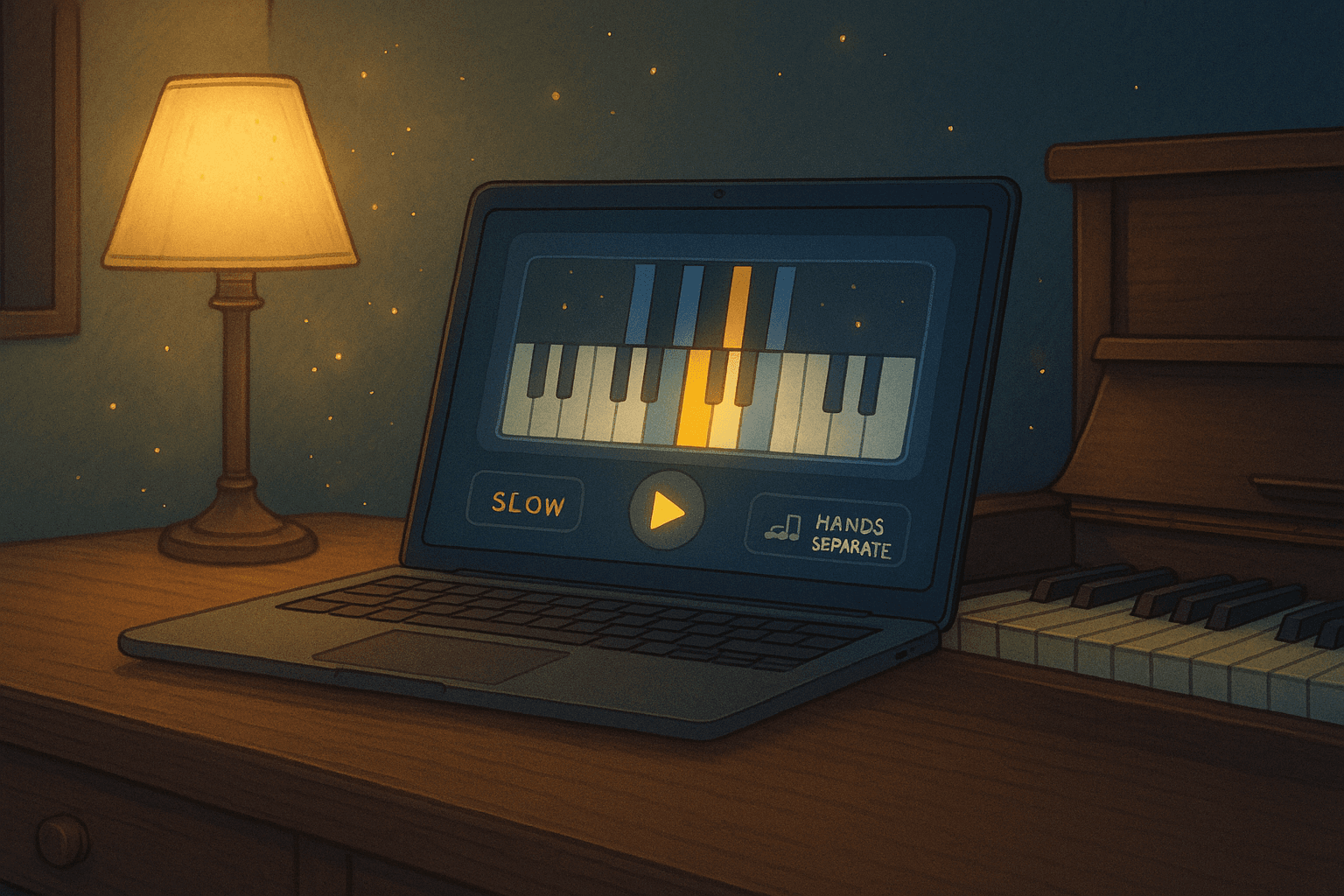
Within the app you’ll find lessons designed around the C minor chord and related progressions. The interactive features allow you to slow down or loop sections, check your timing, and build confidence. These guided tools support effective practice by making the abstract concept tangible.
Piano Chord Generator – Explore More Chords
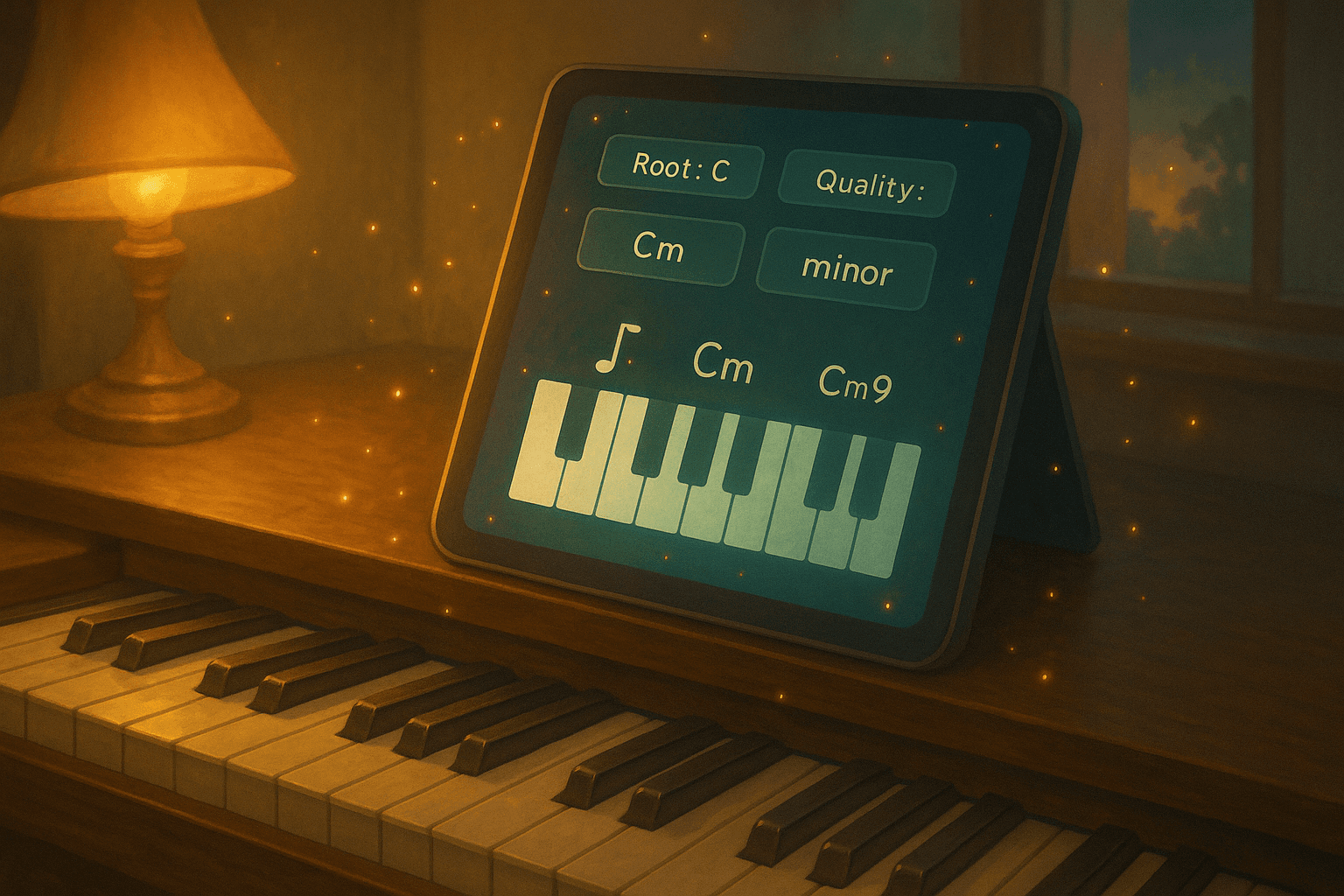
Beyond the C minor chord, you can expand your harmonic vocabulary using online tools such as chord generators. These tools allow you to visualise the C minor chord and then switch to variations like C minor 7, C minor 9 or minor chords in other keys. This exploration enriches your understanding of chord structures and helps you apply the C minor chord formula in new contexts.
You might, for example, use a chord generator to display the C minor chord shape on a virtual keyboard, then tweak the chord quality or inversion and hear how the sound changes. This kind of experimentation supports piano chord exercises and gives you insight into how chords relate to each other.
Use online tools to visualize C minor and its variations
- Visit a piano chord chart or chord generator and select “Root: C” then “Quality: minor”. You’ll see C–E♭–G displayed.
- Then try selecting “Cm7” to add B♭ and hear the richer sound.
- This process helps you internalise how chords evolve from the basic C minor chord into extended forms.
Discover related chords: C minor 7, C minor 9, and more
- Once you understand the **C minor triad**, you can add notes above the fifth to create chords like C minor 7 (C–E♭–G–B♭) or C minor 9 (C–E♭–G–B♭–D).
- These richer chords are used in jazz, soul, and modern pop.
- By studying these you deepen your harmonic awareness and expand beyond beginner piano chords into more expressive territory.
Summary – Mastering the C Minor Chord
In summary, the C minor chord is a foundational and expressive tool for any pianist. You began with the C minor chord notes (C, E♭, G), explored how the chord is built through music theory, and found its shape on the piano keyboard. You learned how to play it in root position, mastered correct finger placement piano chords, and recognised common mistakes beginners make. Then you expanded into C minor chord inversions, understood the difference between a triad and a full chord, and explored common chord progressions in the key of C minor. You practised effectively, used interactive tools like Flowkey or Skoove, and experimented with chord generators to explore variations beyond the basic triad.
Going forward, you are encouraged to integrate the C minor chord into your daily practice and musical expression. The next step might be exploring a piece in the C minor key, improvising using the chord and its progressions, or building your own composition around it. With deliberate practice and attention to detail you’ll make the C minor chord a confident and natural part of your piano vocabulary.
Key takeaways
- The **C minor chord** uses three notes: C, E♭ and G.
- Its character stems from the minor third interval.
- Inversions allow smoother motion between chords.
- Recognising triads versus chords helps you build complex harmony.
- Progressions in C minor often evoke emotion and depth.
- Visual tools and proper practice accelerate learning.
Next steps for piano learners
- Begin practising the C minor chord daily.
- Add inversions and transitions to other chords like A♭ major, F minor or G major.
- Use apps for feedback and chord generators to explore variations.
- Over time you’ll move beyond beginner piano chords into expressive and advanced piano chord structures.
FAQs About the C Minor Chord
1. What are the notes in the C minor chord?
The C minor chord consists of three notes — C, E♭ and G. These form a minor triad, giving the chord its distinct sad or emotional tone.
2. What is the difference between C minor and C major?
C major has the notes C, E and G, while C minor replaces the E with an E♭. That one note changes the chord’s sound from bright (major) to dark and moody (minor).
3. How do you identify C minor on the piano?
Find the C note, skip one white key, play E♭ (the black key before E), then play G. That’s your C minor chord in root position.
4. What are the inversions of C minor?
- First inversion: E♭–G–C
- Second inversion: G–C–E♭
5. What songs use the C minor chord?
- Beethoven’s Symphony No. 5
- Adele’s “Someone Like You”
- Imagine Dragons’ “Demons”
6. How can I practice the C minor chord effectively?
- Play it slowly in root and inverted forms.
- Use it in chord progressions like Cm–A♭–B♭–Cm while keeping a steady rhythm with a metronome.
7. Is C minor a difficult chord to play for beginners?
No — it’s fairly simple once you locate the E♭ correctly. With a bit of hand-positioning practice, even beginners can play it smoothly.