ChatGPT
 Google AI
 Grok
Grok Claude
The C major guitar chord is one of the most important shapes every guitarist must learn. It forms the foundation of countless songs and is often the first step in understanding music theory for guitar. Whether you're learning your first chords or mastering advanced chord voicings, knowing how to play the C guitar chord correctly can transform the way you approach the fretboard.
When you play the C major chord guitar shape, you'll instantly notice its bright, open sound. It's warm, full, and perfectly balanced — a tone that defines the feel of pop, rock, and folk music. In this complete C major tutorial, you'll learn the C major chord structure, its notes, the major chord formula, and how to use it across different chord positions and keys. You'll also discover movable C chord shapes, barre chords, and the C major in the CAGED system so you can play it anywhere on your guitar.
What Is the C Major Guitar Chord?

The C major guitar chord belongs to the major chord family, which produces bright and happy tones. It's built from the C major scale guitar pattern—the notes C, D, E, F, G, A, B—and uses the root–major third–perfect fifth interval structure, forming the root third fifth formula of C–E–G. These are called chord tones, and together they make up the C major triad.
In C major chord theory, each note plays a specific role. The C note is the root, providing stability. The E note adds brightness through the major third, and the G note, the perfect fifth, gives fullness. This is why the C major chord sound feels so natural and balanced. It's also the tonic chord in the key of C major, meaning it often starts and ends a song, giving it a sense of resolution.
What Makes the C Chord Special

The C major chord stands out for its clean, resonant tone and universal presence in Western music. Because it uses only natural notes—no sharps or flats—it's easy to connect it with other basic guitar chords like G major, A minor, and F major. In many ways, the C major triad is the core of the guitar's harmonic language.
Every time you hear a bright, open strum in acoustic music, chances are it involves the C chord guitar shape. Its position also teaches finger independence, helping you strengthen your fretting hand. Learning the C chord finger positions builds coordination and prepares your fingers for more complex shapes like Cmaj7, Cadd9, or C6, which all expand the C major chord variations family.
C Major Chord Notes and Formula
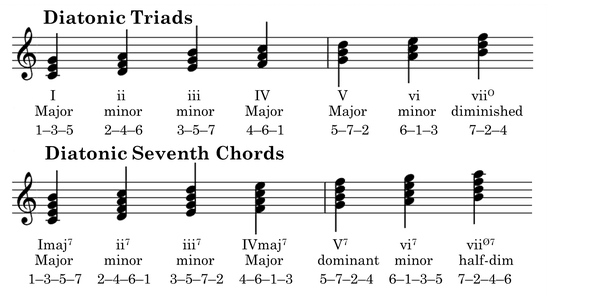
At its heart, the C major chord is built using the major chord formula 1–3–5. This means you take the first, third, and fifth notes of the C major scale.
| Scale Degrees | Notes in C Major | Interval Names |
|---|---|---|
| 1 | C | Root |
| 3 | E | Major Third |
| 5 | G | Perfect Fifth |
Understanding this structure helps you apply the same chord formula 1-3-5 to any other chord on the guitar. It's the foundation for guitar chord construction, stacking thirds, and building chords from scales across the fretboard.
How the Major Chord Is Built
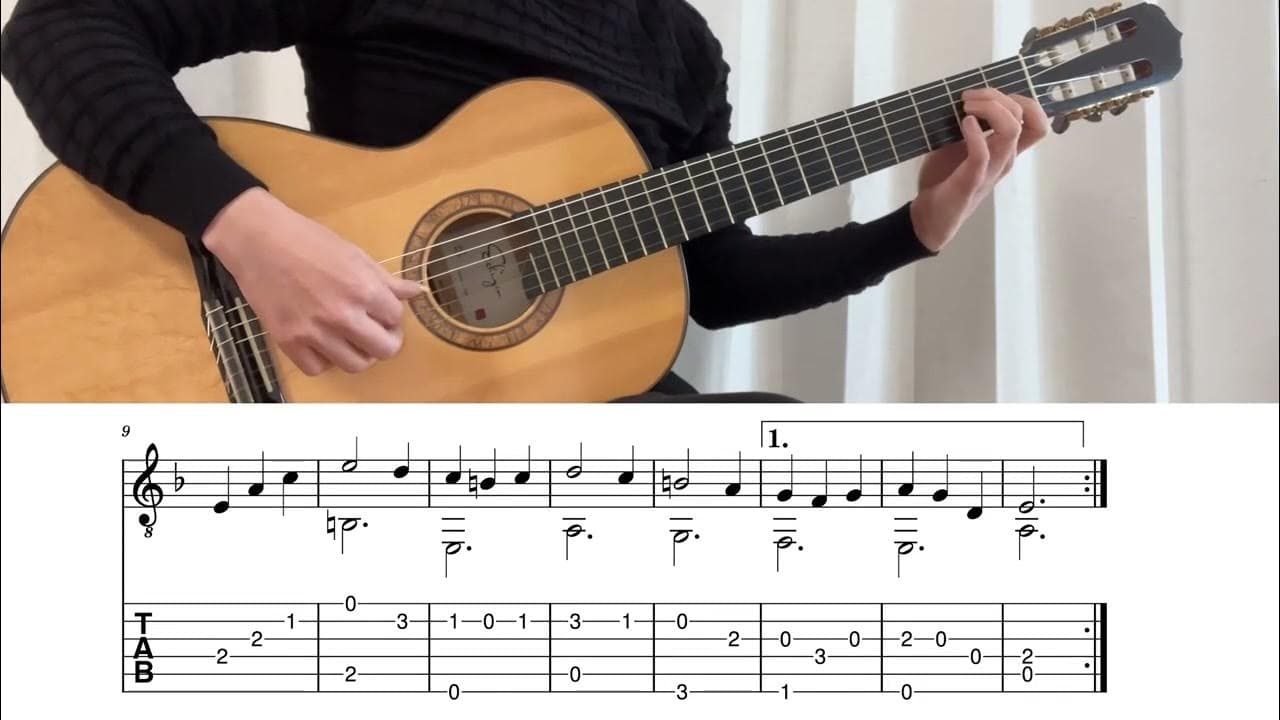
Every major chord follows a simple logic. You start from the root note, add a note that is four semitones higher (major third), and another that is seven semitones higher (perfect fifth). On guitar, this translates into fretboard distances known as music intervals on guitar.
When you apply this to C major, you start with C, count up four semitones to E, and then three more to G. That's the root–major third–perfect fifth interval pattern. This structure defines the major chord sound and works the same way for any other major chord on the fretboard.