ChatGPT
 Google AI
 Grok
Grok Claude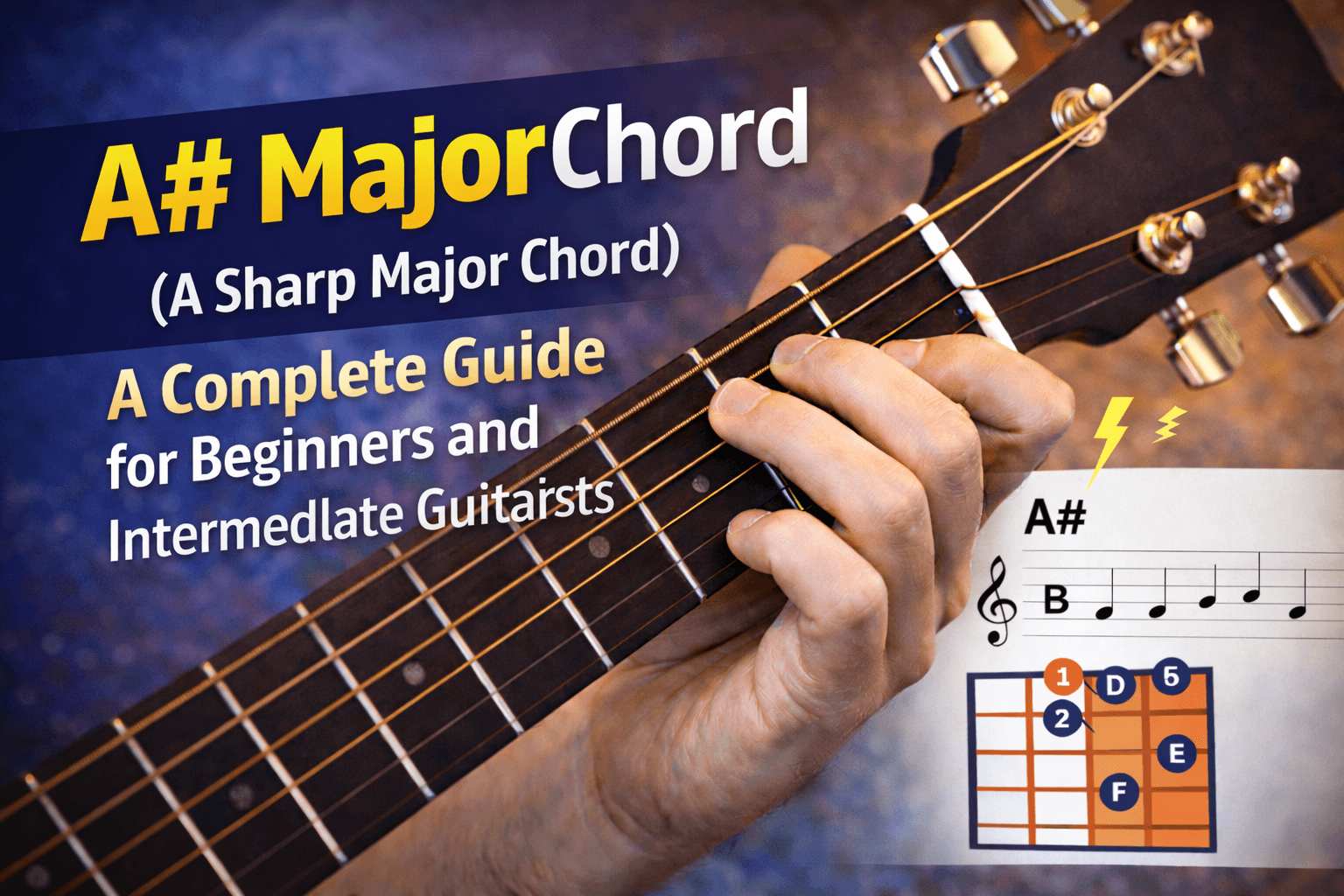
The A# Major chord, also written as A♯ Major, is a bright, expressive, and powerful major chord used across jazz, pop, gospel, funk, R&B, neo-soul, and classical compositions. Even though A# Major appears less frequently as an open chord due to its barre-based nature, it remains an essential chord for guitarists who want to expand their fretboard mastery.
Many players consider A# Major slightly challenging because it is structured primarily as a barre chord, similar to B Major and C Major. However, once the hand strength and technique are developed, this chord becomes extremely versatile and musically rich. Whether you are exploring music theory, learning new progressions, or building a strong foundation in chord shapes, understanding A# Major will elevate your playing significantly.
Before diving into finger placements, alternate voicings, and practical exercises, it is important to understand the theoretical basis of A# Major.
What Is the A# Major Chord?
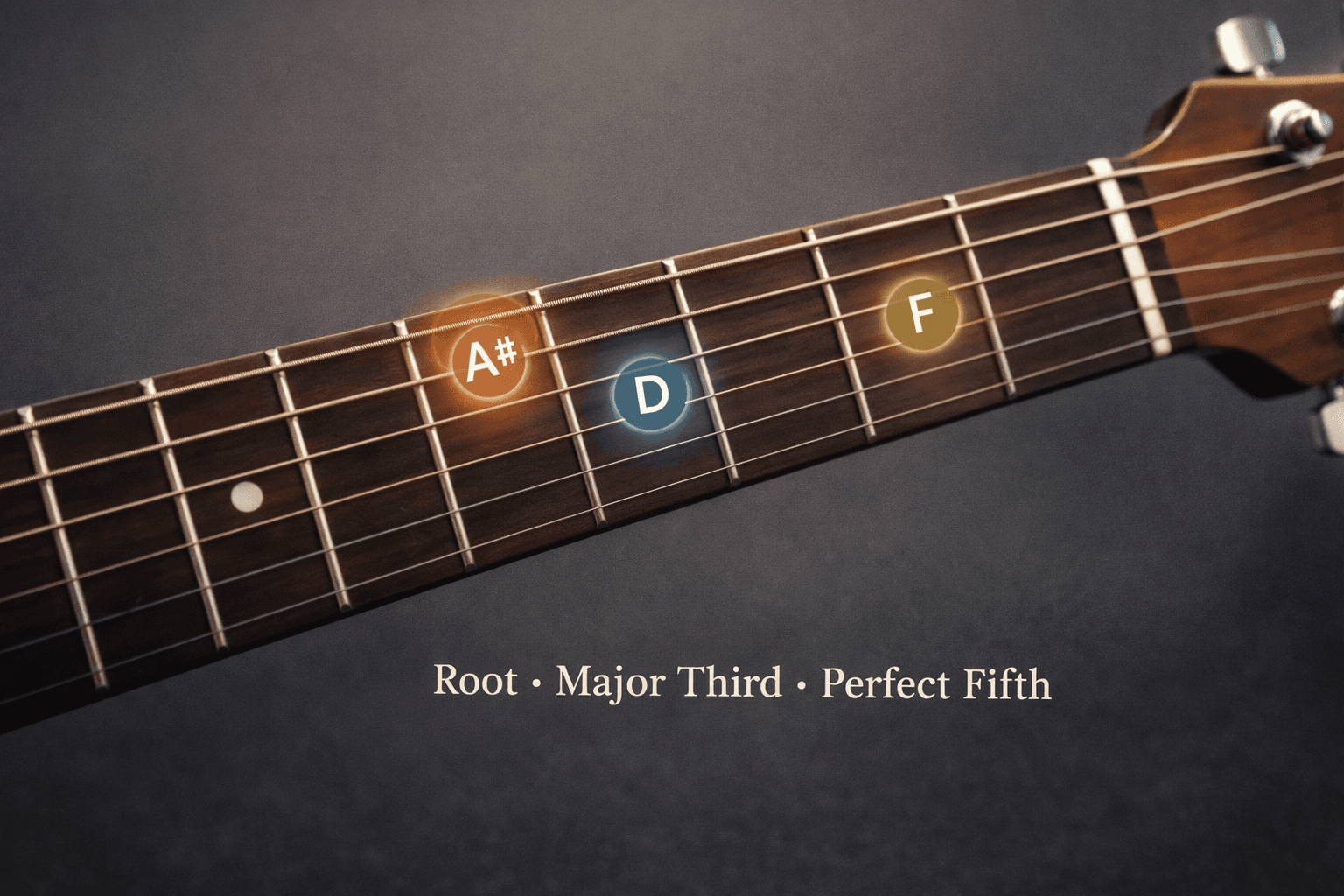 The A# Major chord is built on the note A# and consists of three essential tones:
- Root – A#
- Major Third – D
- Perfect Fifth – F
This arrangement creates a clear, bright, and confident tonality that is characteristic of major chords. Although the name A# Major is common in guitar usage, in classical notation, this chord is often referred to as Bb Major (enharmonic equivalent). On guitar, both A# and Bb share identical finger positions and sound identical, but are used differently depending on key signature.
How to Play the A# Major Chord on Guitar
Since there is no open A# Major chord, the most common method is the barre chord shape rooted on the 1st fret of the A string or the 6th string. Below is a detailed approach to playing the standard A# Major shape.
Finger Positioning for the A# Major Chord
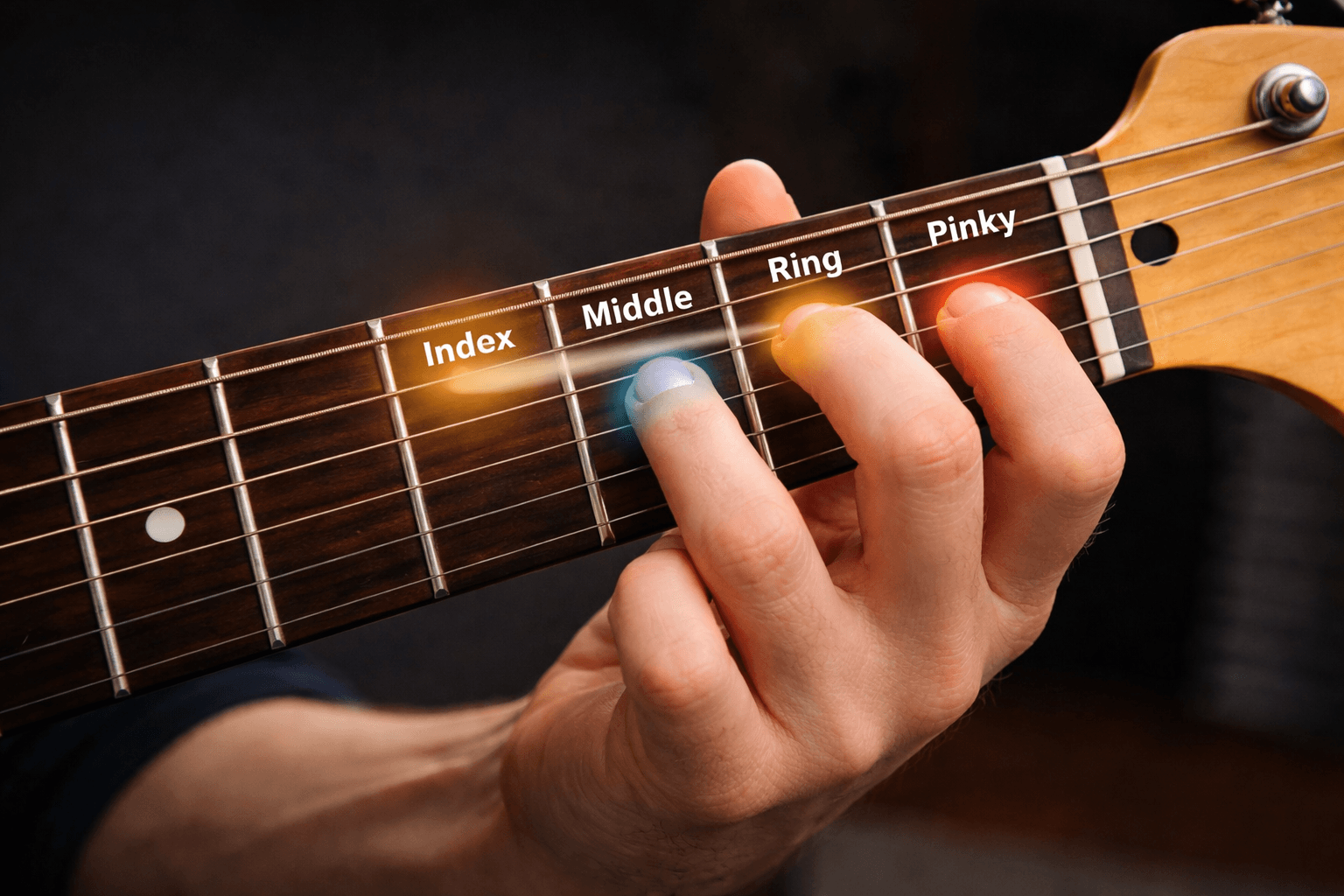
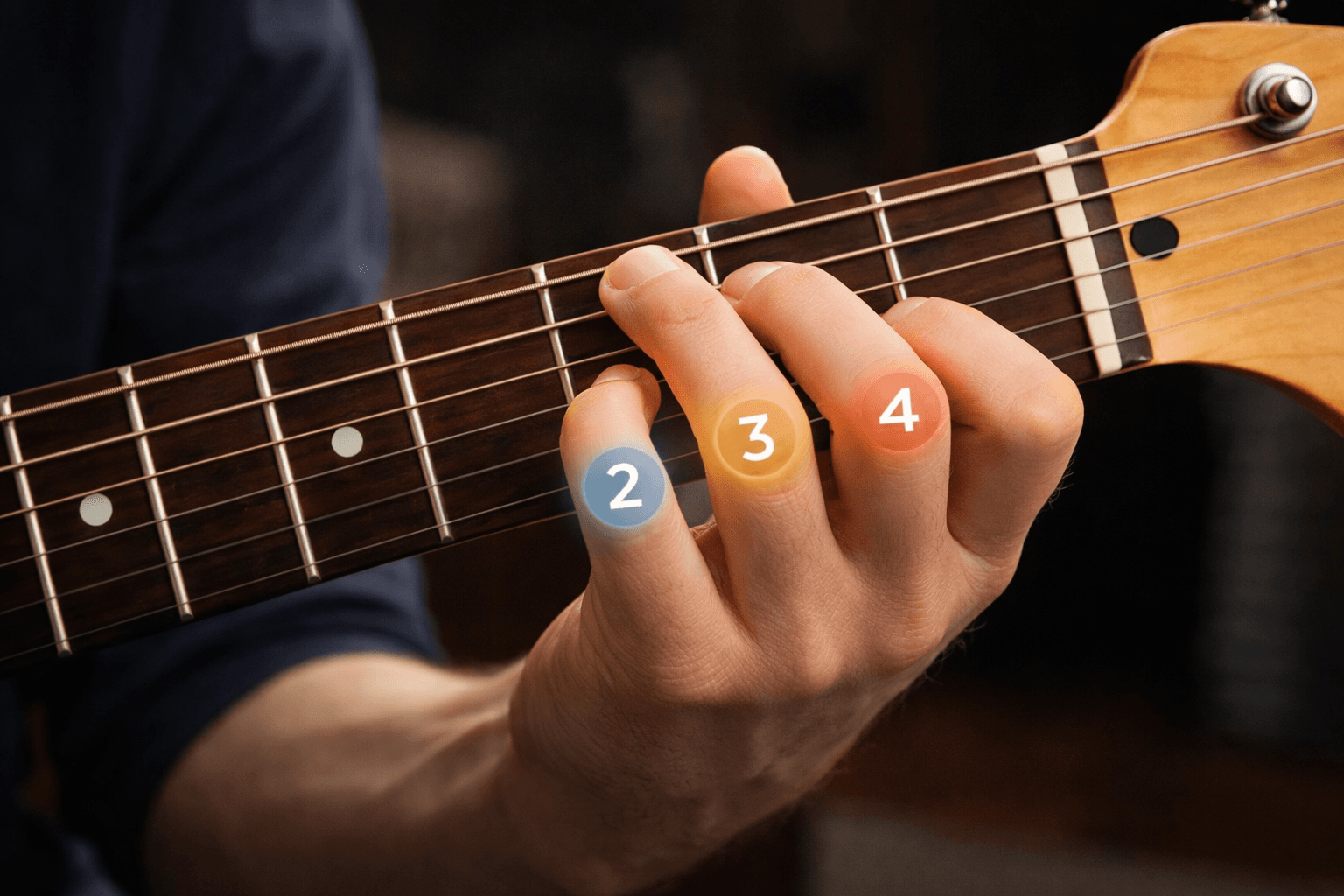 Follow this standard barre chord structure rooted on the A string:
- Index Finger: Barre the 1st fret across all strings
- Middle Finger: 2nd fret of the D string
- Ring Finger: 3rd fret of the G string
- Little Finger: 3rd fret of the B string
- Low E string: Muted
- High E string: Pressed by the index barre
- C Major
- F Major
- G Minor
- D Minor
- 1. Keep your wrist low to encourage proper barre technique.
- 2. Place the index finger close to the fret to reduce buzzing.
- 3. Apply pressure evenly across the barre.
- 4. Avoid pressing too hard—proper form is more important than force.
- 5. Keep fingers arched to prevent unwanted string muting.
- 6. Start slow and increase speed gradually.
- 7. Use a metronome to stabilize rhythm and chord switching.
- Jazz standards
- R&B progressions
- Gospel worship tracks
- Classical orchestral transcriptions
- Funk guitar rhythm pieces
- Incomplete barre coverage causing muted strings.
- Excessive pressure leading to hand fatigue.
- Incorrect thumb positioning.
- Muting adjacent strings accidentally.
- Poor finger placement away from the fret.
- IV in the key of F
- V in the key of D# (Eb)
- III in the key of G Minor
- VI in the key of C Minor
- D Minor
- F Major
- G Minor
- C Minor
Once the barre is strong and consistent, this shape becomes easy to shift and adapt into other chords.
A# Major Chord Diagram
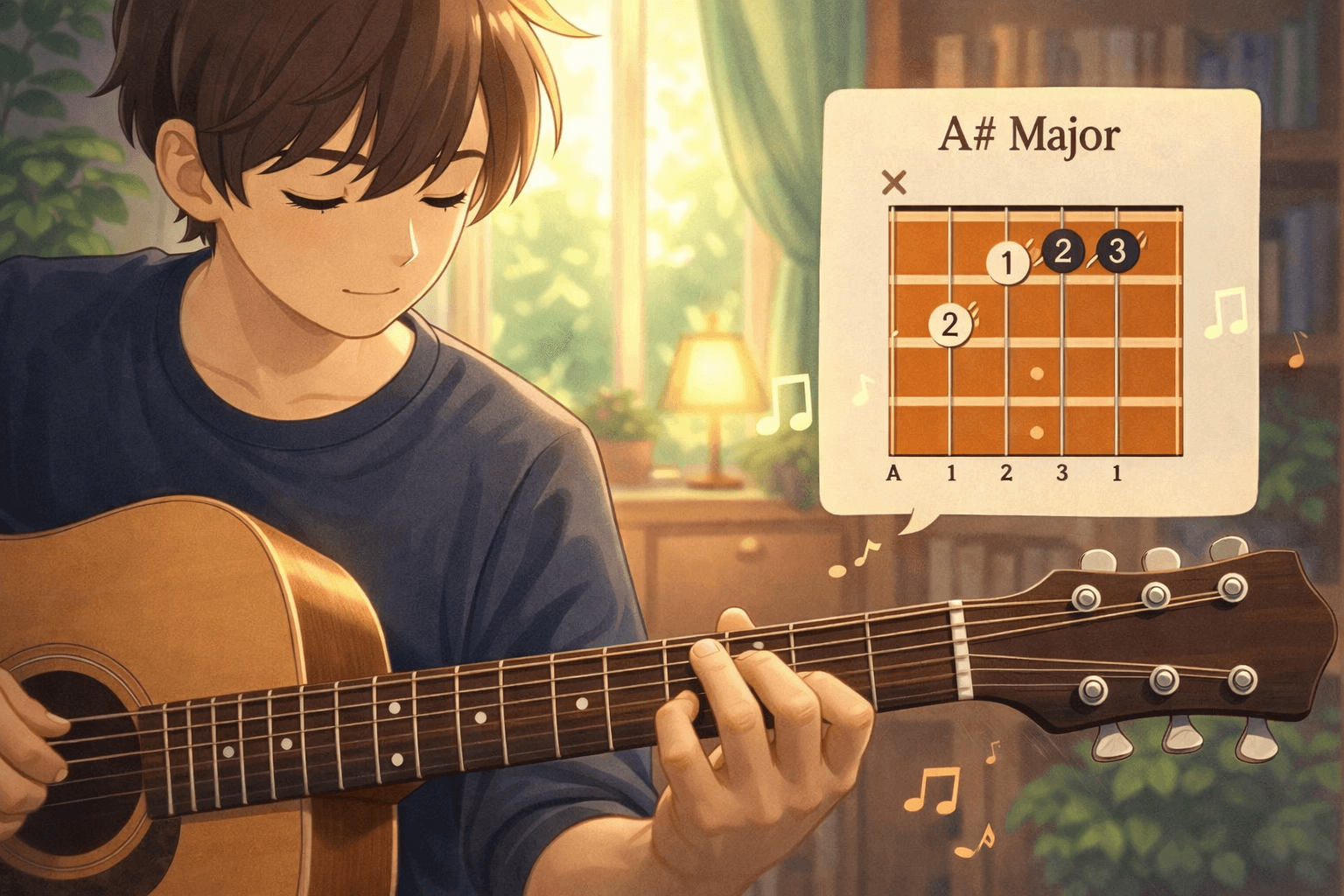 Below is the ASCII chord diagram that accurately represents the A# Major barre chord.
A# Major Chord e|---1--- B|---3--- G|---3--- D|---2--- A|---1--- E|---x---
This structure mirrors the typical A major barre shape moved up to the first fret.
Notes in the A# Major Chord
Understanding the chord tones improves application, improvisation, and recognition of this chord in real music.
Note Interval Importance A# Root Defines the tonal center D Major Third Creates the major quality F Perfect Fifth Adds stability and fullness
A# Major Chord Variations
Since A# Major lacks an open-chord version, players rely heavily on multiple barre and movable shapes. Below are essential versions.
Variation 1: A# Major (Barre Chord on 1st Fret – A String Root)
This is the most widely used variation.
e|---1--- B|---3--- G|---3--- D|---2--- A|---1--- E|---x---
Variation 2: A# Major (Barre Chord on 6th String Root – 6th Fret)
A fuller, deeper voicing that works well with high-energy strumming.
e|---6--- B|---6--- G|---7--- D|---8--- A|---8--- E|---6---
Variation 3: A# Major Triad (D String Root)
A compact shape useful for funk and rhythmic playing.
e|---6--- B|---6--- G|---7--- D|---8--- A|---x--- E|---x---
Variation 4: Spread Triad Version
A bright, open-sounding option perfect for melodic styles.
e|---x--- B|---10--- G|---7---- D|---8---- A|---x---- E|---x----
Variation 5: A# Major Power Chord (A#5)
Used heavily in rock and pop-punk music.
e|---x--- B|---x--- G|---x--- D|---8--- A|---6--- E|---6---
How to Practice the A# Major Chord
 Mastering A# Major requires a combination of technique, strength, and repetition. Follow these steps:
Step 1: Perfect the Barre Ensure the index finger is straight and pressing down firmly behind the fret. The thumb must oppose the index finger for balanced pressure.
Step 2: Place the Supporting Fingers After securing the barre, add your middle, ring, and pinky fingers one at a time. Ensure each string rings clearly.
Step 3: Minimize Finger Pressure Use only the necessary pressure—excess force leads to fatigue.
Step 4: Practice Chord Switching Move between A# Major and neighboring chords such as:
These transitions are frequently used in music and significantly build dexterity.
Tips and Tricks for Playing A# Major
To avoid muddiness and strain:
Songs That Use the A# Major Chord
A# Major (or Bb Major) appears widely across pop, rock, jazz, and film music. While specific song titles vary by arrangement and artist transposition, you will encounter A# or Bb frequently in compositions in keys such as Bb Major, F Major, and G Minor.
The chord is especially common in:
Understanding the chord empowers you to play confidently in these key signatures.
A# Major Chord Chart
Below is a structured reference for all key variations of the A# Major chord:
Variation Type Fret Position Difficulty Notes Variation 1 Barre (A-string root) 1st fret Medium Most common shape Variation 2 Barre (E-string root) 6th fret Medium-Hard Full, bright voicing Variation 3 Triad 8th fret Easy Ideal for rhythm and funk Variation 4 Spread Triad 7th–10th fret Medium Excellent for melodic playing Variation 5 Power Chord 6th fret Easy Great for rock and modern pop
Common Mistakes Beginners Make
Players often struggle with:
Correcting these early helps build long-term consistency.
Music Theory Behind the A# Major Chord
The A# Major chord belongs to the A# major scale, which consists of:
A# – B# – C## – D# – E# – F## – G## – A#
However, in practice, we use its enharmonic equivalent: Bb Major
Bb – C – D – Eb – F – G – A – Bb
The A# Major chord functions as the I (tonic) chord in the key of A# Major and also appears as:
Understanding these relationships helps you place the chord correctly in progressions.
How the A# Major Chord Is Used in Chord Progressions
Here are some widely used progressions involving A# (Bb) Major:
I – V – vi – IV
Bb – F – Gm – Eb Common in pop ballads.
I – IV – V
Bb – Eb – F Very common in jazz, blues, and R&B.
vi – IV – I – V Gm – Eb – Bb – F A modern, emotional progression ideal for songwriting.
A# Major Chord Exercises
To strengthen your technique, follow these drills.
Exercise 1: Barre Strengthening
Hold the barre shape for 10 seconds, release for 5 seconds, and repeat 10 times.
Exercise 2: Chord Switching Drill
Switch between A# Major and:
Play each change slowly and cleanly.
Exercise 3: Arpeggio Breakdown
Pick individual strings across the chord to build accuracy.
Exercise 4: Metronome Practice
Start at 60 BPM and gradually increase tempo to 110 BPM.
Advanced A# Major Voicings
Once the basic shapes are mastered, explore these richer, more complex shapes.
A# Major 7
A lush, jazzy variation.
e|---1--- B|---3--- G|---2--- D|---3--- A|---1--- E|---x---
A# Major 9
For soulful, extended harmony.
e|---1--- B|---1--- G|---0--- D|---3--- A|---1--- E|---x---
A# Major 6
Warm and expressive. e|---1--- B|---3--- G|---0--- D|---3--- A|---1--- E|---x---
Frequently Asked Questions About the A# Major Chord
Why is the A# Major chord considered difficult for beginners?
A# Major requires a full barre on the first fret, which can be physically demanding for new players. The pressure needed to barre cleanly takes time to develop. However, with proper technique and regular practice, beginners can play it comfortably.
Is A# Major the same as Bb Major?
Yes. A# Major and Bb Major are enharmonic equivalents, meaning they sound the same and have identical finger positions on guitar. The difference lies in notation depending on key signature and transcription style.
What chords pair well with A# Major?
A# Major pairs well with Eb, F, G Minor, and D Minor, forming strong and expressive progressions. These chords are commonly used in pop, jazz, and cinematic music.
Can I play A# Major without using a barre chord?
Yes, but the shapes will be partial versions, triads, or simplified fingerings higher up the fretboard. The full rich version is mostly played as a barre.
How do I make the A# Major chord sound cleaner?
Keep your index finger close to the fret, reduce unnecessary pressure, lower your thumb, and practice slowly. Ensuring even pressure across the barre will eliminate buzzing and muted strings.