ChatGPT
 Google AI
 Grok
Grok Claude
Learning the A minor chord on piano is a crucial first step for anyone diving into minor chords piano. This triad chord, composed of A, C, and E, carries a naturally melancholic, emotional sound piano chord that adds depth and feeling to any composition. While major chords often sound bright and happy, the A minor chord evokes a reflective, sometimes somber tone, making it essential for expressive music across genres. From classical compositions to contemporary pop hits, this chord bridges the gap between simplicity and emotional resonance, giving beginners and advanced players alike a versatile tool to convey emotion.
Understanding the A minor piano chord is also an entry point into learning piano chords online effectively. Since it only involves three white keys, it’s ideal for beginner piano chords, yet it offers complexity when explored through chord inversions and progressions. Musicians can learn to play A minor on piano not only in its root position chord, but also in first inversion and second inversion, unlocking smoother transitions in songs and more musical possibilities. Many popular songs with Am chord incorporate these variations, making this chord a foundational piece in any pianist’s repertoire. To practice these chords with expert guidance, you can explore online piano and keyboard classes.
Introduction to the A Minor Chord
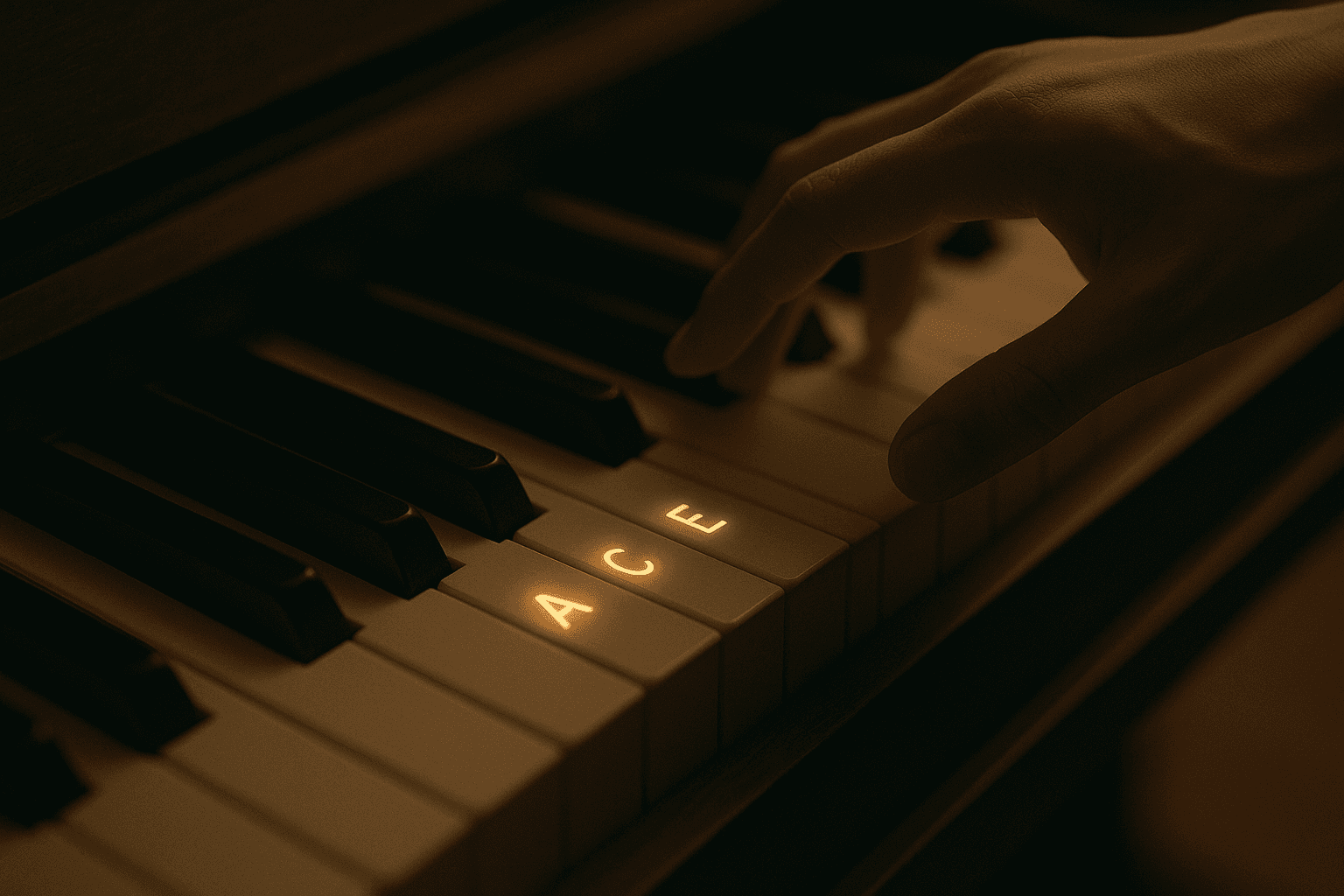
The A minor chord is among the most widely used minor chords piano beginners encounter. Its structure is deceptively simple, yet its expressive power is profound. Composed of triad notes: A, C, E, it blends the root, minor third, and perfect fifth to create a sound that resonates emotionally. This triad can evoke sadness, introspection, or calm reflection, depending on how it is played. In musical notation, this chord is often labeled as Am chord, and mastering it early allows players to understand the role of minor chords in music composition.
Across genres, the A minor piano chord is indispensable. In pop music, it provides a melancholic undertone to hooks and verses. In rock, it grounds rhythmic progressions with depth. Jazz uses the chord’s flexibility to explore inversions and modulations, while classical pieces rely on it to enhance emotional tension or resolution. Below is a table showing the basic triad notes of A minor chord, helping beginners visualize and memorize its structure.
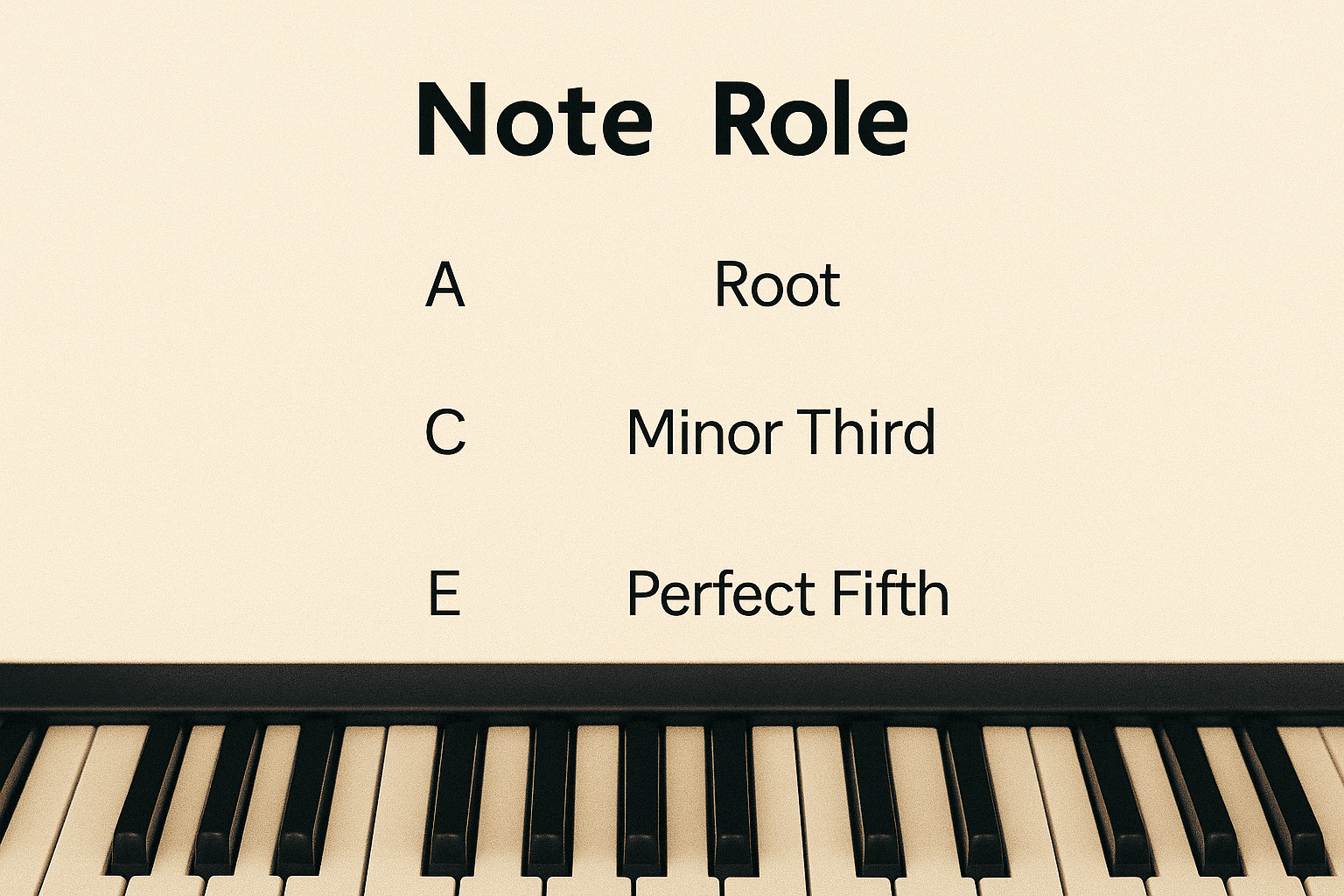
Recognizing the triad chord in different octaves strengthens understanding of piano chord finger placement and prepares beginners for more advanced piano chord practice exercises. The A minor chord also frequently appears in common A minor chord progressions, connecting it naturally to other chords such as F, C, G, Dm, and E.
How to Play the A Minor Chord in Root Position

Playing the A minor chord in root position is the first step to mastering minor chords piano. The root position places A as the lowest note, followed by C and E. For the right hand, use thumb on A, middle finger on C, and pinky on E. For the left hand, reverse this fingering with pinky on A, middle finger on C, and thumb on E. This piano chord finger placement ensures stability and allows beginners to develop dexterity across both hands. To explore structured piano lessons and further guidance, you can visit Art Gharana.
Practicing this step-by-step chord guide encourages strong muscle memory, particularly for beginner piano chords. Starting slowly and pressing all three keys together produces a full, harmonious tone. Diagrams of the keyboard showing the A minor notes help visualize how the root position chord sits within the piano layout. To enhance learning, students should play the chord repeatedly, experimenting with dynamics and tempo. This method also develops the coordination needed to move from root position to first and second inversions, a crucial skill in practicing minor chords.
Inversions of the A Minor Chord
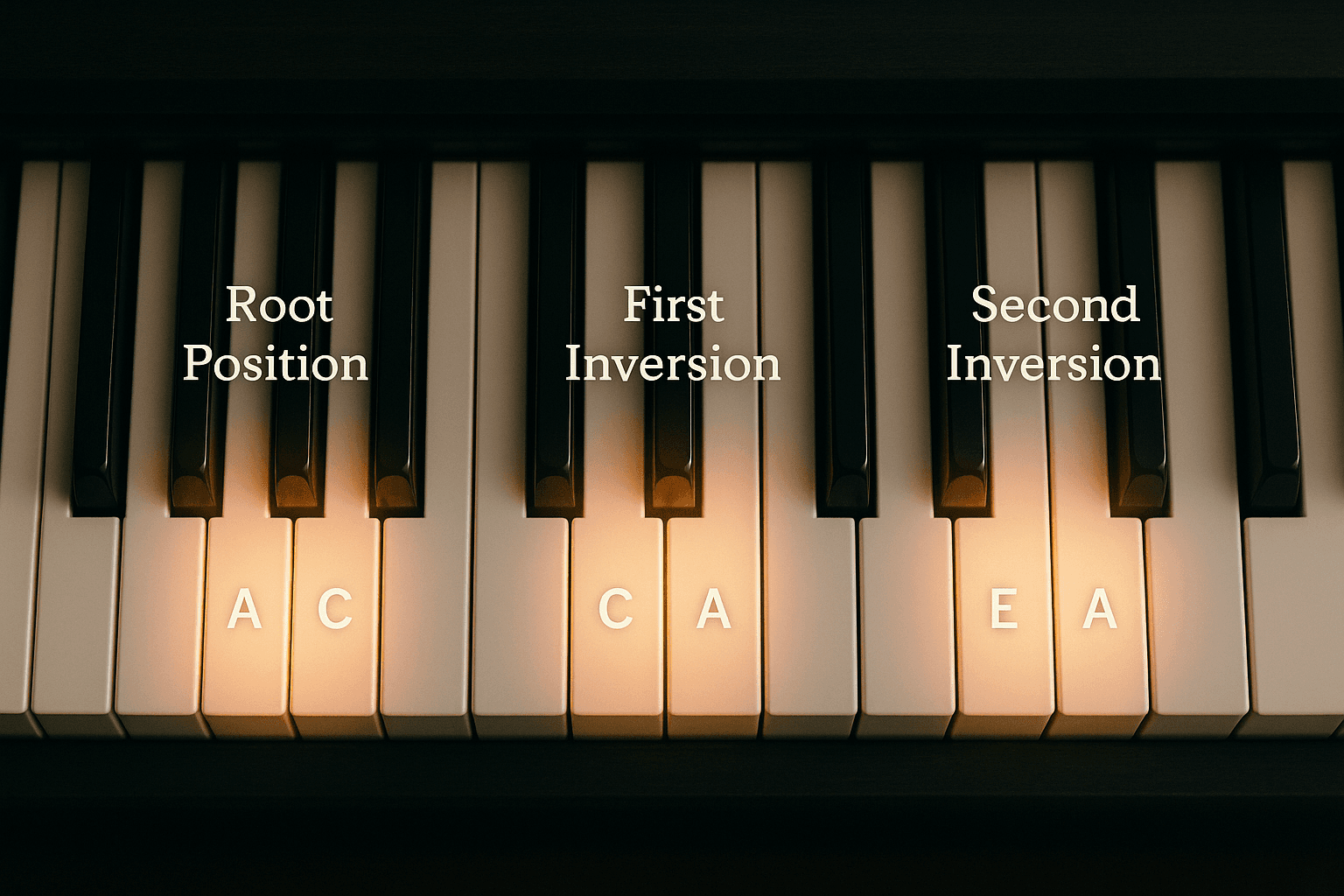
Chord inversions allow the same chord to be played in multiple arrangements, changing the lowest note. These variations are key to achieving smooth chord transitions between common A minor chord progressions. The A minor chord has two main inversions: first inversion and second inversion, both of which provide unique textures. Using inversions is common in Am chord in rock, pop, jazz, classical music, making the music sound more sophisticated and less rigid.
Inversions also improve the flow of chord sequences. Instead of jumping large intervals, a pianist can move between chords with minimal hand movement. This enhances timing, precision, and overall musicality. Understanding how to use chord inversions early equips players to handle more complex songs and arrangements. Learning piano chords online often emphasizes practicing inversions alongside piano chord exercises to solidify this skill.
How to Play A Minor 1st Inversion
- Place C at the bottom, followed by E and A on top.
- Right hand: thumb on C, middle finger on E, pinky on A.
- Left hand: pinky on C, middle finger on E, thumb on A.
- This inversion is ideal for playing songs with A minor that require a softer, flowing transition between chords.
- Practicing the first inversion strengthens familiarity with piano chord finger placement and prepares beginners for more advanced piano chord tutorials.
How to Play A Minor 2nd Inversion
- Begin with E at the bottom, followed by A and C.
- Right hand: thumb on E, middle finger on A, pinky on C.
- Left hand: pinky on E, middle finger on A, thumb on C.
- This inversion is frequently used in piano chord practice exercises for flowing chord progressions and provides a different texture for common A minor chord progressions, enhancing musical versatility.
Common Chord Progressions in the Key of A Minor
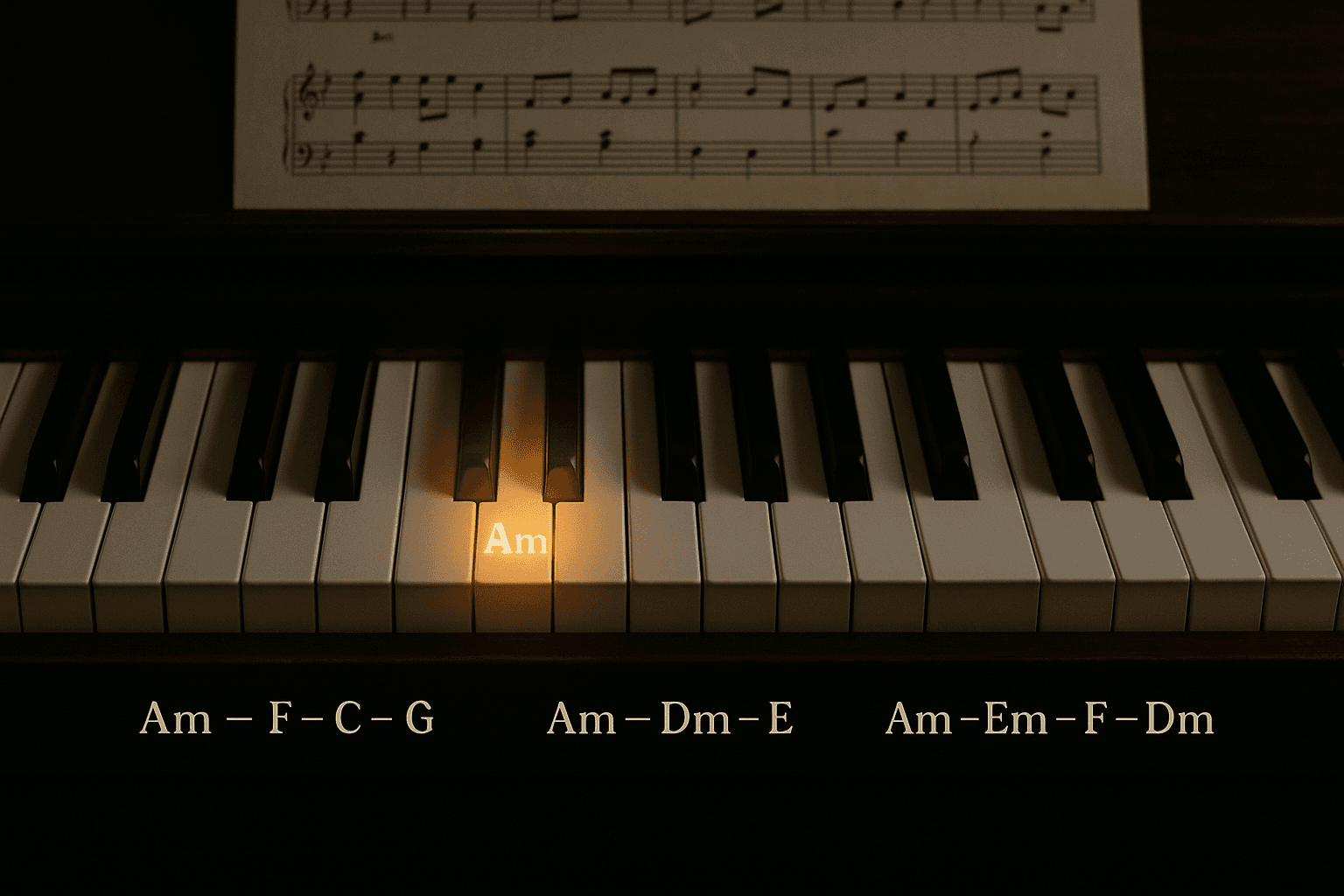
Chord progressions in A minor form the backbone of many songs across genres. Progressions such as Am – F – C – G, Am – Dm – E, and Am – Em – F – Dm appear frequently in Am chord in rock, pop, jazz, classical music. Mastering these sequences allows students to practice minor chords in real musical contexts and understand how chords interact within keys.
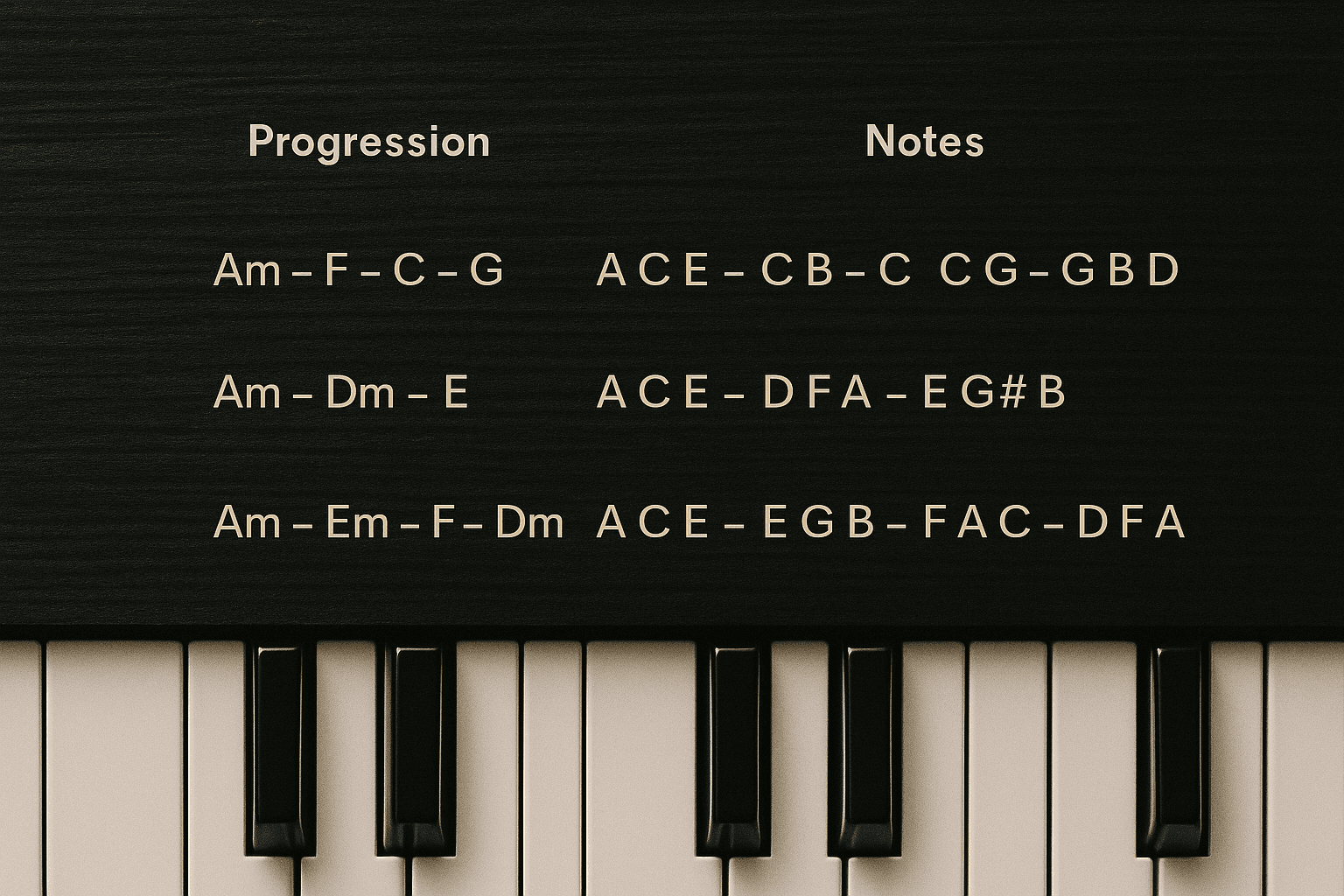
Practicing these step-by-step chord guides reinforces piano chord finger placement, timing, and coordination. By alternating root position chords with first and second inversions, beginners can achieve smooth chord transitions that sound professional and polished.
Popular Songs to Play with the A Minor Chord
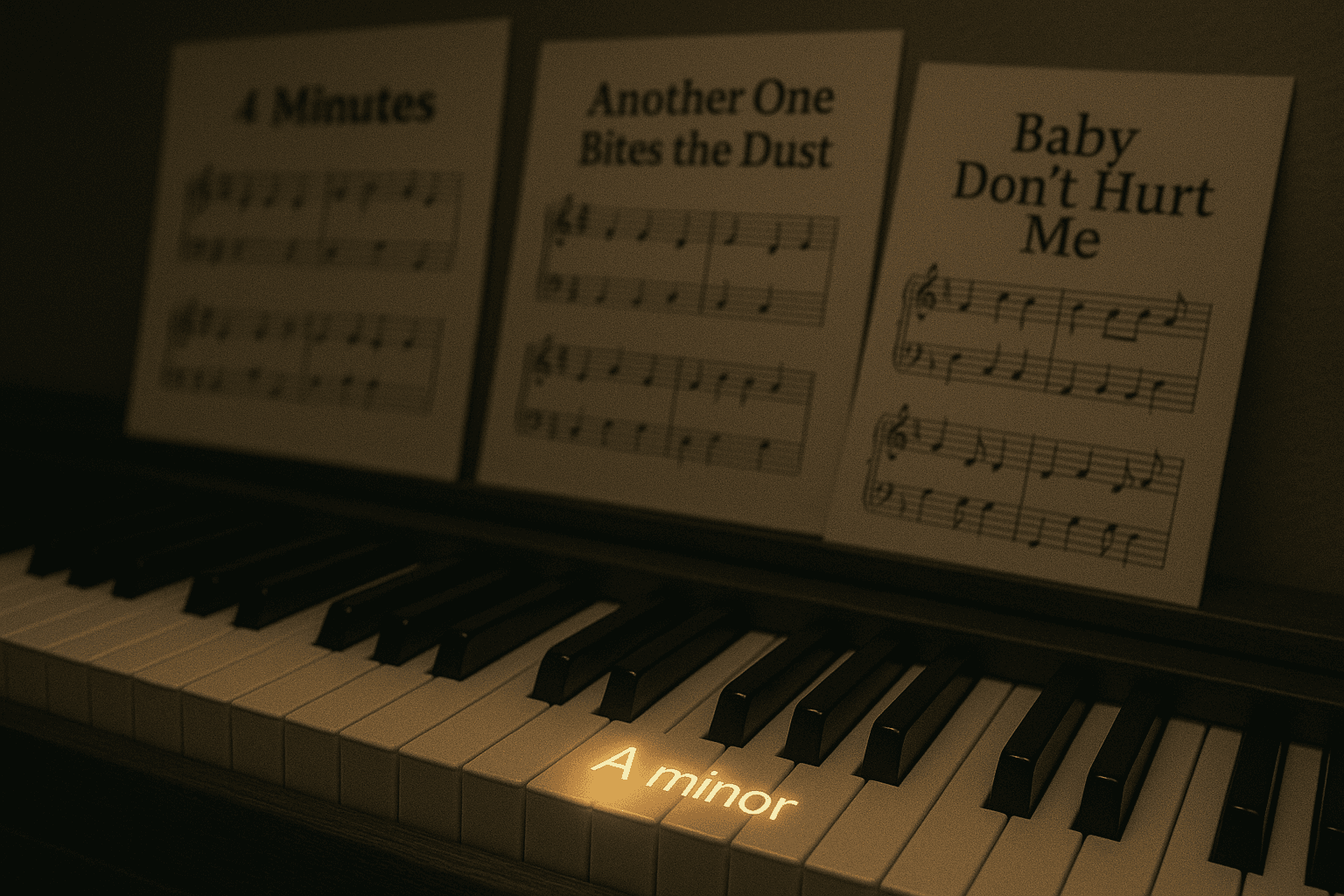
Using popular songs with Am chord makes practice enjoyable and practical. Music by artists like Madonna, Queen, and David Guetta demonstrates how the A minor chord fits in different genres. Learning these songs helps beginners apply piano chord exercises and understand chord qualities (major, minor, etc.) in real contexts. Practicing with songs also improves rhythm, timing, and musical intuition.
Madonna – 4 Minutes
- The Am chord provides the verse’s melancholic undertone, blending with electronic rhythms and pop instrumentation.
- Beginners should start slowly, focusing on right hand fingering and chord timing to capture the emotional tone.
- Repeating the progression with both hands strengthens piano chord finger placement and improves accuracy.
Queen – Another One Bites the Dust
- Here, the A minor chord contributes to the rhythmic foundation.
- Learning left hand fingering while maintaining tempo is critical.
- Practicing this track improves smooth chord transitions and coordination between hands, a skill transferable to many other songs.
David Guetta – Baby Don’t Hurt Me
- This song emphasizes chord inversions in a pop-electronic context.
- Using first and second inversions of Am enhances the song’s flow and keeps transitions fluid.
- Practicing this track serves as an advanced piano chord practice exercise, improving dexterity, timing, and musicality.
Tools to Learn and Generate Chords
Modern pianists benefit from chord generator tools and apps like Flowkey to learn piano chords online. These apps provide visual guides, real-time feedback, and exercises to practice root position chords, inversions, and common A minor chord progressions. Using digital tools accelerates learning and helps beginners master piano chord tutorials effectively.
Practicing with apps reinforces triad notes: A, C, E, piano chord finger placement, and understanding of chord qualities (major, minor, etc.). Gamified exercises, chord recognition tests, and step-by-step tutorials make learning structured and engaging.
Tips and Tricks for Mastering the A Minor Chord
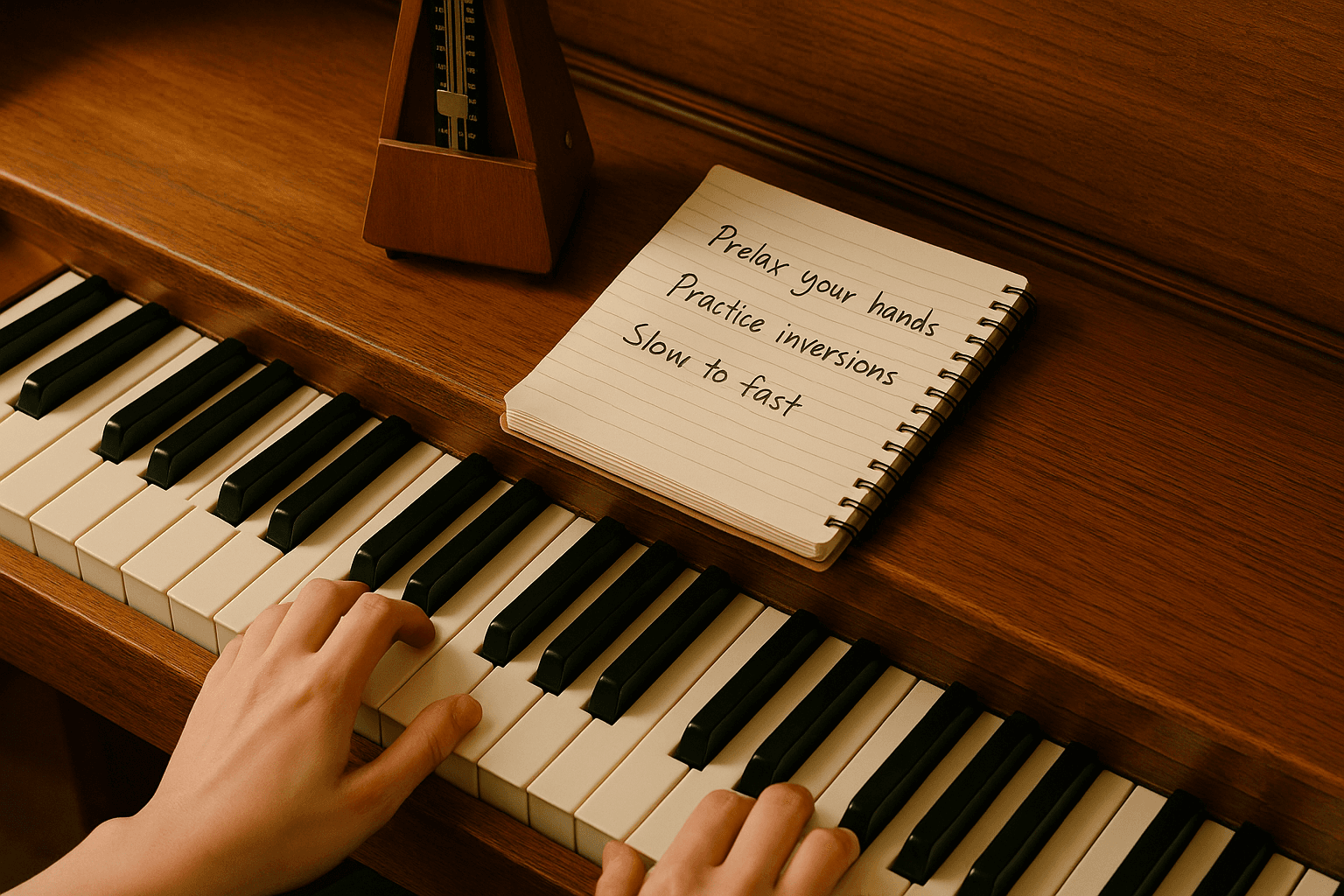
To master the A minor chord on piano, practice slowly and focus on finger placement for chords. Begin with root position chord, then move to first and second inversions. Using piano chord exercises daily strengthens coordination and hand independence. Avoid tension in your hands to prevent fatigue or strain.
Incorporating common A minor chord progressions in practice sessions reinforces musical memory. Try playing along with popular songs with Am chord to make practice enjoyable. Gradually increase speed while maintaining accuracy. This structured approach allows beginners to progress quickly, applying step-by-step chord guide techniques and developing confidence in playing songs with A minor. To receive personalized guidance and structured practice, you can book a trial class.
Frequently Asked Questions (FAQs)
1. What notes are in the A minor chord?
The A minor chord includes the notes A, C, and E. These form the root, minor third, and perfect fifth. Its emotional sound piano chord is ideal for expressive music, from reflective ballads to dramatic compositions.
2. How do I play the A minor chord on piano?
- Right hand fingering: thumb on A, middle finger on C, pinky on E.
- Left hand fingering: pinky on A, middle finger on C, thumb on E.
- Practicing this root position chord builds a strong foundation in beginner piano chords.
3. What are the inversions of the A minor chord?
- First inversion (C – E – A)
- Second inversion (E – A – C)
Using inversions improves smooth chord transitions and is common in Am chord in rock, pop, jazz, classical music.
4. Which songs can I play using the A minor chord?
- Madonna’s 4 Minutes
- Queen’s Another One Bites the Dust
- David Guetta’s Baby Don’t Hurt Me
These tracks help beginners practice playing songs with A minor and piano chord exercises.
5. How can I practice A minor chord smoothly?
- Practice slowly, focusing on finger placement for chords.
- Transition between Am, C, F, and G gradually.
- Use apps like Flowkey or chord generator tools to reinforce learning and improve accuracy.
6. Is A minor a sad or happy chord?
The A minor chord produces a melancholic, reflective sound. Its emotional sound piano chord is widely used in music requiring introspection or drama.
7. Can beginners play the A minor chord easily?
Yes. The A minor piano chord uses three white keys, with no black keys involved, making it one of the simplest yet most versatile beginner piano chords to learn.