ChatGPT
 Google AI
 Grok
Grok Claude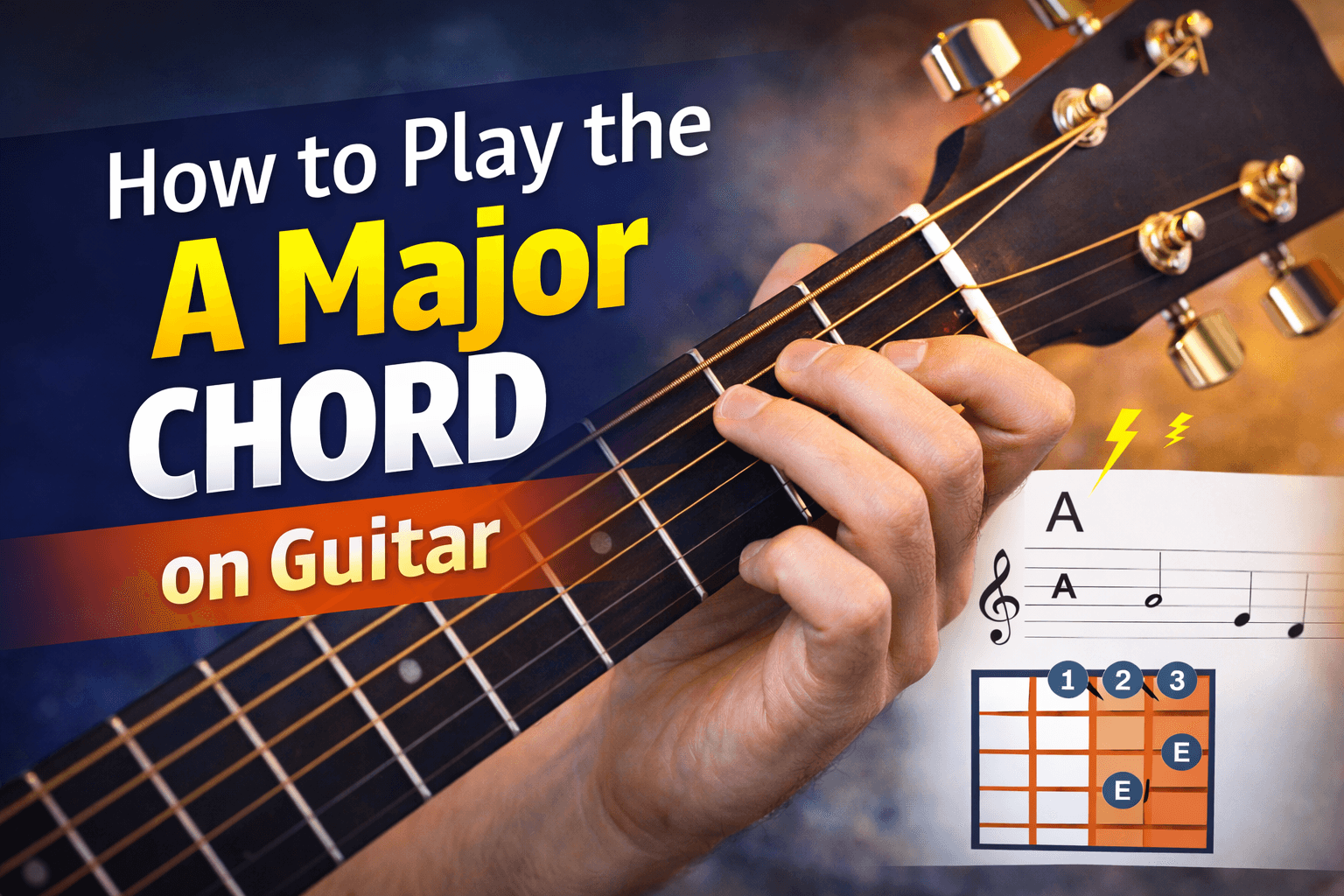
What Is the A Major Guitar Chord?
 The A major chord on guitar is one of the most commonly used open-position chords and a foundational shape for rhythm guitar. It consists of three notes: A, C#, and E, which together form a bright and stable major triad. The A major chord is present in numerous genres such as pop, rock, folk, worship, country, and classical music, making it essential for beginners and experienced guitarists alike.
Learning the A major chord diagram is a critical step for players who want to build smooth chord transitions, strong rhythmic foundations, and a deeper understanding of how chords function within keys. Through open shapes, barre chords, and movable forms, the A major chord teaches guitarists how to visualize major triads across the fretboard and apply them in practical situations like accompaniment, improvisation, and composition.
What Makes the A Major Chord Special
 The A major chord has a unique tonal balance because of its structure. Built from the 1–3–5 formula (A–C#–E), it produces a clear, uplifting, and harmonically rich sound. This chord often serves as the tonic or dominant in major keys, giving music a sense of strength, brightness, and resolution.
Across various styles of music, the A major chord appears in thousands of iconic progressions. Songs in keys such as A major, D major, and E major use the A chord extensively, making it a chord that guitarists must know deeply. Its versatility also comes from the multiple ways to play it: open position, one-finger barre variations, movable CAGED forms, and higher voicings for expressive rhythm playing.
Understanding the A major chord sound helps players craft more intentional chord progressions, improve improvisation, and build confidence in switching between other essential major and minor chords.
A Major Chord Notes and Formula
 The A major chord consists of:
- A (Root)
- C# (Major Third)
- E (Perfect Fifth)
- D string 2nd fret
- G string 2nd fret
- B string 2nd fret
- Open A string
- Avoid striking the low E string for clarity
- I–IV–V (A–D–E)
- vi–IV–I–V (F#m–D–A–E)
- I–vi–IV–V (A–F#m–D–E)
- I–V–vi–IV (A–E–F#m–D)
- Sweet Home Alabama – Lynyrd Skynyrd
- Knockin’ on Heaven’s Door – Bob Dylan
- Wonderful Tonight – Eric Clapton
- Yellow – Coldplay
- Wish You Were Here – Pink Floyd
- Amaj7
- Asus2
- Asus4
- A6
- Aadd9
- Move the A open shape up two frets → B major
- Move the A-shape barre to the 3rd fret → C major
- Move the A-shape to the 5th fret → D major
- Muted high E string
- Buzzing from crowded fingers
- Over-pressing, causing fatigue
- Accidentally striking the low E string
These notes form the fundamental A major triad. The chord follows the standard major chord formula of 1–3–5, derived from the A major scale.
A Major Chord Tone Breakdown
Note Interval A Root C# Major Third E Perfect Fifth
Understanding this triad structure is essential for building chord shapes across the neck, identifying chord tones during improvisation, and creating new voicings. By learning how these notes appear on each string, players can unlock triads on guitar, enhance fretboard knowledge, and apply chord tone mapping to both rhythm and lead playing.
How the Major Chord Is Built
The A major chord is constructed using stacked thirds from the A major scale (A, B, C#, D, E, F#, G#). Selecting the 1st, 3rd, and 5th notes from this scale forms the A major triad: A–C#–E. This interval pattern creates the bright, strong, and stable sound associated with major chords.
Understanding major chord intervals and the root–third–fifth formula allows guitarists to form the A major structure anywhere on the guitar. This knowledge also supports the creation of A major chord variations, inversions, and extended voicings used in modern music. Mastering these concepts strengthens both rhythm playing and melodic phrasing.
A Major Chord on Guitar
The A major chord can be played in several shapes and positions, including the traditional open position, barre forms, and movable shapes across the fretboard. Each position produces a unique tonal voice, giving guitarists flexibility in arrangement, performance, and songwriting.
Using chord tones across strings helps players navigate the fretboard and understand how different voicings connect. The A major chord becomes a building block for advanced chord construction, triads, and inversions.
The Basic Open A Major Shape
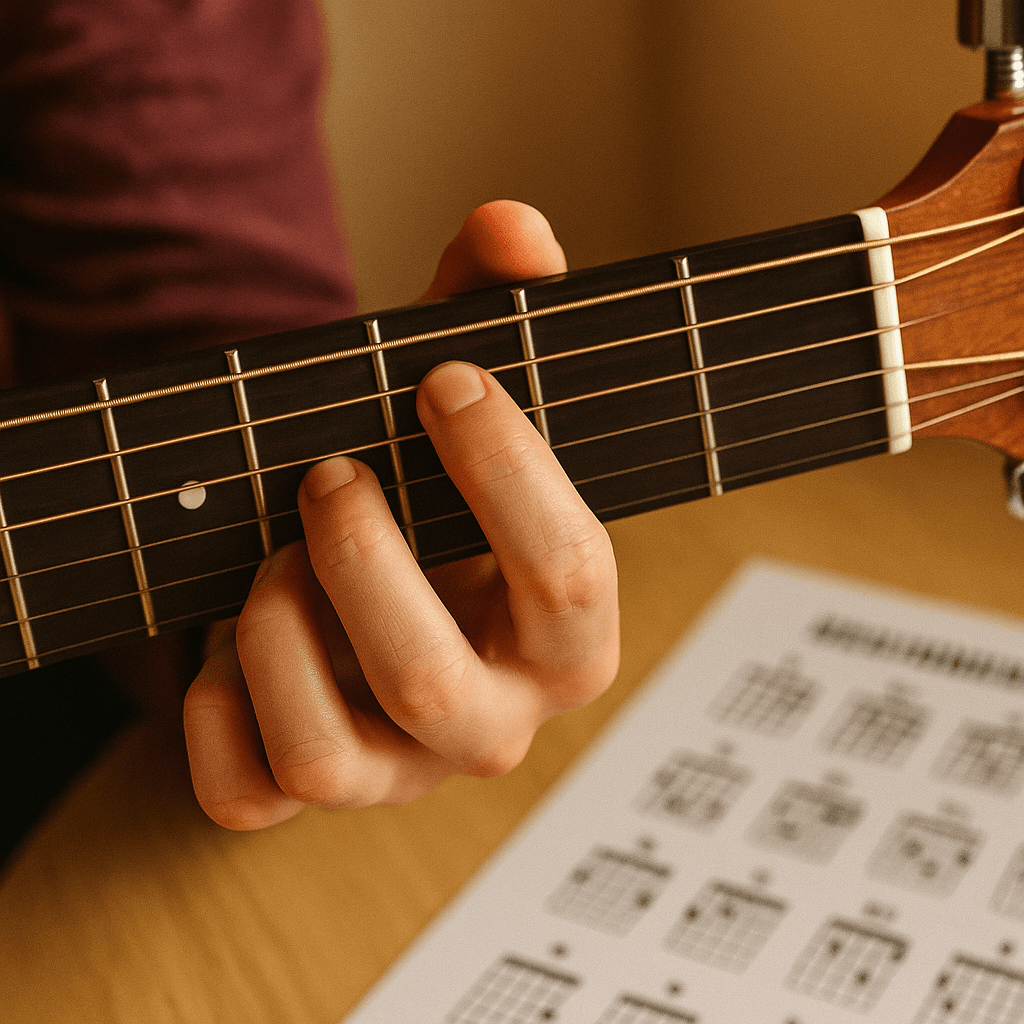
The most commonly used form of A major is the open chord played near the nut. It produces a full, warm, resonant tone and is generally easy to learn, although some beginners may struggle with fitting three fingers on the second fret.
Typical fingering includes:
Players sometimes face challenges such as muted notes or crowding. Practicing the A chord fingering ensures clean execution and smooth transitions.
Keys Where You’ll Find the A Major Chord
 The A major chord appears naturally in several keys. Understanding which keys contain the A major chord is essential for songwriting, improvisation, and analyzing chord progressions.
Keys Containing A Major Key I ii iii IV V vi vii°
A Major A Bm C#m D E F#m G#dim D Major D Em F#m G A Bm C#dim E Major E F#m G#m A B C#m D#dim F# Minor F#m G#dim A Bm C#m D E B Minor Bm C#dim D Em F#m G A
Learning these relationships helps players identify chords in A major and incorporate them into common chord progressions. This is a major step toward building musical understanding and improvising confidently across keys.
Common Chord Progressions With A Major
 A major is widely used in classic and modern progressions such as:
These progressions appear in pop, rock, folk, worship, and country music. Learning these harmonies strengthens rhythm playing and helps guitarists understand how A major functions within different musical styles.
Scales to Play Over an A Major Chord
 To improvise over the A major chord, players can use several scales that contain the chord tones A, C#, and E. Targeting these tones during solos helps create melodic phrasing that blends with the underlying harmony.
Scales Compatible With A Major
Scale Notes Mood
A Major Scale A B C# D E F# G# Bright, uplifting F# Minor Scale F# G# A B C# D E Emotional, warm A Major Pentatonic A B C# E F# Clean, simple A Lydian A B C# D# E F# G# Airy, spacious A Mixolydian A B C# D E F# G Bluesy, relaxed
Understanding scales that fit A major provides a foundation for improvisation, melodic construction, and lead guitar phrasing.
Popular Songs That Use the A Major Chord
The A major chord appears in countless iconic songs across genres. Some examples include:
These songs use A major in different voicings and progressions, giving players real-world examples of how the chord fits into musical arrangements.
How to Play the A Major Chord: Guitar Shapes & Positions
 Using the CAGED system, guitarists can play the A major chord across five main positions. Each shape connects across the neck, improving fretboard knowledge and fluency.
A Major Chord Positions Position Root Note Shape Type
1 Open Open Open Shape 2 5th fret E string Barre E-shape 3 12th fret A string Barre A-shape 4 14th fret E string Movable High voicing 5 17th fret A string Movable Inversion
Learning A major chord positions allows players to approach rhythm guitar with variety, dynamics, and expression.
Alternate Voicings and Extensions
 To add flavor and color to the A major chord, guitarists can explore voicings such as:
These voicings provide different textures, making them useful for songwriting, arranging, and creating expressive harmonic variations. They also support more advanced improvisation and chord melody techniques.
Play This Chord With Other Roots
The A major chord shape can be transposed across the fretboard to play other major chords. For example:
Using the CAGED method, players learn to apply the A major structure to all roots, enhancing chord vocabulary and key-changing ability.
How to Build the A Major Chord on Guitar
Building the A major chord involves locating the three chord tones (A, C#, E) across the fretboard. Using chord tone visualization and tone mapping helps players identify every instance of these notes, enabling new chord shapes, triads, and inversions.
Mastering these skills deepens understanding of guitar chord theory and supports advanced techniques like arpeggios, melodic embellishments, and creative harmonic writing.
Tips to Master the A Major Chord
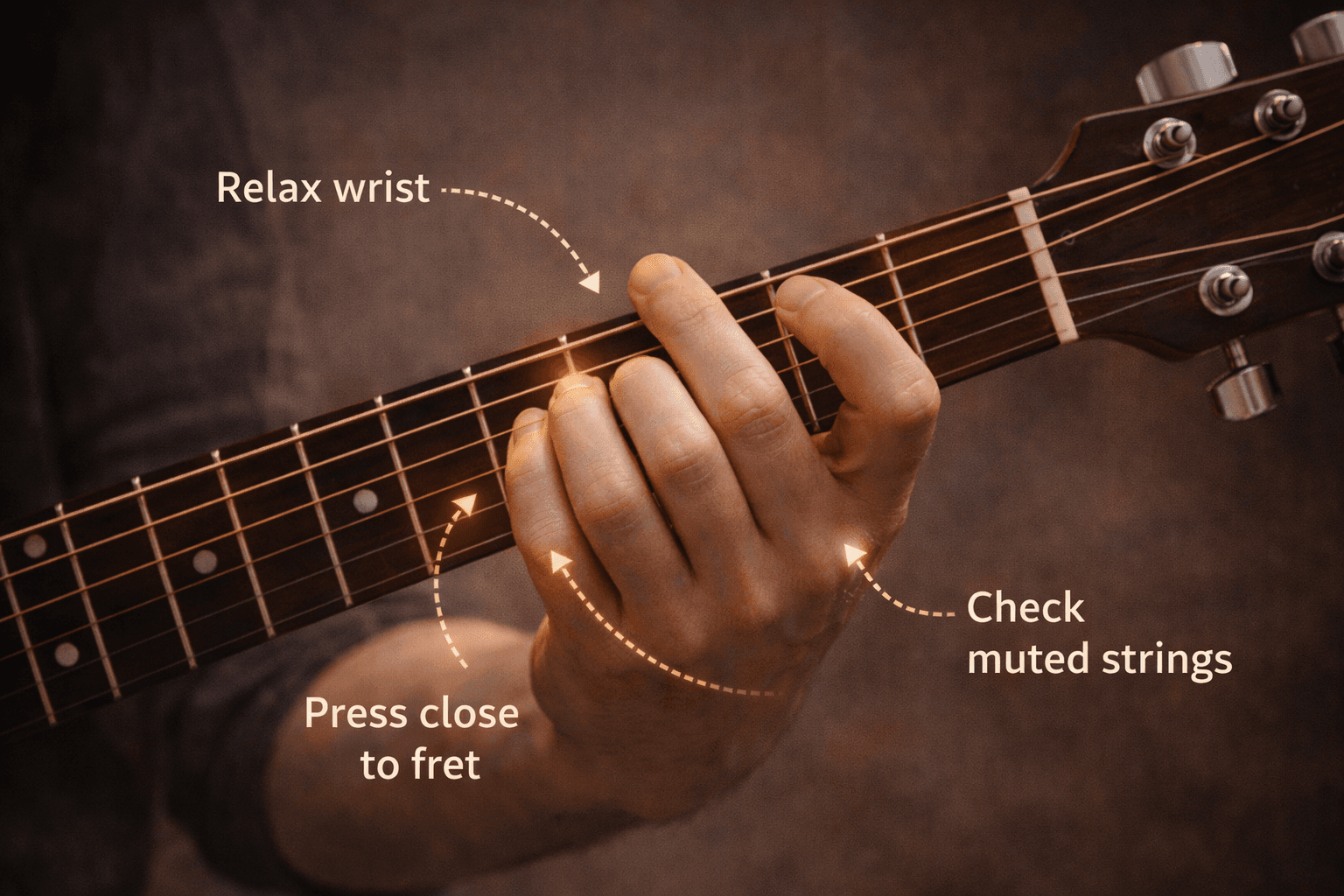
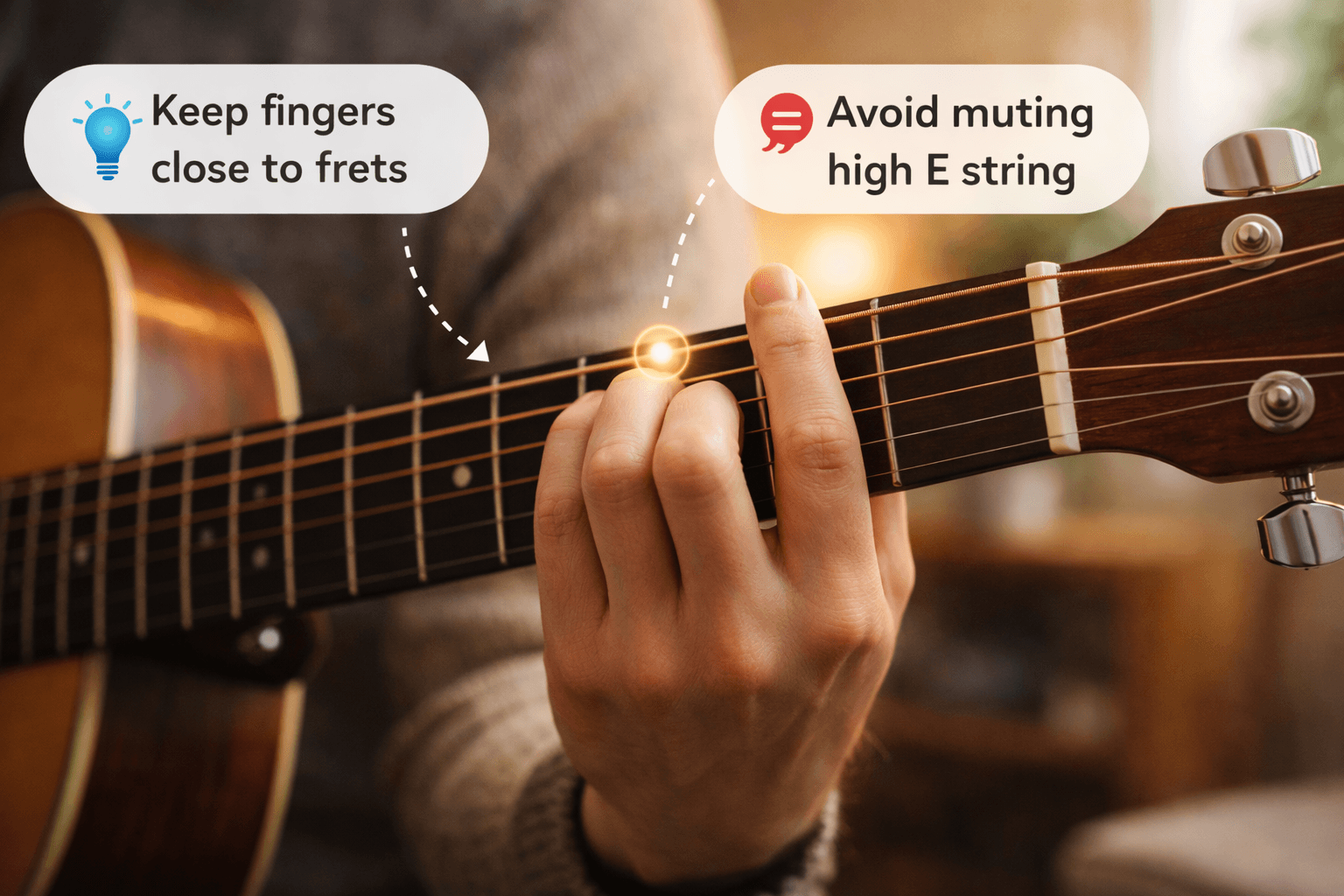 Playing A major cleanly requires relaxed wrist posture, curved fingers, and proper thumb placement behind the neck. Practicing transitions such as A–D–E and A–F#m–D–E improves rhythm flow and helps build muscle memory.
A Major Practice Routine
Exercise Duration Goal
A chord finger placement 5 mins Finger accuracy Transition A–D 10 mins Smooth chord changes Progression A–F#m–D–E 10 mins Timing and rhythm flow
Balanced practice ensures that players overcome common challenges and achieve clean, resonant playing.
Troubleshooting Common Problems
Players may encounter issues such as:
Adjusting finger angles, relaxing the hand, and practicing with slow, clean strokes resolves these issues. Small adjustments lead to noticeable improvements in clarity and tone.
Advanced Applications of the A Major Chord
 In lead guitar, using A major arpeggios and chord inversions provides melodic richness. In rhythm playing, applying A-based voicings and movable shapes offers dynamic variety. Understanding scale-to-chord relationships allows players to improvise seamlessly over progressions that include A major.
A major becomes a gateway to advanced harmony as players integrate triads, extensions, and modal scales into their compositions and solos.
FAQ About the A Major Guitar Chord
1. Is A major easy to play on guitar?
Yes, A major is considered a beginner-friendly chord. Although placing three fingers on the same fret can feel tight at first, consistent practice makes it one of the most comfortable chords.
2. What are the notes in the A major chord?
The A major triad consists of A (root), C# (major third), and E (perfect fifth).
3. Which chords go well with A major?
D major, E major, F# minor, and B minor pair naturally with A major in popular progressions like A–D–E and A–F#m–D–E.
4. How do I play A major without crowding my fingers?
You can use a two-finger variation, a mini-barre on the second fret, or higher-position barre shapes to avoid finger congestion.
5. What is the difference between A major and A minor?
A major uses the notes A–C#–E, producing a bright sound. A minor uses A–C–E, giving it a sadder, darker tone due to the lowered third.