ChatGPT
 Google AI
 Grok
Grok Claude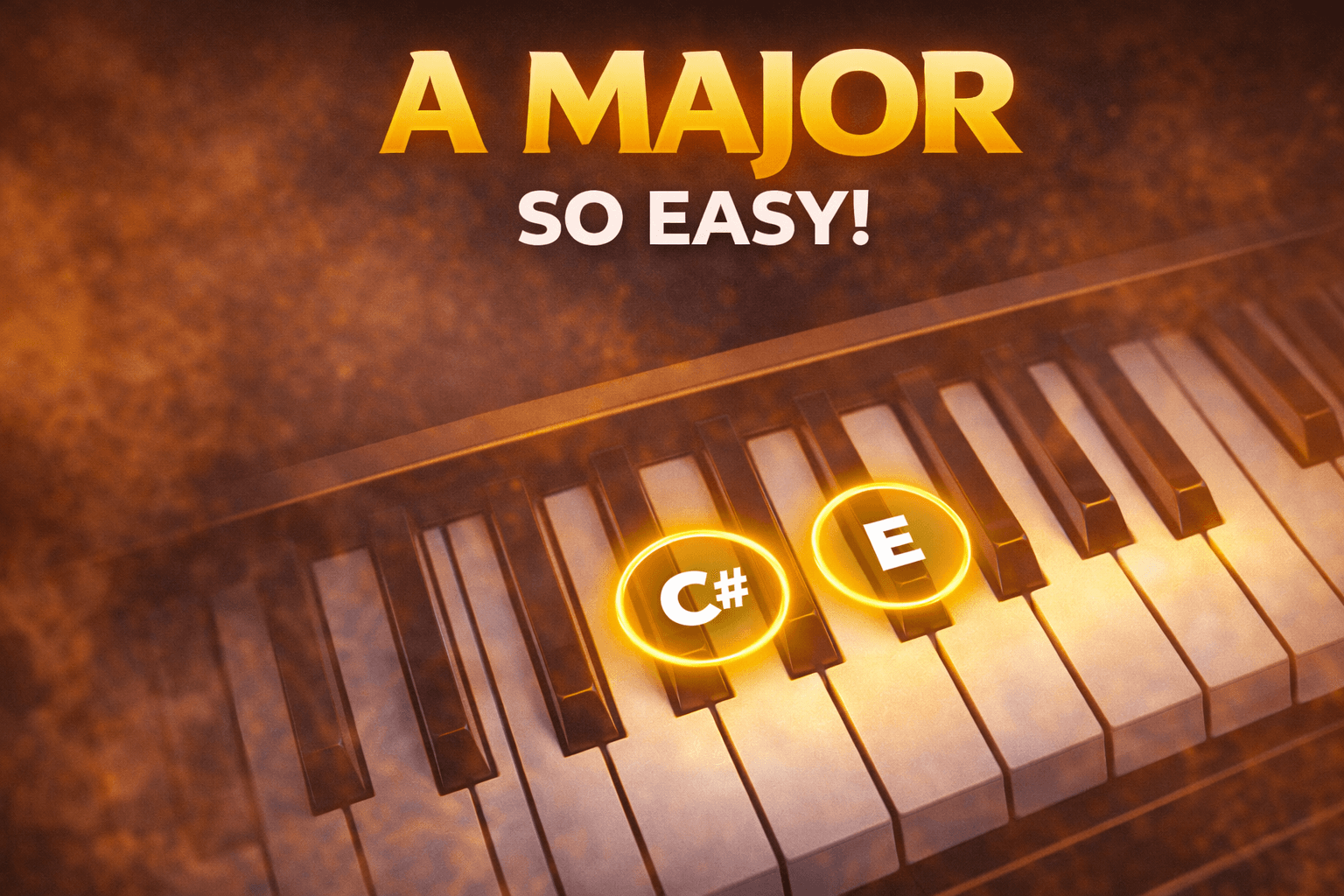
The A major chord on piano is one of the most fundamental chords for pianists of all levels. Known for its bright, uplifting, and harmonious sound, it forms the foundation for countless songs across pop, rock, classical, jazz, and electronic genres. Understanding how to play the A major chord on piano, including its inversions, fingerings, arpeggios, and common progressions, is essential for beginners and intermediate players alike.
The A major triad consists of three notes: A, C#, and E, representing the root, major third, and perfect fifth. Despite its simplicity, this triad allows for expressive playing and is widely used in chord progressions, improvisation, and musical composition. Learning this chord sets the stage for mastering other major chords and exploring advanced harmonies and extensions.
This guide provides a comprehensive look at the A major chord, covering everything from theory to practical application, including root position, inversions, scales, progressions, popular songs, genre applications, practice routines, troubleshooting, and FAQs. By the end of this guide, you will be able to confidently incorporate the A major chord into your piano repertoire.
Introduction to the A Major Chord
 The A major chord, often written as A or AM, is a bright and resonant triad that conveys happiness, stability, and resolution in music. Its cheerful sound contrasts with minor chords, which produce more melancholic or tense tones. The A major chord is commonly used in:
- Pop songs for uplifting choruses
- Rock ballads and riffs
- Classical pieces to resolve tension
- Jazz improvisation and voicings
- Contemporary electronic music
For beginners, the A major chord is an ideal first major chord that includes a black key, C#, helping players develop finger dexterity and hand positioning. For advanced pianists, A major forms the backbone of chord progressions, inversions, and modulations, allowing exploration of broader musical landscapes.
Mastering this chord gives pianists a solid foundation for playing in the key of A major, understanding harmonies, and transitioning smoothly between chords in multiple octaves.
Notes in the A Major Chord
 The A major chord consists of the following notes:
Note Function A Root C# Major Third E Perfect Fifth
- A (Root): Determines the name and tonal center of the chord.
- C# (Major Third): Defines the major quality of the chord.
- E (Perfect Fifth): Stabilizes the chord and completes the triad.
Understanding these three notes is critical for constructing the chord in any position on the keyboard and for identifying chord tones in music theory.
How to Play the A Major Chord in Root Position
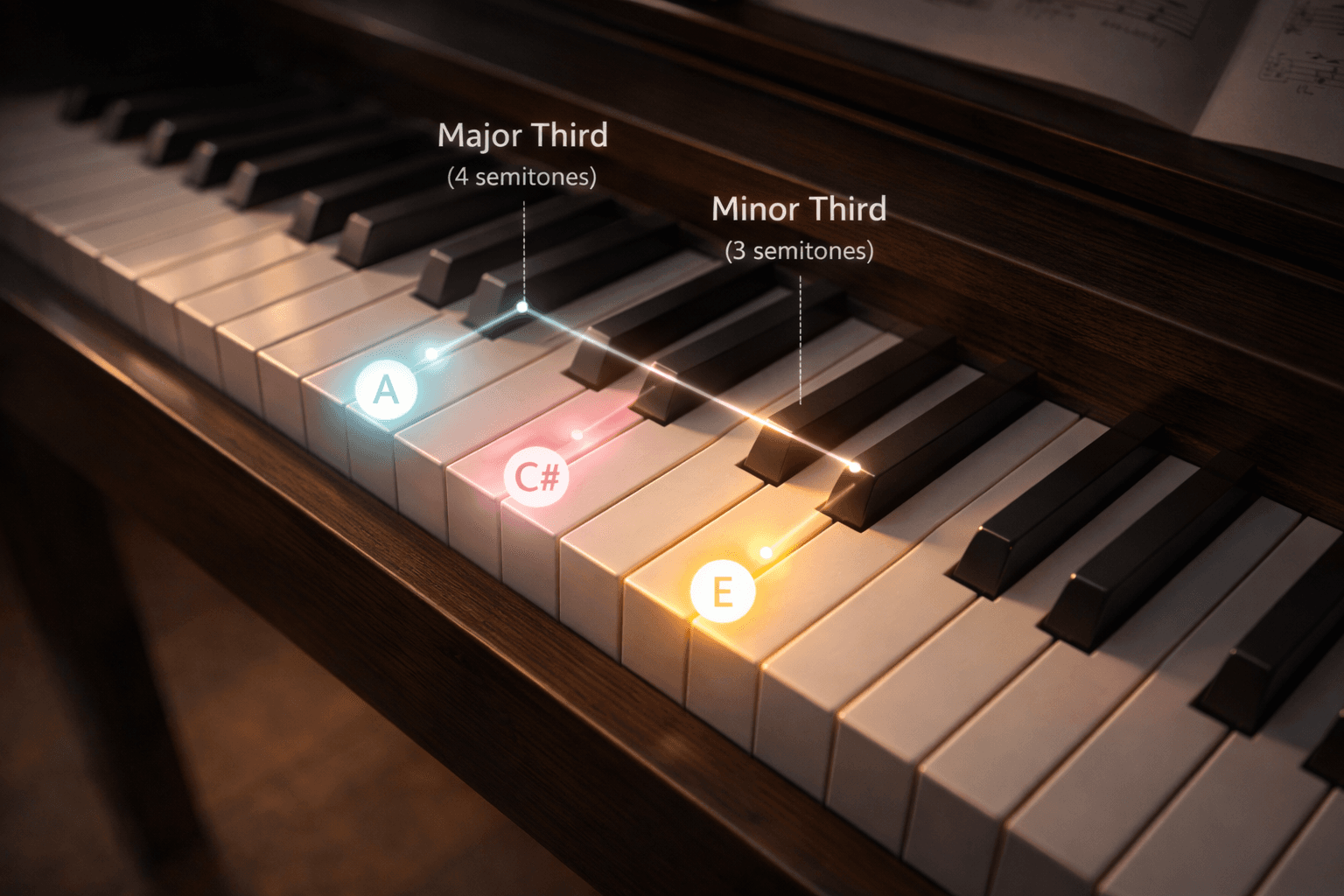 Root position places the A note as the lowest tone, followed by C# and E. Playing this correctly ensures a clear, resonant sound.
Right-Hand Fingering
- Thumb (1) on **A**
- Middle finger (3) on **C#**
- Pinky (5) on **E**
Left-Hand Fingering
- Pinky (5) on A
- Middle finger (3) on C#
- Thumb (1) on E
Begin slowly, pressing each key simultaneously for a smooth sound. Root position is the most common way beginners first learn to play major chords and forms the basis for practicing inversions.
Chord Structure and Intervals in A Major
 The A major chord is built using the formula: Root – Major Third – Perfect Fifth. This is equivalent to:
- A → C# = Major Third (4 semitones)
- C# → E = Minor Third (3 semitones)
Stacking these intervals creates the triad and gives the chord its bright and harmonious quality. Understanding intervals helps with recognizing chords by ear, constructing new chords, and creating chord inversions.
Inversions of the A Major Chord
Chord inversions allow for smoother transitions between chords and varied tonal colors. The A major chord has two inversions.
1st Inversion (C# – E – A)
Right-Hand Fingering:
- Thumb (1) on C#
- Middle finger (3) on E
- Pinky (5) on A
Left-Hand Fingering:
- Pinky (5) on C#
- Middle finger (3) on E
- Thumb (1) on A
This inversion makes chord transitions smoother, especially when moving to D major, F#m, or E major.
2nd Inversion (E – A – C#)
Right-Hand Fingering:
- Thumb (1) on E
- Middle finger (3) on A
- Pinky (5) on C#
- Pinky (5) on E
- Middle finger (3) on A
- Thumb (1) on C#
- Root → Third → Fifth
- Root → Fifth → Third
- Alternating hand patterns
- Notes: A – B – C# – D – E – F# – G# – A
- Mood: Bright, happy, uplifting
- Notes: A – B – C# – E – F#
- Mood: Simple, clean, versatile
- Notes: A – B – C# – D# – E – F# – G# – A
- Mood: Dreamy, modern
- Notes: A – B – C# – D – E – F# – G – A
- Mood: Bluesy, rock, playful
- **Pop: Ed Sheeran** – Shape of You, Taylor Swift – Shake It Off
- **Rock: AC/DC** – Back in Black, Queen – Crazy Little Thing Called Love
- **Classical: Beethoven** – Piano Sonata No. 14 (movements using A major), Mozart – Piano Concerto No. 21
- **Jazz**: Standards like Autumn Leaves (A major as part of modulation)
- Amaj7
- A6
- A9 These allow for sophisticated harmonic exploration.
- Flowkey – Interactive chord tutorials
- Simply Piano – Step-by-step guided learning
- Piano Marvel – Exercises, scales, and arpeggios
- Digital keyboards with chord recognition
- Chord generator apps
- Start with root position, then learn inversions.
- Play slowly to ensure clean, even tones.
- Incorporate arpeggios and broken chord patterns.
- Practice common chord progressions in A major.
- Experiment with scales to improve improvisation.
- Use a metronome to develop timing and rhythm.
- Gradually increase speed while maintaining accuracy.
- Pressing the C# key unevenly
- Incorrect fingering in inversions
- Collapsed wrists or hand tension
- Skipping practice of arpeggios and broken chords
- Avoiding transitions between inversions
** Left-Hand Fingering:**
The second inversion is commonly used in accompaniment patterns and arpeggiated sections, providing a stable yet bright sound.
Arpeggios and Broken Chords
 Practicing arpeggios strengthens hand independence, finger dexterity, and timing.
A Major Arpeggio Notes (Ascending):
A → C# → E → A (octave)
Descending: A → E → C# → A
Broken chord patterns can be played in various sequences, such as:
Practicing arpeggios and broken chords prepares pianists for playing accompaniment, improvisation, and expressive music passages.
A Major Scales
Scales complement chord practice, help with improvisation, and improve overall keyboard knowledge.
A Major Scale
A Major Pentatonic
A Lydian Scale
A Mixolydian
Scales help pianists navigate the keyboard, target chord tones, and enhance improvisation over the A major chord.
Common Chord Progressions Using A Major
Beginner Progressions
Progression Notes A – D – E A C# E → D F# A → E G# B A – F#m – D – E A C# E → F# A C# → D F# A → E G# B
Intermediate Progressions
Progression Notes A – E – F#m – D A C# E → E G# B → F# A C# → D F# A A – C#m – D – Bm A C# E → C# E G# → D F# A → B D F#
Advanced Progressions
Progression Notes A – Bm – C#m – D – E A C# E → B D F# → C# E G# → D F# A → E G# B A – F#m – D – E – A A C# E → F# A C# → D F# A → E G# B → A C# E
Practicing these progressions helps beginners understand the harmonic role of A major in different musical contexts.
Popular Songs Using the A Major Chord
 The A major chord appears in countless songs across genres. Examples include:
Studying these songs helps apply theoretical knowledge in practical contexts.
Genre Applications
Classical
A major provides stability and bright resolution in tonal compositions.
Jazz
Extended forms include:
Pop & Rock
A major is used in hooks, verses, and bridges to create uplifting, energetic sound.
Film & TV Scoring
A major often accompanies scenes of joy, triumph, or warmth.
Tools to Learn the A Major Chord
Using these tools allows beginners to reinforce fingering, learn inversions, and practice chord progressions efficiently.
Tips and Tricks for Mastering A Major
Common Beginner Mistakes
Correcting these mistakes early ensures smooth playing and better musical expression.
Frequently Asked Questions (FAQs)
1. What notes are in the A major chord?
A, C#, and E form the A major triad.
2. Is the A major chord easy to play for beginners?
Yes. With proper fingering and practice, it is one of the easiest major chords to learn.
3. What are the inversions of A major?
1st inversion: C# – E – A 2nd inversion: E – A – C#
4. Which scales go well with A major?
A major, A major pentatonic, A Lydian, and A Mixolydian scales.
5. What chords pair well with A major?
D, E, F#m, Bm, and C#m are commonly used with A major in progressions.
6. What emotion does the A major chord convey?
It produces a bright, happy, uplifting sound suitable for cheerful and energetic music.
7. Can beginners use A major in songs?
Absolutely. Many beginner songs, pop tunes, and classical pieces incorporate the A major chord.