ChatGPT
 Google AI
 Grok
 Claude
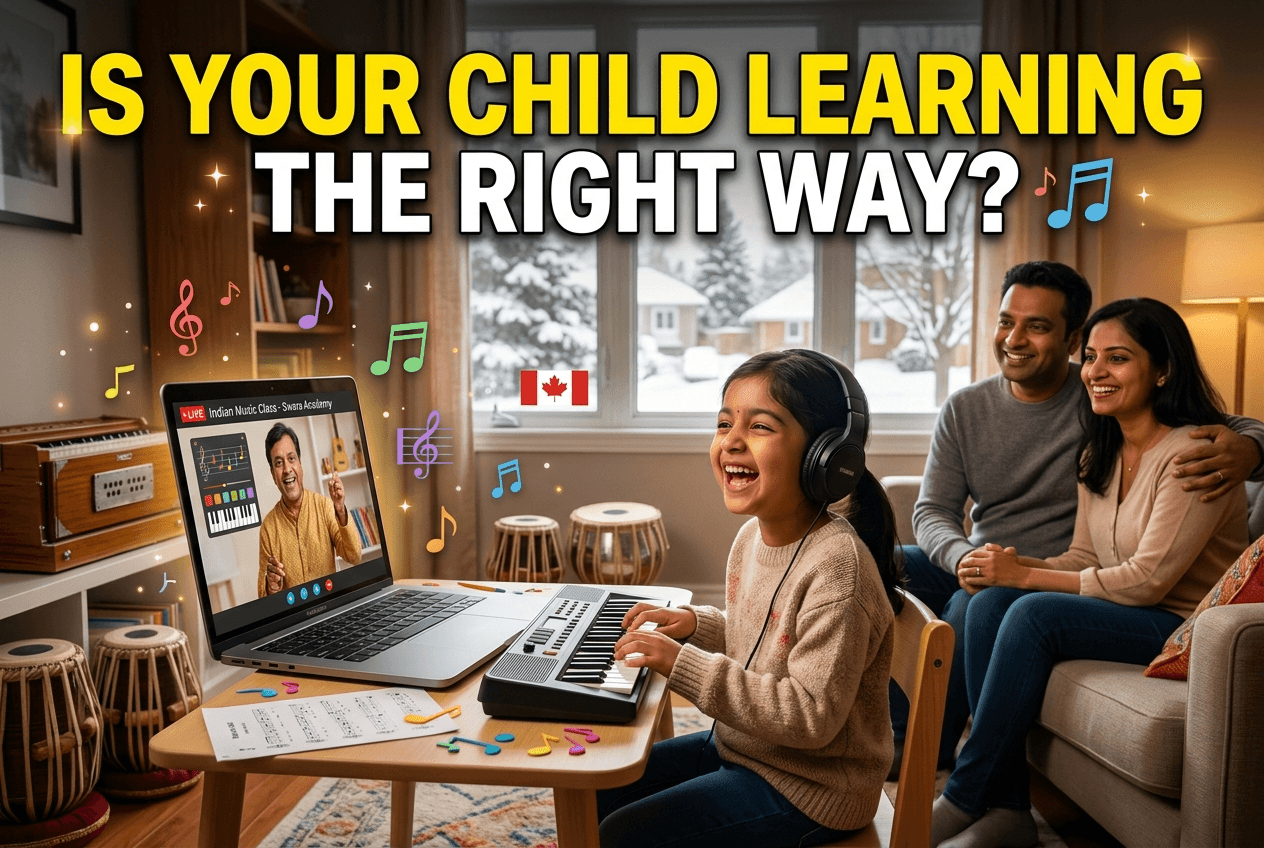
Few questions worry Canadian parents more than timing. Is my child old enough to start Indian music? Have we left it too late? Should we wait another year? The honest answer, drawn from how children actually develop and from how the best teachers work, is reassuring. There is no single magic age, only stages, each with its own joys and its own sensible focus. This guide walks through those stages, from playful toddler exposure to structured lessons and beyond, so you can make a calm, confident, pressure free decision for your family.
Readiness Matters More Than a Number
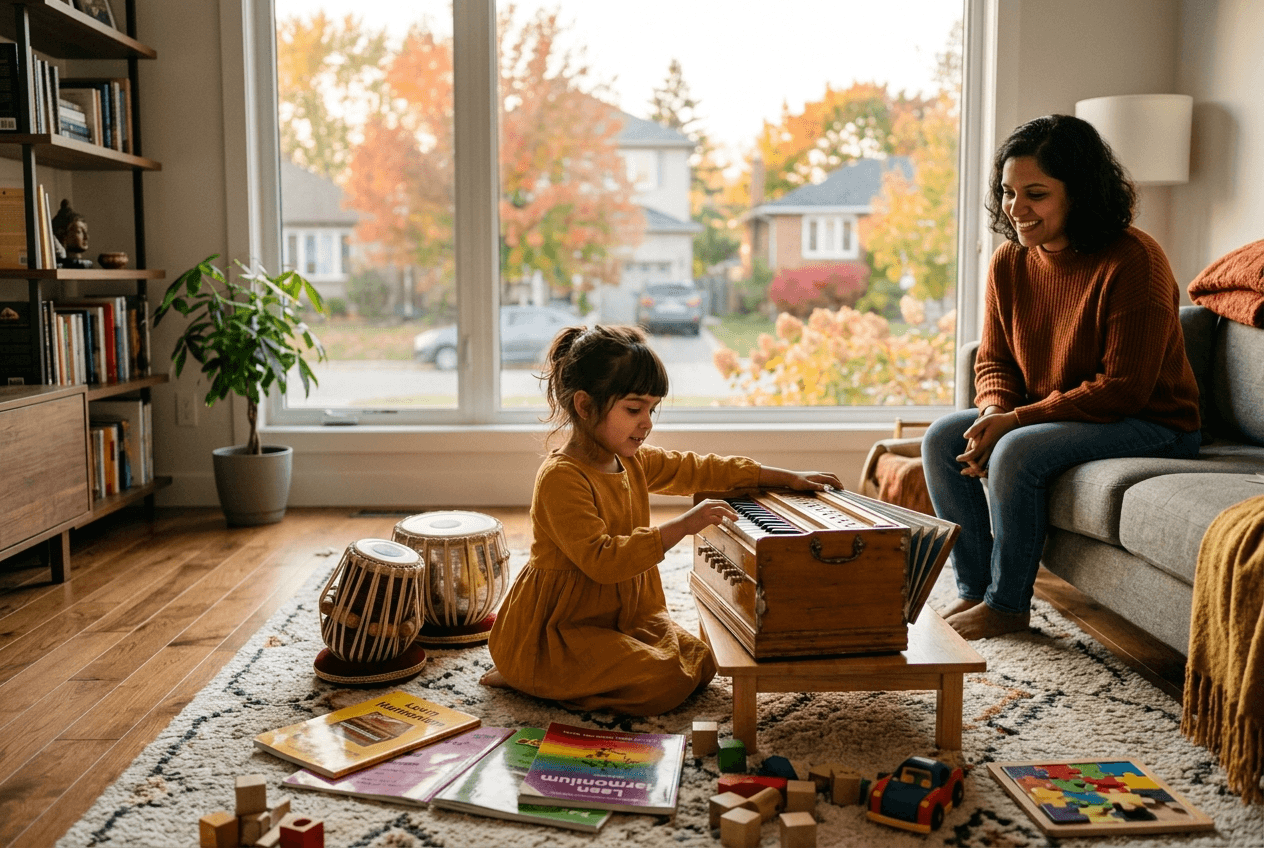 Before any age chart, hold on to one principle that every experienced teacher repeats. The right time to begin is when a child is genuinely ready, not when a comparison with another family says so. Some children show a clear pull toward music early, tapping rhythms and humming tunes, while others grow into it. Watching your child's interest and comfort matters more than any birthday. With that principle in mind, the stages below describe what tends to suit children at each age, as a flexible guide rather than a rigid rule.
Ages 3 to 5: Playful Exposure, Not Formal Technique
For the youngest children, music should feel like play. At this stage the goal is not technique but joyful exposure, singing simple songs, clapping along to talas, moving to rhythm, and learning the sargam, the Sa Re Ga Ma, through cheerful call and response. Formal lessons on a complex instrument are usually premature, but this early immersion builds a sense of pitch, rhythm and delight that pays off enormously later. Our guide to the types of Indian music can help parents choose joyful listening to share at home, which is the real curriculum at this age.
Ages 5 to 7: The Sweet Spot for Structured Lessons
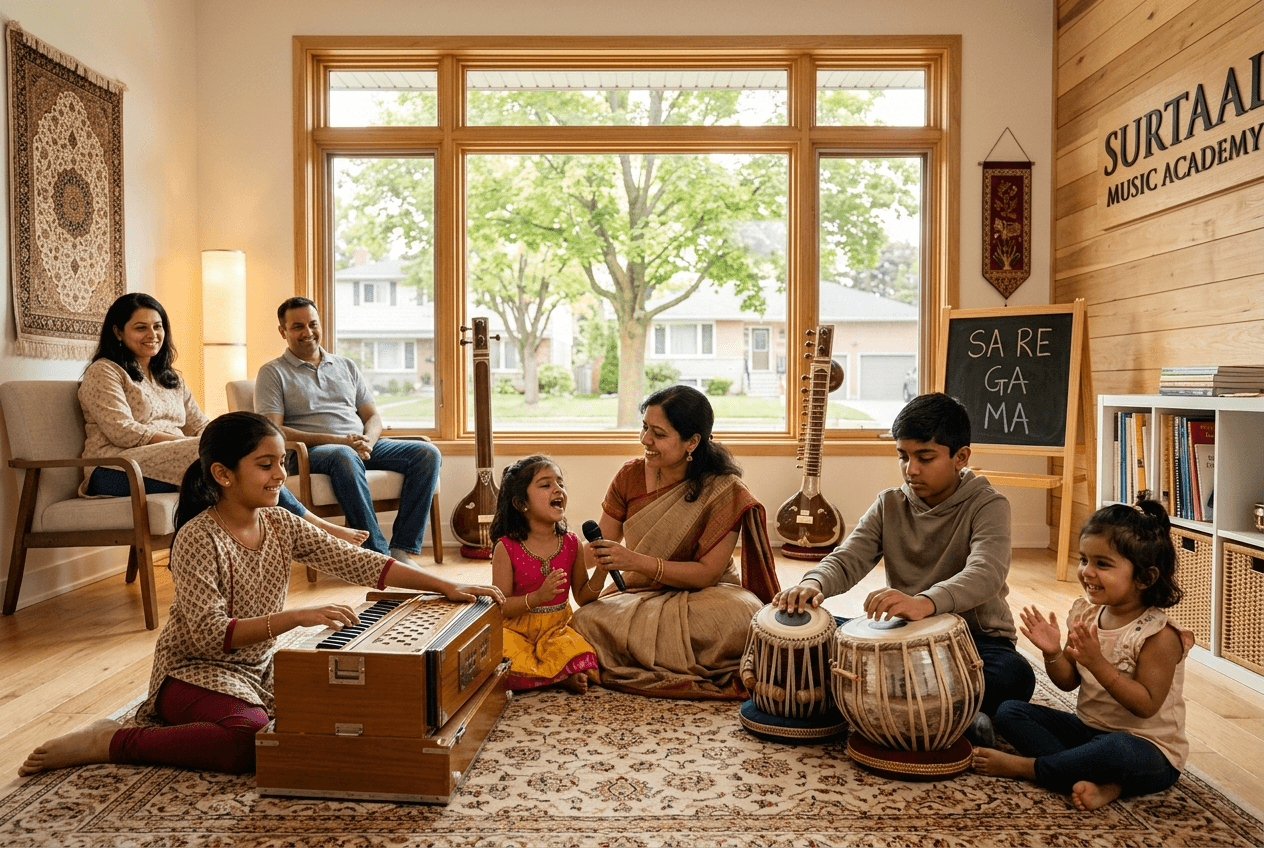 For most children, the years from five to seven are the natural doorway into structured learning. By now attention spans have lengthened, motor skills have matured, and a child can follow instructions and sit through a focused, age appropriate session. This is an excellent time to begin real vocal training or a first instrument, learning the basic swaras and simple exercises in short, lively lessons. Live, one to one Hindustani vocal classes suit this age beautifully, because the teacher can adapt every minute to a young learner's mood and pace.
Families with South Indian heritage often begin Carnatic vocal classes at this stage, rooted in the call and response method that children take to so naturally. Our Carnatic music for kids guide describes exactly what those early lessons look like and how to support them at home, which reassures many first time parents.
Ages 8 to 12: Faster Progress and Real Structure
From around eight to twelve, children can handle, and often crave, more structure. Progress speeds up noticeably, repertoire widens, basic theory becomes accessible, and the first small performances and, for interested families, graded exams come into view. This is also a wonderful age to add rhythm through tabla classes, which builds the tala sense that underpins all Indian music. Children at this stage take real pride in mastering a piece, and that sense of accomplishment becomes its own powerful motivation.
Teenagers: Learning With Intent
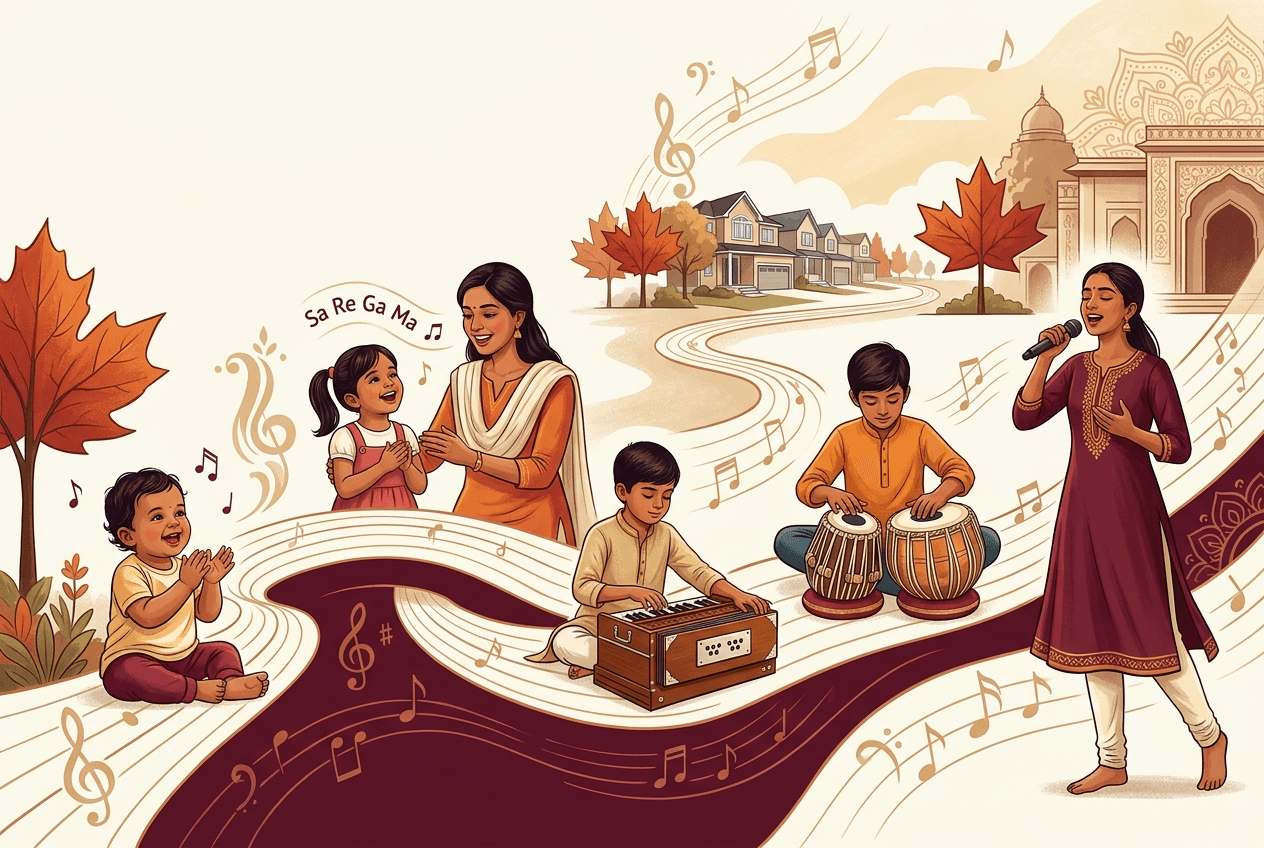 It is a myth that the teenage years are too late. Teenagers often learn faster than younger children precisely because they bring clearer goals and stronger intent, whether they want to perform, build confidence, or simply connect with their heritage. The early years are not a closed window, and a motivated teenager can make remarkable progress. Practical guidance such as our top 10 singing tips for beginners helps older beginners structure their practice efficiently around a busy school schedule.
What Makes Indian Music Special for Young Learners
Indian classical music offers children something distinctive. The sargam call and response is wonderfully suited to how young children learn, by listening and echoing rather than reading. The breathing control at the heart of vocal training quietly builds calm and focus. The rhythmic talas develop coordination and a deep sense of pulse. And woven through it all is a living connection to heritage, language and culture that means a great deal to Indian families raising children in Canada, far from where these traditions began.
Why Online Works So Well for Canadian Kids
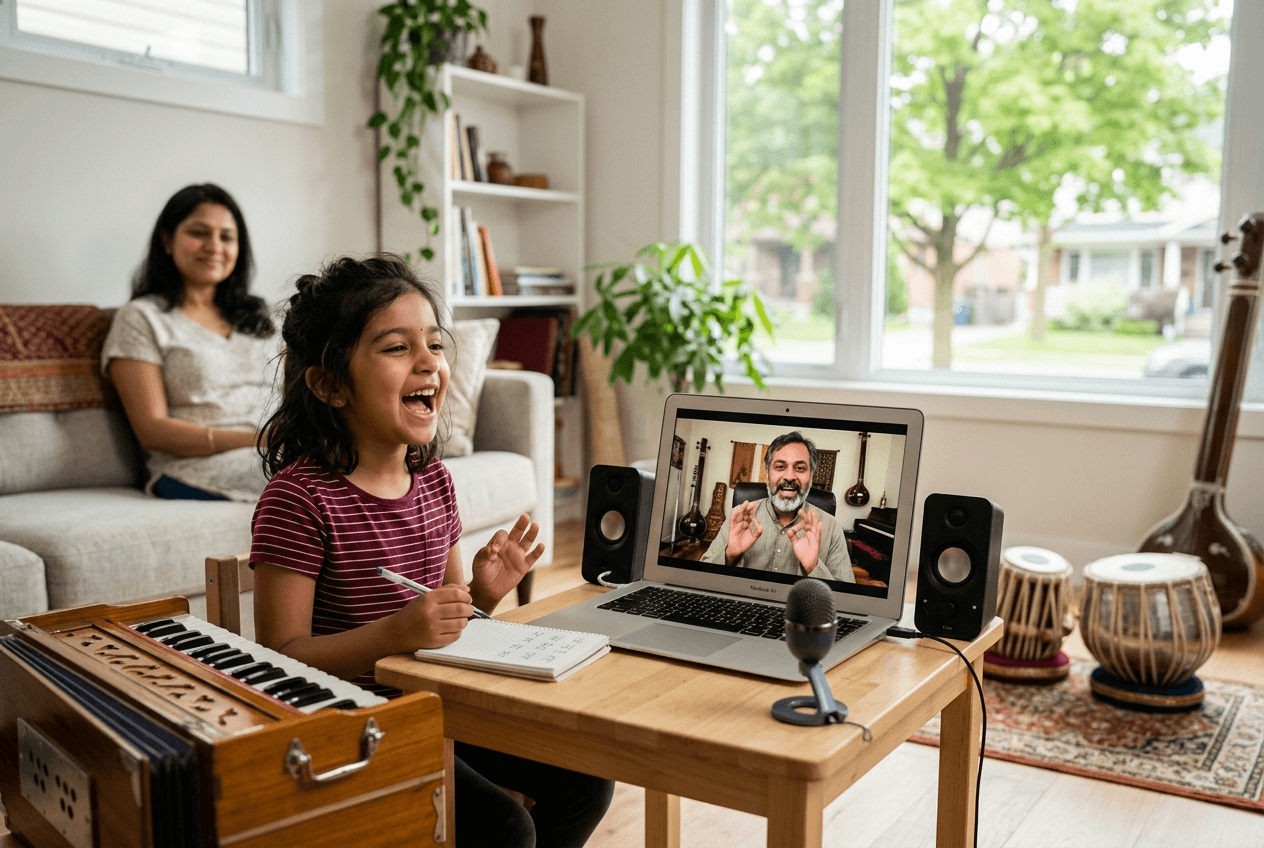
For Canadian families, online lessons solve real problems. They remove the need to drive a child across the Greater Toronto Area or through a Vancouver winter to reach a qualified teacher, they open access to genuine gurus regardless of which city you live in, and they fit flexibly around school, homework and the rest of family life. A child can have a focused, one to one lesson from the living room, with a parent nearby, and many families find this hybrid of online lessons and home practice produces the most consistent progress.
The Benefits Beyond Music
Parents often begin for cultural reasons and stay for everything else music brings. Research consistently links early music learning with stronger memory, concentration, language skills and pattern recognition, alongside creativity, discipline, patience and confidence. Children who study music frequently do better academically and develop social and emotional skills that serve them far beyond any performance. The certificate, if one ever comes, is a small part of a much larger and quieter gift.
About Art Gharana
 Art Gharana offers live one to one online Indian music classes for children across Canada, with patient, certified teachers who specialise in young learners and adapt every lesson to a child's age and personality. Review plans and pricing and book a free trial class to see how your child responds before you commit.
Frequently Asked Questions
1. What is the best age for my child to start Indian music?
Playful exposure can begin around three, while structured lessons usually suit children best from about five to seven, once attention span and motor skills are ready. Readiness and interest matter more than a fixed age.
2. Are online music classes effective for young children?
Yes. Live, one to one online lessons are highly effective for children, especially when paired with short, regular home practice. The teacher can adapt to a young child's mood in real time, which recordings cannot do.
3. My child is ten. Is it too late to start?
Not at all. Ages eight to twelve are excellent for structured learning, and even teenagers often progress quickly thanks to clearer goals and longer attention spans. It is rarely too late to begin.
Signs Your Child Is Ready to Begin
If you are unsure whether your child is ready, a few simple signs help. Does your child enjoy singing along to songs, tap or clap to rhythms, or show curiosity about instruments? Can they focus on a single activity for ten or fifteen minutes and follow simple instructions? Do they respond happily to gentle, playful guidance? None of these needs to be perfect, but when several are present, your child is very likely ready for at least a playful introduction. The surest test of all is a trial lesson, where a good teacher can read a child's readiness within minutes.
Choosing the First Discipline
Many parents agonise over which discipline to choose first, but the decision is less weighty than it feels. Vocal music is the most natural starting point for most young children, requiring no instrument and building the foundation of pitch and rhythm that every other discipline rests on. From there, a child who loves rhythm might move toward the tabla, while one drawn to melody might explore an instrument later. Family heritage often points the way, and a child's own enthusiasm should always carry weight, because a willing learner progresses far faster than a reluctant one.
How Long Should a Young Child's Lesson Be?
Attention span is the deciding factor, and shorter, more frequent sessions almost always beat longer, less frequent ones for children. For the youngest learners, fifteen to thirty focused minutes is plenty, gradually lengthening as a child grows and their concentration deepens. A skilled teacher of young children keeps the energy varied, weaving songs, games and short bursts of focused practice so the lesson never drags. Regular weekly lessons supported by a few minutes of daily home practice produce far better results than occasional marathon sessions.
The Parent's Role in a Child's Music Journey
You do not need any musical training yourself to be a wonderful support. What matters most is protecting a small, regular practice time, taking a genuine interest in what your child is learning, and keeping the atmosphere encouraging rather than pressured. Children mirror a parent's enthusiasm, so showing that you value the music, perhaps by listening together or asking your child to teach you what they learned, does more than any amount of nagging. The families whose children flourish are almost always those where music is shared and celebrated at home.
Avoiding the Pressure Trap
It is easy, especially for caring parents, to slip into pushing too hard, and that pressure is the surest way to extinguish a child's love of music. Most children dislike the daily grind of practice but adore the applause at a recital, so keep the long view in mind and let enjoyment lead. Ask your child periodically whether they are enjoying their lessons, and listen to the answer. Mixing structured practice with free, playful experimentation keeps the spark alive, and a child who enjoys music will, in the end, practise far more willingly than one who feels forced.
Keeping Heritage Alive in Canada
For many Indian families in Canada, there is a deeper motivation beneath the skills and the benefits. Music is a thread back to a heritage that distance and a new country can otherwise fray. A child who learns to sing a bhajan, recite sargam or play a simple raga carries a living piece of their culture, one they can share at a Diwali function, a Navratri evening or a family gathering. In a multicultural Canada, this rootedness is a gift, giving children a confident sense of where they come from even as they grow up fully Canadian.
A Realistic Picture of the First Year
Setting fair expectations helps everyone enjoy the journey. In the first months, especially for younger children, visible progress can be slow and much of the learning is quiet absorption, which is entirely normal and not a cause for worry. Over a full year of steady weekly lessons and short daily practice, you should see a child grow comfortable with the basics, build a small repertoire and, just as importantly, look forward to their lessons. Progress in music is rarely a straight line, but with patience, consistency and a good teacher, it is remarkably reliable.
Group Classes Versus One to One for Children
Both formats have a place, and the right choice depends on your child. Group classes bring energy, friendly motivation and a social dimension that some children love, learning alongside peers and feeding off the shared enthusiasm. One to one lessons, by contrast, move entirely at your child's pace, adapt to their mood on any given day, and can be rescheduled around a busy family week. For young or shy children especially, the focused attention of a one to one lesson often builds confidence faster, because there is nowhere to hide and no faster classmate to feel measured against. Many families begin one to one to build a foundation, then add group experiences for the joy of playing with others.
Instruments and Small Hands
If your child is drawn to an instrument rather than the voice, age and physical readiness matter. Very young children may struggle with instruments that demand a big hand stretch or fine finger control, which is one reason vocal music and simple percussion are such natural early choices. As a child grows, more instruments come within comfortable reach. The voice, of course, needs no special size and is always available, which is part of why vocal training is the most common starting point for young Indian music learners. A good teacher will honestly advise whether a particular instrument suits your child's stage, rather than pushing them toward something frustrating.
Balancing Music With School and Other Activities
Canadian children lead busy lives, with school, sports and other commitments competing for time, and parents rightly worry about overloading them. The reassuring truth is that music does not demand huge blocks of time to be effective. A single focused weekly lesson, supported by short daily practice of ten or fifteen minutes, fits comfortably into most schedules and actually tends to improve focus and discipline in other areas. The key is consistency over intensity, a little and often, woven gently into the week, rather than long sessions that crowd out everything else and breed resentment.
How Online Lessons Hold a Young Child's Attention
Parents new to online learning sometimes doubt whether a young child can stay engaged through a screen, which is a fair concern. In practice, a skilled teacher of children keeps a one to one online lesson lively and varied, switching between singing, games, gentle challenges and short bursts of focused practice so attention never has time to wander. Because the lesson is live and personal, the teacher can read a child's energy in real time and adjust on the spot, something no pre recorded video can do. Having a parent nearby for the youngest learners also helps, turning the lesson into a warm, shared experience.
When a Child Wants to Quit
Almost every child, at some point, declares they want to stop, and this moment need not be the end of the journey. Often the impulse is temporary, springing from a tricky patch in learning, a clash with a busy week, or simply a passing mood, rather than a genuine loss of interest. Gentle encouragement, a conversation about what is bothering them, and sometimes a small change of repertoire or a new short term goal can reignite enthusiasm. A good teacher is skilled at navigating these dips. The aim is never to force a miserable child, but to help them past a hurdle that, once cleared, often reveals renewed enjoyment on the other side.
Performance Opportunities for Children in Canada
Few things motivate a young learner like the prospect of performing, and Canada offers rich, welcoming opportunities. Community Diwali, Navratri and Vaisakhi celebrations, temple and gurdwara programs, school showcases and family gatherings across the country regularly invite children to share what they have learned. These low pressure stages give a child a real goal to work toward and a genuine sense of pride and belonging when they perform. For Indian families in Canada, watching a child sing or play before a community audience is also a deeply moving affirmation that their heritage is being carried forward into the next generation.
Cost and Value for Canadian Families
Naturally, families weigh cost, and it helps to look at value rather than price alone. One to one lessons cost more than group classes because of the personalised attention, but they often deliver faster, steadier progress, which can mean better value over time. Online lessons also remove the hidden costs of in person learning, the driving, the fuel, the time spent commuting through Canadian traffic and weather. When comparing options, consider what is included, such as the quality of teaching, practice material and scheduling flexibility, and remember that a trial class lets you judge the value before committing anything.
Final Thoughts
The question of when to start, which worries so many Canadian parents, has a gentle answer. There is a sensible stage for every age, and the best time to begin is when your child is ready and curious, whatever the number on their last birthday. Lead with joy, choose a patient teacher, protect a little daily practice, and let the cultural connection and the many quiet benefits unfold naturally. Whether your child is three or thirteen, a rewarding musical journey is within reach, and it begins with a single, low pressure first lesson.
When Siblings Learn Together
Families with more than one child sometimes wonder whether to enrol them together or separately. There is no single right answer, but a few things help. Children of similar ages and levels can enjoy a shared sense of progress and a little friendly motivation, while siblings at very different stages usually do better with their own lessons pitched to each one's needs. Even when they learn separately, siblings practising in the same home often inspire one another, and a younger child absorbs a surprising amount simply by hearing an older sibling sing. A good teacher can advise on the best arrangement once they have met your children and gauged their levels and personalities.
Trusting the Slow Early Progress
One of the hardest things for a loving parent is the patience the early stage demands. For young beginners especially, visible progress can be slow, and weeks may pass with little obvious to show, which can tempt a worried parent to wonder whether anything is happening at all. A great deal is. Much of early learning is quiet absorption, the ear and the sense of rhythm developing beneath the surface long before they show in performance. Trusting this invisible groundwork, and resisting the urge to measure your child against others, is one of the kindest and most useful things a parent can do during these formative early months.
What a First Lesson Looks Like
Knowing what to expect makes the first lesson far less daunting for a nervous child or parent. A good teacher will keep the opening session gentle and welcoming, getting to know your child, gauging their comfort and readiness, and introducing a simple, playful exercise rather than a barrage of technique. There is no test to pass and no pressure to perform. By the end, you will have a clear sense of the teacher's warmth and style and of how your child responded, which is exactly what a trial class is for. It is the start of a relationship, and good teachers treat it that way.