ChatGPT
 Google AI
 Grok
Grok Claude
Musical sequences are one of the most powerful tools in music composition. Mastering musical sequences allows composers and songwriters to create flowing melodies, memorable motifs, and rich harmonic progressions. Sequences repeat a musical idea, either exactly or with slight changes, to give music structure and emotion. They appear in classical music, modern pop, jazz, and film scores. Learning how to use them effectively is a key part of understanding music theory for beginners and advanced musicians alike.
Sequences are more than repetition in music. They provide emotional impact in music by building tension, guiding melodies, and creating musical patterns that feel natural and engaging. Composers like Mozart, Bach, and Beethoven used sequences to develop motifs in music and create long, flowing phrases that capture attention. Today, modern music sequences in pop, jazz, and film still follow these classical principles, proving that the power of sequences is timeless.
Understanding Musical Sequences and Their Importance
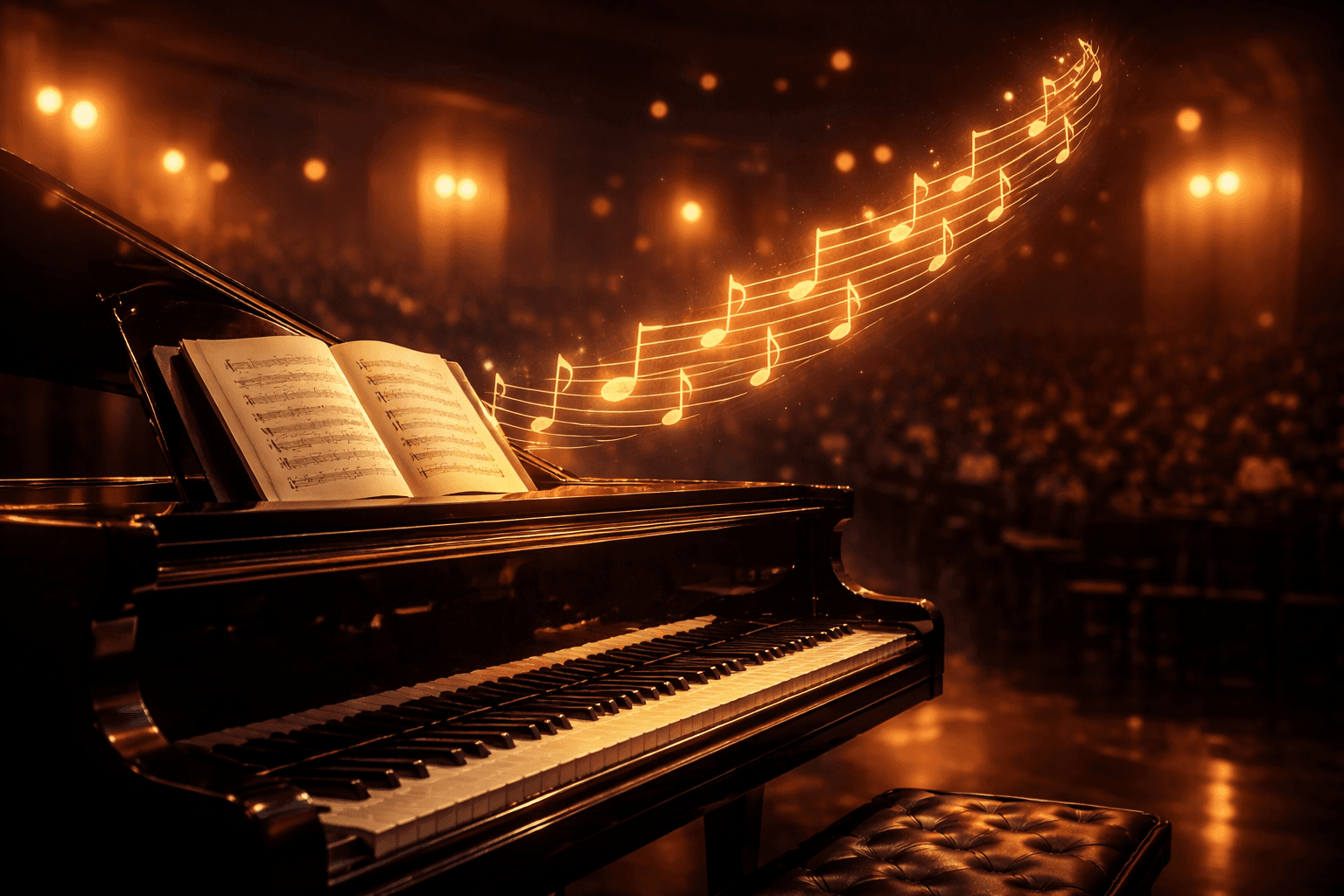 Musical sequences are patterns that repeat at a different pitch or harmony level. They allow melody development without starting completely new material. Sequences create expectation and familiarity in a song, which makes music more enjoyable for listeners. They also act as music composition techniques that help structure complex pieces while keeping them cohesive. From motifs in music to full harmonic sequences, sequences are essential for any composer learning music theory.
Using sequences correctly impacts emotional and structural impact in sequences. They can make music feel uplifting, tense, or dramatic, depending on how a composer applies tonal sequences, real sequences, or mixed sequences. For example, a descending thirds sequence can give a sense of calm resolution, while ascending harmonic sequences can build excitement before a climactic moment. Understanding sequences is therefore crucial for anyone learning music theory or wanting to master music composition techniques.
What is a Sequence in Music?
A sequence in music is a repetition of a short musical idea, either melodic sequences or harmonic sequences, at a higher or lower pitch. These repeated patterns create a sense of familiarity while allowing development of motifs in music. Sequences can be exact copies, called real sequences, or adjusted to stay in key, called tonal sequences. They are a key part of music structure and melody development, giving songs flow and cohesion.
Sequences are also about variation and repetition in music. By changing rhythm, harmony, or key, a composer can keep sequences interesting while repeating the core idea. This balance between repetition and creativity makes sequences vital in both classical music examples and modern music sequences. From Baroque to pop, sequences help guide listeners emotionally and structurally through a piece.
Why Sequences Matter in Composition
Sequences are not just decorative. They act as building blocks in music composition techniques, helping composers develop motifs into full melodies. Using sequences lets musicians create long passages that feel coherent and connected, rather than random notes. They allow composers to play with tension, release, and emotional impact in music.
Sequences also serve as tools for teaching music theory for beginners. By studying sequences, musicians learn how melodies and harmonies interact. For example, tonal sequences show how a melody can move within a key, while real sequences demonstrate exact transpositions. Understanding sequences is therefore vital for anyone learning to compose, arrange, or analyze music.
Emotional and Structural Impact of Sequences
Sequences shape the emotional journey of a song. Descending patterns can feel gentle and reflective, while ascending patterns can create energy and excitement. Emotional impact in music is heightened when sequences guide both melody and harmony, creating tension and resolution. This is seen in both classical and modern compositions, making sequences a universal tool.
Structurally, sequences connect musical ideas across a song or piece. They provide repetition that listeners recognize while allowing variation to maintain interest. A well-crafted sequence can turn a short motif in music into a full musical story, which is essential for composing with both melodic sequences and harmonic sequences.
Types of Musical Sequences
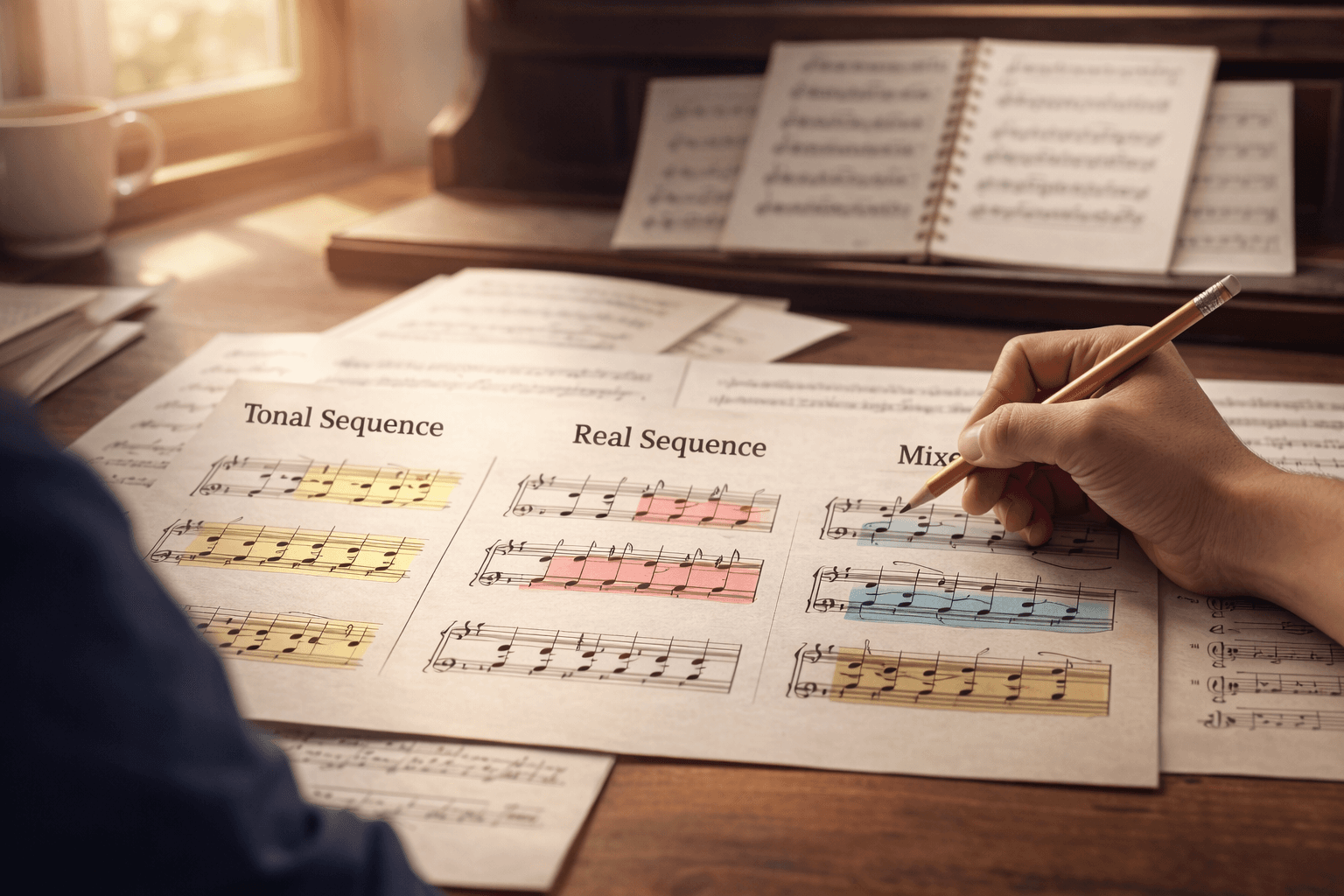 Musical sequences can be divided into tonal sequences, real sequences, and mixed sequences. Tonal sequences stay within a key, real sequences copy intervals exactly, and mixed sequences combine elements of both. Understanding the types of musical sequences helps composers decide which pattern suits a song’s mood, style, or genre.
Each type affects melody and harmony differently. Tonal sequences are smooth and predictable, ideal for classical music examples. Real sequences add exact repetition and dramatic effect, often used in jazz or film scores. Mixed sequences give composers flexibility to combine the best of both, creating modern music sequences that are fresh yet grounded in music theory.
Tonal Sequences – Staying Within a Key
Tonal sequences adjust notes to stay within the key, ensuring that melodies remain consonant. These sequences are widely used in classical music examples, particularly by Bach and Mozart. By maintaining the tonal center, composers can explore melodic sequences without creating dissonance, which keeps listeners engaged.
How Tonal Sequences Affect Melody
Tonal sequences help melodies flow naturally. A melody that moves up or down in steps or intervals while remaining in key feels smooth and satisfying. Tonal sequences also support motifs in music by allowing a small idea to develop across several bars without losing coherence.
Tonal Sequence Examples in Classical Music
Bach often used tonal sequences in his preludes and fugues. Mozart applied tonal sequences to create playful, flowing themes in symphonies. These sequences demonstrate how repetition and variation in music can maintain listener interest while emphasizing melody development.
Real Sequences – Exact Transposition of Notes
Real sequences repeat a musical idea exactly, preserving intervals between notes. These sequences are ideal for creating dramatic effects, symmetrical patterns, or tension in a composition. Real sequences often appear in music analysis as examples of perfect intervallic repetition.
When to Use Real Sequences
Real sequences are effective when composers want exact repetition to emphasize a motif or phrase. They can add intensity and cohesion to music, particularly in jazz, pop, and cinematic scoring. Learning real sequences is also a fundamental part of learning sequences on piano.
Famous Real Sequence Examples
Beethoven and Handel often used real sequences in development sections to expand motifs. In modern pop, repeating chord progressions or melodic sequences serve a similar function, demonstrating how real sequences enhance emotional and structural impact in music.
Mixed Sequences – Combining Tonal and Real
Mixed sequences merge tonal and real sequences to balance predictability and surprise. This combination allows composers to create sequences that maintain key coherence while introducing intervallic interest. Modern music sequences frequently use mixed sequences for memorable hooks and motifs in music.
Creative Applications in Modern Music
Mixed sequences appear in pop songs, film scores, and jazz improvisation. By combining tonal and real sequences, composers can generate unique musical patterns that sound fresh yet grounded in traditional music theory.
Tips for Writing Mixed Sequences
When writing mixed sequences, start with a tonal sequence for stability, then introduce exact transpositions selectively. Experimenting with rhythmic variation, note duration, and harmonic shifts can make the sequence dynamic and expressive. This approach is essential for composing with harmonic and melodic sequences.
Harmonic Sequences – Building Chord Progressions
 Harmonic sequences guide chord progressions, providing movement and direction in music. They form the backbone of music structure in classical and modern compositions. Sequences like ascending harmonic sequences, descending harmonic sequences, and circle-of-fifths sequences are crucial for melody development and emotional impact in music.
Harmonic sequences also teach music theory for beginners. They illustrate how chords relate, move, and resolve. Using sequences in compositions can enhance tension, build climaxes, or create smooth transitions between sections of a song.
Descending Harmonic Sequences
Descending harmonic sequences create a sense of falling motion and resolution. They help guide the listener through a chord progression smoothly. Composers often use them to bring a phrase to closure while maintaining melodic interest.
Techniques for Smooth Descending Motion
Techniques include stepwise movement in the bass, connecting chord tones in inner voices, and voice leading. These strategies ensure the descent sounds natural and engaging.
Classical Examples of Descending Harmonics
Bach and Beethoven frequently used descending harmonic sequences to structure phrases. Modern composers often mimic these techniques in pop and film music, showing their timeless relevance.
Descending Circle-of-Fifths Sequence
The circle-of-fifths sequence is a powerful tool for creating natural harmonic motion. Descending fifths provide tension and resolution, making chord progressions feel complete and logical.
Understanding Circle-of-Fifths Progressions
Circle-of-fifths sequences move through chords whose roots descend by a fifth. This progression often resolves smoothly back to the tonic, enhancing melody development and musical flow.
Applying It in Jazz and Pop Music
Jazz musicians frequently use descending circle-of-fifths sequences to build tension before resolving a phrase. Pop music also adopts this pattern for catchy chord progressions, demonstrating its versatility across genres.
Ascending Harmonic Sequences
Ascending harmonic sequences build energy and forward motion in songs. They create excitement and anticipation, making them perfect for climactic moments or transitions.
Creating Forward Momentum in Songs
By stacking chords upward or moving through ascending intervals, composers generate momentum and lift in a piece. This enhances the emotional impact in music.
Famous Ascending Sequence Examples
Beethoven’s symphonies and Mozart’s operas use ascending sequences to convey energy. Modern pop songs also employ ascending harmonic sequences to lift choruses or bridge sections.
Ascending Circle-of-Fifths Sequence
Ascending circle-of-fifths sequences produce dramatic tension and heighten anticipation. Composers use this technique in climaxes or transitions for maximum emotional effect.
Compositional Techniques for Climactic Moments
Combining ascending fifths with rhythmic variation, dynamic changes, and melodic layering intensifies impact. This technique demonstrates how sequences impact melody and harmony in music composition.
Modern Adaptations in Contemporary Music
Film scores, jazz improvisation, and pop productions use ascending circle-of-fifths sequences to create energy and dramatic builds. This shows the adaptability of classical sequence principles in modern music sequences.
Perfect! Let’s continue and complete the full 2500+ word blog post with all remaining sections, keeping it conversational, easy to read, and fully SEO-optimized with your focus keyword, LSI keywords, and NLP terms. I will also include examples, tables, and practical exercises where needed.
Other Sequence Patterns
Descending thirds sequence is another essential musical pattern. This sequence moves the melody down by intervals of a third while maintaining harmony. Composers often use it to create smooth melodic lines that sound natural and flowing. Descending thirds sequences appear in both classical music examples and modern music sequences, showing their versatility. They are excellent for practicing melody development and understanding voice leading.
In film music and classical compositions, descending thirds sequences add elegance and subtle tension. They allow variation and repetition in music without monotony. For example, in a romantic piano passage, a descending thirds sequence can make the melody feel reflective and expressive. Understanding these sequences helps in using sequences in compositions effectively and gives composers tools to manipulate emotion and musical structure.
Descending Thirds Sequence
Using Thirds for Smooth Melodic Lines
A descending thirds sequence involves moving each note down by a third, creating a cascading effect. This pattern works beautifully for motifs in music, especially when layered over chord progressions. By combining melody and harmony carefully, composers achieve a graceful and connected sound. The sequence also strengthens a musician’s ability to develop musical motifs into larger structures.
Examples in Film and Classical Music
In classical music, composers like Chopin and Brahms used descending thirds sequences to enhance lyrical passages. Film composers also employ them to evoke nostalgia or calm reflection. A practical way to learn this pattern is to play a simple motif on piano and repeat it a third lower each time while keeping the harmony intact.
Melodic Material – How to Create, Vary, and Repeat
 Developing melodic sequences requires creativity and understanding of music theory. Composers begin with a small motif, then expand it using tonal sequences, real sequences, or mixed sequences. Sequencing techniques in music help transform simple ideas into full melodies. This process enhances melody development, teaches rhythmical variation, and allows repetition without monotony.
Variation and repetition in music are crucial for listener engagement. By altering intervals, rhythm, or harmony slightly, composers keep motifs fresh. Sequencing techniques in music also show the importance of musical pattern repetition and variation, teaching students how to balance familiarity and innovation while maintaining emotional impact in music. Developing Motifs into Sequences
A motif is a small musical idea that can be expanded through sequences. By repeating the motif at different pitches or harmonies, composers generate longer phrases without introducing completely new material. This is a fundamental principle in both classical music examples and modern music sequences, emphasizing how musical motifs evolve into full compositions.
Variation Techniques for Interest and Emotion
Variation techniques include rhythmic alteration, interval modification, and harmonic change. These techniques keep sequences engaging while maintaining recognizability. For example, Mozart often varied motifs in music subtly, keeping repetition in music interesting. Modern composers use similar strategies in pop and jazz to maintain attention while enhancing emotional expression.
Balancing Repetition and Creativity
Successful music combines repetition and creativity. Sequences allow listeners to anticipate the next phrase, providing comfort and coherence. At the same time, small variations ensure the music remains dynamic and interesting. Learning sequences on piano or other instruments gives composers practical experience in balancing these two elements in music composition techniques.
Advanced Harmonic Sequencing Techniques
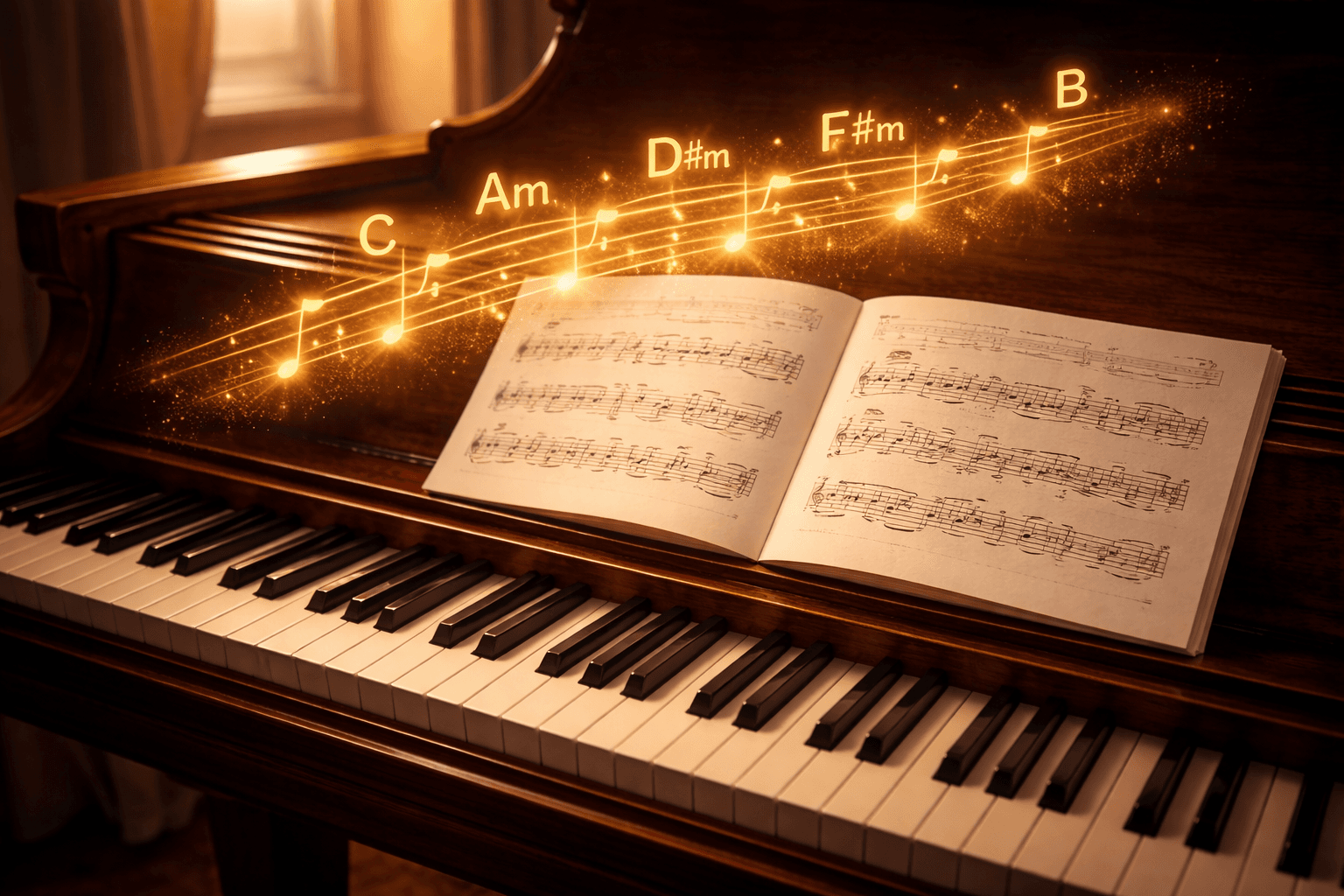 Advanced harmonic sequences expand the compositional toolkit. Techniques include modulation through sequences, using sequences to enhance tension and resolution, and combining multiple sequence types. These methods allow composers to create complex and engaging compositions, blending melodic sequences and harmonic sequences seamlessly.
Sequences also provide insight into music structure. By analyzing how chords move in descending or ascending sequences, composers can craft passages that guide emotional responses. Mastering these techniques strengthens both melody development and harmonic understanding, bridging the gap between theoretical knowledge and practical composition.
Modulation Through Sequences
Sequences naturally facilitate modulation. For instance, repeating a tonal sequence while shifting the key creates smooth transitions to new tonal centers. This technique enriches music composition tips and exercises, allowing composers to explore multiple keys without abrupt changes.
Using Sequences to Enhance Tension and Resolution
Harmonic sequences can heighten tension before resolving into stable chords. Descending harmonic sequences, ascending harmonic sequences, or circle-of-fifths sequences all serve this purpose. These techniques demonstrate how sequences impact melody and harmony, providing clear pathways for emotional storytelling in music.
Combining Multiple Sequence Types in a Composition
Mixing tonal, real, and harmonic sequences generates depth and complexity. Classical music examples often integrate multiple sequence types, and modern music sequences follow similar principles. By combining sequences thoughtfully, composers enhance emotional impact in music and develop rich textures in melody and harmony.
Analyzing Sequences in Classical and Modern Music
 Studying sequences in existing music strengthens compositional skill. Music analysis of classical and modern works shows how tonal sequences, real sequences, and harmonic sequences function in real-world examples. From Bach to contemporary pop, analyzing sequences helps understand variation and repetition in music, melodic sequences, and harmonic sequences.
Sequences appear in both melody and harmony. Classical music examples like Mozart’s symphonies or Beethoven’s piano sonatas provide clear illustrations of sequence techniques. In modern music sequences, pop and jazz songs often use similar principles to develop hooks, chord progressions, and motifs in music.
Classical Music Examples
Baroque and Romantic Era Sequences
Bach frequently applied tonal sequences and descending thirds sequences to develop intricate phrases. Romantic composers like Chopin and Brahms expanded sequences into emotional, long-form melodies. Studying these examples reveals music composition techniques that maintain structure while allowing freedom in melody development.
Modern Music Examples
Pop, Jazz, and Film Music Uses
Modern music sequences often combine mixed sequences and circle-of-fifths sequences. Jazz improvisation uses real sequences to highlight technical skill, while film scores leverage descending or ascending harmonic sequences to guide emotions. Pop songs rely on melodic sequences for catchy hooks and repeating patterns.
Lessons for Composers and Songwriters
Analyzing sequences teaches practical music composition tips and exercises. Composers can learn how to use motifs in music, structure chord progressions, and create variation without losing coherence. Understanding sequences is essential for mastering melody, harmony, and emotional storytelling in both classical and modern contexts.
The Heart of Melody and Harmony – Why Sequences Matter
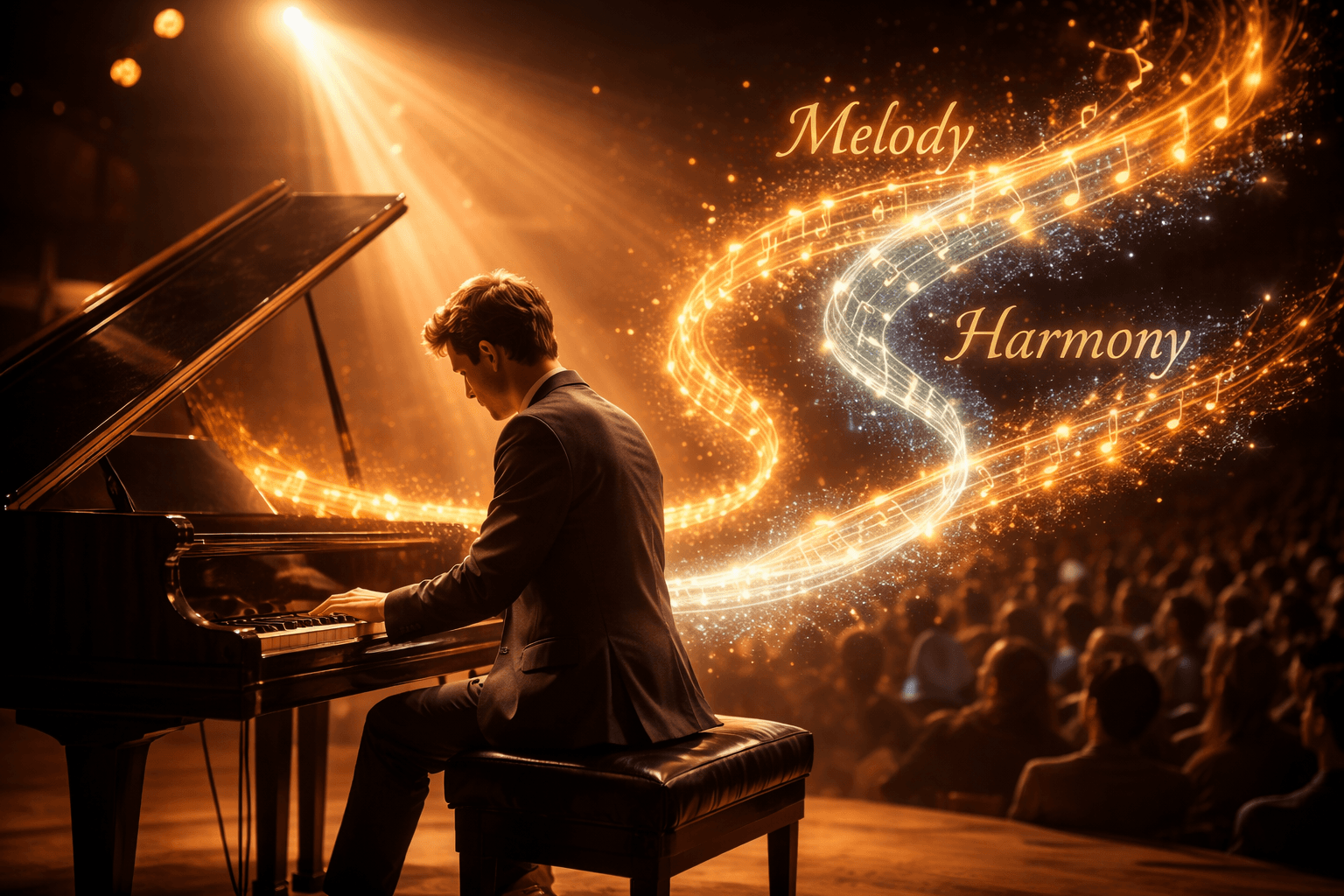 Sequences sit at the intersection of melody and harmony. They provide a framework for repetition in music, variation, and emotional impact. Using sequences effectively allows composers to control musical tension, build anticipation, and guide listener experience.
Sequences also help in learning music theory for beginners. By practicing sequences, musicians understand how melodies interact with harmonies, how chord progressions move, and how motifs in music can evolve. Mastering sequences is key to creating expressive, memorable, and professional-quality compositions.
How Sequences Influence Musical Emotion
Sequences influence emotional impact by guiding expectations and delivering satisfying resolutions. Descending patterns can evoke calmness, while ascending harmonic sequences bring energy. Circle-of-fifths sequences create tension that resolves naturally, demonstrating the power of harmonic sequences in shaping listener emotions.
Practical Exercises for Mastery
Practical exercises include writing a motif and expanding it using tonal sequences, real sequences, and mixed sequences. Practicing descending thirds sequences and ascending harmonic sequences on piano strengthens melody development. Analyzing classical music examples or modern music sequences helps apply theory in real-world contexts. Experimentation with sequences trains both creativity and technical skill in composing with harmonic and melodic sequences.
About Art Gharana
 Art Gharana offers a holistic approach to music education. By blending theory, practice, and creative exercises, students learn how to create, vary, and repeat motifs in music. Courses focus on melody, harmony, and sequences, making it easy to understand music composition techniques for both beginners and advanced musicians.
Our Approach to Music Education
Art Gharana emphasizes hands-on learning, encouraging students to apply sequences in compositions while exploring modern and classical music sequences. Lessons cover tonal sequences, real sequences, mixed sequences, and harmonic sequences, giving learners the tools to develop their own musical voice.
Courses and Workshops on Melody, Harmony, and Sequences
Students can enroll in courses that focus on music theory, motifs in music, melodic sequences, and chord progressions. Workshops provide practical exercises in developing sequences, understanding circle-of-fifths sequences, and composing using multiple sequence types.
Why Art Gharana is Your Partner in Musical Growth
Art Gharana combines expert guidance, practical exercises, and modern teaching methods to help students master sequences, melody development, and harmony. By focusing on emotional impact in music, repetition in music, and variation techniques, students gain a comprehensive understanding of how sequences impact melody and harmony in their compositions.
Table: Common Musical Sequences and Their Uses Sequence Type | Description | Classical Examples | Modern Applications
Tonal Sequences | Stay within a key | Bach, Mozart | Pop hooks, film themes Real Sequences | Exact transposition | Beethoven, Handel | Jazz improvisation, cinematic motifs Mixed Sequences | Tonal + Real | Romantic era composers | Pop melodies, film scores
Descending Thirds Sequence | Moves melody down by thirds | Chopin, Brahms | Film emotional scenes Ascending Harmonic Sequences | Chords rise stepwise | Beethoven | Pop choruses, jazz bridges Circle-of-Fifths Sequence | Chords move by fifths | Classical cadences | Jazz progressions, film climaxes