ChatGPT
 Google AI
 Grok
Grok Claude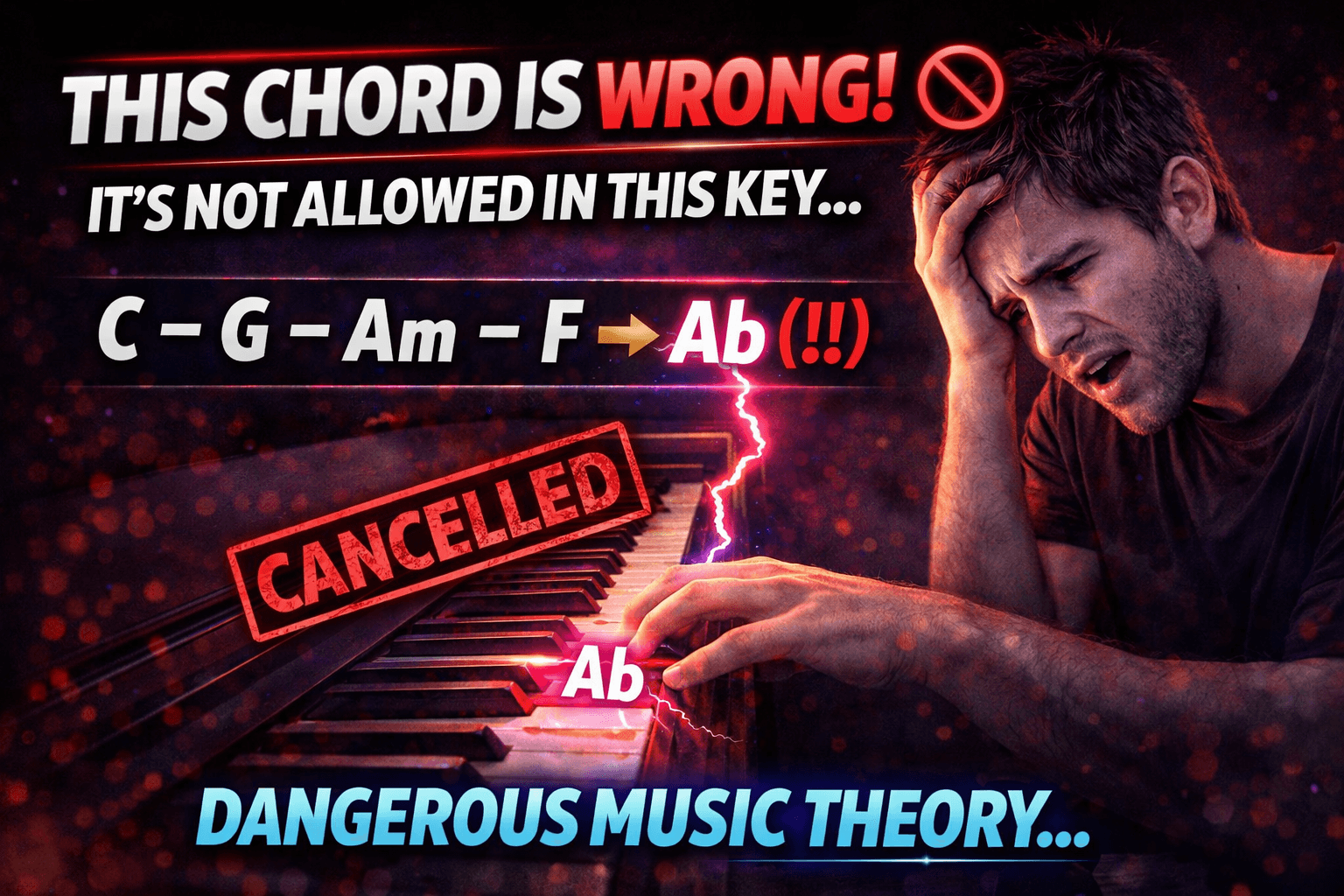
Modal interchange in music refers to the technique of using borrowed chords from parallel modes to enrich a harmonic progression while keeping the same tonal center in music. Musicians often introduce modal interchange chords to add harmonic color in music, deepen emotional storytelling, and create unexpected harmonic variation without completely changing keys.
Composers in jazz, film scoring, and modern pop rely heavily on borrowed harmony because it provides expressive depth while maintaining familiar diatonic harmony. This method introduces non-diatonic chords that still feel natural to the listener, producing subtle contrasts in modal chord progressions and increasing the emotional impact of chords within a song.
Definition of Modal Interchange
In music theory, modal interchange in music: borrowed chords describes the process of using chords from parallel modes such as C minor within a C major context, allowing composers to experiment with modal chord borrowing, expand harmonic progression possibilities, and introduce rich tonal shades that enhance modal harmony in composition without shifting the fundamental key.
Why Musicians Borrow Chords from Parallel Modes
Musicians borrow chords from parallel major and minor scales because this practice introduces dramatic harmonic tension and resolution, creates fresh chord progression variations, and enriches emotional harmony in music, especially when a simple major progression suddenly features darker minor colors or brighter chords that reshape the listener’s expectations.
Difference Between Modal Interchange and Key Modulation
Unlike modulation, which shifts the entire tonal center in music to another key, modal interchange chords maintain the same root while temporarily introducing non-diatonic chords, allowing the harmony to evolve while preserving structural stability and producing smooth harmonic progression transitions that listeners perceive as expressive rather than disruptive.
How Borrowed Harmony Adds Color to Music
Borrowed harmony enhances the chord color in music by introducing unexpected tonal shades that expand modal harmony, allowing composers to manipulate harmonic expectations, deepen emotional harmony in music, and shape powerful moments where musical tension and release create memorable emotional responses within sophisticated modal chord progressions.
Essential Music Theory: Understanding Musical Modes
 Understanding music modes explained concepts is essential for mastering modal interchange in music: borrowed chords, because each of the seven musical modes provides a distinct harmonic environment that can supply chords for modal chord borrowing and broaden the palette available for harmonic progression design.
These major scale modes and minor variations influence modal harmony in composition, enabling musicians to craft expressive harmonic variation and introduce unexpected yet natural chord substitution opportunities that transform standard chords in major scale or chords in minor scale progressions into richer musical landscapes.
What Are Musical Modes?
Musical modes are scale patterns derived from the major scale that begin on different scale degrees in music, forming the seven tonal systems known as Ionian mode, Dorian mode, Phrygian mode, Lydian mode, Mixolydian mode, Aeolian mode, and Locrian mode, each contributing distinctive tonal identities to modal harmony.
The Relationship Between Modes and the Major Scale
All seven musical modes originate from the same parent major scale but start on different scale degrees, creating unique interval structures that shape modal chord progressions, influence minor scale harmony, and provide the theoretical foundation required for effective modal interchange chords.
Ionian Mode – The Major Scale Foundation
The Ionian mode represents the traditional major scale and serves as the starting point for most diatonic harmony, establishing stable harmonic expectations that composers later contrast through modal chord borrowing to create striking harmonic variation within otherwise predictable harmonic structures.
Dorian Mode – The Jazzy Minor Sound
The Dorian mode resembles natural minor but features a raised sixth degree, which produces a smooth and slightly brighter minor scale harmony that jazz and funk musicians often integrate into modal harmony in composition for sophisticated modal chord progressions.
Phrygian Mode – The Dark Spanish Flavor
The Phrygian mode introduces a flattened second scale degree that produces intense harmonic tension and resolution, frequently associated with dramatic cinematic scoring or flamenco-inspired music where exotic chord color in music becomes a defining characteristic.
Lydian Mode – The Bright Dreamlike Mode
The Lydian mode raises the fourth scale degree, generating a luminous and floating harmonic atmosphere that composers often employ in film music to evoke wonder while expanding modal harmony possibilities within broader harmonic progression frameworks.
Mixolydian Mode – The Dominant Blues Sound
The Mixolydian mode lowers the seventh degree, producing a dominant flavor that shapes blues and rock harmony while contributing powerful modal interchange chords that strengthen groove-based harmonic progression patterns.
Aeolian Mode – Natural Minor Character
The Aeolian mode forms the natural minor scale widely used in emotional songwriting, serving as a major source for borrowed chords in major keys and supplying darker tonal shades that enrich modal harmony in composition.
Locrian Mode – The Diminished and Unstable Mode
The Locrian mode contains a diminished fifth above the tonic, creating inherent instability that limits its usage in tonal music yet still contributes theoretical insight into musical modes theory and advanced modal harmony exploration.
How Each Mode Creates a Unique Emotional Atmosphere
Each mode alters interval relationships within a scale, producing distinct emotional harmony in music that influences listener perception and provides composers with subtle ways to manipulate musical tension and release within evolving harmonic progression structures.
When and Why Composers Use Different Modes
Composers apply different modes when they want to reshape harmonic expectations, create unique harmonic color in music, and experiment with modal chord progressions that expand the emotional narrative of a composition while maintaining a consistent tonal center.
Building Chords from Musical Modes
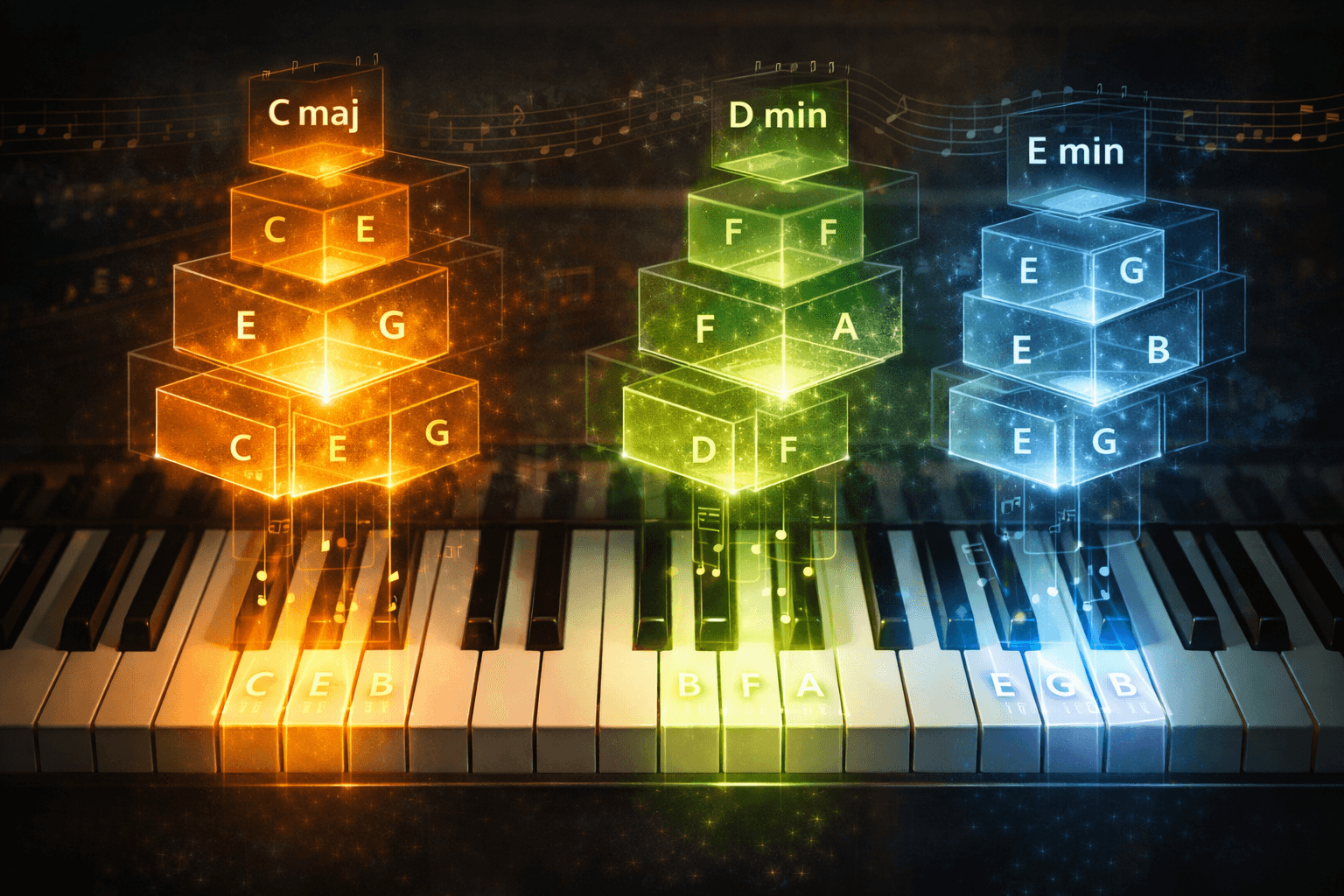 Chords form naturally from scale tones within each mode, meaning that understanding chords in major scale and chords in minor scale allows musicians to identify potential modal interchange chords and experiment with expressive chord substitution techniques that transform traditional harmonic progressions.
The structure of diatonic harmony determines which chords belong to a scale, yet composers frequently introduce non-diatonic chords from parallel modes to create striking harmonic variation that reshapes listener expectations while preserving structural cohesion.
How Triads Are Formed Within Each Mode
Triads form when scale tones are stacked in intervals of thirds, producing major, minor, diminished, or augmented chords that serve as the foundation for modal chord progressions and provide the harmonic building blocks used in modal harmony in composition.
Understanding Diatonic Chord Progressions
A diatonic harmony progression uses only chords belonging to a specific scale, yet musicians often modify these patterns through modal interchange chords or chord substitution to introduce compelling harmonic variation.
Identifying Borrowable Chords from Parallel Modes
Chords commonly borrowed from parallel major and minor keys include iv, bVI, and bVII, which supply dramatic chord color in music and strengthen emotional harmony in music while still aligning with the original tonal center.
Practical Example: Chords in C Major vs C Minor
The relationship between chords in major scale and chords in minor scale clearly illustrates how modal chord borrowing functions within a harmonic system.
Key Diatonic Chords Common Borrowed Chords Harmonic Effect C Major C Dm Em F G Am Bdim Eb Ab Bb Fm Dramatic harmonic color C Minor Cm Ddim Eb Fm Gm Ab Bb C F G Brighter tonal contrast
The Music Theory Behind Modal Interchange in Music: Borrowed Chords
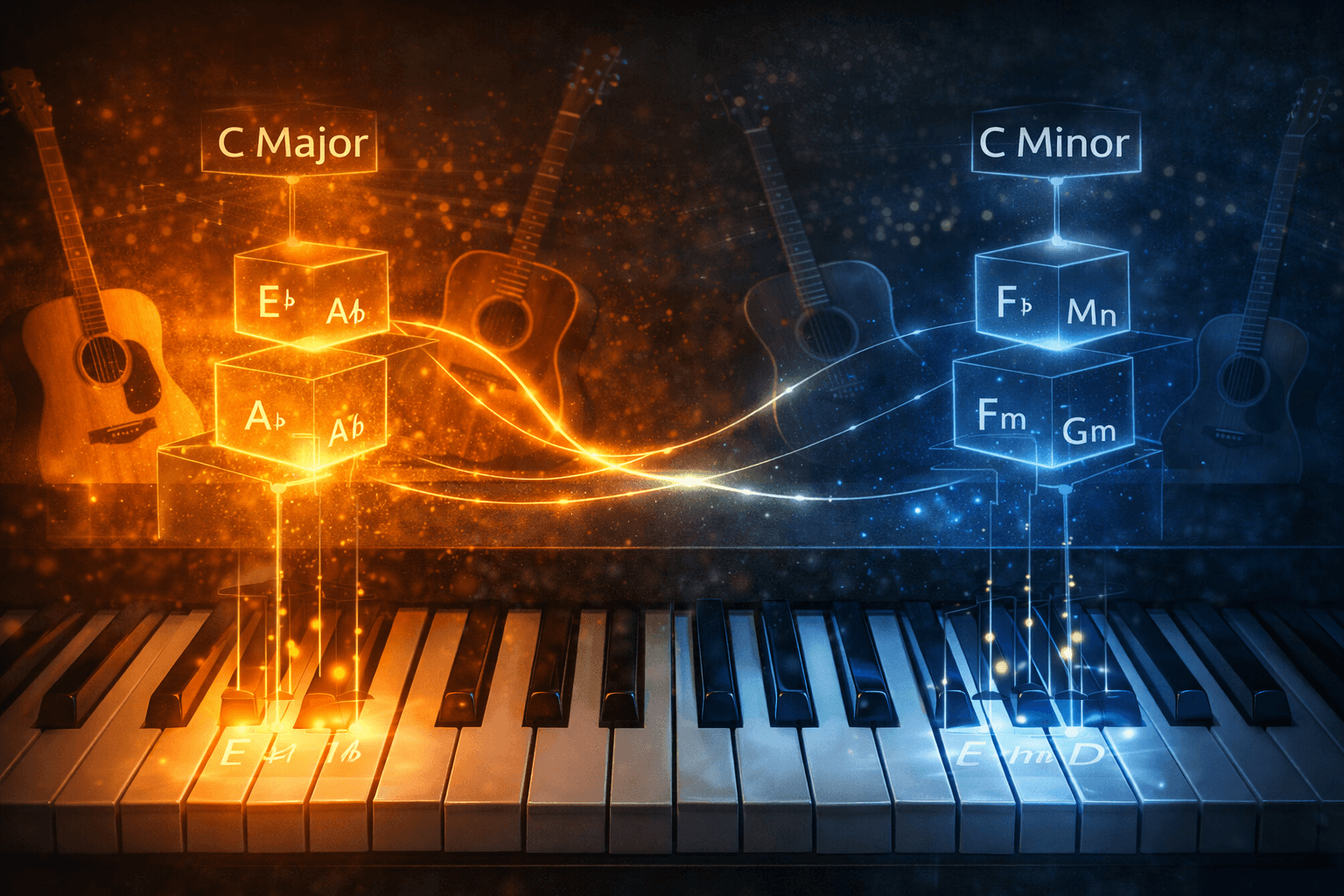 Understanding the deeper theory behind modal interchange in music: borrowed chords requires knowledge of parallel major and minor scales and the way they influence harmonic progression. Composers use modal interchange chords to introduce non-diatonic chords that maintain the same tonal center in music while expanding modal harmony and adding subtle harmonic color in music.
This approach allows musicians to control harmonic tension and resolution without shifting keys. The listener still perceives a stable tonal center while experiencing richer modal chord progressions, unexpected chord substitution, and expressive harmonic variation that enhances the emotional impact of chords in modern songwriting and composition.
Parallel Major and Minor Keys Explained
The concept of parallel major and minor refers to scales that share the same tonic note but contain different interval structures, such as C major and C minor, which allows composers to explore modal interchange in music: borrowed chords by importing harmonies from parallel modes while preserving the same tonal foundation.
How Modal Interchange Creates Emotional Contrast
Introducing modal interchange chords changes the emotional direction of a piece because borrowed harmony temporarily shifts the harmonic mood, creating dramatic musical tension and release that listeners interpret as emotional storytelling within the same harmonic progression.
The Role of Scale Degrees in Borrowed Harmony
Each borrowed chord originates from altered scale degrees in music, meaning composers manipulate specific scale tones from minor scale harmony or other major scale modes to generate rich modal harmony in composition while maintaining structural balance.
Why Borrowed Chords Sound Natural to the Ear
Borrowed chords feel natural because the tonal center in music remains unchanged even when non-diatonic chords appear, which satisfies listener harmonic expectations while still providing fresh harmonic color in music through subtle modal chord borrowing.
Most Common Modal Interchange Chords Used in Modern Music
 Many modern genres rely on modal interchange in music: borrowed chords to shape expressive harmonic progression patterns. Pop, jazz, rock, and cinematic scoring frequently incorporate modal interchange chords to create contrast and deepen emotional harmony in music.
These borrowed chords often appear during important moments such as the chorus or bridge. Their purpose is to introduce surprising harmonic variation while still respecting diatonic harmony and maintaining a stable tonal center in music.
Frequently Used Modal Interchange Chords
Some of the most recognizable modal interchange chords include bIII, iv, bVI, and bVII, which frequently appear in modal chord progressions to introduce strong chord color in music and intensify the emotional impact of chords within contemporary harmonic writing.
Borrowing from the Parallel Minor Key
The majority of borrowed chords come from parallel major and minor scales, where chords such as iv or bVI are taken from minor scale harmony and inserted into major progressions to produce dramatic harmonic tension and resolution.
Borrowing from Other Modes for Unique Colors
Composers sometimes borrow chords from Ionian mode, Dorian mode, Phrygian mode, Lydian mode, or Mixolydian mode, allowing them to explore diverse modal harmony textures and generate innovative modal chord progressions.
Emotional Effects of Different Borrowed Chords
Different borrowed chords create unique emotional reactions because each one changes interval relationships within a harmonic progression, altering the listener’s perception of musical tension and release.
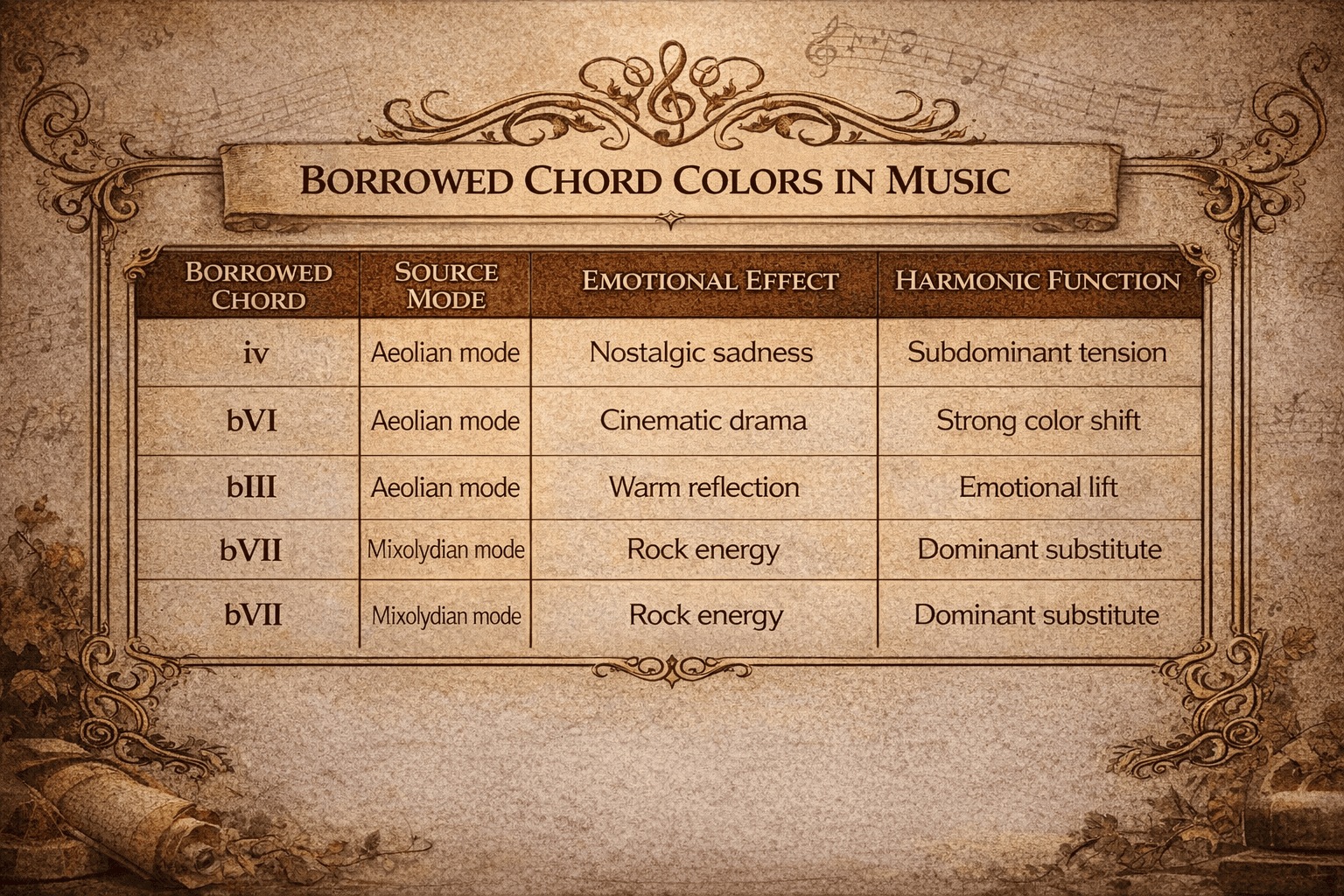
Quick Reference Table for Modal Interchange
Key Type Diatonic Chords Common Borrowed Chords Musical Effect Major Key I ii iii IV V vi vii° bIII bVI bVII iv Dramatic / Emotional Minor Key i ii° III iv v VI VII I IV V Bright contrast
How to Use Modal Interchange in Piano Playing and Composition
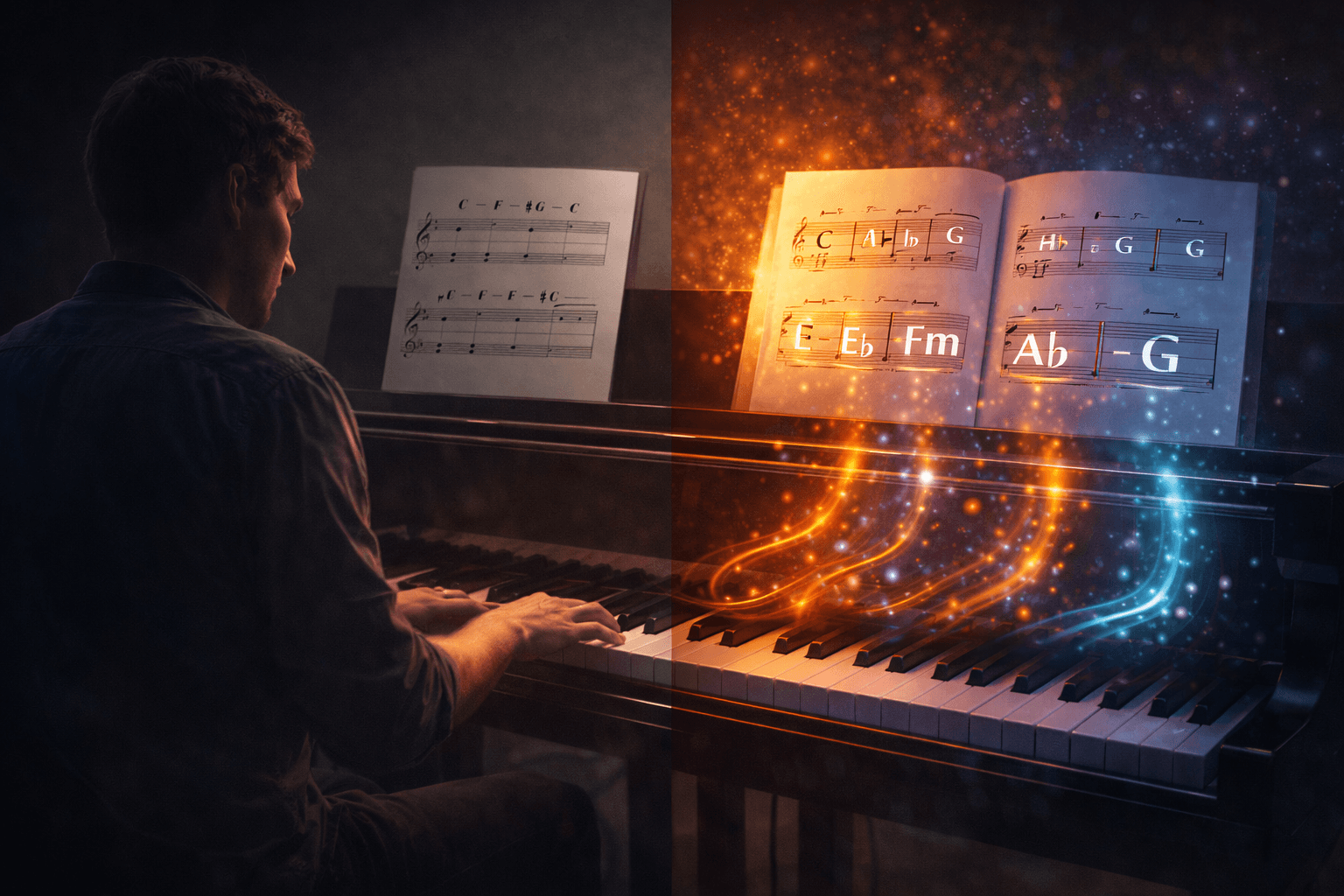 Learning to apply modal interchange in music: borrowed chords on piano opens powerful opportunities for modal harmony in composition. Pianists can transform simple harmonic progression structures by inserting modal interchange chords that enrich harmonic color in music and expand expressive possibilities.
Songwriters often experiment with modal chord borrowing to reshape chord progression variations while maintaining the same tonal center in music. This method creates compelling musical tension and release, which enhances both improvisation and structured composition.
Step-by-Step Method for Using Borrowed Chords
To apply borrowed chords effectively, composers begin with a standard diatonic harmony progression, then replace one chord with a related non-diatonic chord from parallel modes, creating subtle harmonic variation while maintaining tonal stability.
Simple Piano Progressions with Modal Interchange
Many pianists experiment with modal chord progressions by modifying familiar patterns such as C–G–Am–F and replacing the final chord with F minor, introducing powerful harmonic tension and resolution that enriches the emotional harmony in music.
Writing Emotional Chord Progressions
Successful compositions rely on carefully designed harmonic progression patterns where modal interchange chords introduce dramatic chord color in music, shaping the listener’s emotional experience through calculated musical tension and release.
Practicing Modal Interchange in Different Keys
Practicing modal interchange in music: borrowed chords across multiple keys helps musicians internalize scale degrees in music, strengthen understanding of minor scale harmony, and develop flexibility in constructing expressive modal harmony structures.
Applying the Concept in Improvisation
Improvisers frequently explore modal harmony in composition by introducing spontaneous chord substitution and modal chord borrowing, allowing creative freedom while maintaining consistent harmonic progression flow.
Real Song Examples That Use Modal Interchange
 Many famous songs rely on modal interchange in music: borrowed chords to achieve emotional depth and memorable harmonic progression shifts. Composers introduce borrowed harmony during dramatic sections where listeners expect musical tension and release.
Film composers and jazz musicians particularly favor modal chord progressions because they allow greater flexibility in shaping harmonic expectations and exploring richer modal harmony textures.
Famous Pop Songs Using Borrowed Chords
Several iconic songs by artists like The Beatles demonstrate effective use of modal interchange chords, where subtle non-diatonic chords create emotional surprises while maintaining a consistent tonal center in music.
Examples from Film Music and Jazz
Film composer John Williams frequently incorporates borrowed harmony to shape cinematic harmonic progression moments that enhance storytelling through carefully designed emotional harmony in music.
How Borrowed Harmony Creates Memorable Moments in Songs
Moments featuring modal interchange chords often stand out because the listener suddenly experiences new harmonic color in music, creating memorable emotional peaks within otherwise familiar modal chord progressions.
Analyzing Chord Progressions from Popular Music
Analyzing popular songs reveals how composers manipulate scale degrees in music, combine major scale modes, and integrate modal chord borrowing to generate rich harmonic variation while preserving musical coherence.
Common Mistakes Musicians Make with Modal Interchange
 Many musicians become excited about modal interchange in music: borrowed chords and start inserting too many modal interchange chords into a single harmonic progression. While experimentation helps creativity, excessive borrowed harmony can weaken the sense of tonal center in music, making the composition feel unstable instead of emotionally powerful.
Another frequent issue appears when players ignore the relationship between parallel major and minor scales and the scale degrees in music that define each chord. Without understanding musical modes theory and the structure of diatonic harmony, composers may choose inappropriate non-diatonic chords that disrupt harmonic expectations rather than enhancing harmonic color in music.
Overusing Borrowed Chords
Using too many borrowed chords in a short musical phrase can reduce the clarity of modal harmony, because listeners lose track of the underlying tonal center in music, which prevents effective musical tension and release.
Choosing Chords That Disrupt the Key
Some musicians attempt modal chord borrowing without considering the surrounding chord progression variations, which leads to abrupt harmonic progression changes that feel disconnected rather than expressive.
Ignoring Voice Leading
Smooth voice movement between chords remains essential in modal harmony in composition, because proper voice leading helps modal interchange chords blend naturally with the surrounding diatonic harmony.
Not Understanding Parallel Modes
A lack of understanding of parallel modes such as Ionian mode, Dorian mode, or Aeolian mode often results in random chord substitution choices that fail to create meaningful harmonic variation.
Ear Training Techniques for Recognizing Borrowed Chords
Developing the ability to hear modal interchange in music: borrowed chords is a valuable skill for composers, performers, and producers. Ear training helps musicians recognize subtle changes in harmonic progression that occur when non-diatonic chords appear inside otherwise predictable modal chord progressions.
By actively listening for shifts in harmonic color in music, musicians begin to identify when borrowed harmony introduces unexpected emotional changes. This awareness strengthens understanding of musical tension and release and helps performers respond creatively during improvisation or composition.
How to Identify Modal Changes by Ear
Musicians learn to detect modal interchange chords by noticing moments when the emotional character of a progression shifts suddenly while the tonal center in music remains stable.
Listening Exercises for Musicians
Practicing with songs that contain modal harmony allows listeners to hear how borrowed chords influence harmonic expectations and create powerful emotional harmony in music.
Practicing with Piano and Backing Tracks
Playing along with backing tracks helps musicians experiment with modal chord borrowing, allowing them to hear how different major scale modes interact within a real harmonic progression.
Developing Harmonic Awareness
Over time musicians develop a stronger sense of harmonic variation, enabling them to predict when modal interchange chords may appear within complex modal chord progressions.
Practice Exercises to Master Modal Interchange
Consistent practice is essential for mastering modal interchange in music: borrowed chords because theoretical knowledge alone cannot fully develop musical intuition. Practical exercises help musicians internalize modal harmony, understand chord color in music, and apply borrowed harmony within real harmonic progression contexts.
As players practice constructing modal chord progressions, they become comfortable using chord substitution techniques and exploring relationships between parallel major and minor keys. This process strengthens knowledge of scale degrees in music and builds confidence in composing expressive harmonic variation.
Beginner Exercises
Beginner exercises focus on replacing a chord within simple diatonic harmony progressions with a related modal interchange chord, allowing students to hear the immediate change in emotional harmony in music.
bIntermediate Chord Progression Drills
Intermediate drills encourage musicians to build longer modal chord progressions that combine multiple borrowed chords while still maintaining a clear tonal center in music.
Advanced Composition Exercises
Advanced composers experiment with complex modal harmony in composition, blending chords from Dorian mode, Mixolydian mode, or Aeolian mode to produce sophisticated harmonic variation.
Improvisation Practice Routine
Improvisation exercises encourage performers to explore modal interchange chords spontaneously while responding to the evolving harmonic progression and shaping natural musical tension and release.
Learning Advanced Music Theory with Art Gharana
 Structured music education plays an important role in mastering modal interchange in music: borrowed chords because guided lessons explain how modal harmony interacts with diatonic harmony, scale degrees in music, and advanced harmonic progression techniques.
Students who study harmony systematically learn how modal chord borrowing enhances composition, improvisation, and arrangement. Teachers often demonstrate how borrowed harmony appears in real songs, helping learners understand the emotional power of harmonic color in music.
Final Thoughts: Using Modal Interchange to Elevate Your Music
Understanding modal interchange in music: borrowed chords opens a new dimension of creativity for musicians. By exploring modal interchange chords, composers gain access to richer harmonic progression patterns that combine diatonic harmony with expressive borrowed harmony.
Whether writing songs, improvising, or producing film scores, mastering modal harmony helps musicians shape powerful harmonic variation, deepen emotional harmony in music, and control musical tension and release with greater precision.