For Indian families living in the UK, providing children with structured Indian music or dance education has always been a priority. Whether the goal is cultural connection, personal development, performance training or simply a meaningful and enriching after-school activity, Indian classical arts offer something that no other educational option can quite replicate.
The challenge has traditionally been one of access and quality. Online Indian music and dance classes have transformed this landscape completely. This guide is designed to help UK parents understand their options across the full range of online Indian music classes for kids in the UK, compare the different art forms, and make an informed choice about the right starting point for their child.
Understanding Your Options: Dance, Instruments and Vocal
Bollywood Dance
Bollywood dance is the most immediately accessible and entertaining option for most children. It blends film choreography with elements of classical and folk dance, and the music is familiar and exciting. Classes are joyful, energetic and an excellent first step into Indian arts education. Best suited to children who are drawn to movement and music and want a fun, engaging activity they can immediately share with family and friends.
Kathak
Kathak is one of India's eight classical dance forms, characterised by intricate footwork, elegant spins and expressive storytelling rooted in centuries of tradition. It requires patience and commitment, but the rewards in terms of technical skill, cultural knowledge and physical grace are extraordinary. Best suited to children who are serious about dance and enjoy discipline and precision. Full details on our Kathak classes page.
Bharatanatyam
Bharatanatyam is the classical dance of South India, combining powerful footwork, hand gestures and expressive storytelling in a tradition rooted in ancient temple ritual. It is deeply connected to Carnatic music and Tamil cultural heritage. Best suited to Tamil, Telugu and broader South Indian families and children drawn to the grandeur and spiritual depth of the classical tradition. Full details on our Bharatanatyam classes page.
Tabla
The tabla is the rhythm instrument of Hindustani classical music. It develops bilateral coordination, mathematical thinking and deep rhythmic awareness. Best suited to children drawn to percussion and rhythm. Our tabla classes cover everything from first strokes to intermediate compositions.
Flute
The bansuri is one of the most evocative instruments in Indian music, associated with the devotional tradition of Krishna. It develops breath control, tone production and melodic sensitivity. Best suited to children with a natural musical ear. Our flute classes are taught by certified Hindustani and Carnatic flute teachers.
Hindustani Vocal
Hindustani vocal is the classical singing tradition of North India, based on the raga system and a rich repertoire of khayal and thumri compositions. Best suited to children from North Indian families and those with a natural singing voice. Our Hindustani vocal classes are delivered by formally trained vocalists.
Carnatic Vocal
Carnatic vocal is the classical singing tradition of South India, closely associated with Bharatanatyam and deeply embedded in Tamil, Telugu and Kannada cultural heritage. Best suited to South Indian families and those interested in the profound melodic depth of the Carnatic tradition. Our Carnatic vocal classes are taught by certified South Indian classical vocalists.
How to Choose the Right Art Form for Your Child
 With so many excellent options available, choosing where to begin can feel overwhelming. Here is a straightforward framework.
Start with your child's natural inclinations. Does your child instinctively move and dance when music plays? Dance is the natural starting point. Does your child tap rhythms constantly on every available surface? Tabla might be the perfect match. Does your child sing along to every song they hear? Vocal classes are worth exploring first.
Consider your family background. South Indian families will find Bharatanatyam and Carnatic vocal provide the most direct cultural connection. North Indian families will find Kathak and Hindustani vocal are the natural classical choices. For families from any background who want to start with something immediately engaging, Bollywood dance is a wonderful first step that can lead naturally to deeper classical exploration as interest grows.
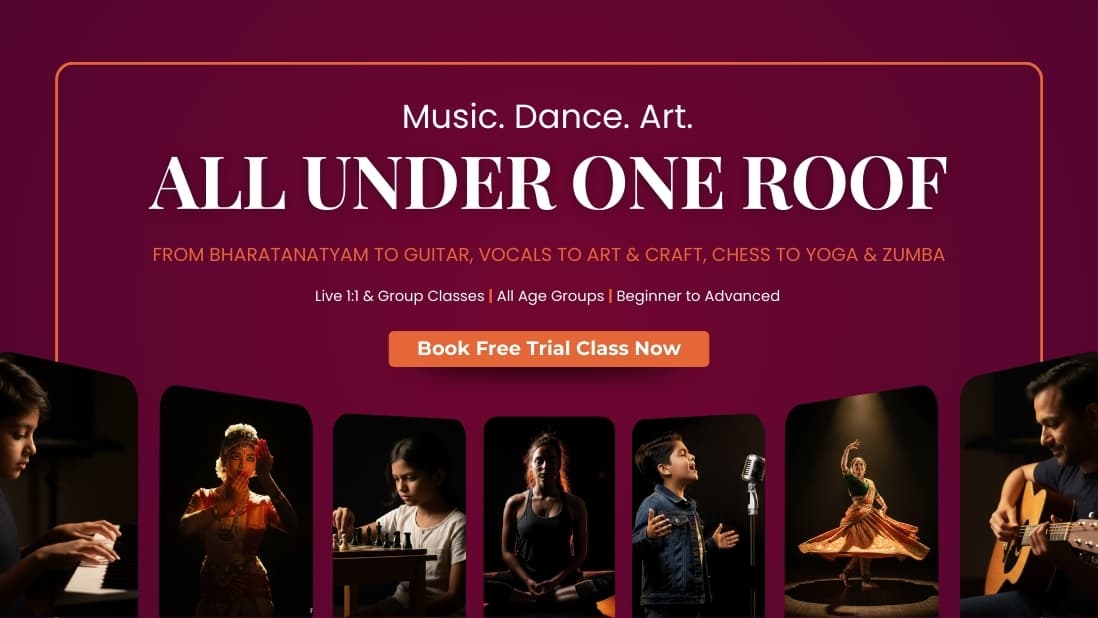
Try before committing. Art Gharana offers free trial classes across all disciplines. There is genuinely no substitute for letting your child experience a class and seeing how they respond. Most children give you a very clear signal about whether a particular art form excites them or not, and that signal is the best guide available.
What to Look for in Online Indian Music Classes
Teacher Qualifications
In classical Indian arts, the teacher's training lineage matters enormously. A tabla teacher who trained under a recognised ustad, a Bharatanatyam teacher certified by a classical institution, these credentials ensure that what your child learns is authentic and not a simplified or diluted version of the tradition. Always ask about a teacher's qualifications and training background before enrolling.
Live Rather Than Pre-Recorded Instruction
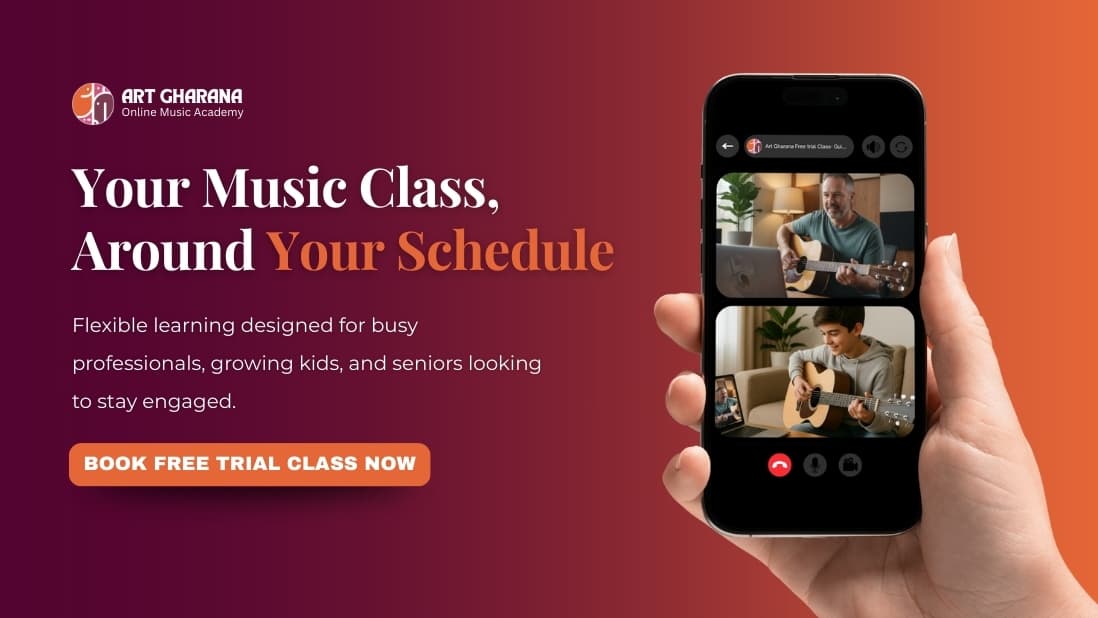
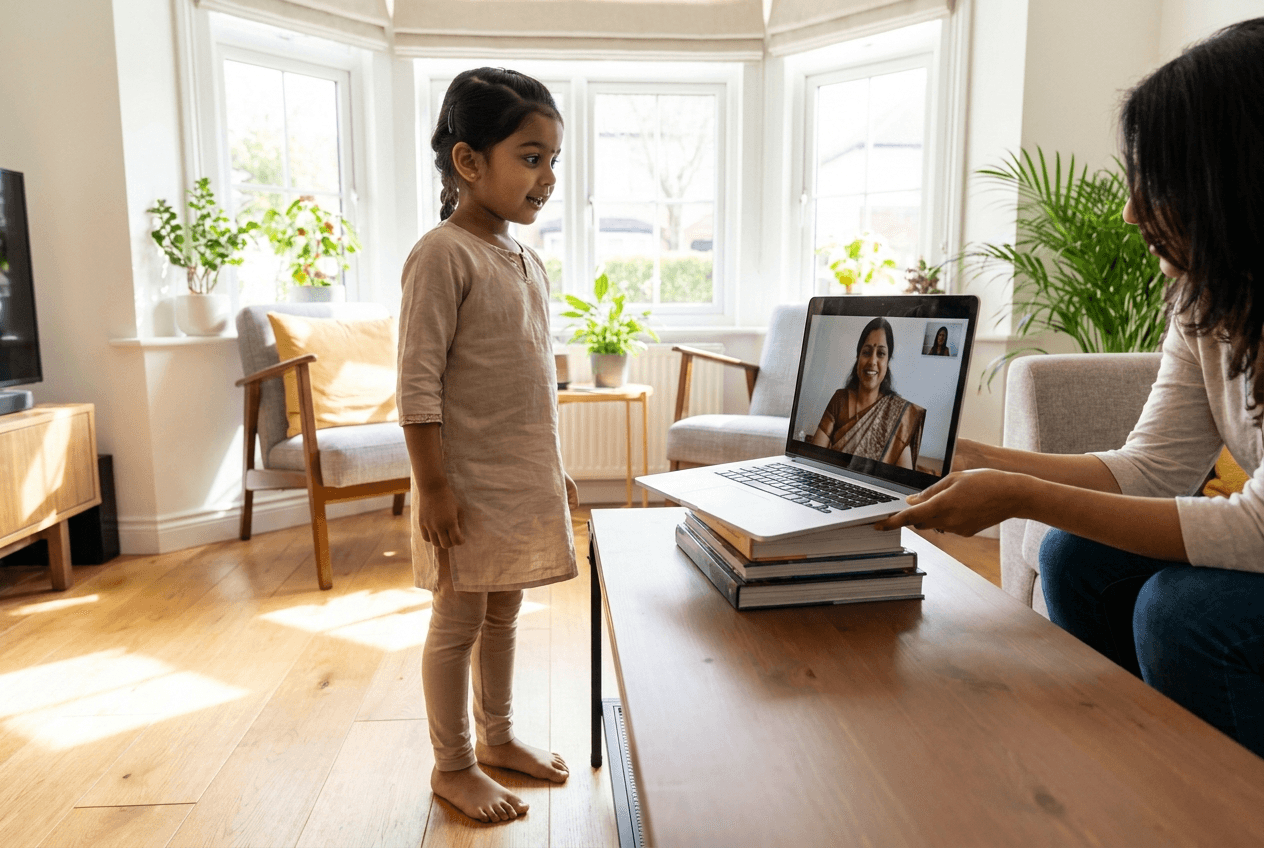
Live one to one classes allow the teacher to provide real-time corrections, adapt to the child's pace and energy, and build the personal relationship that motivates long-term commitment. Pre-recorded videos are useful supplements but cannot replace live teaching, especially for young children who need immediate feedback and human connection to stay engaged.
UK Scheduling Compatibility
Many online Indian arts providers operate primarily in Indian Standard Time or UAE time zones. Classes offered only at those times will consistently clash with UK school hours and family life. Art Gharana offers full flexibility across UK time zones including morning, evening and weekend slots.
Curriculum Structure
A structured curriculum with clear levels, regular assessments and certificates gives you confidence that your child is progressing purposefully. Review our plans and pricing to see how Art Gharana structures its programmes and what each plan includes.
Art Gharana: A Complete Indian Arts Education for UK Families
Art Gharana is a specialist online Indian arts education platform with over 50 certified teachers across dance, music and vocal disciplines. All classes are live, one to one and available in UK time zones. Every new student can begin with a completely free trial class. Browse full teacher biographies on our teacher profiles page to find the right instructor for your child before booking.
The Benefits of Starting Young
The research on music education and child development is remarkably consistent on one point: earlier is significantly better. Children who begin musical or dance training before the age of seven are absorbing the foundational vocabulary of an art form during a developmental window of extraordinary neurological plasticity. Movements, rhythms, melodic patterns and cultural associations learned at this age embed themselves at a depth that is simply not available to learners who begin later.
This does not mean that older children or adults cannot learn Indian classical arts effectively. They absolutely can, and many Art Gharana students begin as teenagers or adults with excellent results. But the child who begins tabla or Kathak or Carnatic vocal at age five has an advantage that compounds over years of training, building a foundation of embodied knowledge that becomes increasingly natural and automatic as they grow.
For NRI families in the UK, starting early also means that cultural engagement becomes part of the fabric of a child's identity before the social pressures of adolescence begin. A child who has been dancing Bharatanatyam since age five carries it as a natural and confident part of who they are, not something they have to consciously decide to maintain against social friction.
How Art Gharana Structures Learning for UK Children
Every Art Gharana teacher begins with a thorough assessment of the student's current level, learning style and pace of progress. There is no one-size-fits-all curriculum imposed on every student regardless of their individual needs. Instead, each child's programme is tailored to where they are and where they are going, with regular feedback to parents on progress, areas of strength and what to focus on in home practice between sessions.
Assessment milestones and certificates are built into the curriculum at each level, giving students and parents a clear sense of progression and achievement. Students work towards these milestones at their own pace, with the teacher's guidance, rather than being pushed through a fixed timetable that may not suit their individual development.
Many Art Gharana students also participate in virtual recitals and performance opportunities where they can share their progress with family and the wider Art Gharana community. For a child in Manchester or Glasgow who might otherwise have no performance platform available locally, these online performance opportunities are genuinely significant. They give children the experience of preparing for and delivering a performance, the discipline that demands and the confidence it builds, without requiring any travel or physical venue.
Practical Advice for Parents Choosing Their First Class
If you are new to Indian classical arts education and unsure where to start, here is the simplest possible framework. Ask your child which of the following appeals to them more: moving and dancing, or playing an instrument, or singing. This one question, answered honestly, typically points clearly to the right starting category. From there, the specific choice between Bollywood dance and Kathak, or tabla and flute, or Hindustani and Carnatic, can be made after a trial class in each.
Do not overthink the choice. The most important thing is to start. A child who begins Bollywood dance at age five and later transitions to Kathak at age nine has not wasted those four years. They have built a physical vocabulary, a love of movement, a sense of rhythm and a relationship with Indian music that makes their Kathak training richer and faster than it would have been otherwise. Every entry point into the world of Indian classical arts is a good one.
The Long-Term Value of Indian Arts Education
Parents often ask whether the investment in Indian arts education is worth it, particularly when children have so many competing demands on their time. The answer, based on the experience of thousands of families across the UK, USA, Canada and Australia who have enrolled their children at Art Gharana, is an unequivocal yes. And the reasons go far beyond music and dance.
Children who receive sustained Indian arts education from a young age develop qualities that serve them throughout their lives: the discipline of regular practice, the patience to work at something difficult until it yields, the confidence that comes from genuine mastery of a complex skill, and the cultural pride that comes from knowing and embodying their heritage. These are not small things. They are foundational qualities of character that parents across every culture recognise as important and that good arts education consistently develops.
Beyond these character qualities, the cognitive benefits of classical music and dance training are now very well documented. Neurological research consistently shows that children who receive structured music training in early childhood develop larger working memory, stronger phonological processing, better executive function and superior mathematical reasoning compared to children who do not. These benefits emerge across all forms of music training, but they are particularly strong in training systems with highly structured technical demands, and classical Indian music and dance training is among the most technically demanding in the world.
What UK Indian Families Say About Their Experience
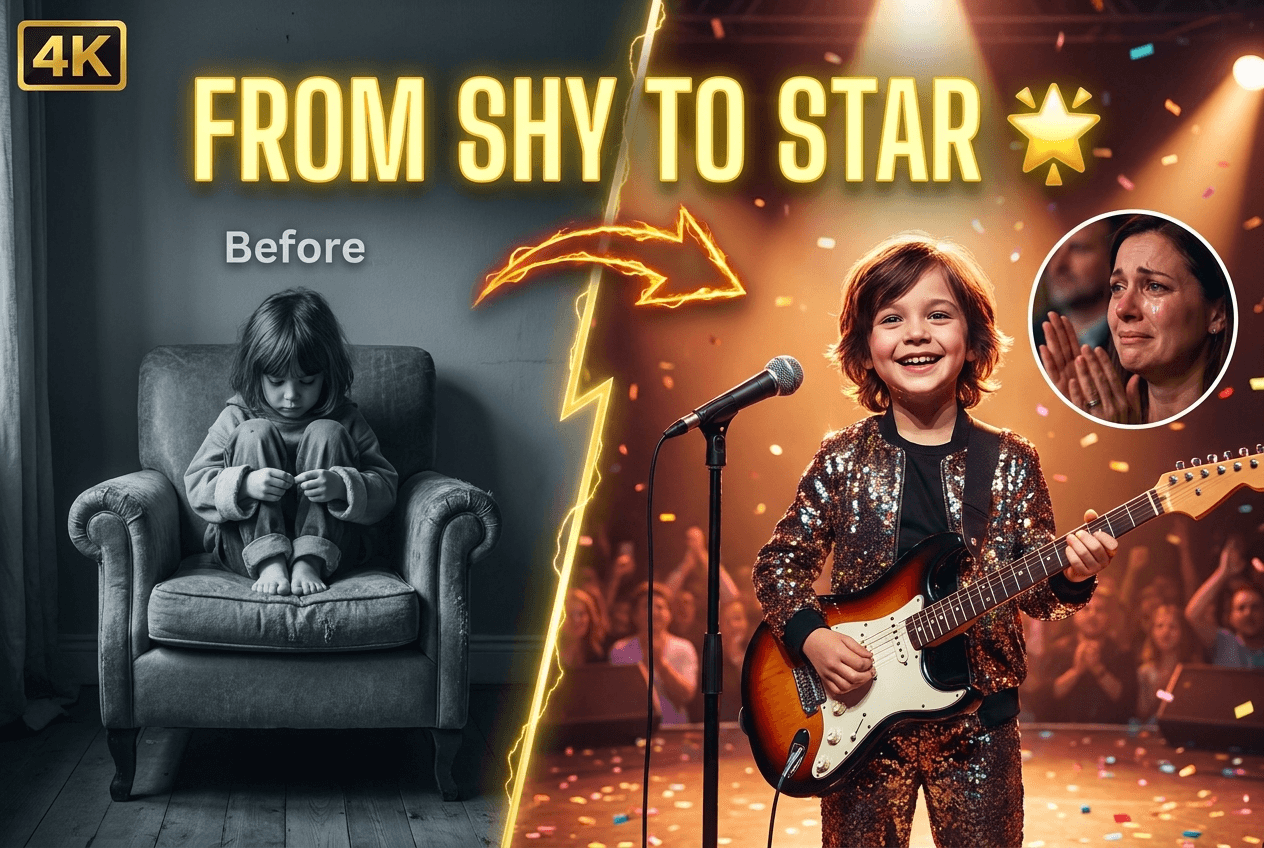
The most compelling evidence for the value of Art Gharana's programmes comes from the families themselves. Parents across the UK describe watching their children transform over the course of a year or two of consistent training: a shy child who barely spoke in class becoming a confident performer on stage; a restless, distracted child developing the ability to sit and focus for extended periods; a child who felt caught between two cultures finding a sense of pride and groundedness in their Indian heritage that carried into every area of their life.
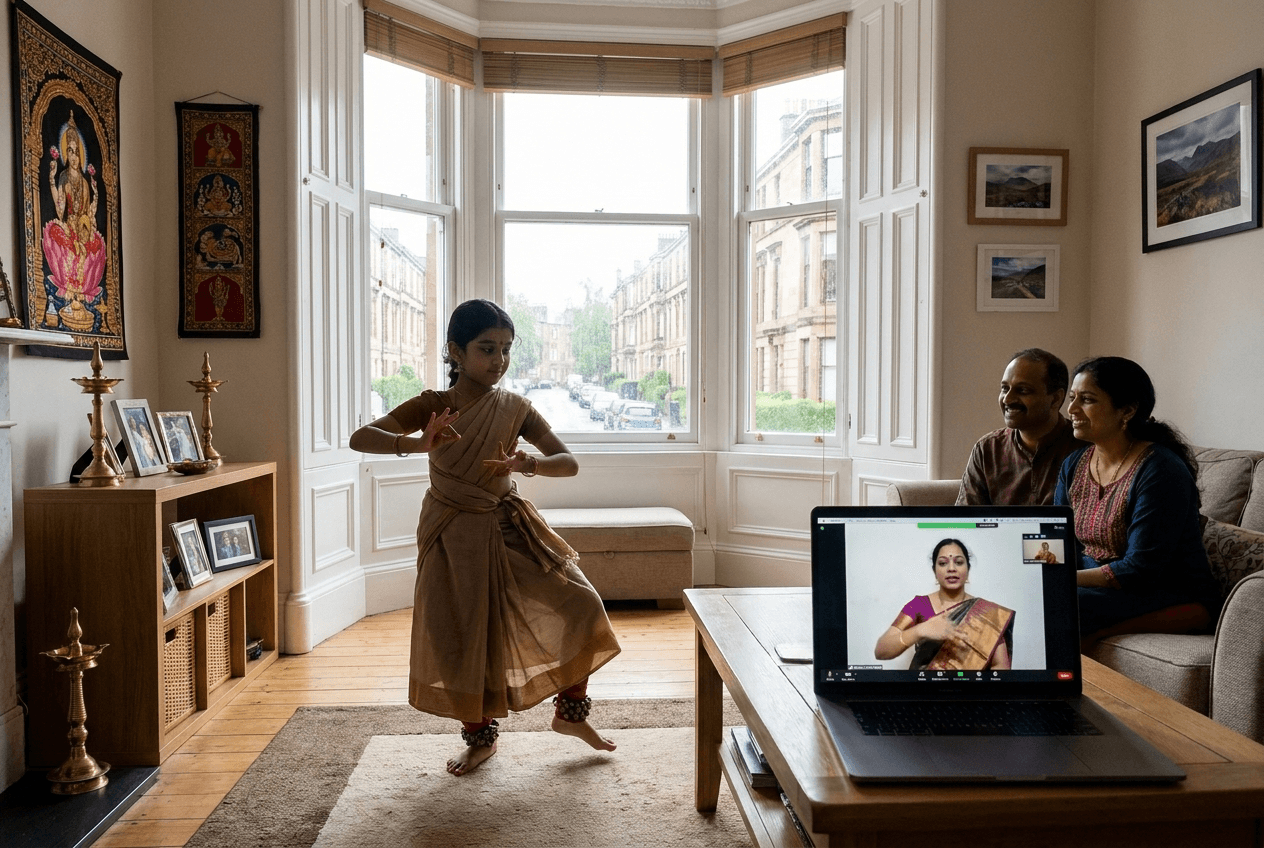
Grandparents in India who watch their grandchildren perform Bharatanatyam or play tabla over a video call frequently describe it as one of the most moving experiences of their lives. The knowledge that their cultural traditions are being carried forward by children growing up thousands of miles away, that the art forms they grew up with are still living and developing in the next generation, is profoundly meaningful.
For many NRI families, the decision to enrol their child at Art Gharana is one they describe as among the most important educational investments they have made. Not because of the cost, which is very reasonable, but because of what it delivers: a living cultural connection that no other activity can provide.
Getting Started: Your Next Steps
If you have reached this point in the guide and are ready to take the next step, here is what to do. Visit the Art Gharana website and browse the courses page to see the full range of disciplines available. Read the teacher profiles to get a sense of the teachers who work in the discipline you are most interested in. Then book a free trial class in the discipline that appeals most to your child.
The trial class is completely free and carries no obligation whatsoever. It is simply an opportunity for your child to meet their potential teacher, experience what a live online class feels like, try some basic movements or exercises in the art form they are exploring, and see whether it excites them. Most children come away from the trial class enthusiastic about continuing. Some discover that a different discipline would suit them better. Either way, the trial class gives you information that no amount of reading can provide.
The most important thing is simply to begin. Cultural engagement, like all habits, is easier to build than to rebuild once a pattern of non-engagement has been established. The child who begins their tabla or Kathak or Carnatic vocal training at five or six has a significantly easier cultural journey ahead of them than the child who waits until twelve. And the family that builds arts education into their weekly rhythm now has a foundation that will serve them for the next decade and beyond.
Frequently Asked Questions
1. Which Indian instrument is easiest for a child to start with?
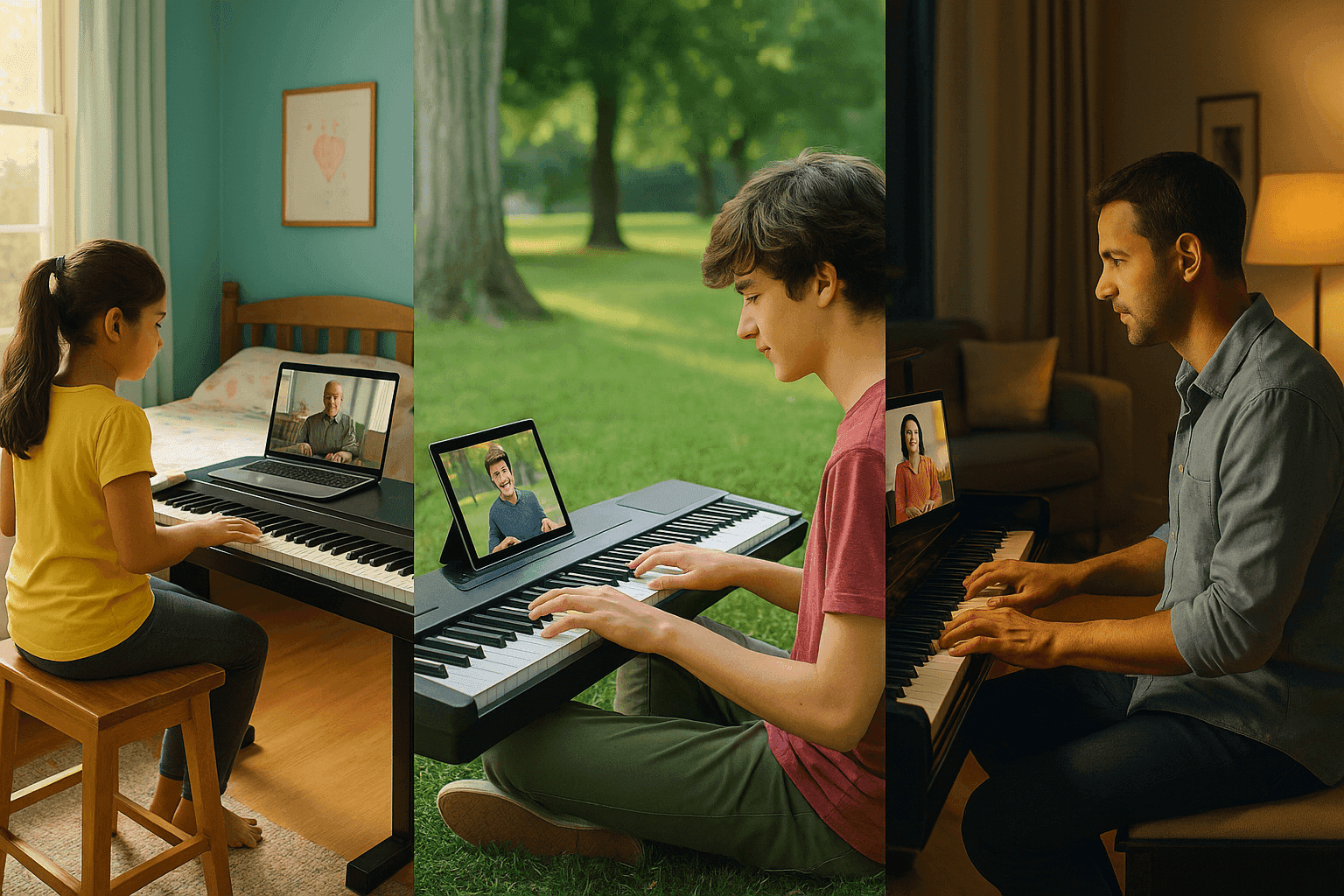
Tabla is recommended for children drawn to rhythm. Flute is excellent for children with a natural melodic ear. Guitar and piano have broad modern repertoires that motivate young learners quickly. The right choice always depends on the individual child.
2. Should my child learn Bollywood dance or classical Indian dance first?
Bollywood dance is typically the better starting point for most children because it is immediately fun and accessible. Classical forms like Kathak and Bharatanatyam build on that enthusiasm with greater technical depth and cultural grounding over time.
3. How do I know which art form is right for my child?
The best way is to try a class. Art Gharana offers free trial classes across all disciplines, and children typically self-select quite naturally once they have experienced a session.
4. Are all Art Gharana teachers formally qualified?
Yes. Every teacher on the Art Gharana platform holds formal qualifications in their discipline and has been vetted for teaching experience and ability to engage effectively with children in the online format.
Book Your Child's Free Trial Class Today
Finding the right Indian music or dance class for your child in the UK has never been easier. With Art Gharana's full range of online courses, certified teachers, UK-compatible scheduling and a completely free first lesson, you can explore all the options without any risk or obligation. Head to our book a free trial class page and take the first step today.