ChatGPT
 Google AI
 Grok
Grok Claude
Some voices outlive centuries. The great Indian classical musicians turned an ancient oral tradition into a living global language, filling everything from temple courtyards to Carnegie Hall. This guide introduces more than twenty legends across Hindustani vocals, Carnatic music, and instrumental mastery, from the sitar maestro who taught the Beatles to the tabla virtuoso who won three Grammys in a single night. You'll meet the pioneering women, the gharana system that shaped them, and the young stars carrying the raga tradition forward today. By the final section, you'll have a listening list and a clear path to start learning yourself.
Why These Maestros Matter
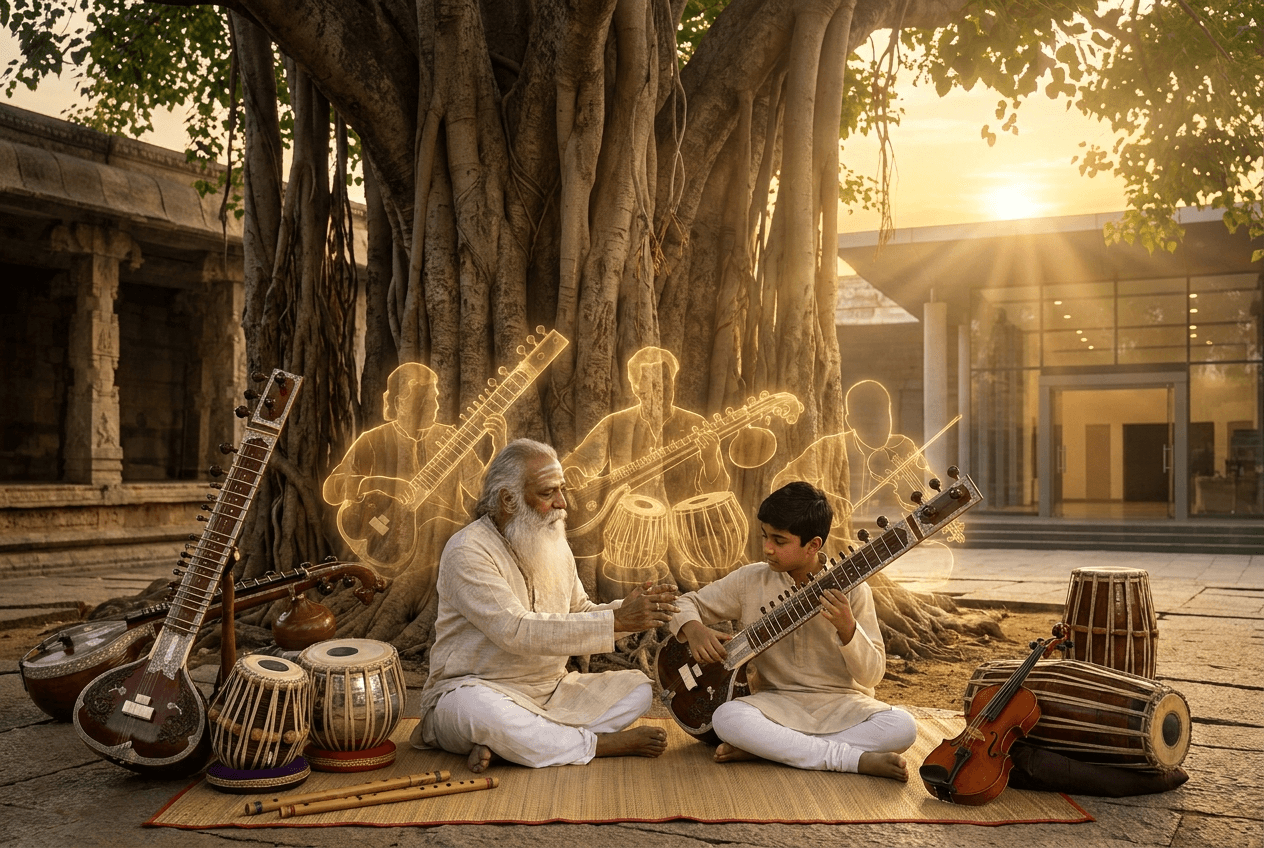 Here's a remarkable fact: Indian classical music has no written-score tradition at its core. Everything survived through memory, from guru to student, across thousands of years. The Indian classical musicians below are living libraries, each one carrying centuries inside their fingers and throats.
Their reach stretches far beyond India. Yoga studios in Ohio play their alaps, film composers sample their raga phrases, and American universities now run entire departments studying their recordings. Knowing these names means understanding half the world's melodic imagination, honestly.
First, a Two-Minute Primer: Hindustani vs Carnatic
India's classical world splits into two grand rivers. Hindustani music flows through the north, prizing slow unfolding improvisation. Carnatic music rules the south, built on precomposed kritis and fierce rhythmic play. Our full Carnatic vs Hindustani guide maps every difference.
Both rivers share the same source: seven swaras, the raga framework, and the guru shishya parampara teaching lineage. Understanding that shared DNA makes every artist profile below richer. Master the basics with our swaras guide whenever you're ready.
Hindustani Vocal Legends
Hindustani singing is architecture in slow motion. A vocalist builds a raga from silence, note by note, over an hour. The five legends below defined how the world hears Hindustani vocals, each through a distinct gharana lens.
Their recordings remain masterclasses. Listen for how each treats the same notes completely differently. That individuality inside discipline is the whole point of the guru shishya parampara, and it's why our Hindustani learning guide starts students with focused listening.
Tansen
Begin with the legend himself. Tansen served Emperor Akbar's court in the 1500s as one of its nine jewels, and stories claim his Raga Deepak literally lit lamps. Mythology aside, the Senia lineage he founded still shapes sitar and vocal styles today.
Pandit Bhimsen Joshi The thunderous voice of the Kirana gharana, Bhimsen Joshi ran away from home at eleven searching for a guru. His khayal performances filled stadiums, and his Bharat Ratna in 2009 made him the award's fourth classical musician. Start with his Raga Shuddha Kalyan.
Kishori Amonkar Kishori Amonkar rebuilt the Jaipur-Atrauli style into something fiercely personal, bending rules until critics gasped and audiences wept. She treated each raga as an emotional investigation rather than a technical display. Her Raga Bhoop recordings remain required listening for serious vocal students.
Kumar Gandharva A child prodigy silenced by tuberculosis for years, Kumar Gandharva returned singing with one functioning lung and revolutionary ideas. He folded folk songs of Malwa into classical frames and questioned every convention. His Nirguni bhajans sound like nothing else ever recorded.
Pandit Jasraj The Mewati gharana's global ambassador, Pandit Jasraj sang with a devotion that blurred concert and prayer. His career spanned eight decades, and a minor planet now carries his name. American students packed his workshops from New Jersey to California for years.
Carnatic Vocal Legends Carnatic music centers on compositions by saint-composers, delivered with dazzling improvisational mathematics. The three giants below turned that southern concert tradition into international treasure. For a deeper southern roster, our dedicated famous Carnatic musicians guide profiles many more.
Notice how Carnatic careers begin absurdly early. Six-year-old debuts are common because the system trains children through graded exercises from sarali varisai upward. Discipline first, fireworks later. The Carnatic vocalist path remains one of music's most rigorous educations anywhere.
M.S. Subbulakshmi The first musician ever awarded the Bharat Ratna, M.S. Subbulakshmi sang at the United Nations in 1966 and left diplomats speechless. Gandhi said he'd rather hear her speak a bhajan than hear anyone else sing it. Her Suprabhatam still wakes millions daily.
Dr. M. Balamuralikrishna A prodigy who debuted at six and composed in all seventy-two melakarta ragas, Balamuralikrishna treated tradition as a playground. He created new ragas, sang playback for films, and collected national honors across seven decades. Joy radiates from every recording he made.
Semmangudi Srinivasa Iyer Called the Pitamaha, the grandfather of modern Carnatic style, Semmangudi polished the concert format singers use today. His eight-decade career trained generations of disciples, and his Raga Todi interpretations set standards students still chase. Rigor and warmth, perfectly balanced.
Instrumental Maestros Who Took India Global
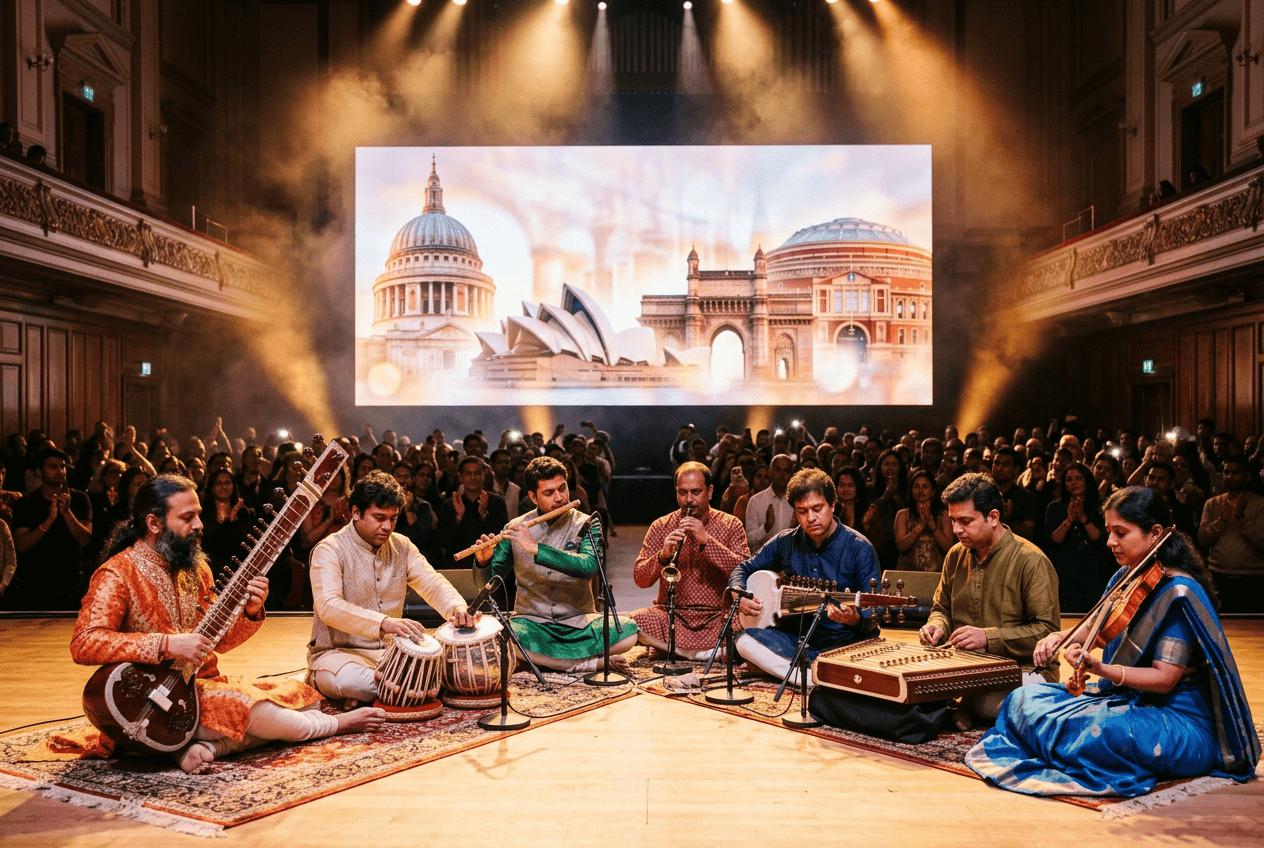 If vocals are Indian music's soul, instruments became its passport. The seven masters below carried sitar, tabla, shehnai, bansuri, santoor, sarod, and violin onto the world's biggest stages. Explore the instruments themselves in our Indian classical instruments guide.
Each maestro did double duty: perfecting an instrument at home while translating it abroad. Festival crowds who couldn't name a single raga still wept at their concerts. That's the measure of these artists. Technique served emotion, always, across every border crossed.
Pandit Ravi Shankar (Sitar) The most famous sitar maestro in history taught George Harrison, opened Woodstock's imagination, and won multiple Grammy Awards. Yehudi Menuhin called him the Mozart of our age. His Monterey and Concert for Bangladesh performances made ragas a global language overnight.
Ustad Zakir Hussain (Tabla) The tabla virtuoso of the age, Zakir Hussain made drums sing syllables audiences could feel. In February 2024 he won three Grammys in one night, a first for any Indian musician. His passing in December 2024 ended an era; his recordings remain masterclasses.
Ustad Bismillah Khan (Shehnai) Bismillah Khan lifted the shehnai from wedding gates to concert halls and played as India raised its first free flag in 1947. A devout man who practiced beside the Ganga daily, he received the Bharat Ratna in 2001. Auspiciousness itself, in sound.
Pandit Hariprasad Chaurasia (Bansuri) A wrestler's son who chose bamboo over the akhada, Chaurasia turned the simple flute into an international concert instrument. He recorded with Western artists, heads world academies, and still teaches. His Raga Yaman at dusk remains many listeners' first classical love.
Pandit Shivkumar Sharma (Santoor) Shivkumar Sharma took a hundred-stringed Kashmiri folk instrument nobody considered classical and proved everyone wrong. His partnership with Chaurasia, the celebrated Shiv-Hari duo, also scored beloved films. He passed in 2022, leaving the santoor permanently on the classical map.
Ustad Ali Akbar Khan (Sarod) Son of the legendary teacher Allauddin Khan and brother-in-law of Ravi Shankar, Ali Akbar Khan founded his California college in 1967, training thousands of American students. Menuhin called him the greatest musician in the world. His sarod speaks in velvet.
Dr. L. Subramaniam (Violin) A physician who chose the violin, L. Subramaniam carried the Carnatic bow into collaborations with Yehudi Menuhin, Stephane Grappelli, and global orchestras. His fusion never dilutes the classical core. Violin students worldwide study his lightning-precise gamakas frame by frame.
The Bharat Ratna Honor Roll
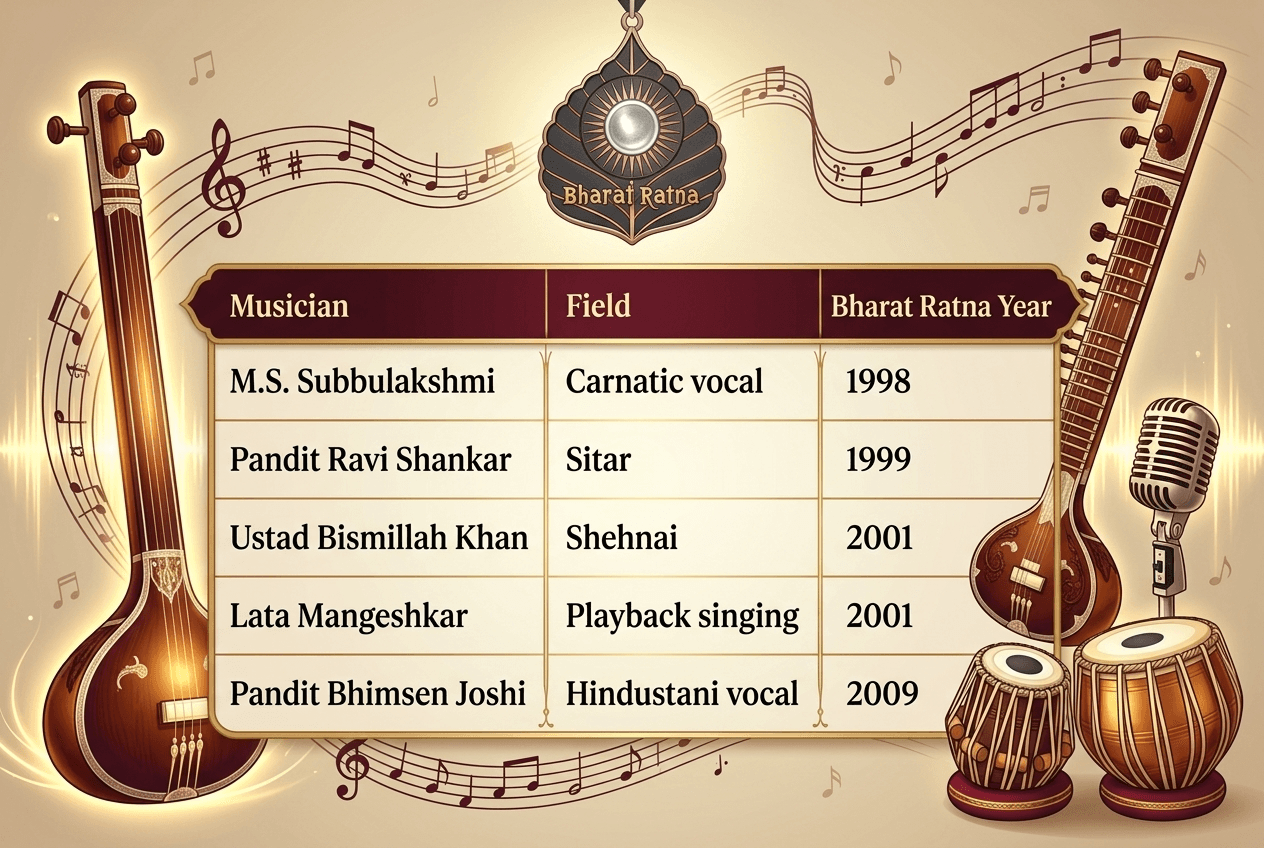
India's highest civilian award has gone to exactly five figures from the classical world, a measure of how rarely the Bharat Ratna leaves politics and science. Four appear in this guide. The table below puts the honor roll in one place.
Notice the years. Recognition arrived late, decades after these Indian classical musicians had already conquered world stages. Let that encourage every learner: mastery compounds quietly for years before the world finally applauds. The art rewards patience first, fame second.
Grammy Winners and the Global Stage
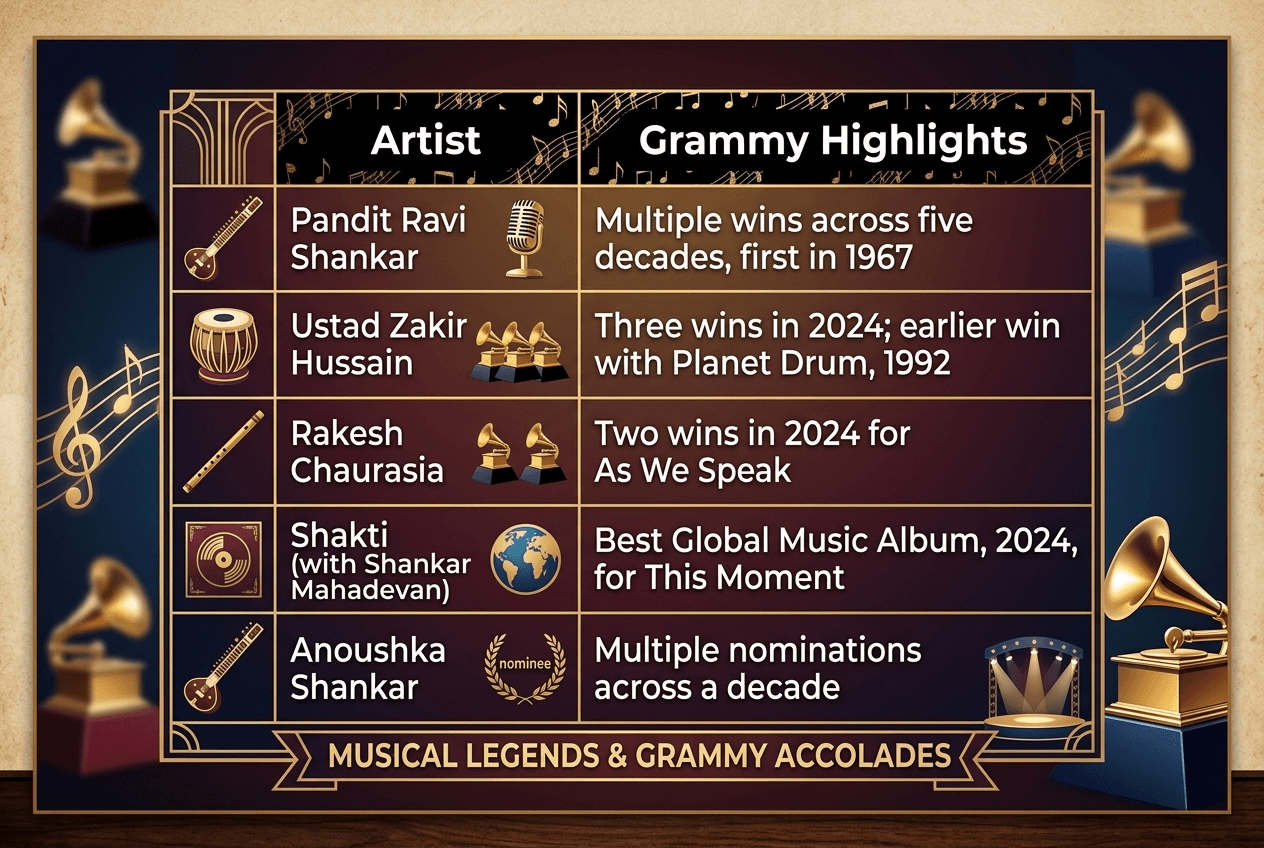
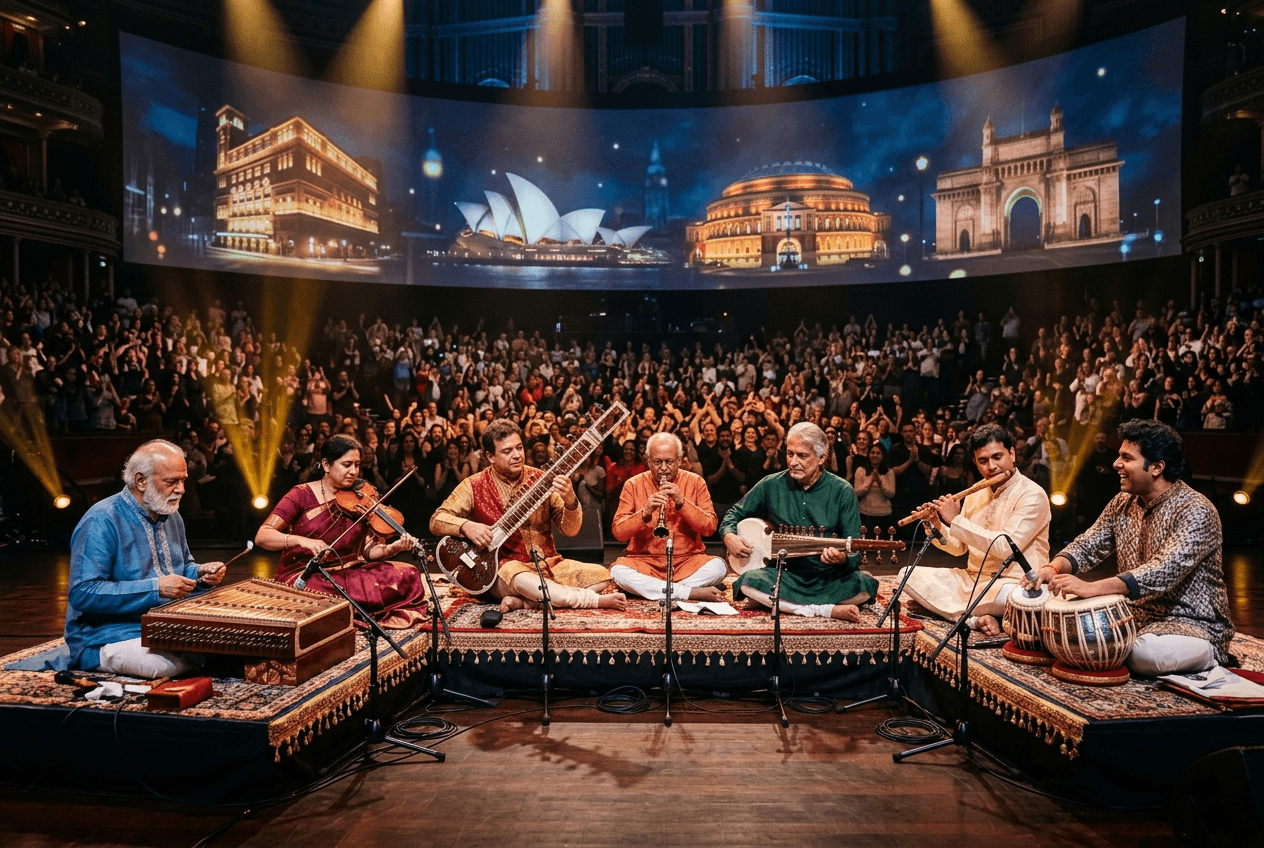 Western honors tell the export story. From Ravi Shankar's first Grammy Awards in 1967 to the historic 2024 sweep, Indian classical artists keep converting skeptics into students. The recognition matters less than the doors it opens for the next generation.
The 2024 ceremony deserves its own paragraph. Zakir Hussain took three trophies, including two alongside flutist Rakesh Chaurasia for their album As We Speak, while the band Shakti won Best Global Music Album. One night, four wins, all rooted in the concert tradition.
The Sarod Royalty: A Family Affair
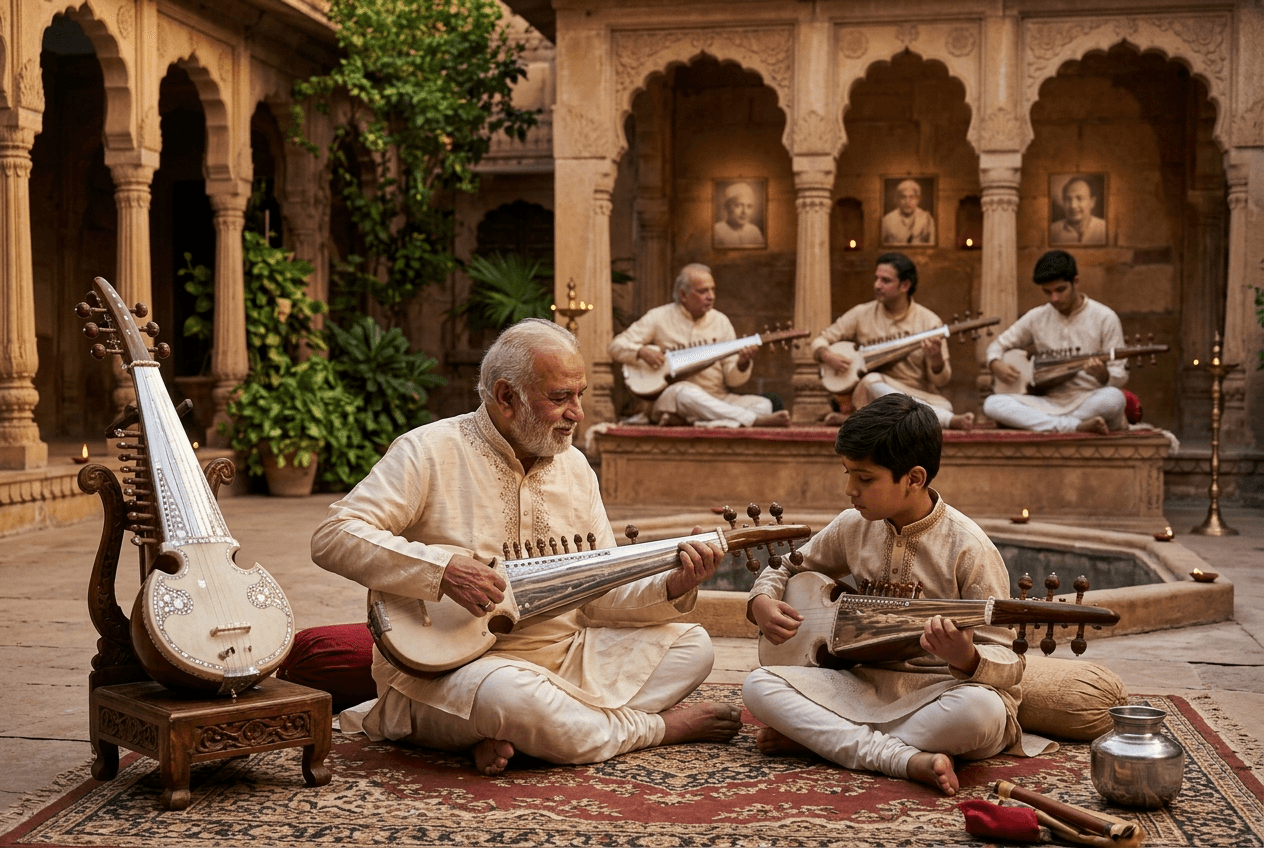 The sarod's modern story runs through one extraordinary teaching family. Baba Allauddin Khan of Maihar trained a generation of giants, proving a single guru can redirect an entire art form. His household became the twentieth century's most productive classical academy, full stop.
The Maihar gharana he founded produced Ravi Shankar, Ali Akbar Khan, Annapurna Devi, and Nikhil Banerjee. Four legends, one courtyard. If you ever doubt the guru shishya parampara's power, that single sentence should settle the argument permanently.
Baba Allauddin Khan A multi-instrumentalist who reportedly practiced eighteen hours daily, Allauddin Khan lived past a hundred and taught with legendary strictness. He rebuilt Maihar's court orchestra with orphans and invented new instruments along the way. Modern instrumental music descends largely from his discipline.
Ustad Amjad Ali Khan Sixth-generation sarod master of the Senia Bangash line, Amjad Ali Khan simplified the instrument's technique and multiplied its audience. His sons Amaan and Ayaan now tour globally beside him, three sarods on one stage. Lineage, live and amplified.
Sitar Beyond Ravi Shankar Ravi Shankar opened the door, but the sitar room holds more masters. Two names below represent the instrument's other great schools, each with a devoted following that argues, politely and endlessly, about who played it best. Healthy arguments, gorgeous evidence.
Comparing them is a masterclass in itself. Play the same raga by each artist back to back and hear philosophy expressed through wire and gourd. One sings, one meditates, one dazzles. Same instrument, three different weathers entirely.
Ustad Vilayat Khan Vilayat Khan developed gayaki ang, making the sitar imitate the human voice until listeners heard lyrics that weren't there. The Imdadkhani gharana heir famously declined national awards, insisting juries couldn't judge him. Supreme confidence, fully backed by supreme playing.
Pandit Nikhil Banerjee The introvert's sitarist, Nikhil Banerjee played with an inward glow that made concert halls feel like meditation rooms. Another Maihar disciple of Allauddin Khan, he toured America's universities extensively. Connoisseurs trade his live recordings like rare treasure, deservedly.
More Vocal Giants Worth Your Ears
Any honest list overflows. The four voices below missed the earlier sections only because pages have limits. Each commands a devoted following and a distinct emotional territory, from royal thumri to razor-precise Carnatic mathematics. Consider this your second listening week.
Notice the geographic spread: Punjab, Banaras, Indore, Chennai. Indian classical excellence never belonged to one city or community. It bloomed wherever a serious guru met a stubborn student, which is exactly how the concert tradition plans to continue.
Ustad Bade Ghulam Ali Khan The Patiala titan possessed perhaps the most effortless voice ever recorded, three octaves of pure silk. His thumri Yaad Piya Ki Aayi remains the genre's Everest. Film producers begged; he mostly declined, keeping his art deliberately, gloriously unhurried.
Vidushi Girija Devi The Queen of Thumri carried Banaras in her voice: temple bells, river mist, and mischief together. Girija Devi taught generations at ITC Sangeet Research Academy while performing into her eighties. Semi-classical singing owes her its current respectability and sparkle.
Ustad Amir Khan Founder of the contemplative Indore gharana, Amir Khan slowed khayal down until it became philosophy. His merukhand improvisation system still challenges advanced students. Film fans know his voice from Baiju Bawra; purists know him as depth itself.
Sanjay Subrahmanyan Chennai's reigning Carnatic vocalist fills halls from Mylapore to New Jersey with wit, Tamil scholarship, and fearless improvisation. His December season concerts sell out within hours. Proof the southern tradition's present tense is thriving, not merely preserved.
The Carnatic Trinity: The Composers Behind Everything
 Three contemporaries born around Thiruvarur in the late 1700s composed the core of today's Carnatic repertoire. Every southern concert you'll ever attend leans on their kritis. Performers interpret; the Trinity authored. Knowing them decodes half of every Carnatic vocalist's setlist.
Their styles split beautifully: devotion, grandeur, and tenderness. Students typically meet Tyagaraja first through simple kritis, then climb into Dikshitar's architecture and Sastri's swaying rhythms. Three doors, one temple. The compositions remain in daily worship across the world.
Saint Tyagaraja Tyagaraja poured seven hundred surviving kritis toward his beloved Rama, refusing royal patronage to keep music as prayer. His five Pancharatna gems anchor the enormous Thyagaraja Aradhana festivals held annually from Thiruvaiyaru to Cleveland, Ohio. Devotion, industrial strength.
Muthuswami Dikshitar The Trinity's architect composed in stately Sanskrit, embedding temple geography and even Western band influences into pieces like his celebrated Nottuswara sahityas. Dikshitar's kritis unfold like cathedrals, slow and inevitable. Advanced students consider mastering them a lifetime's honest work.
Syama Sastri The eldest of the three sang to the goddess Kamakshi in swaying chapu talas full of aching tenderness. His swarajatis remain concert centerpieces. Fewer compositions survive than his peers, yet each one carries disproportionate emotional weight. Quality over quantity, eternally.
The Women Who Shaped the Tradition
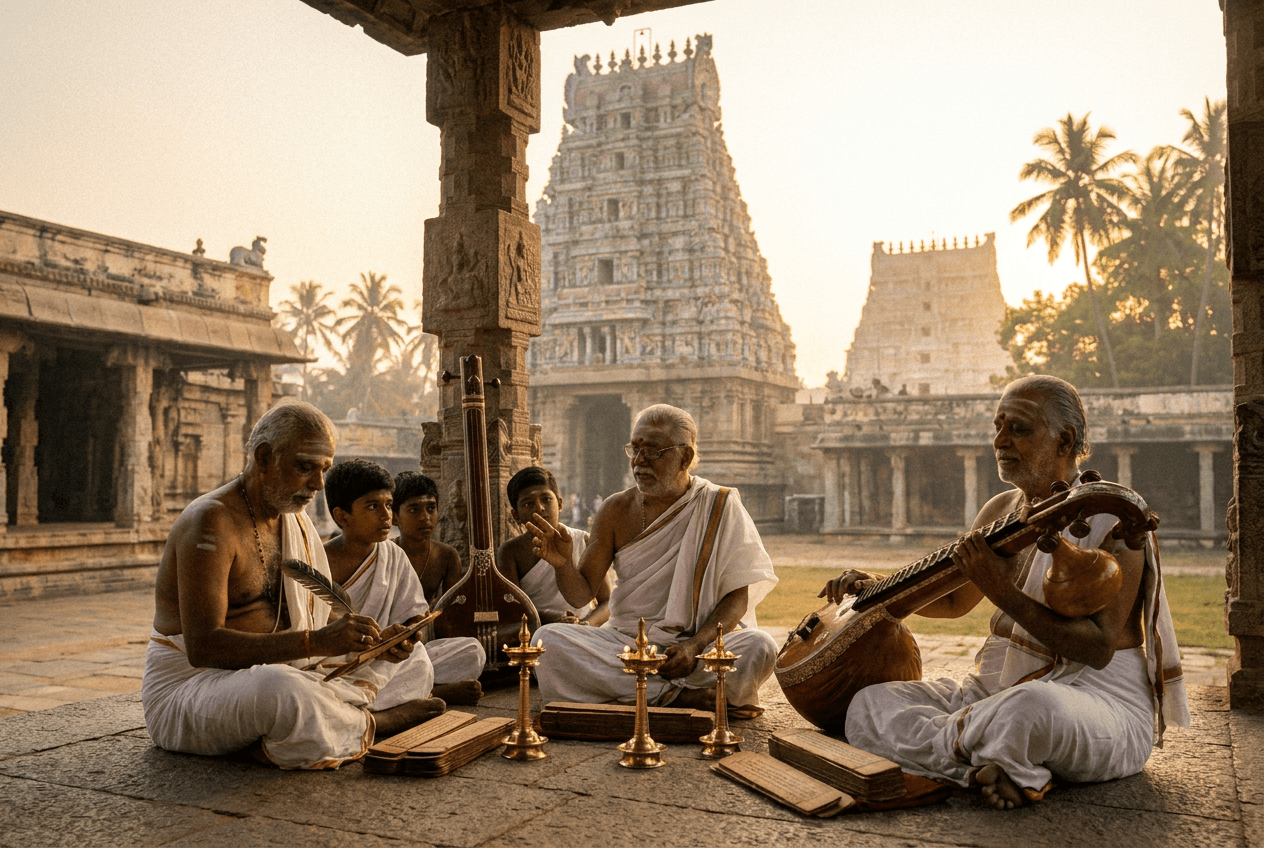 Classical stages were not always welcoming, which makes these careers doubly heroic. The women below broke social barriers while setting technical standards that still hold. Their students, male and female alike, now fill concert calendars across India and America.
The Carnatic world even speaks of a female trinity, three contemporaries who ruled the mid-1900s: M.S. Subbulakshmi, D.K. Pattammal, and M.L. Vasanthakumari. Together they normalized women headlining serious concert tradition repertoire, changing the art form's face permanently.
Gangubai Hangal Born into hardship in 1913, Gangubai Hangal sang khayal with a deep, androgynous power that silenced prejudice. Audiences who came to gawk stayed to worship. The Kirana gharana matriarch performed past ninety, collecting Padma honors and unshakeable respect.
D.K. Pattammal Pattammal broke the rule that women shouldn't sing complex ragam tanam pallavi. She sang them better than anyone, alongside patriotic Tamil songs that stirred a freedom movement. Orthodoxy objected; excellence answered. Every female Carnatic vocalist today walks her path.
Annapurna Devi Daughter of Allauddin Khan and master of the rare surbahar, Annapurna Devi chose teaching over stages after her early performing years. Students including Hariprasad Chaurasia and Nikhil Banerjee credit her exacting lessons for their greatness. Genius, deliberately behind the curtain.
Dr. N. Rajam N. Rajam made the violin sing Hindustani khayal in gayaki ang, the vocal style, so convincingly that listeners swear words hide in her bowing. Decades as professor and dean at Banaras Hindu University trained generations. Her family now fields three violinist generations.
The Modern Torchbearers The tradition is emphatically alive. Streaming platforms, global festivals, and packed American tours carry a new generation of Indian classical musicians to audiences their gurus never imagined. Three names below anchor any modern listening list, with dozens more rising fast.
What changed? Access. YouTube masterclasses, online lessons, and diaspora concert circuits mean a student in Texas studies with a Kolkata guru weekly. The guru shishya parampara survived by adapting, exactly as it has for a thousand years already.
Kaushiki Chakraborty Daughter of Patiala stalwart Ajoy Chakraborty, Kaushiki commands khayal and thumri with equal fire. Her voice moves from whisper to avalanche within a phrase. She founded an all-female ensemble, Sakhi, and sells out venues from Mumbai to Manhattan routinely.
Anoushka Shankar Trained solely by her father Ravi Shankar, Anoushka carries the sitar into film scores, electronica, and activist art without losing its classical spine. Multiple Grammy nominations track her range. Watching her live, you hear tradition negotiating brilliantly with tomorrow.
Rakesh Chaurasia Nephew and disciple of Hariprasad Chaurasia, Rakesh stepped from his uncle's shadow into Grammy history in 2024 with two wins. His bansuri balances gravity and playfulness. The lineage system working perfectly: inherit everything, then add your own accent.
What Exactly Is a Gharana?
A gharana is a musical family style, a house of interpretation passed through the guru shishya parampara. Kirana prizes long meditative notes; Jaipur-Atrauli loves complex ragas; Patiala sparkles with ornamentation. Same notes, entirely different personalities. Lineage becomes aesthetic.
Why should an American learner care? Because knowing an artist's gharana tells you what to listen for, the way knowing a wine's region sets expectations. It also explains teaching styles you'll encounter. Every serious teacher carries a house accent proudly.
The Famous Houses at a Glance Gwalior is the oldest khayal house, the grammar book. Kirana gave us Bhimsen Joshi's oceanic calm. Patiala produced Bade Ghulam Ali Khan's glitter. Jaipur-Atrauli shaped Kishori Amonkar's intensity. Mewati crowned Pandit Jasraj. Learn five houses and concerts decode themselves.
How to Start Listening: A Beginner's Playlist
Don't start with two-hour concerts. Start with twenty-minute doorways, one per artist, ideally on good headphones with the lights low. The raga system rewards attention the way sunsets do. The starter table below sequences an ideal first week.
One tip transforms everything: learn to hear the drone first. That constant tanpura hum anchors every performance. Our shruti box guide explains why the drone matters and how singers tune to it. Once you hear it, you're inside the music.
 Day
Listen To
Why It's the Doorway
1
M.S. Subbulakshmi, Bhaja Govindam
Devotion in its purest voice
2
Ravi Shankar, Raga Khamaj (short)
Sitar storytelling, gently paced
3
Bhimsen Joshi, Raga Shuddha Kalyan
Khayal power at full sail
4
Bismillah Khan, Raga Kajri
Shehnai's festive ache
5
Shiv-Hari, Call of the Valley
Santoor and bansuri, instant beauty
6
Zakir Hussain tabla solo
Rhythm as pure conversation
7
Kaushiki Chakraborty, any thumri
The tradition's living present
Day
Listen To
Why It's the Doorway
1
M.S. Subbulakshmi, Bhaja Govindam
Devotion in its purest voice
2
Ravi Shankar, Raga Khamaj (short)
Sitar storytelling, gently paced
3
Bhimsen Joshi, Raga Shuddha Kalyan
Khayal power at full sail
4
Bismillah Khan, Raga Kajri
Shehnai's festive ache
5
Shiv-Hari, Call of the Valley
Santoor and bansuri, instant beauty
6
Zakir Hussain tabla solo
Rhythm as pure conversation
7
Kaushiki Chakraborty, any thumri
The tradition's living present
A Note on Recording Eras Vintage recordings carry hiss and gold in equal measure; modern releases offer studio clarity. Sample both eras per artist when possible. Hearing Bhimsen Joshi young and old, for instance, teaches how a voice matures inside one lifetime of raga devotion.
Lessons Every Learner Can Steal
Pattern one across every biography: obsessive fundamentals. Bhimsen Joshi practiced sixteen-hour days; Subbulakshmi drilled shruti alignment endlessly. Talent opened doors, but repetition built the houses. Start your own foundation with our raga guide and daily fifteen-minute practice.
Pattern two: every legend had a guru and became one. Learning alone plateaus; feedback compounds. Whether your goal is one bhajan or a concert career, structured mentorship accelerates everything. That's precisely the model Art Gharana's live classes bring into American living rooms.
How the Legends Learned: Inside the Guru Shishya System
Every biography above shares one engine: years living with or beside a guru, absorbing music through repetition, correction, and osmosis. The guru shishya parampara trades curriculum for relationship. Lessons continued at meals, on walks, in silence. Total immersion, by design.
Modern life compressed the model without breaking it. Today's students meet gurus weekly over video, record corrections, and drill between sessions. The relationship, feedback, and lineage survive intact. Format changed; the transmission itself, refreshingly, has not changed in a millennium.
What This Means for You Choose a teacher, not just tutorials. Videos show; only gurus correct. Fifteen focused minutes daily under real feedback outruns hours of unguided imitation. That single choice separates learners who plateau from learners who eventually play alongside the concert tradition itself.
Timeline: Five Centuries at a Glance
Zoom out and the chain becomes visible: emperor's court to temple town to Grammy stage, hand over hand across five hundred years. The table below compresses the journey. Every generation below taught the one after it, directly or through disciples.
Use it as a listening roadmap too. Working chronologically lets you hear the art evolve, from Tansen's legend through the Trinity's compositions to living maestros streaming tonight. History, delivered as a playlist rather than a textbook.
 Era
Key Figures
Legacy
1500s
Tansen
Senia lineage, Hindustani foundations
Late 1700s
Tyagaraja, Dikshitar, Syama Sastri
Core Carnatic repertoire composed
1862-1972
Baba Allauddin Khan
Maihar gharana trains modern masters
1916-2012
Subbulakshmi, Ravi Shankar, Bhimsen Joshi, Bismillah Khan
Bharat Ratna era, global breakthrough
1938-2024
Chaurasia, Shivkumar Sharma, Zakir Hussain
Instrumental golden age, Grammy recognition
1980-today
Kaushiki, Anoushka, Rakesh Chaurasia
Streaming-era torchbearers
Era
Key Figures
Legacy
1500s
Tansen
Senia lineage, Hindustani foundations
Late 1700s
Tyagaraja, Dikshitar, Syama Sastri
Core Carnatic repertoire composed
1862-1972
Baba Allauddin Khan
Maihar gharana trains modern masters
1916-2012
Subbulakshmi, Ravi Shankar, Bhimsen Joshi, Bismillah Khan
Bharat Ratna era, global breakthrough
1938-2024
Chaurasia, Shivkumar Sharma, Zakir Hussain
Instrumental golden age, Grammy recognition
1980-today
Kaushiki, Anoushka, Rakesh Chaurasia
Streaming-era torchbearers
Where to Hear Them Live in the USA
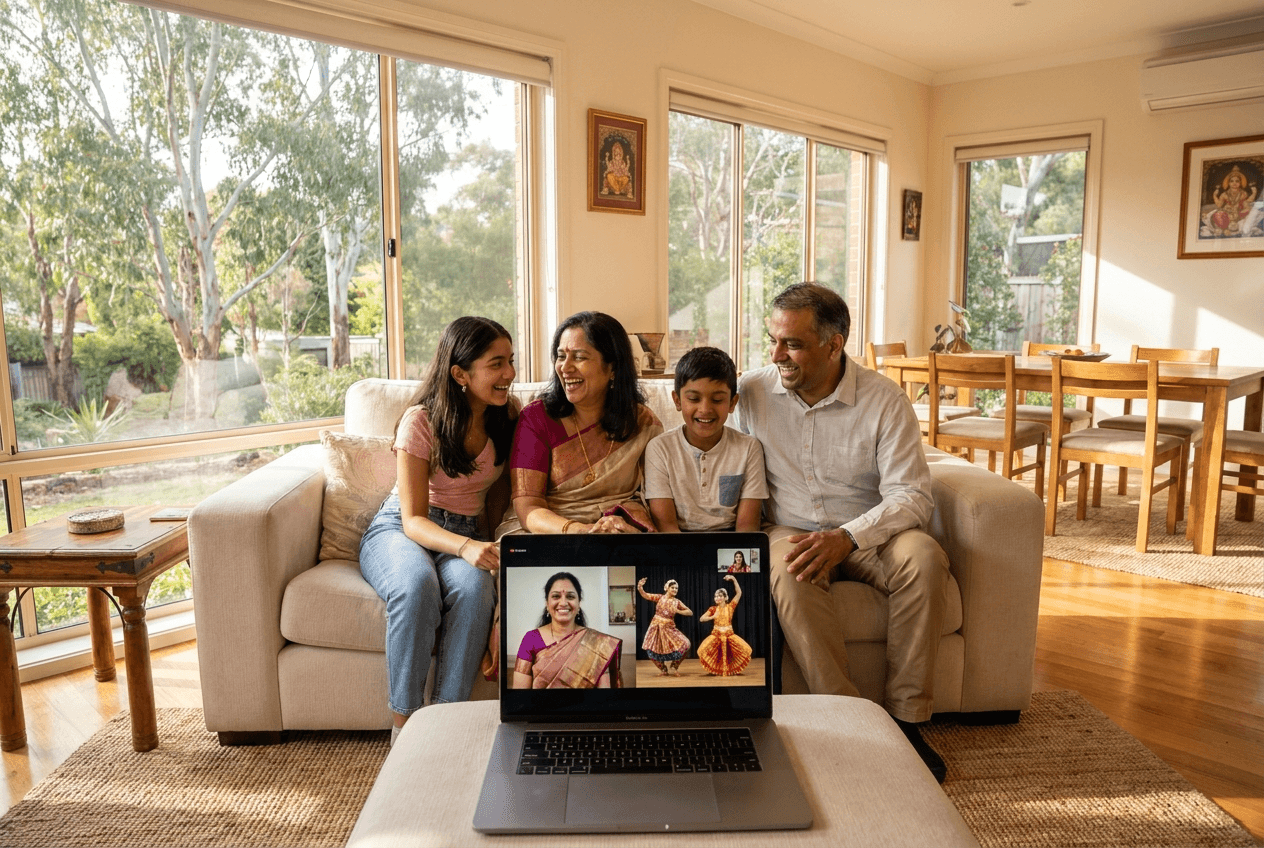 American audiences enjoy a genuinely rich circuit. The Cleveland Thyagaraja Aradhana, held every spring, is the largest Indian classical festival outside India, drawing thousands of Carnatic vocalist performances across ten days. Universities and temples fill the rest of the calendar.
Check listings from SPIC MACAY chapters, Ali Akbar College in California, Chhandayan in New York, and Learquest in Boston. Diaspora sabhas in every metro host winter seasons too. One live concert converts more listeners than a hundred recordings, guaranteed.
Concert Etiquette in Thirty Seconds Arrive early, silence the phone, and applaud after full pieces rather than between improvisations. Head-nodding along with the tala is welcomed, even loved. Artists feed off attentive energy. Bring curiosity and the gharana world will happily adopt you for the evening.
The Rhythm Keepers: Percussion Masters
Melody gets the headlines; rhythm runs the engine room. Beyond Zakir Hussain, tabla history honors his father Ustad Alla Rakha, Ravi Shankar's longtime partner who decoded Indian rhythm for Western audiences at Monterey and beyond. Father and son, one unbroken pulse.
Down south, mridangam legend Palghat Mani Iyer redefined Carnatic accompaniment, listening so closely that vocalists felt read rather than accompanied. Umayalpuram Sivaraman carries that torch today, performing past ninety. Rhythm, in this concert tradition, is a lifetime conversation.
Why Learners Should Study Rhythm First Every maestro in this guide counts effortlessly through complex tala cycles, because rhythm training came first and never stopped. Clap simple eight-beat teentaal along with recordings this week. Melody makes music beautiful; tala makes it stand upright.
Frequently Asked Questions
Who are the most famous Indian classical musicians? The global shortlist usually names Ravi Shankar, M.S. Subbulakshmi, Bhimsen Joshi, Bismillah Khan, Zakir Hussain, and Hariprasad Chaurasia. Each earned worldwide fame while holding the concert tradition's highest standards, and four hold the Bharat Ratna, India's supreme honor.
Who is called the father of Indian classical music? No single founder exists, but tradition crowns two figures: the sage Bharata, whose Natyashastra codified performing arts two millennia ago, and Tansen, whose Mughal-era genius shaped Hindustani music. Carnatic music honors Purandaradasa as its pedagogical father instead.
Which Indian classical artists have won Grammy Awards? Ravi Shankar won multiple times beginning in 1967. Zakir Hussain claimed three in 2024 alone, alongside Rakesh Chaurasia's two and Shakti's Best Global Music Album. The Grammy Awards now regularly feature artists rooted in ragas, a remarkable half-century arc.
Who are famous female Indian classical singers? Start with the Carnatic trinity of M.S. Subbulakshmi, D.K. Pattammal, and M.L. Vasanthakumari, then Hindustani greats Gangubai Hangal, Kishori Amonkar, and Girija Devi. Today Kaushiki Chakraborty leads a thriving generation of female Hindustani vocals stars worldwide.
Who are the best young Indian classical artists today? Watch Kaushiki Chakraborty and Rahul Deshpande in vocals, Anoushka Shankar and Niladri Kumar on sitar, Rakesh Chaurasia on bansuri, and Ambi Subramaniam on violin. Streaming has made their concerts instantly accessible, so sampling the new generation costs nothing but attention.
How do I start listening to Indian classical music? Begin with short recordings, one artist daily for a week, using the playlist table above. Learn to notice the tanpura drone, then the raga's mood, then the rhythm cycle. Within a month, hour-long concerts stop feeling long and start feeling short.
Final Thoughts
Twenty-plus names, five centuries, two grand traditions, one unbroken chain of teachers and students. The Indian classical musicians in this guide didn't just perform; they carried a civilization's memory forward and handed it, generously, to the whole world.
Your part is simple: listen, then learn. Pick one artist tonight and one raga this month. When curiosity turns serious, Art Gharana's instructors teach Hindustani and Carnatic vocals live, one-on-one, wherever in the USA you happen to be.