ChatGPT
 Google AI
 Grok
Grok Claude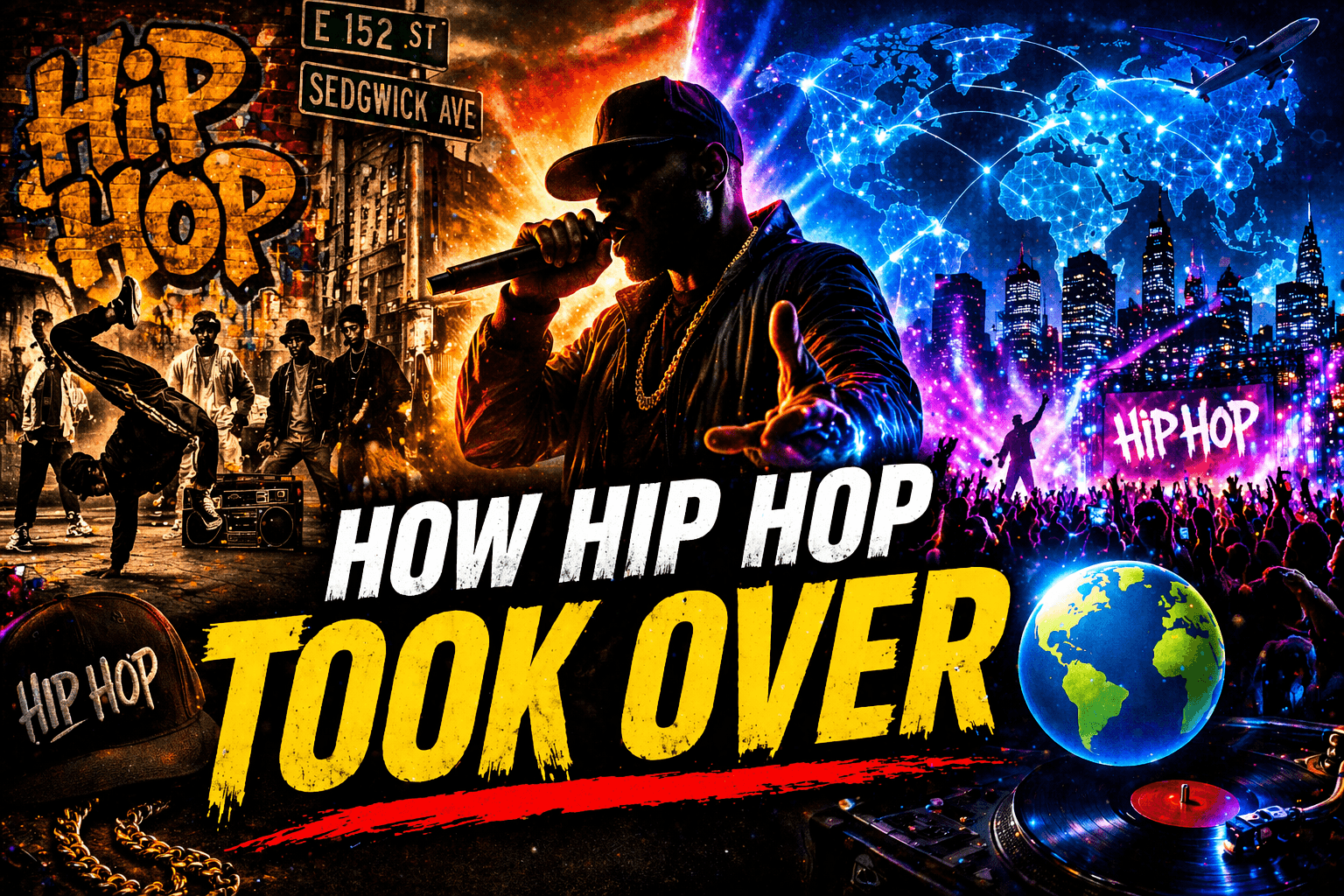
Hip hop stands today as one of the most influential cultural movements in modern society. The hip hop culture, born in New York during the 1970s, reshaped music, art, fashion, and youth identity across continents. What began as a local Bronx hip hop movement soon evolved into a powerful African American cultural movement that changed how people communicate, protest, celebrate creativity, and express social identity.
Across decades, the history of hip hop reveals a remarkable transformation from neighborhood block parties into a dominant global industry influencing film, fashion, sports, technology, and digital entertainment. Today the global hip hop movement connects millions of artists, dancers, writers, and producers who contribute to the hip hop worldwide popularity visible in music charts, streaming platforms, international festivals, and creative communities.
Understanding Hip Hop as a Cultural Movement
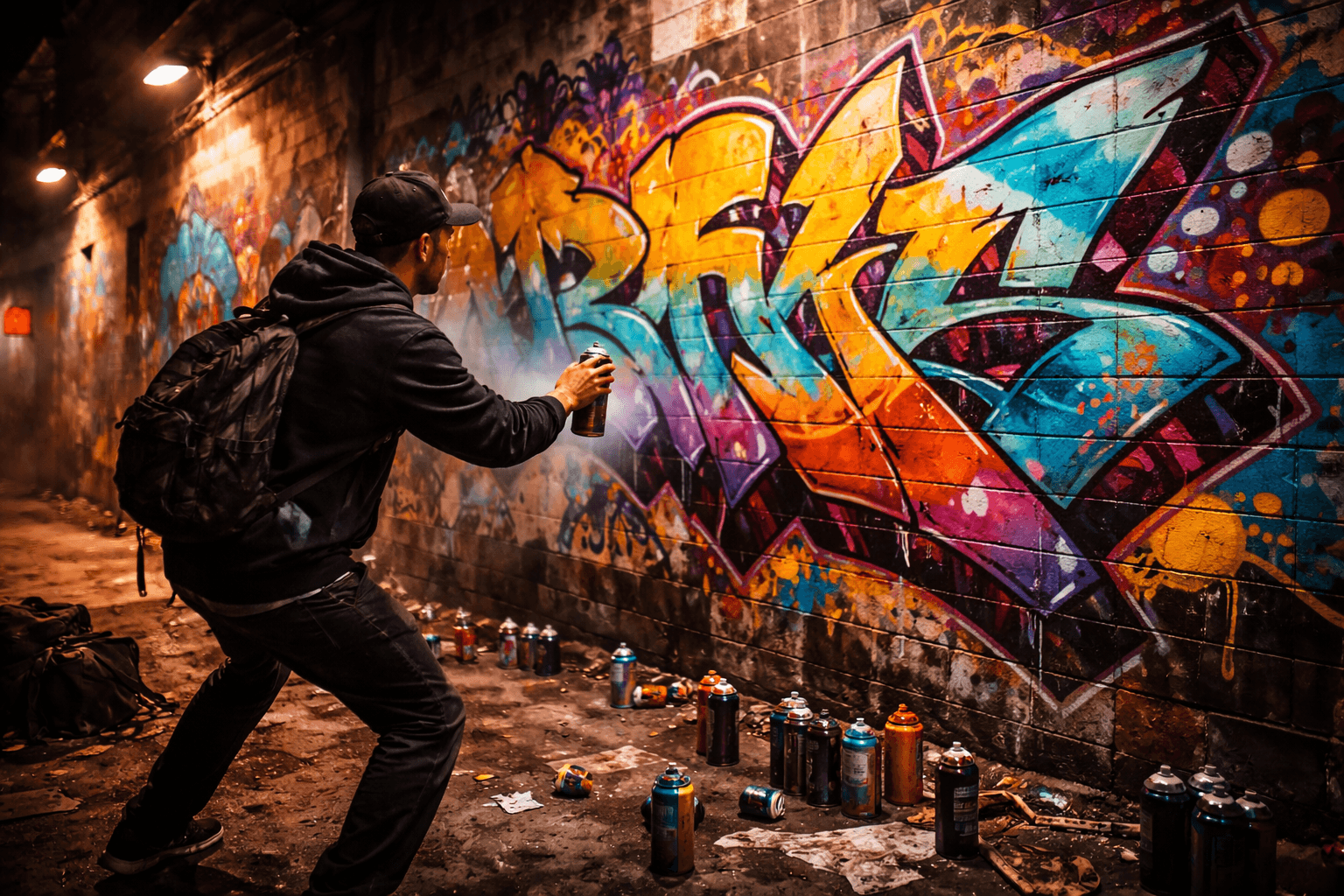 Hip hop culture represents far more than music because it combines artistic creativity, social awareness, and urban storytelling into a unified cultural identity that reflects the voices of marginalized communities, making it one of the most powerful forms of hip hop artistic expression, community storytelling, and youth empowerment ever created within modern street culture.
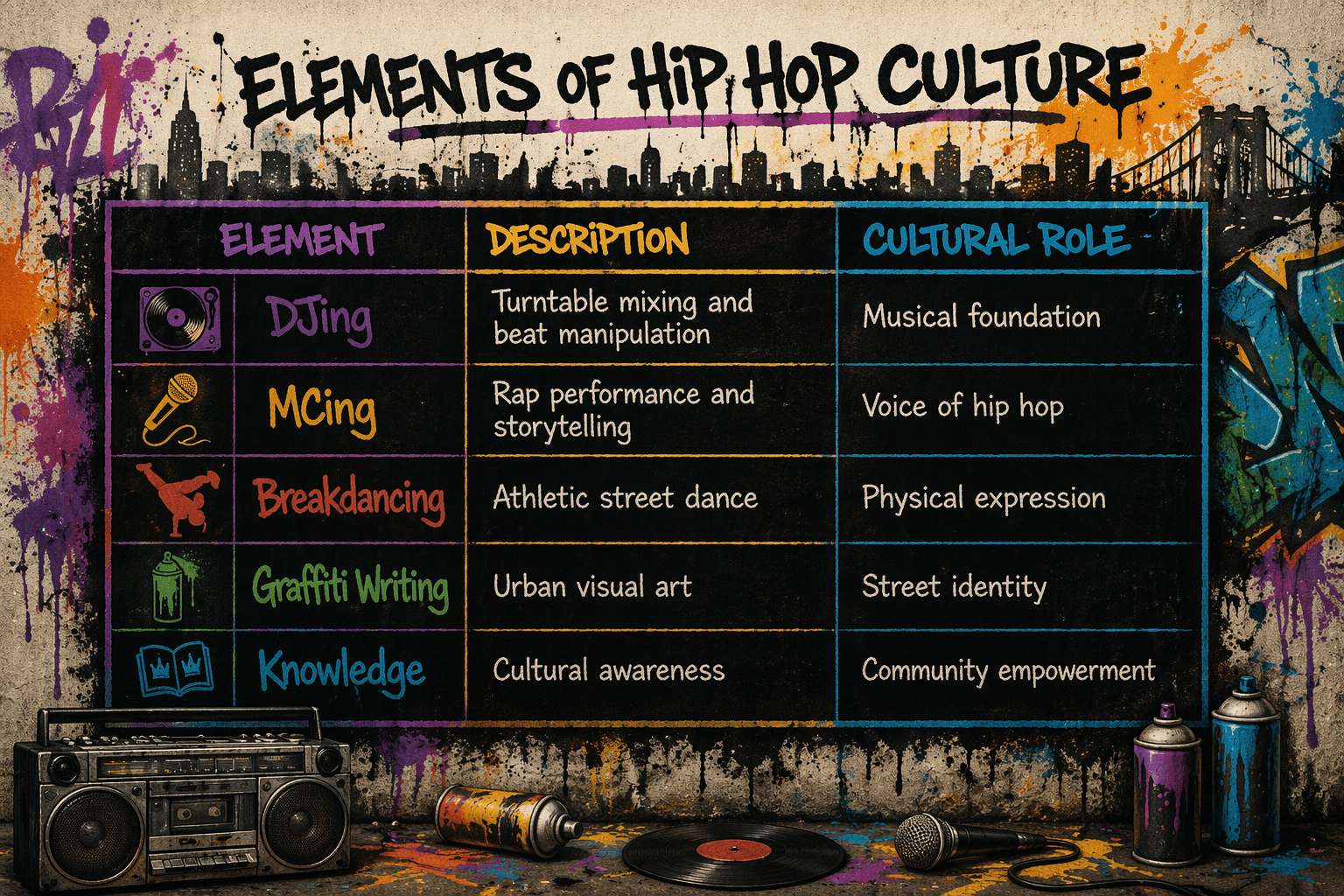
The hip hop culture elements—DJing, MCing, breakdancing, graffiti writing, and knowledge—formed the foundation of an innovative urban youth culture that encouraged creativity, competition, collaboration, and cultural pride, transforming neighborhoods into creative laboratories where young artists expressed identity through rhythm, movement, poetry, and hip hop philosophy.
What Hip Hop Really Represents
Hip hop represents freedom of expression, cultural storytelling, and community identity because it blends music, dance, poetry, and graffiti street art into one creative ecosystem where individuals communicate experiences of struggle, resilience, and ambition while shaping a distinctive hip hop lifestyle that celebrates authenticity, creativity, and bold hip hop identity and empowerment.
The Five Core Elements of Hip Hop Culture
The traditional hip hop elements include DJing, MCing, breakdancing, graffiti writing, and hip hop knowledge, each contributing to a dynamic artistic system where DJs control rhythm through DJ turntables and scratching, MCs perform powerful MC rap performance, dancers demonstrate athletic breakdance power moves, writers create wildstyle graffiti lettering, and communities share wisdom through hip hop philosophy.
Why Hip Hop Became a Voice for Communities
Hip hop quickly became a powerful voice for underserved neighborhoods because artists used rap lyricism and storytelling to document social realities such as poverty, discrimination, and systemic inequality while promoting social justice in hip hop, community unity, and hip hop community activism that empowered young people to transform frustration into creativity and cultural pride.
Hip Hop as Art, Identity, and Social Expression
Hip hop thrives as a multidimensional artistic platform where hip hop visual art, dance, and spoken word poetry combine with music to create a living culture that reflects community values, shapes youth identity, and strengthens cultural belonging through expressive outlets like hip hop cypher gatherings, freestyle rap sessions, and collaborative street performances.
The Birth of Hip Hop in New York
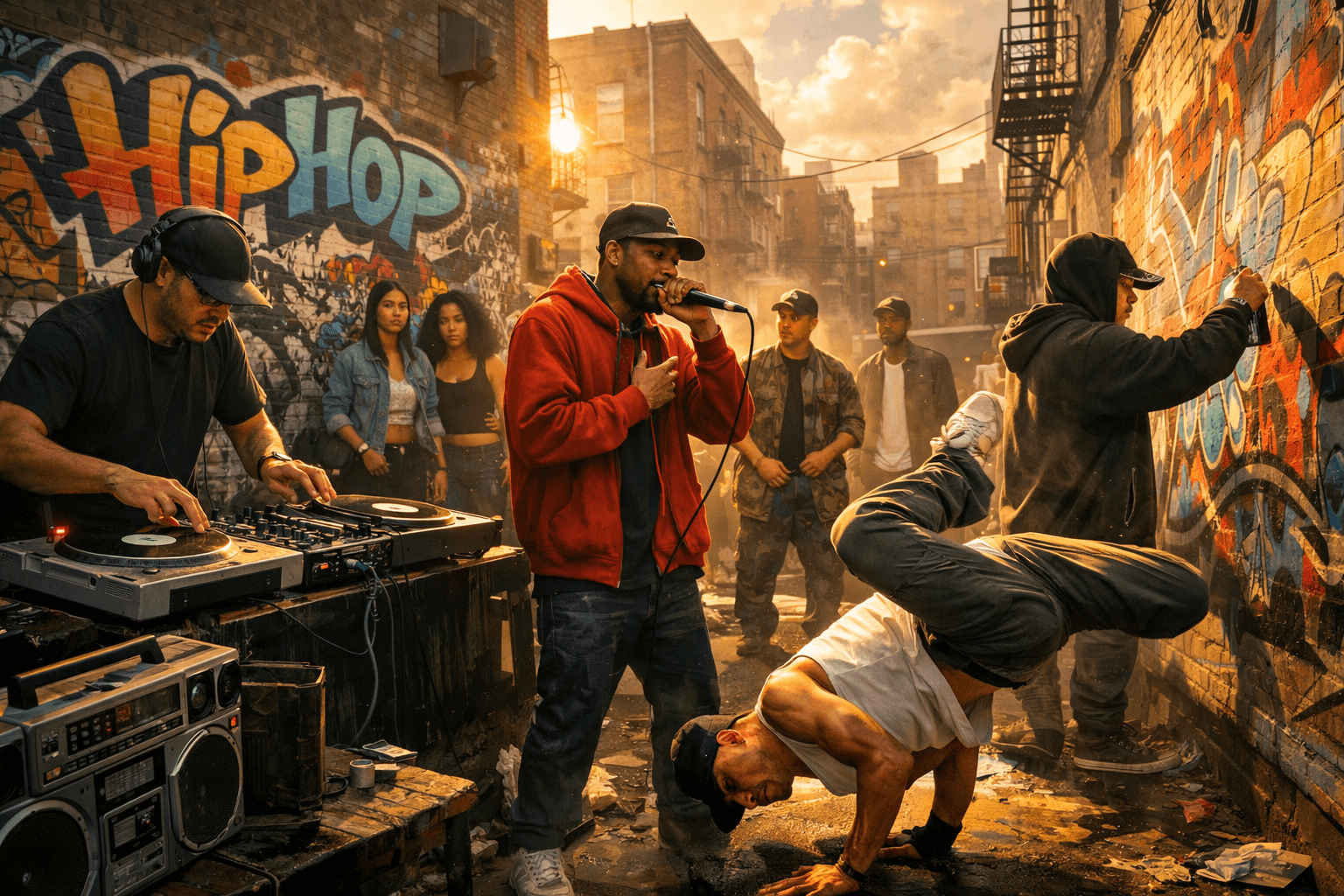 The hip hop origins trace back to the Bronx borough of New York City during the early 1970s where communities facing economic hardship, urban decay, and limited opportunities developed innovative forms of music, dance, and art that laid the foundation for the history of hip hop and ignited the cultural spark behind the Bronx hip hop movement.
These grassroots gatherings blended Caribbean sound system traditions, funk rhythms, and soul music into energetic block parties where DJs experimented with music sampling, rhythmic mixing, and beat juggling, gradually forming the sound and culture that would later influence the entire evolution of hip hop music and the hip hop global influence.
The Bronx in the 1970s: Where It All Began
During the 1970s the Bronx experienced economic hardship and declining infrastructure, yet this challenging environment fueled creativity as young residents developed innovative art forms including breakdancing culture, rap performance, and graffiti street art, transforming neglected neighborhoods into vibrant centers of street culture and cultural innovation.
Early Block Parties and Community Gatherings
Block parties became the heartbeat of early hip hop culture because DJs set up large sound systems in parks and recreation centers where communities gathered to dance, celebrate music, and witness the birth of hip hop dance battles, freestyle rap exchanges, and energetic performances that shaped the early hip hop community.
Influences from Funk, Soul, and Disco Music
Early hip hop DJs drew inspiration from funk, soul, and disco records because these genres contained powerful drum breaks and rhythmic grooves that allowed performers to extend beats, experiment with music sampling, and introduce innovative hip hop rhythm and flow that defined the sonic identity of early hip hop music.
How DJs and MCs Created a New Musical Movement
As DJs extended instrumental breaks using DJ turntables and scratching, MCs began energizing crowds with rhythmic chants and improvised freestyle rap, eventually developing sophisticated lyrical patterns that formed the early stages of rap music history and established the powerful tradition of lyrical storytelling within hip hop culture.
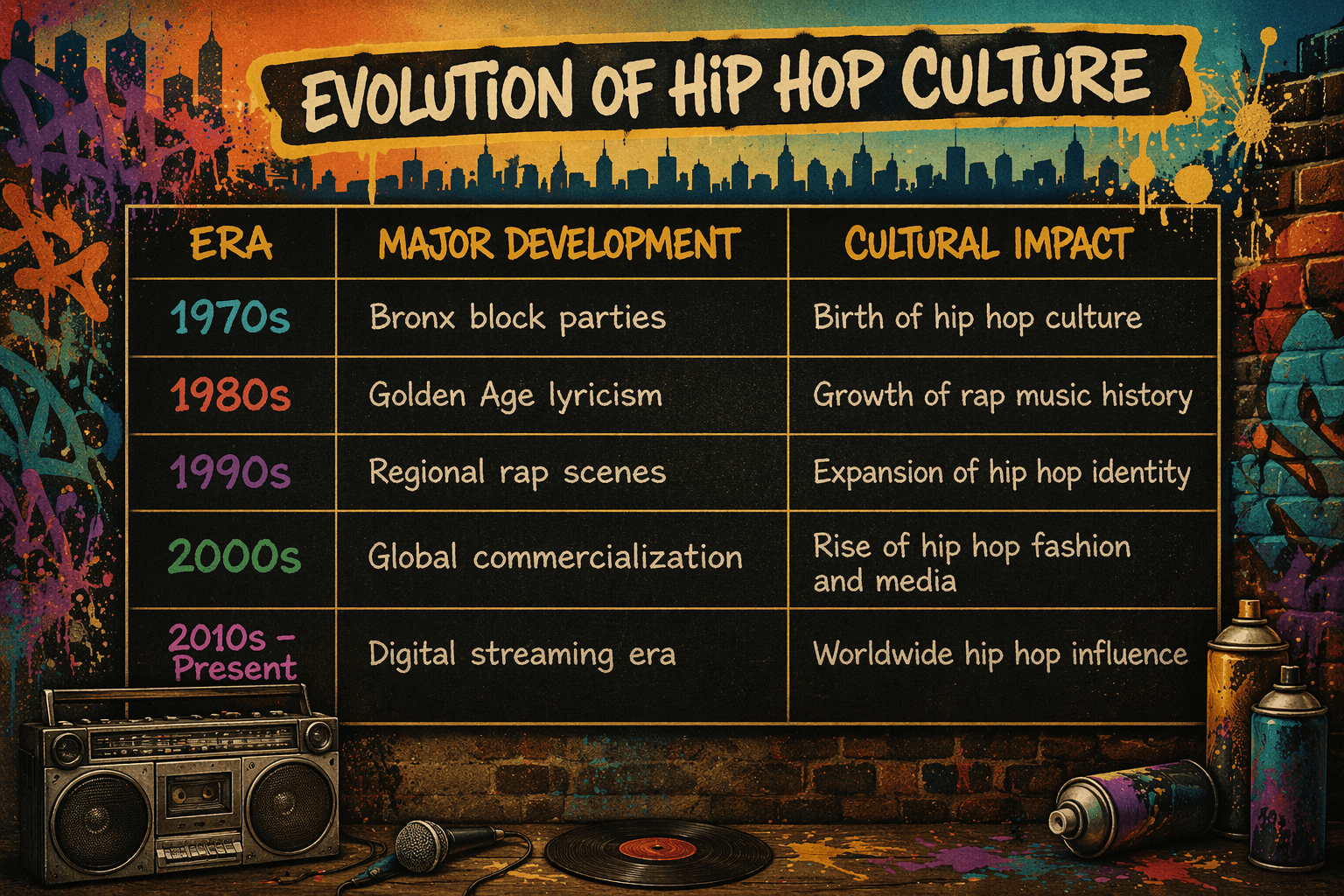
The Timeline of Hip Hop’s Growth (1970s – Modern Era)
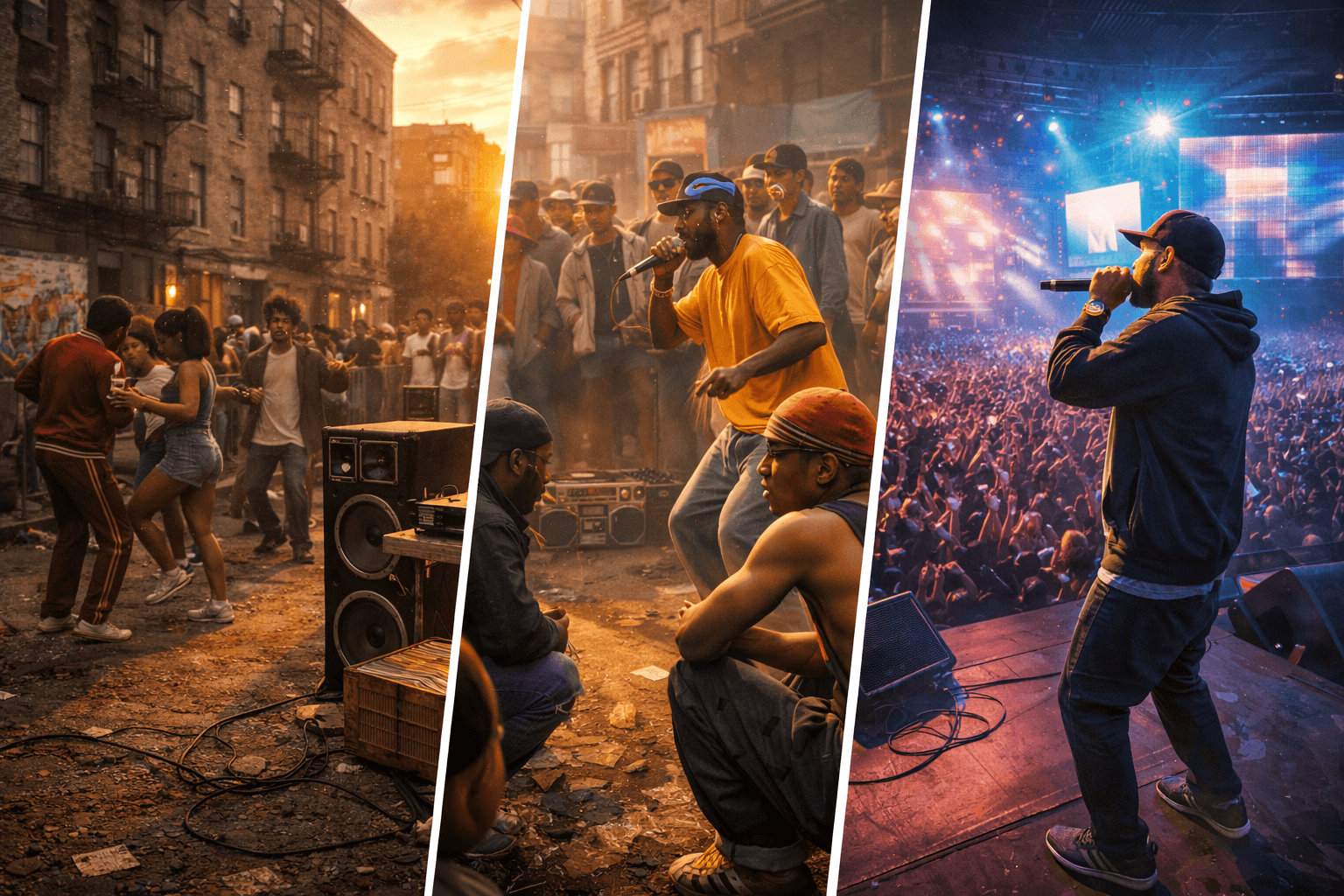 The evolution of hip hop music reflects decades of artistic innovation where underground neighborhood performances gradually transformed into a dominant cultural industry influencing global entertainment, fashion, and media while expanding the hip hop global influence through international artists, collaborations, and digital distribution networks.
From vinyl records to music streaming platforms, hip hop continuously adapts to new technologies and creative trends, allowing independent artists, producers, and performers to share music worldwide while strengthening the global hip hop movement that now connects communities across continents and fuels the growing international rap culture.
Hip Hop’s Early Breakthrough in the Late 1970s
The late 1970s marked hip hop’s first commercial breakthrough when recorded rap music began appearing on radio stations and dance clubs, allowing the Bronx hip hop movement to expand beyond local neighborhoods while introducing wider audiences to the emerging art of MC rap performance and innovative DJ techniques.
The Golden Age of Hip Hop in the 1980s and 1990s
The 1980s and 1990s are widely known as the golden age because artists refined rap lyricism and storytelling, producers advanced hip hop sampling techniques, and performers strengthened cultural identity through socially conscious music that addressed political issues, community struggles, and social commentary in rap.
Commercial Expansion in the 2000s
During the early 2000s hip hop expanded into mainstream entertainment as artists collaborated with global brands, launched influential hip hop fashion brands, and partnered with major corporations through hip hop brand collaborations, transforming the culture into a powerful creative economy while maintaining strong connections to urban youth culture.
Hip Hop’s Digital Era and Streaming Revolution
In the modern digital era, music streaming platforms, social media networks, and online video platforms accelerated the hip hop international influence, enabling independent musicians, dancers, and producers to reach global audiences instantly while fueling international festivals, cross-cultural collaborations, and the unstoppable rise of hip hop worldwide popularity.
Key Milestones in the History of Hip Hop
Influential Hip Hop Cultural Elements
“Hip hop is not just music. It is a culture, a movement, and a powerful language spoken through rhythm, art, and truth.”
Breaking and Hip Hop Dance Culture
 Breaking represents one of the most energetic expressions of hip hop culture because dancers transformed athletic movement into a powerful storytelling language that reflects rhythm, creativity, and competition while strengthening the cultural spirit of the Bronx hip hop movement, where early performers used dance as a vibrant form of identity and hip hop artistic expression.
Over time, breakdancing culture expanded beyond street corners and community centers into international competitions, festivals, and performances where b-boy and b-girl culture showcases incredible physical skill, rhythm, and creativity while strengthening the global hip hop movement and demonstrating how dance continues shaping the hip hop lifestyle worldwide.
The Origins of Breaking in the Bronx
Breaking began during early Bronx block parties when DJs extended drum breaks from funk records and dancers improvised acrobatic moves, spins, and rhythmic footwork that reflected the spirit of urban youth culture, eventually forming the energetic b-boy and b-girl culture that became one of the defining foundations of breakdancing culture.
How Street Dance Became a Global Art Form
Street dance expanded globally through films, competitions, and international tours where performers introduced hip hop dance battles, creative choreography, and expressive freestyle movements that helped transform breaking into a respected art form while strengthening the hip hop international influence and inspiring dancers across continents.
Major Styles Within Hip Hop Dance
Hip hop dance contains multiple movement styles developed through community experimentation and rhythmic improvisation where dancers combine musical interpretation, athletic skill, and cultural storytelling to create visually powerful routines that reflect hip hop rhythm and flow, creative identity, and the evolving nature of street culture.
Top Rock
Top rock describes the upright footwork that dancers perform at the beginning of routines where rhythmic steps, spins, and expressive gestures establish timing, personality, and connection with the music while introducing the dancer’s individual style within the dynamic energy of hip hop dance battles and competitive performances.
Down Rock
Down rock refers to floor-based movement where dancers support their weight on hands and feet while executing intricate footwork patterns that synchronize with the beat, demonstrating agility, rhythm, and control while emphasizing the connection between hip hop rhythm and flow and physical expression.
Power Moves
Power moves represent the most athletic aspect of breakdancing culture, featuring spinning movements such as windmills, headspins, and flares where dancers rotate rapidly across the floor while demonstrating exceptional strength, balance, and creativity within the highly competitive environment of professional dance battles.
Freezes
Freezes occur when dancers suddenly pause in dramatic poses during routines, often balancing on one hand or head, creating powerful visual moments that highlight control, precision, and dramatic expression while emphasizing the rhythm of the music and the artistic personality within hip hop dance battles.
Popping
Popping involves quick muscle contractions that create a robotic visual effect where dancers synchronize movement with the beat, combining rhythm and illusion to produce an electrifying style that became an important component of the broader hip hop artistic expression visible in music videos and stage performances.
Locking
Locking developed as a funk-inspired dance style where performers exaggerate arm movements, pauses, and playful gestures, creating a vibrant visual rhythm that emphasizes entertainment, humor, and connection with audiences while expanding the expressive vocabulary of modern breakdancing culture.
Up Rock
Up rock focuses on upright dance movements often performed during competitive exchanges where dancers use rhythmic gestures and expressive footwork to challenge opponents in stylized battles that demonstrate confidence, creativity, and mastery of street culture performance traditions.
Dance Battles, Cyphers, and Street Competitions
The hip hop cypher plays a central role in dance culture because performers gather in circular formations where individuals enter the center to showcase improvisation, rhythmic interpretation, and expressive creativity while building community energy and strengthening the spirit of friendly competition within the hip hop community.
The Role of Dance Crews in Hip Hop
Dance crews represent collaborative teams where members train together, develop choreography, and compete internationally while preserving traditions of b-boy and b-girl culture, strengthening artistic discipline, and demonstrating how collective creativity supports the growth of the expanding global hip hop movement.
DJ Culture: The Foundation of Hip Hop Music
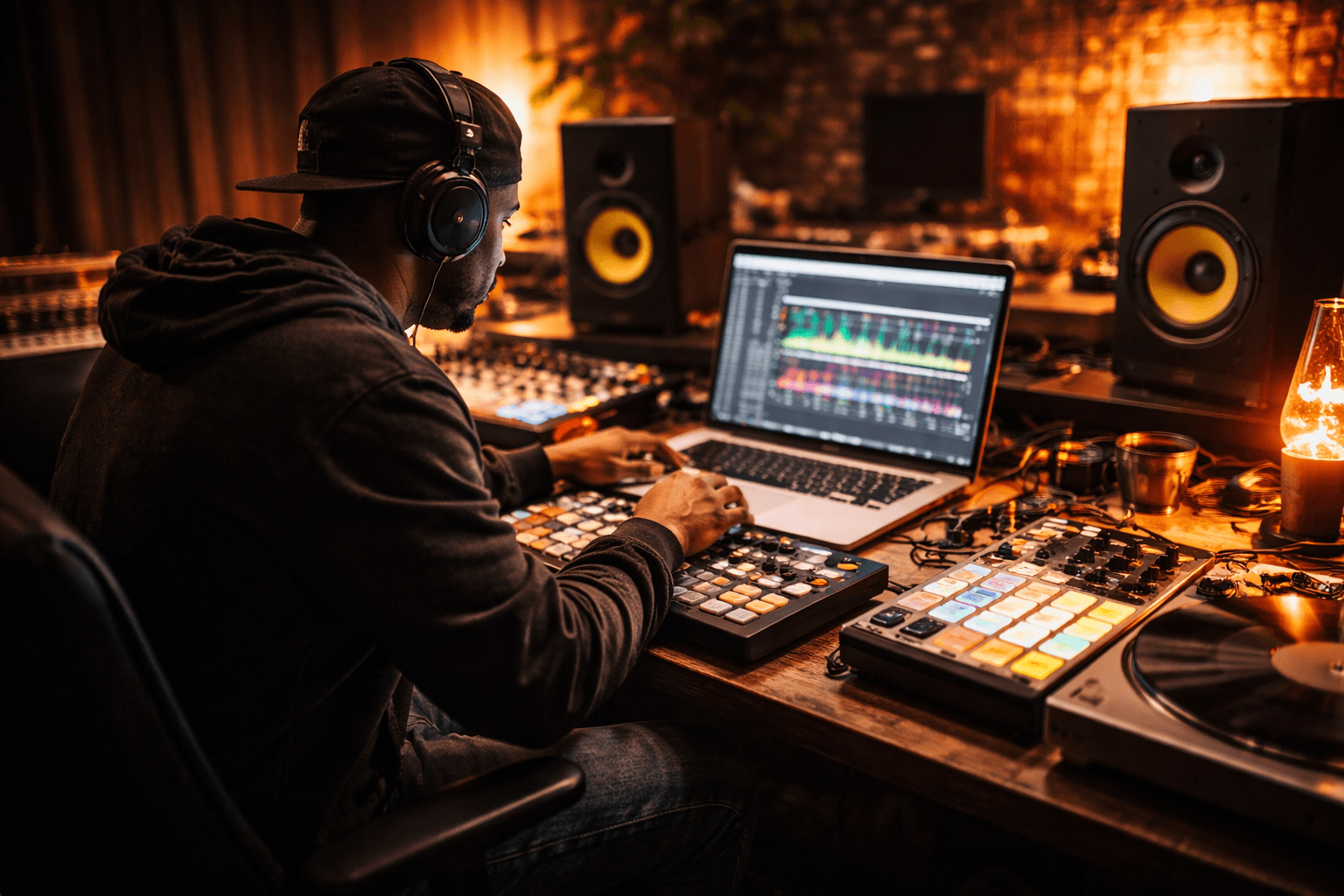
 The history of hip hop cannot be understood without recognizing the revolutionary role of DJs who transformed record players into musical instruments, manipulating vinyl records to create rhythmic patterns that shaped the early sound of hip hop while pioneering techniques like beat juggling, scratching technique, and creative music sampling.
Through experimentation with DJ turntables and scratching, early DJs developed an entirely new musical language that allowed performers to remix existing songs, isolate drum breaks, and extend beats for dancers, forming the sonic backbone behind the evolution of hip hop music and modern hip hop music production.
The Role of DJs in Early Hip Hop
In the earliest days of hip hop, DJs controlled the atmosphere of block parties by selecting records, extending rhythmic breaks, and energizing crowds while MCs supported performances through rhythmic chants, establishing the dynamic collaboration between DJing and MCing that defined the earliest stages of the Bronx hip hop movement.
Turntables as Musical Instruments
Creative DJs treated turntables like instruments by manipulating vinyl records through scratching, looping, and rhythmic mixing, transforming playback devices into performance tools capable of producing unique sounds that expanded the boundaries of hip hop music production and the creative potential of music sampling.
The Evolution of DJ Techniques
As hip hop culture matured, DJs refined complex technical skills including beat juggling, rhythmic looping, and advanced scratching technique, demonstrating how innovation within DJing continually pushed the boundaries of creativity while strengthening the musical identity of the broader hip hop culture.
Beat Matching
Beat matching involves synchronizing the tempo of two records so that their rhythms align perfectly, allowing DJs to blend songs smoothly while maintaining continuous dance energy during live performances and club events.
Beat Juggling
Beat juggling allows DJs to rearrange drum breaks by alternating between two copies of the same record, creating entirely new rhythmic patterns that demonstrate the creative power of turntable manipulation.
Back Spinning
Back spinning occurs when DJs quickly rewind vinyl records to repeat specific sections of music, extending instrumental breaks and building excitement among dancers and audiences.
Scratching
The iconic scratching technique involves moving vinyl records back and forth beneath the needle to produce rhythmic sounds that function like musical percussion within hip hop tracks.
Looping and Sampling
Looping and music sampling allow producers to capture segments of existing recordings and transform them into new compositions, making this technique one of the most influential innovations in the evolution of hip hop music.
The Impact of Sound Systems and Live DJ Performances
Large sound systems powered early hip hop events, allowing DJs to project booming basslines and rhythmic breaks across crowded neighborhoods while establishing the immersive atmosphere that made block parties essential to the development of the hip hop community.
MCs and the Rise of Rap Music
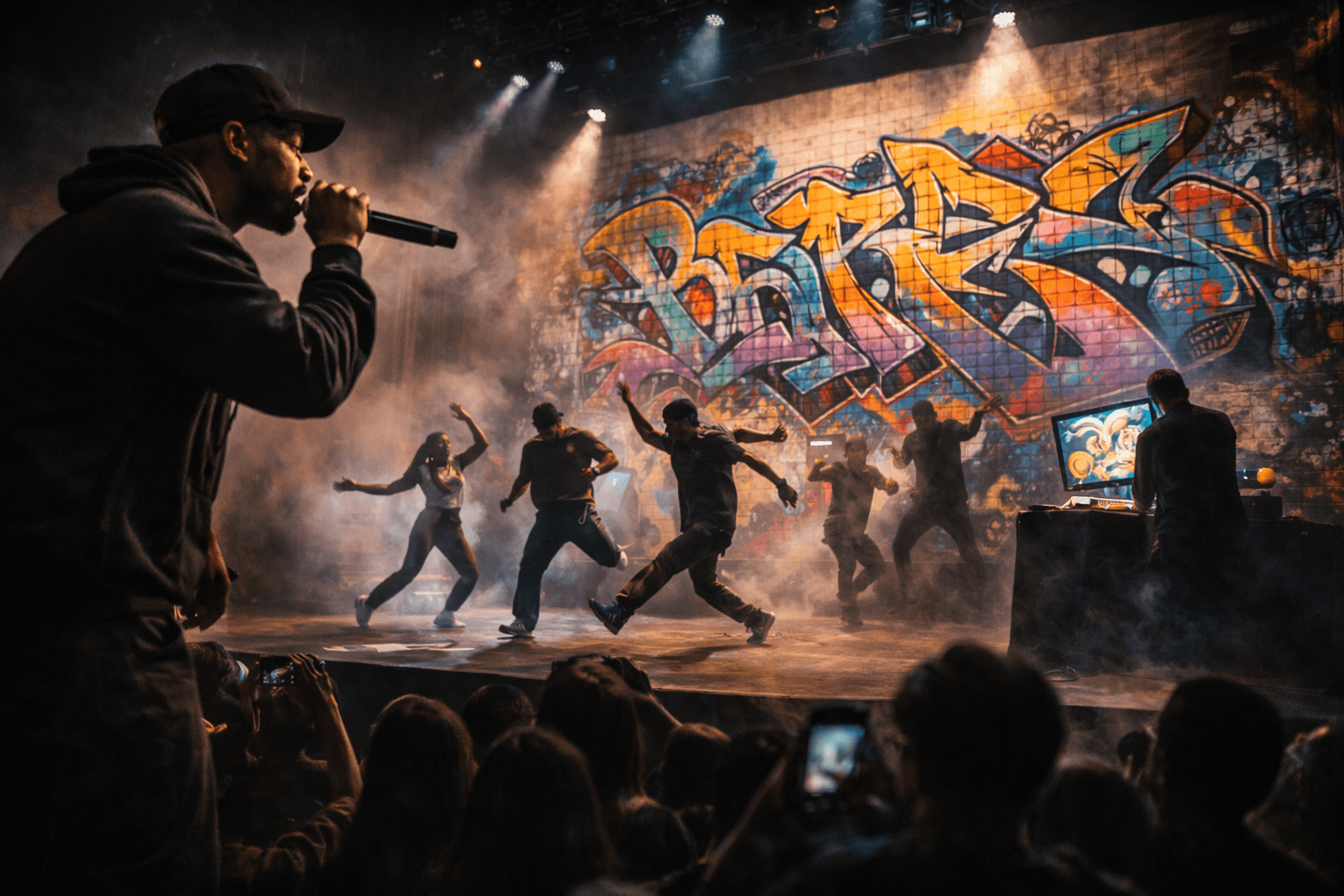 The rise of rap represents one of the most influential developments in the history of hip hop because MCs evolved from party hosts into lyrical storytellers who used rhythm, rhyme, and poetic structure to communicate experiences, emotions, and social realities within the powerful tradition of rap lyricism and storytelling.
Through expressive MC rap performance, artists transformed spoken rhythm into a sophisticated musical art form where freestyle rap, rhythmic phrasing, and poetic storytelling combined with hip hop rhythm and flow to produce the dynamic lyrical culture that defines modern rap music worldwide.
From Party Hosts to Lyrical Artists
Early MCs originally served as hosts who energized crowds with short chants and rhythmic phrases, yet these performers gradually developed longer verses and structured rhymes that laid the foundation for modern rap music history and the sophisticated lyrical performances heard in contemporary hip hop.
How Rapping Became the Voice of Hip Hop
Rapping became the defining voice of hip hop because artists discovered that rhythmic speech could communicate powerful stories about identity, struggle, and ambition while shaping a new form of spoken word poetry rooted deeply in the experiences of urban youth culture.
Poetry, Rhythm, and Storytelling in Rap
The artistry of rap lies in its ability to blend poetry with rhythm where artists construct verses using rhyme patterns, metaphor, cultural references, and rhythmic timing to deliver powerful messages through expressive lyrical storytelling and compelling narrative performance.
Key Techniques Used by MCs
Successful MCs rely on multiple performance techniques including complex rhyme patterns, breath control, improvisation, and rhythmic delivery to craft powerful lyrical performances that highlight the expressive creativity of modern MC rap performance.
Flow
Flow describes the rhythmic pattern through which rappers deliver lyrics across a beat while maintaining musical timing and expressive personality.
Freestyle
Freestyle rap represents improvisational performance where MCs create lyrics spontaneously during battles or live performances.
Internal Rhyme
Internal rhyme occurs when rhyming words appear within a line rather than only at the end.
End Rhyme
End rhyme refers to rhyming syllables placed at the end of lines within rap verses.
Syncopation
Syncopation occurs when rappers emphasize off-beat rhythms to create dynamic vocal patterns within hip hop music.
Rap as Social Commentary and Cultural Reflection
Throughout the history of hip hop, rap music has functioned as a platform for social commentary in rap, addressing political injustice, racial inequality, and community struggles while supporting hip hop activism, cultural awareness, and meaningful hip hop identity and empowerment within marginalized communities.
“Rap is rhythm and poetry, but hip hop is the culture that gives that poetry meaning.”
Graffiti Art and Street Expression
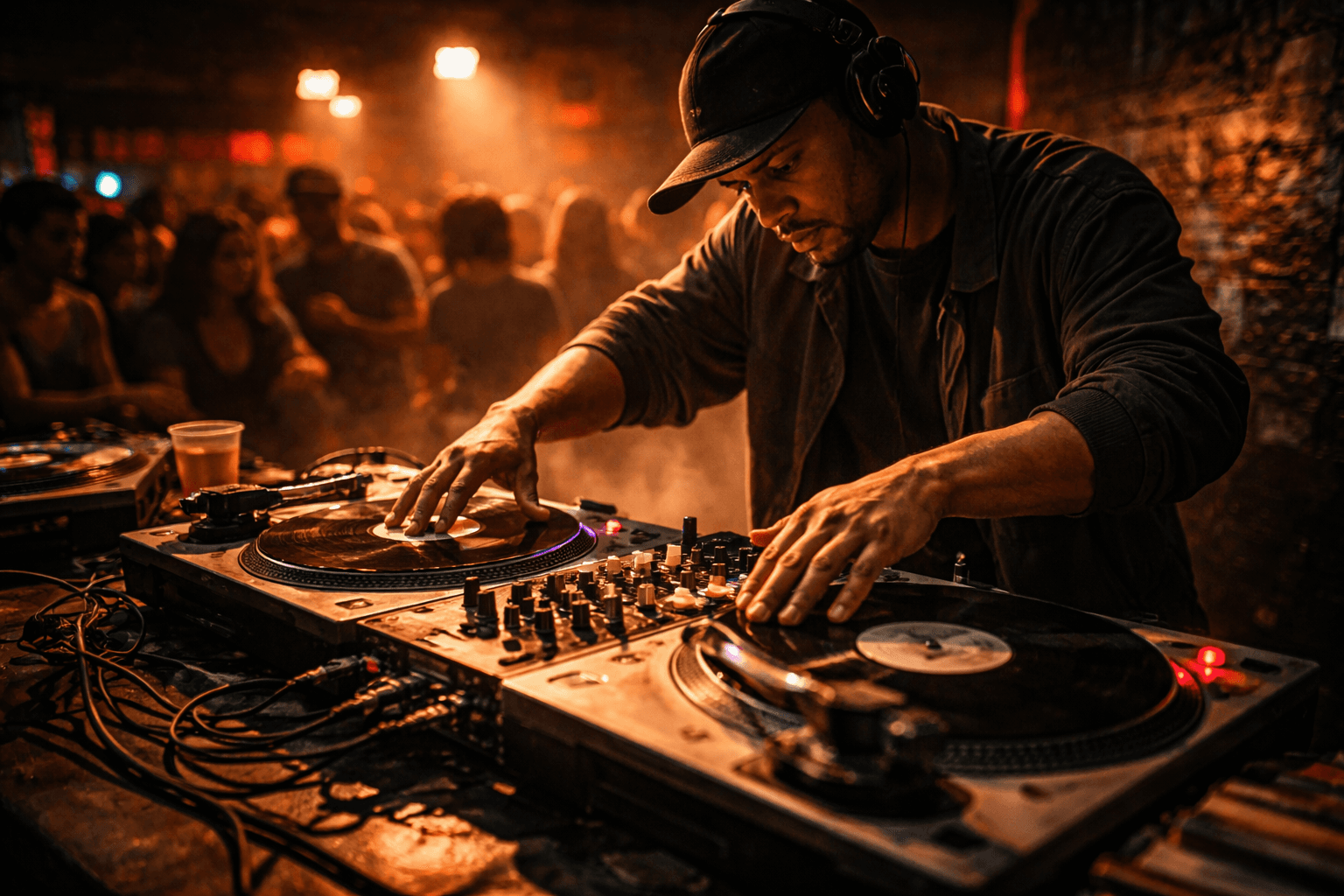 Graffiti developed as one of the boldest visual pillars of hip hop culture because artists transformed city walls, subway trains, and abandoned buildings into vibrant canvases where color, typography, and imagination merged into powerful hip hop visual art that reflected identity, rebellion, and creative pride within evolving street art culture.
Over decades, graffiti street art grew from underground urban expression into a globally recognized artistic discipline influencing graphic design, advertising, architecture, and fashion while demonstrating the remarkable hip hop global influence that continues shaping modern aesthetics across music videos, urban spaces, and international creative industries.
Graffiti as the Visual Language of Hip Hop
Within the broader hip hop culture elements, graffiti writing became a symbolic visual language where artists used stylized letters, vivid colors, and bold signatures to represent identity, territory, and creative individuality while contributing to the artistic storytelling tradition that defines hip hop artistic expression.
The Rise of Street Artists and Writers
As the history of hip hop evolved, graffiti writers gained recognition as cultural innovators whose visual creativity captured the attention of galleries, fashion designers, and global audiences while helping transform underground tagging into respected forms of contemporary street art culture.
Graffiti Crews and Urban Art Culture
Graffiti artists often collaborate in crews where members share techniques, compete for recognition, and develop distinctive lettering styles that reflect community identity, artistic rivalry, and collective creativity within the expanding hip hop community.
Popular Graffiti Styles
Graffiti writing includes numerous visual styles developed through experimentation where artists manipulate typography, color, and scale to create expressive murals that embody the rebellious spirit and innovative creativity of hip hop visual art.
Tags
Tags represent the simplest graffiti form where artists quickly write stylized signatures across urban surfaces to establish identity and recognition within the street culture network of writers.
Throw-Ups
Throw-ups involve larger bubble-letter forms created rapidly using limited colors, allowing artists to cover wider surfaces while maintaining bold visual presence within urban landscapes.
Pieces
Pieces, short for masterpieces, represent elaborate graffiti artworks where artists design large-scale compositions filled with intricate color gradients, shadows, and decorative patterns.
Wild Style
Wildstyle graffiti lettering features complex overlapping characters and arrows that challenge readability while demonstrating advanced skill, creativity, and deep cultural knowledge within graffiti communities.
Stencil Graffiti
Stencil graffiti uses pre-cut templates that allow artists to repeat detailed images quickly, blending political commentary with artistic precision across public spaces.
Graffiti’s Influence on Modern Design and Fashion
Graffiti’s bold typography and visual energy influenced streetwear designers, advertising agencies, and technology brands that now incorporate urban lettering, spray-paint aesthetics, and mural-inspired graphics into hip hop fashion brands and major hip hop brand collaborations worldwide.
Knowledge and Philosophy in Hip Hop Culture
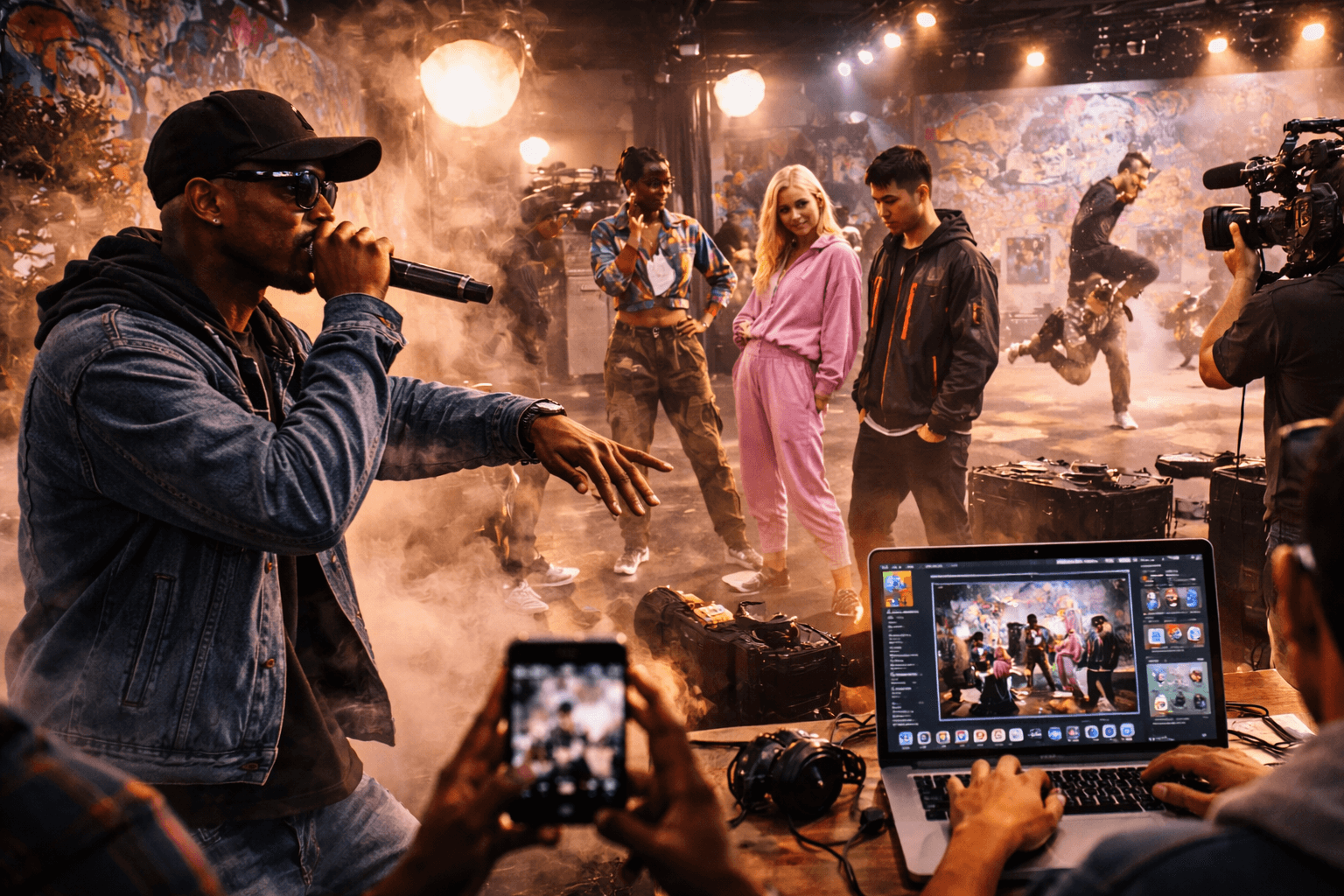 Beyond music and art, hip hop philosophy represents the intellectual foundation of the culture because the fifth element—knowledge—encourages awareness, historical understanding, and community empowerment while guiding artists toward meaningful hip hop activism and responsible cultural leadership.
Through educational initiatives, workshops, and creative programs, the hip hop community continues using art as a tool for learning, dialogue, and personal development while strengthening the connection between cultural identity and hip hop identity and empowerment.
The Meaning of the Fifth Element of Hip Hop
The fifth element, known as hip hop knowledge, emphasizes cultural awareness and responsibility by encouraging artists and audiences to understand the history of hip hop, respect its roots, and promote unity through creativity, education, and social understanding.
Hip Hop as a Tool for Education and Empowerment
Educational programs increasingly use hip hop to teach literature, music production, and poetry because the creative nature of rap lyricism and storytelling helps students explore language, rhythm, and identity while encouraging confidence and personal expression.
Social Awareness and Community Leadership
Artists frequently address social issues through music, performances, and community programs that promote social justice in hip hop, inspiring audiences to examine political realities and strengthen hip hop community activism across neighborhoods and cities.
Hip Hop as a Platform for Cultural Identity
For many communities, hip hop functions as a cultural mirror that reflects heritage, struggle, and resilience while supporting meaningful conversations about youth identity, representation, and empowerment.
Hip Hop in Theater, Literature, and Performing Arts
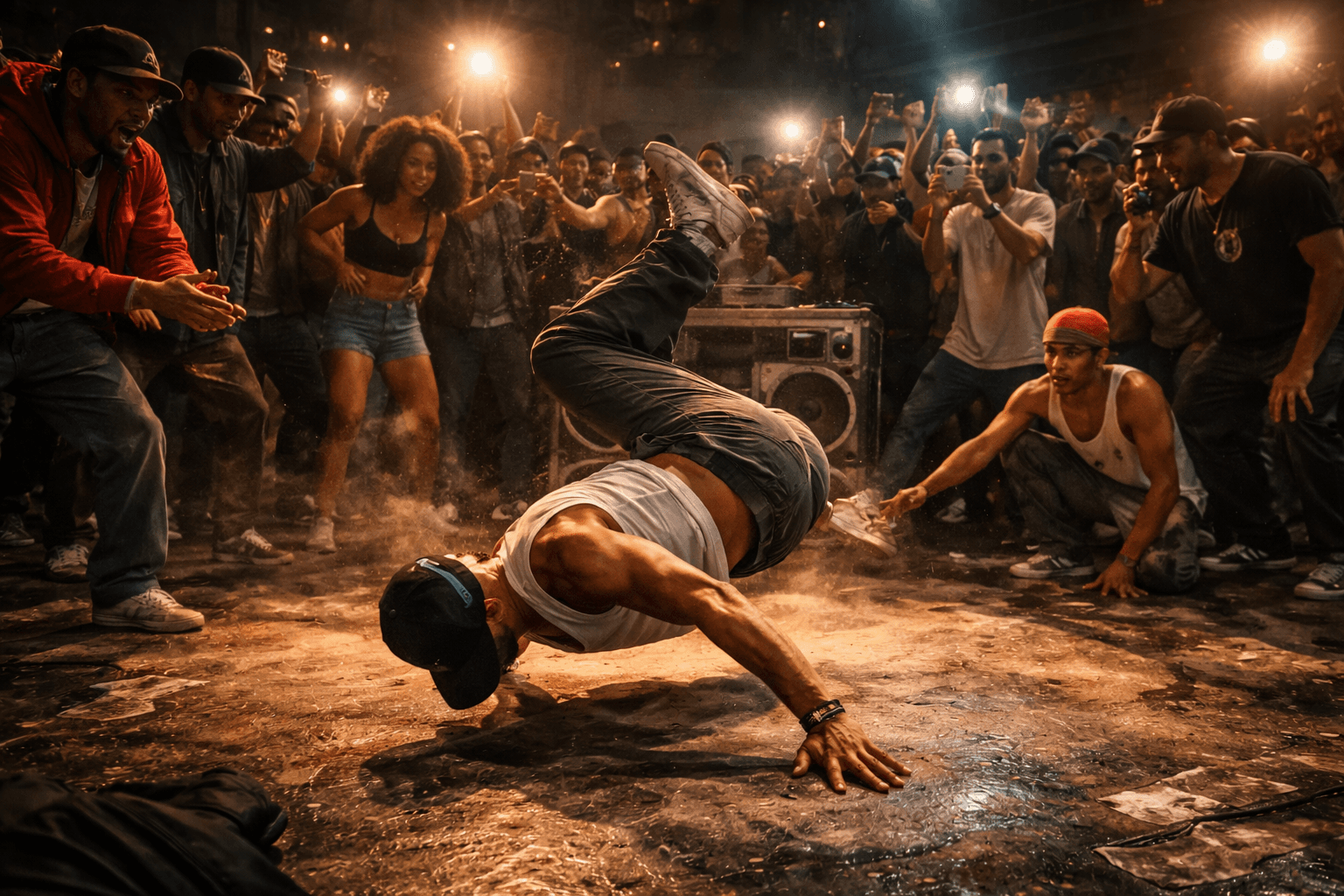 As the global hip hop movement expanded, artists began integrating rap, dance, and visual storytelling into theater productions, literary works, and multimedia performances that blend rhythm, narrative, and choreography into immersive cultural experiences.
This fusion of disciplines demonstrates the versatility of hip hop artistic expression, proving that the culture can thrive beyond traditional music venues while influencing modern stage productions, poetry festivals, and experimental art performances.
Hip Hop Storytelling Through Performance
Performers use rap and dance to create narrative stage productions where lyrical storytelling, choreography, and dramatic dialogue merge to communicate complex human experiences through rhythm and movement.
Dance Theater and Stage Productions
Contemporary theater companies increasingly incorporate breakdancing culture and street choreography into stage productions that celebrate urban creativity and connect traditional performing arts with modern street culture influences.
Rap Poetry and Spoken Word
Spoken word poetry and rap share deep connections because both emphasize rhythm, metaphor, and emotional storytelling that transforms language into powerful performance art rooted in the traditions of rap music history.
Collaboration Between Music, Dance, and Visual Arts
Many performances combine DJs, MCs, dancers, and visual artists into collaborative shows where music, movement, and imagery unite to create immersive cultural experiences that highlight the interdisciplinary nature of modern hip hop culture.
Musical Structure and Elements of Hip Hop
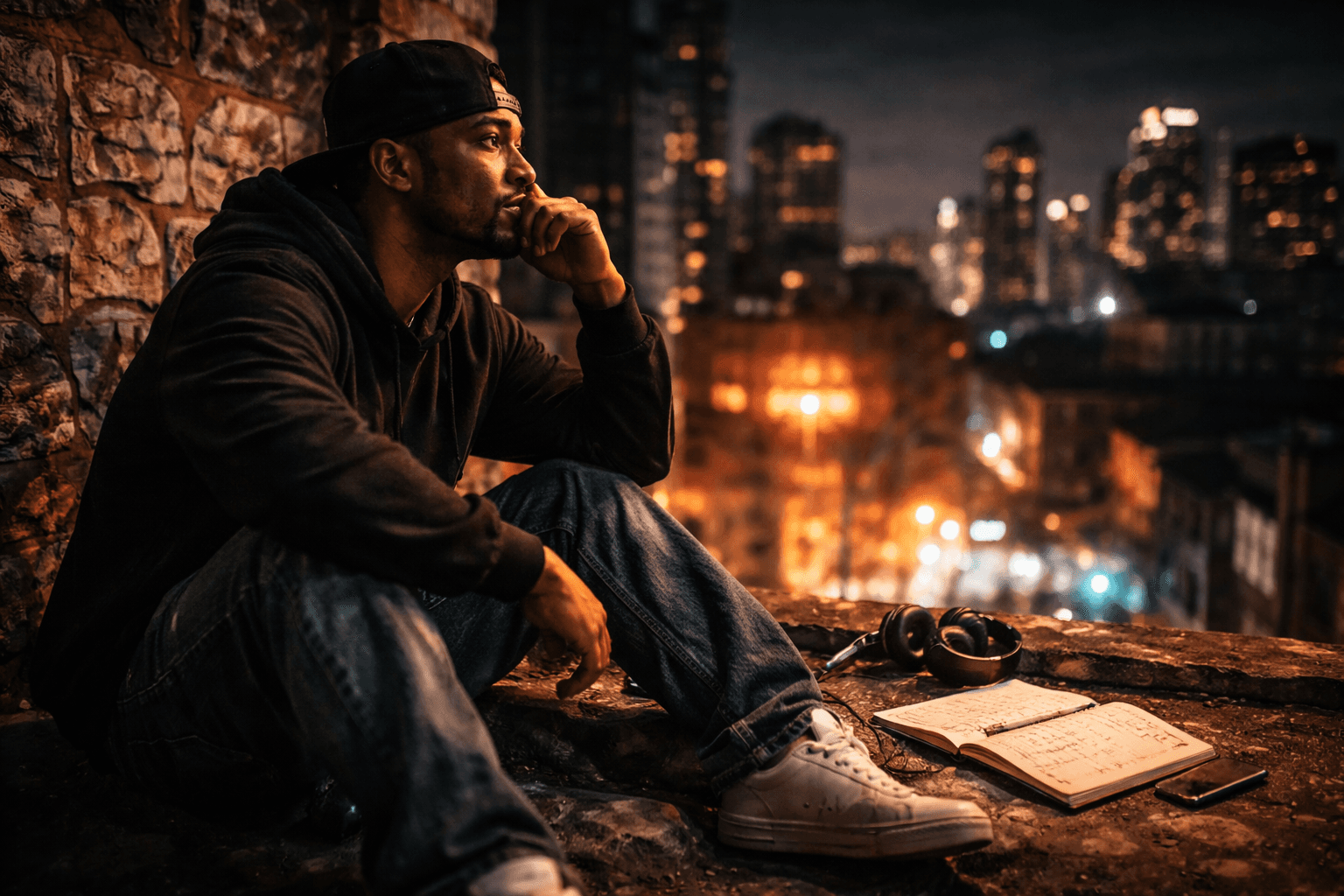 The sound of hip hop is built upon complex rhythmic structures where producers combine drum patterns, music sampling, and digital technology to craft distinctive beats that drive modern rap performances and shape the continuing evolution of hip hop music.
Advances in technology expanded hip hop music production, allowing artists to experiment with synthesizers, software instruments, and beat making and beatboxing techniques that continually redefine how hip hop music sounds and evolves.
Rhythm and Beat Patterns in Hip Hop
At its core, hip hop relies on strong rhythmic foundations where drum patterns emphasize groove, basslines, and timing to create the unmistakable hip hop rhythm and flow that fuels both rap performances and dance culture.
The Importance of Sampling in Music Production
Hip hop sampling techniques involve borrowing short segments of existing recordings and rearranging them creatively to produce new musical compositions that connect past musical traditions with contemporary innovation.
Drum Machines and Beat Making
Electronic drum machines revolutionized beat making and beatboxing by enabling producers to program rhythmic patterns that became the backbone of modern hip hop production and performance.
Modern Hip Hop Production Techniques
Contemporary producers use digital audio software, synthesizers, and advanced sound design tools to create complex compositions that blend rhythm, melody, and texture within the evolving landscape of hip hop music production.
“Graffiti gave hip hop its visual voice, while rhythm gave it movement.”
Hip Hop’s Global Influence
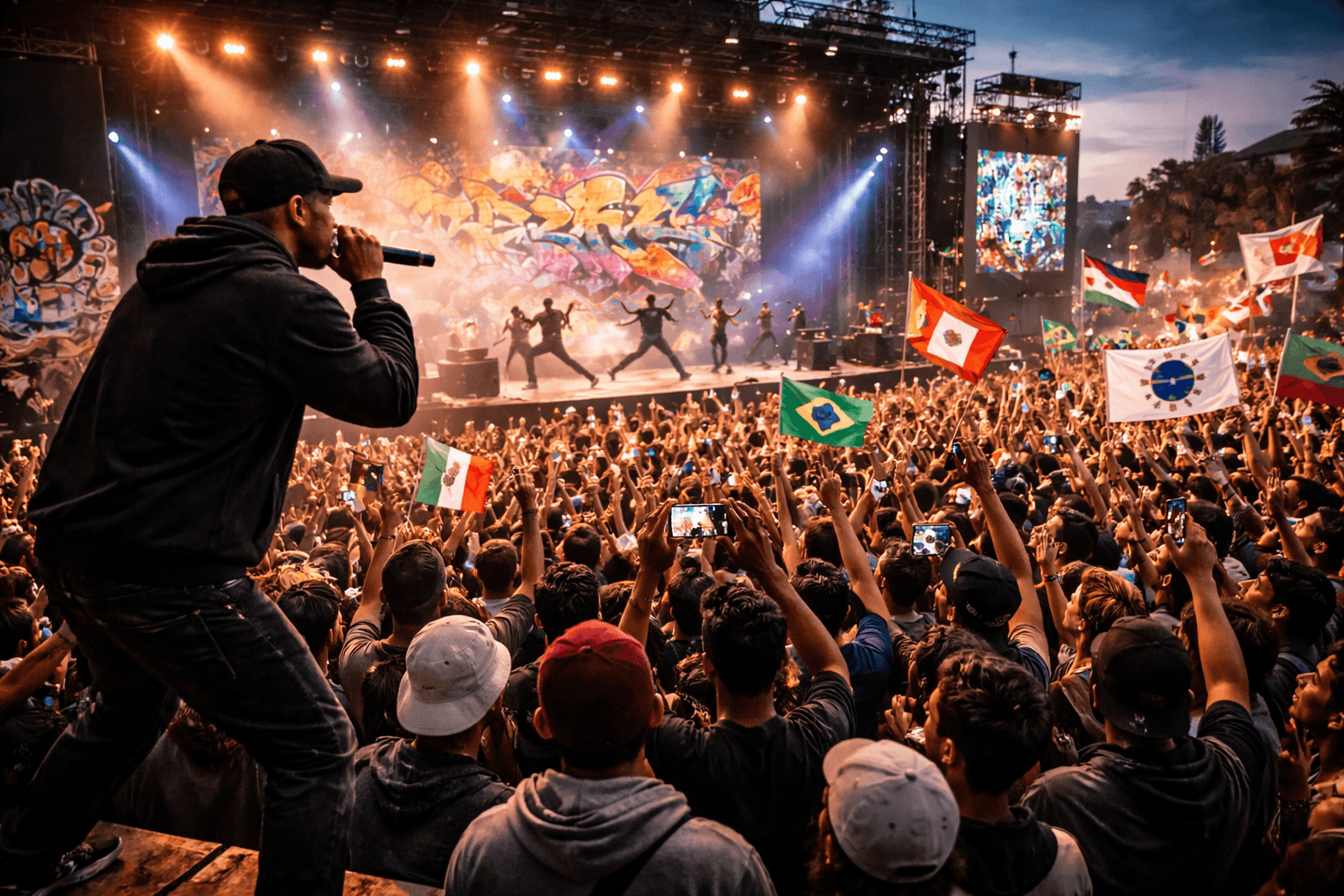
The hip hop global influence demonstrates how a local cultural innovation from New York transformed into a worldwide creative force shaping music, fashion, film, and digital media while inspiring millions of artists who contribute to the ever-expanding global hip hop movement across continents.
Today the hip hop international influence reaches nearly every region of the world where local artists adapt rhythm, language, and storytelling traditions to create unique regional styles that strengthen the remarkable hip hop worldwide popularity visible through festivals, streaming platforms, and international collaborations.
How Hip Hop Spread Beyond the United States
Hip hop spread beyond the United States through touring artists, international record distribution, and media exposure that introduced global audiences to the energy of rap music history, breakdancing, and graffiti street art, eventually creating the powerful international rap culture seen across continents today.
Hip Hop in Europe and Asia
Across Europe and Asia, artists embraced hip hop by blending local languages and cultural influences with modern rap performance, creating diverse musical scenes that demonstrate how hip hop in Europe and Asia reflects both global inspiration and regional identity within the expanding global hip hop movement.
Cultural Adaptations of Hip Hop Worldwide
Different countries interpret hip hop uniquely by incorporating local rhythms, fashion, and social narratives into rap music, dance, and art while preserving the core hip hop culture elements that connect international communities through shared creative values.
The Role of the Internet and Social Media in Hip Hop Growth
Digital technology accelerated the hip hop worldwide popularity because artists distribute music instantly through music streaming platforms, build global audiences on social media, and participate in international collaborations that strengthen the cultural exchange within the global hip hop movement.
Hip Hop in Modern Education and Creative Learning
Educators increasingly recognize that hip hop culture offers powerful educational tools because rhythm, poetry, dance, and visual art encourage students to explore language, creativity, and identity while engaging deeply with artistic learning methods.
Creative education programs now integrate rap lyricism and storytelling, spoken word poetry, and music production workshops to help students build communication skills, artistic confidence, and cultural awareness through innovative learning experiences.
Teaching Music and Dance Through Hip Hop
Schools and community programs use hip hop dance and music classes to introduce students to breakdancing culture, rhythm training, and performance techniques that strengthen creativity while building physical coordination and confidence.
Hip Hop as a Tool for Creative Development
By encouraging experimentation with beat making and beatboxing, freestyle rap, and visual design, hip hop education supports creative thinking and self-expression while empowering young artists to explore their unique voices.
How Arts Education Helps Build Confidence and Expression
Participation in rap performance, dance battles, and collaborative art projects helps students develop leadership, teamwork, and confidence while strengthening personal identity through creative exploration.
Learning Hip Hop Arts at Art Gharana
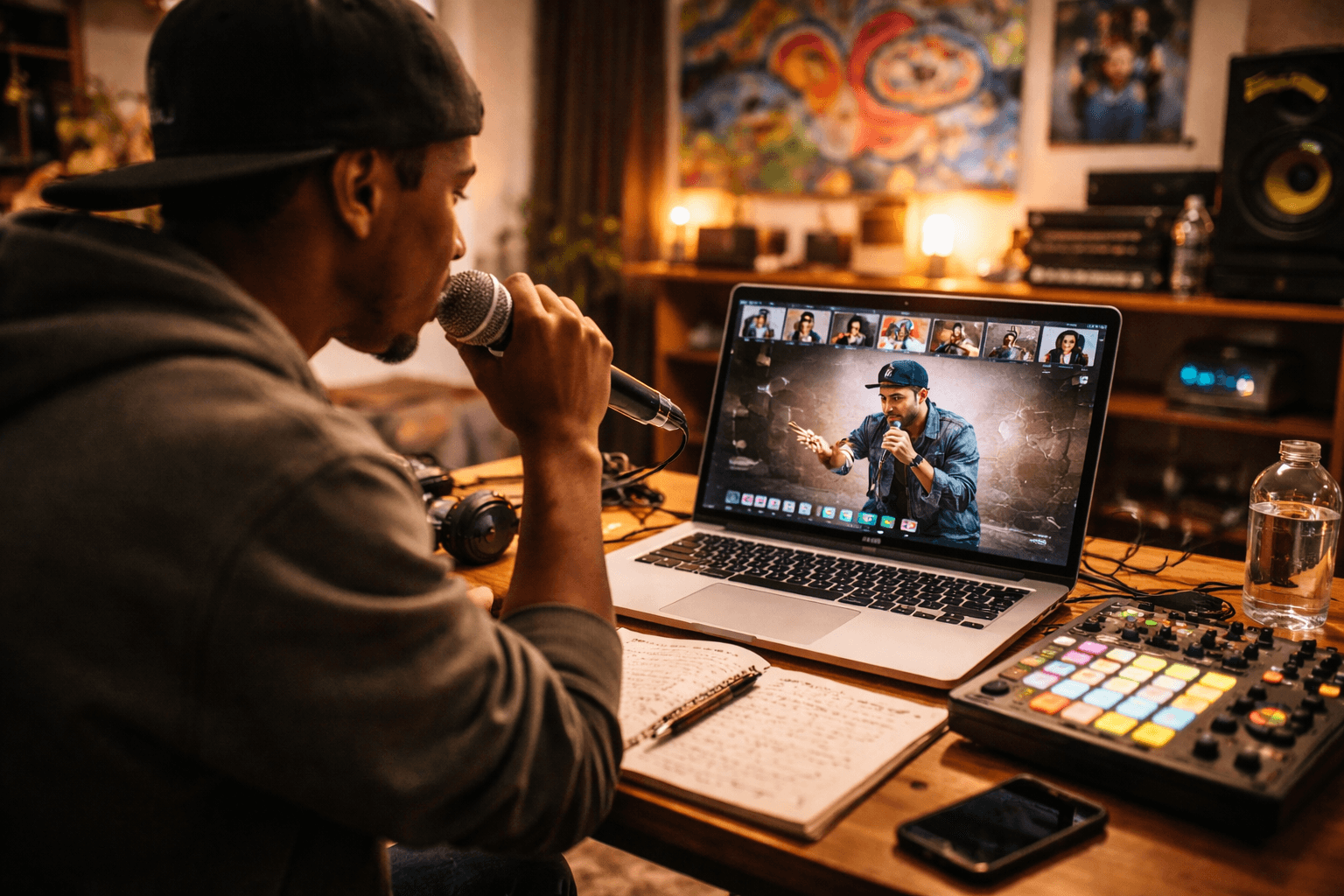 Institutions like Art Gharana contribute to the cultural education movement by offering structured programs where students explore hip hop artistic expression through music, dance, and visual arts under the guidance of experienced instructors.
Through modern teaching methods and digital learning platforms, such programs help young creators understand the history of hip hop, practice creative skills, and develop professional artistic abilities.
How Art Gharana Encourages Creative Expression
Students participate in collaborative workshops that introduce DJing, rap performance, and dance training while encouraging experimentation with rhythm, storytelling, and visual creativity.
Professional Training in Music, Dance, and Performing Arts
Structured courses teach skills such as hip hop music production, choreography, freestyle rap performance, and stage presentation that prepare students for careers in entertainment and creative industries.
Online Learning Opportunities for Students Worldwide
Digital classrooms now allow learners worldwide to study dance techniques, rap composition, and music production through online platforms that expand access to creative education.
Building Future Artists Through Structured Arts Education
Through mentorship, practice sessions, and performance opportunities, educational programs cultivate disciplined artists who contribute to the evolving global hip hop movement.
Why Hip Hop Continues to Influence Global Culture
Few artistic movements have demonstrated the longevity and adaptability of hip hop because the culture constantly reinvents itself through music, fashion, technology, and storytelling while maintaining strong connections to community identity and creative freedom.
From fashion runways to global music festivals, the continuing hip hop global influence proves that the culture remains one of the most powerful artistic forces shaping modern entertainment and youth expression.
Final Thoughts
The history of hip hop illustrates how creativity can transform communities, industries, and global culture when individuals express authentic experiences through rhythm, poetry, and visual art.
From the streets of the Bronx to international festivals and digital platforms, hip hop remains a living cultural force that continues to inspire innovation, storytelling, and artistic collaboration.
The Enduring Power of Hip Hop Culture
The lasting strength of hip hop culture lies in its ability to unite music, dance, art, and community activism into one vibrant cultural ecosystem that celebrates creativity and social awareness.
Why Hip Hop Remains One of the Most Influential Art Forms
Because it continuously adapts while preserving its core values of expression and resilience, hip hop will remain one of the most influential cultural movements in modern history.
“Hip hop began as a voice for communities, yet it grew into a universal language spoken through rhythm, art, and creativity.”
Frequently Asked Questions
1. What is hip hop culture?
Hip hop culture is a global artistic movement that combines music, dance, graffiti, DJing, and community storytelling to express identity, creativity, and social experiences.
2. Where did hip hop originate?
Hip hop originated in the Bronx, New York City during the early 1970s as part of an African American and Latino youth cultural movement.
3. What are the main elements of hip hop?
The five core hip hop elements are DJing, MCing (rap), breakdancing, graffiti writing, and knowledge.
4. Why is hip hop important globally?
Hip hop became globally influential because it allows artists to express social realities, cultural identity, and creativity through music, dance, and visual art.
5. How has hip hop influenced modern culture?
Hip hop influences modern culture through music, fashion, film, digital media, and global youth culture.