ChatGPT
 Google AI
 Grok
Grok Claude
Exploring negative harmony in music opens a door to hearing familiar sounds in unfamiliar ways. Harmony often works like color in painting. It shapes mood, depth, and emotion without needing words. When harmony changes, the emotional meaning of music shifts instantly. Negative harmony in music offers a mirrored view of the tonal harmony system, allowing musicians to flip emotional gravity while keeping structure intact. This idea has fascinated composers, jazz musicians, theorists, and piano players searching for new creative directions.
At its core, what is negative harmony in music can feel complex. However, when explained simply, it becomes a powerful and logical extension of music harmony theory. Instead of adding random chords, negative harmony reflects notes and chords across a harmonic axis. This creates fresh sounds while preserving musical balance. For American audiences raised on Western tonal music, this concept challenges habits while respecting tradition.
Foundations of Musical Harmony
 Harmony forms the emotional backbone of music. Melody may speak, but harmony decides how that voice feels. Understanding harmony in music begins with recognizing how multiple notes interact at the same time. These relationships shape tension, release, warmth, and unease. Without harmony, music would feel flat and emotionally limited.
Western tonal music relies on functional harmony, where chords follow predictable paths. These paths guide the listener through expectation and resolution. Chord progressions in music create emotional storytelling, even when listeners cannot name the chords. This foundation matters deeply before exploring negative harmony in music.
How harmony shapes musical emotion and structure
Harmony affects mood in music more than rhythm or tempo. A major chord can feel open and hopeful, while a minor chord can feel introspective or sad. Emotional impact of chord progressions comes from how chords move, not just what they are. When harmony shifts unexpectedly, listeners feel surprise or tension.
Structure also depends on harmony. Songs feel complete because harmony resolves. Without resolution, music feels unfinished. Harmony acts like gravity. It pulls sounds toward rest. This gravity becomes essential when exploring advanced harmony concepts like negative harmony.
Intervals, triads, and chord formations explained simply
Intervals and chords form the grammar of harmony. An interval measures distance between two notes. When intervals stack, they form triads. These triads become major, minor, diminished, or augmented chords. Piano music theory basics teach these shapes early because they define tonal language.
Intervals and chords shape emotion. A minor third feels darker than a major third. A perfect fifth feels stable. These relationships remain constant even when harmony is flipped. That is why negative harmony works without sounding random.
Harmonic movement and progression in Western music
Chord progressions in music rely on motion. Certain chords want to move forward. Others want to rest. This motion creates tension and release in harmony. The Circle of Fifths explanation shows why some chord movements sound natural. Closely related keys share notes, making transitions smooth.
Negative harmony challenges this movement while respecting it. Instead of moving forward traditionally, chords reflect across a harmonic axis transformation. The result feels new yet familiar, like seeing a landscape in a mirror.
The role of harmony in composition, performance, and listening
Harmony influences how music is written, played, and heard. Composers use harmony to guide emotion. Performers shape harmony through voicing and emphasis. Listeners respond emotionally without conscious analysis. Harmony truly is the color of music.
When musicians understand harmony deeply, creativity expands. Negative harmony in music becomes easier to explore once this foundation feels natural.
Understanding the Concept of Negative Harmony
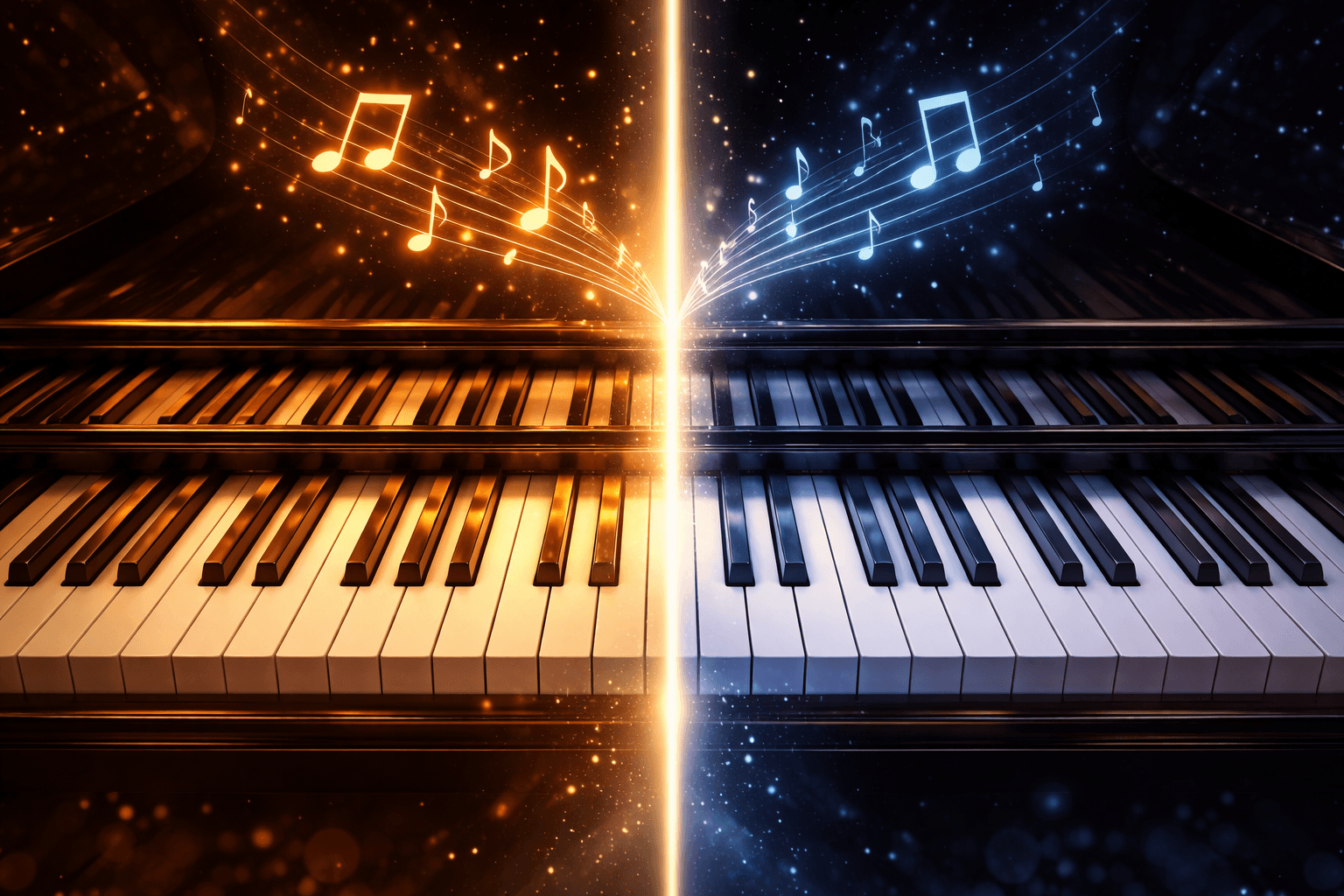 Understanding negative harmony in music requires a shift in perspective. Instead of asking which chord comes next, the question becomes how chords reflect across a center. This reflection forms the mirror harmony concept. It does not replace traditional harmony. It offers an alternative lens.
Negative harmony explained simply involves symmetry. Just as a mirror flips left to right, negative harmony flips intervals around a tonal axis. This creates chord polarity in music, where emotional qualities reverse.
What negative harmony means in modern music theory
In modern music theory, negative harmony refers to reflecting notes across an axis between the tonic and dominant. This reflection preserves interval relationships but reverses emotional direction. Major becomes minor. Bright becomes dark.
How negative harmony works becomes clearer when applied to piano chords theory. Familiar chords transform into unexpected shapes that still function logically. This makes negative harmony appealing to composers seeking depth without chaos.
The philosophical idea behind musical inversion
Musical inversion has philosophical roots in balance and symmetry. Harmony reflects emotional duality. Joy and sorrow often feel connected. Negative harmony expresses this duality through sound.
Traditional inversion flips chords vertically. Negative harmony flips them horizontally across tonal space. This philosophical approach aligns with modern approaches to harmonic composition that seek emotional nuance.
Visualizing negative harmony using symmetry
Visualizing negative harmony helps demystify it. Imagine a line through the tonal center. Notes on one side reflect to the other. This harmonic symmetry creates order within inversion.
Using the Circle of Fifths for harmony makes this visualization clearer. Reflection across the axis creates predictable outcomes. This removes fear and invites experimentation.
Common misconceptions about negative harmony
Many believe negative harmony creates dissonance. This is false. Negative harmony relies on consonant relationships. Others think it replaces traditional harmony vs negative harmony. In reality, it complements it. Negative harmony does not demand constant use. It offers options. Understanding this prevents misuse and frustration.
Historical Roots and Evolution of Negative Harmony
Negative harmony did not appear suddenly. It evolved from earlier ideas about symmetry and inversion. Understanding its roots builds respect for its depth.
Early theorists explored harmonic balance mathematically. These explorations laid groundwork for modern music theory and advanced harmony concepts.
Early theoretical inspirations behind the concept
The tonal harmony system has always contained symmetry. Composers like Bach explored inversion extensively. While they did not use the term negative harmony, the ideas existed.
Music harmony theory gradually recognized reflection as a structural tool. These ideas matured over centuries.
How negative harmony gained attention in contemporary music
Negative harmony gained popularity through jazz harmony concepts and online education. Musicians sought fresh reharmonization techniques without abandoning tonal centers.
Social platforms amplified demonstrations. Piano players especially embraced negative harmony for piano players because of visual clarity.
Influential thinkers and educators who shaped the theory
Educators simplified complex ideas. They showed flipping chords using an axis rather than abstract math. This approach made learning advanced music theory concepts accessible.
Their influence continues in harmony in music education today.
Negative harmony’s journey from theory to practice
Once theory met practice, musicians applied negative harmony in composition. Jazz improvisers reharmonized standards. Film composers used it for emotional depth.
This journey proves theory becomes powerful when applied musically.
Core Mechanics of Negative Harmony
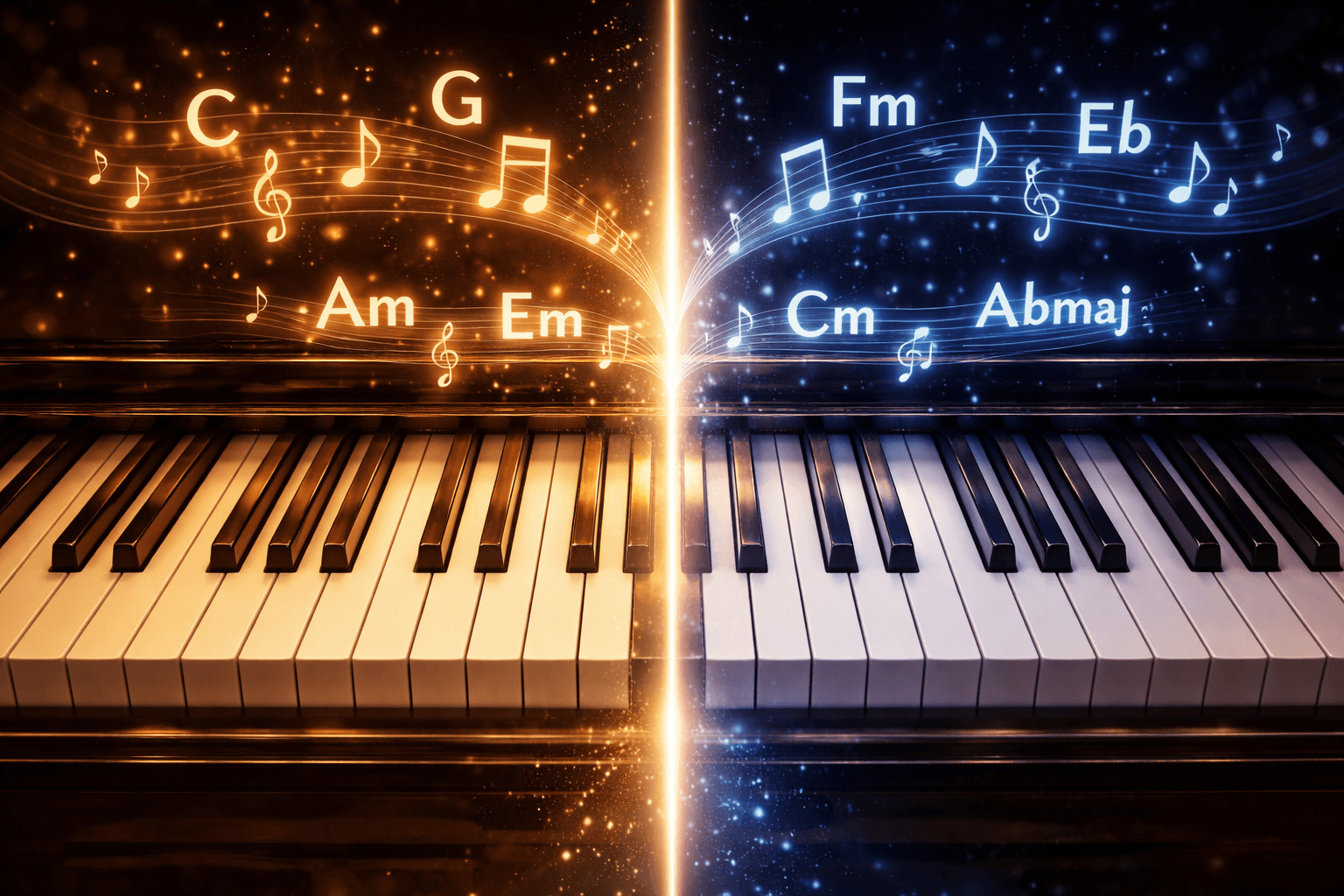 The mechanics behind negative harmony in music rely on structure, not guesswork. Understanding these mechanics removes confusion and builds confidence.
Negative harmony operates within the same tonal harmony system as traditional harmony. The difference lies in reflection, not abandonment.
Understanding tonal centers and harmonic balance
Tonal centers anchor music. Without them, harmony floats aimlessly. Negative harmony preserves tonal gravity while changing direction.
This balance ensures music still resolves emotionally. Listeners feel coherence even when chords surprise.
The axis system and note reflection explained
The axis system defines where reflection occurs. Usually placed between tonic and dominant, it creates symmetrical mapping.
This harmonic axis transformation allows notes to flip predictably. Understanding this removes randomness from the process.
Mapping traditional chords to their negative counterparts
Traditional chords map logically to negative ones. A C major chord becomes F minor under reflection. The emotional shift feels dramatic yet grounded.
This mapping supports reharmonizing melodies using theory rather than instinct alone.
Comparing positive harmony and negative harmony systems
Traditional harmony moves forward. Negative harmony reflects inward. Both systems create emotional impact.
The difference between traditional and negative harmony lies in perspective, not quality. Each serves creative goals differently.
Practical Use of Negative Harmony in Music Creation
 Applying negative harmony in composition unlocks creative freedom. Instead of forcing originality, musicians discover it naturally.
Negative harmony becomes a tool, not a rule. It encourages curiosity and experimentation.
Applying negative harmony in songwriting and composition
Songwriters use negative harmony to escape predictable chord progressions in music. Reflection introduces contrast while keeping structure intact.
This technique works especially well in bridges or alternate sections.
Creating emotional contrast using harmonic inversion
Harmonic inversion through negative harmony intensifies emotion. Bright sections can turn introspective instantly.
This contrast deepens storytelling without changing melody.
Enhancing originality in melodic development
Melodies gain freshness when harmonized negatively. Familiar tunes feel reborn.
This approach avoids overused progressions while respecting musical logic.
Negative harmony in arrangement and music production
Producers apply negative harmony subtly. Bass movement, voicing choices, and texture shift emotional tone.
Modern music theory embraces these creative approaches to harmony.
Using negative harmony as a creative exercise
As an exercise, negative harmony sharpens awareness. Musicians hear intervals and chords differently.
This practice strengthens intuition and theoretical understanding simultaneously.
Learning and Teaching Negative Harmony
 Negative harmony challenges students intellectually while inspiring creativity. Teaching it requires balance.
When presented gradually, it becomes empowering rather than intimidating.
Negative harmony challenges students intellectually while inspiring creativity. Teaching it requires balance.
When presented gradually, it becomes empowering rather than intimidating.
Why negative harmony is valuable for music students
Students develop flexibility. They learn multiple solutions for harmonic problems.
This flexibility improves confidence and creativity.
How it improves harmonic awareness and creativity
Negative harmony trains ears. Students recognize relationships rather than memorizing shapes.
This awareness transfers to all music composition techniques.
Teaching negative harmony in modern music education
Educators integrate negative harmony with piano music theory basics. Visual tools support understanding.
Step-by-step learning ensures clarity.
Balancing theory with musical intuition
Theory guides, intuition decides. Negative harmony should support expression, not restrict it.
Balance creates artistry.
Artistic and Musical Impact of Negative Harmony
 Negative harmony reshapes emotional perception. It deepens expression and broadens genre possibilities.
Its influence continues to grow across styles.
How negative harmony changes emotional perception
Reflected harmony feels introspective. It reveals emotional shadows within familiar sounds.
This depth enriches listening experiences.
Its influence on genre experimentation and fusion
Jazz, film, and modern pop adopt negative harmony creatively. Genre boundaries blur.
This fusion drives innovation.
The future relevance of negative harmony in global music
As music evolves, negative harmony remains relevant. It offers timeless symmetry within change.
Its future looks strong.
Critical Perspectives and Ongoing Discussions
 Negative harmony sparks debate. Some embrace it. Others remain skeptical.
Both views matter.
Supporters vs skeptics of negative harmony
Supporters praise creativity. Skeptics warn against overuse.
Healthy debate strengthens theory.
Is negative harmony a tool or a theory?
Negative harmony functions best as a tool. It supports expression, not ideology.
This flexibility ensures longevity.
When and when not to use negative harmony
Use negative harmony intentionally. Avoid forcing it where simplicity works better.
Choice defines artistry.
How Art Gharana Approaches Advanced Music Theory
 Art Gharana bridges complexity and clarity. Advanced harmony concepts feel accessible.
Learning becomes inspiring, not overwhelming.
Making complex concepts accessible to learners
Lessons simplify without diluting meaning. Visual and practical methods guide understanding.
Students progress confidently.
Integrating theory with practical musical training
Theory meets sound immediately. Students apply concepts through playing and listening.
This integration builds mastery.
Encouraging creative thinking through modern music concepts
Creative risk is encouraged. Students explore, question, and experiment.
Growth follows curiosity.
Art Gharana’s role in nurturing well-rounded musicians
Balanced musicians emerge. Theory supports creativity. Creativity fuels confidence.
This approach shapes future artists.
Conclusion: Rethinking Harmony Through a New Lens
Exploring negative harmony in music reshapes how harmony feels and functions. It reveals symmetry within emotion and structure. By understanding harmony deeply, musicians gain freedom. Negative harmony does not replace tradition. It expands it beautifully.
Frequently Asked Questions About Negative Harmony
Is negative harmony used in modern music production?
Yes, many producers use it subtly. Film scores and jazz arrangements often include negative harmony techniques.
How is negative harmony taught at Art Gharana?
Art Gharana teaches negative harmony gradually. Visual tools, piano examples, and practical application guide learning.
Should music students focus on negative harmony early in learning?
Students should build strong foundations first. Negative harmony works best after understanding basic functional harmony.
Are there limitations or criticisms of negative harmony?
Critics argue it can sound forced. Like any tool, misuse limits effectiveness.
Will learning negative harmony help me become a better musician?
Yes. It improves harmonic awareness, creativity, and emotional understanding of music.