ChatGPT
 Google AI
 Grok
Grok Claude
A chorus in music sits at the emotional center of most modern compositions, acting as the section listeners remember long after the song ends. When people ask what is a chorus in a song, they are really asking about the moment where melody, rhythm, harmony, and lyrical motifs unite into a memorable musical statement that defines the entire piece.
In almost every genre—from pop music and rock music to R&B music, hip hop music, and country music—the song chorus functions as the strongest musical anchor. This repeated section of a song often carries the main vocal melody, the central theme, and the most recognizable musical phrase, which explains why listeners instinctively sing along when it appears.
Introduction to the Chorus in Music
 The chorus meaning in music becomes clearer when you examine how composers organize song structure in music. The chorus in music usually arrives after a verse or pre-chorus, delivering a powerful melodic resolution through a memorable chorus melody, layered harmony, and a clear catchy hook in music that anchors the listener’s attention.
Historically, composers from George Gershwin and Ira Gershwin to modern songwriters in pop music relied on the chorus in songwriting to summarize a song’s emotional message. This section often highlights the main chord progression, expands the instrumental tracks, and invites background singers or a vocal ensemble to amplify the sound.
Understanding the chorus melody becomes easier when musicians practice melodic instruments that highlight harmony and chord movement. Many beginners strengthen their understanding of chorus in music by studying piano because it clearly demonstrates melody and harmony relationships through structured lessons like online piano and keyboard classes where students learn how chord progressions shape the emotional impact of a song chorus.
Why the Chorus Is the Most Memorable Part of a Song
The chorus in music becomes unforgettable because it concentrates musical energy into a repeating melodic statement, often using rhythmic repetition, simplified chorus lyrics, and a rising chorus melody pattern that allows listeners to anticipate the musical phrase long before it begins, creating the powerful sing-along moments heard in songs by The Beatles, ABBA, and Oasis.
How Choruses Shape Modern Music
Modern streaming culture transformed how artists design the chorus section of a song, because producers now introduce the hook earlier in the pop song structure, ensuring the listener quickly hears the memorable chorus melody that defines the track, a strategy used by artists from Bruce Springsteen to hip hop legends like 2Pac and Warren G.
Defining the Chorus in Songwriting
 To understand the music chorus definition, it helps to view songwriting as architecture, where verses build the narrative foundation while the chorus in song structure delivers the emotional roof that ties everything together. The chorus typically repeats the core lyrical idea while expanding harmony and rhythm so the music feels larger.
In practical chorus in songwriting, composers often shape the section through contrast. The verse may use quieter instrumentation while the chorus expands into full music production layers, including backing vocals, choral ensemble harmonies, and stronger percussion that transforms the section into the emotional highlight of the composition.
The chorus in songwriting often depends on strong chord transitions and melodic hooks that support the vocal line. Guitarists frequently study how chords build energy between the verse, pre-chorus, and chorus sections, which is why many aspiring songwriters practice composition techniques through online guitar classes where instructors explain real-world pop and rock song structure in music.
Simple Explanation of a Chorus
Simply explained, the chorus in music is the repeating section that communicates the central message of a song while using a memorable melody, clear rhythm, and a strong hook so listeners recognize the theme immediately when it returns during the verse and chorus format.
Core Elements That Make a Chorus Powerful
A powerful chorus in music blends rhythmic repetition, emotional chorus lyrics, and a strong vocal melody supported by harmonic layering and a distinctive chord progression, creating the sonic lift that separates the chorus from surrounding sections such as the verse or pre-chorus.
Why Choruses Are Designed to Be Catchy
Songwriters intentionally design the chorus in music to be catchy by repeating musical motifs, simplifying melodic movement, and emphasizing rhythmic accents, a technique heard across genres from reggae music to jazz music, where even instrumental hooks can function as the memorable center of the composition.
Chorus vs Refrain: Understanding the Key Differences
 Many listeners assume the terms chorus and refrain mean the same thing, yet the distinction plays an important role in music composition structure. A chorus appears as a full musical section with a new melody while a refrain simply repeats a line inside the verse.
Understanding the difference improves songwriting analysis because the chorus in music often introduces a separate harmonic progression and melodic structure while the refrain repeats a lyrical motif without creating a new section in the song structure in music.
What Is a Refrain in Music
A refrain is a short lyrical phrase repeated throughout a song, often appearing at the end of each verse, where it reinforces the central message without forming a separate musical section like the chorus.
Structural Differences Between Chorus and Refrain
In technical music chorus definition, the chorus stands as a full structural section containing its own melody and harmony while a refrain simply repeats within the verse, making it part of the narrative flow rather than a separate musical event.
Examples of Songs Using Chorus vs Refrain
Songs by Bob Dylan frequently rely on refrains woven into verses while many pop music classics by Paul McCartney showcase large, melodic choruses that expand the sound through layered vocals and instrumental tracks.
Common Placements of a Chorus in Song Structure
 The placement of the chorus in music shapes how listeners experience the song’s emotional journey. Most compositions follow recognizable forms such as ABAB song structure, verse–chorus–bridge structure, or the famous 32-bar song form used in classic American songwriting.
These patterns appear across genres from rock song structure to hip hop song format, where the chorus often features a repeated hook performed by a lead singer or guest vocalist while the verses deliver narrative storytelling.
Opening a Song With the Chorus
Some contemporary producers begin a song directly with the chorus in music so the audience immediately hears the strongest melodic hook before the verse develops the story.
Chorus Following the First Verse
Traditional songwriting places the chorus after the opening verse because the verse introduces the narrative context that prepares listeners for the emotional release of the chorus.
Alternating Between Chorus and Verse
Many songs follow the verse chorus structure where verses and choruses alternate repeatedly, maintaining a balanced musical rhythm and clear storytelling arc.
Chorus After a Pre-Chorus Build-Up
In modern pop song structure, the pre-chorus acts as a rising tension builder that leads smoothly into the explosive arrival of the chorus melody.
Using the Chorus as the Song’s Grand Finale
Some songs conclude with an extended chorus that increases energy through layered vocals, dramatic instrumentation, and a rising chord progression.
Repeating the Chorus Throughout the Song
Repetition remains essential because a repeating chorus strengthens listener memory and reinforces the central theme.
The Role of the Final Chorus in a Song
 The final chorus often becomes the emotional climax where musical energy reaches its peak. Producers may introduce additional harmonies, stronger percussion, and a brighter chord progression so the ending feels larger than previous sections.
Many famous recordings feature a dramatic last chorus supported by background singers, a vocal chorus, or even a full choir performance, creating the sense of musical celebration often heard in gospel choir arrangements.
How the Final Chorus Creates Emotional Impact
The emotional power of the final chorus emerges from accumulated musical tension, which releases through expanded harmony, stronger rhythm, and expressive vocal delivery.
Techniques Musicians Use to Elevate the Last Chorus
Artists frequently add new harmonies, layered instrumentation, or dynamic vocal lines to increase intensity during the final chorus.
Why Key Changes Often Appear in the Final Chorus
Songwriters often shift the key upward during the final chorus because a higher pitch naturally increases excitement and emotional lift.
Different Styles of Choruses in Music
 The chorus in music does not follow a single design because composers shape the song chorus according to genre, emotional tone, and storytelling goals. In pop music, rock music, and R&B music, choruses often deliver a large melodic payoff through layered harmony, a rising chorus melody, and a memorable catchy hook in music that instantly defines the track.
Across genres like hip hop music, country music, and reggae music, the chorus section of a song may emphasize rhythm, repetition, or group vocals rather than complex melodies. These stylistic variations show how the chorus in songwriting adapts to different traditions while still functioning as the central repeated section of a song within the music composition structure.
Rhythm plays a critical role in shaping the chorus section of a song, especially in genres like hip hop music, R&B music, and reggae music where groove and rhythmic phrasing define the musical identity. Many musicians develop this rhythmic awareness through traditional percussion training such as online tabla classes which teaches complex rhythm cycles and timing patterns used in global music composition structure.
Hook-Based Chorus
A hook-based song chorus relies on a short melodic phrase repeated throughout the chorus in song structure, creating a powerful memory trigger for listeners and forming the recognizable musical identity heard in hits from The Beatles, ABBA, and many modern pop song structure productions.
Anthem-Style Chorus
An anthem-style chorus in music expands the melody and harmony into a large, emotionally uplifting moment where a group of singers, backing vocals, or even a choral ensemble join the lead vocal melody, producing the stadium-scale sound frequently associated with artists like Bruce Springsteen.
Instrumental Chorus
An instrumental chorus section of a song removes the vocal melody and replaces it with a memorable instrumental motif, where guitars, keyboards, or synthesizers carry the chorus melody pattern, a technique heard in rock music solos and some jazz music compositions.
Call-and-Response Chorus
In many hip hop song format and gospel choir traditions, the chorus in music appears as a call-and-response structure where the lead vocalist sings a phrase and the vocal chorus answers, creating a rhythmic dialogue rooted in liturgical music traditions and historical choir performance practices.
Layered Harmony Chorus
A layered harmony song chorus builds emotional richness through multiple vocal parts, often performed by background singers or a choir performance, echoing traditions from choral music, Gregorian chant, and the grand studio arrangements pioneered by producer Phil Spector.
How Songwriters Create a Strong Chorus
 Crafting a compelling chorus in music requires careful attention to melody, rhythm, and emotional storytelling. Professional composers treat the chorus as the core of the song structure in music, ensuring it delivers the strongest melodic lift and clearest lyrical message.
Successful chorus in songwriting often involves revising musical phrases many times until the melody feels natural and memorable. Writers also experiment with chord progression, rhythmic accents, and vocal layering to ensure the chorus section of a song feels dramatically larger than surrounding verses.
Writing Memorable Lyrics
Effective chorus lyrics focus on a clear emotional idea expressed through repeated lyrical motifs, allowing listeners to recognize the message quickly and sing along easily during the verse and chorus format.
Building Catchy Melodies
Songwriters craft a chorus melody by using stepwise melodic movement and rhythmic repetition so the musical phrase feels intuitive, a technique heard in classics written by Leonard Cohen, Joni Mitchell, and Paul McCartney.
Using Rhythm and Repetition
The rhythmic pattern inside a chorus in music often repeats key musical accents, which strengthens memory and allows the catchy hook in music to stay in the listener’s mind long after the song ends.
Emotional Connection With Listeners
A successful song chorus connects emotionally because the melody, harmony, and lyrical theme align with universal experiences such as love, struggle, or hope.
Famous Song Structures That Highlight the Chorus
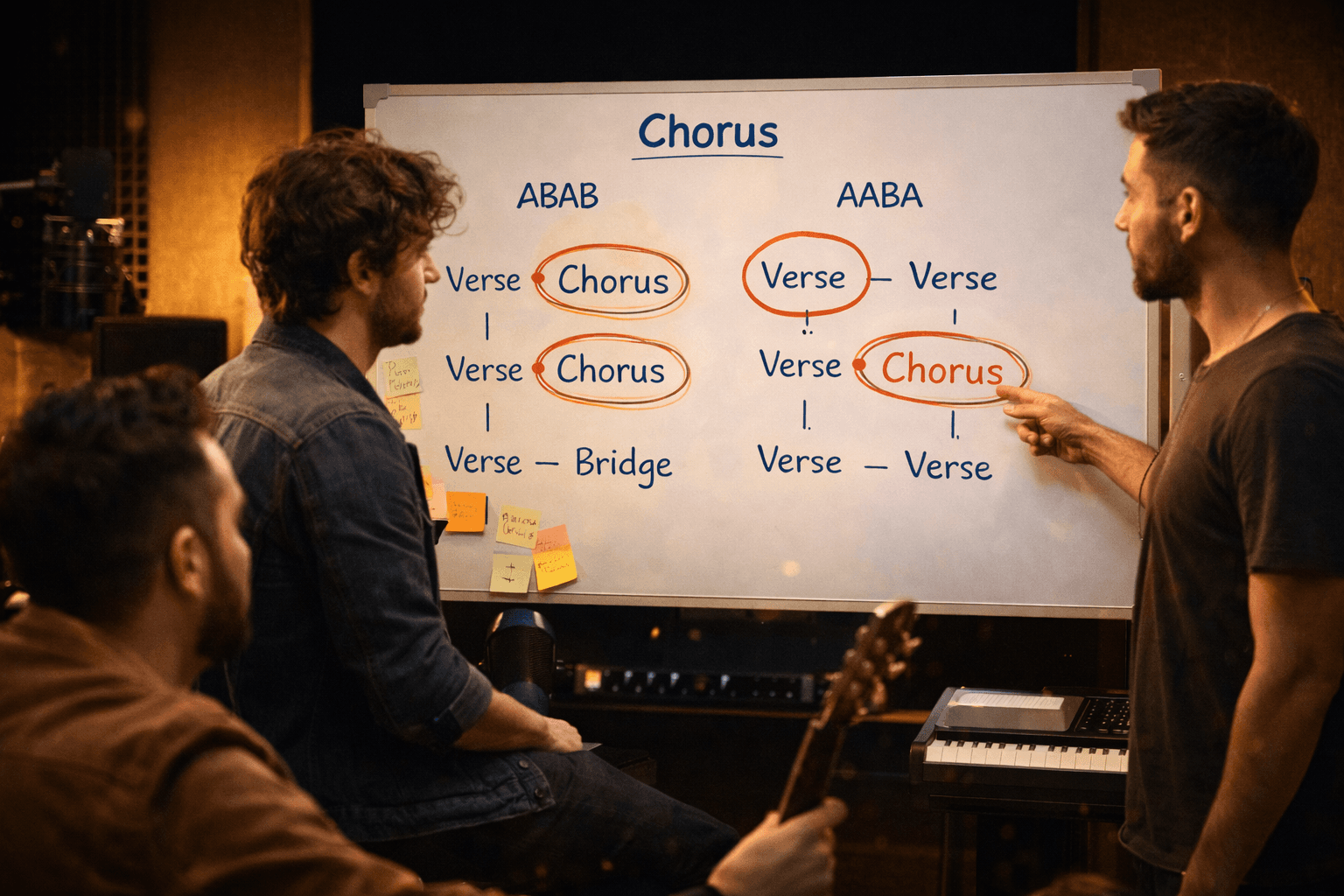 The placement of the chorus in music depends on the broader song structure in music, which composers organize using recognized frameworks such as the AABA song form, ABAB song structure, or the verse–chorus–bridge structure common in modern recording.
These patterns appear in genres ranging from rock song structure to hip hop song format, where verses deliver narrative storytelling and the chorus section of a song provides the emotional payoff through repetition and melodic emphasis.
Verse–Chorus Form
The verse chorus structure alternates narrative verses with repeating choruses, allowing the chorus melody and hook to reinforce the central theme after each lyrical development.
Verse–Pre-Chorus–Chorus Structure
Many modern songs add a pre-chorus that builds tension between the verse and chorus, preparing listeners for the melodic explosion of the song chorus.
Pop Song Formula Using Repeating Choruses
In modern pop song structure, producers often repeat the chorus in music several times throughout the track so the hook remains dominant and recognizable.
How Learning Song Structure Improves Music Skills
 Studying the chorus in music and broader music composition structure helps musicians understand why certain songs feel memorable. By analyzing the relationship between verse, chorus, and bridge, artists gain deeper insight into effective songwriting techniques.
Learning song structure in music also improves performance skills because musicians recognize when musical intensity should rise or fall during a composition.
Benefits for Singers
Understanding the chorus melody helps singers control breath support and vocal dynamics so the chorus delivers maximum emotional power.
Benefits for Instrumentalists
Instrumentalists learn when to expand harmonic layers or rhythmic energy during the chorus section of a song, making performances more expressive.
Benefits for Songwriters and Producers
Songwriters refine their songwriting techniques by studying how successful songs build tension and release within the music composition structure.
Learn Songwriting and Music Theory with Art Gharana
 Learning how the chorus in music functions inside real compositions becomes easier through structured training in melody, rhythm, and music production. Students who study songwriting gain practical experience analyzing famous songs and composing their own song chorus using professional techniques.
Structured online lessons also help musicians explore instruments that shape modern pop music, rock music, and hip hop music, allowing them to understand how instrumental tracks support the chorus melody and the emotional impact of the chorus in song structure.
Conclusion: Why the Chorus Is the Heart of a Song
The chorus in music remains the defining moment in most compositions because it combines melody, harmony, rhythm, and lyrical meaning into one unforgettable musical statement. Whether appearing in pop music, rock music, hip hop music, or country music, the song chorus transforms storytelling into an emotional experience that listeners remember.
From classic songwriting by Bob Dylan and Joni Mitchell to modern hits produced with advanced music production techniques, the chorus section of a song continues to shape how audiences connect with music, proving that mastering the chorus in songwriting remains one of the most powerful skills any musician can develop.
Frequently Asked Questions About Chorus in Music
1. What is a chorus in music?
A chorus in music is the repeated section of a song that contains the main melody and central message.
2. Why is the chorus important in a song?
The song chorus is important because it delivers the emotional highlight and the most memorable hook for listeners.
3. What is the difference between a chorus and a refrain?
A chorus is a separate repeated section with its own melody while a refrain is a repeated line within a verse.
4. Where does the chorus usually appear in a song?
In most song structure in music, the chorus appears after the verse and repeats several times throughout the track.
5. Why are choruses designed to be catchy?
Songwriters design the chorus section of a song with repetition and strong melodies so listeners remember it easily.