ChatGPT
 Google AI
 Grok
Grok Claude
Music is a language of patterns, structure, and emotion. Among the many musical forms, binary form in music stands out as one of the oldest and most influential. It provides a framework that organizes music into two contrasting sections, creating balance and clarity. Understanding binary form unlocks a deeper appreciation for classical compositions, modern songs, and the evolution of music forms. From the Baroque period music to contemporary tunes, this structure continues to guide composers and performers in crafting memorable music.
Binary form also helps learners identify musical patterns, making musical analysis easier. By dividing a piece into an A section and B section, listeners can follow melodies and rhythms more clearly. Musicians use this structure to create contrast, repetition, and harmony, making even simple compositions feel complete. Through music education and structured piano and keyboard lessons, students develop skills in recognizing sections, understanding musical storytelling, and exploring new music horizons.
The Origins and Historical Roots of Binary Form
 The origins of binary form in music trace back to the early Baroque era. Composers used it to structure dances and keyboard works, allowing performers to repeat sections while introducing variation. In this period, music favored symmetry, and the two-part layout became a natural choice for organizing melody and rhythm. This form provided clear musical contrast while maintaining balance, making compositions easier to play and more enjoyable to listen to. Early works often showcased musical development within each section, highlighting harmony and phrasing.
Binary form evolved as composers experimented with modulation and thematic contrast. The repeated A and B sections allowed composition techniques to grow, creating richer textures. This evolution of music forms influenced ternary form (ABA) and other complex structures. Classical composers refined binary patterns, ensuring that the second section could introduce tension or new keys, enriching musical storytelling. The historical legacy of binary form remains significant, serving as a foundation for understanding musical forms and analyzing iconic music pieces.
Early Beginnings of Binary Structure in Western Music
Binary structure first appeared in dances like the allemande, courante, and sarabande. Each movement had a clear A section and B section, making it easy to follow. Early keyboard works for harpsichord and organ often used repetition and contrast in music, giving performers and audiences a sense of completion.
Baroque composers emphasized clarity and symmetry, which helped listeners identify patterns. These binary form examples in pop songs later inspired classical and folk traditions, showing how influence of classical music on modern tunes shaped melodic development.
How Binary Form Developed Over Different Musical Periods
During the Classical period, composers expanded binary form with key changes and thematic contrast. Music became more expressive while keeping the two-part structure. The Romantic period saw further adaptation, using musical storytelling through sections to evoke emotion and drama.
Binary form also influenced folk music and popular songs. Even in contemporary genres, the concept of two contrasting sections remains vital. Recognizing these patterns aids in analyzing music composition and identifying binary form in classical and modern music.
The Lasting Impact of Binary Form on Musical Composition
Binary form influenced the development of ternary, rondo, and sonata forms. Composers borrowed the concept of contrast and repetition, shaping musical structure for centuries.
Today, binary form still appears in teaching music theory and composition. Its legacy in music education allows students to explore new music horizons while understanding foundational concepts.
Binary Form Explained in Simple Terms
Binary form in music is a structure that divides a composition into two main sections, labeled A and B. The first section introduces the theme, while the second section contrasts it, often with changes in key or melody. This structure uses musical patterns to create tension and release, making even simple pieces feel complete and memorable.
For beginners, binary form provides a clear roadmap. Recognizing the two contrasting sections helps learners track melodies, rhythms, and harmonies. Active listening techniques make it easier to follow A and B sections, enhancing music appreciation and preparing students for more advanced theory.
What Musicians Mean by “Binary Form”
Musicians see binary form as a tool for organization. The A section establishes a theme, and the B section introduces contrast. Often, repeat signs indicate how each section should be played again. This structure emphasizes melody and rhythm and helps performers maintain balance in both classical and contemporary works.
Key Musical Features That Define Binary Form
Binary music structure relies on distinct sections, modulation, and contrast. The A section usually stays in the home key, while the B section may explore related keys. Repetition reinforces recognition, and thematic contrast provides variety. Musicians often analyze pieces to identify how repetition and contrast in music guide the listener’s attention.
Types of Binary Form: Simple vs Rounded
Simple binary form follows an A–B pattern without returning to the first section. Rounded binary returns partially to the A section, creating an A–B–A′ effect. This subtle return blends composition techniques with audience expectation, demonstrating how musical storytelling through sections enhances listening enjoyment.
Understanding Binary Form Through Real Music Examples
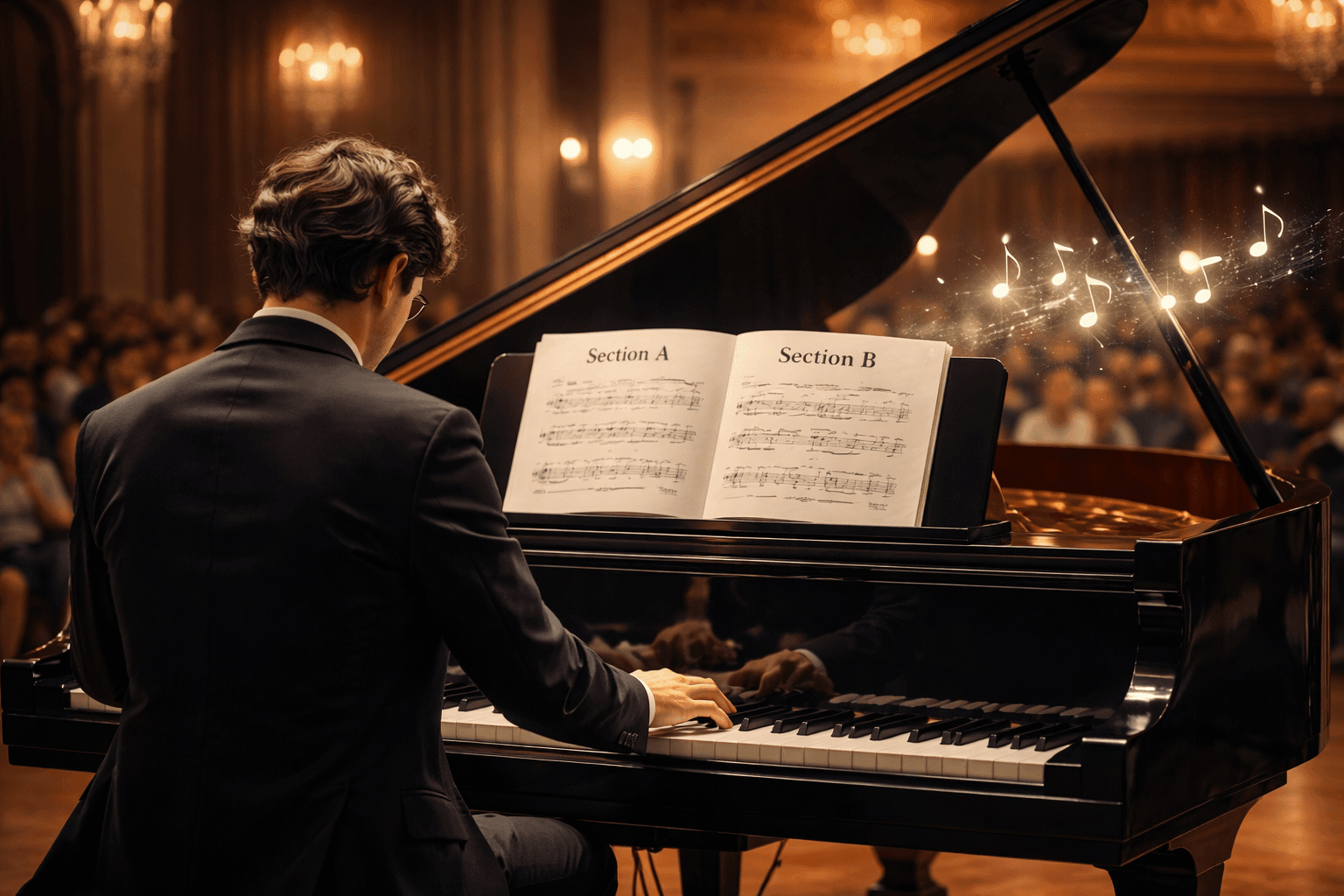 Binary form appears in classical and traditional music, particularly in dance movements and keyboard works. Bach’s Minuets and Handel’s keyboard suites often feature two contrasting sections with clear repetition. The first section introduces motifs, while the second develops them. These pieces showcase how musical contrast shapes both melody and rhythm.
Modern and popular songs also use binary principles. Pop songs often have verses and bridges that function like A and B sections. Recognizing these patterns improves listening techniques and helps learners identify binary form in classical and modern music.
Binary Form in Classical and Traditional Music
Early keyboard works relied on A–B sections to create structure and flow. Baroque period music emphasized symmetrical phrasing, repetition, and contrast, providing clarity for performers and audiences.
Dance forms like the gigue and sarabande demonstrated how musical development within binary structure made compositions engaging and memorable.
Recognizing Binary Patterns in Modern and Popular Songs
Many contemporary genres, including pop, film music, and electronic tracks, incorporate binary ideas. Verses and choruses often mimic binary form examples in pop songs, creating two contrasting sections that guide the listener’s experience.
Section Comparison Table: First Part vs Second Part
Feature | First Section (A) | Second Section (B)
Melody | Introduces main theme | Contrasts theme, sometimes modulates Harmony | Tonic key | Modulation to related key Rhythm | Repeated patterns | Variation in rhythm Mood | Calm or introductory | Climax or contrasting
How to Analyze Binary Form Step by Step
Analyzing binary form in music starts with identifying A and B sections. Focus on melodic and rhythmic changes, noting key shifts and thematic contrast. Breaking down pieces helps learners understand musical patterns and improves enhancing listening skills.
Active listening is key. Follow melody and rhythm, watch for repeat signs, and compare sections. Using sheet music or recordings strengthens the ability to spot binary patterns in both classical compositions and popular music examples.
Breaking Music into A and B Sections
Identify phrases, key modulations, and motifs. The A section usually sets the theme, while the B section develops it or provides contrast. Look for repeated material and how composers manipulate it to create structure and tension.
Practical Listening Techniques to Spot Binary Form
Listening actively involves focusing on contrasts, phrasing, and rhythmic changes. Pianists and keyboard players can benefit from hands-on practice. Following piano and keyboard lessons in tandem with theoretical analysis helps bridge theory with practice.
Mini Case Studies of Well-Known Binary Form Pieces
Bach’s Minuet in G and Handel’s Keyboard Suite in D major are classic examples. Both use clear A section and B section divisions with modulation and repeated motifs, demonstrating binary form in classical and modern music.
Why Learning Binary Form Matters for Music Students and Listeners
 Binary form teaches how music organizes ideas. Understanding it enhances music appreciation and improves memory and prediction. Students can anticipate melodic developments and appreciate composers’ musical storytelling through sections.
Performers benefit by learning how contrast guides phrasing. Composers gain tools for structuring new pieces. Even beginners can quickly identify themes and modulation, making learning piano with music theory more effective.
How Binary Form Improves Musical Understanding
It strengthens analytical skills, revealing how composers use repetition, contrast, and modulation. Recognizing musical patterns in A and B sections aids in understanding complex works like sonatas and rondos.
Benefits for Performers, Composers, and Beginners
Pianists, keyboardists, vocalists, and composers learn composition techniques through binary form. It provides a framework for improvisation, arranging, and original composition.
Binary Form as a Foundation for Advanced Music Theory
Binary form bridges to ternary form (ABA), rondo, and sonata. It introduces concepts of thematic return, modulation, and contrast, laying the groundwork for advanced musical analysis and understanding musical forms.
Binary Form in Today’s Music Landscape
 Binary form is alive in contemporary genres. Pop, film, electronic, and indie music often rely on two contrasting sections to create interest and emotional flow. Even subtle uses of binary form guide melody and rhythm and maintain listener engagement.
Influence of Binary Thinking in Contemporary Genres
Modern composers use A and B sections to organize verses, bridges, and instrumental breaks. Influence of classical music on modern tunes ensures that binary principles continue to shape creative choices across genres.
Is Binary Form Still Relevant in Modern Composition?
Yes. Understanding binary form supports music education, performance, and composition. Recognizing patterns enhances enhancing listening skills and helps musicians explore new approaches to structure and melody.
Learning Binary Form the Right Way with Art Gharana
 Art Gharana teaches musical forms step by step, combining theory and practice. Lessons highlight A section and B section, guiding students to recognize contrast and repetition naturally.
Binary Form Lessons in Piano and Keyboard Courses at Art Gharana
Structured piano and keyboard lessons allow students to play pieces while identifying binary patterns. Practical exercises make theoretical concepts easier to grasp, boosting music appreciation and analytical skills.
Why Structured Music Education Makes Theory Easier
Stepwise instruction helps students connect composition techniques with musical patterns. Understanding binary form builds confidence and fosters curiosity to explore advanced forms like ternary form (ABA) and sonata.
Common Misconceptions About Binary Form
Binary form is often thought of as simple, but it can include complex modulations, musical contrast, and thematic development. Many confuse it with ternary form (ABA), but binary lacks a full thematic return. Misunderstanding these structures can limit musical analysis skills.
Binary Form vs Ternary Form: Key Differences Explained
Binary form consists of two sections, while ternary form returns to the initial theme. Recognizing this difference improves music appreciation and analytical precision, especially in classical compositions.
Is Binary Form Too Simple for Advanced Music?
No. Composers exploit repetition, contrast, modulation, and phrasing to create depth. Binary form provides a foundation for more intricate forms and teaches principles of musical development.
The Legacy and Importance of Binary Form in Music Education
 Binary form is essential in music education. It teaches structure, contrast, and repetition, helping students develop analytical skills and listening techniques. Its binary form legacy in music education ensures that both classical and modern learners can explore musical storytelling with clarity and confidence.
Frequently Asked Questions About Binary Form in Music
What is binary form in music theory?
Binary form divides a piece into two main sections, A and B, often with repetition and contrast in music.
What is the difference between simple and rounded binary form?
Simple binary follows A–B, while rounded binary returns partially to the A section, creating A–B–A′.
Is binary form used in modern music?
Yes. Pop, film scores, and electronic songs often follow two-section patterns inspired by classical binary form.
Why is binary form important for beginners?
It teaches musical structure, contrast, repetition, and phrasing. Beginners gain skills in analyzing music composition and music appreciation.
How can students learn binary form easily?
Step-by-step piano and keyboard lessons combined with active listening help students identify A section and B section patterns in classical and contemporary music.