ChatGPT
 Google AI
 Grok
Grok Claude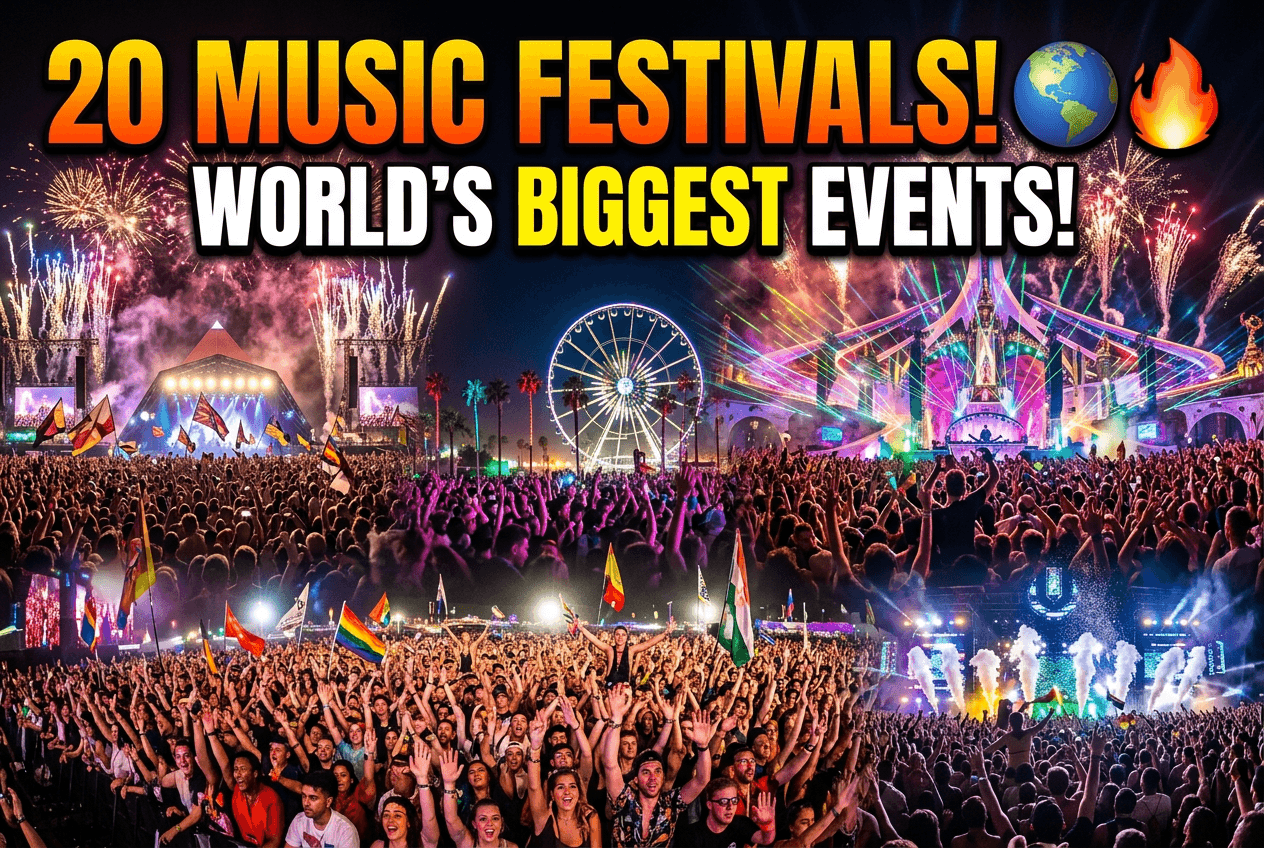
Some concerts you attend; some festivals rearrange your life. The best music festivals gather hundreds of thousands of strangers into temporary cities built entirely on live music, from desert EDM cathedrals to century-old classical gatherings. This guide tours twenty legendary events across five continents, including the American giants, Europe's institutions, and India's booming festival season, both electronic and classical. You'll get attendance numbers, ideal months, a master table, and a first-timer's planning playbook covering festival tickets, packing, and etiquette. Whether you're chasing headliners or hidden stages, your next unforgettable weekend starts on this page. Let's travel.
What Makes a Festival Truly Great
 Size impresses, but greatness needs more: a festival lineup with discovery beyond the headliners, a setting that becomes part of the show, and a crowd culture people return for annually. The best events feel like nations with anthems.
For music students, festivals double as classrooms. Watch stagecraft, crowd control, and setlist architecture across genres in one weekend. Understanding music genres deeply transforms festival-hopping from entertainment into education. Take notes between dance breaks; future performances will thank you.
The American Giants
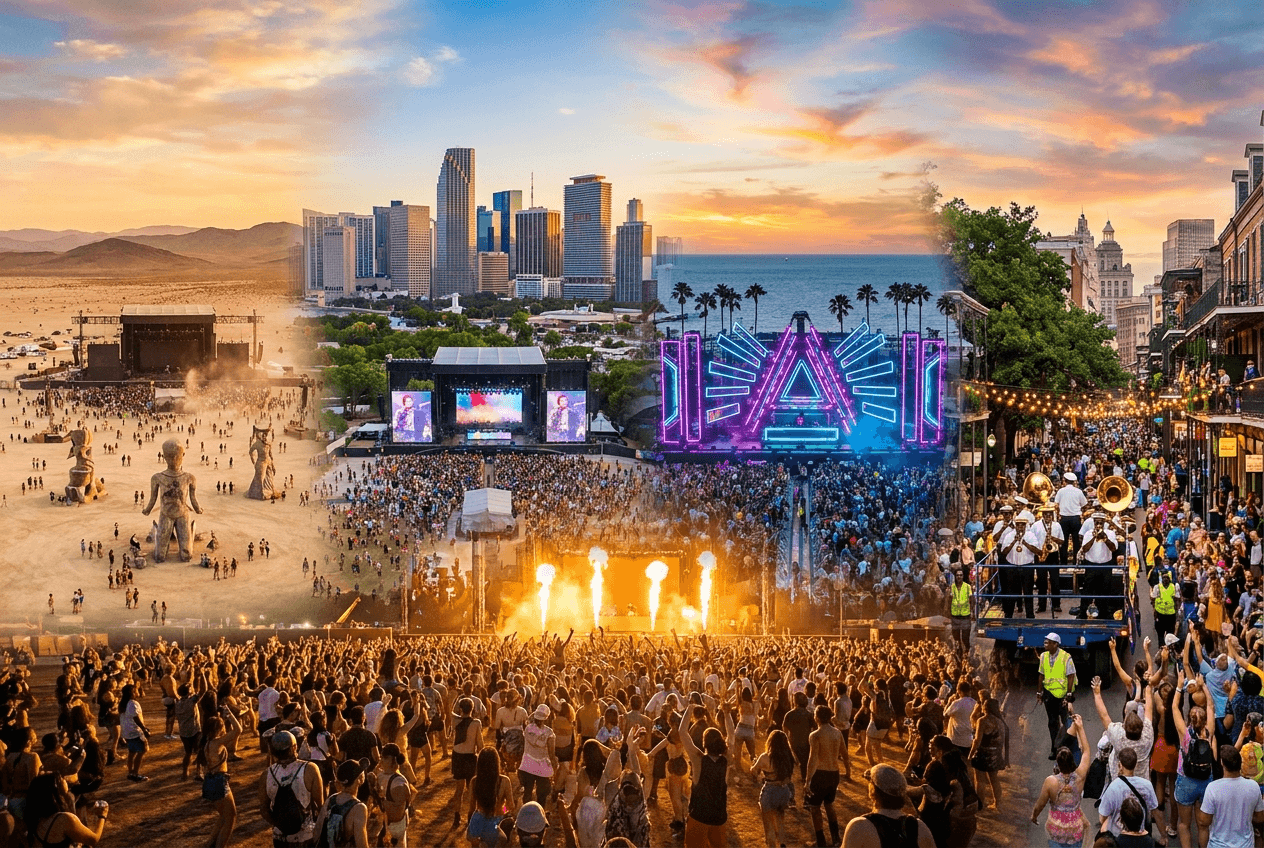
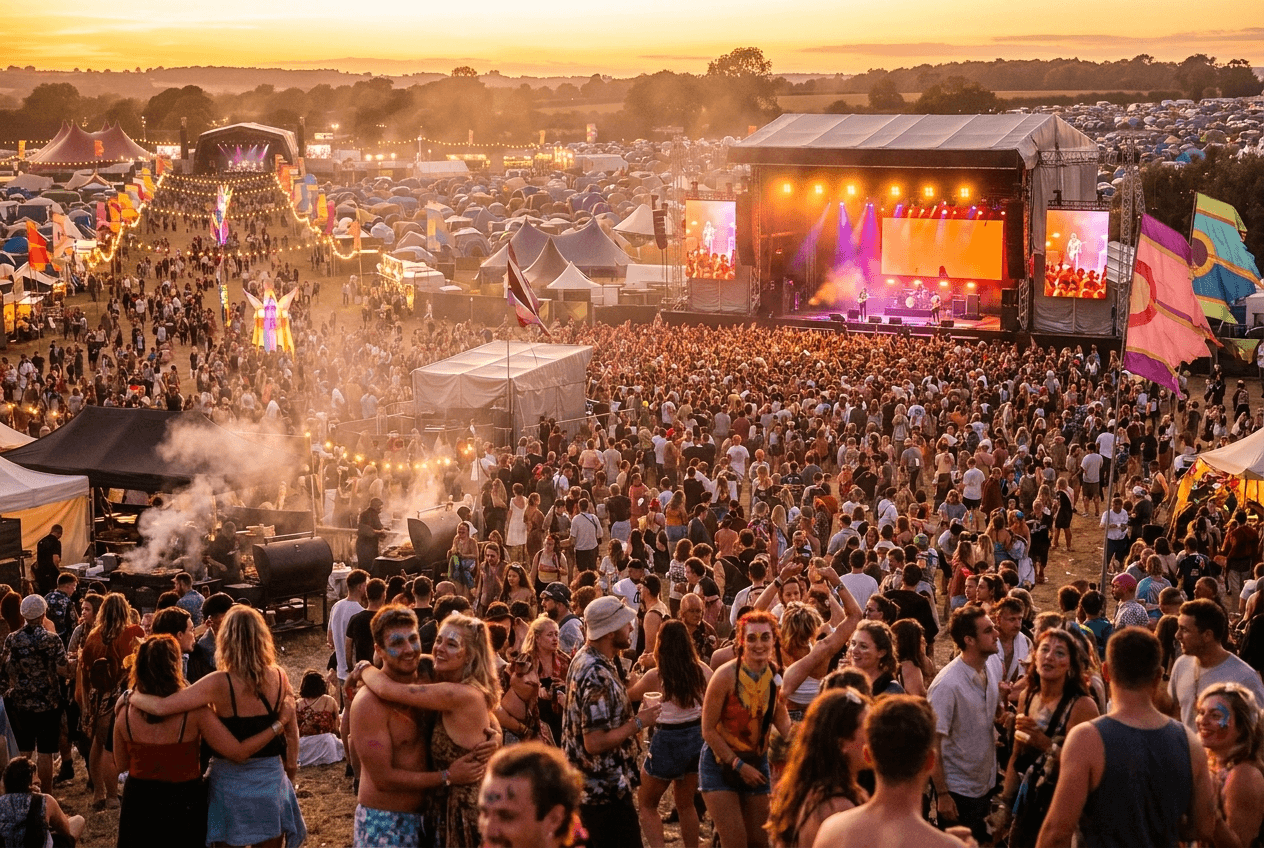 America industrialized the modern festival: massive productions, celebrity culture, and livestreams that turn local events into global broadcasts. The four below anchor the US festival season from spring desert weekends through summer park takeovers. Passport optional, sunscreen mandatory.
Each serves a different tribe. Fashion and pop culture converge in California, rock heritage rules Chicago, EDM owns Miami, and heritage jazz soaks New Orleans. Sampling all four amounts to a masterclass in American music history, delivered loudly.
Coachella (Indio, California)
Held across two April weekends in the Colorado Desert, Coachella long ago outgrew music into full pop-culture phenomenon: surprise guests, viral fashion, and art installations visible from space, almost. Its festival lineup spans pop, hip hop, rock, and electronic royalty.
Lollapalooza (Chicago, Illinois)
Born as Jane's Addiction's 1991 farewell tour, Lollapalooza settled into Chicago's Grant Park and multiplied worldwide with editions across South America and Europe. Four days, multiple stages, four hundred thousand attendees, and a skyline backdrop no other main stage matches.
Ultra Music Festival (Miami, Florida)
Every March, Miami becomes the EDM world capital as Ultra's stages ignite Bayfront Park. Expect the planet's biggest DJs premiering tracks the industry dances to all year. The energy is relentless, the visuals borderline science fiction, the bass genuinely seismic.
New Orleans Jazz and Heritage Festival
Late April in New Orleans delivers America's soul food festival: jazz, gospel, blues, zydeco, and legendary local cuisine across the Fair Grounds. Generations of families attend together. It's less spectacle, more communion, and utterly irreplaceable in world live music culture.
Europe's Legendary Institutions
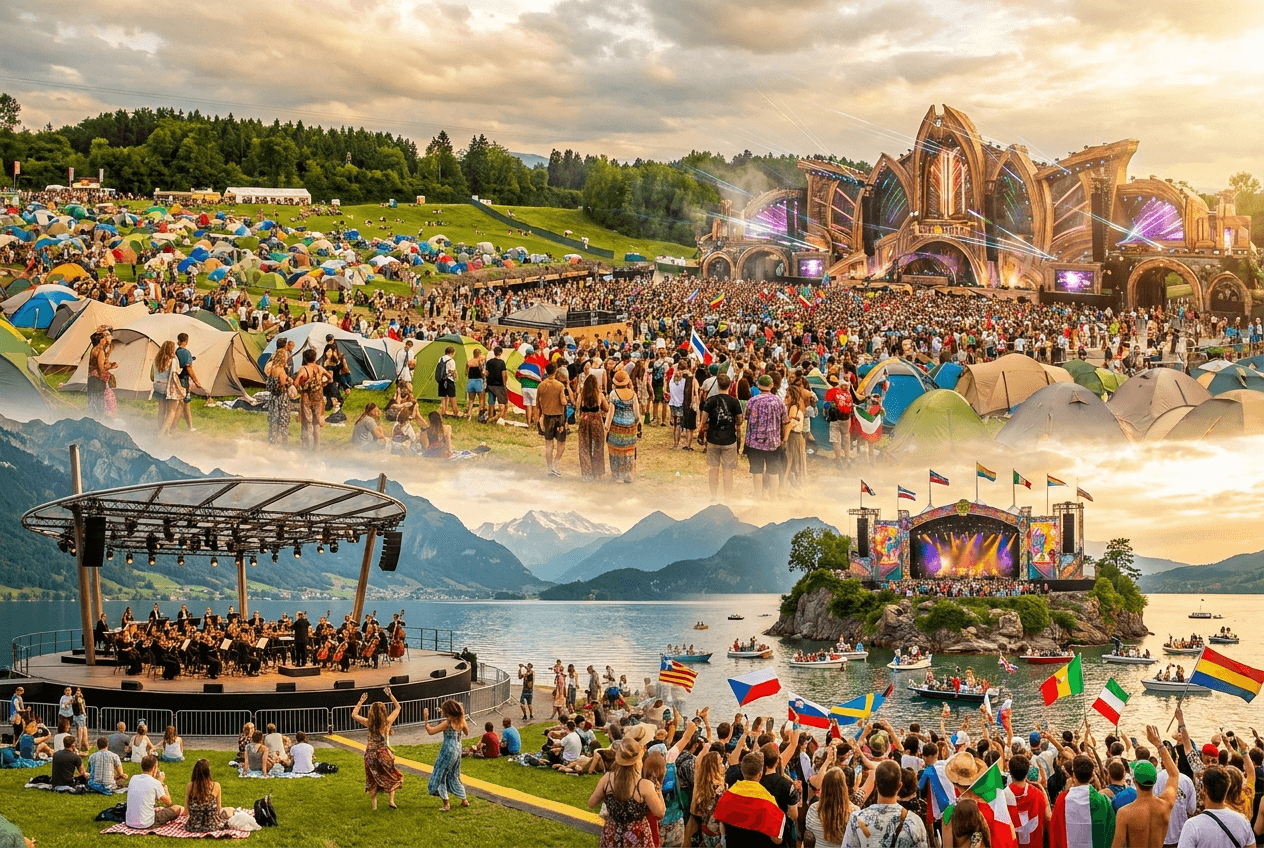
Europe treats festivals as heritage. Several events below predate their attendees' grandparents, and their fields, islands, and lakesides have hosted history repeatedly. Summer here means festival season as civic religion, with tickets selling out before headliners are even announced.
The variety astonishes: mythic English farmland, Belgian fantasy kingdoms, Swiss jazz elegance, and a Budapest island republic. Eurail passes exist for exactly this pilgrimage. Budget travelers chain two or three events into one legendary summer regularly.
Glastonbury (England)
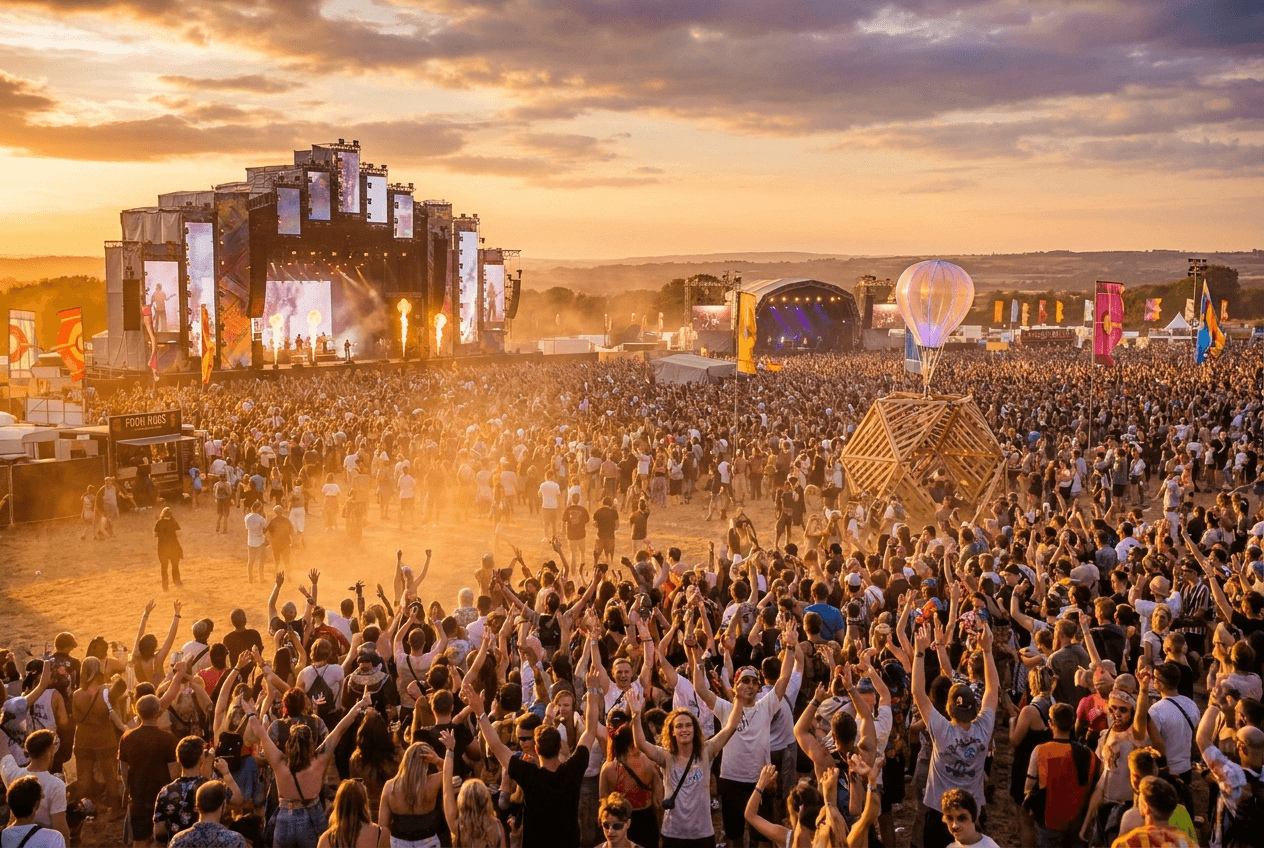
The mother of all festivals sprawls across Worthy Farm each June: two hundred thousand people, a hundred stages, and mud that has achieved mythological status. Careers are crowned on its Pyramid Stage. Tickets vanish within minutes, years of demand compressed.
Tomorrowland (Boom, Belgium)
Tomorrowland builds fantasy kingdoms that happen to host EDM: storybook stages, fireworks choreography, and four hundred thousand citizens from two hundred countries waving flags together. Even non-electronic fans watch the livestreams purely for the impossible main stage architecture.
Montreux Jazz Festival (Switzerland)
Since 1967, Lake Geneva's shoreline has hosted music's most elegant gathering. Montreux began as pure jazz and grew to welcome every genre; its archive of legendary recorded performances is celebrated worldwide. Intimate venues, Alpine views, and impeccable sound define it.
Sziget Festival (Budapest, Hungary)
An entire Danube island transforms each August into the Island of Freedom: a week-long multi-genre republic with circus tents, beach parties, and sunrise concerts. Sziget's festival lineup mixes global stars with gloriously weird discoveries around every tree.
Primavera Sound (Barcelona, Spain)
The tastemaker's choice: seaside Barcelona, early June, and lineups critics call the best-curated in live music. Primavera champions indie, electronic, and left-field pop before the mainstream catches up. City-based comfort means real beds after 4 a.m. sets.
Icons Beyond the Atlantic
The festival map circles the whole planet now. South America throws the largest parties by sheer scale, and Japan perfected the mountain retreat model. Both destinations below justify building entire international trips around a single weekend of live music.
Traveling fans report the same discovery everywhere: crowds differ, courtesy differs, food gloriously differs, yet the moment the main stage lights drop, every nationality sings identically. Festivals are humanity's most reliable proof of common ground, sold by the weekend.
Rock in Rio (Brazil)
The world's biggest festival brand regularly draws seven hundred thousand people across its Rio editions, with sister events in Lisbon. Rock, pop, and Brazilian superstars share colossal stages. The crowd's singing frequently drowns the speakers, which artists universally adore.
Fuji Rock (Naeba, Japan)
Japan's flagship festival occupies a mountain ski resort each July: forest boardwalk stages, river-cooled drinks, and the politest hundred thousand attendees in festival season history. The nature-meets-music formula converts every skeptic. Pack rain gear; the mountain insists.
India's Booming Festival Scene
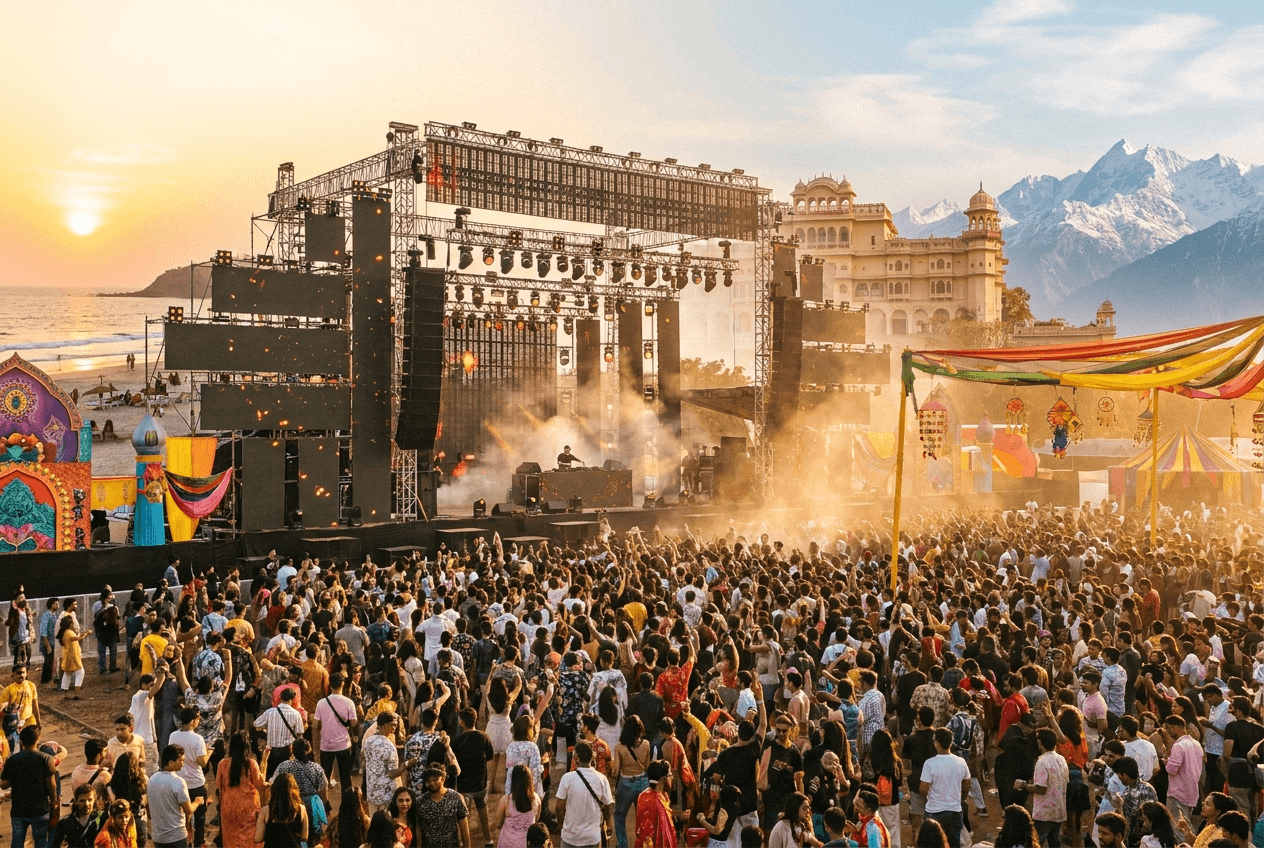
 Here's the chapter global festival lists keep missing. India's contemporary festival season exploded over the past two decades, blending international production standards with settings no other country can offer: beaches, palaces, Himalayan valleys, and rice fields as venues.
For diaspora travelers, December is the golden window: pleasant weather, wedding-season energy, and three major festivals within one trip. Pair any event below with exploring the country's types of Indian music and the journey doubles as education.
Sunburn (Goa)
Asia's biggest EDM festival brings global DJ royalty to Goa each December. Beach sunsets, massive production, and tens of thousands of dancers built its reputation as India's Tomorrowland. International attendees increasingly plan entire Goa holidays around its dates.
NH7 Weekender (Pune and Beyond)
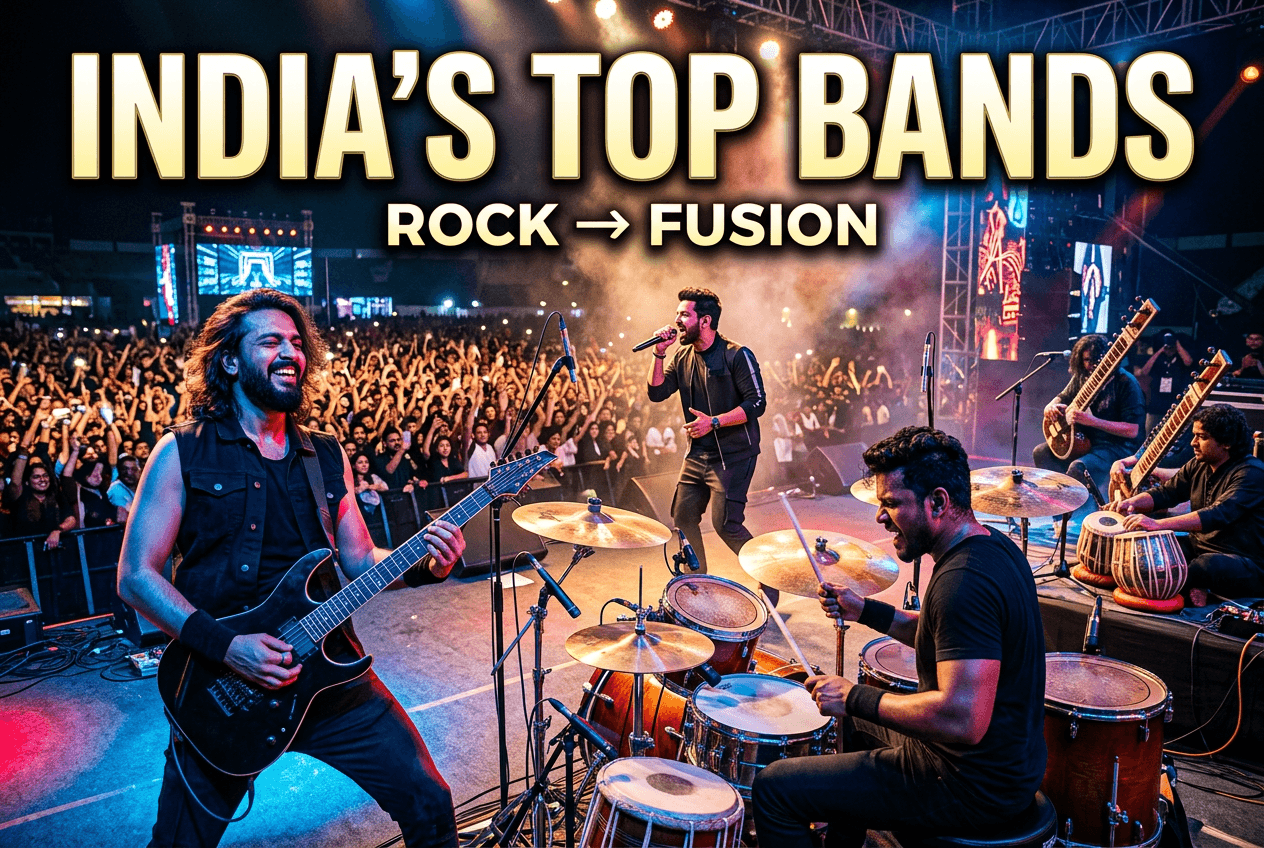
India's happiest festival, as fans call it, champions indie, rock, hip hop, and fusion across multiple cities each winter. NH7 launched countless Indian independent careers and treats its festival lineup as discovery engine first, star vehicle second.
Magnetic Fields (Alsisar, Rajasthan)
A seventeenth-century Rajasthani palace hosts three December days of electronic music, art, and desert glamour. Magnetic Fields caps attendance deliberately, trading scale for intimacy. International press regularly ranks it among the world's most beautiful boutique festivals. Book months ahead.
Ziro Festival of Music (Arunachal Pradesh)
Held each September in the Ziro Valley's rice fields, hosted by the Apatani community, this indie gathering pairs emerging bands with Himalayan sunrises. Getting there takes effort; leaving takes willpower. Sustainable, community-run, and utterly unlike any other live music event.
Hornbill Festival (Nagaland)
Every December, Nagaland's Festival of Festivals celebrates tribal heritage with music as centerpiece: rock contests, folk performances, and traditional dance across ten days. Hornbill offers cultural immersion no main stage elsewhere can replicate. Northeast India's proudest showcase, deservedly.
India's Classical Festivals: The Original Festival Tradition
 Long before wristbands, India gathered annually for ragas. These classical festivals, some approaching their centenary, remain the world's most rigorous cultural gathering spaces, where audiences listen for hours with scholarly attention. Begin understanding the art with our raga guide.
Artium's festival list rightly includes two of these; the full circuit deserves naming. Winter is the season: December through January delivers a classical marathon across Chennai, Kolkata, and Ahmedabad that serious students plan pilgrimages around annually.
Long before wristbands, India gathered annually for ragas. These classical festivals, some approaching their centenary, remain the world's most rigorous cultural gathering spaces, where audiences listen for hours with scholarly attention. Begin understanding the art with our raga guide.
Artium's festival list rightly includes two of these; the full circuit deserves naming. Winter is the season: December through January delivers a classical marathon across Chennai, Kolkata, and Ahmedabad that serious students plan pilgrimages around annually.
Margazhi Season (Chennai)
Chennai's December Season is the largest classical festival on earth: thousands of Carnatic concerts across dozens of sabhas through the sacred month of Margazhi. Morning lecture-demos, afternoon rising stars, evening legends, plus legendary canteen food between everything.
Dover Lane Music Conference (Kolkata)
Since 1952, Kolkata's flagship Hindustani gathering has run all-night concerts each January where maestros perform until sunrise. Audiences arrive with shawls and devotion. Hearing dawn ragas as actual dawn breaks remains one of live music's most transcendent experiences anywhere.
Saptak Festival (Ahmedabad)
Ahmedabad opens every year with Saptak: thirteen January nights of Hindustani music that have hosted virtually every modern master since 1980. The atmosphere balances festival scale with baithak intimacy. Gujarat's winter gift to the classical world, reliably stellar.
Cleveland Thyagaraja Aradhana (Ohio, USA)
The largest Indian classical festival outside India blooms in Cleveland each spring: ten-plus days of Carnatic concerts, dance, and competitions drawing thousands of diaspora families. Founded in 1978, it proves the cultural gathering tradition migrated to America intact and thriving.
Master Table: 20 Festivals at a Glance
Scan, shortlist, and start planning. Attendance figures are typical recent scales, and months indicate usual timing, though dates shift yearly, so verify before booking festival tickets or flights. Prices vary wildly by tier, from free classical entry to four-figure VIP passes.
Notice the genre spread deliberately built into this list. The best music festivals education comes from crossing lanes: one EDM weekend, one jazz institution, one classical season. Triangulate those three and your musical taste gains permanent depth.
Festival Calendar: Where to Be Each Season
 Serious festival-goers plan by season, not by event. Spring belongs to America: Ultra, Coachella, then New Orleans in quick succession. Summer is Europe's, June through August, when festival season turns the continent into one rolling encore.
Autumn pivots east and south with Ziro and Rock in Rio, then winter crowns India: Sunburn, Hornbill, Magnetic Fields, and the classical season all within weeks. A determined fan could chase twelve months of continuous live music. Some genuinely do.
Planning Your First Festival: The Playbook
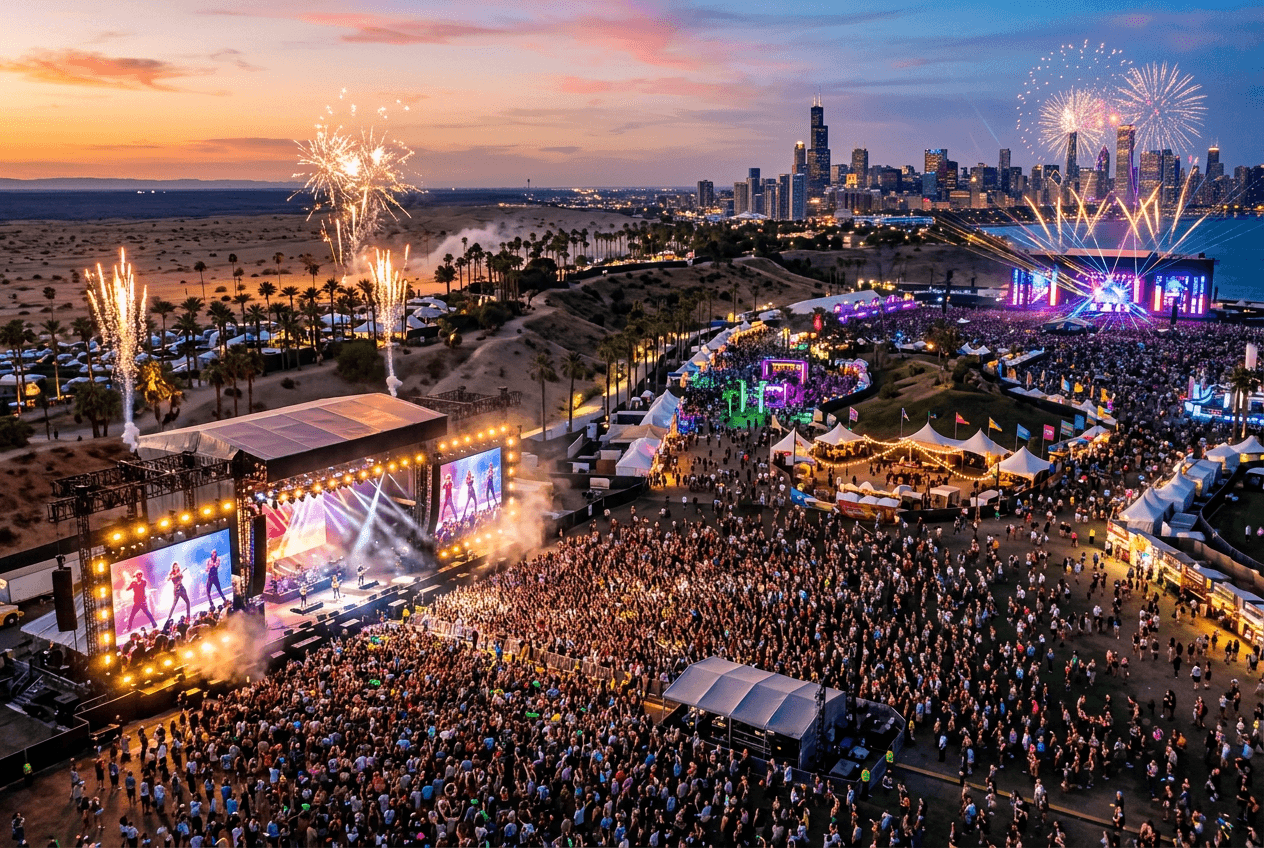 Rule one: buy festival tickets the moment sales open, since the best music festivals sell out before lineups finalize. Rule two: book accommodation the same hour. Rule three: build your schedule around three must-sees daily, leaving gaps for glorious accidents.
Budget honestly: passes, travel, lodging, food, and merch typically double the ticket price. Split costs with a crew, and register wristbands immediately upon arrival. Screenshot the site map offline; cell networks collapse precisely when a hundred thousand phones agree.
What to Pack
The veteran's kit: refillable water bottle, sunscreen, earplugs, portable charger, cash backup, light rain layer, and shoes you've already broken in. Add a bandana for dust and a cheap watch. Comfort outranks fashion by day two, universally.
Festival Etiquette in Five Lines
Respect sightlines during sets, help fallen dancers up immediately, and keep phone screens low during quiet songs. At classical festivals, silence between phrases is participation. Everywhere, the crowd's kindness is the real production budget. Contribute generously; it returns multiplied.
How Festivals Launch Careers
Nearly every legend has a festival origin story: Hendrix igniting Monterey in 1967, Ravi Shankar introducing ragas to that same crowd, and countless iconic singers earning breakthrough slots on side stages before conquering headliners' billing years later.
The pattern continues today: discovery slots, battle-of-the-bands pipelines, and viral festival clips mint careers annually. For learners, the lesson is direct: stages reward the prepared. Sharpen your voice with our guide on becoming a better singer and aim deliberately.
A Short History: How Festivals Conquered the World
The modern festival was born in the 1960s. Monterey Pop in 1967 introduced Hendrix and Ravi Shankar to America within one weekend, and Woodstock's 1969 half-million made gatherings generational statements. Every wristband since descends from those muddy fields.
Newport's folk and jazz festivals predate even those, while India's Margazhi tradition began back in 1927. The lesson across all origins: festivals start as communities before becoming industries. The ones that remember this stay beloved; the ones that forget become expensive parking lots.
The Moment That Changed Everything
When Ravi Shankar played Monterey's Sunday morning slot, Western audiences met the sitar seriously for the first time. That single cultural gathering performance opened the door every world-music stage walks through today. Festivals don't just host history; they manufacture it.
Which Festival Fits You: A Genre Picker
Choosing from twenty options paralyzes; matching taste to destination liberates. Find your listening profile below and your shortlist writes itself. Honest self-assessment beats hype: a jazz soul at a bass-drop weekend enjoys neither the headliners nor the nap options.
Mixed households, take heart: several events serve multiple profiles at once. Sziget and Lollapalooza span genres widely, and India's December circuit lets one trip cover EDM beaches and classical sabhas within the same week. Compromise has never sounded better.
Doing Festivals on a Budget
Legendary weekends needn't bankrupt anyone. Volunteer programs trade shifts for free entry at most major events, early-bird festival tickets cut prices sharply, and group campsites divide costs painlessly. Students should hunt official discounts before paying general admission anywhere.
India delivers the best value on this entire list: world-class production at a fraction of Western prices, plus classical festivals where many concerts cost nothing at all. Pair one paid pass with free sabha hopping and December becomes astonishingly affordable.
The Livestream Loophole
Zero budget? Tomorrowland, Coachella, and Glastonbury broadcast professionally filmed streams free, and classical festivals increasingly upload full concerts. Host a living-room festival with friends, proper speakers, and themed snacks. It's genuinely eighty percent of the joy for zero percent of the airfare.
First Time at a Classical Festival? Read This
Classical gatherings run on different physics: seated listening, multi-hour concerts, and applause conventions worth learning. Arrive early for good sightlines, silence devices completely, and save applause for piece endings rather than improvisational peaks. Watching regulars for cues works perfectly.
Preparation multiplies pleasure enormously. Learn what a raga is before Margazhi and performances transform from pleasant sound into visible architecture. Nodding along with the tala earns approving smiles from aunties, which is the classical world's highest civilian honor.
The Canteen Secret
Chennai insiders know Margazhi runs on two parallel festivals: the concerts and the legendary sabha canteens serving filter coffee and festival specials between performances. Plan meals around both. Musical judgment and culinary judgment are equally serious sports in December Chennai.
Surviving the Big Day: Hour-by-Hour Wisdom
Arrive when gates open, walk the grounds once fully, and locate water refills, medical tents, and meeting points before the crowds thicken. Early sets play to small crowds; some become your favorite discoveries precisely because nobody else showed up yet.
Pace everything: alternate main stage crushes with side-stage breathing room, hydrate hourly, and eat real food before the evening peak. The fans still dancing at midnight are the ones who treated the day as a marathon, never a sprint.
Going Solo Is Underrated
Solo festival trips convert skeptics reliably: total schedule freedom, easier single-ticket availability, and crowds that adopt friendly strangers within hours. Pack confidence and a portable charger. Half of festival season's lifelong friendships began with two solo attendees sharing one phone map.
Where Festivals Are Heading
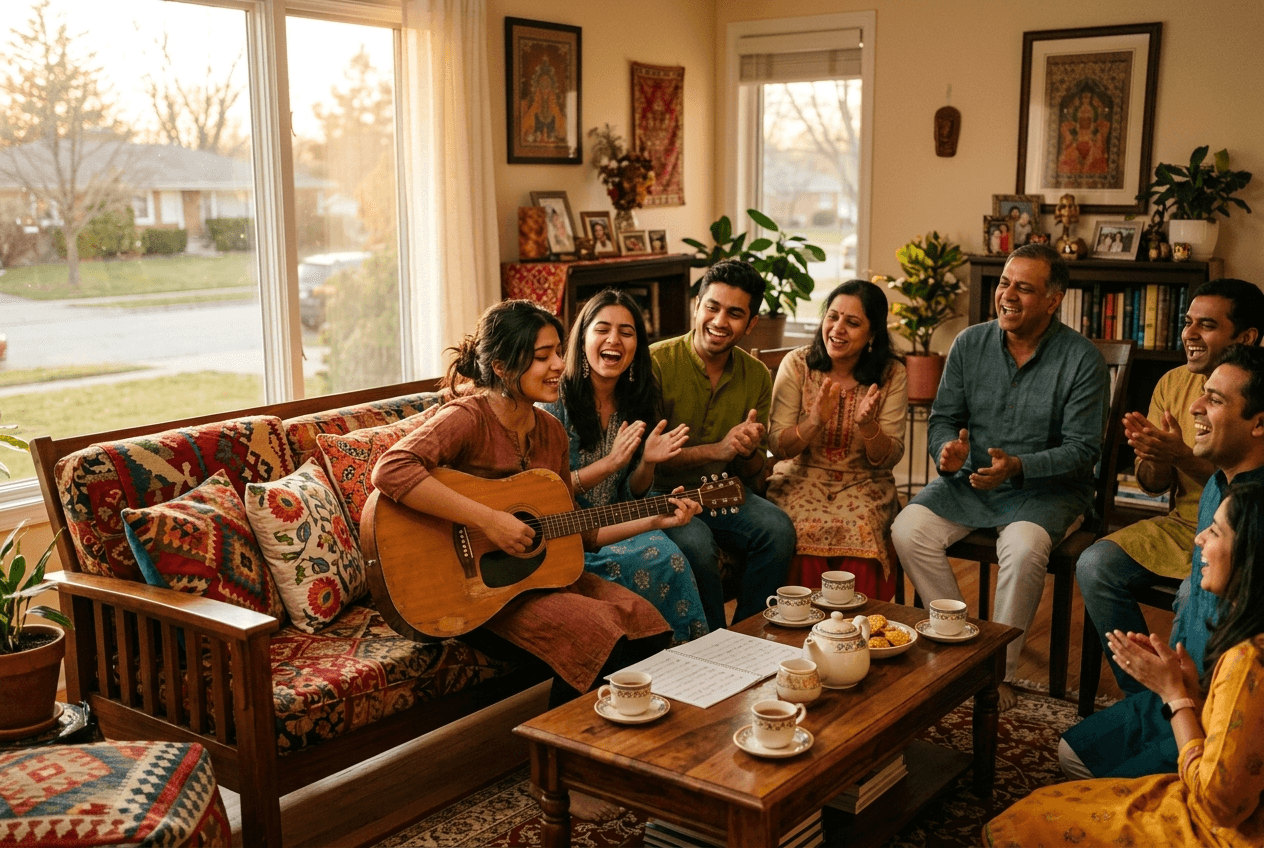 The industry's next decade is already visible: sustainability pledges reshaping sites, cashless wristbands replacing wallets, and hybrid livestream audiences dwarfing physical ones. Boutique events keep multiplying too, as fans increasingly trade mega-crowds for curated intimacy in remarkable locations.
India sits at the center of this future. Global promoters keep announcing Indian editions, palace and valley venues offer unmatched settings, and a young population streams live music voraciously. The next decade's defining festival lineup innovations will likely debut there first.
Your Pre-Festival Listening Homework Great festival weekends are built two weeks early: play each day's festival lineup top to bottom on streaming, star three unfamiliar acts daily, and arrive already owning the choruses. Familiar music hits triple strength live; homework converts directly into goosebumps.
Study the greats between sets too. Reading about iconic singers before watching living ones sharpens your ear for what separates good from unforgettable. Festivals reward informed ears with details casual attendees never notice. Curiosity is the cheapest upgrade available.
Festivals and the Indian Diaspora in America
For Indian-American families, the festival calendar doubles as cultural bridge. Cleveland's Aradhana, regional Diwali and Holi mega-events, and touring editions of Indian brands bring the homeland's festival season stateside, minus the airfare. Community sabhas in every metro extend it year-round.
These gatherings solve a real parenting puzzle: making heritage feel like celebration rather than homework. Kids who dance at a Holi festival ask about the music afterward. That question is the cultural gathering's quiet superpower, and enrollment inquiries follow it reliably.
Kids to Festivals
Family-friendly events increasingly offer kids' zones, ear defenders, and daytime programming. Start children with single-day community festivals before attempting camping marathons. One well-timed afternoon builds festival stamina and musical curiosity together. Pack snacks like you're provisioning an expedition; you are.
How Lineups Actually Get Made
Behind every poster sits a year of booking chess: agents, routing logistics, exclusivity clauses, and budgets where headliners consume half the talent spend. Undercard slots get curated for discovery and genre balance. Reading a poster becomes fascinating once you know this.
The font-size hierarchy is literal economics: placement reflects fees and drawing power. Rising artists fight for third-line billing the way executives chase corner offices. Next time a tiny-font act blows you away, remember you witnessed the poster's future top line early.
Why Set Times Clash on Purpose
Scheduling conflicts aren't accidents; they distribute crowds across stages safely. Accept that you'll miss someone great every evening. Veterans choose by venue intimacy over fame: the small-tent legend beats the distant main stage speck, almost every single time.
Free and Community Festivals Near You
Your festival education can start this weekend for nothing. American cities run free summer series in parks, university music departments stage festival-grade concerts, and temple and community organizations host classical evenings monthly. Local live music listings hide genuine treasures.
Treat local events as training camps: practice crowd navigation, test your packing kit, and discover how long your feet actually last. Then graduate to the international bucket list with veteran confidence. Every legendary festival-goer started at a neighborhood stage somewhere.
Protecting Ears, Energy, and Memories
Hearing is the musician's retirement account, so spend it wisely: high-fidelity earplugs preserve sound quality while cutting damage, and stage-speaker proximity is never worth the ringing. Hydration, sunscreen reapplication, and one daily real meal keep the festival season sustainable.
On memories: film thirty seconds of a favorite song, then pocket the phone deliberately. Screens full of shaky footage nobody rewatches cost you the actual moment. The set you experience fully will outlast every gigabyte. Presence is the premium ticket.
Weather Wildcards
Desert nights freeze, English fields flood, and mountain afternoons flip hourly. Check historic weather for your festival's exact week, not the season generally. Layers beat bulk, and a two-dollar poncho has saved more festival lineup experiences than any VIP upgrade ever sold.
Meeting Artists: The Realistic Guide
Artist encounters happen more at smaller events than mega-festivals: boutique gatherings like Magnetic Fields and Ziro put performers in the same food lines as fans, and classical festivals traditionally welcome respectful post-concert greetings. Mega-events wall headliners behind logistics, understandably.
When the moment arrives, brevity wins: one genuine sentence about a specific song beats ten minutes of selfie negotiation. Musicians remember thoughtful listeners. Workshop tents and masterclass sessions, increasingly common at the best music festivals, offer structured access worth every early alarm.
Merch, Money, and Souvenirs Worth Buying
Festival merch operates on scarcity: designs retire when the weekend ends, making that overpriced shirt a genuine time capsule. Budget for one keeper item, skip impulse duplicates, and buy early since popular sizes evaporate by Saturday afternoon reliably.
The better souvenirs cost nothing: the festival lineup poster photographed for your records, a setlist grabbed after the final song, and the playlist you build from discoveries. Ten years later, those artifacts replay the weekend better than any wristband drawer.
The Discovery Playlist Ritual
Start a playlist named after each festival before arriving and add every act that stops you mid-walk. Review it monthly afterward. Veterans' libraries become autobiographies written in live music, one weekend per chapter. Your future self will thank you repeatedly.
From Audience to Stage: The Long Game
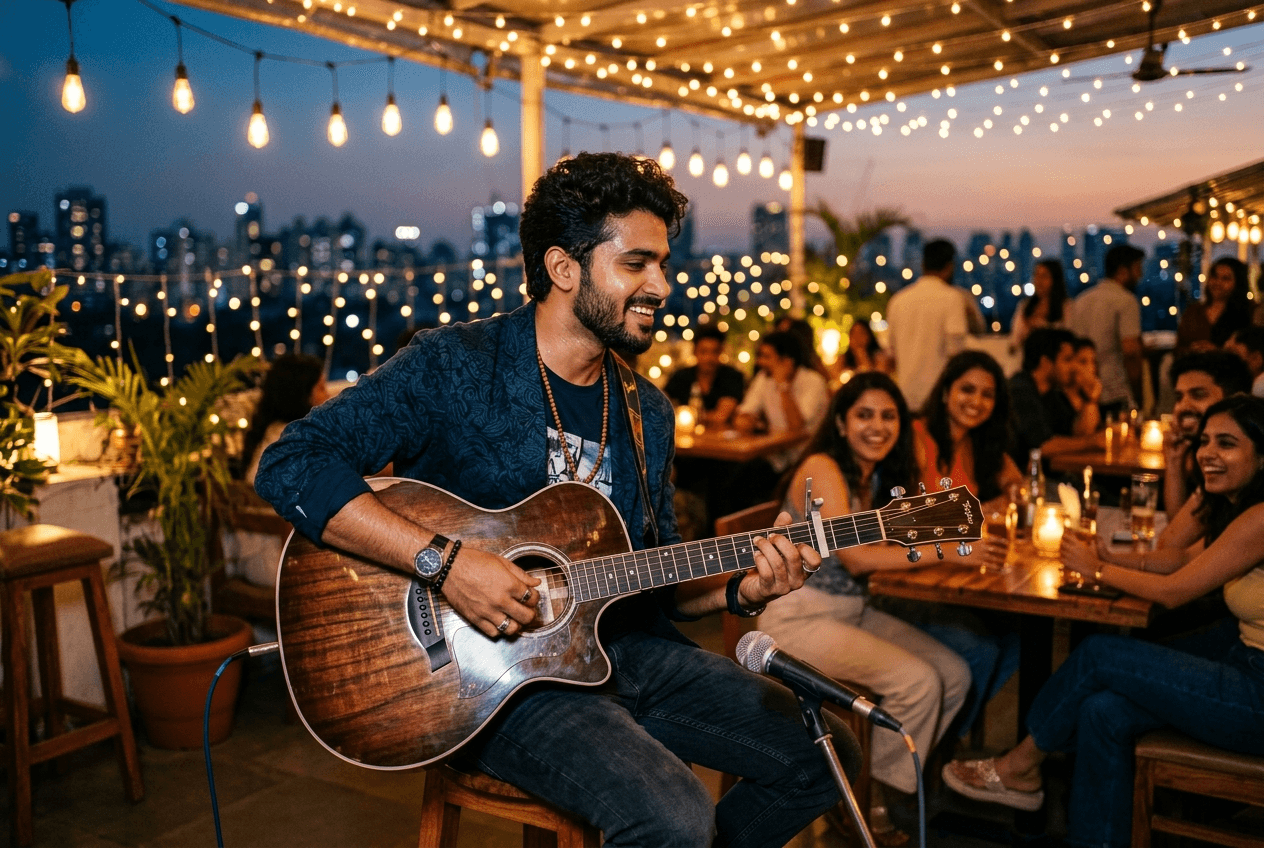 Plenty of attendees leave festivals carrying an itch that never quite fades: the wish to be on the other side of the barrier. Honor it seriously. Community open mics, sabha youth slots, and college battles form the actual pipeline every main stage draws from.
The path is unglamorous and completely real: daily practice, small stages, recorded sets, repeat for years. Festival slots reward bodies of work, not lucky breaks. Start the practice habit this month and let the festival season of some future year hold your name.
A Ninety-Day Starter Challenge
Learn three songs to performance standard, play one open mic monthly, and film everything. Ninety days builds the baseline confidence every performer you watched this summer once had to construct identically. Stages are patient; they simply require you to begin.
Frequently Asked Questions
1. What is the biggest music festival in the world?
By attendance, Rock in Rio and Austria's Donauinselfest trade the crown, each drawing crowds approaching a million across their runs, while Glastonbury remains the most culturally mythic. By classical scale, Chennai's Margazhi Season hosts the most performances anywhere, by thousands.
2. Which country has the best music festivals?
The honest answer is a tie by category: the UK and USA lead pop-rock heritage, Belgium and Hungary define EDM spectacle, and India owns the classical and boutique-palace categories outright. Passport-holders needn't choose; the calendar accommodates greedy fans.
3. What are the top music festivals in 2026?
The evergreen circuit holds: Coachella, Glastonbury, Tomorrowland, Lollapalooza, and Rock in Rio anchor the year, with Sunburn and Margazhi closing December. Check each festival lineup announcement between January and March, and buy passes immediately upon release.
4. Which music festivals are in India?
Contemporary picks: Sunburn in Goa, NH7 Weekender, Magnetic Fields in Rajasthan, Ziro in Arunachal, and Hornbill in Nagaland. Classical pilgrims choose Chennai's Margazhi Season, Kolkata's Dover Lane, and Ahmedabad's Saptak, all peaking December through January gloriously.
5. What should I pack for my first festival?
Essentials: refillable bottle, sunscreen, earplugs, portable charger, broken-in shoes, rain layer, and offline maps. Camping events add tent, sleep mask, and wet wipes, the camping festival currency. Pack half the clothes and twice the socks you planned.
6. How much do festival tickets cost?
General admission spans roughly one hundred to five hundred dollars for major international events, with VIP tiers multiplying that. Indian contemporary festivals often run cheaper; classical festivals like Margazhi offer many free or nominal-entry concerts. Early-bird windows reward the decisive.
Final Thoughts
Twenty festivals, five continents, one shared electricity when the lights drop and a hundred thousand strangers inhale together. The best music festivals aren't destinations; they're annual proof that melody remains humanity's fastest friendship. Pick one and commit tonight.
And if watching those stages stirs something performer-shaped in you, feed it. Art Gharana's instructors coach voices and instruments live, one-on-one, from first note toward first stage. Somewhere on this list, a main stage is patiently waiting for your name.