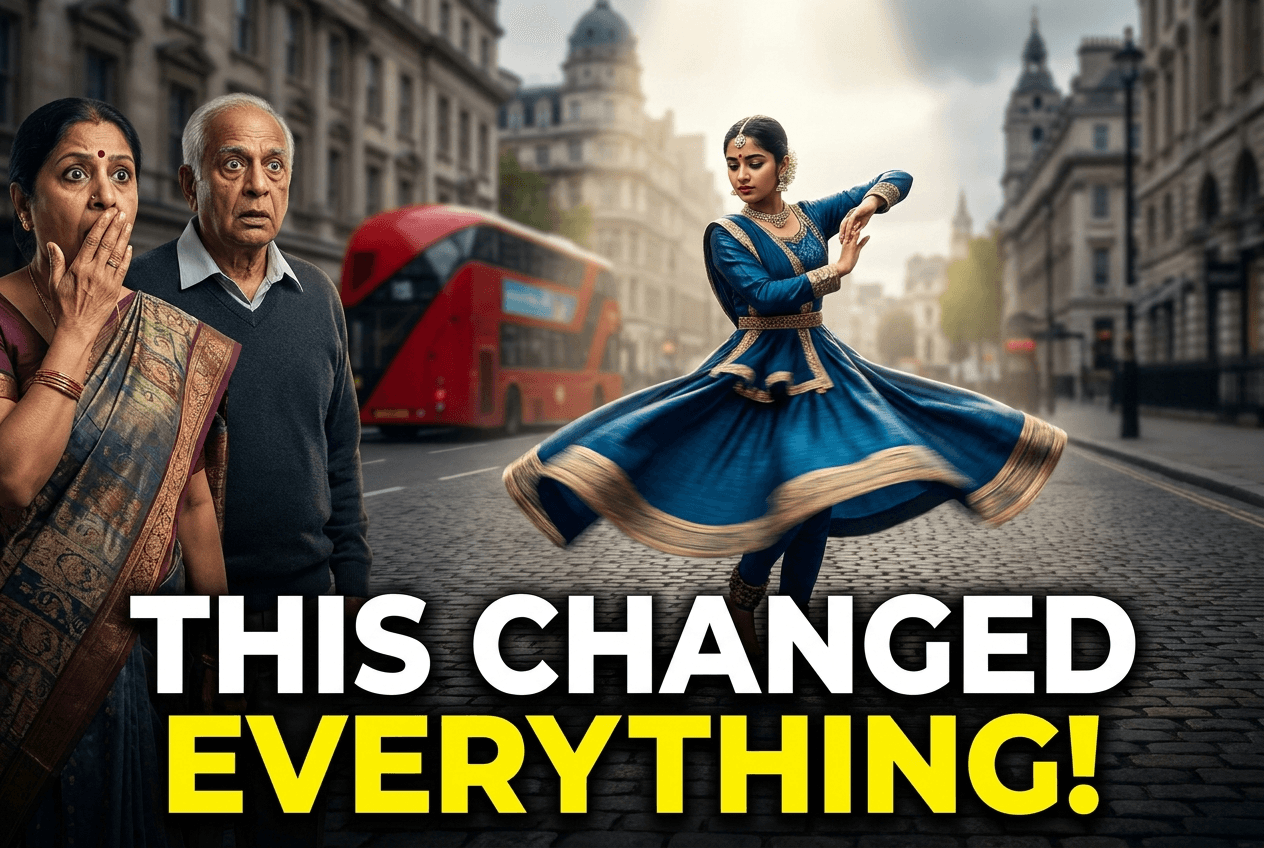
Kathak is one of India's eight classical dance forms and one of the most technically sophisticated and visually compelling art forms in the world. For children growing up in Indian families across the United Kingdom, learning Kathak is far more than picking up a new skill. It is a meaningful, embodied connection to a tradition that stretches back centuries and carries the stories, rhythms and wisdom of generations. With live online instruction now widely accessible, UK families no longer need to be within driving distance of a specialist teacher to give their children this extraordinary gift.
This guide is written for UK parents who are considering kathak classes for kids in the UK and want a thorough, honest understanding of what Kathak involves, what structured online training delivers, and what to look for when choosing a teacher. By the end, you will have everything you need to make a confident decision for your child.
The demand for Kathak training among UK Indian families is strong and growing. In cities like Leicester, Birmingham, London, Manchester and Glasgow, Indian cultural life is rich and active, and children who can perform classical dance carry a skill that earns genuine admiration at Diwali celebrations, Navratri events, school multicultural shows and family occasions. Yet access to a truly qualified Kathak teacher has historically been patchy and inconsistent. Art Gharana's live online programme solves that problem directly.
What Is Kathak and Where Does It Come From?
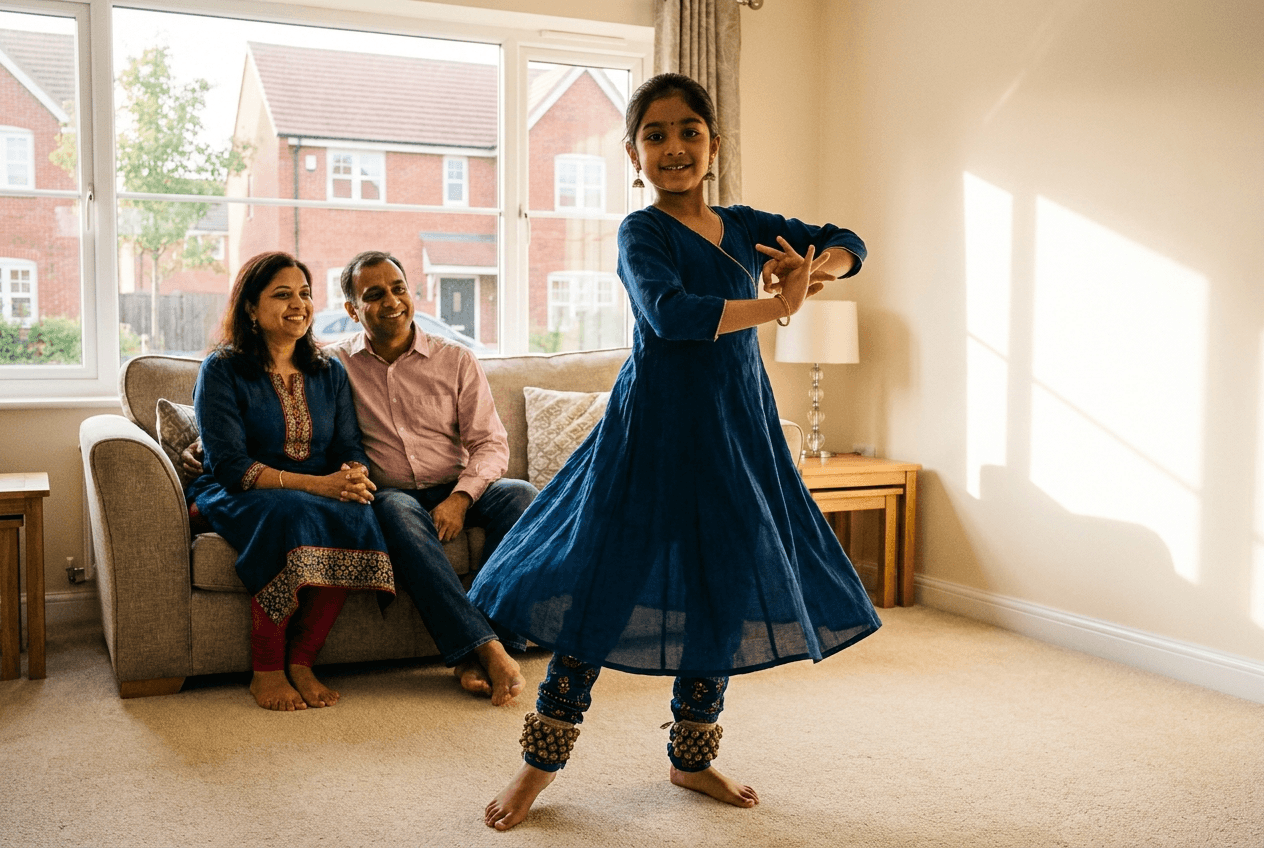 The word Kathak derives from the Sanskrit word katha, meaning story. Historically, Kathak was performed by travelling storytellers called Kathakas who used gesture, movement and expression to bring to life the tales of Hindu mythology, the stories of Krishna and Radha, the great battles of the Mahabharata and the devotional poems of the bhakti tradition.
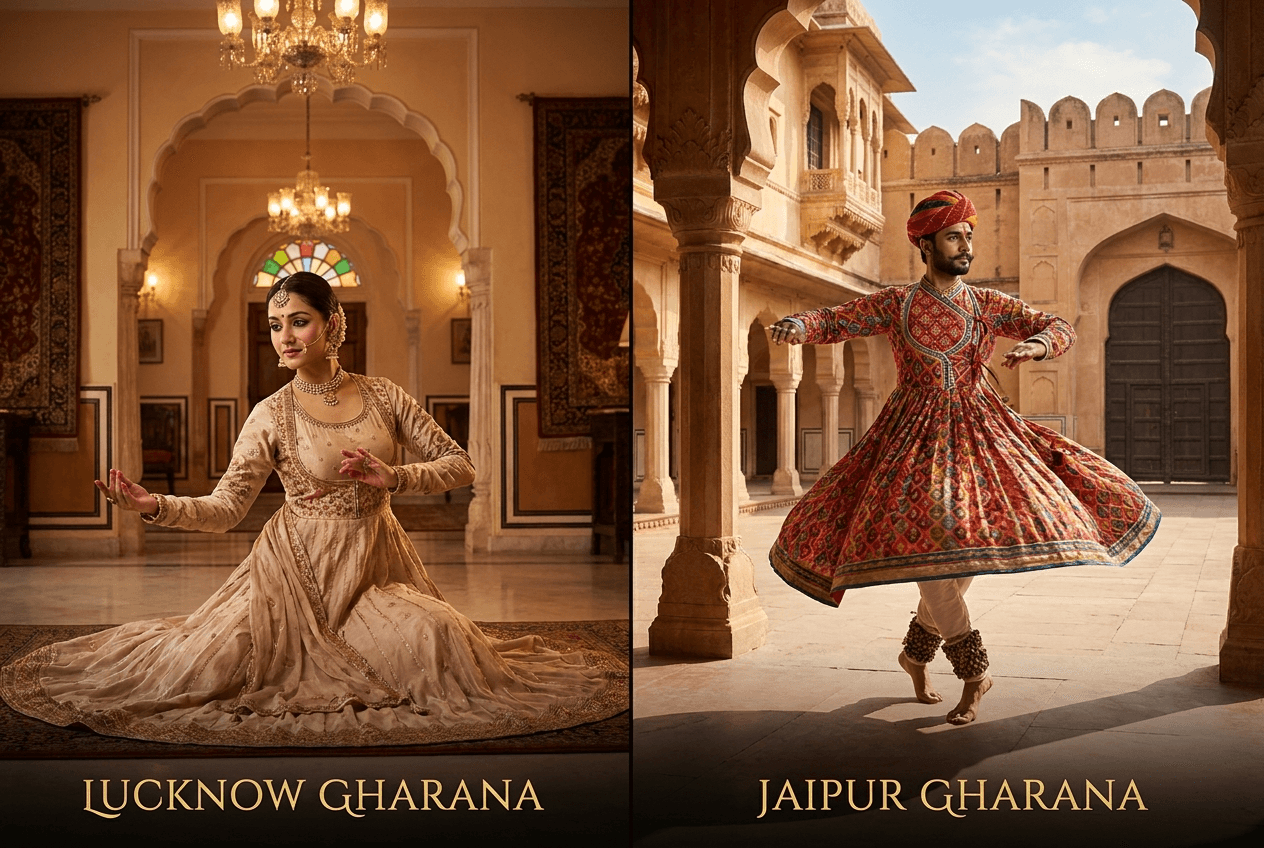
Over centuries, Kathak evolved through two distinct artistic lineages known as gharanas, each with its own aesthetic character. The Lucknow gharana, which flourished under the patronage of the Nawabs of Awadh, developed a lyrical, graceful style emphasising elegant arm movements, expressive facial storytelling and refined musicality. The Jaipur gharana, shaped by the martial culture of Rajasthan, is celebrated for its powerful, percussive footwork, complex rhythmic structures and vigorous energy. Both traditions are alive and active today, and the greatest Kathak performers draw on the richness of both.
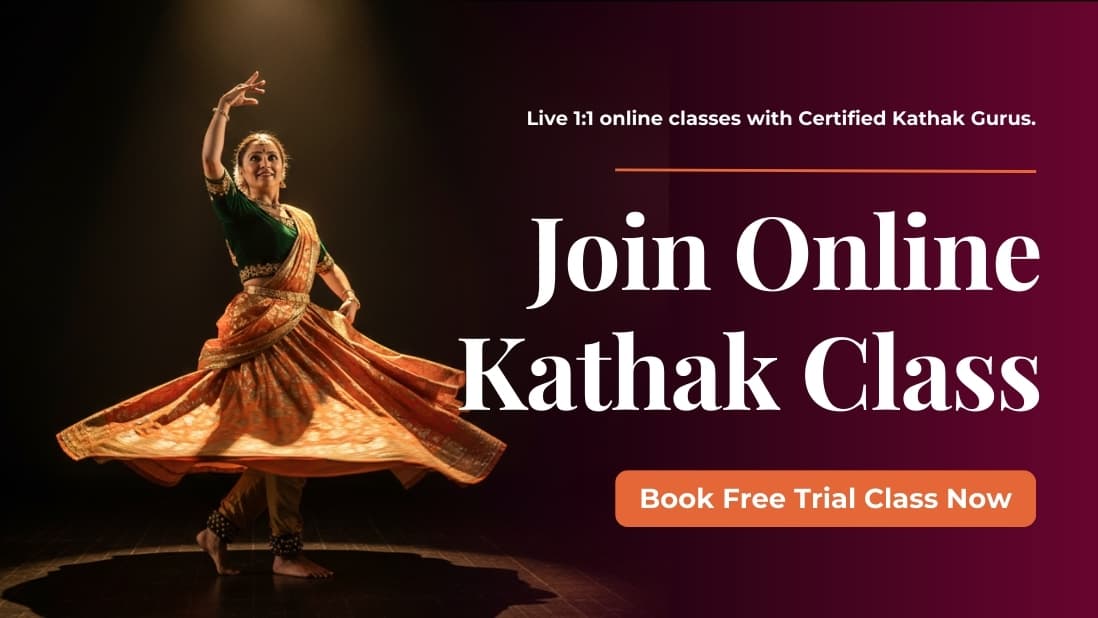
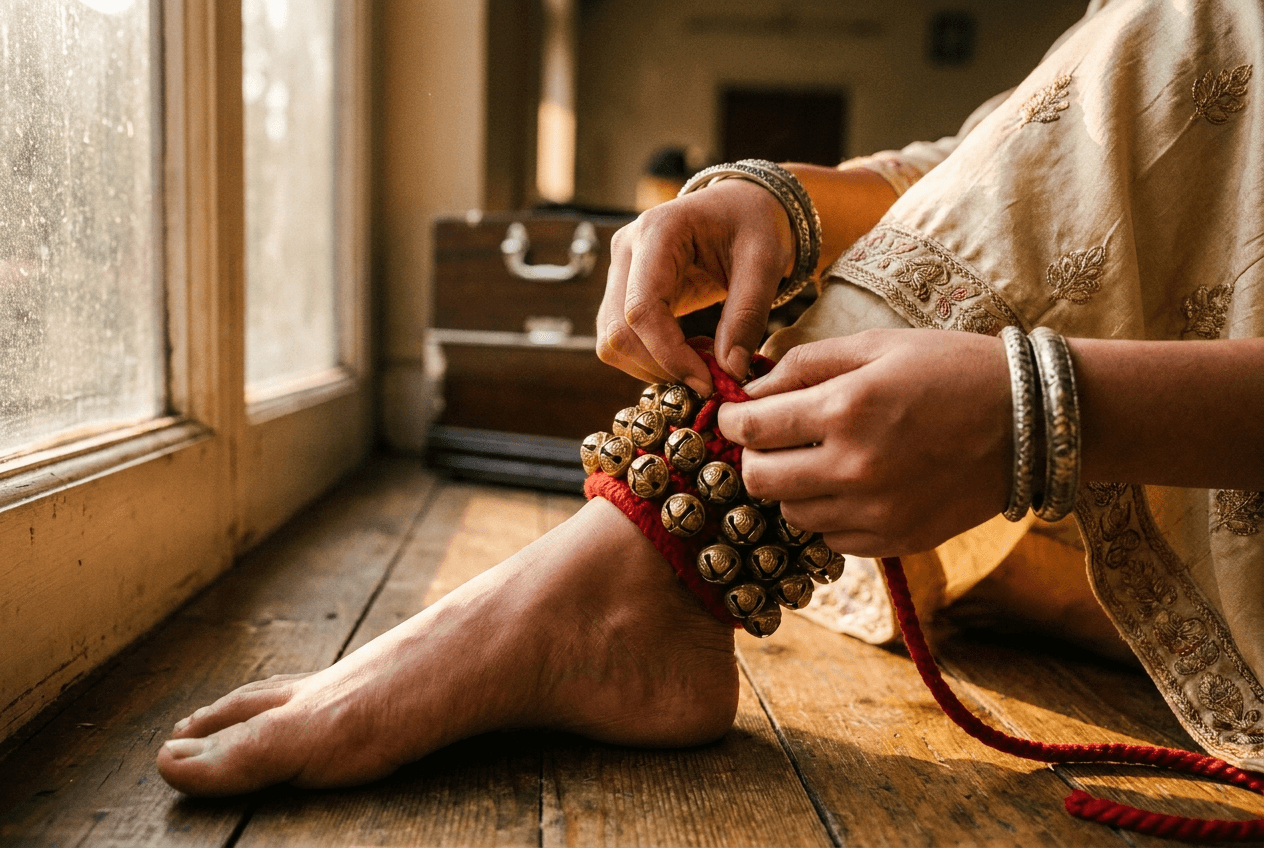
What makes Kathak unique among the world's dance forms is the role of rhythm as both structure and expression. The dancer's feet, adorned with ghungroos, the small brass bells worn around the ankles, function as a percussive instrument in conversation with the tabla accompaniment. Long sequences of rapid, perfectly controlled spins known as chakkars, intricate footwork patterns called tatkaar, and expressive storytelling through hand gestures and facial expression combine into a performance tradition of extraordinary depth and beauty.
Why UK Children Should Learn Kathak
 A Living Connection to Cultural Heritage
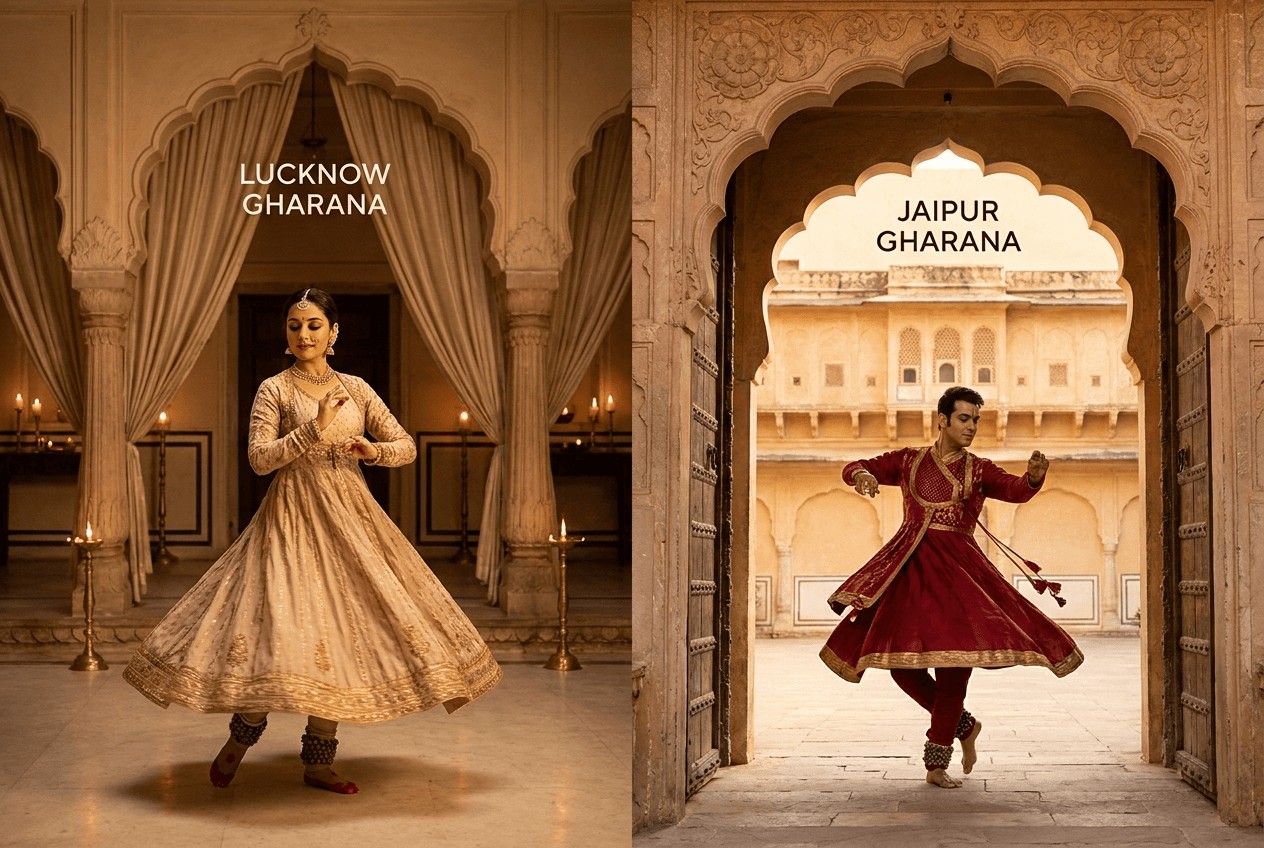
For Indian families in the UK, Kathak carries a cultural significance that goes far beyond any other extracurricular activity. Children who learn Kathak do not just acquire a skill. They inhabit a tradition. The postures they practice, the rhythms they step, the stories they tell through gesture and expression are the same postures, rhythms and stories that have connected generations of Indian families for hundreds of years. In a diaspora context, where the pressures of assimilation are constant, that embodied cultural connection is genuinely irreplaceable.
A Living Connection to Cultural Heritage
For Indian families in the UK, Kathak carries a cultural significance that goes far beyond any other extracurricular activity. Children who learn Kathak do not just acquire a skill. They inhabit a tradition. The postures they practice, the rhythms they step, the stories they tell through gesture and expression are the same postures, rhythms and stories that have connected generations of Indian families for hundreds of years. In a diaspora context, where the pressures of assimilation are constant, that embodied cultural connection is genuinely irreplaceable.
Physical Development
The physical demands of Kathak training are substantial and deeply beneficial. The precise footwork patterns develop exceptional leg strength, coordination and body awareness. The chakkar sequences build balance and spatial awareness. The expressive upper body work develops flexibility, posture and fine motor control in the arms, hands and fingers. Children who train seriously in Kathak develop a physical confidence and grace that is visible not just in the dance studio but in how they carry themselves in everyday life.
Rhythmic Intelligence and Mathematical Thinking
The tala system that underpins Kathak performance is one of the most sophisticated rhythmic frameworks in any musical tradition. Children who learn to count, divide and perform within complex rhythmic cycles are developing a form of mathematical thinking that directly supports their academic performance. The relationship between laya (tempo), tala (rhythmic cycle) and rhythmic subdivision is essentially a practical course in fractions, ratios and pattern recognition delivered through the joy of movement.
Focus, Discipline and Resilience
Kathak training demands sustained concentration, patient practice and the willingness to work on a single movement sequence until it meets the teacher's standard. These demands build habits of discipline and resilience that children carry into every area of their lives. Many parents report that children who begin Kathak training show measurable improvements in their ability to focus on school tasks, manage frustration constructively and persist with challenges rather than giving up when progress is slow.
Confidence and Stage Presence
Performing Kathak, whether at a school event, a community Diwali celebration or a formal recital, builds a quality of confidence and composure under attention that very few activities develop in quite the same way. Children who have experienced the discipline and reward of preparing and delivering a Kathak performance carry a level of self-assurance that serves them throughout their lives.
Understanding the Two Gharanas: Lucknow and Jaipur
 One of the most common questions UK parents ask when exploring Kathak for their children is about the difference between the two major gharanas, and whether it matters which tradition a teacher has trained in.
The honest answer is that for children at the beginner and elementary levels, the curriculum is broadly consistent between both traditions. The fundamental tatkaar patterns, basic hand gestures and introductory compositions are standard across Kathak teaching. The stylistic differences between Lucknow and Jaipur become meaningful at the intermediate and advanced levels, where the emphasis on lyrical expressiveness versus powerful rhythmic complexity begins to define a dancer's artistic identity.
At Art Gharana, our Kathak teachers bring training from both the Lucknow and Jaipur traditions, giving students a well-rounded foundation before the emphasis of their training is guided by their own natural inclinations and the teacher's assessment of where their strengths lie.
What Your Child Will Learn: The Art Gharana Kathak Curriculum
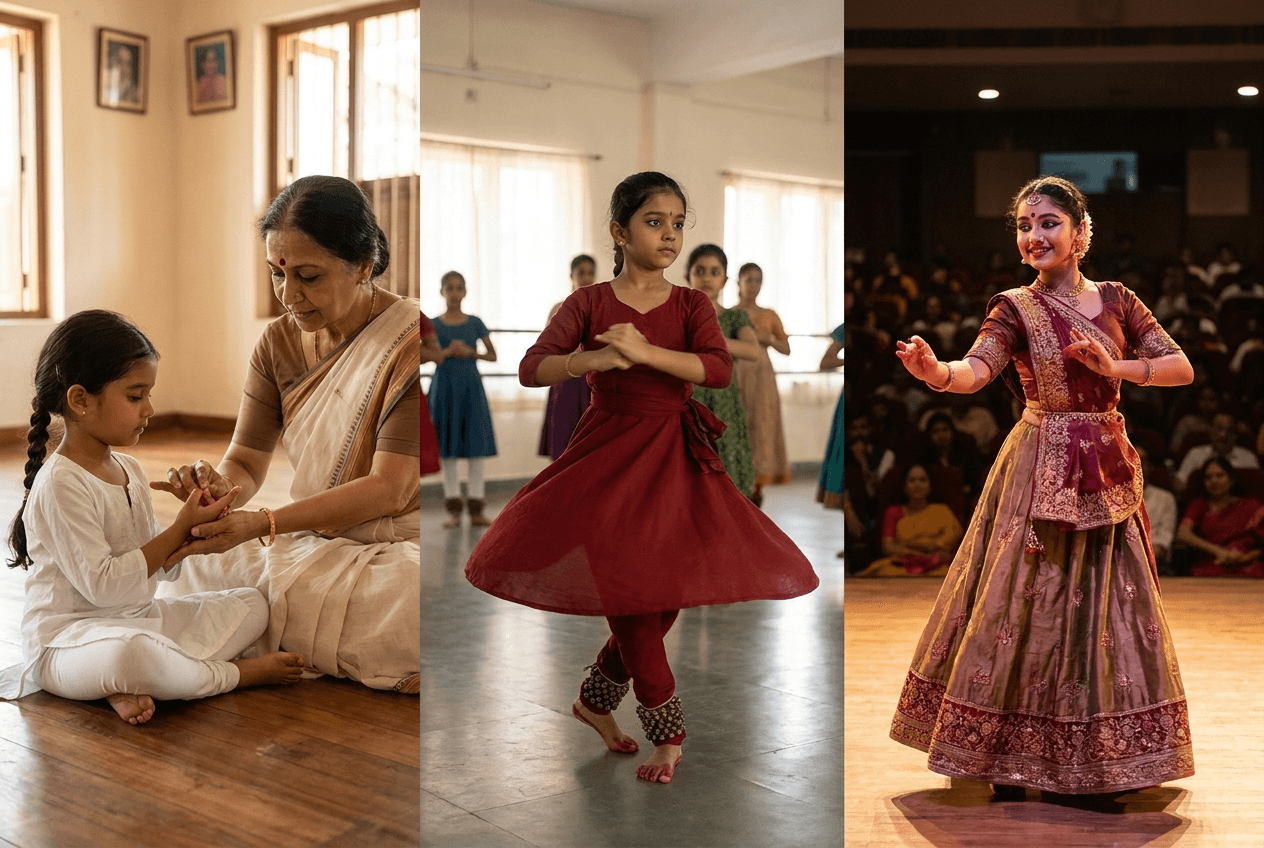
Foundation Stage, Ages 5 to 8
At the foundation stage, everything is about building the physical and rhythmic base that Kathak demands. Students learn the basic standing posture known as samabhanga, the fundamental arm positions, simple hand gestures called hasta mudras and the foundational footwork pattern known as tatkaar. They begin to develop their sense of rhythm through clapping exercises, learning to follow the beat of the tabla and understanding the concept of a rhythmic cycle. Short, simple compositions such as the tatkaar theka introduce students to the experience of moving within a structured musical framework. Classes at this stage are gently structured and playful, designed above all to build a child's love for the art form.
Elementary Stage, Ages 8 to 12
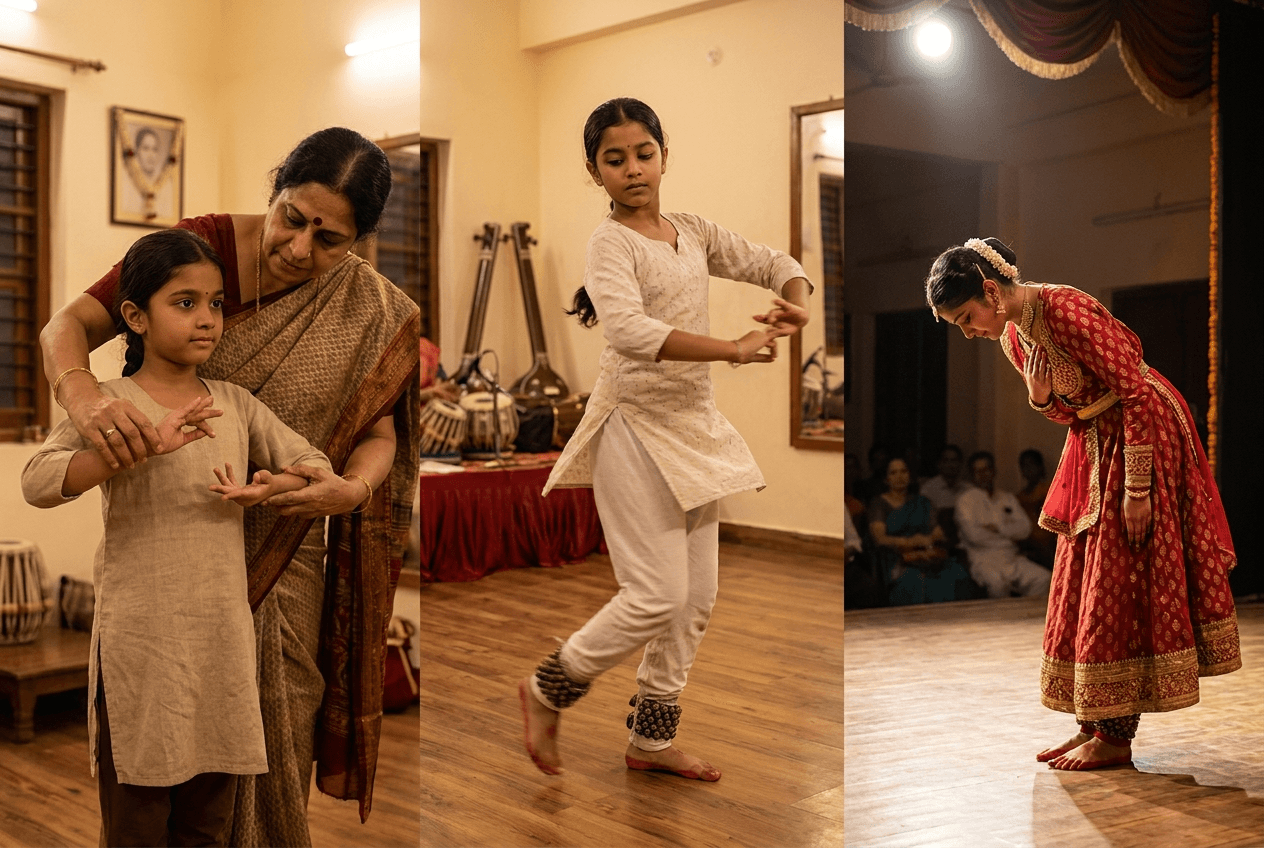
At the elementary stage, students work on more complex tatkaar patterns, introductory chakkar sequences and short compositional pieces. They learn to synchronise footwork with live rhythmic accompaniment and begin to develop their expressive range through simple abhinaya exercises in which gesture and facial expression are used to tell a short story. Students at this level are introduced to the vocabulary of Kathak, learning the correct names for movements and beginning to understand how compositions are structured and how the dancer's performance relates to the musical framework.
Intermediate Stage, Ages 12 and Above
At the intermediate stage, students work on longer compositions, extended chakkar sequences, more complex tala structures and the development of a personal expressive style. Performance becomes a regular feature of training at this level, with students working towards recital pieces. Students also begin to explore the narrative dimension of Kathak more deeply, learning to tell stories through the dance with genuine emotional conviction and developing the kind of stage presence that commands an audience's attention.
How Art Gharana Compares to Other Online Kathak Providers
 UK parents exploring online Kathak classes for their children will find a range of providers offering very different things. Some offer group classes at fixed times in India or UAE time zones. Some rely on pre-recorded video content. Some have no children-specific curriculum. Here is a clear comparison to help you understand what to look for and how Art Gharana delivers on each point.
The most significant gap in the current online Kathak market for UK families is the combination of live one to one instruction, genuine UK time zone availability and a curriculum built specifically with diaspora children in mind. Most providers treat their UK students as an afterthought, delivering content designed for students in India at times that suit teachers in India. Art Gharana is designed from the ground up to serve Indian families in the UK, the USA, Canada and Australia, and every aspect of the programme reflects that focus.
How Live Online Kathak Classes Work
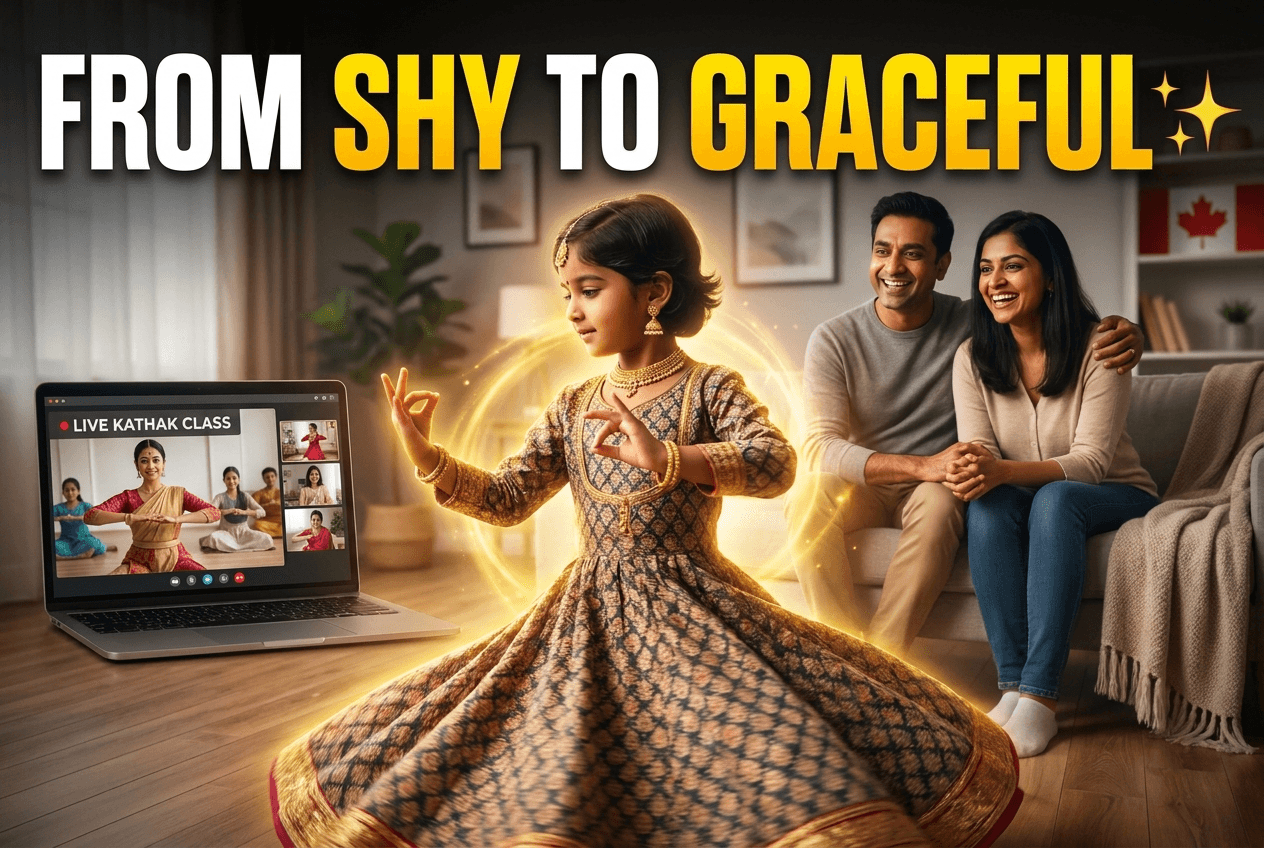
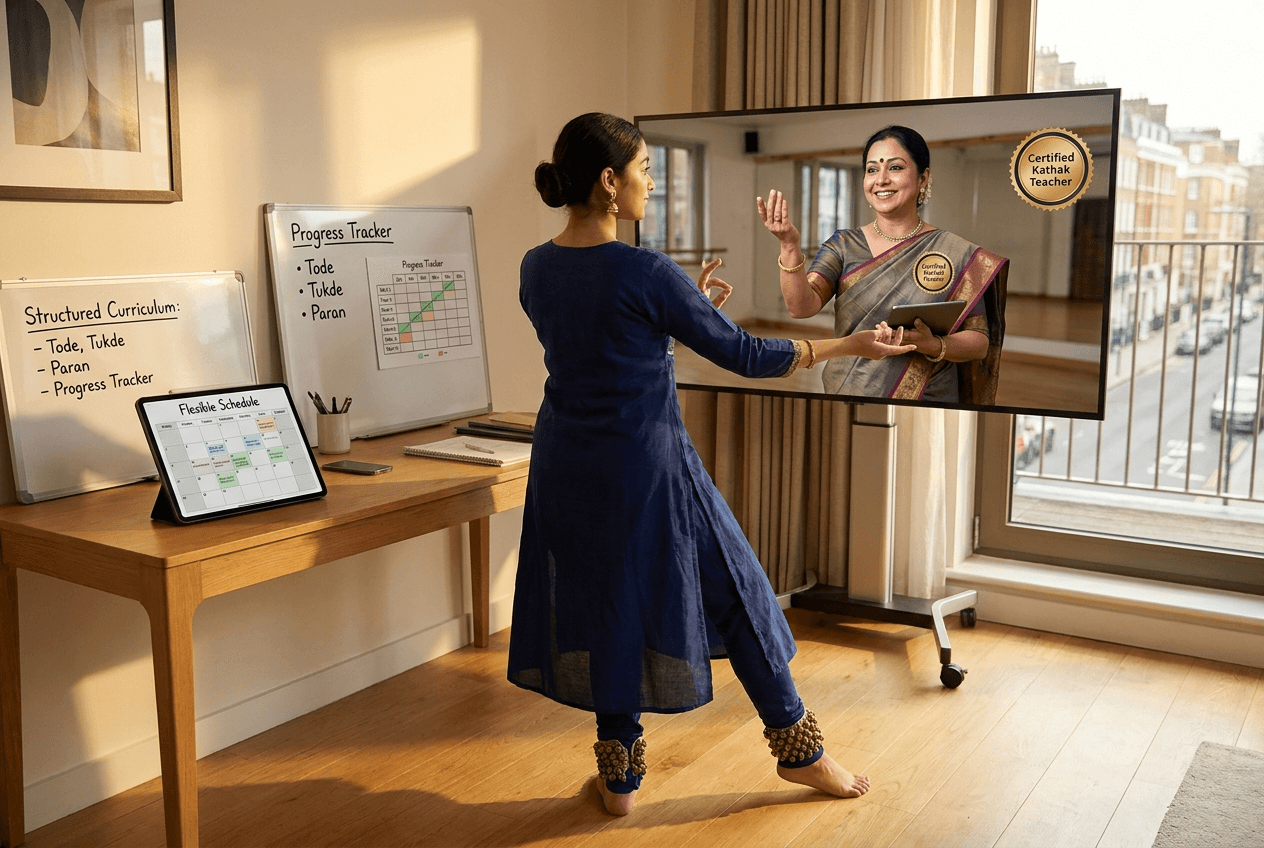 All Art Gharana Kathak classes are delivered live via video call. At the scheduled time, your child connects with their teacher face to face, and the class proceeds exactly as it would in a traditional dance studio. The teacher demonstrates movements, guides practice, corrects technique in real time and builds the kind of personal relationship with the student that motivates consistent long-term progress.
Because the teacher can see your child clearly throughout the session, corrections to posture, footwork placement, hand position and chakkar execution are made with the same precision as in a face-to-face lesson. The one to one format means every moment of the 45-minute session is focused entirely on your child. You can review our plans and pricing to understand what each session includes and choose the plan that works for your family.
Morning, evening and weekend slots are all available in UK time zones, including GMT and BST. If your schedule changes or your child is unwell, rescheduling is straightforward through the Art Gharana platform.
Ghungroos, Attire and Equipment for Kathak Classes
What You Need at the Beginning
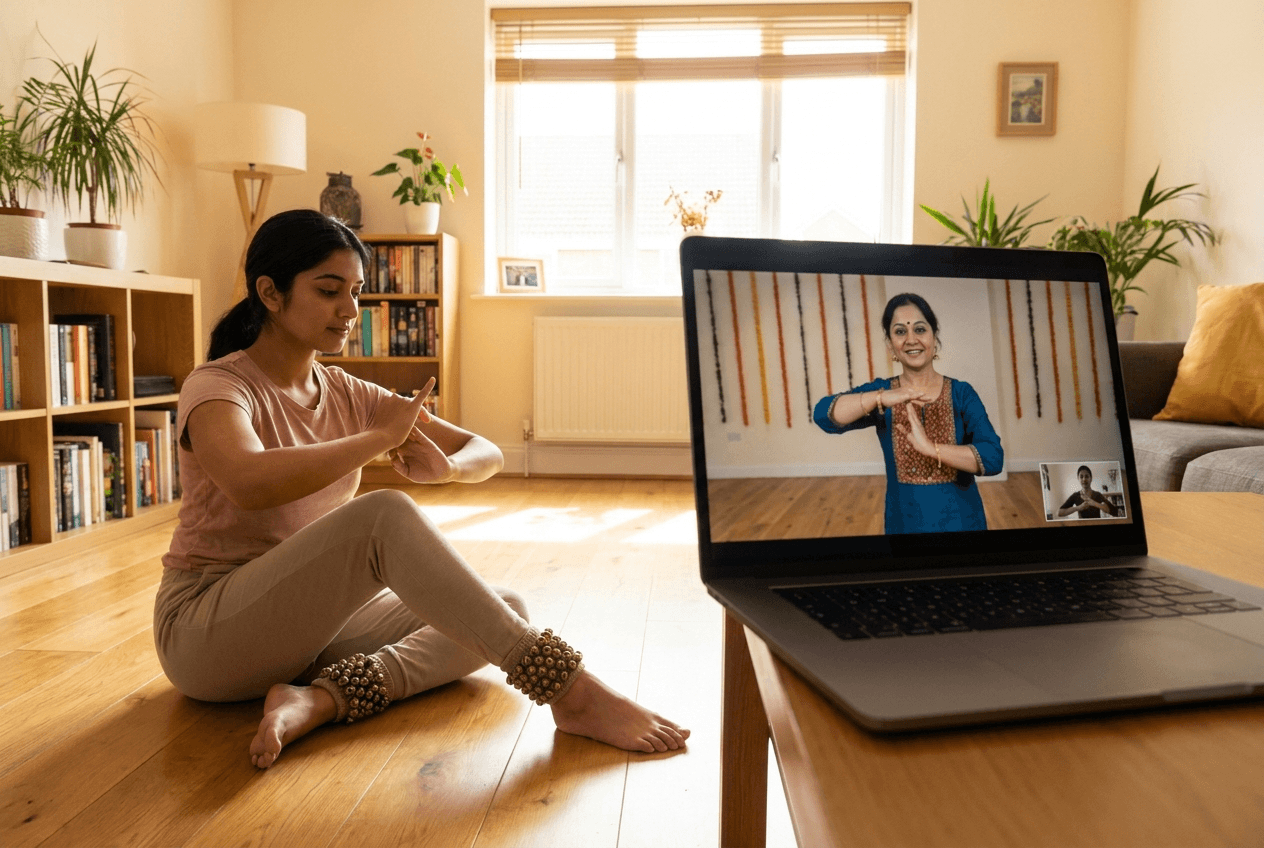
At the very start of Kathak training, no specialist equipment is needed at all. Your child can begin in comfortable, loose-fitting clothing and bare feet. The only requirement is a device with a working camera, a stable internet connection and enough clear floor space to move.
When to Introduce Ghungroos
As your child progresses and begins working seriously on tatkaar, their teacher will advise when it is time to introduce ghungroos. These ankle bells are central to Kathak training because they amplify the footwork rhythms and provide essential audio feedback that helps the student develop precise timing. For online classes, lightweight practice ghungroos are entirely suitable.
Costume for Practice and Performance
As students advance further, a Kathak practice costume becomes useful for more serious rehearsal. Traditional Kathak costume typically consists of churidar fitted trousers, a kameez tunic and a dupatta scarf, in rich vibrant colours. For performance occasions, the costume is completed with jewellery and appropriate makeup. Your teacher will provide guidance on all of this at the appropriate stage of training, so there is no need to invest in anything beyond comfortable practice clothing to begin.
Online Kathak Classes Across the UK
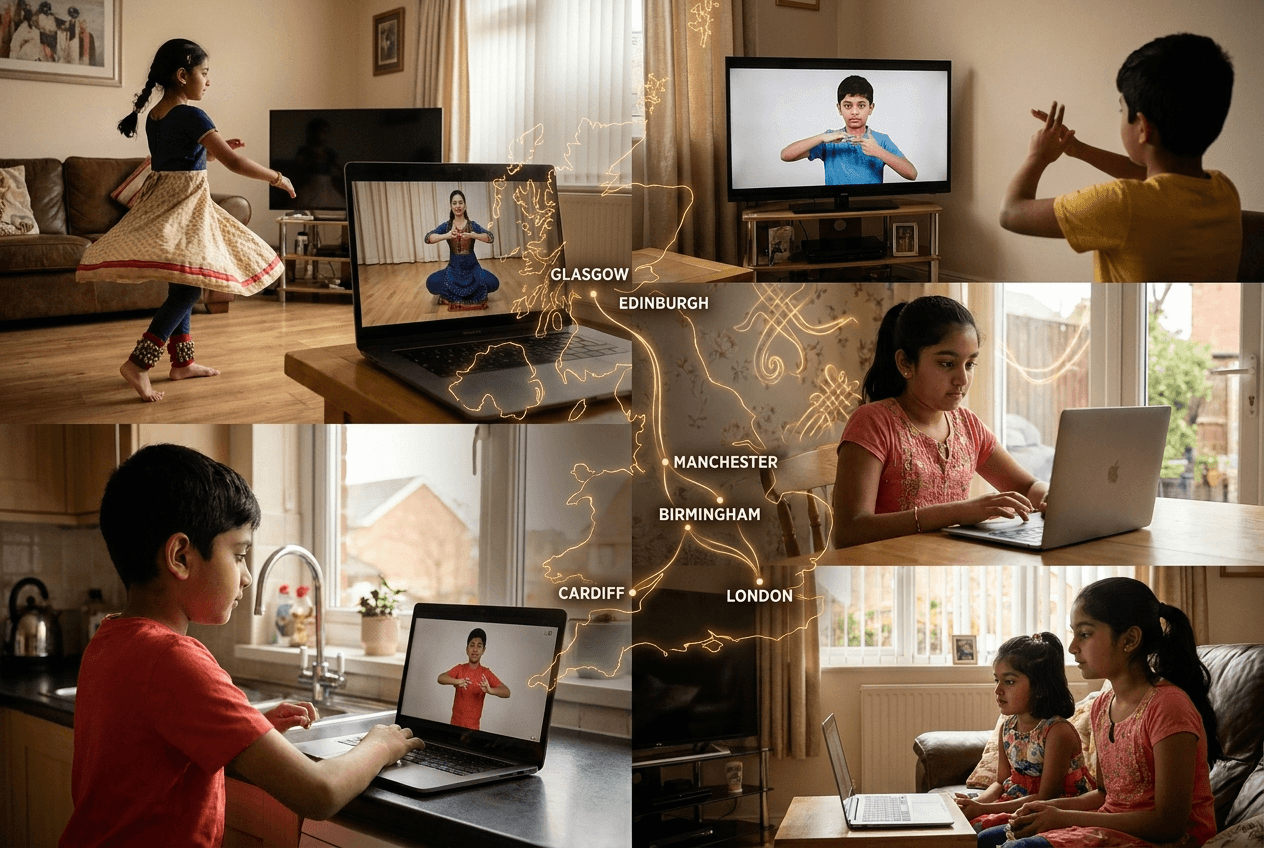
 Art Gharana's Kathak programme serves students right across the United Kingdom. We have active students learning Kathak online from London, Leicester, Birmingham, Manchester, Bradford, Leeds, Sheffield, Coventry, Glasgow, Edinburgh, Cardiff and many other cities and towns. Because all instruction is delivered live via video call, where you live in the UK makes no difference to the quality of teaching your child receives.
For families in Leicester, home to one of the most vibrant South Asian communities in Europe and famous worldwide for its Diwali celebrations, online Kathak classes through Art Gharana give children a skill that connects them directly to the cultural life of their city. For families in Birmingham, Glasgow or Manchester, the same is true. And for families in smaller towns and rural areas where no local Kathak teacher is available, Art Gharana's programme is often the only genuine option, and our students in these areas consistently tell us how transformative it has been for their children.
Kathak Alongside Other Indian Arts
 Many families who begin Kathak training discover that their children develop a wider appetite for Indian classical arts as their confidence and knowledge grow. Kathak pairs especially well with tabla classes, because the deep rhythmic knowledge that tabla training develops directly enriches a child's Kathak performance. Understanding how talas are constructed from the inside, as a performer rather than just a listener, transforms the quality of a student's footwork and rhythmic improvisation.
Our Hindustani vocal classes complement Kathak training beautifully. The thumri, dadra and other light classical vocal forms that are closely associated with Kathak performance give children a melodic understanding that directly informs the expressive quality of their dance. Students who study both Kathak and Hindustani vocal simultaneously consistently develop richer, more musically sensitive performance styles than those who study dance alone.
If your child is interested in exploring other dance forms alongside Kathak, our bollywood dance classes provide an energetic and accessible complement. Many students find that Bollywood training develops the spontaneous performance confidence and enjoyment of movement that then feeds back into a more expressive Kathak practice. You can explore our full range of courses to see everything available for UK families.
About Art Gharana
Art Gharana is a specialist online Indian arts education platform with over 50 certified teachers across dance, music and vocal disciplines. We serve Indian families in the UK, USA, Canada, Australia and India, and our Kathak programme has been designed specifically to deliver the depth and rigour of classical training through the live online format. You can browse full teacher biographies and introductions on our teacher profiles page, and read what our students say about their experience learning with Art Gharana.
Frequently Asked Questions
1. What age is Kathak suitable for?
Children can begin Kathak from age 5. Art Gharana's beginner curriculum is designed to be fun, gentle and age-appropriate for young learners who are just starting out with no prior dance experience.
2. How long does it take to learn Kathak?
Basic Kathak proficiency, including a working knowledge of fundamental tatkaar, simple hand gestures and introductory compositions, typically takes one to two years of regular weekly practice. Reaching an intermediate level usually takes three to five years. The pace depends significantly on how frequently a student practises between classes, but consistent effort always produces clear results.
3. Do children need ghungroos for online Kathak classes?
Ghungroos are not needed at the beginner stage. As your child progresses and begins working on more developed tatkaar patterns, their teacher will advise when to introduce them. Lightweight practice ghungroos are perfectly suitable for online classes.
4. Are your Kathak teachers classically trained?
Yes. All Art Gharana Kathak teachers hold formal qualifications in Indian classical dance and have trained in either the Lucknow or Jaipur gharana tradition. Every teacher on our platform is vetted for their qualifications, performance experience and ability to teach children effectively in the online environment.
5. Are classes available in UK time zones?
Yes. Morning, evening and weekend class slots are all available in GMT and BST to suit UK families' schedules throughout the year.
6. Is there a certificate at the end of Kathak training?
Art Gharana awards certificates upon the successful completion of each curriculum level. Assessments are conducted at the end of each stage, and certificates recognise both technical achievement and consistent effort throughout the programme.
7. What is the difference between Kathak and Bollywood dance?
Kathak is a classical Indian dance form with a formal technical system developed over centuries, emphasising precise footwork, controlled spins, hand gesture vocabulary and expressive storytelling. Bollywood dance is a popular contemporary style that borrows elements from Kathak and other forms and blends them with modern entertainment influences. Kathak demands greater technical rigour and a longer training commitment, but provides a far deeper foundation in Indian dance tradition. Many children begin with Bollywood and discover Kathak as their interest in the classical tradition grows.
8. Can adults also learn Kathak at Art Gharana?
Yes. While our primary focus is children and teens, Art Gharana welcomes adult Kathak learners at all levels. Many adults in the UK come to Kathak as a way of reconnecting with their cultural heritage and find the training deeply rewarding both physically and culturally.
Book Your Child's Free Trial Kathak Class Today
Kathak is a gift that keeps giving, a skill, a cultural connection and a discipline that children carry with them throughout their lives. With live online Kathak classes available across the UK through Art Gharana, certified teachers trained in the Lucknow and Jaipur gharana traditions, flexible UK scheduling and a completely free first lesson, there has never been an easier time to begin. Visit our book a free trial class page to reserve your child's first session today. We look forward to welcoming your family to the Art Gharana community.