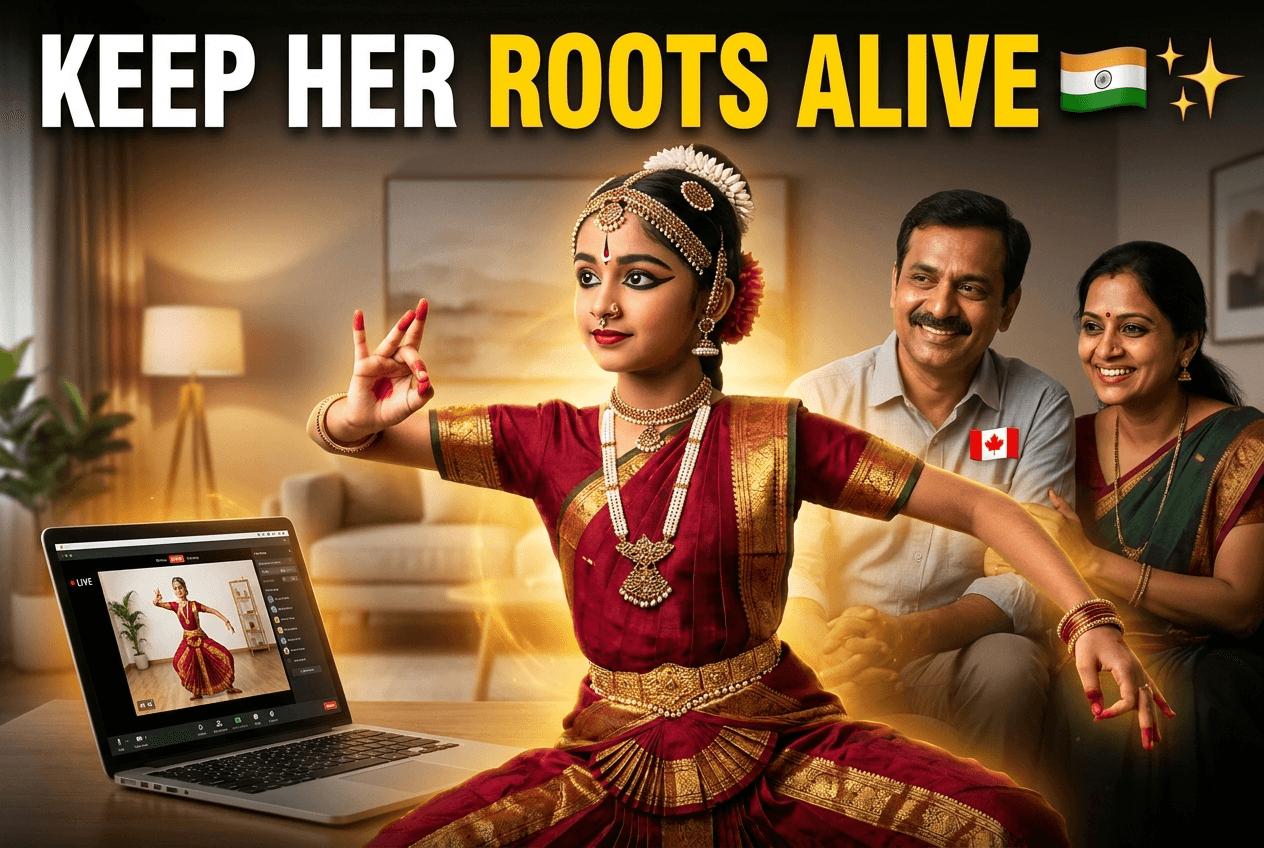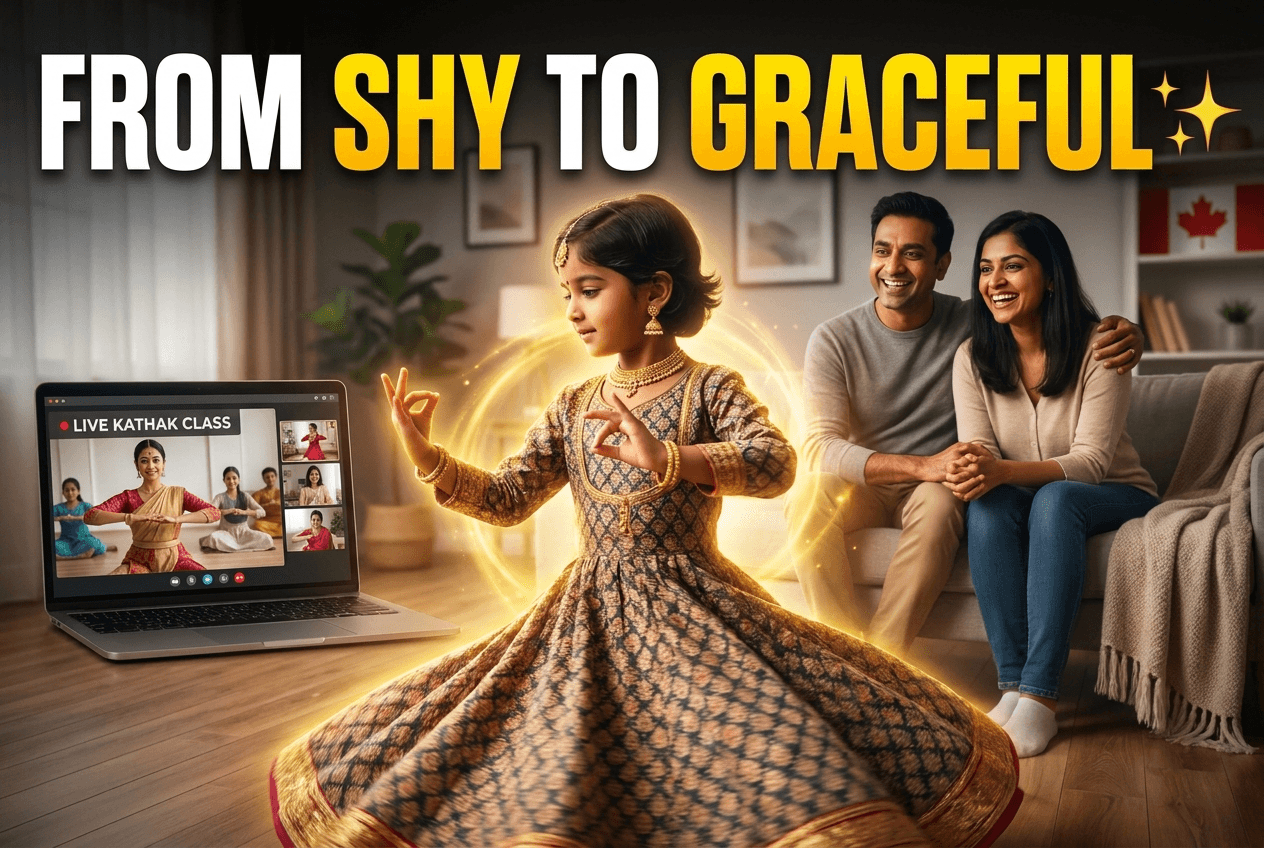
Kathak is one of India's eight classical dance forms and one of the most technically sophisticated and culturally rich art forms in the world. For Indian-Canadian families from Toronto's Brampton and Mississauga communities to Vancouver's Surrey and Burnaby neighbourhoods, from Calgary's growing Indian community to the Tamil and South Asian families of Ottawa and Montreal, Kathak training gives children an extraordinary gift: a deep, living connection to one of humanity's great artistic traditions, combined with the physical, cognitive and cultural development that classical dance training uniquely provides.
The challenge for Canadian families has been access. In Toronto and the GTA, Kathak Toronto's in-person classes in downtown Toronto serve adult enthusiasts well but are not designed as a children's programme. IndianNatya offers online Kathak but explicitly restricts enrollment to female students only. No provider offers live one-to-one online Kathak classes for children across all of Canada in Canadian time zones with genuine flexibility. Art Gharana fills this gap directly with certified Kathak dance classes for kids in Canada, scheduled in your time zone, available nationwide.
Kathak and Canada's Indian Community
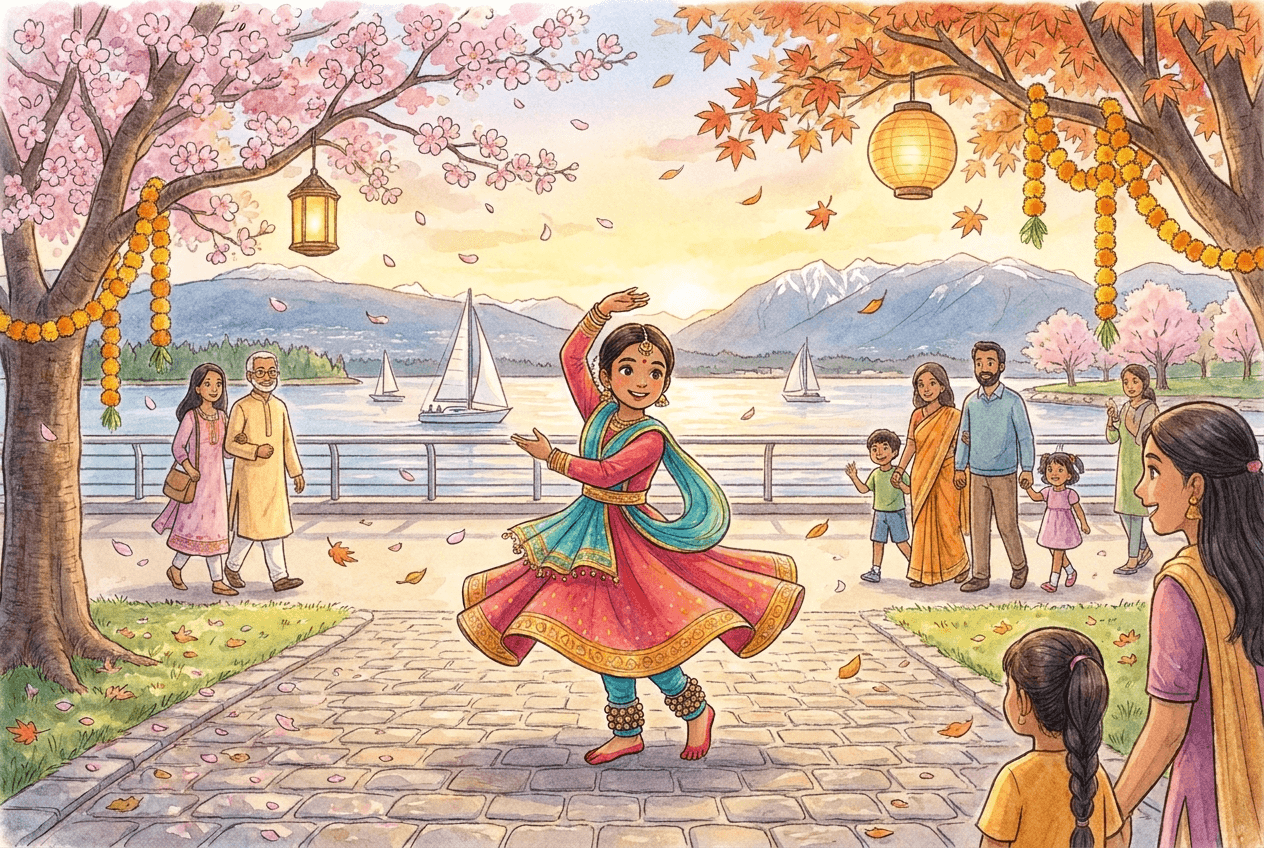 Canada's Indian community is one of the most diverse in the world, encompassing families from virtually every state and cultural tradition of India. This diversity is reflected in the range of classical arts that Indian-Canadian families seek for their children. Kathak, the classical dance of North India, is the natural choice for families from Uttar Pradesh, Delhi, Rajasthan, Punjab, Gujarat, Maharashtra and Bengal, whose cultural heritage is rooted in the Hindustani classical tradition. It is also increasingly sought by families from South Indian backgrounds who recognise Kathak's extraordinary technical and expressive depth.
In the GTA's Brampton and Mississauga communities, where North Indian families from Punjabi, Gujarati and UP backgrounds are among the most numerous, Kathak training is a priority. The Navratri celebrations, Diwali events and cultural competitions that punctuate the Indian-Canadian calendar in these cities provide trained Kathak students with regular and meaningful performance opportunities that make their training immediately relevant to their community lives.
Kathak in Toronto, Brampton and Mississauga
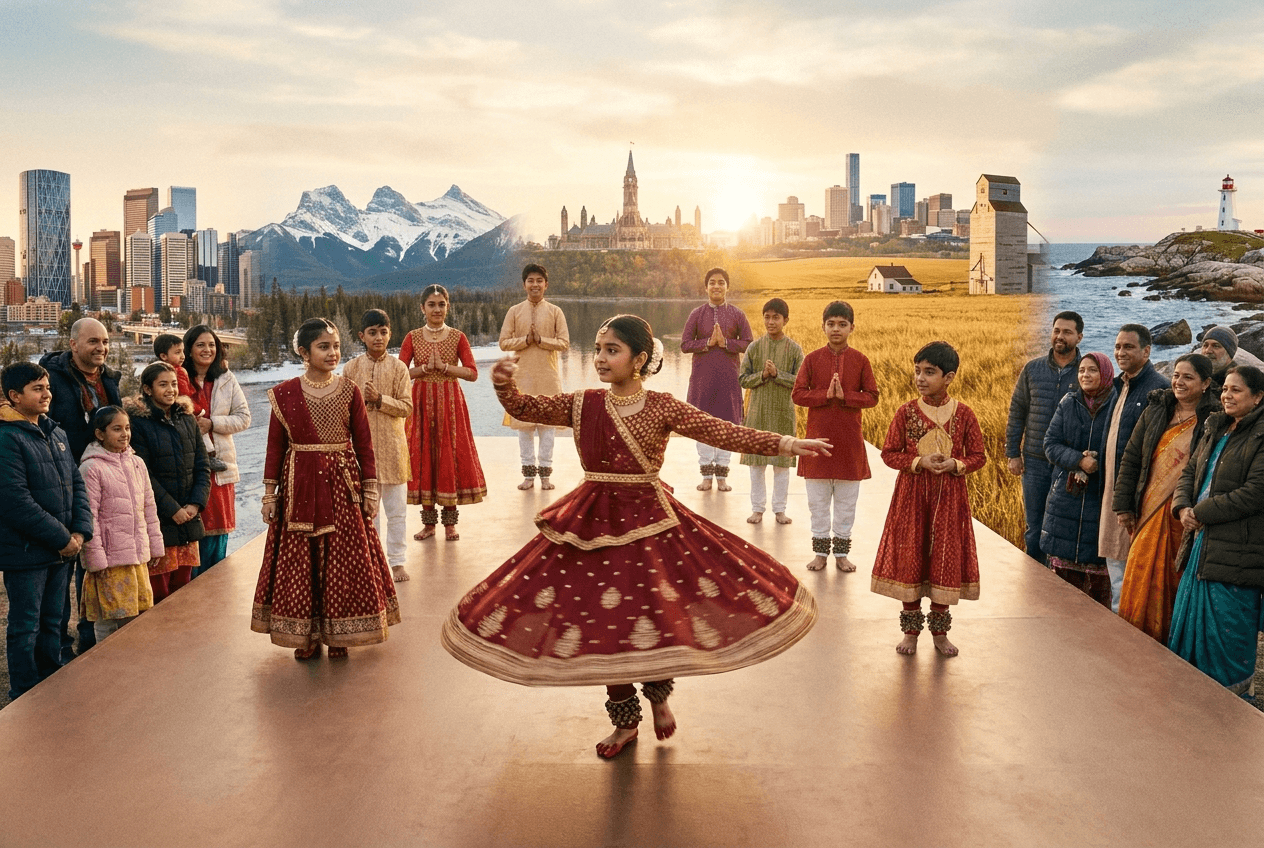 Toronto's Kathak tradition has depth, anchored by Kathak Toronto's longstanding programme under Joanna de Souza, a disciple of Pandit Chitresh Das. However, Kathak Toronto's classes are in-person, located in downtown Toronto and oriented primarily toward adult practitioners. For families in Brampton, Mississauga, Markham, Scarborough or North York whose children want Kathak training, a downtown Toronto location is not always practical. And for children aged 5 to 12 who are just beginning, adult-oriented group technique classes are not the right learning environment.
Art Gharana's online programme gives Toronto-area families the flexibility to access certified Kathak teachers without the travel, scheduling and age-appropriateness constraints of local studio options. Morning, after-school and evening slots in Eastern Time Zone mean classes can be scheduled around the GTA's demanding school and activity schedules.
Kathak in Vancouver and the Lower Mainland
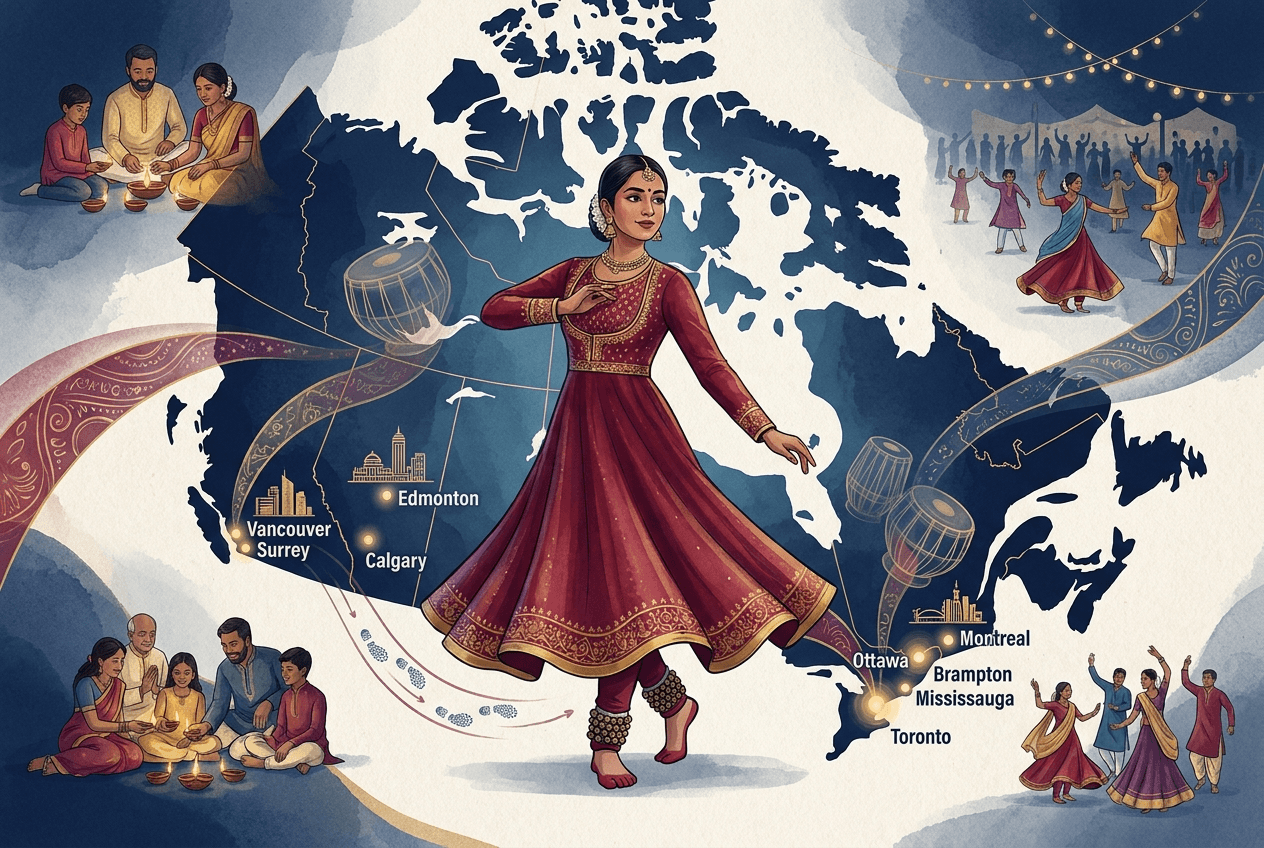 Vancouver's Indian-Canadian community in Surrey, Burnaby, Abbotsford and the broader Lower Mainland has strong cultural traditions but limited access to classical Kathak teaching at the children's level. IndianNatya's online Kathak programme, the most prominent online option serving Vancouver, is available to female students only, which immediately excludes boys and adult males. Art Gharana's Pacific Time Zone scheduling serves Vancouver and Lower Mainland families across all genders with morning, evening and weekend slots.
Kathak Across Canada: Calgary, Edmonton, Ottawa and Beyond
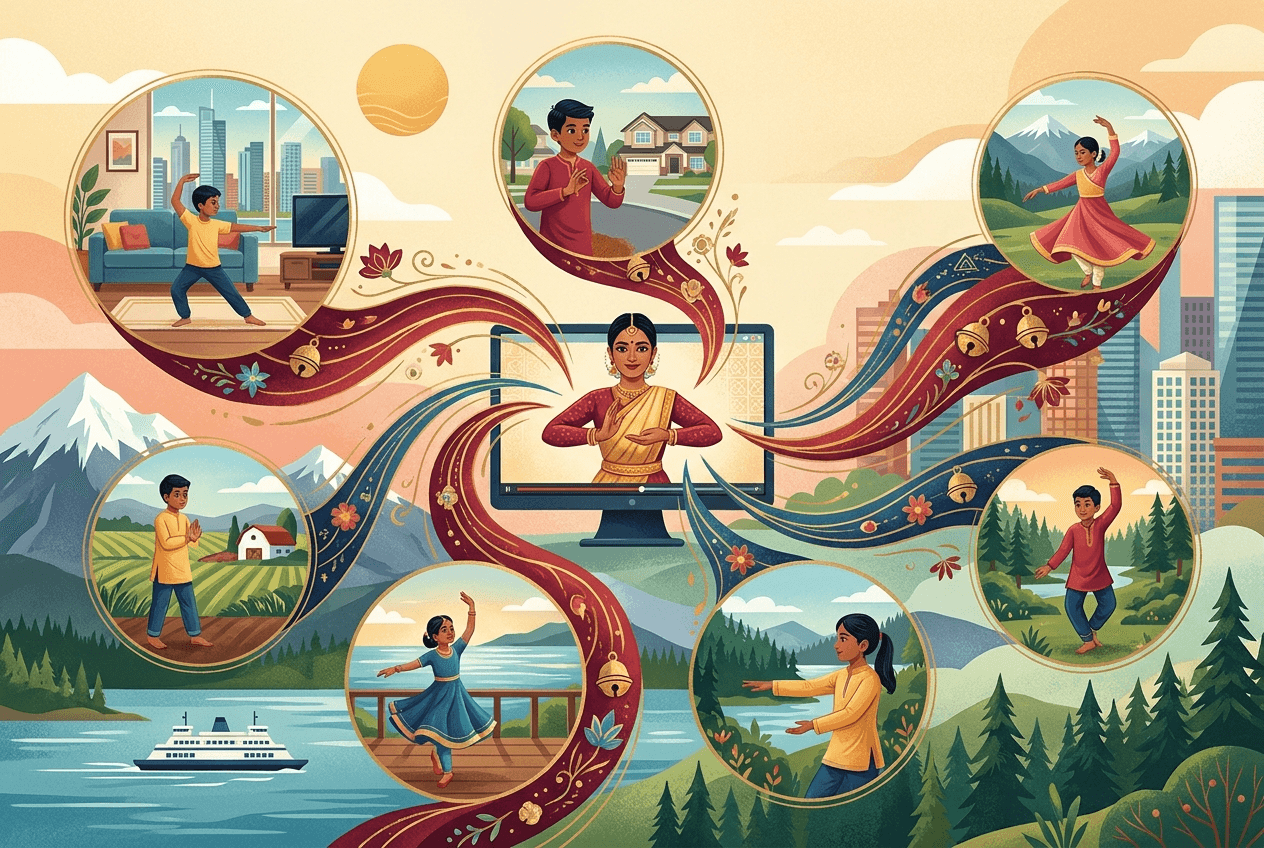
For Indian-Canadian families in Calgary, Edmonton, Winnipeg, Ottawa and the Atlantic provinces, local Kathak instruction for children is essentially unavailable. The concentrated demand for classical Indian arts education in Alberta's growing South Asian communities in Calgary's Northeast and Edmonton's Mill Woods areas is not being served by any local in-person provider at a children's level, and the online providers that exist impose gender restrictions or operate at India-time-zone hours that do not fit Canadian family schedules. Art Gharana's nationwide programme resolves all of these barriers simultaneously.
The Benefits of Kathak for Indian-Canadian Children
Cultural Identity in Canada's Multicultural Context
Canada's multicultural identity creates a unique context in which Indian-Canadian children's heritage is celebrated rather than marginalised. A child who can perform Kathak at a school heritage event, at a Canada Day multicultural celebration or at a community Diwali performance is not demonstrating something exotic. They are contributing a genuinely impressive and beautiful expression of Canadian cultural diversity. That contribution earns a quality of admiration from peers and teachers that builds cultural pride and bicultural confidence simultaneously.
Rhythmic Intelligence and Academic Performance
The tala structures of Kathak training develop a form of mathematical and rhythmic intelligence that directly supports academic performance. The counting, division and pattern recognition involved in performing within rhythmic cycles of sixteen, twelve and seven beats is essentially applied mathematics delivered through dance. Canadian parents who want an extracurricular activity that develops both cultural connection and cognitive capability simultaneously will find few options as efficient as Kathak.
Physical Excellence
Kathak's demands on the body are extraordinary. The bilateral coordination required to synchronise complex footwork with precise arm and hand movements simultaneously, the balance and body control demanded by chakkar sequences, the strength and stamina built through extended practice sessions: these physical qualities develop in Kathak students at a level that is visible and measurable, and they carry benefits across every other physical activity a child pursues.
What Your Child Will Learn
Foundation Stage, Ages 5 to 8
All training begins with correct posture, the fundamental tatkaar footwork patterns, basic hand gestures and an introduction to rhythmic counting within taal cycles. Ghungroos are introduced when the teacher judges that the student's tatkaar has developed enough to benefit from them. Short, structured compositions introduce students to the experience of moving within a musical framework. The emphasis at this stage is entirely on building a solid foundation and a genuine love for the art form.
Elementary Stage, Ages 8 to 12
Elementary students develop a broader tatkaar vocabulary, begin working on chakkar sequences and learn their first complete compositional pieces. Abhinaya, the expressive storytelling dimension of Kathak, becomes a regular feature of training, and students begin performing at community cultural events. Performance preparation, including costume advice, stage presence and the ability to project to an audience, is a regular part of instruction at this level.
Intermediate Stage and Beyond
Intermediate students work on extended compositions, complex tala structures and the development of a personal performance style. Students at this level regularly perform at significant cultural events and, in many cases, begin to develop choreography for other students. The combination of technical mastery, expressive depth and performance experience that intermediate Kathak training develops is truly distinctive.
Kathak Alongside Other Indian Arts
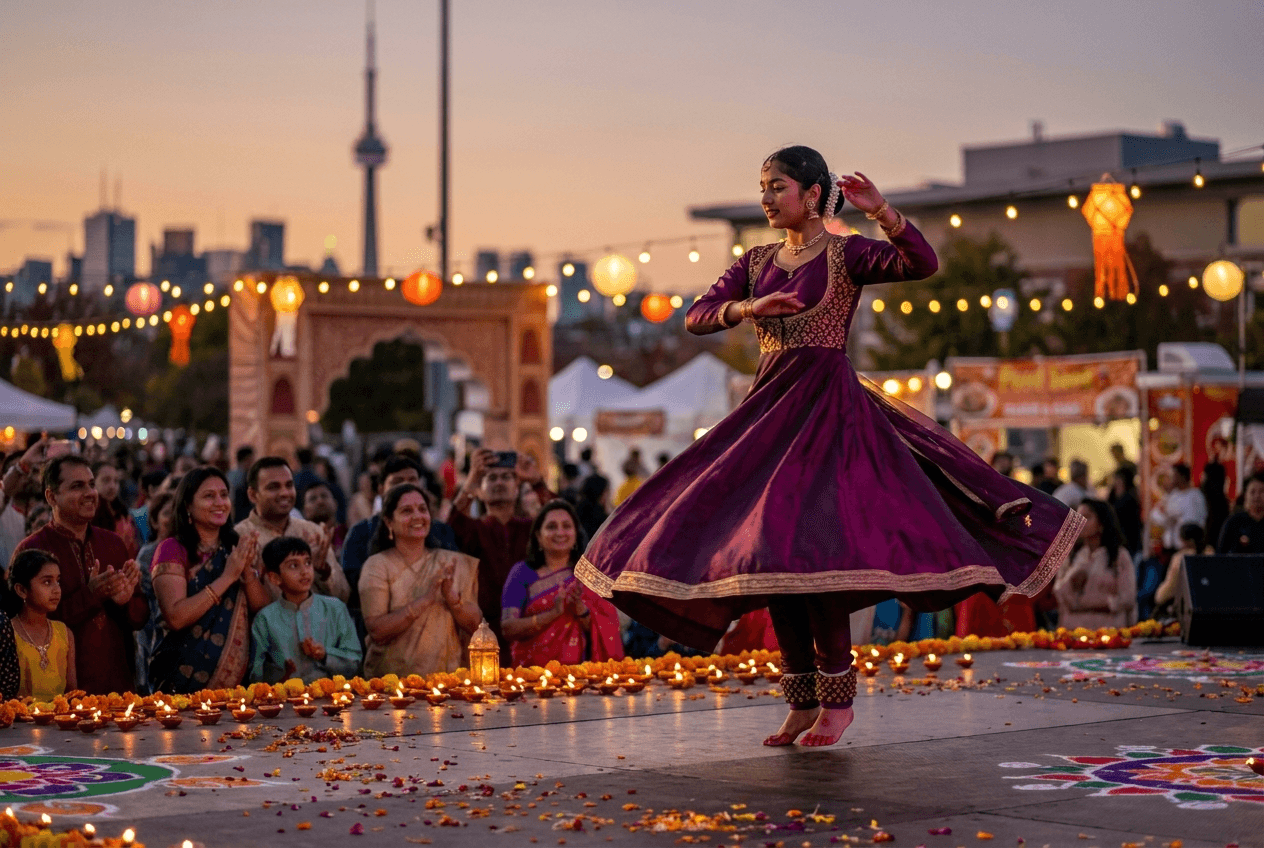 Kathak pairs beautifully with Hindustani vocal classes, since the musical tradition that gives Kathak its melodic and rhythmic framework is the Hindustani classical tradition. Students who study both develop a quality of musical intelligence that is immediately evident in the depth and responsiveness of their performance. Our tabla classes pair even more directly with Kathak, since the tala cycles of Kathak footwork are the same rhythmic structures that tabla students master from the percussionist's perspective.
For families interested in a range of Indian classical arts, our Bollywood dance classes, Bharatanatyam classes and full range of courses are all available with the same live one-to-one format and Canadian time zone scheduling.
About Art Gharana
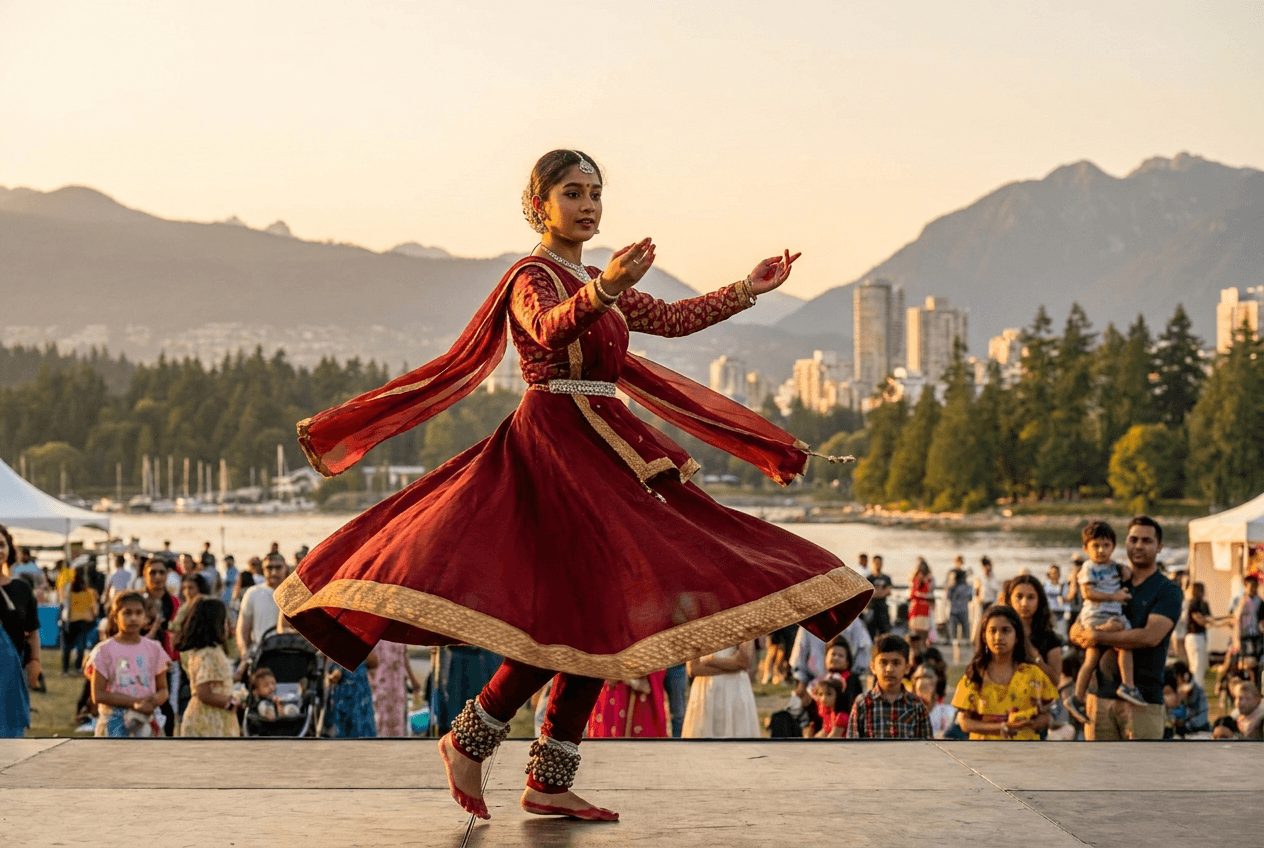 Art Gharana serves Indian-Canadian families across all provinces with live one-to-one Kathak classes delivered by certified classical teachers in Canadian time zones. Browse our teacher profiles, read what our students say on our testimonials page, and review our plans and pricing to choose the right plan for your family.
Frequently Asked Questions
1. Are there good online Kathak classes for kids in Toronto?
Yes. Art Gharana provides live one-to-one online Kathak classes for children in Toronto and across Canada, with Eastern Time Zone scheduling and fully flexible morning, evening and weekend slots. The one-to-one format means your child receives the teacher's complete attention throughout every session, regardless of whether you are in Brampton, Markham or downtown Toronto.
2. Is Kathak available for boys as well as girls in Canada?
Yes. Art Gharana welcomes all students regardless of gender. Several prominent online Kathak providers, including IndianNatya, explicitly restrict enrollment to female students only. Art Gharana has no such restriction, and our male Kathak students develop the same technical excellence, cultural pride and performance confidence as their female counterparts.
3. What age can children start Kathak in Canada?
Children can begin Kathak from age 5. Our beginner curriculum is designed to be age-appropriate, engaging and fun for young learners who have no prior dance experience.
4. How long until my child can perform at a cultural event?
Most students are ready for their first community performance after 12 to 18 months of consistent weekly training combined with regular home practice. Your teacher will help prepare them for specific performance opportunities as they arise.
5. Can I find a Kathak teacher who is available in Pacific Time for Vancouver families?
Yes. Art Gharana offers morning, evening and weekend slots in Pacific Time Zone, making Kathak classes practical for families in Vancouver, Surrey, Burnaby and across the BC Lower Mainland.
Book Your Child's Free Trial Kathak Class Today
Whether your family is in Toronto, Brampton, Mississauga, Vancouver, Calgary, Ottawa or anywhere else across Canada, Art Gharana's certified Kathak teachers are ready to welcome your child into this extraordinary tradition. Live one-to-one instruction, Canadian time zone scheduling, a structured curriculum and a completely free first lesson. Head to our book a free trial class page and begin today.
The Lucknow and Jaipur Gharanas for Canadian Parents
Canadian parents who explore Kathak for their children will quickly encounter references to the Lucknow and Jaipur gharanas, the two primary classical lineages of Kathak, and wonder which one their child should study. At the beginner and elementary levels, the foundational curriculum is essentially consistent across both traditions. The stylistic differences become meaningful only at the intermediate and advanced levels as a students own artistic personality begins to emerge. The Lucknow gharana is characterised by lyrical grace and expressive emotional depth. The Jaipur gharana is celebrated for powerful footwork and complex rhythmic compositions. Art Gharanas teachers bring training from both traditions, and the emphasis of a students training evolves naturally based on their own artistic strengths and inclinations.
The Guru-Shishya Relationship in the Canadian Context
The guru-shishya parampara, the teacher-student transmission tradition that has carried Indian classical arts across generations for thousands of years, is a living reality in every Art Gharana Kathak class. Our Kathak teachers build genuine, ongoing relationships with each student, understanding each childs learning style, artistic personality and areas for development, calibrating their teaching accordingly session by session and month by month. For Indian-Canadian families in Canada, this relationship has particular cultural resonance. When an Art Gharana Kathak teacher forms a genuine mentoring relationship with a child growing up in Brampton or Surrey, they are transmitting a living connection to a cultural heritage that the childs parents and grandparents know and love.
Kathak for Performance in Canada
The performance opportunities available to trained Kathak students in Canada are rich and culturally significant. Diwali celebrations across the GTA and Vancouver, temple Navratri events, school multicultural performances, cultural competitions at events like the Mississauga South Asian Cultural Festival and the Vancouver India Mela, and family occasions of all kinds provide students with meaningful platforms year-round. Art Gharana teachers actively prepare their Canadian students for these performance contexts, providing event-specific preparation including piece selection, costume advice and the performance preparation skills that transform a trained dancer into a confident performer.
The Academic Benefits of Kathak
Canadian parents who are weighing the time demands of Kathak training against academic priorities will find the research on this question consistently reassuring. Sustained classical arts training is associated with measurably better academic performance. The memorisation demands of Kathak, which require students to hold choreographic sequences, rhythmic patterns, hand gesture vocabulary and expressive narrative content in working memory simultaneously, build working memory capacity that directly supports academic performance in mathematics, language arts and science. The rhythmic intelligence that Kathak training develops is essentially mathematical thinking in a physical medium. Several Art Gharana families in Canada have reported that beginning Kathak training coincided with notable improvements in their childrens school performance, particularly in numeracy and concentration.
Why Online One-to-One Is Better Than Local Group Classes
For families who are weighing Art Gharana against local dance studios in Brampton or Scarborough, it is worth considering what the one-to-one format actually means in practice. In a group class of eight students, each child receives approximately five to six minutes of direct teacher attention per hour. In an Art Gharana one-to-one class, each child receives all 45 minutes of direct, personalised attention from a certified classical teacher. The compound effect of that difference, sustained over a year of weekly classes, is measured and visible in the quality and depth of what the student develops. This is why parents who have tried both formats consistently choose to continue with one-to-one instruction once they have experienced the difference.
Kathak and the Canadian Indian Community
Canada is home to over 1.8 million people of Indian heritage, and the cultural diversity within that community means that almost every Indian classical art form has a constituency within the country. Kathak, the classical dance of North India, resonates most immediately with families from UP, Delhi, Rajasthan, Punjab, Gujarat and Maharashtra, whose cultural heritage is rooted in the Hindustani classical tradition. But it is increasingly sought by families from South Indian and other backgrounds who recognise its extraordinary technical and expressive depth. In the GTA communities of Brampton, Mississauga, Scarborough and Markham, where North Indian families are among the most numerous, Kathak training is a genuine cultural priority. The Navratri celebrations, Diwali events and cultural competitions that punctuate the Indian-Canadian calendar in these cities provide trained Kathak students with regular meaningful performance opportunities that make their training immediately relevant to their community lives. Art Gharana serves this community with live, one-to-one instruction from certified teachers who are available across Eastern, Central, Mountain and Pacific time zones.
Practical Information for Canadian Families
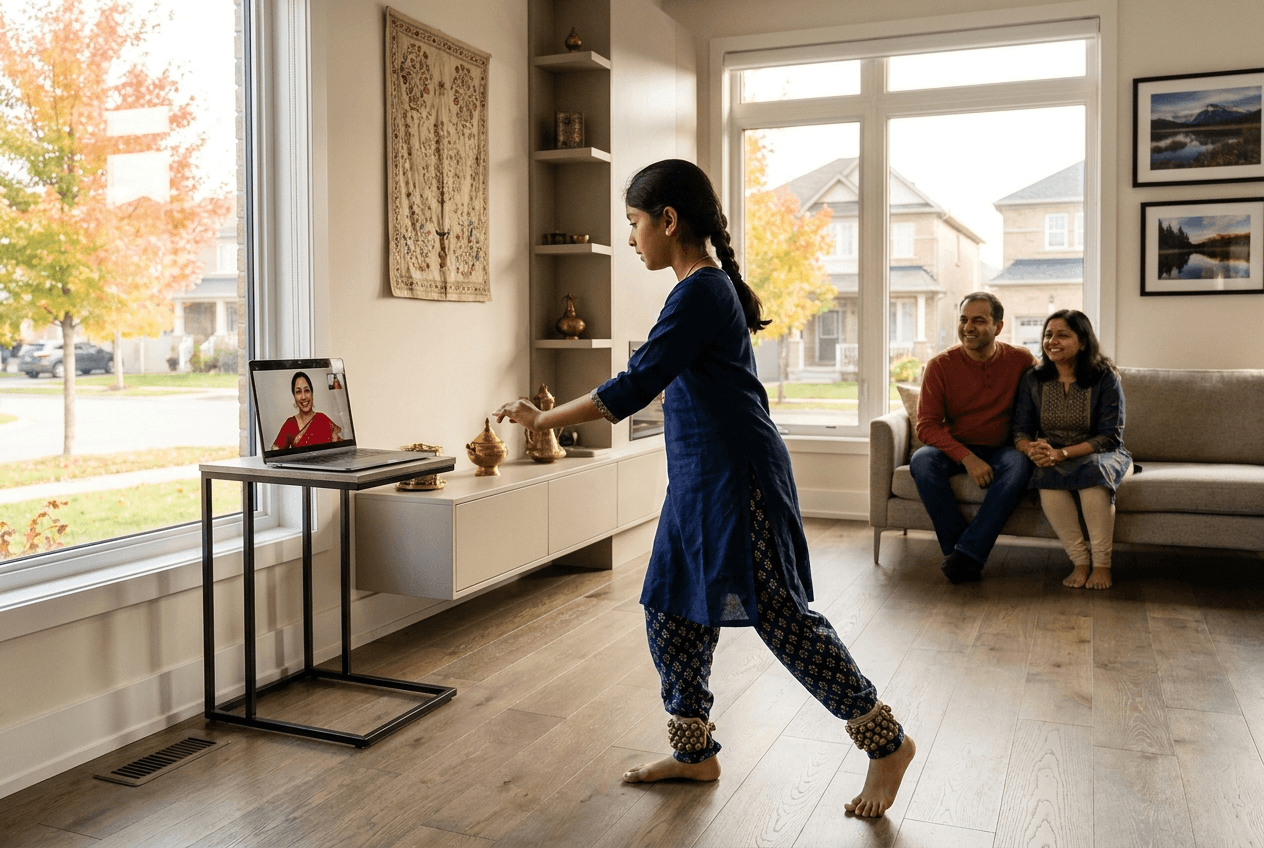
Starting Kathak training at Art Gharana requires minimal setup. Your child needs a device with a working camera, a stable internet connection, comfortable loose-fitting clothing that allows free movement and enough clear floor space to take a few steps and turn in both directions. Bare feet are standard for Kathak. Ghungroos, the small brass bells worn around the ankles that are central to Kathak footwork training, are introduced by the teacher at the appropriate stage, typically after a few months of foundational tatkaar work. There is nothing to purchase before the trial class.
Classes are 45 minutes long and scheduled at your preferred time in your Canadian time zone. If your regular slot does not work in a particular week due to a school event, family commitment or illness, rescheduling through the Art Gharana platform is straightforward. The flexibility of the online format means that the weekly class commitment can be maintained even through the busy periods, school exams, holiday seasons, sports seasons, that Canadian family schedules regularly produce. This consistency, sustained over years, is what produces the depth of artistic development that classical training promises.
For families across Canada who have been searching for a Kathak programme that combines genuine classical training, open access regardless of gender, Canadian time zone scheduling and the individual attention that one-to-one instruction provides, Art Gharana is the answer. The free trial class is the simplest and most direct way to experience the quality of our teaching. In forty-five minutes with a certified Kathak teacher, your child will try tatkaar for the first time, experience the ghungroo sounds that make Kathak so evocative, and get a genuine sense of whether this is the art form for them. Most children come away from that first class with an enthusiasm that makes every subsequent decision clear and easy.
The Kathak tradition is one of humanity's great artistic achievements, and the opportunity to pass it on to children growing up in Canada, to give them a skill that connects them to thousands of years of North Indian cultural life while developing the physical, cognitive and character qualities that classical arts training uniquely produces, is one that Art Gharana takes seriously. Every teacher in our Kathak programme is committed to making that transmission happen with integrity, warmth and genuine pedagogical skill. We look forward to welcoming your child into the tradition.
Art Gharana has been serving Indian-Canadian families across the country since our founding, and the consistency of what we hear from Kathak families is striking. Parents describe watching their children grow not just as dancers but as culturally grounded, self-assured young Canadians who carry the Kathak tradition with them as a source of pride and identity throughout their lives. That transformation, from a child who has Indian heritage to a child who actively inhabits and performs it, is what Art Gharana is built to facilitate. The free trial class is where that journey begins.