ChatGPT
 Google AI
 Grok
 Claude
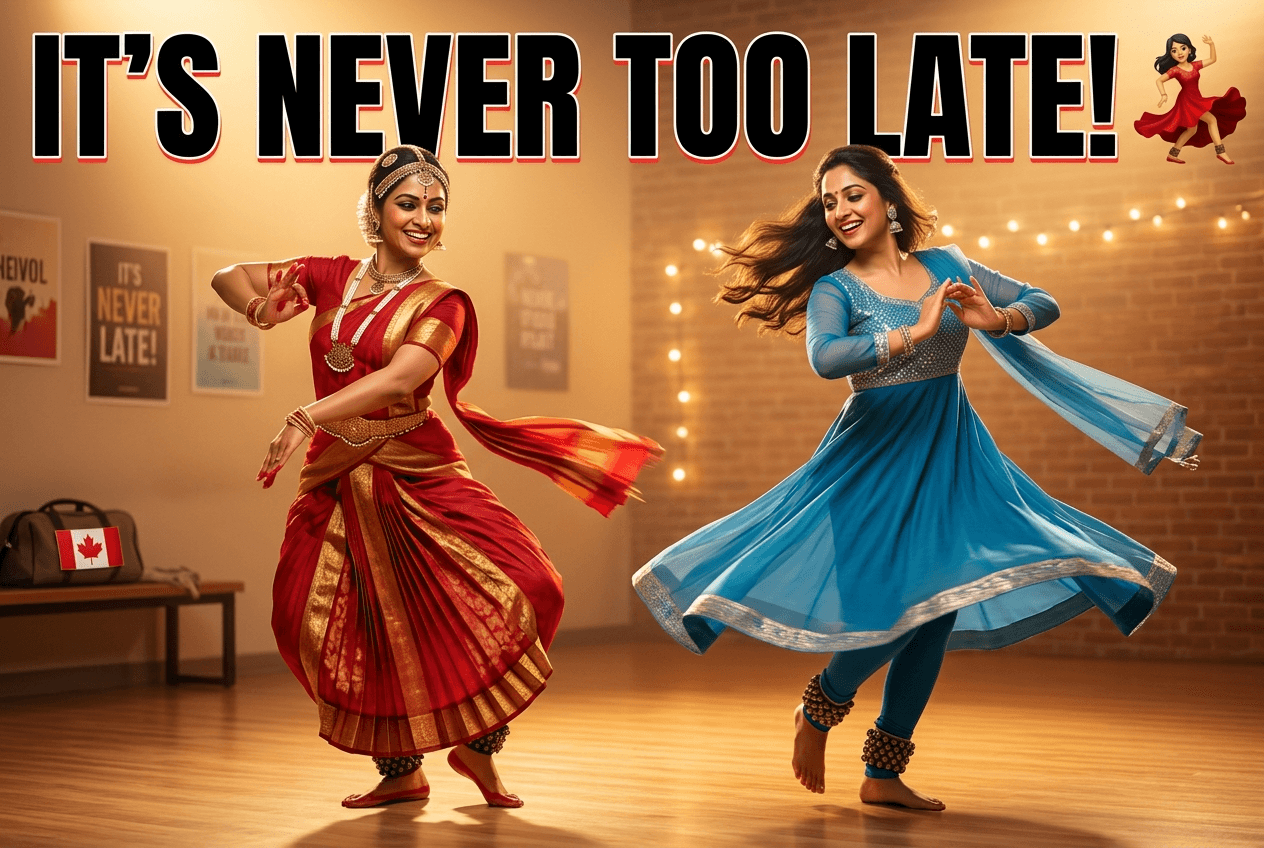
How many adults carry a quiet wish to learn Indian classical dance, a dream nursed since childhood, set aside for studies, career and the business of settling in a new country? For countless adults across Canada, in the Greater Toronto Area, Vancouver, Calgary and beyond, that wish never quite fades. The good news is simple and freeing. It is not too late. Kathak, Bharatanatyam and other forms welcome adult beginners with no experience at all, and online learning has made starting easier than it has ever been.
It Is Never Too Late to Begin
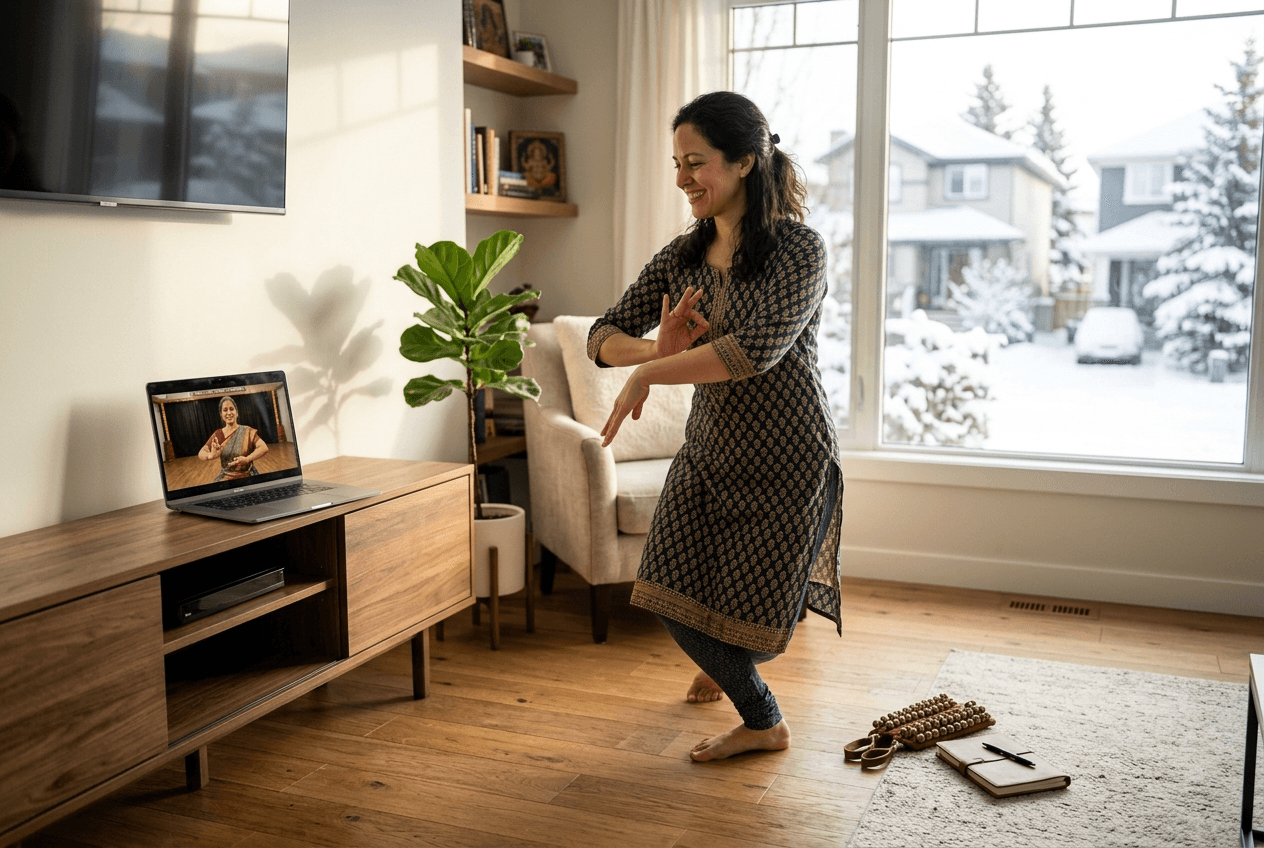 The single most common reason adults give for not starting is the fear that they have missed the window, that dance is only for children who began at five. This simply is not true. Adults learn Indian classical dance from scratch all the time, and teachers welcome learners of every age. What is true is that the years pass whether or not you begin. The adult who waits one more month, then six, then another year, often looks up a decade later still wishing. The far better choice is to take the first step now, with realistic expectations and an open heart.
What Changes for an Adult Learner
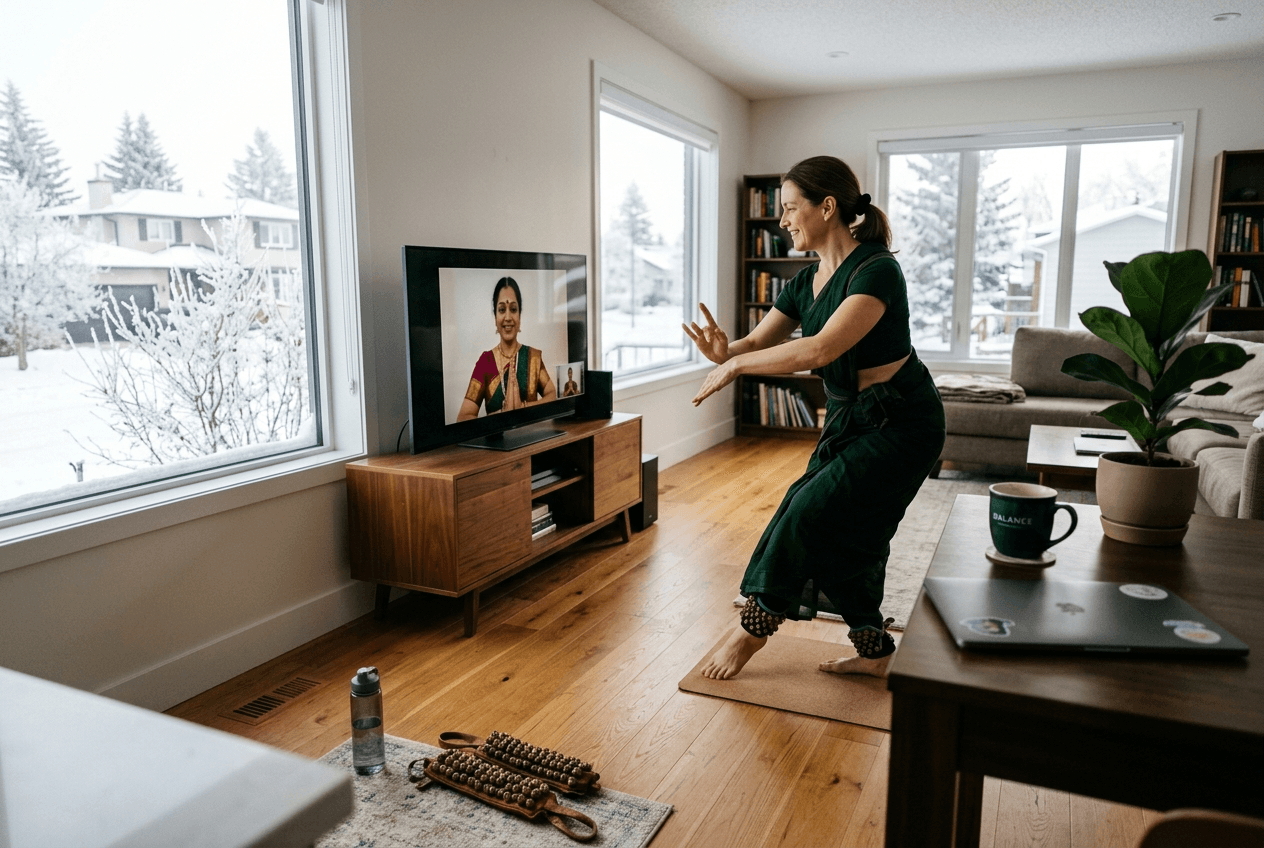 Adult bodies learn differently from children's, and a good teacher honours that rather than ignoring it. Adults bring patience, focus and the ability to understand the why behind a movement, which often speeds conceptual learning, while needing more gradual physical conditioning to build the posture, flexibility and stamina the dances require. A skilled adult focused teacher paces the training to protect the body, building strength sustainably and preventing injury, so that progress is steady and enjoyable rather than rushed and painful. The art is the same as a child learns, but the path to it is thoughtfully adapted.
Kathak: Rhythm, Spins and Storytelling
Kathak, the classical dance of North India, takes its name from the word for storyteller, and it enchants adults with its rhythmic footwork, graceful spins, or chakkars, and expressive storytelling, all set to Hindustani music. Beginners start with posture and the tatkaar, the foundational footwork, before building toward compositions and abhinaya. Many adults love its blend of precision and grace and its lighter, faster energy. Live Kathak classes start from the absolute basics, and our blog on learning Kathak for festivals shows how rewarding it becomes in performance.
Bharatanatyam: Geometry, Grace and Devotion
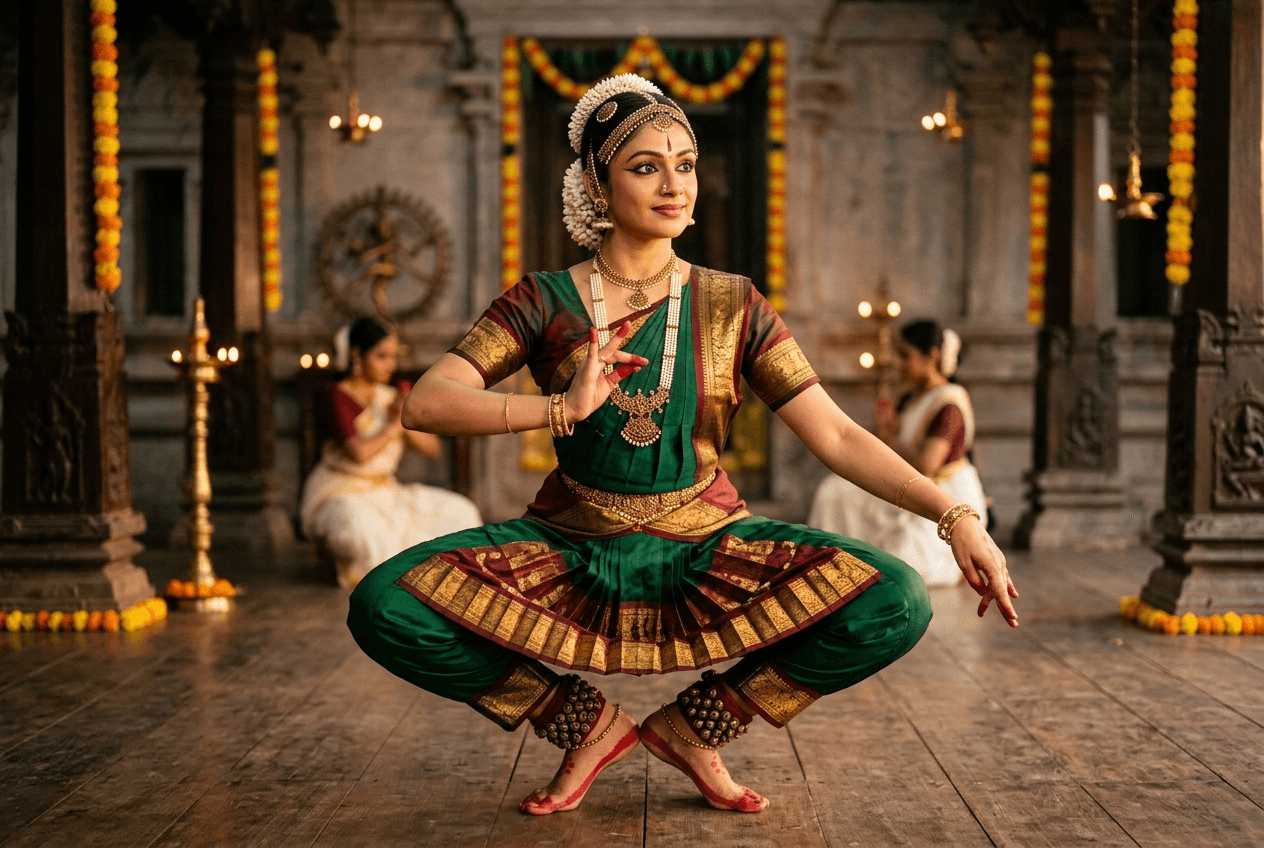
Bharatanatyam, from the South, is one of the oldest classical forms, built on sculptural postures, precise geometry and deep expression, set to Carnatic music. Beginners learn the foundational stance, the half sitting aramandi, and the adavus, the basic steps, alongside mudras and abhinaya. It is physically demanding in a different way from Kathak, rewarding discipline and stillness, and adults often find its meditative quality deeply satisfying. Structured Bharatanatyam classes build this foundation patiently, and our guide to South Indian dance forms offers helpful context.
And More: Bollywood and Beyond
Not every adult wants the rigour of a classical form, and that is perfectly fine. For those who want joyful movement, fitness and fun, Bollywood dance blends classical, folk and contemporary styles into an energetic, accessible form that suits adults of every fitness level. It is a wonderful entry point that can later spark curiosity about the classical roots beneath it. Our overview of Indian dance styles helps adults compare the options and choose what genuinely calls to them.
Why Online Suits Adult Dancers
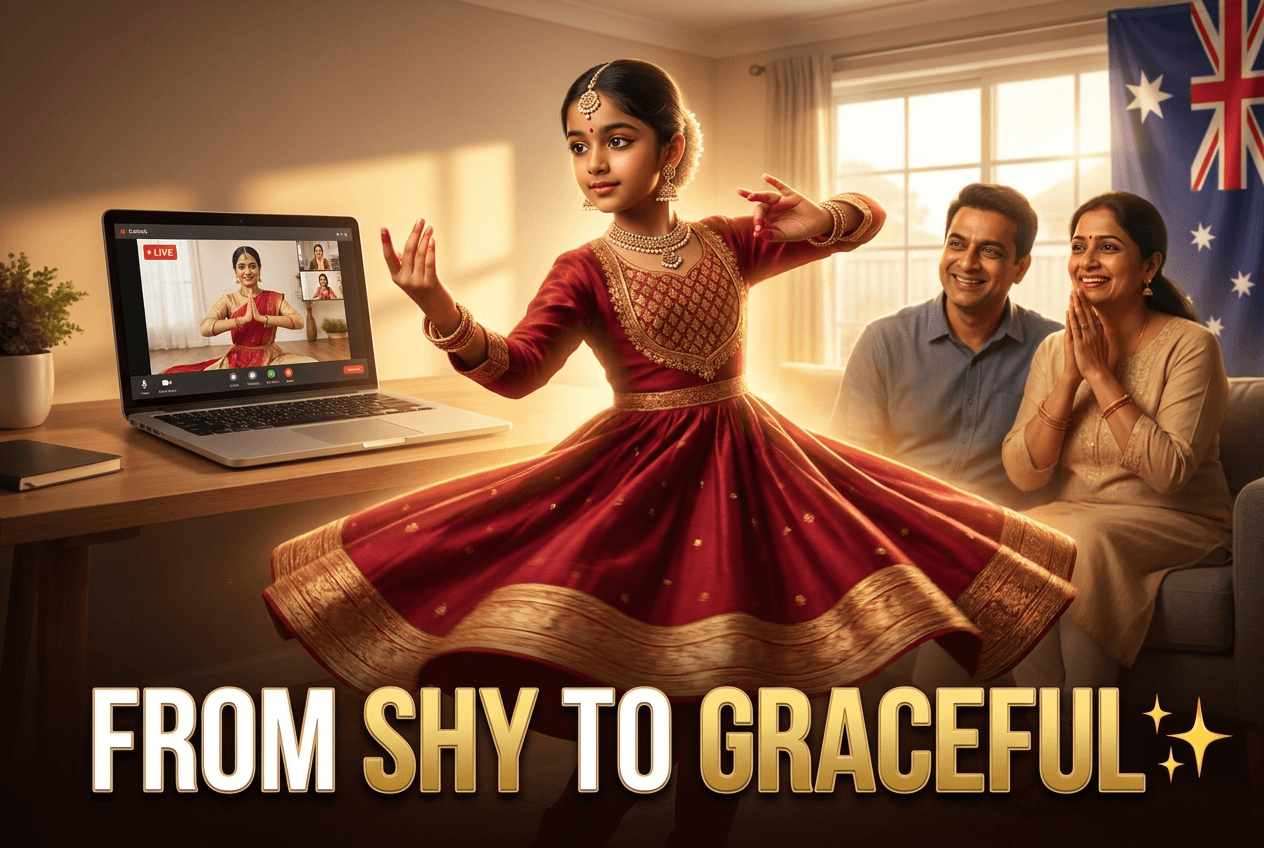
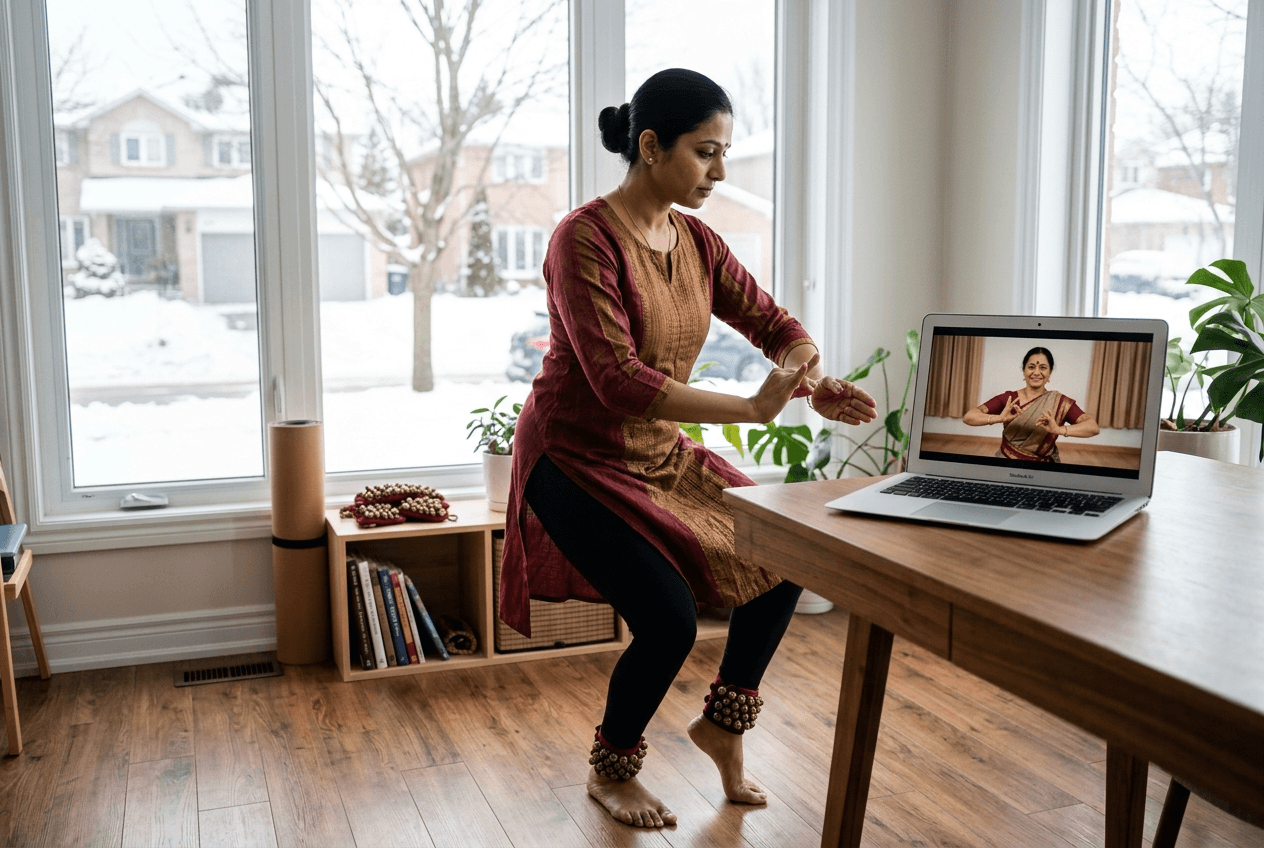 Online dance lessons fit an adult life in a way studio classes often cannot. They remove the commute through Canadian traffic and winter weather, schedule flexibly around work and family across all Canadian time zones, and let you learn in the privacy of your own home, free of the self consciousness many adult beginners feel in a room of strangers. All you need is a device with a camera, a clear space of a few feet, comfortable clothing and good lighting. A live one to one lesson gives real time correction that recorded videos simply cannot match.
About Art Gharana
 Art Gharana offers live one to one online Kathak, Bharatanatyam and Bollywood lessons for adults across Canada, paced for beginners and scheduled across all Canadian time zones. Review plans and pricing and book a free trial class to take that long awaited first step.
Frequently Asked Questions
1. Is it too late to learn Indian classical dance as an adult?
No. Adults learn Kathak, Bharatanatyam and other forms from scratch all the time. Classes welcome all ages, and adults often progress quickly thanks to focus, patience and clear motivation.
2. I have no dance background at all. Can I still start?
Absolutely. Beginner lessons start from the very basics, posture, simple footwork and hand positions, and build a foundation gradually. No prior experience of any kind is needed.
3. Which form should an adult beginner choose, Kathak or Bharatanatyam?
Both are wonderful. Kathak offers lighter, faster footwork and spins, while Bharatanatyam offers grounded postures and rich expression. Family heritage often guides the choice, but the surest test is a trial in each to see which one moves you.
The Health and Wellbeing Benefits
Adults are often surprised by how much Indian classical dance gives back to body and mind. The sustained postures and footwork build strength, flexibility, balance and stamina, offering a genuine workout that rarely feels like exercise. Beyond the physical, the focus required to coordinate movement, rhythm and expression is deeply absorbing, quieting a busy mind in much the way meditation does. Many adult dancers describe their practice as the most restorative part of the week, a space where work stress falls away and body and mind move as one, which is especially welcome through long Canadian winters.
Reconnecting With Heritage as an Adult
For many adults of Indian heritage in Canada, learning classical dance is about more than movement. It is a way of claiming a cultural identity that career and immigration once crowded out. To finally learn the dance your grandmother performed, or the form you watched at every wedding and festival, is to weave a missing thread back into your sense of self. For Canadian born adults with limited childhood exposure, it can be a profound discovery, and for those who grew up immersed in the culture, a joyful homecoming. The dance becomes a living bridge between a Canadian present and an ancestral past.
Adult Learners Without Indian Heritage
Indian classical dance also welcomes adults with no Indian background at all, drawn by its beauty, its storytelling, or an interest sparked through yoga, world music or travel. These traditions have always embraced sincere, respectful students regardless of origin, and a thoughtful teacher weaves in the history and meaning behind the movements so that newcomers understand the culture they are stepping into. For these learners, the dance becomes a gateway to a rich artistic world, and their presence reflects the genuine diversity of adult students taking up Indian dance across Canada today.
Setting Up Your Space at Home
Practising Indian dance at home needs surprisingly little. A clear floor space of around six to eight feet, free of furniture and obstacles, is enough for most beginner work, along with a device positioned so your teacher can see your full body. Good lighting helps the teacher correct your posture, comfortable clothing lets you move freely, and bare feet or appropriate footwear suit most forms. A quiet room where you can focus without interruption completes the setup. With these simple basics, an adult can build a genuine, sustainable practice without any special studio or equipment.
Building a Sustainable Practice Habit
As with any skill, consistency matters more than intensity, and this is especially true for adult bodies. Short, regular practice between lessons, with gentle warm ups to prepare muscles and joints, builds strength and memory far better than occasional long, strenuous sessions that risk strain. Listening to your body, resting when needed and progressing gradually protects you from injury and keeps the experience joyful. A good teacher sets realistic, achievable practice goals, and an adult who practises a little most days will be quietly amazed at how much they can achieve over a single year.
Performance Opportunities for Adults in Canada
Adults sometimes assume performance is only for children or professionals, but Canada offers warm, welcoming stages for dancers at any stage of life. Community Diwali, Navratri and Vaisakhi celebrations, cultural association events, temple programmes and informal family gatherings across the country regularly invite dancers to share what they have learned. Performing, even a short, simple piece, brings a real sense of achievement and belonging, and many adult learners describe their first community performance as a genuinely moving milestone. There is no age at which the joy of stepping onto a stage, however modest, stops mattering.
Choosing Between Forms, and Changing Your Mind
Many adults agonise over which form to choose, but the decision carries less weight than it feels. Family heritage often points the way, North Indian families toward Kathak, South Indian families toward Bharatanatyam, while others simply follow what moves them most. And nothing is permanent. An adult who begins with Bollywood for fun may grow curious about Kathak, or a Bharatanatyam student may explore another form years later. The important thing is to begin somewhere, because enthusiasm sustains practice, and a willing dancer following genuine curiosity will always travel further than one forcing an obligatory choice.
What a Typical Adult Lesson Looks Like
Knowing what to expect makes a first class far less daunting. An adult lesson usually begins with gentle warm ups to prepare the body, followed by focused work on posture and footwork, the foundations on which everything else rests. The teacher introduces new movements in small, learnable pieces, correcting alignment and timing in real time, and often closes with guidance for the week's practice. There is no expectation of instant grace and no judgment of a beginner's stumbles. The atmosphere of a good adult lesson is patient and encouraging, designed to build confidence as much as technique, one achievable step at a time.
Overcoming Self Consciousness
Many adults hesitate to start dance for fear of feeling awkward or being watched, and this is precisely where online one to one learning helps. In the privacy of your own home, with only your teacher seeing you through the screen, there is no room of strangers and no mirror full of younger, more experienced dancers to measure yourself against. This gentle, judgment free setting lets adult beginners relax, make mistakes freely and progress without embarrassment. Most find that the self consciousness which held them back for years simply melts away within a few lessons, replaced by genuine enjoyment of the movement itself.
Clothing and Practical Considerations
Indian classical dance asks very little in the way of equipment, which makes starting easy. Comfortable clothing that allows free movement is the main requirement, and most forms are practised barefoot, though some dancers later add ankle bells, or ghungroos, as they progress. A clear, non slip floor space protects the joints during footwork, and staying hydrated and warming up properly guards against strain. None of this demands special purchases at the outset. An adult can begin a first trial lesson in ordinary comfortable clothes, in a cleared corner of a room, with nothing more than willingness and a little space.
How Quickly Will I Progress?
Adults naturally want a realistic sense of the timeline. With consistent practice, most beginners grasp fundamental footwork and basic movements within the first couple of months, enough to feel real momentum and to enjoy short, simple sequences. Building genuine fluency, stamina and expression takes longer, unfolding over a year or more of steady practice, and the journey only deepens from there. Individual timelines vary with practice and prior movement experience, but the principle is constant. Regular, gentle practice between lessons is what drives progress, and an adult who shows up consistently will be quietly delighted by how far a year can take them.
Dance as a Lifelong Practice
One of the joys of taking up Indian classical dance as an adult is that it is not a skill to be quickly mastered and set aside, but an art that rewards a lifetime of practice. Even master dancers describe themselves as perpetual students, always refining, always discovering new depth in movements they have performed for decades. This means there is no pressure to rush and no point at which the journey is finished. For an adult, the dance can become a steady, evolving companion through the years, a practice that grows richer with age rather than one that age forecloses.
When Parents Dance Alongside Their Children
A lovely possibility for many Canadian families is for a parent to learn alongside a child, whether in separate lessons or simply by practising together at home. A parent who takes up Bharatanatyam or Kathak while their child learns sends a powerful message, that this art is valued and worth an adult's time, and children are far more motivated when they see a parent embracing the same challenge. Beyond the motivation, it becomes a shared journey, a source of common ground and joyful bonding across generations, and a beautiful way to keep heritage alive within the home itself.
The Confidence That Dance Builds
Beyond fitness and culture, adult dancers frequently discover an unexpected gift, a quiet growth in confidence and self expression. Learning to hold a strong posture, to move with intention, and eventually to perform before others builds a poise that ripples into everyday life, into how one carries oneself and speaks and meets the world. For adults who have spent years prioritising work and family over their own creative needs, reclaiming a space for personal artistic growth can be genuinely transformative. The dance gives back not only grace of movement but a deeper, steadier sense of self.
Final Thoughts
The wish to dance that you have carried, perhaps for years, has not expired. It has simply been waiting for the right moment and the right access, both of which live one to one online lessons now provide for adults across Canada. Whether you are drawn to the rhythmic grace of Kathak, the sculptural devotion of Bharatanatyam, or the sheer joy of Bollywood, the path begins the same way, with a single, low pressure first lesson. Years from now you will be glad you began. Choose the future with dance in it, and take that first step today.
Caring for an Adult Body
A practical priority for adult dancers is protecting the body, and a good teacher makes this central rather than incidental. Proper warm ups before practice prepare muscles and joints, correct technique distributes effort safely, and gradual progression avoids the strains that come from pushing too hard too soon. Forms like Bharatanatyam, with their demanding half sitting posture, ask for particular care in building strength over time. Listening to your body, resting when it signals fatigue, and never forcing a movement keep the practice sustainable for years. Approached sensibly, Indian dance is gentle on an adult body and genuinely good for long term mobility and strength.
The Music Behind the Dance
Indian classical dance and music are inseparable, and part of the joy for adult learners is discovering the music that drives the movement. Kathak unfolds to Hindustani music and the rhythmic syllables of the tabla, while Bharatanatyam moves to Carnatic compositions and the patterns of its talas. Understanding the music deepens the dance, helping a student feel the rhythm in their feet and the emotion in their expression rather than merely counting steps. Many adult dancers find that learning to hear and feel the music transforms their dancing, turning a sequence of movements into genuine, heartfelt performance.
Group Energy Versus One to One Focus
Both learning formats have their merits for adults. Group classes bring camaraderie, shared motivation and the joy of moving alongside others, which some adults find energising and social. One to one lessons, by contrast, offer undivided attention, feedback tailored to your body and pace, and the privacy that many adult beginners prefer, especially at the start. For building correct technique and confidence from scratch, the focus of one to one learning is hard to beat, and adults can always add group experiences later for the shared joy of dancing in company. The right choice depends on your temperament and goals.
What a First Performance Feels Like
For many adults, the idea of performing feels distant or even frightening at first, yet it often becomes a cherished milestone. A first performance need not be grand, a short, simple piece at a community gathering or family event is a perfect beginning, and the warmth of a supportive audience does much to calm the nerves. The sense of accomplishment in sharing something you have worked toward, of stepping onto a stage at any age, is genuinely moving. Adult dancers frequently describe their first performance as a turning point, the moment the practice became truly their own.
Begin Today
There is no better time to begin than the moment you are in, reading this and wondering whether it is finally right. It is. The years will pass regardless, and the only real difference between the future where you dance and the one where you do not is whether you take a single first step now. You need no experience, no special equipment and no perfect schedule, only the willingness to begin. Book a free trial class, meet a patient teacher, and discover for yourself how it feels to finally move to the rhythms you have loved for so long.