Among all the classical dance forms of India, Bharatanatyam stands in a class of its own. Its visual grandeur, technical complexity and spiritual depth have made it one of the most celebrated performing arts in the world, and its origins in the temple traditions of Tamil Nadu connect it to a cultural lineage that stretches back more than two thousand years. For Tamil and broader South Indian families living in the United Kingdom, Bharatanatyam is not simply an art form to admire. It is a living thread connecting children born and raised in Leicester, Birmingham, London and beyond to the traditions of their ancestors.
This guide is for South Indian families and anyone else in the UK who wants to understand what Bharatanatyam involves, why it is such a powerful choice for children, and how to find a qualified teacher who genuinely understands both the art form and the cultural significance it carries. If you are ready to take the first step, you can book a free trial class today with no obligation. Otherwise, read on for the complete picture.
The South Asian communities in Leicester, Birmingham and London are among the most culturally active in Europe. Leicester's Diwali celebrations on the Golden Mile are famous worldwide. Birmingham hosts some of the most vibrant Tamil and Telugu cultural organisations in the country. London's Bhavan Centre in Kensington and the numerous South Indian temples across the capital provide a constant backdrop of classical arts events, performances and cultural gatherings where Bharatanatyam is central.
Yet for many families in these cities, and especially for families outside the major urban centres, finding a genuinely qualified Bharatanatyam teacher has been a persistent challenge. Live online instruction through Art Gharana changes that entirely.
What Is Bharatanatyam and Why Does It Matter?
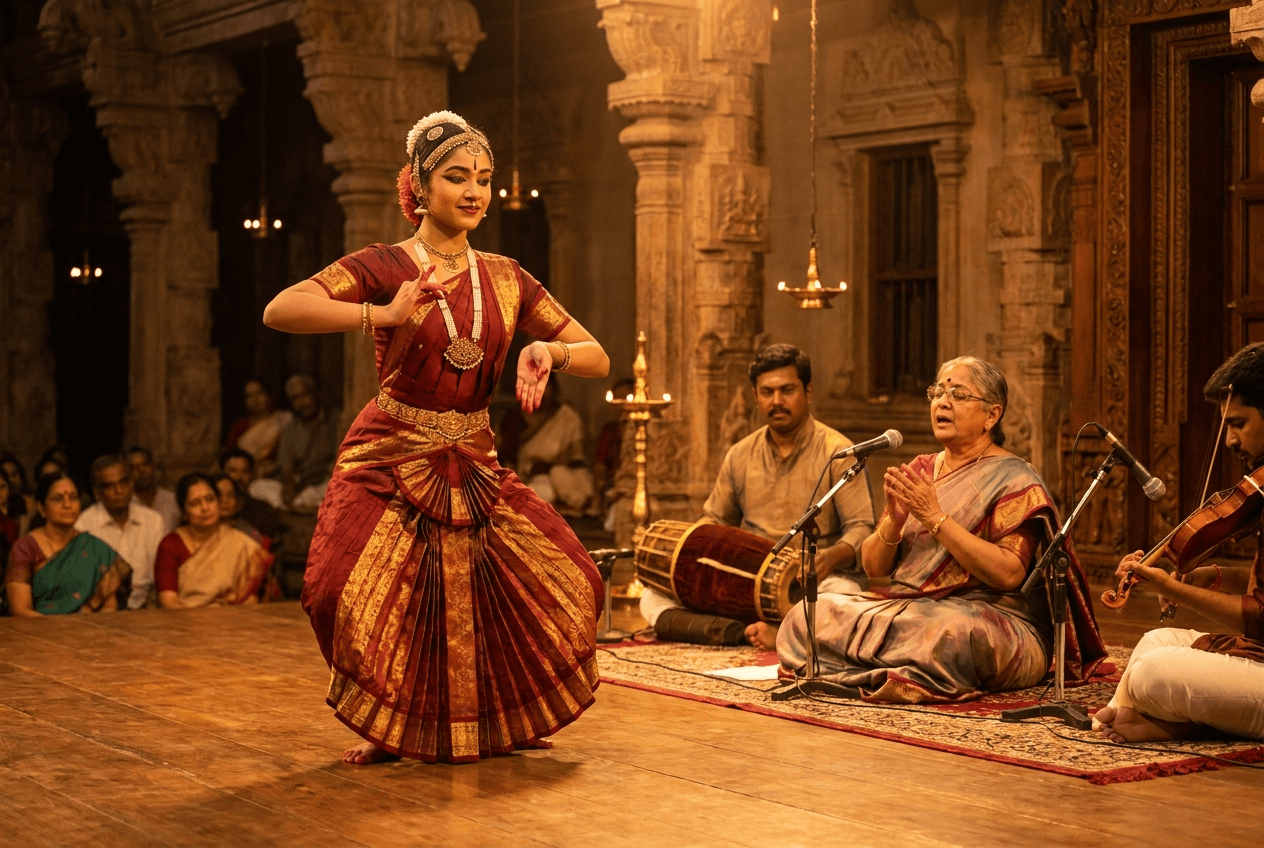 The name Bharatanatyam is itself a declaration of purpose. Bha stands for bhava, the emotional expression that brings stories to life. Ra stands for raga, the melodic framework that gives the dance its musical soul. Ta stands for tala, the rhythmic cycle that governs every movement. Natyam means dance. The name captures in four syllables everything that defines the art form.
Bharatanatyam originated as a devotional offering performed by devadasis in the temples of Tamil Nadu. These trained performers served as ritual intermediaries between worshippers and the divine, using dance to tell the stories of gods and goddesses and to channel collective spiritual aspiration into movement and music. The form went through a period of significant decline under colonial rule before a twentieth-century revival movement transformed it into the internationally recognised classical art form it is today.
A complete Bharatanatyam performance follows a structured sequence known as a margam, progressing from an invocatory opening piece called alarippu through increasingly complex items to a rhythmically exuberant concluding thillana. The dance integrates three distinct modes of performance: nritta, which is pure rhythmic movement without narrative content; abhinaya, which is expressive storytelling through facial expression, hand gestures and body language; and nritya, which combines both. Mastering all three dimensions of the form is the work of years, and the journey is one of the most enriching experiences available to a young person.
Bharatanatyam in Leicester: A City With Deep South Asian Roots
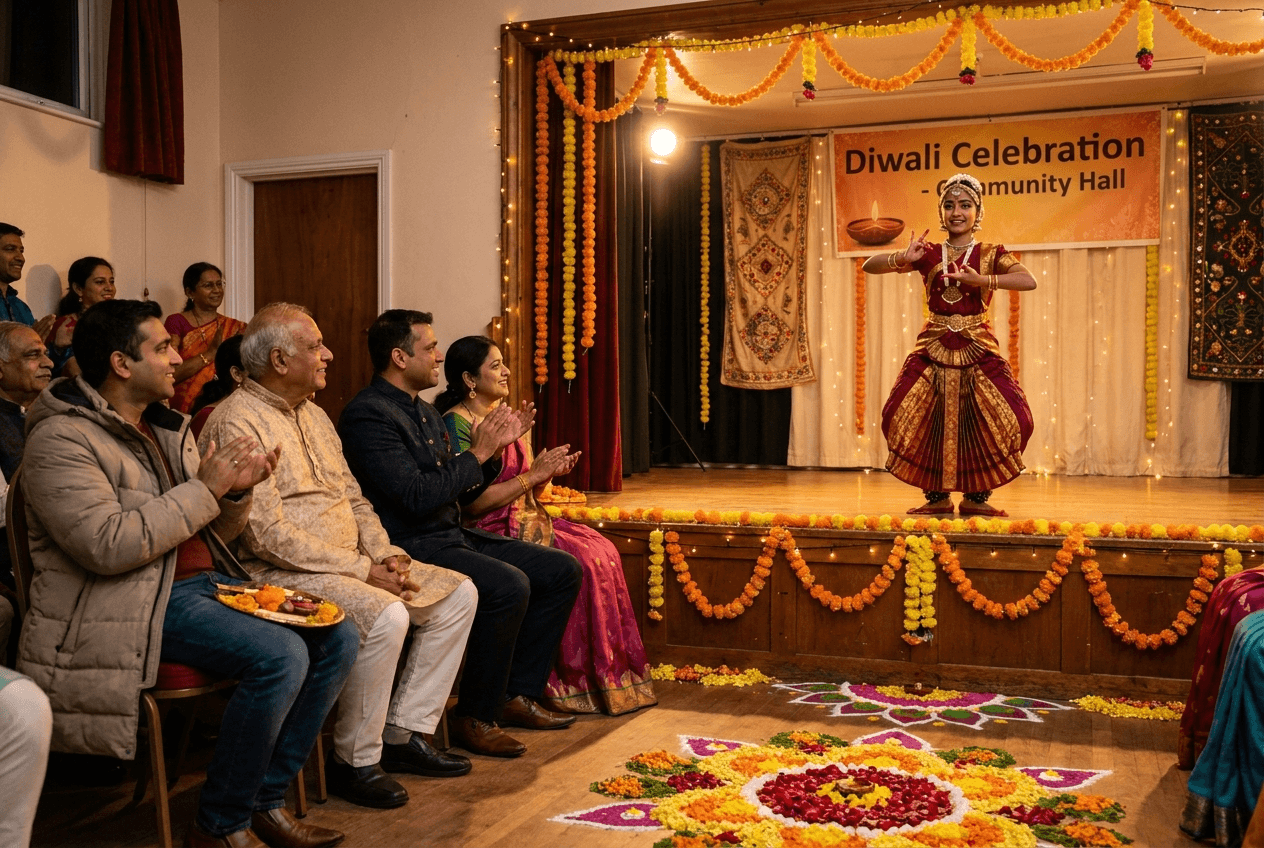
 Leicester holds a unique place in the British South Asian story. Its Indian community, one of the largest proportionally of any UK city, has built cultural institutions, temples, businesses and community organisations that make Leicester feel, in important ways, like an extension of India itself. The Diwali celebrations on Belgrave Road, known globally as the largest Diwali celebrations outside India, draw hundreds of thousands of people each year and feature Bharatanatyam performances as a central attraction.
For Leicester families, Art Gharana's online Bharatanatyam classes for kids in the UK offer something that local provision has historically struggled to provide consistently: access to formally trained, certified teachers whose own training is rooted in the authentic classical tradition. Rather than learning from a teacher whose classical grounding may be limited, students at Art Gharana learn from teachers who have trained seriously and at depth in the Kalakshetra or other recognised styles of Bharatanatyam.
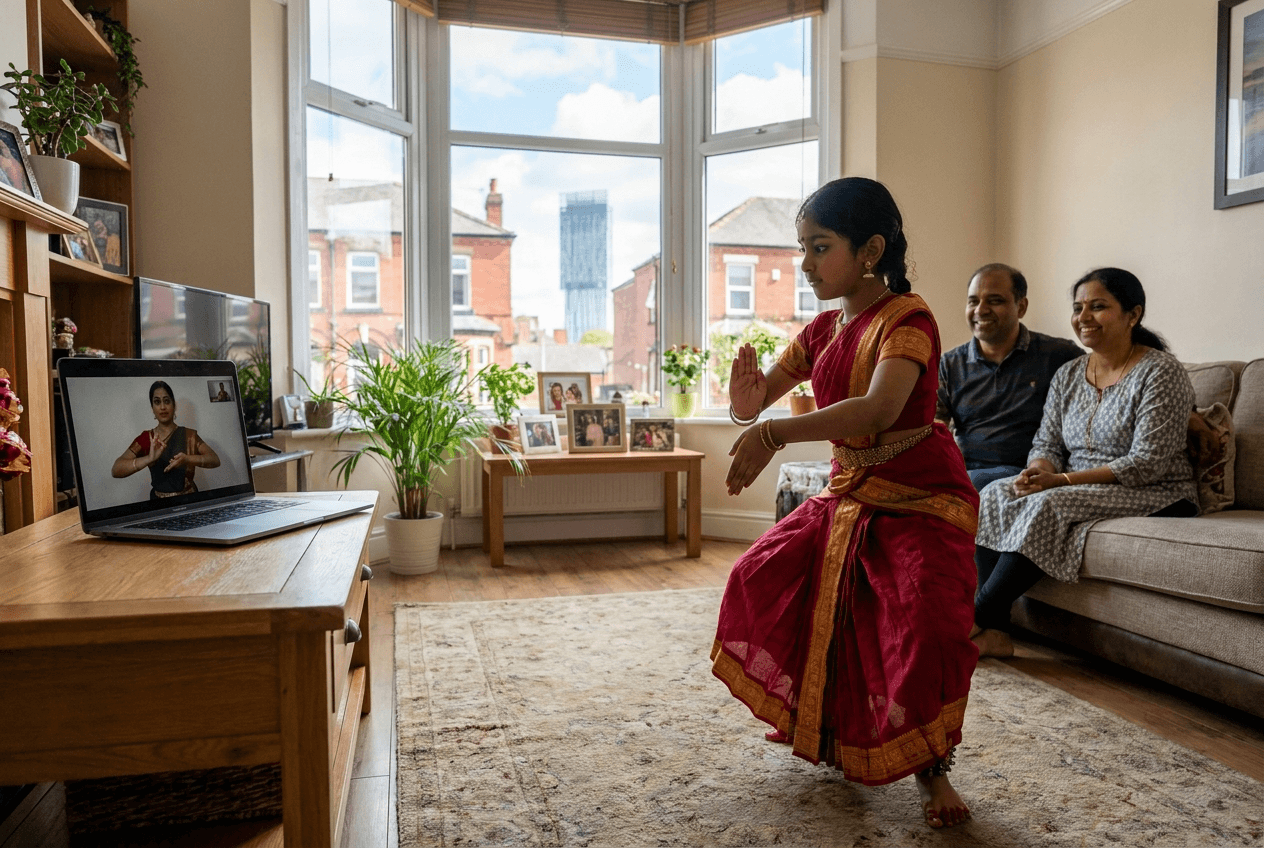
Classes are scheduled to fit around Leicester school hours and family life, with morning, evening and weekend slots available across UK time zones. Students attend via video call from home, with no travel required.
Bharatanatyam in Birmingham: South India's Cultural Heart in the Midlands
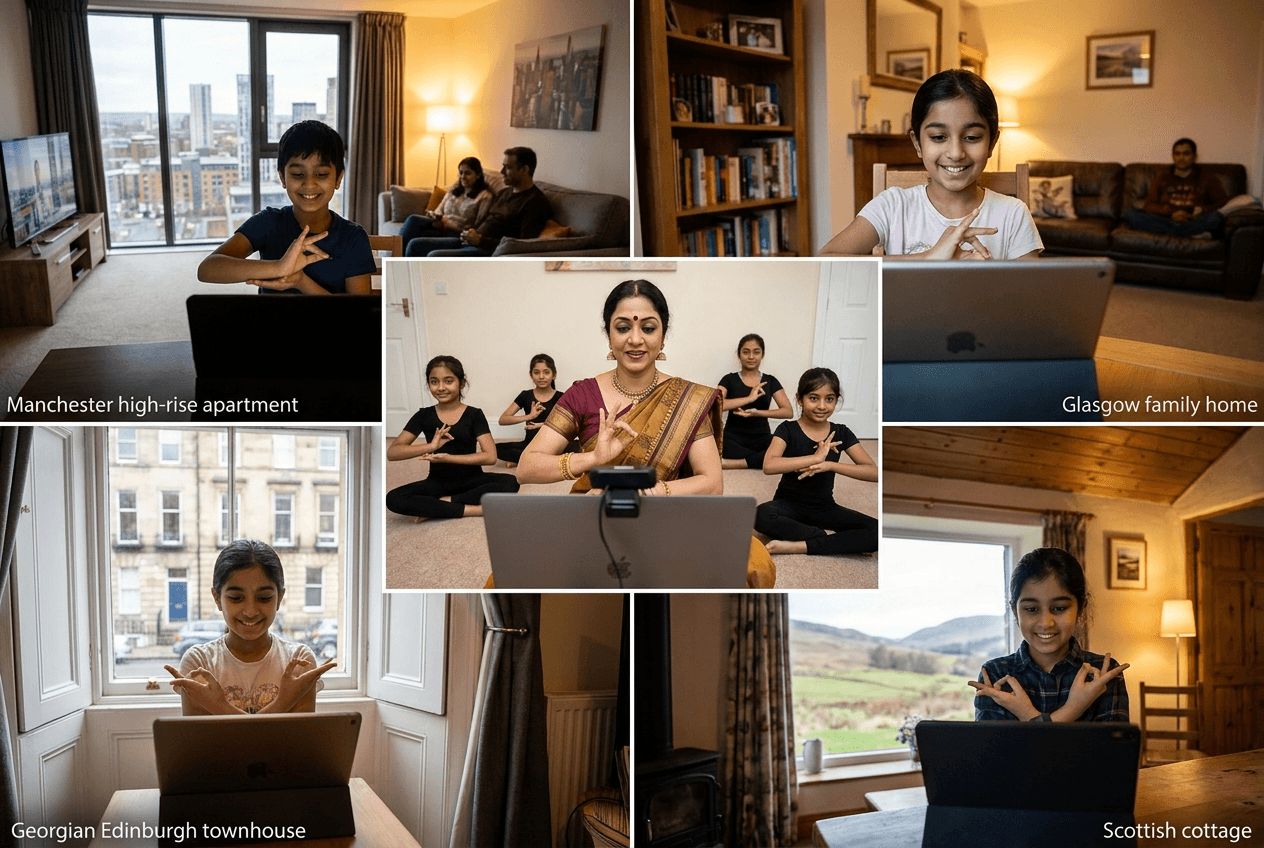 Birmingham's South Indian community is one of the most active in the UK. The city's Tamil and Telugu organisations host classical music and dance events throughout the year, and Bharatanatyam performances at temples, community halls and cultural centres are a regular feature of Birmingham's Indian cultural calendar. For children growing up in this environment, Bharatanatyam training gives them a skill that connects them directly to the life of their community.
Art Gharana's Birmingham students attend live online sessions with certified teachers from the comfort of their homes. The one to one format means children receive the teacher's full attention throughout every 45-minute session, and the flexible scheduling means classes can always be arranged to fit around school, homework and family commitments. Parents in Birmingham consistently tell us that the online format has removed the logistical barrier that previously prevented their children from accessing quality classical dance training.
Bharatanatyam in London: From Harrow to Tooting London's South Indian community is spread across the capital, with significant populations in Harrow, Wembley, Southall, East Ham, Tooting and Balham. The city's cultural infrastructure for classical Indian arts is the richest in the UK, with the Bhavan Centre in West Kensington offering regular Bharatanatyam performances, workshops and events, and numerous temples across the capital hosting recitals and celebrations throughout the year.
For London families, the online format resolves what is often the most significant practical obstacle to dance training: travel time and cost. Rather than navigating tubes, buses and traffic to reach a dance studio for a 45-minute class, students attend from home. The time saved is significant, the cost of travel is eliminated, and the quality of teaching through Art Gharana is at least the equal of what any London dance academy provides.
The Real Benefits of Bharatanatyam for Children
Physical Strength, Flexibility and Coordination
The aramandi, the characteristic bent-knee stance that is the foundation of Bharatanatyam movement, develops exceptional leg strength and flexibility from a young age. The intricate adavu patterns build coordination, balance and body awareness. The expressive upper body work, with its precise mudras and facial movements, develops fine motor control and spatial intelligence. Children who train seriously in Bharatanatyam develop a physical confidence and physical capability that extends far beyond the dance studio.
Academic Benefits Through Arts Training
The memorisation demands of Bharatanatyam are substantial. Students must simultaneously hold choreographic sequences, musical phrases, rhythmic structures, hand gesture vocabulary and expressive content in their memory and reproduce them with precision under performance conditions. This kind of multidimensional memorisation builds concentration, pattern recognition and working memory capacity in ways that directly and measurably support academic performance.
Emotional Intelligence Through Abhinaya
The abhinaya component of Bharatanatyam, the expressive storytelling through facial expression and gesture, is perhaps uniquely powerful in developing emotional awareness and empathy in children. Learning to identify, understand and communicate a wide range of human emotions with precision and authenticity is a deeply valuable life skill that Bharatanatyam training develops over years of dedicated practice.
Cultural Pride and Heritage Connection
For Tamil and South Indian children growing up in the UK, Bharatanatyam provides an embodied connection to their cultural heritage that nothing else can replicate. Performing the same gestures, stepping the same rhythms and telling the same stories that their ancestors danced in temples thousands of years ago is a profound experience of cultural continuity. This sense of belonging and pride in heritage is one of the most important gifts a parent can give a child growing up between two cultures.
What Your Child Will Learn: The Bharatanatyam Curriculum
Beginner Stage, Ages 5 to 8
All Bharatanatyam training begins with the fundamentals of posture and movement. Students learn the basic standing position called samabhanga, the foundational bent-knee stance known as aramandi, and the primary hand gestures called asamyuta hastas. They are introduced to basic adavu patterns, the foundational movement units that form the building blocks of all Bharatanatyam choreography. Students begin to develop an ear for Carnatic music and learn to recognise and move within simple rhythmic cycles. The first compositional item, the alarippu, is introduced once posture fundamentals are established.
Intermediate Stage, Ages 8 to 12
At the intermediate stage, students expand their adavu vocabulary, learn more complex compositional pieces including the jatiswaram and begin working on the foundational sections of the varnam, the most substantial compositional form in the Bharatanatyam repertoire. Abhinaya training becomes more systematic and detailed at this level, with students learning to tell specific stories from Indian mythology with conviction and expressiveness. Physical stamina develops progressively through longer practice sessions and more demanding choreography.
Advanced Stage and Arangetram
Advanced students work towards the full performance margam and, in many cases, towards their arangetram, the formal debut solo performance that represents the culmination of foundational Bharatanatyam training. The arangetram is one of the most significant cultural milestones in the life of a South Indian family, and Art Gharana teachers guide students through every aspect of the preparation, from repertoire selection and choreography refinement to advice on costume, jewellery, stage lighting and performance presentation.
How Art Gharana Compares to Other Online Bharatanatyam Providers
 UK families searching for online Bharatanatyam classes will find several providers operating in this space. The quality and relevance of what they offer varies significantly. Here is a clear comparison to help you understand the key differences and why Art Gharana is built specifically for UK families.
The most critical gap in the current online Bharatanatyam market for UK families is the combination of live one to one instruction, genuine UK time zone availability and content built specifically for diaspora children. Several providers operate exclusively in female-only formats, which means brothers, fathers and non-female students have no access to their programmes. Art Gharana welcomes all children regardless of gender, and our curriculum is designed to honour the tradition while making it genuinely accessible to young people growing up in a UK context.
Bharatanatyam and the South Indian Arts Ecosystem
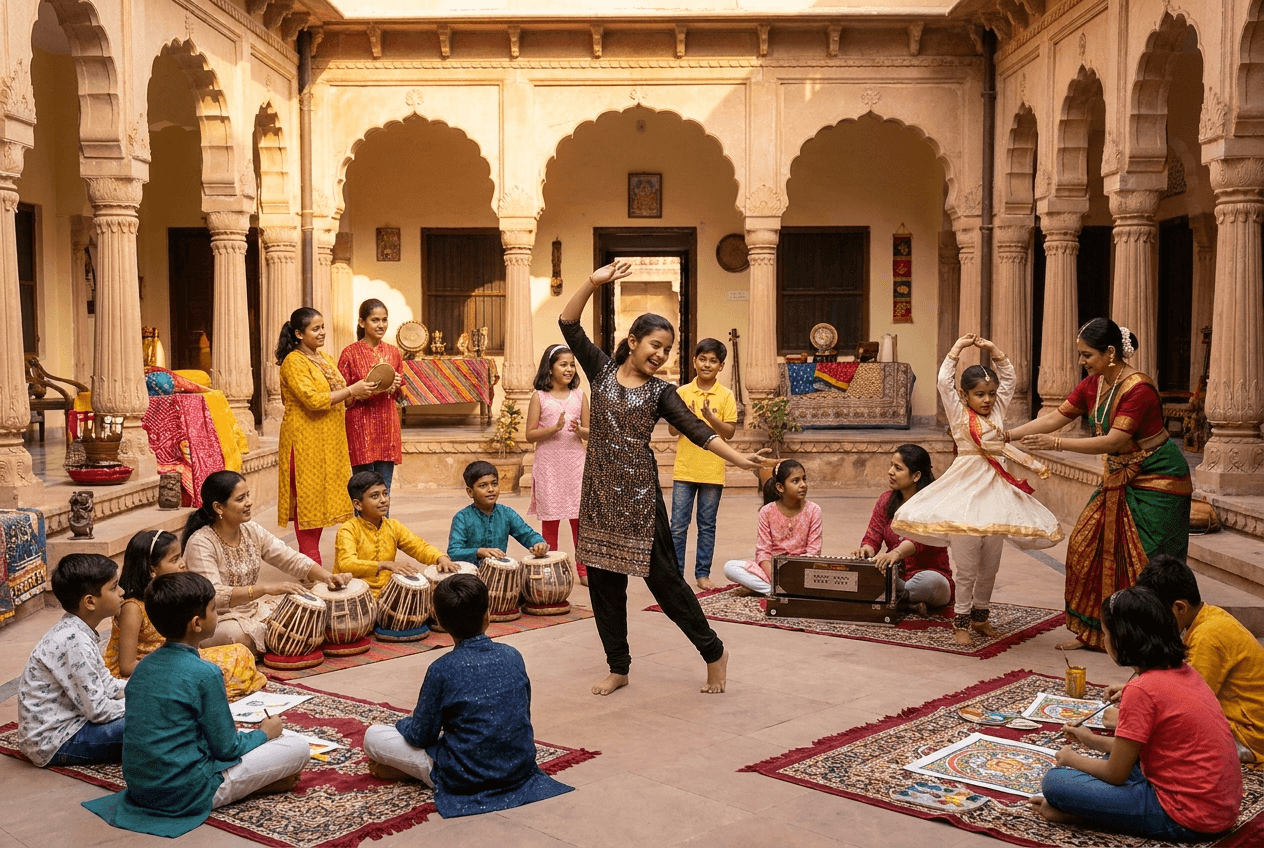
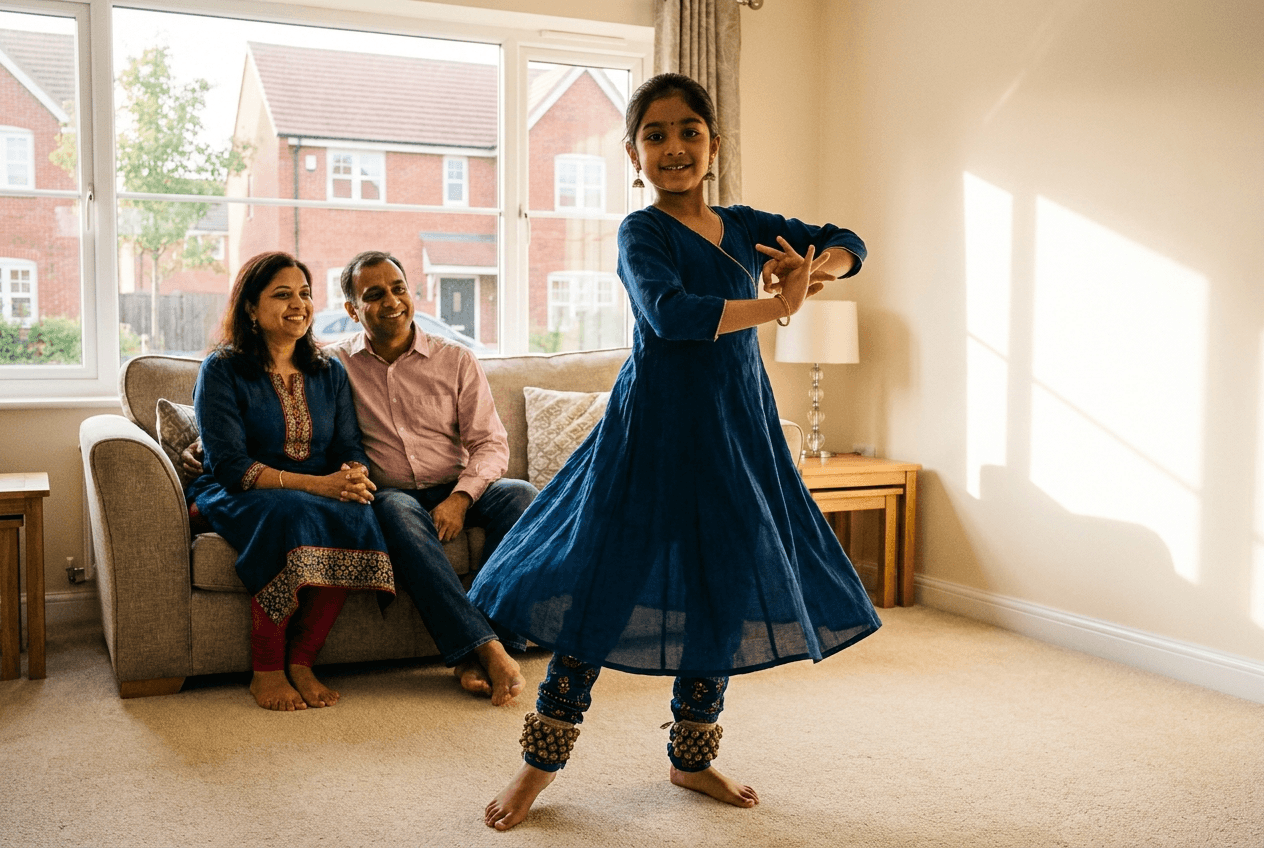 Bharatanatyam and Carnatic music are deeply intertwined. Every piece in the Bharatanatyam repertoire is set to a Carnatic musical composition, and students who develop an understanding of the music from the inside, as singers rather than just as dancers, develop a significantly more nuanced and expressive performance style. Art Gharana's Carnatic vocal classes are taken by many Bharatanatyam students precisely for this reason, and the combination produces a depth of musical and expressive understanding that dance training alone cannot achieve.
For children who are drawn to rhythm rather than melody, our tabla classes develop a rhythmic intelligence that directly enriches Bharatanatyam training. The tala structures used in Bharatanatyam are closely related to those used in Carnatic percussion, and students who understand rhythm from a performer's perspective develop a quality of rhythmic precision in their footwork that is immediately evident.
If you are exploring the range of Indian arts available for your child, you can also browse our Kathak classes, our Bollywood dance classes and our full range of courses to find the right combination for your family.
Setting Up for Your Child's First Bharatanatyam Class
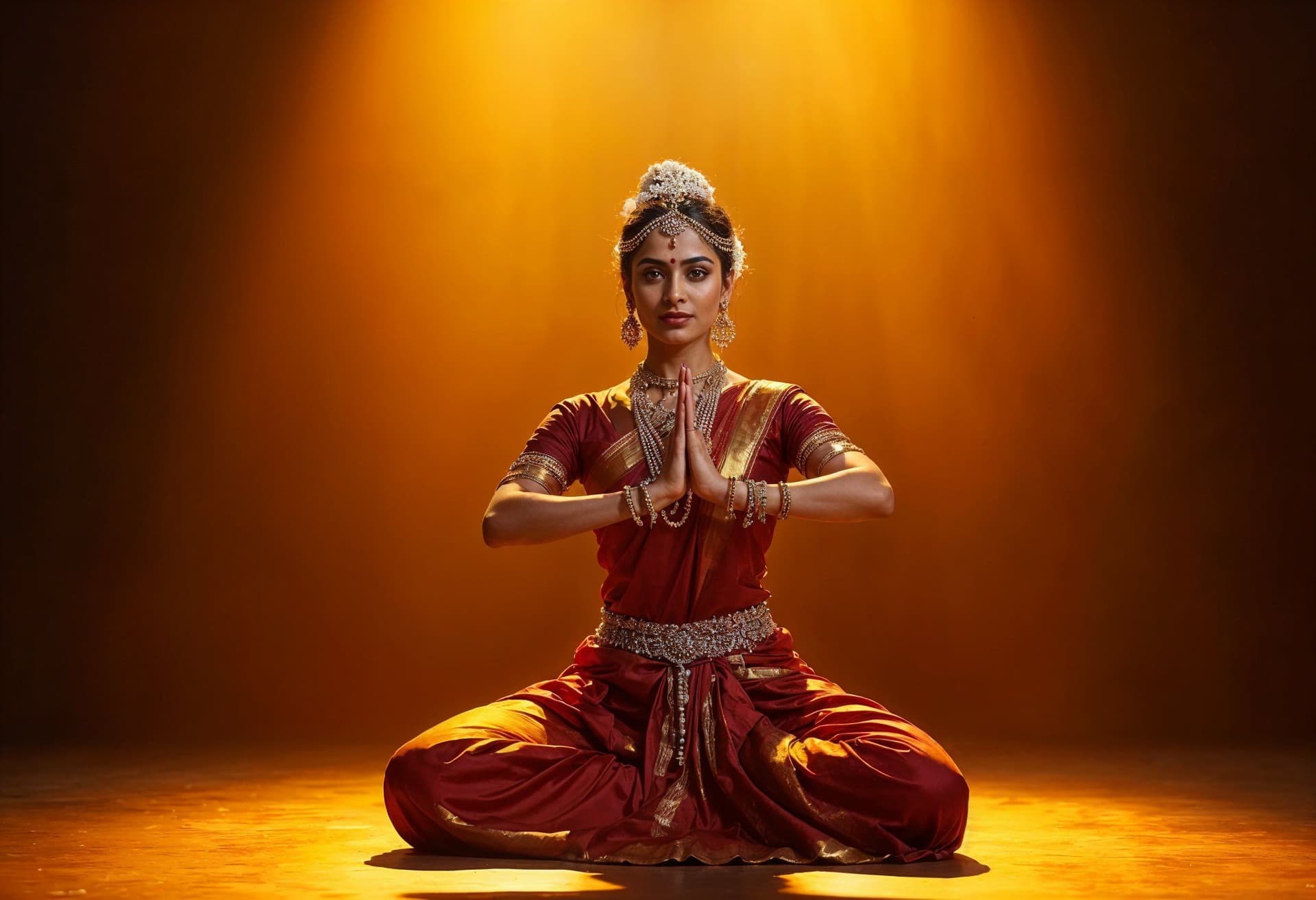 Preparing for a first Bharatanatyam class is straightforward. Here is everything you need to have in place before the session begins.
• Clear enough floor space for your child to move their arms and legs freely in all directions without obstruction. • A device with a working camera, positioned so the teacher can see your child's full body from head to toe. • A stable internet connection. A wired ethernet connection is more reliable than wifi where possible. • Comfortable, loose-fitting clothing that allows free movement. Bare feet are standard for Bharatanatyam training. • A calm, quiet space with good lighting so the teacher can see your child's facial expressions and hand positions clearly. • Some time to talk to your child before the class about what to expect. Let them know that the first session is about getting to know their teacher and trying some basic movements. There is no pressure to perform.
About Art Gharana
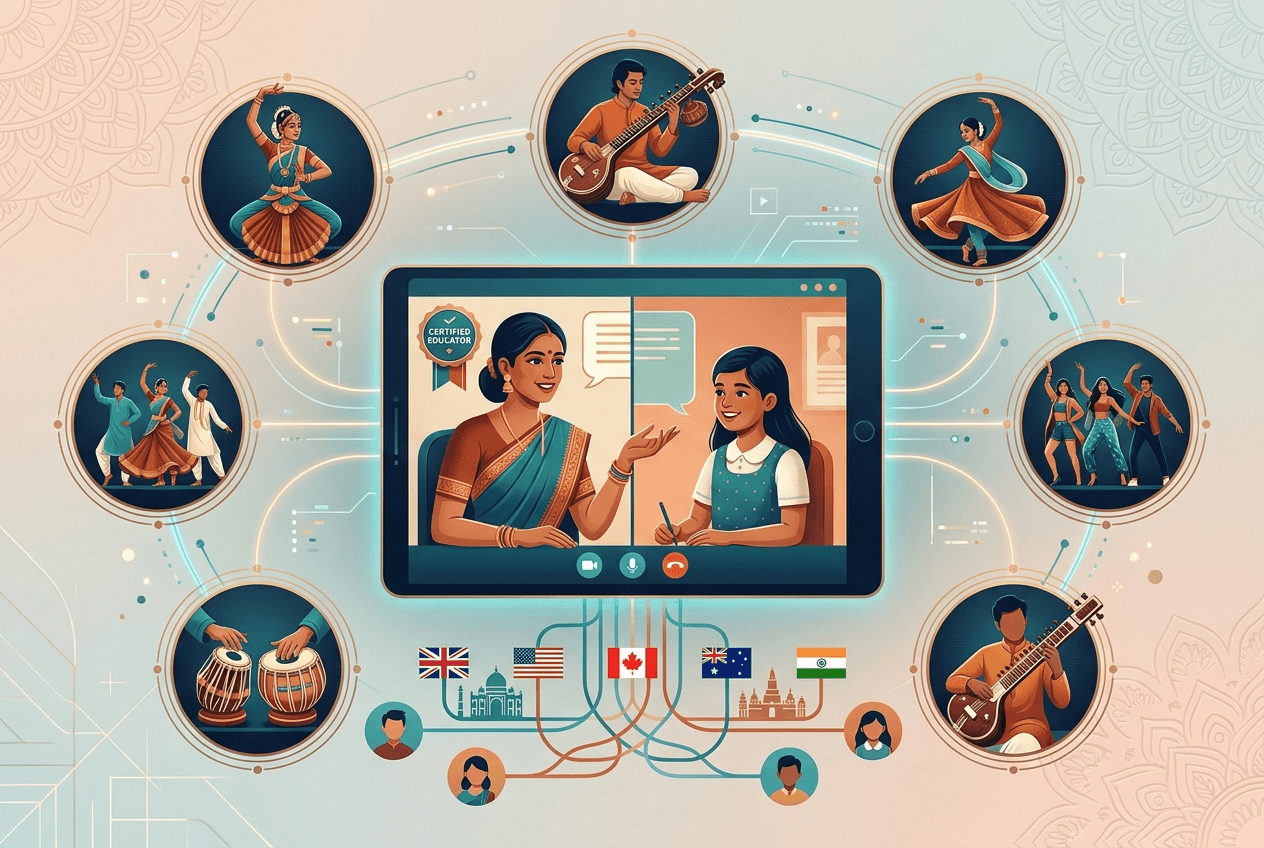
Art Gharana is a specialist online Indian arts education platform with over 50 certified teachers across dance, music and vocal disciplines. We serve South Indian families and all Indian families across the UK, USA, Canada, Australia and India. Our Bharatanatyam programme has been designed to deliver the depth and rigour of classical training through the live online format, with teachers who bring formal qualifications, performance experience and a genuine passion for passing the tradition on to the next generation. You can browse teacher biographies on our teacher profiles page or review our plans and pricing to understand what each session includes.
Frequently Asked Questions
1. Are there Bharatanatyam classes available for kids in Leicester?
Yes. Art Gharana offers live online Bharatanatyam classes for children in Leicester and across the UK, with all classes scheduled in UK time zones. Morning, evening and weekend slots are available to suit family schedules.
2. What age can children start Bharatanatyam?
Children can begin Bharatanatyam from age 5. Our beginner curriculum is designed to introduce young learners to fundamental postures, basic footwork and hand gestures in a gentle, fun and age-appropriate way that builds a love for the art form before the technical demands increase.
3. What equipment does my child need for online classes?
At the beginner stage, all your child needs is a device with a camera, a reliable internet connection and clear floor space. As training advances, the teacher will advise on ankle bells known as salangai and a suitable practice costume. There is no need to invest in any equipment to begin.
4. What is an arangetram and does Art Gharana support it?
An arangetram is the formal debut solo performance of a Bharatanatyam student, typically held after several years of training. It is one of the most important cultural milestones in South Indian family life. Art Gharana teachers guide students through every stage of arangetram preparation, including repertoire selection, choreography, costume and performance presentation.
5. Are your Bharatanatyam teachers qualified?
Yes. All Art Gharana Bharatanatyam teachers hold recognised qualifications in South Indian classical dance and are vetted for their teaching ability, performance experience and capacity to work effectively with children in an online setting.
6. Can children from non-South-Indian families learn Bharatanatyam?
Absolutely. Bharatanatyam is open to children of all cultural backgrounds. While it is most deeply associated with the South Indian tradition, many Art Gharana students come from North Indian, non-Indian and mixed-heritage families who are drawn to the artistry, discipline and cultural richness of the form.
7. How does Bharatanatyam differ from Bollywood dance?
Bharatanatyam is a classical South Indian art form with a structured technical system built over two thousand years of tradition. It demands more rigorous technical training and a longer commitment than Bollywood dance, but provides a far deeper grounding in Indian cultural and performance heritage. Many students begin with Bollywood dance and later develop a serious interest in Bharatanatyam as their appreciation of the classical tradition grows.
Book Your Child's Free Trial Class Today
Whether your family is in Leicester, Birmingham, London or anywhere else in the UK, Art Gharana is ready to welcome your child into the world of Bharatanatyam. With certified teachers, flexible UK scheduling, a structured curriculum from beginner to arangetram level and a completely free first lesson, there is no better time to begin. Visit our Bharatanatyam classes for kids in the UK page for full curriculum details, or head straight to the booking page to secure your child's first class. We look forward to meeting your family.