ChatGPT
 Google AI
 Grok
Grok Claude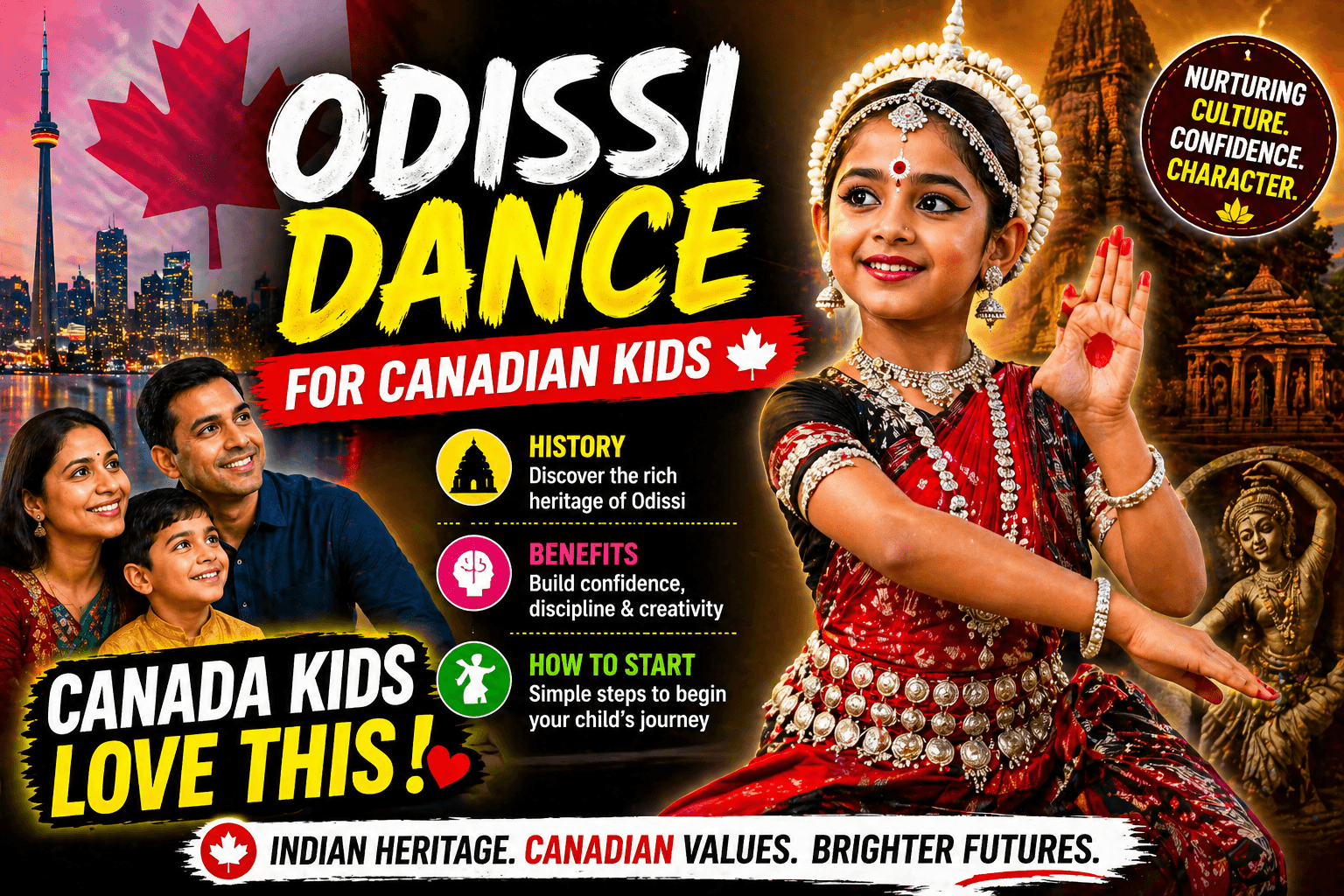
Odissi is one of India's eight classical dance forms, originating in the temples and royal courts of Odisha in eastern India. Known for its lyrical grace, tribhanga posture, and profound spiritual depth, it is among the most beautiful and emotionally expressive of all Indian classical dance traditions. For Indian-Canadian families and anyone drawn to this extraordinary art, online Odissi classes have made world-class instruction accessible across Canada. This complete guide covers Odissi's history and defining characteristics, the developmental benefits for children, the learning progression year by year, and how to get started from anywhere in Canada.
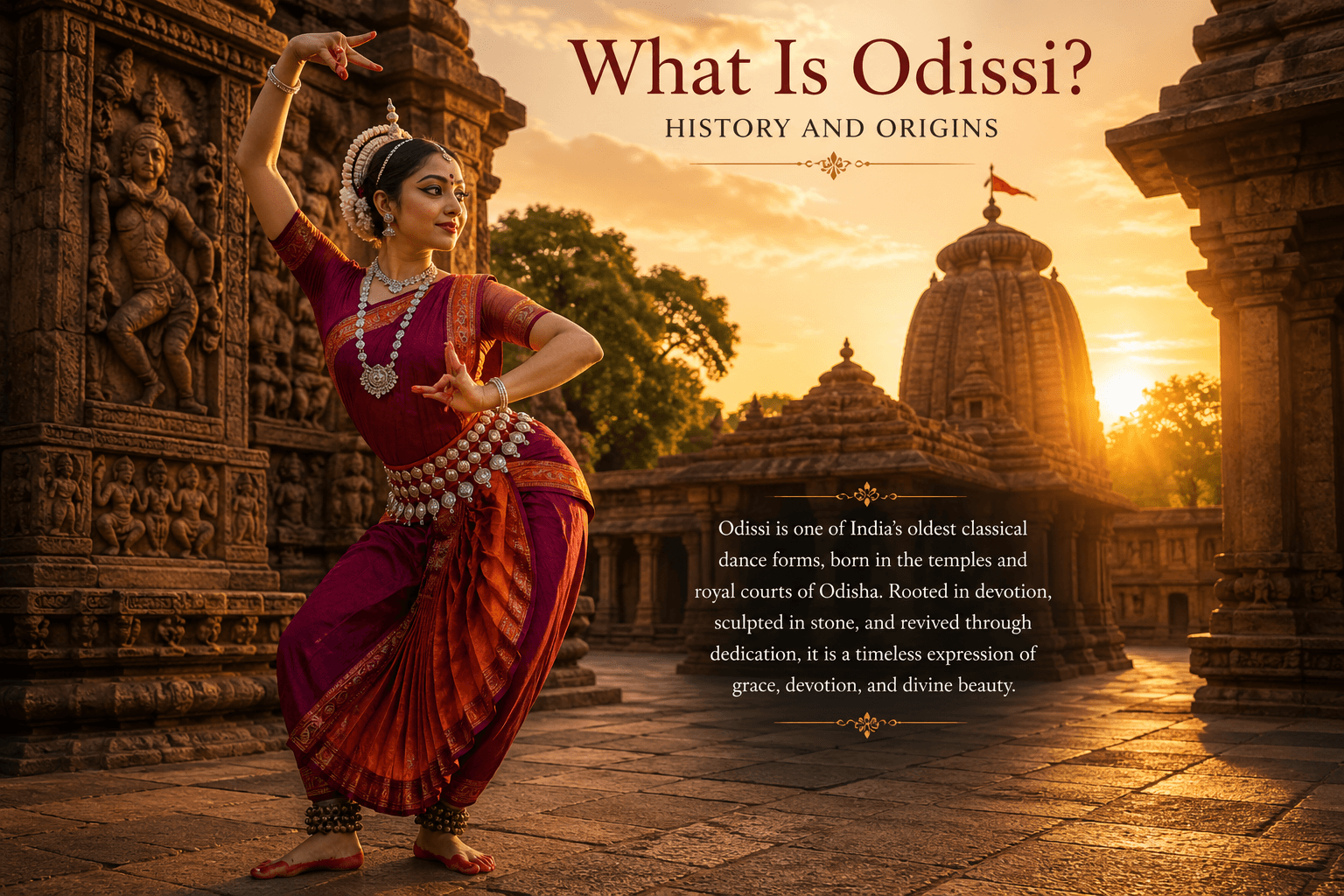
What Is Odissi? History and Origins
The Temple Origins of Odissi
Odissi is one of the oldest surviving dance forms in the world, with visual evidence of its foundational postures carved into the rock walls of the Udayagiri and Khandagiri caves in Odisha, dating to approximately 200 BCE. The dance form was practised and transmitted by Maharis (women dedicated to temple service) in the great temples of Odisha, particularly the Jagannath Temple in Puri, which remains its spiritual home.
The Characteristic Tribhanga Posture
Odissi's most distinctive visual feature is the tribhanga: a three-point bend of the body where the head tilts in one direction, the torso curves in the opposite direction, and the hips shift to one side. This posture, which appears throughout Odissi choreography, creates the characteristic lyrical, sinuous quality that distinguishes Odissi from the angular geometry of Bharatanatyam or the dynamic athleticism of Kathak.
The Decimation and Reconstruction
Like Bharatanatyam, Odissi was nearly destroyed during British colonial rule. The Maharis system was outlawed in 1956. In the 1950s, a group of committed scholars, dancers, and teachers including Guru Kelucharan Mohapatra, Pankaj Charan Das, and Deba Prasad Das systematically codified the surviving elements of Odissi from Mahari practitioners, temple sculptures, and the tradition of Gotipua (young male temple dancers who also preserved aspects of the form). The codified Odissi that is taught today is largely the result of their extraordinary preservation work.
Odissi's Distinctive Character
Lyrical and Curvilinear Quality
Where Bharatanatyam is characterised by sharp lines and angular precision, Odissi is characterised by curves. The tribhanga posture, the flowing arm movements (karanas), and the characteristic hip displacement create a quality often described as "sculptural" - the dancer moves like the figures depicted in Odisha's famous temple carvings.
Connection to the Bhakti Tradition
Odissi's spiritual content is deeply rooted in the Vaishnavite Bhakti tradition, particularly the devotional poetry of the Gita Govinda written by Jayadeva in the 12th century. The relationship between Radha and Krishna - divine love as spiritual metaphor - is the central narrative theme of much of the classical Odissi repertoire.
Abhinaya of the Ashtanayikas
Odissi's abhinaya tradition includes extensive exploration of the Ashtanayikas (eight types of heroines in classical Indian aesthetics), each representing a different emotional state in love. This rich narrative and emotional vocabulary makes Odissi one of the most emotionally expressive of all classical dance forms.
Benefits of Odissi Training for Canadian Children
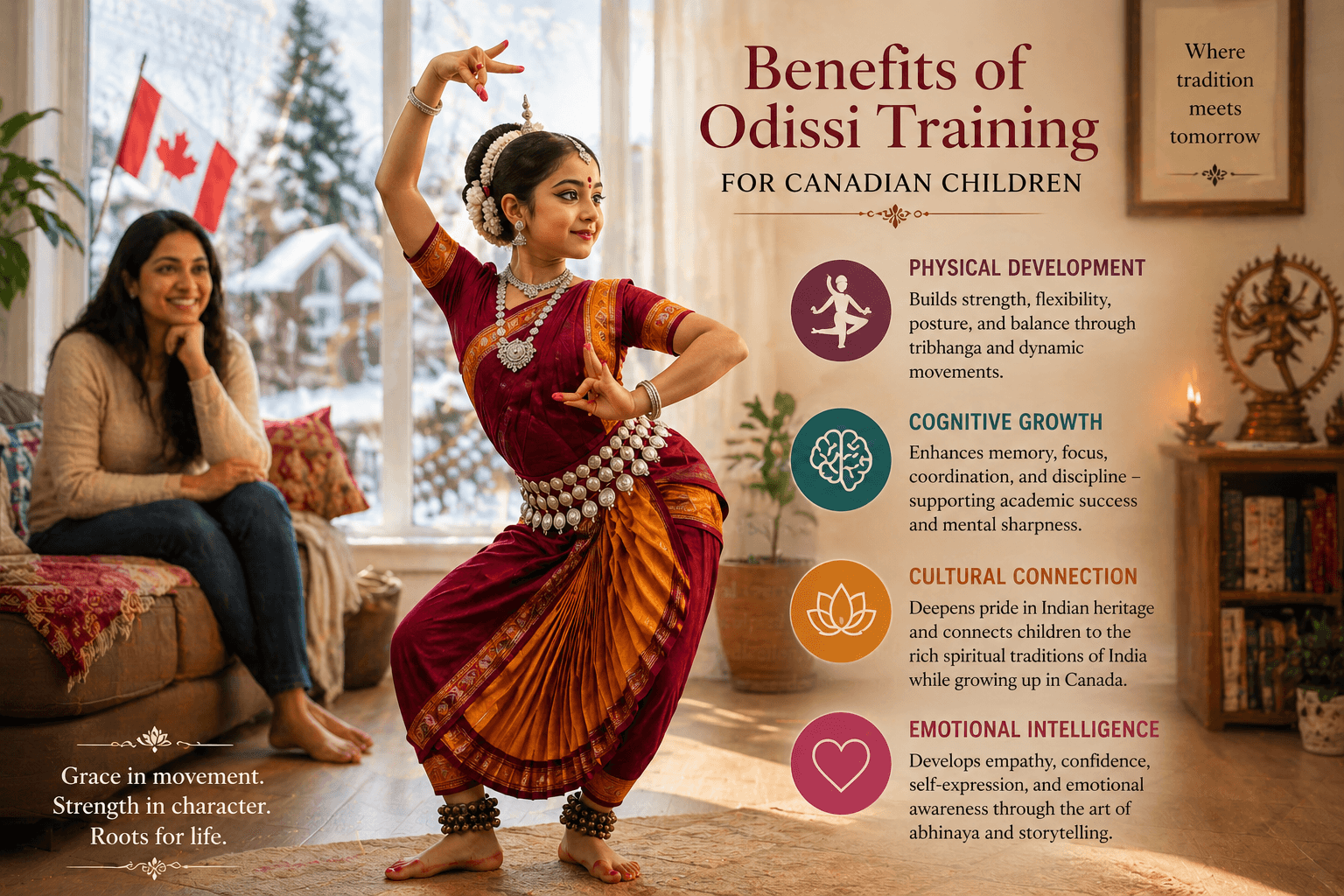
Physical Development
The Tribhanga Build
The tribhanga posture builds specific strength in the lateral muscles of the core, the hip flexors, and the inner thighs. Maintaining and moving within this characteristic posture develops physical strength and proprioceptive awareness that is distinctive from other dance forms.
Flexibility and Spinal Mobility
Odissi's characteristic curvilinear movements develop spinal flexibility, particularly in the lateral and diagonal planes. The graceful quality of Odissi movement emerges from this developed spinal mobility.
Cognitive and Academic Benefits
Structured dance training, as confirmed by research published in Frontiers in Neuroscience, significantly improves children's cognitive abilities including short-term memory, planning, and inhibitory control. Odissi's memorisation demands - learning complex choreographic sequences with precise emotional expression - make particularly strong demands on these cognitive functions.
Cultural Identity for Odia-Canadian and Other Indian-Canadian Families
For Canadian families of Odia origin (from Odisha), Odissi provides a specific and profound connection to regional cultural heritage. For families from other Indian states, Odissi offers a deep encounter with a different but equally magnificent facet of India's classical heritage.
Emotional Intelligence Through Abhinaya
Odissi's abhinaya tradition - the systematic exploration of emotional states through precisely controlled facial expression and gesture - provides children with a sophisticated curriculum in emotional expression. The study of the Ashtanayikas introduces children to a nuanced vocabulary of emotional states, developing emotional intelligence that carries into their everyday social lives.
The Odissi Learning Progression
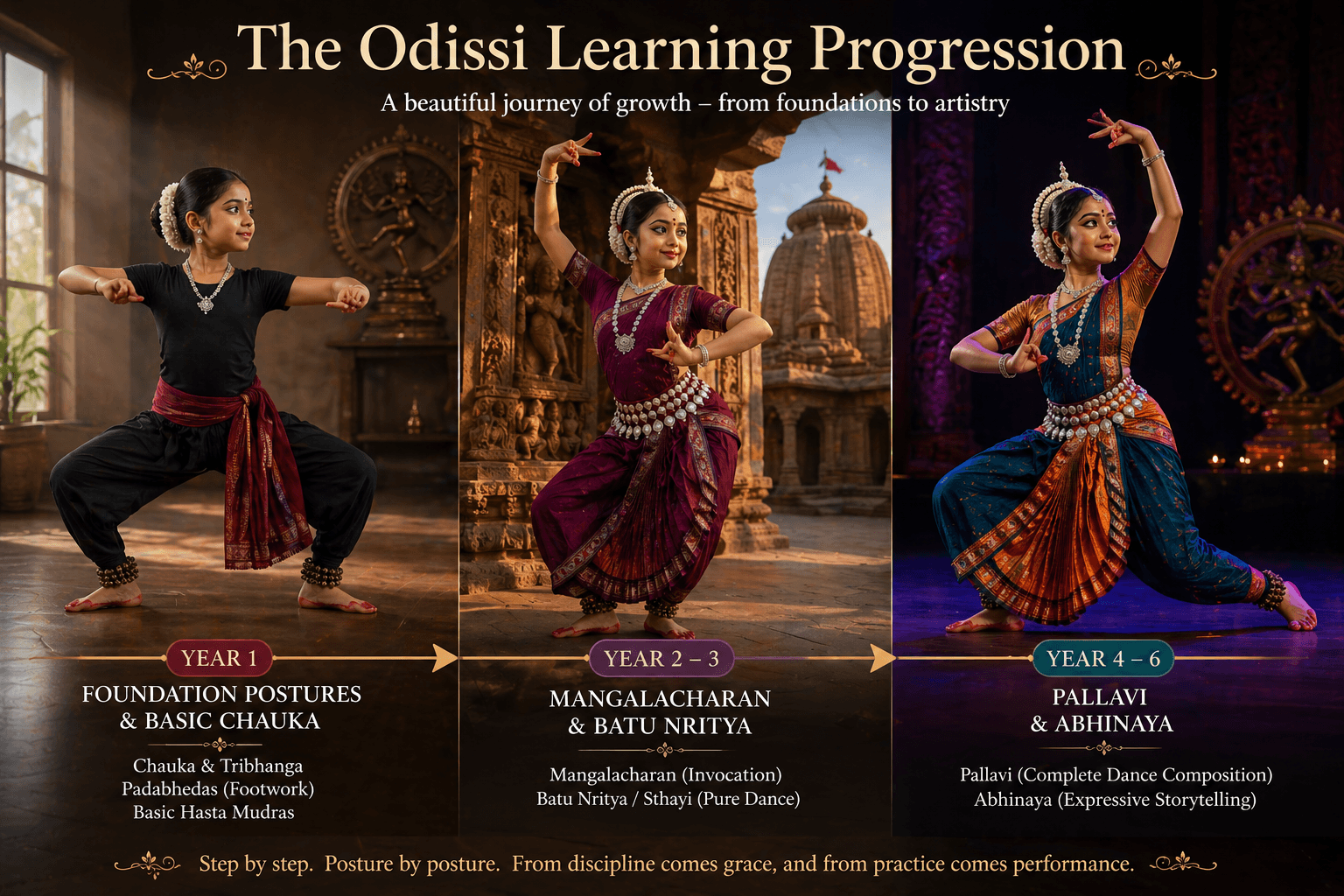
Year 1 - Foundation Postures and Basic Chauka
The Two Foundation Postures
Odissi uses two primary standing postures:
Chauka: A square, grounded posture with feet turned out, knees bent, and hips level. Chauka represents the masculine, grounded aspect of Odissi.
Tribhanga: The three-bend posture described above. Tribhanga represents the feminine, lyrical quality of Odissi.
Most of the first year alternates between these postures and develops the muscular strength required to move between them fluidly.
Basic Footwork (Padabhedas)
Unlike Bharatanatyam's tatkaars or Kathak's tatkaars, Odissi uses a different footwork system based on the padabhedas (foot positions and movements) described in the Abhinaya Darpana. Beginners learn the basic foot positions and their transitions, developing the specific footwork quality that is central to authentic Odissi.
Basic Hasta Mudras
Odissi uses a similar mudra vocabulary to Bharatanatyam but with some distinctive additions. Students learn both Asamyukta (single-hand) and Samyukta (double-hand) mudras progressively.
Year 2-3 - Mangalacharan and Batu Nritya
Mangalacharan
The invocatory composition that opens all Odissi performances. Learning the Mangalacharan is typically the first complete composition a student learns. It introduces the characteristic Odissi movement vocabulary including the tribhanga quality, arm movements, and basic expressive gestures in a structured, modest-length composition.
Batu Nritya (or Sthayi)
A pure dance composition in the tandava (masculine, vigorous) style of Odissi, typically performed in Chauka posture. Batu Nritya provides a strong technical workout and develops the grounded, powerful quality that balances Odissi's lyrical dimension.
Year 4-6 - Pallavi and Abhinaya
Pallavi
The Pallavi is the centrepiece of most intermediate Odissi training, equivalent to the Varnam in Bharatanatyam. A full Pallavi explores the complete vocabulary of a specific raga through Odissi movement, combining pure dance (nritta) with melodic expression (nritya). Learning a full Pallavi is a significant milestone, typically reached after three to five years of consistent training.
Abhinaya
Shorter expressive pieces that develop the student's abhinaya vocabulary, particularly the expression of devotional love (shringara bhakti) that is central to Odissi's emotional range.
How Online Odissi Classes Work for Canadian Children
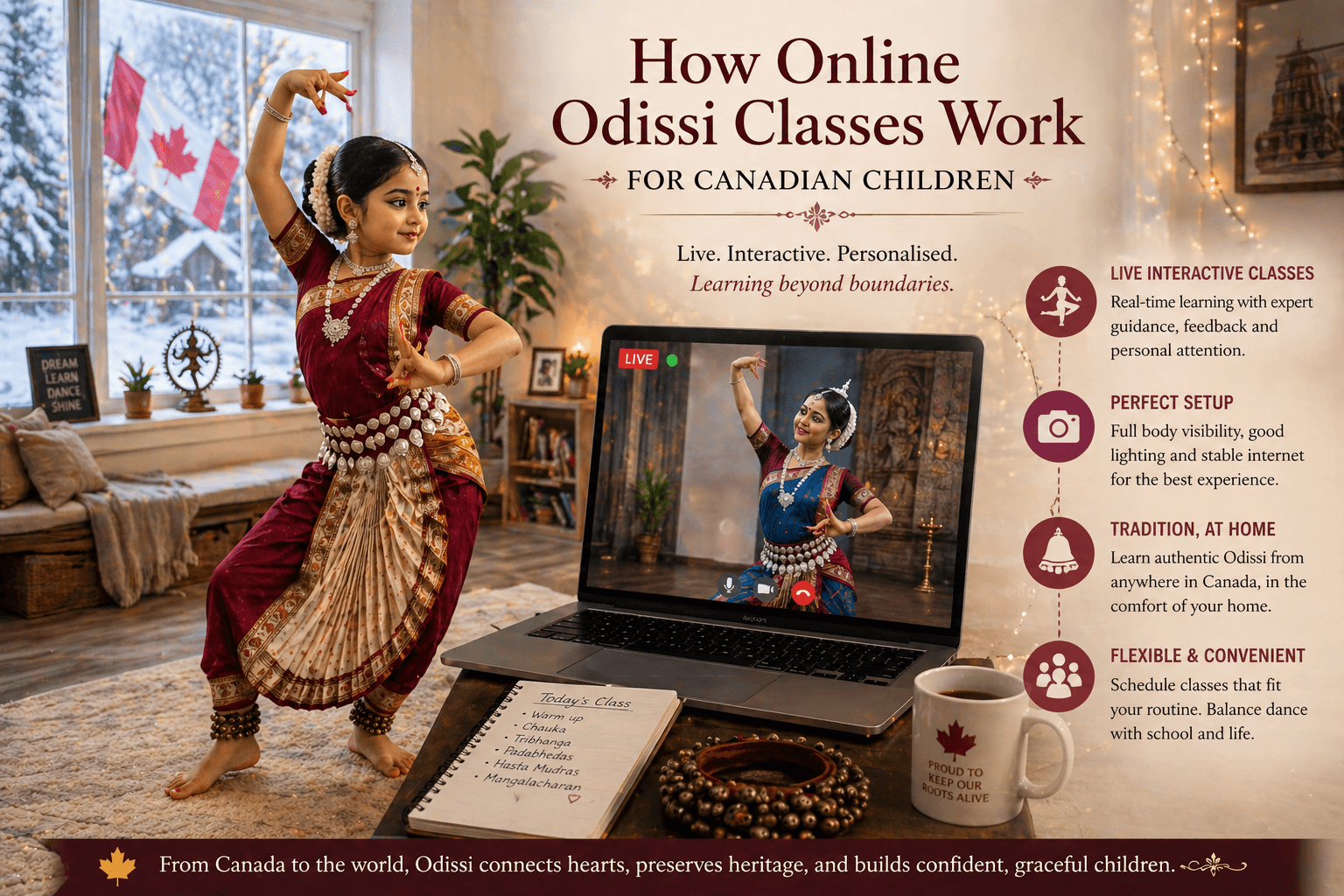
Setup Requirements
Floor Space
Odissi requires a practice space of approximately 8 feet by 6 feet with hard flooring preferred. Unlike Bharatanatyam's strong stamping footwork, Odissi's footwork is lighter and more fluid, meaning carpet is less problematic - but hard flooring is still preferred for developing correct foot placement sensations.
Camera Position
Position at full body height, showing the complete figure from head to feet. The teacher needs to see the tribhanga quality in the whole body, including the head tilt and hip displacement that are central to authentic Odissi.
Salangai/Ghungroo
Odissi uses ankle bells similar to Bharatanatyam's salangai. Your teacher will introduce these within the first few months of training.
Finding a Qualified Odissi Teacher in Canada
Odissi teachers are less common than Bharatanatyam or Kathak teachers in Canada's diaspora community. Online instruction specifically helps here: the best Odissi teachers in the world can now teach Canadian students from India, regardless of where in Canada the student lives.
Look for teachers with lineage traceable to the major reconstruction gurus (Kelucharan Mohapatra, Pankaj Charan Das, Deba Prasad Das, or their direct disciples), formal examination credentials, and experience teaching children online.
At Art Gharana, we offer classical Indian dance classes for children across Canada. Explore our dance courses and read our guide on connecting with roots through Indian classical dance.
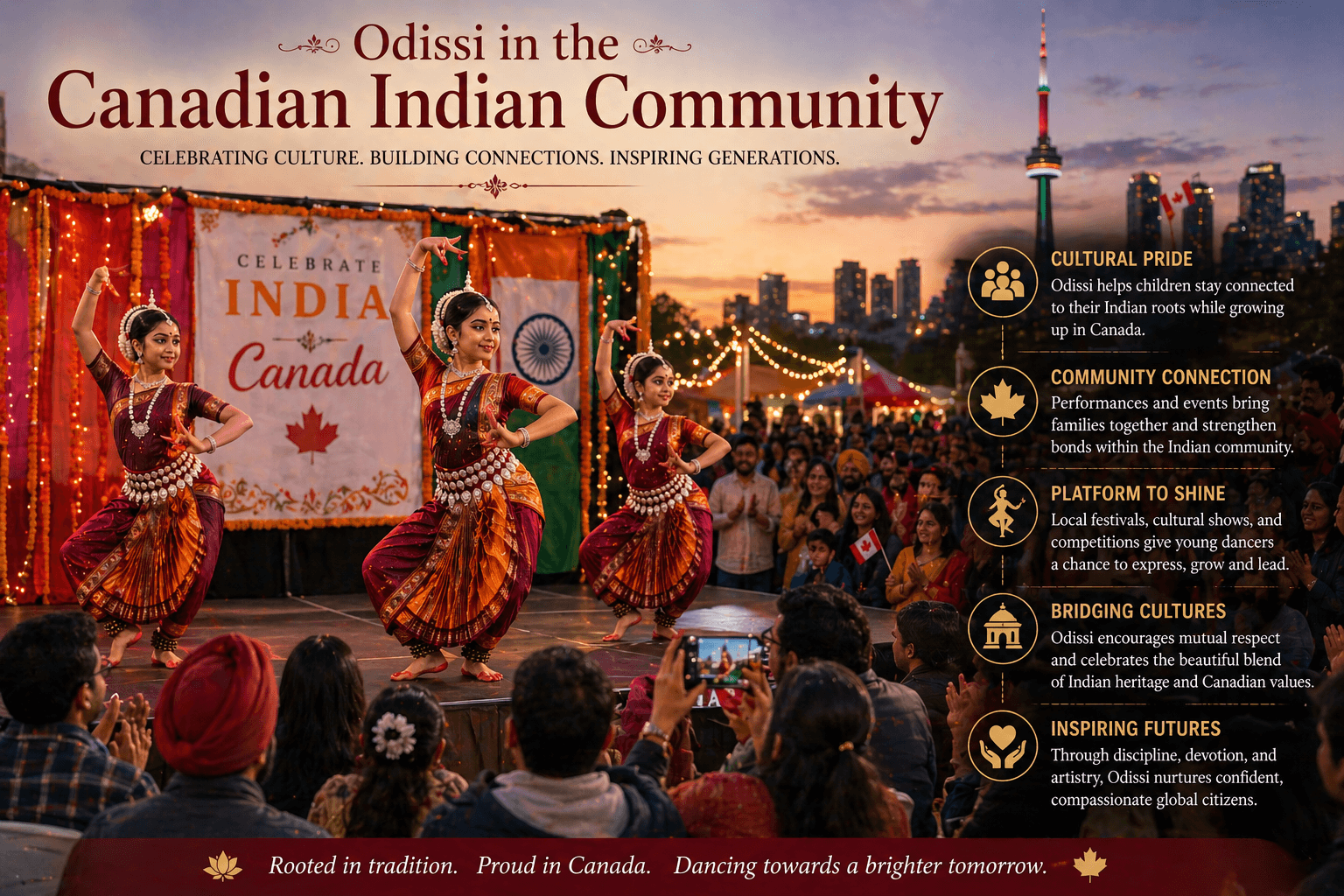
Odissi in the Canadian Indian Community
Odissi Performances at Community Events
Odissi performances have become a visible and celebrated presence at Indian cultural events across Canada's major South Asian community centres. Diwali festivals, cultural galas, and temple programme celebrations regularly feature Odissi performances that showcase the art form's extraordinary beauty to audiences beyond the Odia community specifically.
Competitions and Recognition
Some Indian classical arts competitions in Canada include Odissi divisions. Canada-based organisations affiliated with Indian performing arts bodies occasionally hold festivals that include Odissi alongside other classical forms.
Conclusion
Odissi is one of the world's most beautiful and spiritually profound art forms. For Canadian children who encounter it, learning it is a journey into extraordinary grace, deep cultural heritage, and genuine artistic expression.
Three things to take away. First, find a teacher with traceable lineage to the major reconstruction gurus - this is the most reliable indicator of authentic transmission. Second, the tribhanga posture requires specific muscle development that comes through consistent practice of the foundation exercises. Third, Odissi's online availability means that Canadian children can access world-class Odissi instruction regardless of where in Canada they live.
Book a free trial Indian classical dance class at Art Gharana today and introduce your child to this magnificent tradition.
Frequently Asked Questions
1. What age is best to start Odissi dance for children in Canada?
Most Odissi teachers recommend starting children between ages seven and nine. The tribhanga posture requires more physical maturity than Bharatanatyam's aramandi, making seven the more typical starting age. Some teachers work with children from age six. Starting between ages ten and twelve is equally effective musically and technically.
2. How is Odissi different from Bharatanatyam?
Bharatanatyam originates in Tamil Nadu and is characterised by angular, geometric movements and strong stamping footwork. Odissi originates in Odisha and is characterised by lyrical, curvilinear movements and the three-bend tribhanga posture. Both are classical dance forms with dedicated philosophical and spiritual traditions, but they have distinct physical identities.
3. Can my child learn Odissi online without any prior dance experience?
Yes. Online Odissi classes for complete beginners are designed for children with no prior dance experience. The teacher starts from foundation postures, basic footwork, and introductory mudras.
4. Are there Odissi teachers available online for Canadian students?
Yes. Online instruction means geographic proximity to an Odissi teacher is no longer necessary. Several qualified Odissi teachers from India and the Canadian diaspora community offer live online classes that Canadian children can access regardless of their location.
5. How long does it take to develop recognisable Odissi capability?
Most children show clear, recognisable Odissi quality in their movement within 18-24 months of consistent weekly lessons and daily practice. Performing a complete Mangalacharan with confident expression and accurate tribhanga quality typically takes 12-18 months.