ChatGPT
 Google AI
 Grok
Grok Claude
Employee well-being is no longer a “nice-to-have” benefit—it’s a business priority shaping the future of Indian workplaces. As organisations navigate rising burnout, mental health challenges, hybrid work fatigue, and growing employee expectations, one question keeps coming up: how can companies build meaningful employee wellness programs that actually work?
In 2026, employee wellness in India is evolving beyond traditional health check-ups and gym memberships. Today’s corporate wellness programs are holistic, people-centric, and deeply connected to how employees feel, perform, and stay engaged at work. From mental and emotional well-being to creative wellness experiences and flexible work cultures, organisations are rethinking what employee health and wellness truly means.
But here’s the real challenge—which wellness trends are worth investing in, and which ones deliver real impact? With HR leaders and business owners under pressure to improve retention, productivity, and workplace culture, understanding the latest workplace wellness programs has become essential. Especially in India, where diverse workforces, cultural nuances, and fast-paced corporate environments demand customised wellness solutions.
This guide explores the top employee wellness trends shaping Indian organisations in 2026, backed by insights, research, and real-world practices. Whether you’re designing a new employee well being program, upgrading your existing company wellness strategy, or looking for innovative wellness activities that resonate with modern teams, this blog will help you make informed, future-ready decisions—without the fluff.
Let’s dive into how employee wellness is being redefined in India, and what forward-thinking organisations are doing differently to create healthier, happier, and more engaged workplaces.
Evolution of Employee Wellness in Indian Workplaces
 Not too long ago, employee wellness in India was limited to annual health check-ups, basic insurance coverage, and the occasional team outing. But ask yourself—does that really address how employees feel, think, and perform at work today? As work environments become more demanding and expectations evolve, organisations are realising that wellness needs to go far beyond physical health.
Modern Indian companies are now shifting towards employee wellness programs that focus on the complete human experience at work. This evolution is driven by a simple truth: when employees feel supported, valued, and balanced, businesses thrive. Studies show that organisations with strong wellness initiatives (workplace wellbeing research showing productivity and engagement gains)can see increased productivity, reduced absenteeism, and higher engagement across teams. As a result, corporate wellness programs are no longer reactive benefits—they are proactive strategies tied closely to productivity, engagement, and retention.
So, what’s changing in practice?
From Health Benefits to Holistic Well-Being
Today’s employee health and wellness approach looks at the whole person, not just medical needs. Indian workplaces are increasingly recognising the importance of:
- Emotional and mental well-being alongside physical health
- Work-life balance in fast-paced corporate cultures
- Purpose, creativity, and self-expression as part of workplace wellbeing
This shift has paved the way for more inclusive and human-centric workplace wellness programs that resonate with diverse teams.
The Impact of Hybrid and Flexible Work Models
The rise of hybrid and remote work has further transformed how organisations view employee wellness. While flexibility has reduced commute stress, it has also blurred boundaries between work and personal life. Forward-thinking companies are responding by reimagining company wellness initiatives that support:
- Sustainable work routines
- Reduced burnout and digital fatigue
- Stronger emotional connection despite physical distance
Wellness is no longer confined to the office—it’s embedded into how work itself is designed.
Leadership-Led Wellness Cultures
Another major evolution is the role of leadership. Wellness is no longer just an HR initiative; it’s becoming a leadership responsibility. When leaders actively support and participate in wellness initiatives, wellness programs gain credibility and higher engagement. This top-down approach helps normalise well-being conversations and builds trust across teams.
Why This Evolution Matters
Indian organisations are competing not just for customers, but for talent. Employees today expect workplaces that care about their overall well-being—not just their output. Companies that adapt to this evolution in workplace wellness programs are better positioned to:
- Attract and retain top talent
- Build resilient, motivated teams
- Create a healthier and more engaged work culture
The evolution of employee wellness in India is not a trend—it’s a transformation. And as the next sections will show, the most impactful organisations are those that continue to innovate, personalise, and humanise their approach to wellness.
Mental Health–First Workplace Strategies
Let’s be honest—how often do employees in Indian workplaces feel truly comfortable talking about stress, anxiety, or burnout? For years, mental health was pushed aside as a personal issue rather than a workplace responsibility. But that mindset is rapidly changing. In 2026, organisations are placing mental well-being at the very heart of their employee wellness programs, and for good reason.
Today’s high-performance environments demand emotional resilience as much as technical skills. As workloads intensify and boundaries blur, companies are realising that ignoring mental health directly impacts productivity, retention, and overall employee health and wellness. This has led to the rise of corporate mental wellness programs designed not as reactive fixes, but as long-term strategic investments.
Breaking the Silence Around Mental Health
One of the most important shifts is cultural. Indian organisations are slowly but steadily normalising conversations around mental well-being. Instead of viewing stress as a sign of weakness, progressive leaders are acknowledging it as a natural response to modern work pressures.
This shift is reflected in:
- Open discussions on mental health during town halls
- Manager training to recognise early signs of burnout
- Clear communication around available wellness support
When mental health becomes part of everyday dialogue, workplace wellbeing feels safer and more human.
Leadership and Executive Mental Wellness
Mental well-being doesn’t stop at junior or mid-level employees. Increasingly, organisations are investing in executive wellness programs, recognising that leadership burnout can ripple across entire teams. Senior leaders today are expected to be emotionally present, decisive, and resilient—qualities that require strong mental health support.
By prioritising leadership well-being, companies strengthen:
- Decision-making under pressure
- Organisational stability during change
- A culture where wellness is led by example
This top-down commitment reinforces the credibility of broader corporate wellness programs.
Beyond Therapy: Expanding Mental Wellness Approaches
While access to counselling and professional support remains crucial, companies are also exploring more approachable, everyday ways to support mental wellness. Creative and expressive practices are gaining traction as effective tools to reduce stress and encourage emotional balance.
Many employee wellness programs now include:
- Music-based relaxation sessions to calm the mind
- Guided breathing and voice-based exercises
- Safe creative spaces that encourage self-expression
These approaches feel less clinical and more inclusive, making participation easier and more engaging for employees.
Why a Mental Health–First Approach Works
A mental health–first strategy doesn’t just support individuals—it strengthens the entire organisation. Companies that prioritise mental well-being as part of their workplace wellness programs often see:
- Higher employee engagement and morale
- Reduced absenteeism and burnout
- Stronger trust between employees and leadership
In India’s evolving corporate landscape, mental wellness is no longer optional. It’s a defining pillar of effective employee wellness—and organisations that embrace this shift are building healthier, more resilient workplaces for the future.
Holistic Wellness Programs Powered by Creative Expression
What if employee wellness wasn’t something people had to do—but something they genuinely looked forward to? This is exactly the shift we’re seeing in modern employee wellness programs across India. Organisations are moving away from rigid, one-size-fits-all initiatives and embracing wellness experiences that feel human, engaging, and emotionally meaningful.
At the heart of this evolution is a broader understanding of wellness and wellbeing. True well-being isn’t limited to physical fitness or clinical mental health support—it’s also about emotional release, joy, connection, and creative expression. That’s why forward-thinking corporate wellness programs are increasingly turning to music, dance, and singing as powerful tools for holistic wellness.
Why Creative Expression Matters in Workplace Wellbeing
Creative activities tap into something universal. They help employees disconnect from stress, reconnect with themselves, and feel present—often without the pressure of “performance” or outcomes.
When integrated into workplace wellness programs, creative expression supports:
- Emotional balance and stress reduction
- Improved mood and energy levels during the workday
- Stronger social connection and team bonding
- A sense of psychological safety and openness
In fast-paced Indian work environments, these benefits are no longer optional—they’re essential.
Music-Based Relaxation for Mental and Emotional Balance
Music has a unique ability to calm the nervous system and shift emotional states. Many organisations are now incorporating music-based sessions into their employee well being programs—not as entertainment, but as intentional wellness practices.
These may include:
Guided music listening sessions to reduce mental fatigue
Sound-based relaxation experiences during high-stress periods
Short musical breaks to reset focus and attention
Such initiatives make employee wellness feel accessible, inclusive, and refreshingly non-intrusive.
Dance and Movement as Stress-Release Tools
Sitting for long hours, screen fatigue, and sedentary routines have become common challenges in Indian workplaces. Dance-based wellness activities address this holistically—combining movement, expression, and energy release.
As part of company wellness initiatives, dance and movement sessions help:
Release built-up physical and emotional tension
Boost circulation and energy without intense workouts
Encourage participation through fun and cultural relevance
Because dance doesn’t feel like “exercise,” employees are more likely to engage consistently.
Singing and Voice-Based Wellness Practices
Voice-based activities, such as group singing or guided vocal exercises, are emerging as effective tools within workplace wellbeing strategies. Singing encourages deep breathing, emotional expression, and a sense of collective experience—especially valuable in hybrid or remote teams.
When included thoughtfully, these practices can:
Reduce anxiety and improve emotional regulation
Build confidence and self-expression
Strengthen interpersonal connections within teams
Redefining Holistic Corporate Wellness
By integrating music, dance, and singing into corporate wellness programs, organisations are redefining what holistic wellness looks like in India. These approaches don’t replace traditional health initiatives—they complement them by addressing emotional and cultural dimensions of well-being.
The result? Employee wellness programs that feel less like policies and more like experiences—ones that employees connect with, participate in, and genuinely value.
Personalised and Employee-Centric Wellness Programs
Have you ever wondered why some wellness initiatives thrive while others barely get noticed? The answer is simple—employees don’t want generic solutions anymore. In 2026, the most effective employee wellness programs in India are those that recognise one key truth: every employee’s needs, challenges, and motivations are different.
Organisations are now shifting from uniform offerings to employee-centric wellness programs that place choice, relevance, and flexibility at the core. This evolution is redefining how corporate wellness programs are designed, delivered, and experienced.
Moving Away from One-Size-Fits-All Wellness
Traditional wellness initiatives often struggled because they assumed everyone needed the same support. But today’s diverse workforce—across age groups, roles, and lifestyles—demands a more thoughtful approach to employee health and wellness.
Personalised wellness strategies focus on:
Individual preferences and comfort levels
Different stress triggers across roles and teams
Varied physical, emotional, and creative wellness needs
When wellness feels relevant, participation becomes natural—not forced.
Data-Driven Insights Shaping Wellness Decisions
Modern workplace wellness programs are increasingly guided by insights rather than assumptions. Organisations are using employee feedback, participation trends, and engagement data to refine their wellness programs and improve outcomes.
This data-led approach helps companies:
Identify what employees actually value
Improve adoption of wellness initiatives
Continuously evolve their employee well being programs
The result is a smarter, more responsive wellness ecosystem that grows with the organisation.
Flexibility as the Foundation of Employee Wellness
Flexibility has become a defining factor in successful company wellness initiatives. Employees today want the freedom to choose how and when they engage with wellness—whether that’s a creative session, a movement-based activity, or a moment of emotional reset.
Employee-centric wellness programs often offer:
Multiple wellness formats to suit different personalities
Optional participation instead of mandatory activities
On-demand and live wellness experiences
This flexibility respects autonomy while still encouraging consistent engagement.
Why Personalisation Drives Long-Term Impact
When employees feel seen and supported as individuals, wellness stops being a checkbox activity. Organisations that invest in personalised corporate wellness programs often experience:
Higher participation and sustained engagement
Stronger trust between employees and leadership
Better alignment between wellness goals and business outcomes
In India’s evolving corporate landscape, personalisation isn’t a luxury—it’s the future of meaningful employee wellness. And the companies that get this right are the ones building healthier, more resilient workplaces for the long run.
Preventive Healthcare and Long-Term Corporate Health Programs
What if organisations could reduce burnout, absenteeism, and health-related costs before they became problems? That’s exactly why preventive care is emerging as a core pillar of modern employee wellness programs in India. Instead of reacting to illness or fatigue after it impacts performance, companies are proactively investing in long-term employee health and wellness strategies.
This shift marks a significant evolution in corporate wellness programs—from short-term interventions to sustainable health ecosystems that support employees throughout their professional journey.
Why Preventive Health Is Gaining Momentum in Indian Workplaces
Indian organisations are increasingly recognising that chronic stress, lifestyle-related conditions, and sedentary work habits directly affect productivity. Employee wellness outcome statistics suggests that companies with comprehensive wellness plans see significant reductions in sick days and improvements in employee productivity. Preventive healthcare addresses these risks early, making workplace wellness programs more effective and future-ready.
Key drivers behind this trend include:
Rising lifestyle-related health issues among working professionals
Increasing healthcare costs for employers and employees
Growing awareness of the link between health, engagement, and performance
According to the American Psychological Association, workplace stress is strongly linked to physical health risks and reduced job performance, reinforcing the need for preventive wellness strategies.
Proactive Health Check-Ins and Awareness Initiatives
Preventive wellness doesn’t always mean complex medical programs. Many organisations are building simple yet impactful wellness programs that focus on early awareness and healthy habits.
These initiatives often include:
Regular health assessments and screenings
Educational sessions on stress, posture, and daily routines
Awareness campaigns focused on long-term well-being
By embedding these practices into employee well being programs, companies help employees take ownership of their health—without pressure or fear.
Movement and Activity as Preventive Wellness Tools
Long hours at desks and reduced physical movement have become common across Indian workplaces. To counter this, company wellness initiatives are increasingly incorporating movement-based wellness activities that support physical vitality and energy levels.
Examples include:
Light movement and stretching sessions during the workday
Dance-based activities that encourage mobility and circulation
Active breaks designed to reduce physical strain and fatigue
These activities are preventive by nature—helping employees stay active, alert, and engaged over time.
Building a Culture of Long-Term Health
Preventive care works best when it’s part of workplace culture, not a one-time initiative. Organisations that integrate preventive strategies into their workplace wellness programs create environments where health is valued consistently, not just during crises.
The long-term benefits include:
Reduced sick days and health-related disruptions
Improved energy, focus, and morale
Stronger alignment between employee wellness and business sustainability
In 2026, preventive healthcare is no longer an add-on—it’s a strategic investment. Indian organisations that prioritise long-term employee health and wellness are not only protecting their people but also strengthening the foundation of their workplace for years to come.
Financial Wellness as an Emerging Wellness Priority
When we talk about stress at work, we often focus on deadlines, workloads, or burnout—but how often do we acknowledge financial stress as a silent productivity killer? In 2026, Indian organisations are finally recognising that money-related anxiety doesn’t stay at home; it shows up at work, affecting focus, confidence, and overall employee wellness.
This growing awareness is why financial wellness is becoming a core component of modern employee wellness programs, rather than an optional add-on. Forward-thinking companies now understand that true wellness and wellbeing includes not just physical and mental health, but also financial stability and peace of mind.
Why Financial Stress Can’t Be Ignored at Work
For many employees, financial concerns—ranging from monthly expenses to long-term security—are a constant source of pressure. Left unaddressed, this stress can quietly impact employee health and wellness in significant ways.
Organisations are noticing that financial stress often leads to:
Reduced concentration and decision-making ability
Increased anxiety and emotional fatigue
Lower engagement and higher attrition
By addressing these challenges through structured workplace wellness programs, companies can support employees more holistically.
Financial Literacy as a Wellness Tool
Instead of offering one-time sessions, progressive corporate wellness programs are focusing on ongoing financial education that empowers employees to make informed decisions. These initiatives aim to reduce uncertainty and build confidence over time.
Common elements of financial wellness initiatives include:
Budgeting and savings awareness sessions
Guidance on managing debt and financial goals
Education around insurance, benefits, and long-term planning
When included as part of an employee well being program, financial literacy becomes a preventive wellness tool—not just a crisis solution.
Connecting Financial Stability to Mental and Emotional Wellbeing
Financial wellness doesn’t exist in isolation. Organisations are increasingly integrating it with broader workplace wellbeing strategies, recognising the strong link between financial stress and mental health.
This integrated approach helps:
Reduce anxiety related to financial uncertainty
Support emotional resilience and stability
Create a sense of security that positively impacts work performance
Employees who feel financially supported are more likely to engage with other wellness programs and contribute positively to workplace culture.
Making Financial Wellness Accessible and Inclusive
Successful company wellness initiatives ensure that financial wellness resources are approachable, non-judgmental, and relevant to diverse employee groups. The goal isn’t to dictate financial decisions—but to provide tools, clarity, and support.
When organisations prioritise financial wellness as part of their employee wellness programs, they send a powerful message: employee well-being extends beyond the workplace and into real life.
In India’s evolving corporate landscape, financial wellness is no longer a fringe benefit. It’s a strategic pillar of sustainable corporate wellness programs—one that helps employees feel secure, supported, and truly cared for.
Flexible Work Models Supporting Employee Wellbeing
What if flexibility itself became one of the most powerful wellness benefits your organisation could offer? In 2026, that’s exactly what’s happening across Indian workplaces. Flexible work models are no longer just operational choices—they’ve become essential components of effective employee wellness programs.
As work extends beyond traditional office boundaries, organisations are rethinking how flexibility can support employee health and wellness without compromising performance. The focus has shifted from where employees work to how they work—and how that experience impacts their overall workplace wellbeing.
Why Flexibility Is a Wellness Imperative
Rigid schedules and long commutes have long contributed to stress and burnout. Flexible work models address these challenges head-on by giving employees greater control over their time and energy.
Within modern workplace wellness programs, flexibility helps:
Reduce commute-related fatigue and stress
Improve work-life balance in demanding roles
Support diverse personal and family responsibilities
This autonomy allows employees to design workdays that align better with their natural rhythms and wellness needs.
Hybrid Work and Burnout Prevention
Hybrid work models have become a cornerstone of company wellness strategies in India. By blending remote and in-office work, organisations can maintain collaboration while protecting employee energy and focus.
When designed thoughtfully, hybrid work supports:
Reduced burnout and mental fatigue
Increased job satisfaction and engagement
Stronger trust between employees and leadership
Flexibility, when paired with trust, strengthens the foundation of sustainable corporate wellness programs.
Shifting from Time-Based to Outcome-Based Performance
One of the most impactful changes driven by flexible work is the move away from clock-based productivity. Progressive organisations are redefining performance through outcomes rather than hours logged.
This shift benefits employee wellness by:
Reducing pressure to “always be online”
Encouraging healthier work habits
Allowing employees to balance productivity with personal well-being
Outcome-driven cultures naturally align with the goals of long-term employee well being programs.
Flexibility as a Signal of Trust and Care
Beyond logistics, flexibility sends a powerful message—it shows that organisations trust their employees and care about their well-being. This perception plays a critical role in how employees engage with wellness programs and workplace culture as a whole.
In India’s evolving corporate environment, flexible work models are no longer perks. They are wellness enablers that support healthier routines, stronger morale, and more resilient teams—making flexibility a defining trend in modern workplace wellness programs.
Inclusive and Culture-Driven Wellness Initiatives
What truly makes a wellness program effective—its structure, or the people it’s built for? In 2026, Indian organisations are discovering that the most impactful employee wellness programs are those rooted in inclusion, cultural awareness, and a deep understanding of their workforce. Wellness is no longer just about individual benefits; it’s about creating environments where everyone feels seen, respected, and supported.
As workplaces become more diverse, company wellness strategies are evolving to reflect different backgrounds, life stages, and personal experiences. This shift is transforming workplace wellbeing from a set of initiatives into a shared cultural value.
Designing Wellness for a Diverse Workforce
India’s workforce is incredibly diverse—across age groups, genders, family structures, and cultural identities. Inclusive corporate wellness programs acknowledge this diversity by offering flexible, adaptable wellness experiences rather than rigid frameworks.
Inclusive wellness initiatives often focus on:
- Supporting employees across different life stages
- Respecting cultural preferences and comfort levels
- Offering varied formats to ensure broad participation
When wellness feels inclusive, employees are far more likely to engage and trust the intent behind it.
Gender-Sensitive and Family-Inclusive Wellness Support
Progressive employee well being programs recognise that personal responsibilities don’t exist outside the workplace. Gender-sensitive and family-inclusive wellness initiatives help employees manage both professional and personal demands more effectively.
These initiatives may include:
- Wellness support for working parents and caregivers
- Safe spaces and resources addressing gender-specific challenges
- Flexible policies that acknowledge family responsibilities
Such measures strengthen emotional safety—an essential element of sustainable employee wellness.
Building Psychologically Safe Workplaces
Psychological safety is fast becoming a cornerstone of modern workplace wellness programs. Employees need to feel comfortable expressing themselves, sharing ideas, and asking for support without fear of judgment.
Culture-driven wellness strategies help create:
- Open communication and mutual respect
- Trust between employees and leadership
- Environments where mental and emotional well-being are prioritised
When psychological safety is present, wellness initiatives feel authentic rather than performative.
Celebrating Culture Through Creative Wellness
One of the most powerful ways to build inclusive wellness cultures in India is through shared cultural experiences. Music, art, and movement-based activities are increasingly being used as wellness activities that bring people together—regardless of role or background.
By integrating cultural expression into corporate wellness programs, organisations foster connection, belonging, and collective well-being.
In India’s evolving corporate landscape, inclusion isn’t a checkbox—it’s the foundation of meaningful workplace wellbeing. Organisations that align wellness with culture don’t just support employees; they build stronger, more human workplaces.
Experiential Wellness and Employee Engagement
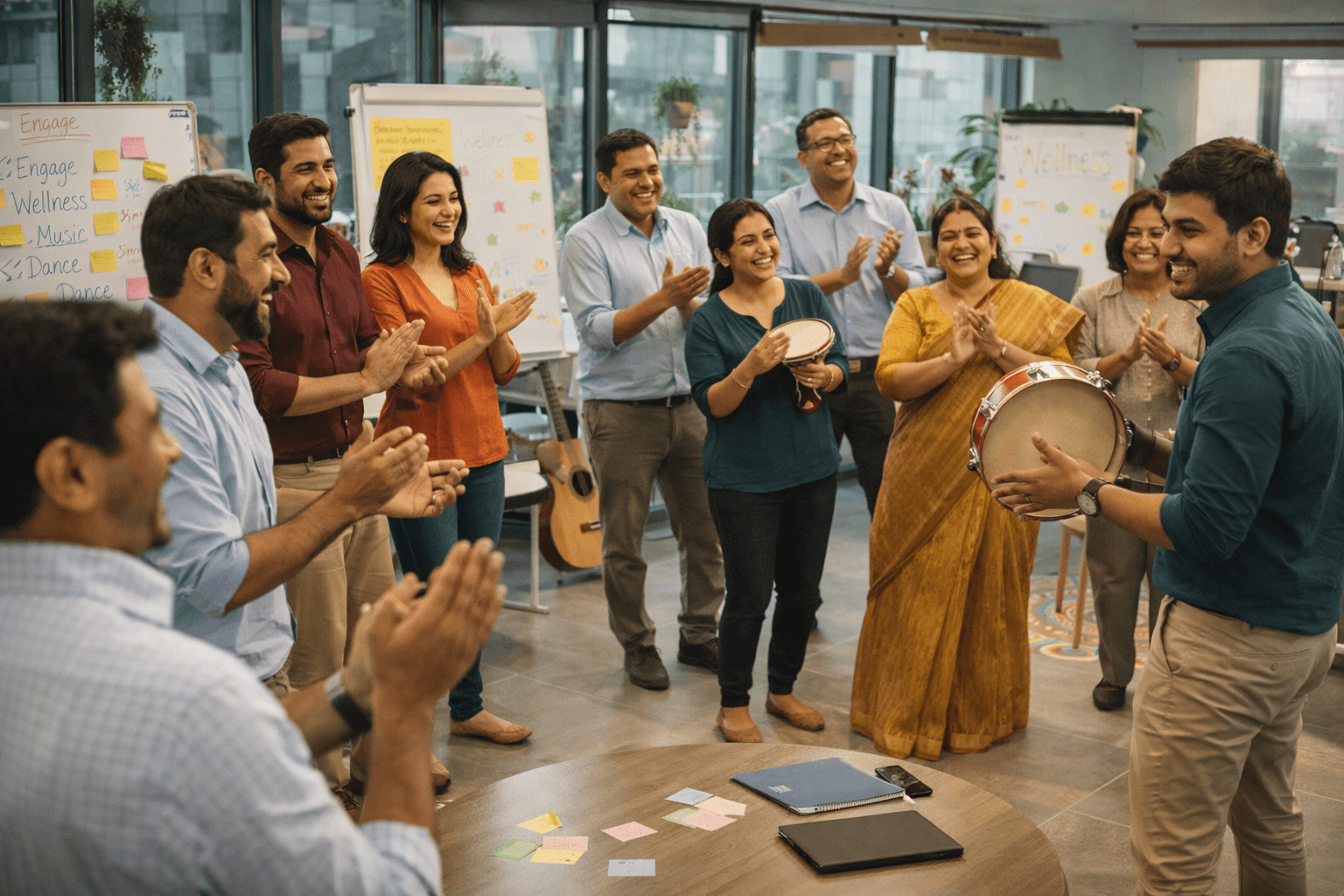 Have you ever noticed how employees remember experiences more than policies? That’s the insight driving the rise of experiential wellness in modern Indian workplaces. Instead of traditional, one-dimensional corporate wellness programs, organisations are creating interactive, hands-on experiences that engage the mind, body, and emotions—making wellness both enjoyable and memorable.
In 2026, employee wellness programs aren’t just about ticking boxes; they’re about fostering engagement, connection, and long-term behavioral change. By transforming wellness into an experience, companies are increasing participation and building deeper workplace loyalty.
The Power of Interactive Wellness Activities
Experiential wellness shifts the focus from passive participation to active involvement. Employees are no longer just attending workshops—they’re interacting, creating, and connecting.
Key examples of wellness activities that drive engagement include:
- Music and singing sessions that reduce stress and encourage emotional expression
- Dance and movement workshops that combine fun with physical well-being
- Art and creative workshops that stimulate imagination and mindfulness
- Team challenges or gamified wellness experiences that make participation rewarding
These activities make employee wellness tangible, immediate, and relatable—leading to higher adoption and better outcomes.
Strengthening Team Bonds Through Creative Engagement
 Engagement isn’t just about individual well-being—it’s also about relationships. Experiential wellness initiatives foster connection across teams, improving collaboration and workplace culture.
Benefits include:
Engagement isn’t just about individual well-being—it’s also about relationships. Experiential wellness initiatives foster connection across teams, improving collaboration and workplace culture.
Benefits include:
- Enhanced trust and communication between colleagues
- A sense of belonging and shared accomplishment
- Opportunities for informal mentorship and peer support
By incorporating music, dance, and art into corporate wellness programs, organisations create a shared language of wellness that resonates across teams.
Gamification and Experiential Learning
Gamification is another powerful tool in workplace wellness programs. Turning wellness into interactive challenges or rewards-based programs keeps employees motivated and consistently involved.
This approach supports:
- Goal-oriented participation in wellness initiatives
- Healthy competition that encourages sustained engagement
- Real-time feedback and measurable outcomes for HR teams
Why Experiential Wellness Works
The secret of experiential wellness lies in its ability to make employees feel wellness, not just comply with it. Organisations that prioritise experience-based employee well being programs often see:
- Higher engagement rates compared to traditional wellness programs
- Improved emotional resilience and reduced stress levels
- Stronger alignment between employee satisfaction and organisational performance
In India’s competitive corporate environment, experiential wellness is more than a trend—it’s a strategy that creates lasting impact, turning employee wellness programs into memorable, meaningful, and measurable experiences.
Measuring Impact and ROI of Workplace Wellness Programs
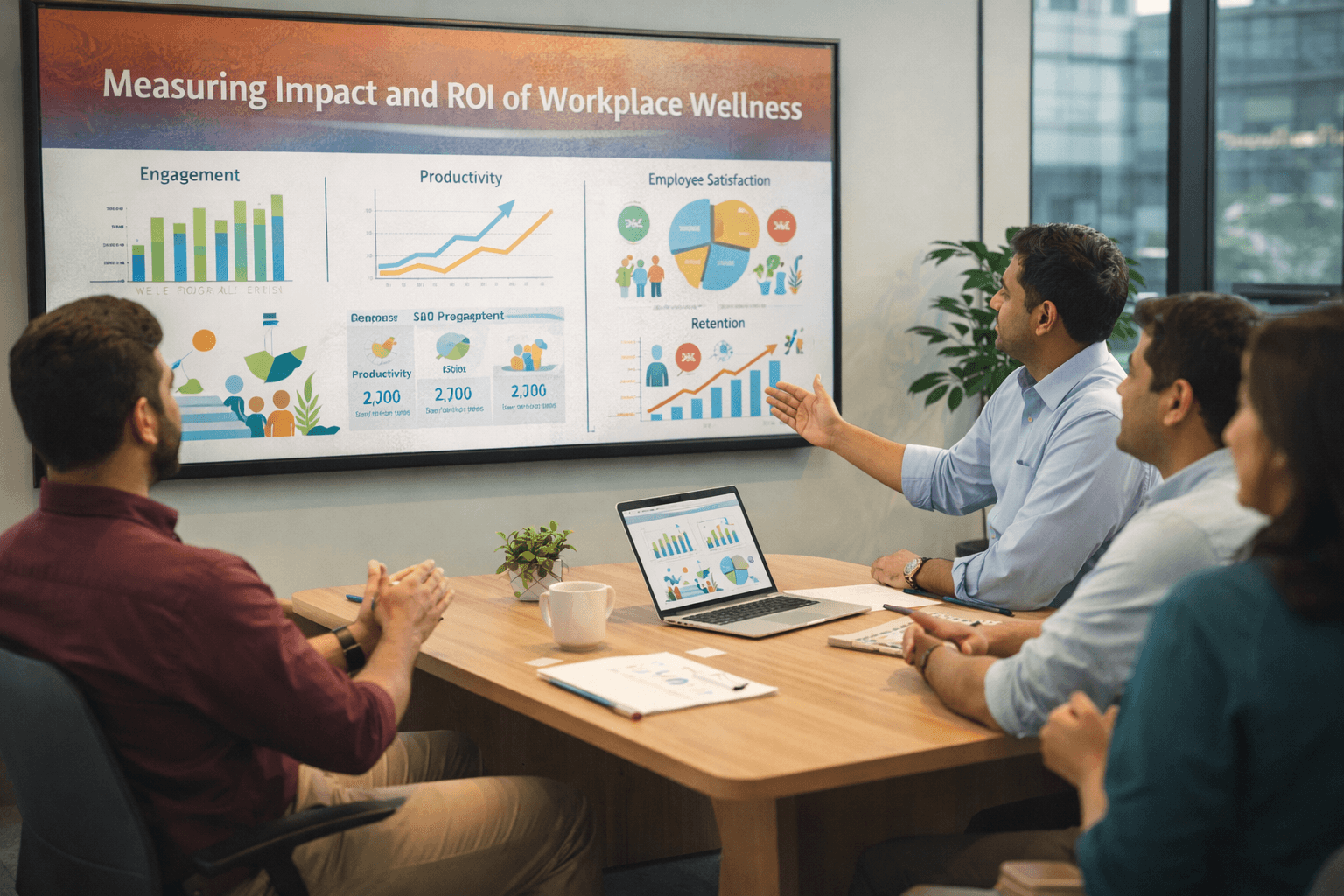 Have you ever invested in a wellness program only to wonder, “Is this really making a difference?” Measuring the effectiveness of employee wellness programs is just as important as designing them. In India’s evolving corporate landscape, organisations are increasingly focused on demonstrating tangible outcomes, linking corporate wellness programs directly to productivity, engagement, and retention.
Understanding the ROI of wellness initiatives ensures that efforts are strategic, scalable, and aligned with both employee needs and business objectives. After all, a program that looks good on paper but doesn’t improve employee health and wellness misses its true purpose.
Key Metrics to Track Success
Measuring impact goes beyond counting participants. Modern workplace wellness programs rely on a mix of qualitative and quantitative metrics to assess effectiveness:
- Engagement Metrics: Participation rates in wellness activities, frequency of use of wellness resources, and employee feedback surveys.
- Health Outcomes: Reduction in sick days, improvements in mental health indicators, and overall well-being assessments.
- Performance Indicators: Productivity improvements, reduced burnout, and enhanced focus and creativity.
- Retention and Satisfaction: Employee satisfaction scores, internal feedback, and retention trends related to wellness offerings.
Tracking these indicators helps organisations understand not only the usage but also the impact of their wellness programs on real employee outcomes.
Linking Wellness to Business Value
Investing in employee wellness isn’t just about well-being—it’s about business performance. Companies that integrate data-driven corporate wellness programs often see measurable benefits, such as: Higher employee engagement and morale
- Higher employee engagement and morale
- Lower absenteeism and healthcare costs
- Increased innovation and collaboration
- Stronger employer branding and talent attraction
Research from Randstad and other HR thought leaders highlights that organisations with robust wellness programs can experience up to a 25% increase in employee engagement—showing that wellness is not just an HR initiative but a strategic business driver.
Continuous Improvement Through Feedback
Wellness programs are most effective when they evolve with employee needs. Ongoing measurement allows companies to:
- Refine offerings to improve participation
- Identify gaps in coverage or resources
- Celebrate successes and highlight wellness champions
- Ensure alignment with overall workplace wellbeing goals
Building Scalable and Future-Ready Wellness Programs
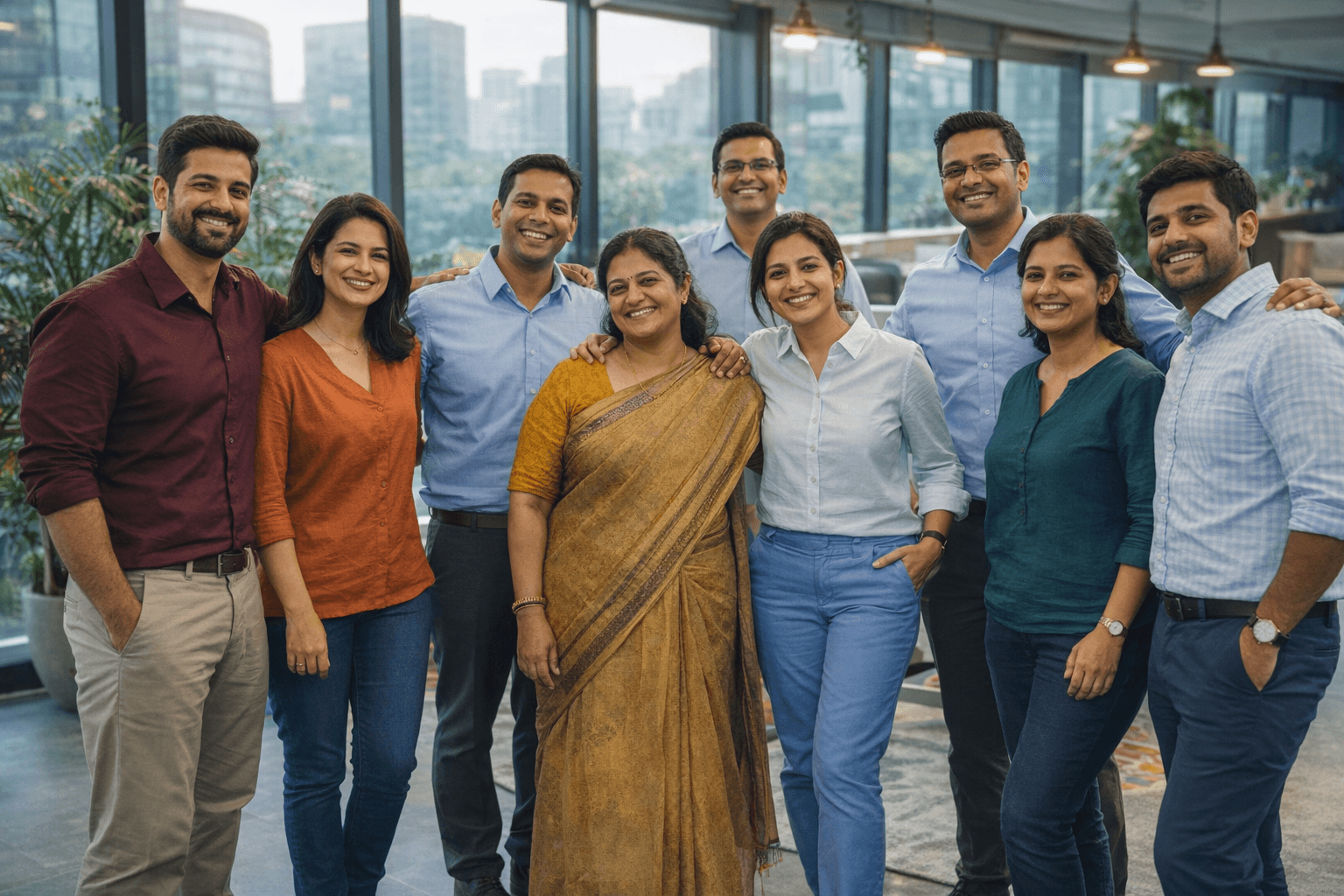 By systematically measuring impact, Indian organisations can scale employee well being programs effectively, ensuring long-term sustainability and relevance. Programs that adapt based on evidence not only support employee health but also strengthen organisational resilience and culture.
In short, measurement turns wellness from a feel-good initiative into a strategic asset—proving that workplace wellness programs are essential for both people and performance in today’s corporate India.
Conclusion
So, what does the future of employee wellness in India really look like? As we’ve explored, employee wellness programs have evolved far beyond traditional perks—they are now strategic, holistic, and deeply personalised. From mental health and financial well-being to creative experiences in music, dance, and art, corporate wellness programs are reshaping how employees feel, perform, and connect at work.
The question every organisation must ask itself is: Are we investing in wellness programs that truly support our people, or are we settling for token initiatives? In 2026, companies that prioritise workplace wellness programs not only see healthier, happier employees—they also benefit from higher engagement, stronger retention, and a culture that attracts top talent.
Remember, wellness isn’t a one-time campaign—it’s a journey. By combining personalised strategies, experiential initiatives, flexible work models, and continuous measurement, you can create employee well being programs that deliver long-term impact. Whether it’s stress reduction through creative expression, preventive health initiatives, or inclusive, culture-driven activities, each component strengthens your organisation from the inside out.
Ultimately, investing in employee wellness is investing in your people, your culture, and your business. The organisations that embrace this holistic approach today are the ones that will thrive tomorrow. So, are you ready to redefine wellness in your workplace and build a healthier, more resilient team?
FAQ
1 What are employee wellness programs and why are they important in India?
Employee wellness programs are structured initiatives by organizations to support the physical, mental, and emotional health of employees. In India, these programs are gaining popularity as companies recognize that a healthy workforce boosts productivity, engagement, and retention.
2 What are the latest trends in corporate wellness for 2026?
Trends include holistic mental health support, creative wellness through music, dance, and art, financial wellness programs, flexible work models, and tech-enabled wellness tracking to measure ROI and engagement.
3 How can creative activities like music, dance, and art improve employee wellness?
Research shows that creative activities reduce stress, improve mood, and enhance cognitive functions. These activities also encourage teamwork, boost morale, and create a positive workplace culture.
4 Are wellness programs effective for employee engagement and productivity?
Yes. Studies have shown that companies with comprehensive wellness programs see reduced absenteeism, higher productivity, and better overall job satisfaction. Programs that focus on mental, physical, and social well-being are especially impactful.
5 How can Indian companies start implementing employee wellness programs?
Start by assessing employee needs, introducing mental health and creative wellness initiatives, offering flexible work options, and continuously measuring outcomes. Partnering with specialized providers like Art Gharana can help integrate creative arts-based wellness programs for a holistic approach.