ChatGPT
 Google AI
 Grok
 Claude
Team building in India has a credibility problem. After a decade of trust falls, escape rooms, offsite resorts and forced fun, most employees have learned to greet the phrase team building activity with a quiet groan. The activities are expensive, occasional and largely forgotten within a week, and they rarely produce the durable connection they promise. Meanwhile, the underlying need has never been more acute. Hybrid and remote work has scattered teams across cities and homes, attrition in the Indian IT sector consistently exceeds twenty percent, and belonging has become the single strongest predictor of whether an employee stays or leaves.
Cultural activities, live music, dance, art and vocal sessions delivered by certified instructors to teams, are emerging as the most effective and most repeatable answer to this problem in the Indian corporate market. They are not a one off event. They are a shared, recurring creative experience that builds the kind of connection between colleagues that no annual offsite ever could. This is the HR leader's guide to why cultural activities build stronger teams, and how to make them work in your organisation in 2026.
Why Traditional Team Building Fails
 The reason most team building fails is structural, not accidental. A one off event, however elaborate, cannot build a durable relationship, because relationships are built through repeated, low stakes shared experience over time, not through a single high pressure day. Worse, many corporate team building activities are competitive, forcing colleagues into artificial rivalry when the goal is cooperation. And a great many are simply awkward, asking adults to perform enthusiasm they do not feel in front of people they barely know. The result is an expensive event that employees endure rather than enjoy, and that leaves the team no more connected on Monday than it was on Friday.
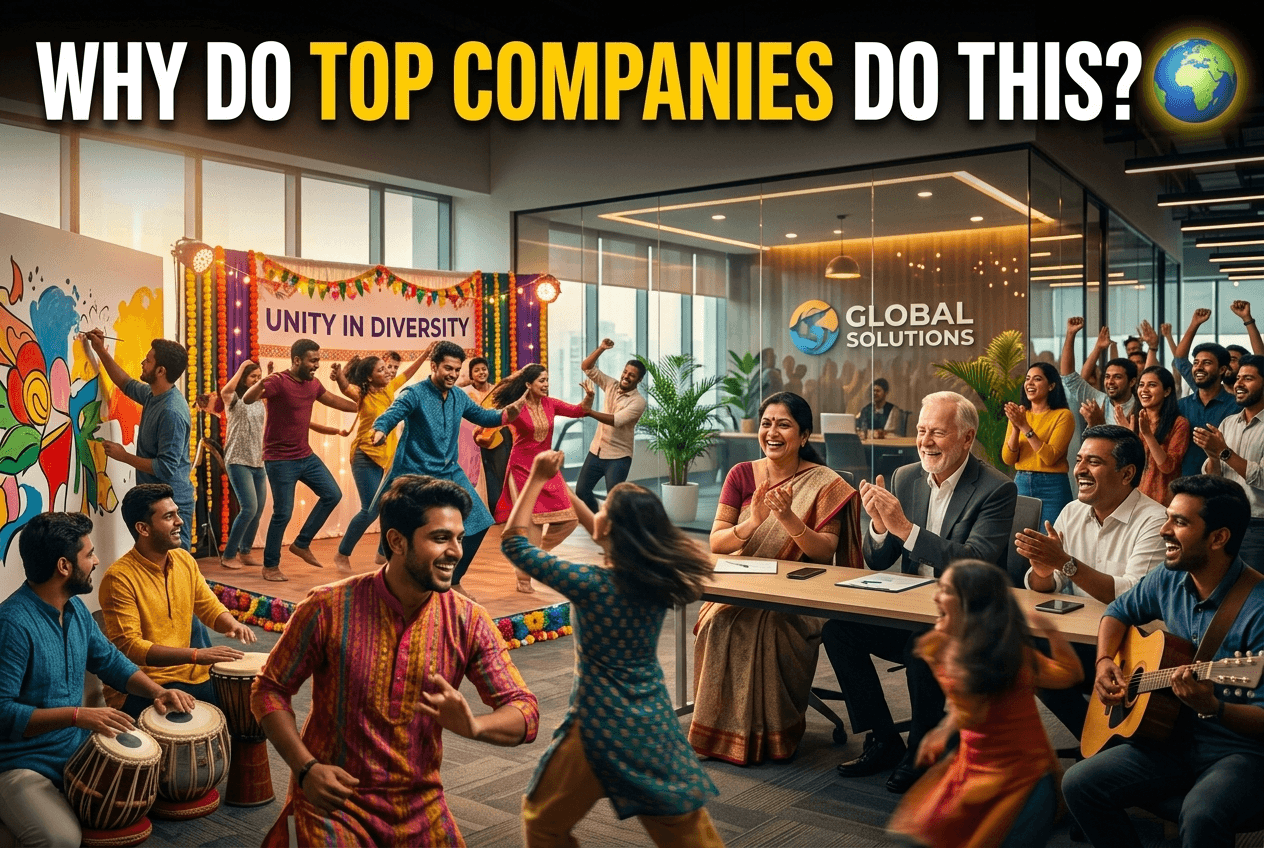
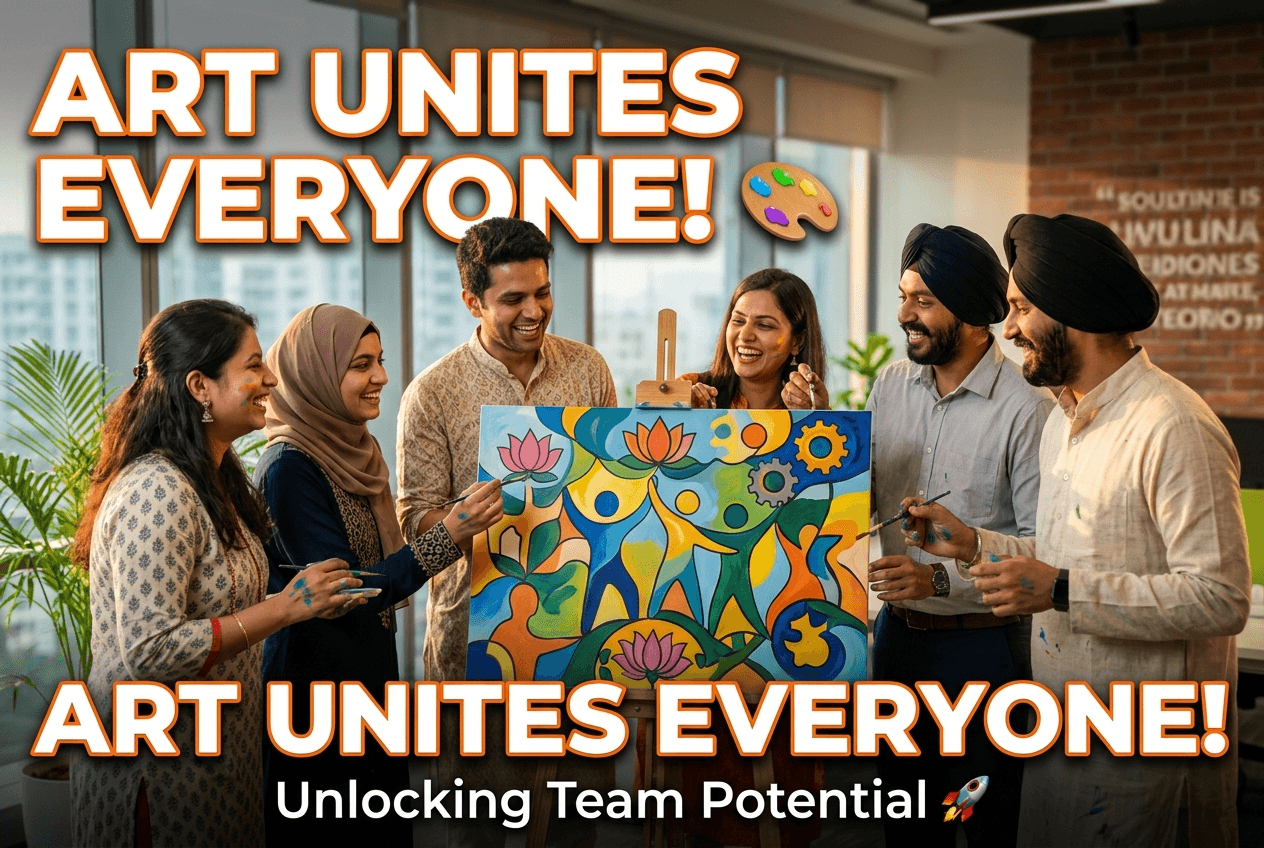
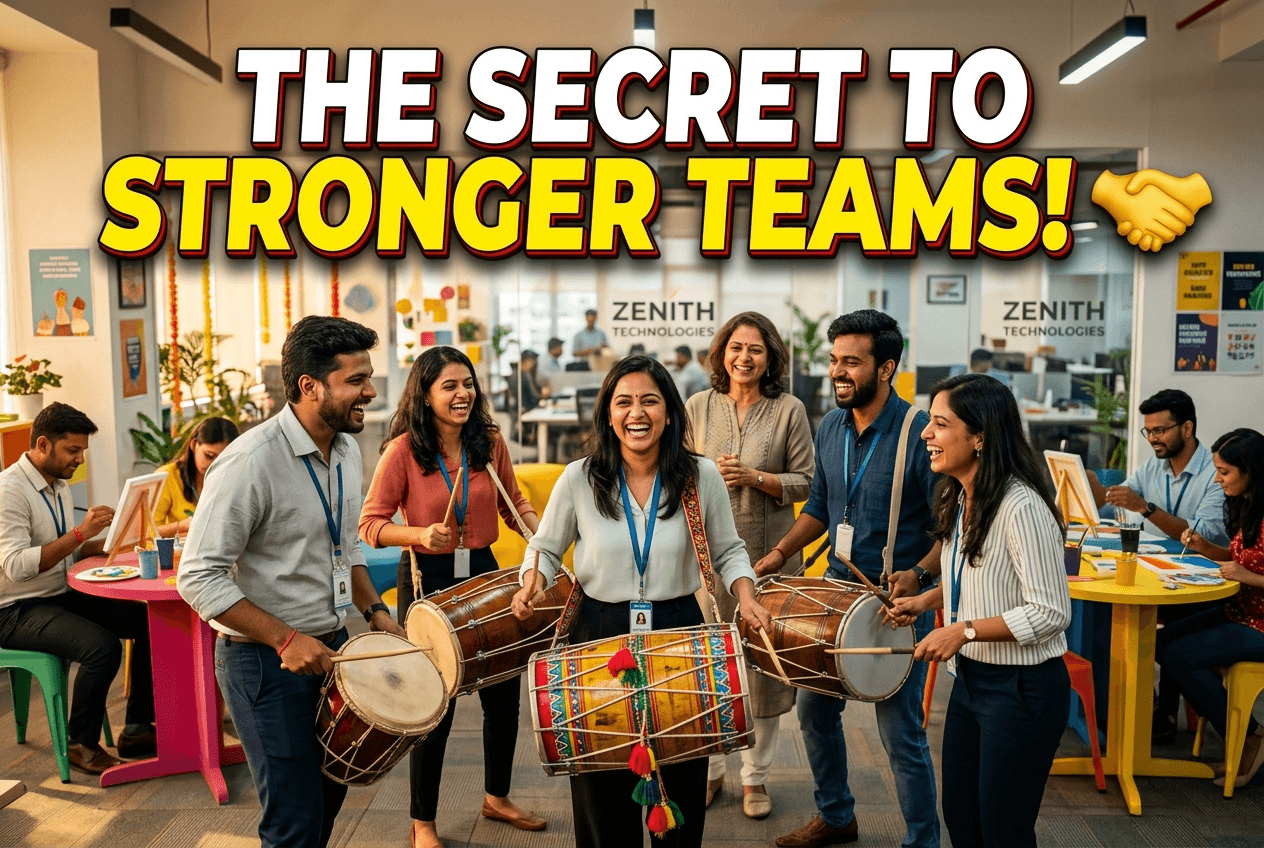
Cultural activities invert every one of these failures. They are recurring rather than one off, cooperative rather than competitive, and genuinely enjoyable rather than performatively fun. When a team learns a simple tabla rhythm together each week, or moves through a Bollywood dance sequence side by side, the connection builds gradually and naturally, in exactly the way real human bonds form.
The Science of Shared Creative Experience
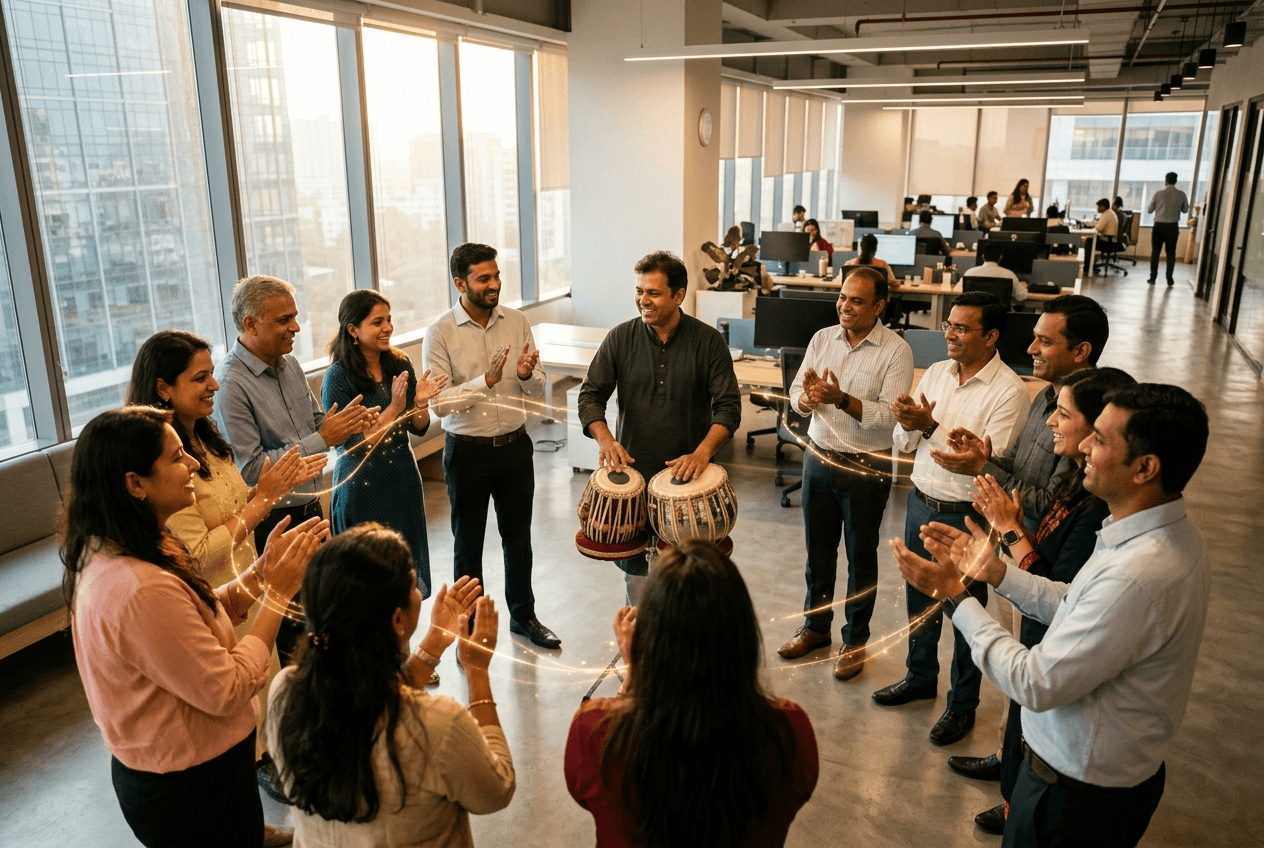 There is robust science behind why making music and moving together bonds people. Research on interpersonal synchrony, the phenomenon of people moving or making sound in time with one another, consistently shows that synchronised activity increases trust, cooperation and a sense of belonging between participants. When a group claps a rhythm together, sings together or dances in time, their sense of being a unified group measurably strengthens. This is not a soft, unmeasurable effect. It is one of the most reliably replicated findings in the social psychology of group cohesion, and it is precisely what cultural activities harness.
A 2025 scoping review published in BMC Complementary Medicine confirmed that music based interventions in workplaces show meaningful benefits for employee mood, stress levels and overall job satisfaction. Music reduces cortisol, lowers blood pressure and stimulates endorphin release. When these physiological benefits are combined with the bonding effect of synchronised group activity, cultural sessions deliver something no lecture, workshop or offsite can: employees who feel measurably better and measurably closer to their colleagues at the same time.
Active Participation Versus Passive Consumption
The critical distinction that makes cultural activities effective is active participation. A meditation app is passive, the employee consumes content produced by someone else. A team lunch is pleasant but structureless. A live cultural session is active: every participant is producing something, with their body and attention fully engaged, alongside a certified instructor and their colleagues. Active creative expression produces a depth of connection and positive affect that passive experiences cannot match, and this is why cultural activities consistently outperform both fitness benefits and generic social events on the measures HR leaders actually care about, engagement, belonging and retention.
What Cultural Team Building Looks Like in Practice
Live Group Music Sessions
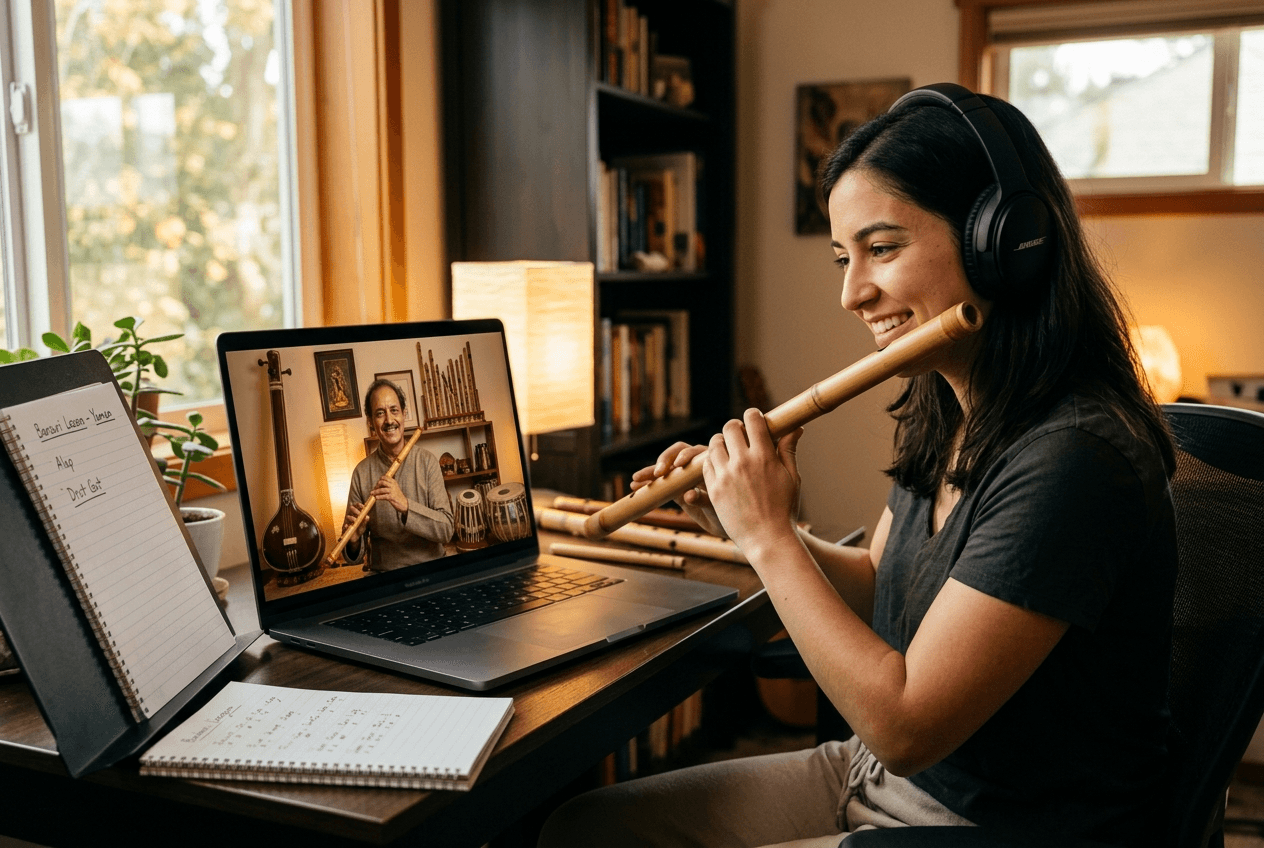
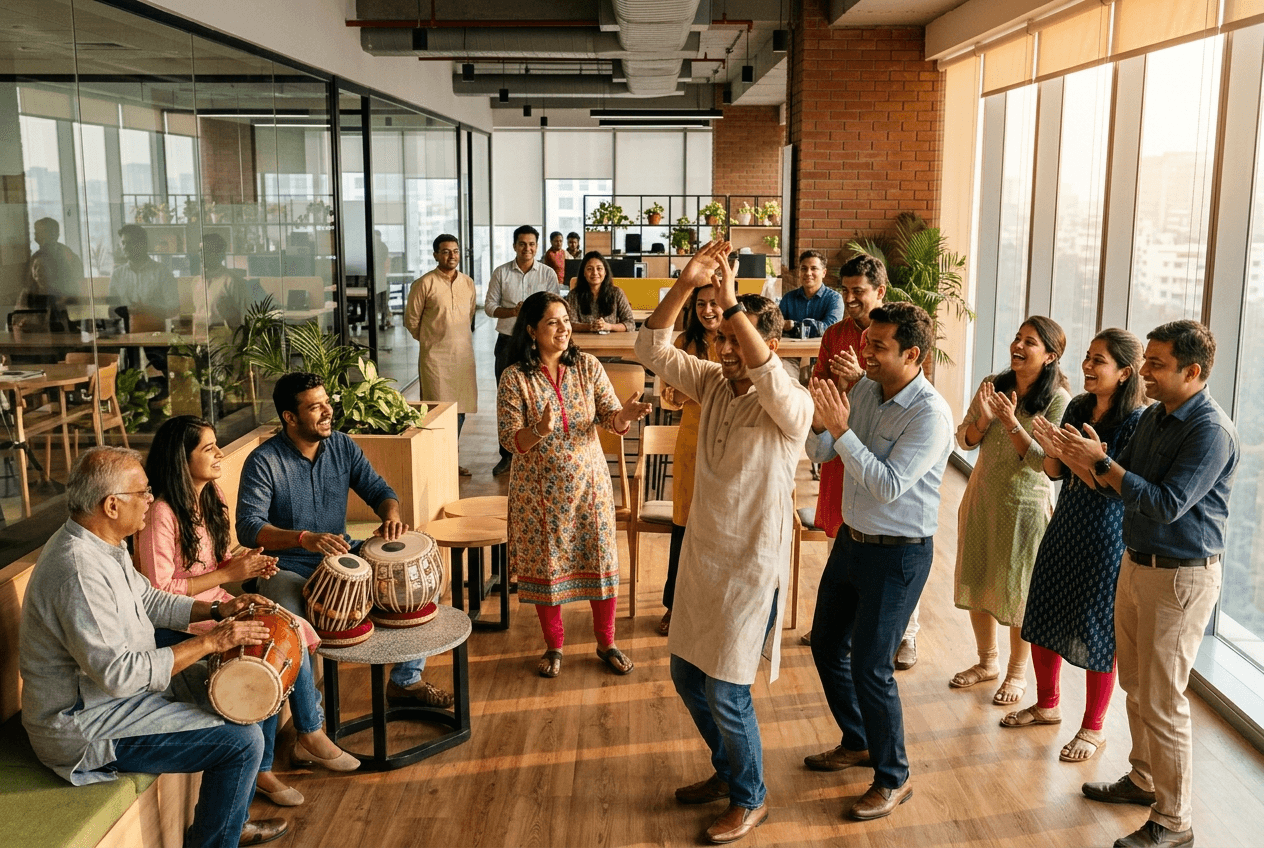
A live group tabla or vocal session for twenty employees, led by an Art Gharana certified instructor over a forty five minute video call, is not a lecture and not a game. It is a genuine shared creative experience in which every participant is actively learning, making sounds, laughing at their own early attempts and quietly surprised by their own progress. The shared vulnerability of being a beginner together, of a senior manager and a new joiner learning the same rhythm side by side, dissolves hierarchy and builds connection in a way that carefully designed team building exercises rarely achieve. Explore our music wellness sessions for the full range of options.
Live Group Dance Sessions
A Bollywood dance session gives a team an experience that is simultaneously physical, expressive, social and culturally resonant. For Indian corporate teams, a session set to familiar Hindi film music is immediately engaging, and the synchronised movement of a group learning a sequence together is one of the most powerful bonding activities available. Nobody has to be good at it. The shared laughter and effort are the point, and they are what build the team.
Cultural Showcases and Team Performances
Beyond regular sessions, a quarterly cultural showcase, where teams perform a short piece they have learned together, creates a shared goal and a memorable milestone. Preparing for a showcase gives colleagues a genuine reason to collaborate outside their usual work, and the performance itself becomes a story the team tells about itself for months afterwards. These shared narratives, of the time we learned a dance together and performed it, are the raw material of team identity.
Cultural Activities for Remote and Hybrid Teams
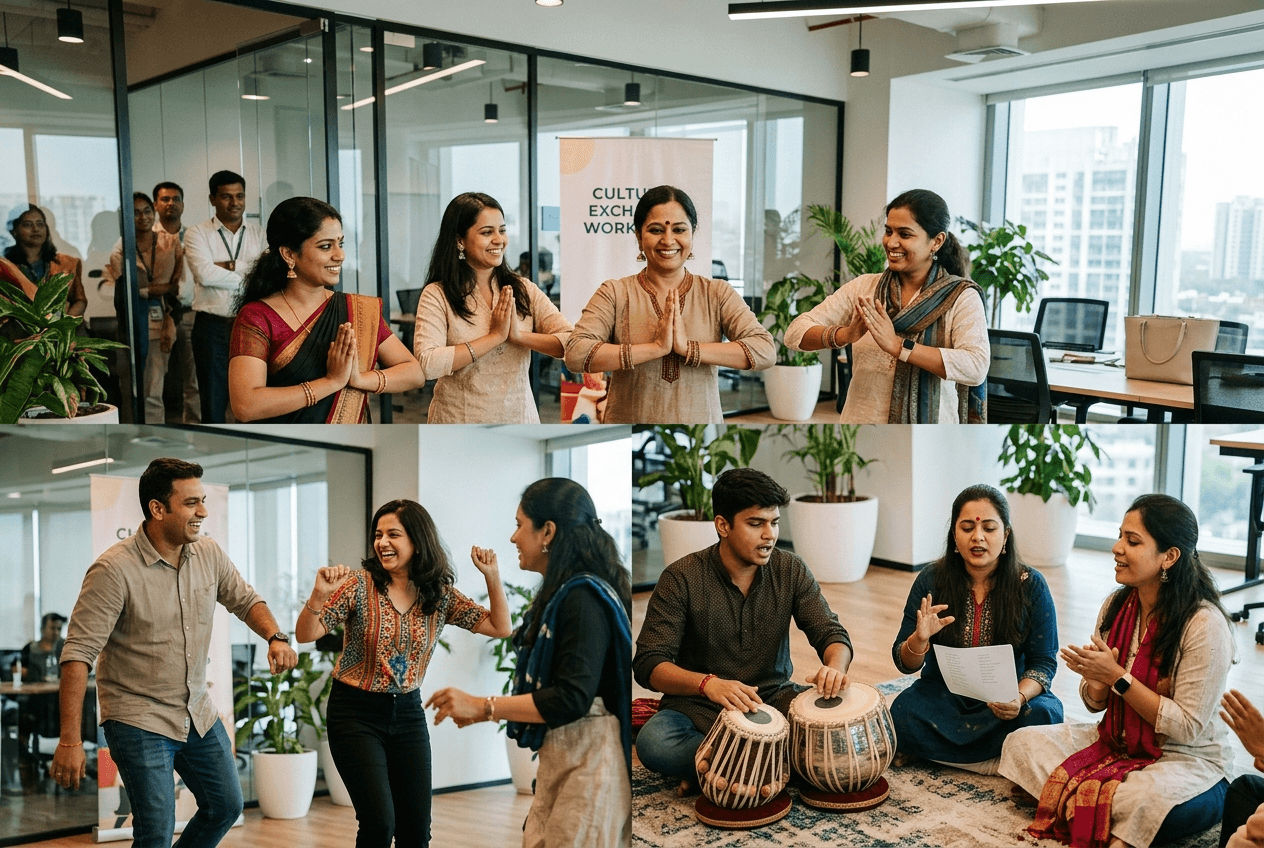 The team building challenge is sharpest for remote and hybrid teams, where colleagues may never share a physical room. This is exactly where live online cultural sessions prove most valuable. A distributed team joining the same live music session from Mumbai, Bangalore, Pune and their homes shares a genuine synchronous experience, moving and making sound together in real time, which text channels and video meetings simply cannot provide. For the growing share of Indian companies operating hybrid models in 2026, live online cultural activities are among the few interventions that create real connection across physical distance, and they do so every single week rather than once a year.
Bridging North and South Indian Teams
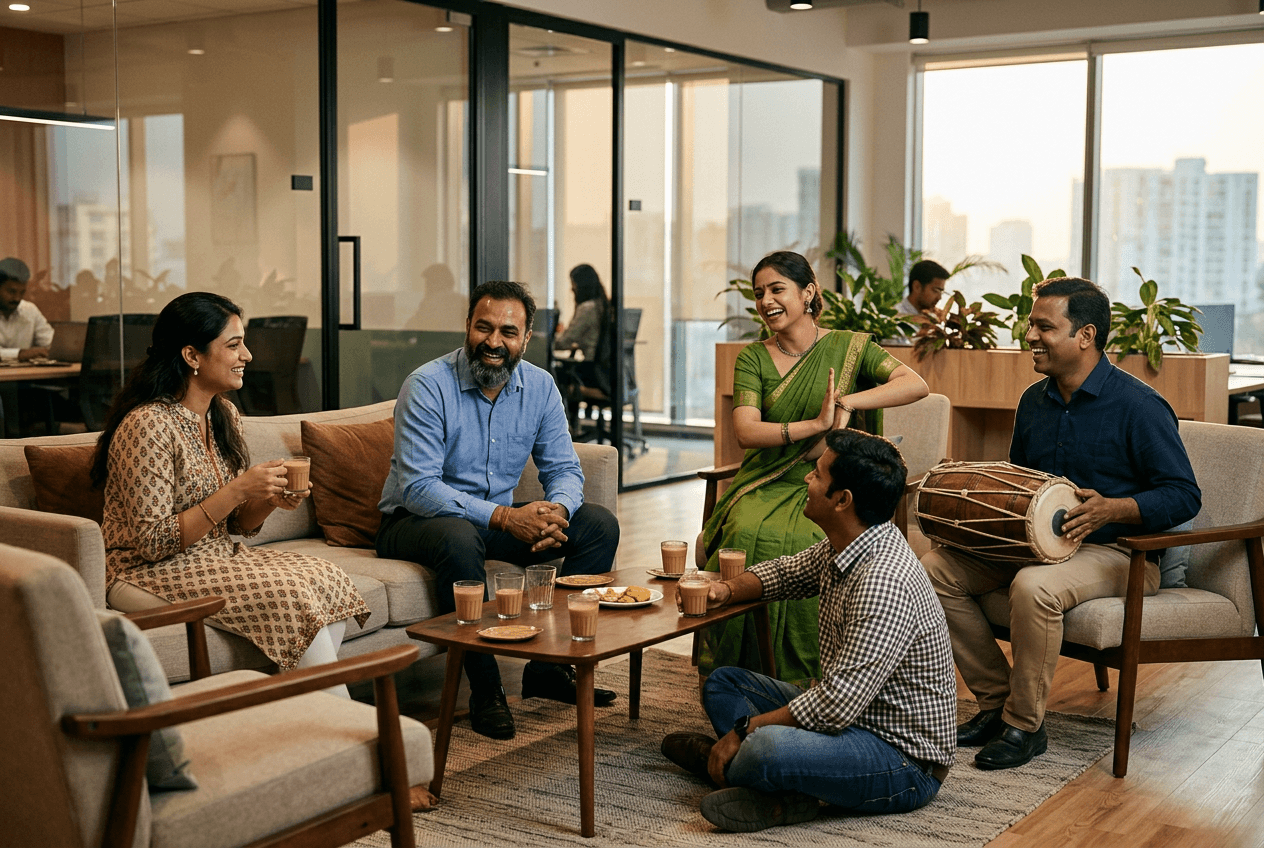 India's corporate teams are culturally diverse, spanning North and South Indian backgrounds, many languages and many regional traditions. Cultural activities can turn this diversity into a source of connection rather than distance. A rotating programme that includes both North Indian disciplines like Hindustani vocal and tabla and South Indian traditions like Carnatic vocal and Bharatanatyam invites employees to share and celebrate one another's heritage. A colleague from Chennai teaching the group a little about a Carnatic composition, or a colleague from Delhi sharing the story behind a Hindustani raga, creates moments of genuine cross cultural curiosity and respect that strengthen the team's fabric.
The Retention and Engagement ROI
For HR leaders, the business case for cultural team building rests on belonging and its direct link to retention. Employees who feel genuinely connected to their colleagues are significantly less likely to leave, and belonging is consistently among the strongest predictors of retention in workforce research. The calculation is straightforward. At typical Indian IT sector attrition rates, with replacement costs of fifty to two hundred percent of annual salary, a cultural programme that prevents even a handful of departures per year from a team of fifty generates a return that comfortably exceeds its cost. Unlike a one off offsite, whose effect fades within weeks, a recurring cultural programme builds connection continuously, which is precisely what sustains its impact on retention over time.
The engagement dimension is equally important. Cultural activities that employees genuinely look forward to raise participation, morale and the everyday texture of team life in ways that show up in engagement surveys and, over time, in the authentic employer brand content that employees share of their own accord.
How to Implement Cultural Team Building
Start with a Pilot
Art Gharana recommends beginning with a four to six week pilot for a specific team before rolling out more broadly. A pilot generates concrete engagement data, employee feedback and a business case for wider implementation. Book a corporate trial session to experience the connection firsthand before any commitment.
Make It Recurring, Not One Off
The single most important implementation principle is regularity. A weekly or fortnightly cultural session builds connection cumulatively, where a single event, however good, cannot. Integrate the sessions into the existing rhythm of the team, a standing Friday afternoon slot, a monthly cultural day, so they become an anticipated part of team life rather than a special occasion.
Rotate Disciplines to Sustain Interest
Rotating between disciplines, a month of Bollywood dance, a month of group tabla, a month of vocal, keeps the programme fresh and lets different employees shine in different activities. It also exposes the team to the breadth of India's cultural traditions, deepening both engagement and cross cultural appreciation.
About Art Gharana Corporate
 Art Gharana is the only platform combining live music, dance, art and vocal wellness specifically positioned for corporate teams in India. With certified instructors across Bollywood dance, Kathak, Bharatanatyam, tabla, bansuri flute, Hindustani vocal and Carnatic vocal, Art Gharana delivers genuine cultural team building in a format designed for corporate delivery. Explore our full range of wellness courses, review our plans and pricing for companies, and browse our instructor profiles before booking your pilot through the Art Gharana corporate programme.
Frequently Asked Questions
1. What are cultural activities for team building?
Cultural activities for team building are live, interactive sessions in music, dance, art or vocal training in which a team learns and creates together. Unlike one off events, they are recurring, cooperative and genuinely enjoyable, building connection gradually through shared creative experience rather than forced fun.
2. Do cultural activities really build stronger teams?
Yes. Research on interpersonal synchrony shows that making music and moving together in time measurably increases trust, cooperation and belonging. Combined with the mood and stress benefits of creative activity, this makes cultural sessions one of the most effective team building interventions available.
3. How does Art Gharana deliver cultural team building?
Art Gharana delivers live group sessions online, conducted by certified instructors in music, dance and vocal disciplines. Sessions are customised for team size, frequency, cultural preferences and scheduling across all Indian time zones, and work equally well for in office, hybrid and fully remote teams.
Why Belonging Is the Metric That Matters
HR leaders in India in 2026 are moving beyond engagement scores toward a more precise metric: belonging. Belonging, the felt sense of being genuinely part of a group that values you, is a stronger predictor of retention, discretionary effort and referral behaviour than generic satisfaction. It is also far harder to manufacture through policy alone. You cannot mandate belonging with a memo. It is built through repeated positive shared experience, which is exactly what recurring cultural activities provide. When a team has shared the small vulnerabilities and triumphs of learning something creative together, week after week, the belonging that results is authentic and durable in a way that no engagement campaign can replicate.
Cultural Team Building Across Indian Company Types
India's IT sector, with its predominantly Millennial and Gen Z workforce, is the most natural fit for cultural team building. This workforce is technically sophisticated, culturally diverse and highly connected to social media, which means cultural sessions both resonate deeply and generate shareable employer brand content organically. India's BFSI sector, with a more demographically varied workforce, benefits from a mix of group sessions and individual learning options, so that employees who prefer not to dance in a group can still engage through, for example, one to one instrumental learning. India's startup ecosystem, competing for talent against far larger compensation budgets, finds cultural team building especially valuable: it delivers disproportionate connection and employer brand value relative to its cost, and it reinforces exactly the creative, culturally curious culture that thriving startups depend on.
Building the Business Case in Five Steps
For HR leaders who need to build the internal business case for cultural team building, a simple framework works with most finance and leadership stakeholders. Step one: establish the baseline cost of current attrition, using the replacement cost formula of fifty to two hundred percent of annual salary per departure. Step two: establish the cost of the cultural programme for your team size and frequency. Step three: calculate the attrition reduction required to break even, which for most Indian corporate teams is a small number of departures per year. Step four: cite the belonging and connection research that explains why cultural activities reduce attrition. Step five: add the engagement and employer brand value as upside beyond the break even calculation. Because this framework is conservative, quantitative and tied to costs finance already understands, it consistently earns approval.
From Colleagues to Community
The deepest value of cultural team building is not captured by any single metric. It is the gradual transformation of a group of colleagues who happen to share an office or a project into a genuine community of people who know and enjoy one another. A team that has laughed its way through learning a dance, that has cheered a shy colleague through a first tabla solo, that has shared the small pride of a cultural showcase, relates differently at work. Communication flows more easily, conflict is navigated more generously, and the everyday experience of work becomes warmer. This is the outcome that recurring cultural activities produce, and it is why they build stronger teams than any other intervention available to Indian companies in 2026.
Key Takeaways for HR Leaders
The essential insights for HR leaders considering cultural team building in India are clear. Traditional one off team building fails because connection is built through repeated shared experience, not single events. Cultural activities succeed precisely because they are recurring, cooperative and genuinely enjoyable, and because the science of interpersonal synchrony confirms that making music and moving together builds trust and belonging. The retention ROI is straightforward and conservative, and the belonging that cultural activities create is the metric most strongly linked to whether employees stay. For hybrid and remote teams especially, live online cultural sessions are among the few interventions that build real connection across distance. Art Gharana is ready to deliver all of this for your team. The pilot is free. Begin today.
The Employer Brand Dividend
Beyond their direct effect on team cohesion, cultural activities generate a valuable employer brand dividend. When employees share a photo or clip of their team learning a dance or drumming together, they produce employer brand content of a credibility no marketing budget can buy. India's talent market in 2026 is transparent, with candidates researching culture through LinkedIn, Glassdoor and AmbitionBox before accepting offers. A company whose employees authentically share distinctive cultural experiences signals a genuine, human culture that generic mentions of a positive work environment cannot convey. That authentic signal is precisely what culturally curious Gen Z and Millennial candidates respond to, making cultural activities a talent attraction asset as well as a team building one.
Cultural Activities and Everyday Wellbeing
Stronger teams are also healthier teams. The same sessions that build connection deliver real wellbeing benefits, since creative activity reduces stress and lifts mood through the physiological mechanisms confirmed by workplace music research. A team that gathers each week to make music or move together is not only bonding; it is collectively decompressing, stepping out of deadline pressure into a shared moment of creative flow. Over time, this regular release contributes to lower burnout and a more resilient team, which compounds the retention benefit. Connection and wellbeing reinforce one another, and cultural activities are among the few interventions that deliver both at once.
Sustaining Momentum Beyond the Pilot
A common failure mode for corporate initiatives is strong early enthusiasm that fades once the novelty passes. Cultural activities avoid this trap when they are treated as an ongoing ritual rather than a campaign. Rotating disciplines keeps the experience fresh, periodic showcases give teams something to work toward, and celebrating milestones, a team's first performed piece, a colleague's breakthrough, sustains engagement. Gathering simple feedback and light participation data after the pilot lets HR refine the programme and demonstrate its value to leadership. Handled this way, cultural activities become a permanent, evolving part of team life whose bonding effect deepens year over year rather than fading after the first few weeks.
People Also Ask: Cultural Activities and Team Building in India
What is the best team building activity for corporate teams in India?
The most effective team building activities for Indian corporate teams are recurring, cooperative and participatory, which is why live cultural sessions such as group Bollywood dance, tabla or vocal work outperform one off events. They build connection gradually through shared creative experience, they suit diverse and hybrid teams, and they are genuinely enjoyable rather than performatively fun, which drives the participation that team building depends on.
How do cultural activities improve team performance?
Cultural activities improve team performance indirectly but powerfully, by strengthening the trust, communication and belonging on which good teamwork depends. Research on synchronised group activity shows measurable increases in cooperation and group cohesion, and the mood and stress benefits of creative sessions leave employees more positive and resilient. Teams that feel genuinely connected collaborate more openly and navigate conflict more constructively.
Can cultural team building work for remote teams in India?
Yes. Live online cultural sessions are among the most effective connection tools for remote and hybrid Indian teams. A distributed team making music or dancing together in real time shares a genuine synchronous experience that ordinary video meetings cannot provide, and because sessions recur weekly or fortnightly, they build connection continuously across physical distance.
How much do corporate cultural activities cost in India?
Corporate cultural activity costs in India vary by team size and session frequency. Art Gharana's corporate programme is priced flexibly based on these variables, with a free pilot available before any commitment. The cost per employee of a weekly group session is typically modest relative to the retention and engagement value it delivers. HR leaders can review plans and pricing for companies.
What cultural disciplines work best for team building?
Group friendly, immediately engaging disciplines work best for team building. Bollywood dance is the most universally accessible, set to familiar music and requiring no prior skill. Group tabla rhythm sessions are excellent for synchrony and are surprisingly quick to produce a satisfying shared result. Vocal sessions and, for cross cultural interest, Kathak or Bharatanatyam introductions add variety across a rotating programme.
How often should teams do cultural activities?
For team building, frequency matters more than duration. A weekly or fortnightly session of forty five minutes builds connection cumulatively and becomes an anticipated part of team life, whereas a single event, however elaborate, fades within weeks. Consistency is the principle that separates cultural activities that genuinely strengthen teams from those that are merely a pleasant one off.