ChatGPT
 Google AI
 Grok
Grok Claude
Mental health at work is no longer a “nice-to-have” — it’s a business necessity. In Indian offices today, fast-paced deadlines, long working hours, and constant digital connectivity have quietly reshaped how employees feel, think, and perform. Have you ever noticed talented team members feeling disengaged, stressed, or emotionally drained despite competitive salaries and perks? That’s where the conversation around employee wellness truly begins.
Organizations across India are increasingly realizing that productivity doesn’t come from pressure alone—it comes from people who feel supported, valued, and mentally balanced. A well-designed workplace wellness program goes beyond surface-level benefits and addresses the real challenges employees face every day, from managing stress to maintaining a healthy work-life balance. When companies invest in holistic employee wellness programs, they don’t just improve morale—they strengthen engagement, retention, and overall workplace culture.
But what does an effective corporate wellness program actually look like in the Indian context? And how can businesses move beyond generic wellness initiatives to create meaningful impact? Today’s forward-thinking organizations are exploring creative and human-centered approaches that foster connection, reduce stress, and build resilience. Initiatives that encourage creativity, collaboration, and emotional expression are proving to be powerful tools for employee engagement and team cohesion.
As you read on, you’ll discover practical insights, proven best practices, and innovative ideas that help organizations build healthier, happier workplaces. Whether you’re an HR leader, a founder, or a people manager, this guide will help you rethink wellness—not as an expense, but as a strategic investment in your people and your company’s future.
Understanding Mental Health in Indian Workplaces
 Mental health in the workplace is no longer an abstract HR concept—it’s a lived reality for employees across Indian offices. From early-morning calls with global teams to late-night deadlines and constant performance pressure, work has become deeply intertwined with our emotional and psychological well-being. Have you ever paused to ask yourself how this daily grind is affecting your team—not just professionally, but personally?
At its core, employee wellness refers to the overall mental, emotional, and physical state of people at work. In the Indian corporate context, this takes on unique dimensions. Cultural expectations around long working hours, job security, and “pushing through stress” often mean mental health concerns go unnoticed or unspoken. Yet, ignoring them comes at a cost—reduced focus, disengagement, burnout, and eventually, attrition.
This is why workplace wellness programs are gaining critical importance across organizations, from startups to large enterprises. These programs aim to create an environment where employees can thrive, not just survive. When mental health is supported proactively, employees feel safer, more motivated, and better equipped to handle challenges.
So, what does mental health at work actually include? It goes beyond stress management workshops or occasional wellness emails. A strong approach to employee wellness programs typically addresses:
- Emotional well-being: Helping employees manage stress, anxiety, and emotional fatigue
- Work-life balance: Creating realistic expectations around availability and workload
- Psychological safety: Ensuring employees feel heard, respected, and supported
- Sustainable performance: Enabling consistent productivity without burnout
In Indian workplaces, where ambition and competition often run high, prioritizing mental health can feel counterintuitive. But the reality is this: mentally healthy employees perform better. They collaborate more effectively, think creatively, and stay engaged with their roles. Over time, organizations that invest in a thoughtful corporate wellness program don’t just see happier teams—they see stronger business outcomes.
Understanding mental health at work is the first step. Once leaders and organizations acknowledge its impact, they can move toward building a workplace culture that supports people as humans first—and professionals second.
Common Workplace Challenges Impacting Employee Well-Being
 Even in the most well-intentioned organizations, employee well-being can quietly erode under everyday workplace pressures. Deadlines pile up, inboxes never stop, and the line between professional and personal life grows increasingly thin. Have you noticed your team feeling constantly “on,” yet rarely recharged? This is one of the most common signs that well-being is being compromised.
In Indian offices, these challenges are often amplified by fast-growing business demands and a culture that values hard work—but sometimes at the cost of health. When these issues persist, they directly affect employee engagement, motivation, and long-term performance.
Let’s look at the most common workplace challenges that impact mental health and overall employee wellness.
1. Work Stress and Burnout
Heavy workloads, tight timelines, and continuous performance expectations create prolonged stress. Over time, this stress turns into burnout—leaving employees feeling exhausted, disconnected, and less productive. Without proper workplace wellness programs in place, burnout can become normalized rather than addressed.
2. Poor Work-Life Balance
The rise of hybrid and remote work has blurred boundaries even further. Employees often feel pressure to be available beyond office hours, making it difficult to switch off mentally. When work-life balance is compromised, personal well-being suffers—and so does professional effectiveness.
3. Declining Employee Engagement
Mental fatigue and emotional stress directly affect how connected employees feel to their work. Disengaged employees may still meet deadlines, but they contribute less creatively and collaborate less effectively. Over time, low employee engagement impacts team morale and overall workplace culture.
4. Retention Challenges and Silent Attrition
When employees feel unsupported, they don’t always voice their concerns—they leave. Poor mental health support is a growing reason behind declining employee retention in Indian organizations. Replacing talent is costly, but preventing attrition through thoughtful wellness initiatives is far more sustainable.
5. Impact on Organisational Reputation
Workplaces that overlook mental health challenges often face reputational risks. Employees talk, reviews spread, and company culture becomes part of public perception. A lack of focus on employee wellness programs can eventually affect employer branding and trust.
These challenges are interconnected, and ignoring one often leads to another. Recognizing them early allows organizations to take proactive steps—shifting from reactive problem-solving to building healthier, more resilient workplaces. Understanding these pain points sets the stage for meaningful wellness solutions that truly support employees and the business alike.
Importance of Workplace Wellness Programs
 If stress, disengagement, and burnout are becoming familiar patterns in your organisation, the question is no longer whether you need a wellness initiative—it’s how soon you can put one in place. Today, forward-thinking companies across India are recognising that a structured workplace wellness program is not an optional perk, but a strategic foundation for sustainable growth. After all, when your people thrive, your business does too.
A well-designed corporate wellness program focuses on prevention rather than damage control. Instead of reacting to burnout or attrition, it creates systems that support employees before challenges escalate. This proactive approach directly strengthens employee wellness while also improving overall performance and morale.
So, what makes workplace wellness programs so impactful?
1. They Create a Healthier, More Engaged Workforce
When employees feel supported mentally and emotionally, they bring more energy and focus to their roles. Thoughtful employee wellness programs help reduce stress, improve motivation, and foster a sense of belonging—key drivers of strong employee engagement.
2. They Reinforce Work-Life Balance
Wellness programs encourage realistic workloads, flexible policies, and healthy boundaries. By supporting work-life balance, organizations send a clear message: employee well-being matters just as much as results.
3. They Strengthen Employee Retention
Employees are far more likely to stay with organisations that invest in their well-being. A consistent focus on employee wellness programmes builds trust and loyalty, significantly improving employee retention over time.
4. They Enhance Organisational Culture
A strong wellness culture shapes how employees interact, collaborate, and support one another. Over time, this positive environment becomes self-sustaining, strengthening internal relationships and reinforcing a people-first mindset.
5. They Deliver Long-Term Business Value
Beyond immediate benefits, workplace wellness initiatives reduce absenteeism, improve productivity, and enhance overall efficiency. The result is a healthier organisation with lower attrition costs and stronger performance metrics.
Ultimately, investing in a workplace wellness program is about more than offering benefits—it’s about creating an environment where employees can perform at their best without sacrificing their well-being. When wellness becomes part of the organisational DNA, both employees and businesses are positioned to succeed.
Role of Creative Wellness Initiatives in Modern Offices
 Traditional wellness initiatives often focus on policies and benefits—but are they enough to truly engage today’s workforce? In modern Indian offices, employees are looking for more human, interactive, and emotionally fulfilling experiences at work. This is where creative wellness initiatives step in, transforming wellness from a checklist into a meaningful experience that employees actually look forward to.
Creative approaches bring energy, connection, and purpose into workplace wellness programs. Instead of passively consuming content, employees actively participate—expressing themselves, collaborating with colleagues, and rediscovering joy at work. These experiences play a powerful role in strengthening employee wellness while also improving everyday engagement.
So why do creative initiatives work so well?
1. They Boost Engagement and Team Bonding
Creativity naturally encourages participation. Activities such as music-based sessions help teams break silos, communicate more openly, and build trust. When organizations aim to boost engagement and team bonding through music, they create shared moments that strengthen team cohesion and workplace relationships.
2. They Encourage Emotional Expression and Stress Relief
Creative outlets allow employees to release stress in a healthy, non-judgmental way. Music, rhythm, and collaborative activities help lower tension, supporting stress reduction without feeling forced or clinical.
3. They Spark Creativity and Problem-Solving
Engaging in creative experiences stimulates the brain in new ways. Employees return to work feeling refreshed, inspired, and more open to innovative thinking. This renewed sense of creativity often carries over into better collaboration and problem-solving at work.
4. They Build Emotional Resilience
Participating in creative wellness initiatives helps employees develop emotional strength and adaptability. Over time, these experiences nurture resilience, enabling teams to handle pressure and change with greater confidence.
5. They Strengthen Organisational Culture
When creative wellness becomes part of a corporate wellness program, it signals that the organisation values people as individuals—not just as roles. This human-centric approach contributes to a more inclusive, supportive workplace culture.
In a time when disengagement and burnout are common, creative wellness initiatives offer something different—connection, expression, and energy. By integrating creativity into workplace wellness programs, organizations move closer to building workplaces where employees feel engaged, supported, and genuinely valued.
Music Workshops as a Powerful Workplace Wellness Tool
 What if improving mental health at work didn’t feel like another task on your calendar? What if it felt energising, inclusive, and genuinely enjoyable? This is exactly why music workshops are emerging as one of the most impactful tools within modern workplace wellness programs—especially in Indian offices where connection and collective experiences matter deeply.
An employee music workshop goes far beyond entertainment. It creates a safe, engaging space where employees can pause, reset, and connect with one another in ways that traditional wellness initiatives often can’t. By tapping into rhythm, sound, and collaboration, music-based sessions support both emotional and mental well-being while strengthening workplace relationships.
So, how do music workshops make a real difference?
1. Supporting Stress Reduction in a Natural Way
Music has a direct impact on the nervous system. Participating in rhythm-based or guided music activities helps employees relax, lower anxiety, and experience meaningful stress reduction—without the pressure of “fixing” themselves.
2. Strengthening Team Connection and Collaboration
Music workshops bring employees together across roles and hierarchies. When teams create music collectively, they listen better, communicate more openly, and build trust. This shared experience enhances team cohesion and fosters stronger workplace bonds.
3. Encouraging Creativity and Emotional Expression
Not everyone is comfortable talking about stress, but music offers a non-verbal outlet. Employees can express emotions freely, sparking creativity and emotional release that carries over into their work.
4. Building Resilience Through Shared Experiences
Overcoming creative challenges together—whether learning a rhythm or performing as a group—helps employees develop emotional strength. These experiences quietly nurture resilience, enabling teams to handle pressure and change more effectively.
5. Enhancing the Impact of Corporate Wellness Programs
When integrated into a broader corporate wellness program, music workshops add depth and differentiation. They transform wellness from a passive benefit into an engaging experience employees remember and value.
In a world of webinars and policy documents, music workshops stand out because they make wellness human again. By incorporating employee music workshops into workplace wellness programs, organisations create space for connection, expression, and genuine well-being—without forcing participation or productivity metrics.
Business Benefits of Employee Wellness Programs
 When organisations invest in wellness, the impact goes far beyond happier employees—it shows up in performance, culture, and long-term growth. Have you ever wondered why some companies consistently attract top talent while others struggle to retain their teams? The answer often lies in how seriously they treat employee wellness.
Thoughtfully designed employee wellness programs deliver measurable business outcomes. They don’t just support individuals; they strengthen the organisation as a whole. Let’s explore how prioritising well-being translates into real, tangible benefits.
1. Higher Employee Engagement and Productivity
Employees who feel mentally supported are more focused, motivated, and committed to their work. Wellness initiatives help reduce emotional fatigue, directly improving employee engagement and enabling teams to perform at their best—day after day.
2. Improved Employee Retention and Loyalty
Well-being plays a major role in whether employees stay or leave. Organisations that invest in consistent employee wellness programmes build trust and loyalty, leading to stronger employee retention and lower hiring and training costs.
3. Stronger Team Cohesion and Collaboration
Wellness initiatives—especially interactive and creative ones—encourage employees to connect beyond job roles. This shared sense of support improves communication and strengthens team cohesion, making collaboration more natural and effective.
4. Enhanced Employer Brand and Company Reputation
Companies known for caring about well-being stand out in competitive talent markets. Strong wellness initiatives enhance company reputation, positioning the organisation as a responsible, people-first employer.
5. Long-Term Cost and Performance Benefits
While wellness programs require investment, the returns are long-lasting. Reduced absenteeism, higher productivity, and better morale all contribute to healthier business outcomes. Over time, these wellness benefits far outweigh the initial costs.
Ultimately, employee wellness is not just an HR initiative—it’s a strategic business decision. Organisations that embed wellness into their culture create environments where employees feel valued, supported, and motivated to grow alongside the company.
Designing a Holistic Corporate Wellness Strategy
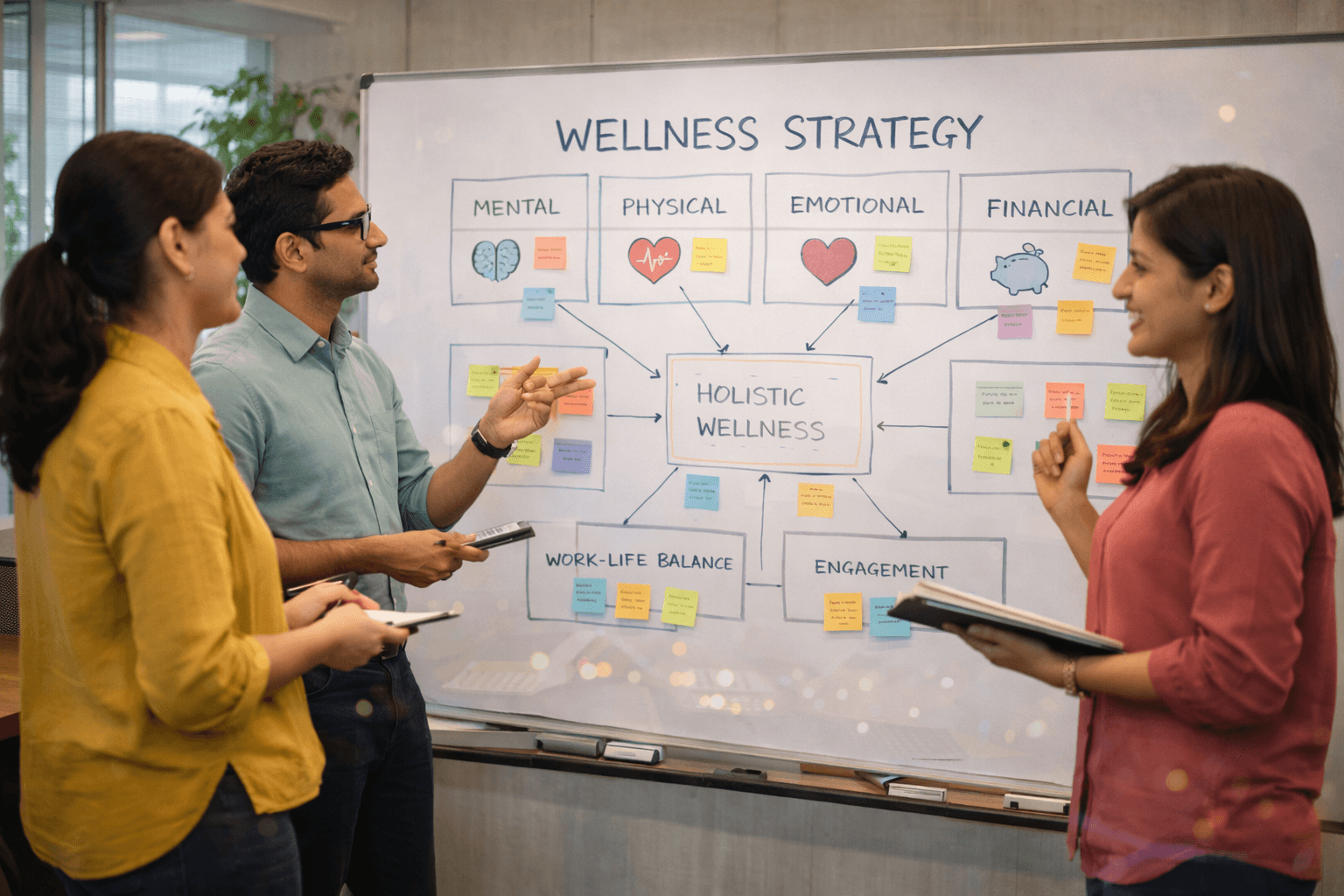 Creating a meaningful wellness strategy isn’t about ticking boxes or launching one-off initiatives—it’s about building a system that genuinely supports employees through every stage of their work life. So, how do organisations move from isolated activities to a sustainable corporate wellness program that delivers long-term value?
The answer lies in a holistic approach—one that recognises employees as whole individuals with mental, emotional, social, and practical needs. When wellness is thoughtfully designed, it becomes an integral part of how a company operates, not just an added benefit.
1. Addressing Multiple Dimensions of Wellness
An effective workplace wellness program goes beyond mental health alone. It brings together different aspects of well-being to create balanced support:
- Mental and emotional wellness: Stress management, emotional support, and resilience-building initiatives
- Physical wellness: Encouraging healthy routines and movement
- Financial wellness: Helping employees manage financial stress through education and guidance
By addressing these dimensions together, organisations create stronger and more resilient teams.
2. Aligning Wellness with Organisational Culture
Wellness initiatives work best when they reflect company values and day-to-day realities. Whether it’s flexible work practices or creative sessions, company wellness programs should feel authentic and relevant—not forced or generic.
3. Customising Programs for Employee Needs
No two workplaces are the same. High-impact employee wellness programs are tailored based on workforce demographics, work models, and stress points. Listening to employees through surveys and feedback helps shape programs that truly add value.
4. Integrating Wellness into Everyday Work Life
The most effective wellness strategies are embedded into daily routines. Small, consistent actions—rather than large, infrequent events—create lasting impact and make well-being a natural part of work culture.
5. Measuring Impact and Evolving Continuously
To sustain success, organisations must track what works. Monitoring participation, engagement, and outcomes helps refine corporate wellness programs over time and ensures ongoing relevance.
Designing a holistic wellness strategy is not a one-time effort—it’s an evolving commitment. When organisations invest in well-rounded workplace wellness programs, they build environments where employees feel supported, motivated, and empowered to perform at their best.
Building a Sustainable Wellness Culture in the Workplace
 Launching a wellness initiative is a great first step—but how do you ensure it lasts? Many organisations invest in a wellness program, only to see engagement fade after the initial excitement. Sustainability comes from culture, not campaigns. When well-being becomes part of how people work every day, the results are far more powerful and long-lasting.
A sustainable approach to company wellness focuses on consistency, leadership involvement, and employee trust. It’s about creating an environment where wellness is supported at every level, not driven by HR alone.
1. Making Wellness a Shared Responsibility
Well-being shouldn’t sit with one team or department. Leaders, managers, and employees all play a role in sustaining employee wellness. When leadership actively participates and encourages healthy behaviours, it signals that wellness truly matters.
2. Embedding Wellness into Everyday Practices
The most effective workplace wellness programs are woven into daily routines:
- Encouraging regular breaks and realistic workloads
- Normalising conversations around stress and mental health
- Supporting flexible work practices where possible
These small, consistent actions make wellness feel natural rather than forced.
3. Offering Meaningful Wellness Benefits
Employees engage more when wellness initiatives address real needs. Thoughtful wellness benefits in your organisation—such as creative engagement, emotional support, or holistic well-being activities—help employees feel genuinely cared for.
4. Listening, Learning, and Evolving
Sustainable wellness cultures are built on feedback. Regular check-ins and surveys help organisations refine employee wellness programs and stay aligned with changing employee needs.
5. Strengthening Employer Trust and Reputation
Over time, a strong wellness culture enhances company reputation. Organisations known for prioritising well-being attract committed talent and build deeper trust with their teams.
Ultimately, building a sustainable wellness culture means shifting from short-term initiatives to long-term intent. When wellness is embedded into everyday work life, organisations create healthier, happier workplaces where employees can grow, contribute, and thrive together.
Mental health at work is no longer a side conversation—it’s at the heart of how modern organisations grow, retain talent, and build lasting success. As you reflect on your own workplace, ask yourself: are your people merely coping, or are they truly thriving? The difference lies in how intentionally you approach employee wellness and the systems you put in place to support it.
A thoughtful corporate wellness program does more than address stress—it builds connection, resilience, and trust. When organisations invest in meaningful workplace wellness programs, they create environments where employees feel valued as individuals, not just as job roles. The result is stronger employee engagement, healthier team dynamics, and a culture that people want to be part of.
The path forward doesn’t require perfection—it requires commitment. Small, consistent efforts, combined with creative and human-centred initiatives, can transform well-being from a policy into a lived experience. When wellness becomes embedded in your culture, it strengthens employee retention, enhances company reputation, and positions your organisation as a place where people can do their best work.
So, where do you begin? Start by listening. Invest in programs that genuinely support your people. And most importantly, treat wellness not as an expense, but as a long-term investment in your workforce and your future. When your people thrive, your organisation naturally follows.
FAQs
1 What is a workplace wellness program and why is it important?
A: A workplace wellness program is a structured initiative designed to support employees’ physical, mental, and emotional well-being. In Indian offices, these programs help reduce stress, improve work-life balance, and boost employee engagement, ultimately enhancing productivity and company reputation.
2 How can creative wellness initiatives improve employee engagement?
A: Creative initiatives, such as employee music workshops, encourage collaboration, emotional expression, and team bonding. They strengthen team cohesion, foster resilience, and make employees more motivated and committed to their roles.
3 What are the benefits of corporate wellness programs in Indian offices?
A: Corporate wellness programs improve overall employee wellness, reduce stress, enhance employee retention, and positively impact company reputation. They also cultivate a culture where employees feel valued and supported, leading to long-term business growth.
4 How do wellness programs help reduce stress at work?
A: By providing structured support for mental and emotional well-being, wellness programs help employees manage workload pressures, maintain work-life balance, and practice stress-relieving activities. Initiatives like creative workshops, mindfulness sessions, or counseling support are highly effective.
5 How can companies measure the impact of employee wellness programs?
A: Organizations can measure the effectiveness of employee wellness programs by tracking metrics such as participation rates, employee engagement scores, retention rates, and overall workplace satisfaction. Feedback surveys and wellness assessments also provide valuable insights for improvement.
6 Why should Indian companies invest in creative wellness programs?
A: Creative wellness initiatives, including music and art-based programs, encourage creativity, emotional expression, and stronger team cohesion. They make wellness engaging, memorable, and impactful, differentiating your organization’s corporate wellness program from traditional initiatives.