ChatGPT
 Google AI
 Grok
Grok Claude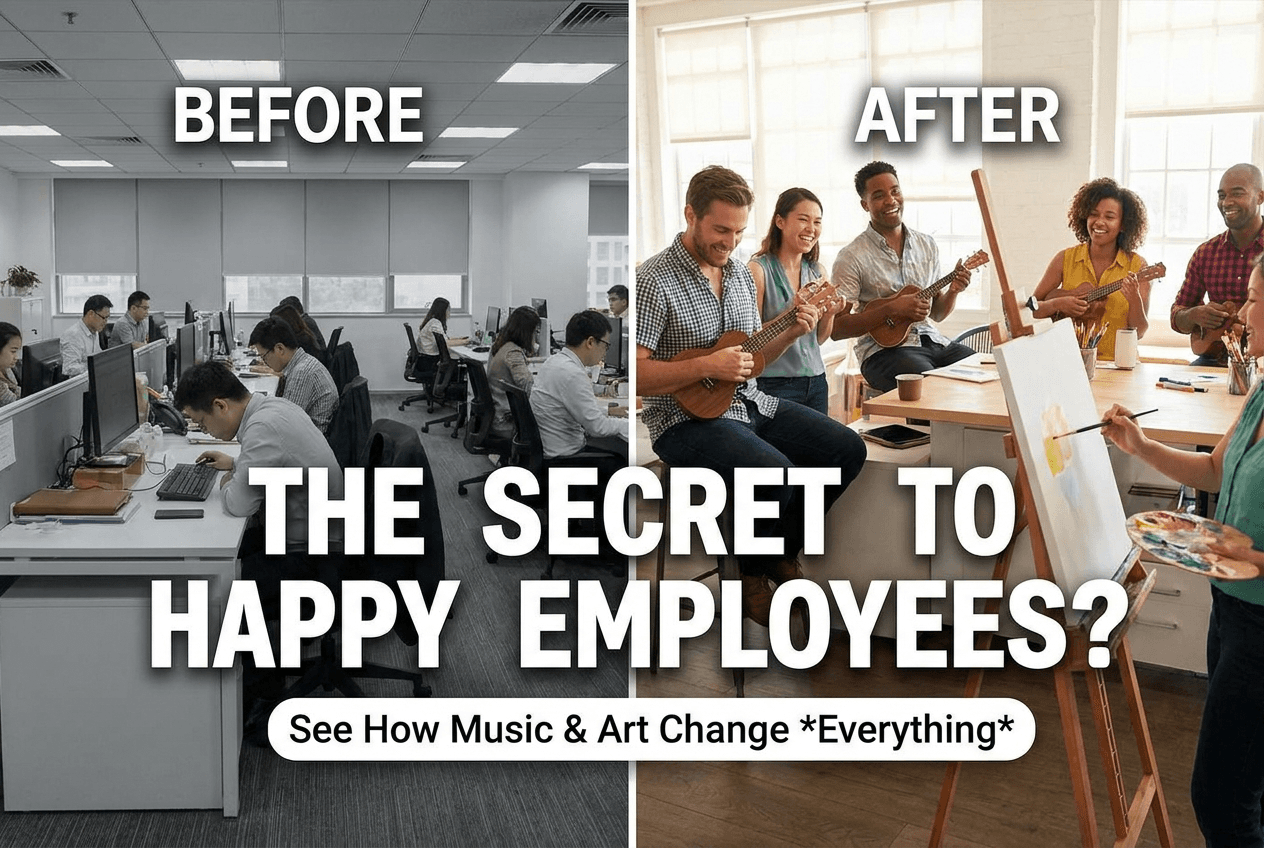
TL;DR: Music and art programs at work aren't just enjoyable. They have measurable effects on stress, focus, emotional wellbeing, and team connection. Neuroscience, psychology, and workplace research all point to the same conclusion: creative expression is a fundamental human need, and companies that support it build happier, healthier, and more productive teams. This post breaks down the science and shows you what to do about it. Book a free trial to bring these programs to your team.
When was the last time you left a meeting feeling genuinely energised?
For most people, the honest answer is: not recently. Work can be meaningful, but it can also grind people down. Deadlines pile up. Conversations repeat. The days start to blur. And at some point, people stop bringing their best selves to work - not because they don't care, but because the environment gives them no room to breathe.
Music and art programs change that equation. And the science behind why they work is more compelling than most companies realise.
This isn't about running a "fun" activity to break up the week. It's about understanding how creative expression actually affects the human brain, nervous system, and social bonds - and using that understanding to build workplaces where people genuinely flourish.
In this post, we'll walk through the research on how music and art improve workplace happiness, and what a practical program looks like in action.
What Does "Workplace Happiness" Actually Mean?
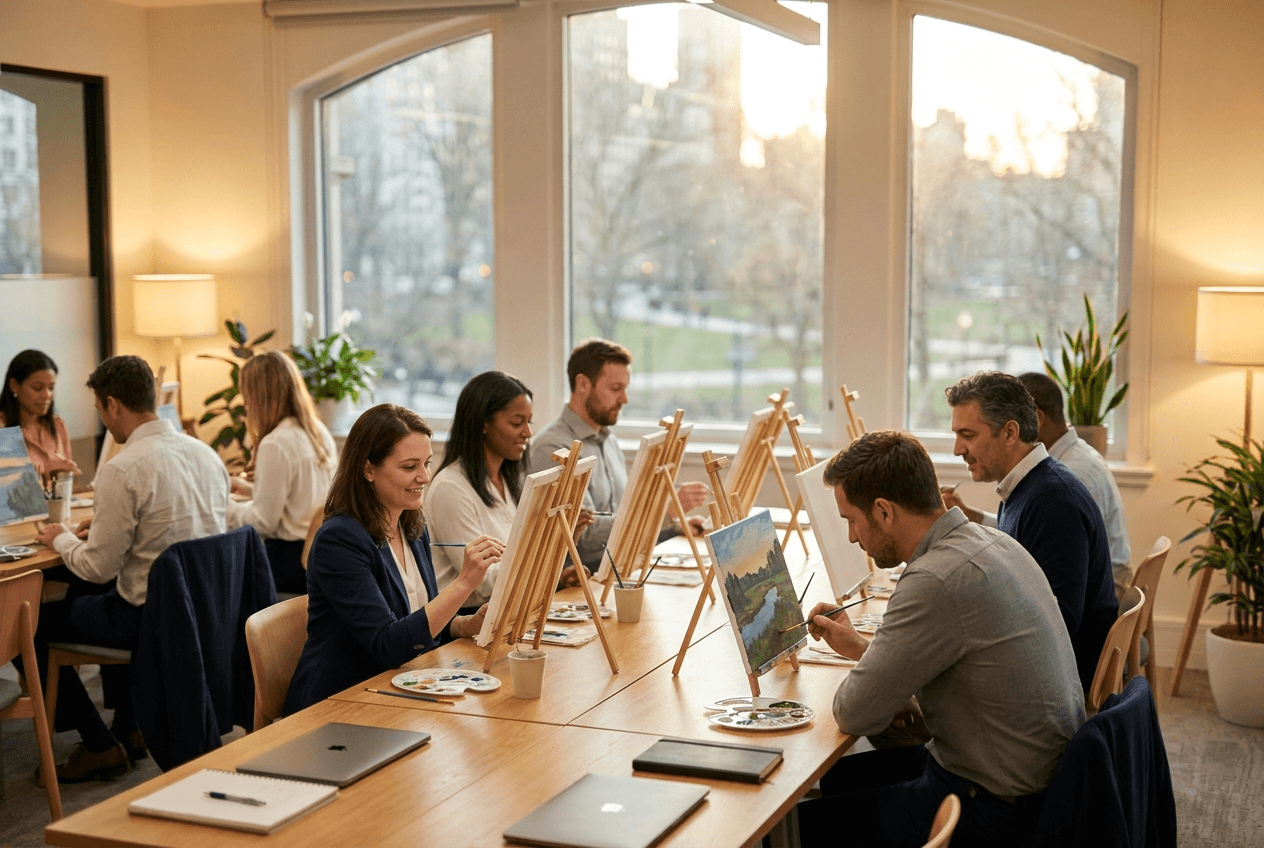 Workplace happiness isn't the same as workplace satisfaction. Satisfaction is about meeting expectations: fair pay, reasonable workload, decent management. Happiness goes deeper. It's about positive emotion, meaning, engagement, and connection.
Researchers Sonja Lyubomirsky and Ed Diener have shown that happier employees are more productive, more creative, more cooperative, and less likely to leave. A meta-analysis of over 200 studies found that happiness at work leads to around 12% higher productivity on average.
The good news is that happiness at work can be influenced by environment, and creative programs are one of the most direct environmental levers available.
When people feel creatively expressed, they feel more alive. When they feel more alive, they perform better. That chain of causality is well-established and deeply practical.
How Does Music Affect the Brain at Work?
Music activates more areas of the brain simultaneously than almost any other human activity. It engages the auditory cortex, motor system, limbic system (the emotional centre), and prefrontal cortex all at once. That's an extraordinary neural workout that has real-world effects on mood, focus, and social bonding.
Here's what the neuroscience shows:
Music reduces cortisol levels. Cortisol is the primary stress hormone. Studies published in journals including PLOS ONE have found that listening to and making music significantly reduces cortisol, even in short sessions. Lower cortisol means less anxiety and better focus.
Music triggers dopamine release. Dopamine is the brain's reward and pleasure chemical. Neuroscientists at McGill University found that emotionally moving music causes dopamine release, the same response triggered by food and positive social interaction. That's genuine joy, on demand.
Group music-making builds trust. When people make music together - even simple rhythm exercises or group singing - their heartbeats and breathing patterns synchronise. This physiological entrainment creates a sense of unity and trust that transfers to work relationships.
For companies running team music sessions, the benefits extend far beyond the session itself. The shared experience creates a mood baseline that carries through the rest of the day. Explore our music programs to see the range of instruments and styles available.
What Does Art-Making Do for Employee Wellbeing?
 Art-making reduces stress, improves focus, and creates a sense of mastery and accomplishment. Engaging in visual art activities lowers cortisol, activates the brain's reward system, and provides a structured outlet for emotions that often have no other channel in a professional setting.
A study by Drexel University researchers found that 45 minutes of creative activity significantly lowered cortisol in participants, regardless of their artistic experience level. You don't need to be talented to benefit. You just need to make something.
Here's why that matters in a work context:
Art creates calm in high-stress teams. Painting, drawing, and craft activities require focused attention on the present moment. This is mindfulness in action, without the instruction to "clear your mind" that many people find frustrating.
Art builds self-confidence. Making something you're proud of, however simple, produces a feeling of competence. For teams where people often feel like small cogs in a big machine, that feeling is genuinely transformative.
Art opens emotional expression. Some people find it hard to express how they feel in words, especially in a professional context. Art gives them a different channel. That expression reduces emotional suppression, which is a key driver of burnout.
Art fosters new connections. When colleagues share a creative experience - showing each other what they've made, laughing at their "terrible" painting, discovering someone has hidden artistic talent - they see each other differently. That new perspective strengthens the team.
At Art Gharana, our art and craft programs are designed specifically to create these moments. Discover our art and craft classes to see what we offer.
How Do Dance Programs Affect Happiness and Team Cohesion?
 Dance is among the most powerful happiness-boosting activities available to human beings. It combines physical movement, music, rhythm, and social interaction in a single experience. The effect on mood, energy, and social bonding is immediate and well-documented.
Research published in the Scandinavian Journal of Public Health found that regular dance participation was associated with significantly higher wellbeing, lower anxiety, and greater social connection. Unlike gym workouts, which are often solo and competitive, dance is inherently communal and expressive.
In a workplace context, dance programs offer something unique:
They dissolve hierarchy. On a dance floor, or in a Bollywood class, the CEO has no more authority than the junior analyst. Everyone's a beginner. That shared vulnerability creates a refreshing reset of social dynamics.
They release physical tension. Most office workers spend hours in static, hunched positions. Movement is a biological need. Dance provides it in a joyful, social form that people actually look forward to.
They build rhythmic synchrony. Groups that move together develop a sense of shared identity and coordination. Research shows that people who synchronise movements with others feel more connected, cooperative, and trusting of each other.
Whether it's Bollywood, Kathak, or contemporary movement, a dance program is one of the fastest ways to shift team energy. See our Kathak and dance offerings to explore what might resonate with your team.
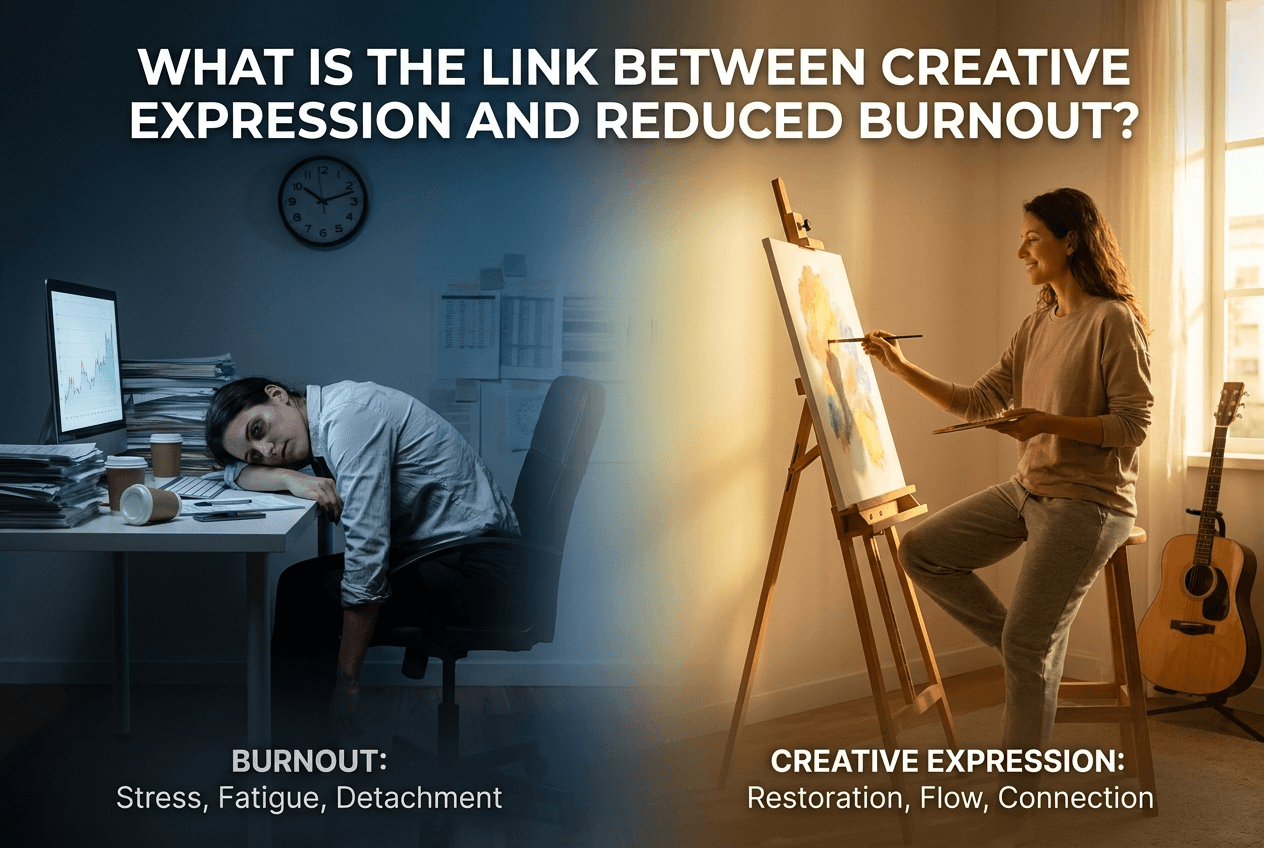
What Is the Link Between Creative Expression and Reduced Burnout?
 Creative expression acts as a direct buffer against burnout by providing emotional release, restoring a sense of agency, and activating the brain's default mode network - the part that processes experience, builds memory, and restores mental resources.
Burnout happens when people feel depleted, disconnected from meaning, and unable to recover. The typical corporate response is to reduce workload or offer time off. Both help. But neither addresses the deeper issue: people need more than rest. They need restoration. And restoration requires active engagement with something that feels alive and self-directed.
Creative programs provide exactly that. Music, art, and dance aren't passive like watching television. They require presence and engagement. But they're also free from evaluation, targets, and outcomes. That combination is what makes them restorative rather than just relaxing.
A 2023 workplace wellbeing report by Deloitte found that over 77% of employees had experienced burnout at their current job. That's a crisis. Creative programs won't solve structural overwork on their own, but they provide the regular restoration that makes difficult work sustainable.
Regular creative sessions embedded in the workweek are part of what Art Gharana calls a sustainable wellness model. Not a single workshop. A rhythm. Learn more about our approach and how it's designed for the long term.
How Can Companies Embed Music and Art Programs Into Daily Work Life?
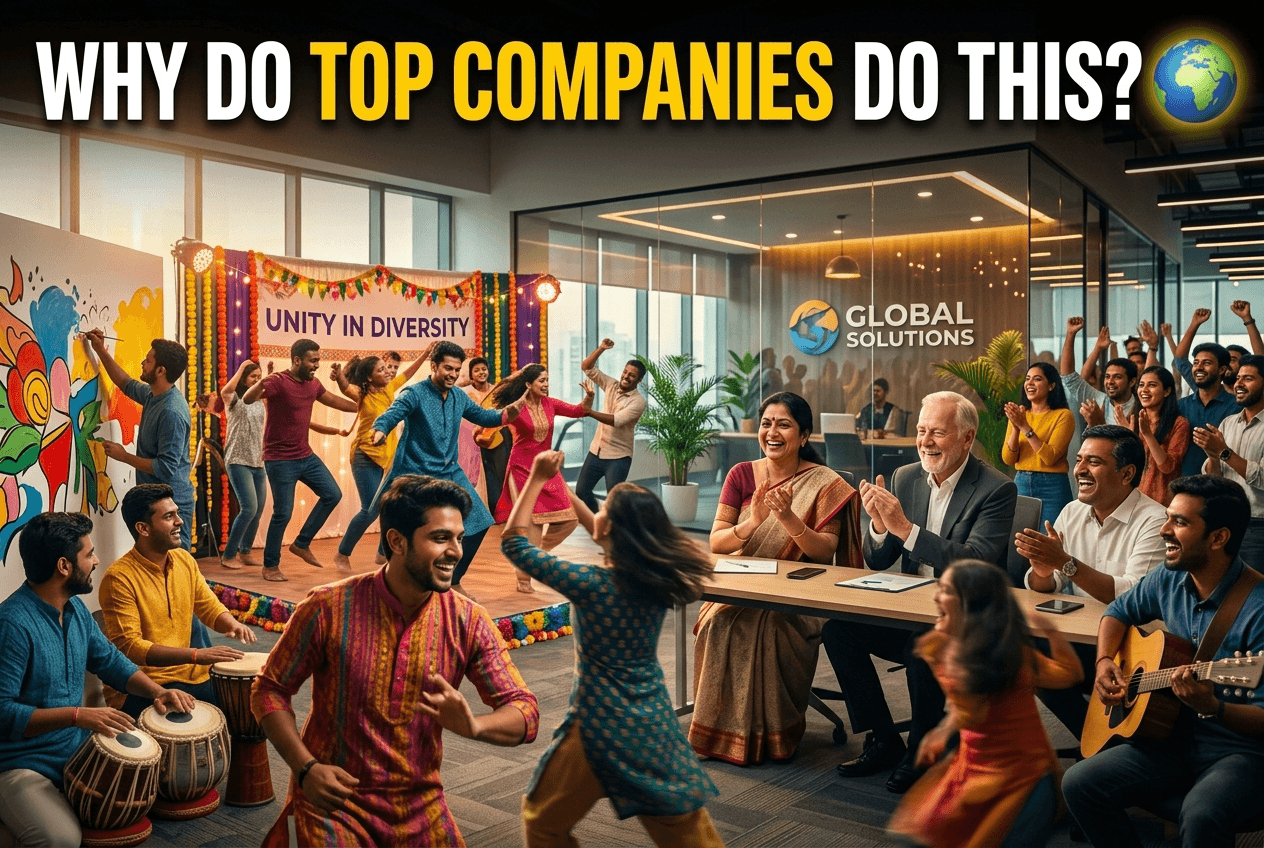
The key to lasting impact is integration, not addition. A one-time team event is forgettable. A regular creative rhythm becomes part of who you are as a company.
Here's a practical framework for embedding music and art into everyday work life:
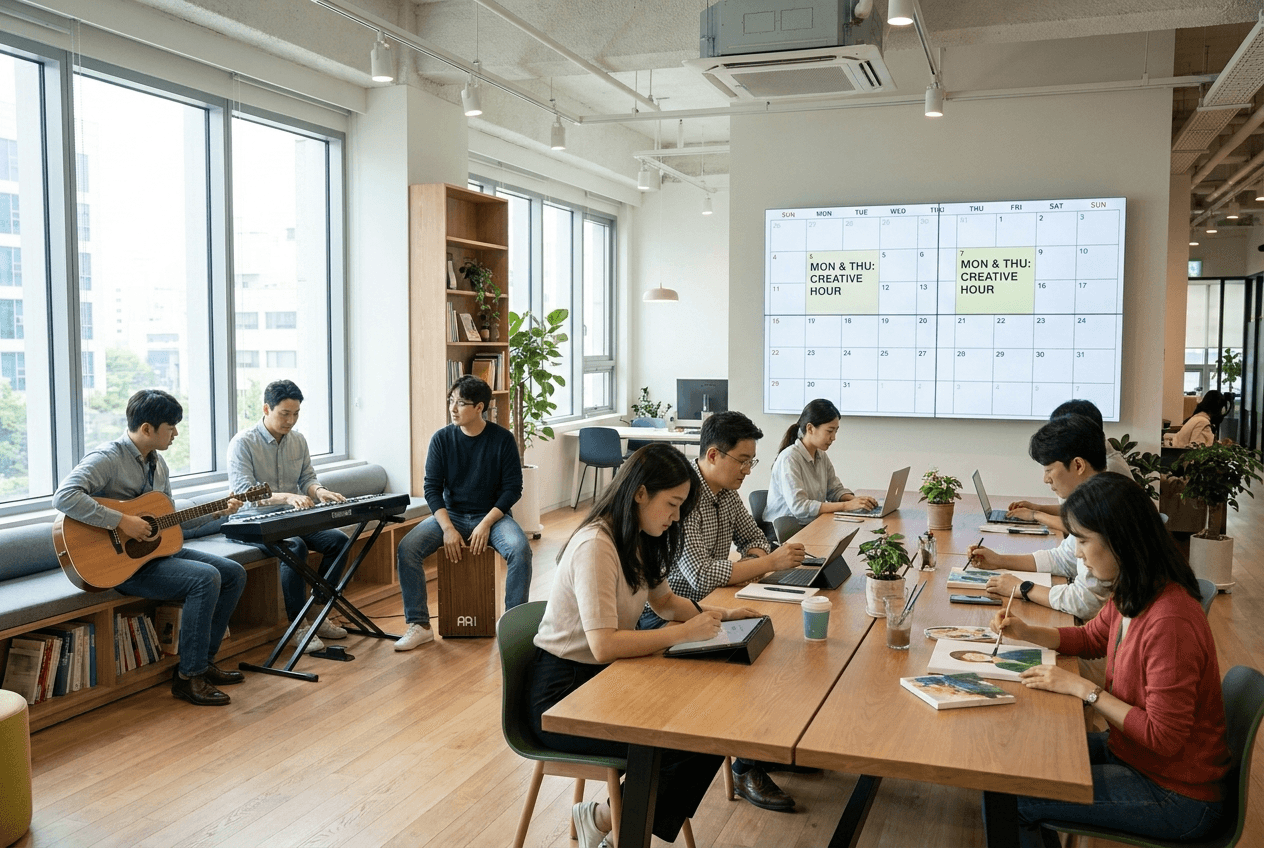
Choose a consistent time slot. A 45-minute music or art session twice a week, on the same days, builds anticipation and habit. Many companies do this at the end of Monday (to set the week's tone) and Thursday (to restore energy before the final stretch).
Match activities to team size and personality. A small, introverted team might love a quiet art session. A large, energetic team might thrive in a Bollywood dance class. The right fit matters. Our facilitators help you find it.
Rotate program types. Keep things fresh by alternating between music, dance, art, and mindfulness each month. Each modality activates different strengths and gives different people their moment to shine.
Measure impact simply. Before and after pulse surveys with two or three questions are enough. Ask: How happy do you feel at work this week? Do you feel connected to your colleagues? The trend lines will tell you everything.
Celebrate participation. Share photos from sessions in internal channels. Celebrate the awkward first attempt at the tabla just as much as the impressive performance. Culture is built in those small, honest moments.
Art Gharana's programs are built to make this implementation easy. We handle facilitation, scheduling, and program design. You focus on showing up. Book a free trial and experience what's possible.
Does Workplace Happiness Actually Affect Business Outcomes?
Yes, decisively. The relationship between employee happiness and business performance is one of the most replicated findings in organisational psychology.
Gallup's research shows that companies with highly engaged, happy teams outperform their peers by 23% in profitability, 18% in productivity, and 81% in lower absenteeism. These aren't marginal differences. They're the kind of gap that separates market leaders from laggards.
Happy employees also make better decisions, treat customers better, collaborate more generously, and innovate more consistently. They're the kind of people every company says it wants to attract. The question is whether you're building the conditions that attract and keep them.
Music and art programs are a proven part of that answer. They're not the only variable, but they're a powerful and underused one. For the relatively low cost of a structured creative program, the return, in wellbeing, retention, productivity, and brand, is extraordinary.
That's why we built Art Gharana's corporate wellness model the way we did: sustainable, expert-led, culture-first. Read what our students and participants say about the difference it makes.
Conclusion
Workplace happiness isn't a soft goal. It's a measurable, manageable outcome with a direct line to business performance. And music and art programs are among the most effective tools we have to cultivate it.
The science is clear. The neuroscience is compelling. The business case is strong. All that's left is the decision to start.
You don't need a huge budget or a complete culture overhaul. You need consistent, expert-led creative sessions, a team willing to try, and the understanding that investing in happiness is investing in everything else.
Book a free trial with Art Gharana today, and give your team a taste of what a genuinely creative workplace feels like.
Frequently Asked Questions
1. How quickly do music and art programs improve employee happiness?
Most teams notice a mood shift within the first two to three sessions. Stress levels visibly drop, energy in the room improves, and colleagues start interacting differently. Measurable improvements in pulse survey scores typically appear within four to six weeks of consistent programming, with more significant wellbeing changes evident over three months.
2. Do employees need any musical or artistic talent for these programs to work?
Not at all. In fact, being a beginner is part of what makes the experience powerful. The science shows that the wellbeing benefits of creative activity come from the act of making and engaging, not from skill level. Research from Drexel University found that cortisol reduction from art-making was equal across experience levels.
3. What is the difference between a one-off team activity and a sustainable creative program?
A one-off event creates a pleasant memory. A sustainable program creates culture. The key differences are frequency (weekly or fortnightly rather than quarterly), professional facilitation, variety across music, dance, art, and mindfulness, and integration with the team's regular rhythm. One creates a spike; the other builds a baseline.
4. Can remote and hybrid teams benefit from music and art programs?
Absolutely. Online creative sessions remove the friction of physical setup while preserving the shared experience. Many of Art Gharana's programs run online, with experienced instructors guiding participants across locations. The social bonding effect is present even virtually, particularly when cameras are on and participation is active.
5. What's the most common mistake companies make when starting creative wellness programs?
The most common mistake is starting with a single event and expecting cultural change. Culture requires repetition. A single workshop generates goodwill. A weekly creative session over three months generates transformation. Companies that commit to consistency see dramatically better results than those that treat creative wellness as a special occasion.