ChatGPT
 Google AI
 Grok
Grok Claude
Creative wellness programs that blend music, dance, art, and mindfulness into everyday work life are becoming powerful tools for attracting and retaining top talent. Companies offering these innovative programs see 75% of employers reporting improved talent attraction, 28% higher retention rates, and 22% increased employee engagement. Unlike traditional gym memberships or health screenings, creative wellness initiatives tap into employees' desire for meaning, purpose, and genuine connection at work, making your organization stand out in a crowded talent market.
The war for talent has never been fiercer. You're competing against hundreds of companies for the same skilled professionals, and everyone's offering competitive salaries, remote work, and health benefits. So how do you actually stand out?
Traditional perks aren't cutting it anymore. Today's top candidates want more than a paycheck. They want workplaces that invest in their whole self, not just their productivity. That's where creative wellness programs come in.
What Makes Creative Wellness Different from Traditional Programs?
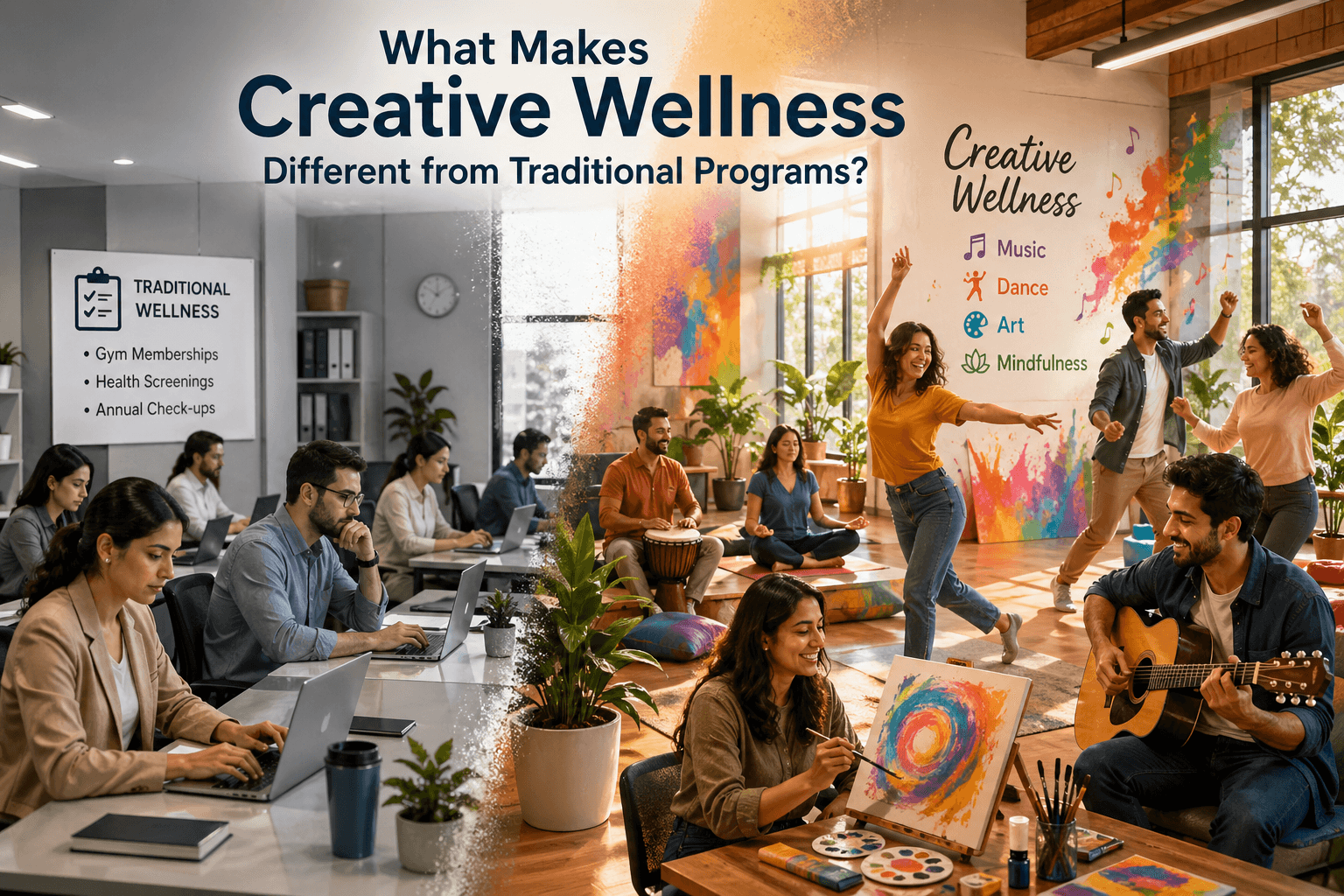 Creative wellness programs go way beyond the standard gym membership or annual health screening. They weave music, dance, art, and mindfulness practices directly into the fabric of your workplace culture.
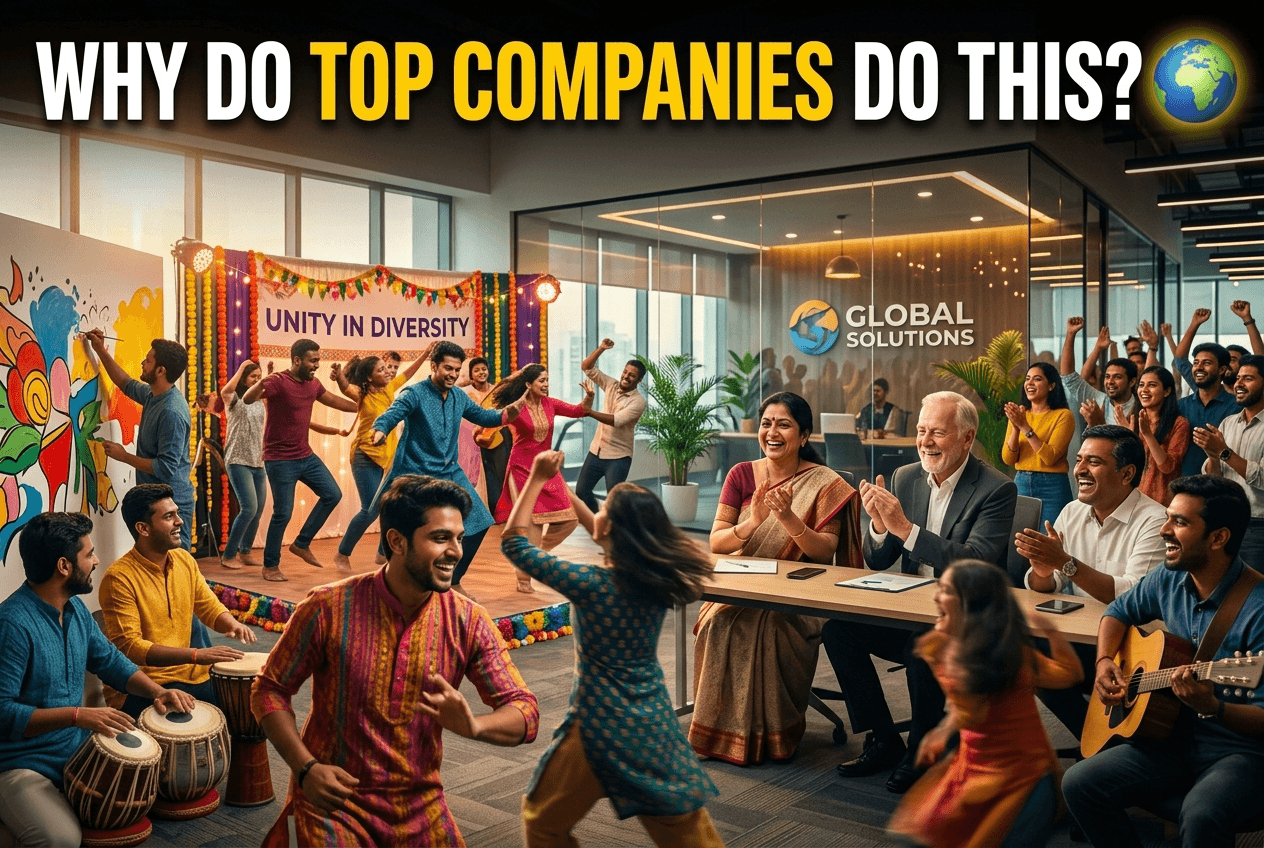
Think lunchtime music sessions where teams learn instruments together. Weekly dance breaks that get everyone moving and laughing. Art workshops that unlock creativity and reduce stress. Mindfulness practices that help employees stay grounded during busy seasons. These aren't just feel-good activities. They're strategic investments in your team's mental, emotional, and physical wellbeing that create real, measurable results.
Research from the Global Wellness Institute shows that companies embedding wellbeing into their culture experience 10% higher retention rates. But here's what really matters: creative wellness programs give your employees something traditional benefits can't. They offer genuine human connection, creative expression, and a sense of belonging that goes deeper than ping pong tables and free snacks.
Why Top Talent Cares About Wellness Programs
 The talent landscape has shifted dramatically. According to Deloitte's 2025 Gen Z and Millennial Survey, workers now seek a "trifecta" of money, meaning, and wellbeing when choosing employers. They're not willing to sacrifice their mental health for a bigger title.
Here's what the numbers tell us. 87% of employees consider health and wellness packages when choosing an employer. Over half of Gen Z and millennials say wellness programs are extremely important in making job decisions. And most striking of all: 88% of employees now value their wellbeing at work just as much as their salary.
Think about that for a second. Your wellness program carries the same weight as compensation in candidates' minds. If you're still treating it like an afterthought, you're already behind.
Top performers know that burnout kills careers. They've seen colleagues crash and burn. They've experienced the stress of toxic workplaces firsthand. So when they're evaluating job offers, they're looking closely at how you support employee wellness. Your creative wellness program isn't just a nice perk. It's proof that you actually care about your people beyond what they produce.
How Creative Programs Solve the Talent Attraction Problem
Let's get practical. How do music, dance, and art programs actually help you hire better people?
First, they differentiate you immediately. When a candidate sees that you offer weekly music sessions or art workshops, they know you're not a cookie-cutter company. You're willing to invest in unconventional approaches to employee happiness. That signals innovation, creativity, and forward thinking across your entire organization.
Second, creative programs demonstrate authentic care. Anyone can say they value work-life balance. But when you're actually bringing in music instructors, organizing dance sessions, and creating spaces for artistic expression, you're putting real resources behind your values. 76% of candidates want to know about company culture and values before accepting offers. Your creative wellness program gives them tangible proof of what you stand for.
Third, these programs attract the right people. The candidates who light up when they hear about your art sessions or mindfulness practices are exactly the kind of emotionally intelligent, well-rounded humans you want on your team. They value collaboration, creativity, and holistic wellbeing. Those qualities translate directly into better teamwork, innovation, and performance.
What the Data Shows About Creative Wellness and Hiring
The research on this is remarkably clear. Companies with strong employer brands can see a 50% decrease in cost per hire, and wellness programs are a major component of strong employer brands. 83% of companies say their wellness program is very or extremely important for talent acquisition.
But creative wellness programs specifically show even stronger results. According to research on art in the workplace, organizations that introduce creative spaces see improved wellbeing, increased innovation, and higher creativity among employees. The World Health Organization has found that engagement with visual art reduces anxiety and helps regulate mood, contributing to overall psychological resilience.
Music programs show similar benefits. Studies on music in the workplace reveal that listening to music you enjoy triggers the release of dopamine and serotonin, the brain's feel-good chemicals. Music helps suppress cortisol, the stress hormone, reducing the physical tension employees feel during busy periods.
When you combine these creative elements with traditional wellness offerings, you create a comprehensive program that addresses the whole person. That's what top talent wants. That's what makes them choose you over competitors.
How Creative Wellness Improves Retention (Your Best Recruitment Strategy)
Here's something most companies miss: your best recruitment tool is retention. Happy employees become your most effective recruiters. They refer talented friends. They post about their awesome workplace on social media. They become walking advertisements for your employer brand.
Creative wellness programs drive retention in powerful ways. Companies with wellness programs see employee engagement rise to 89%. Employer branding (which includes wellness programs) can lead to a 28% increase in retention rates.
Why does this work? Because creative activities build genuine connections between team members. When your employees learn to play guitar together, they're not just strumming chords. They're building trust, sharing vulnerability, and creating memories. Those bonds make people less likely to leave.
Art workshops create similar effects. When team members paint or draw together, they see different sides of each other. The quiet analyst reveals an artistic streak. The outspoken manager shows patience and focus. These discoveries deepen relationships and strengthen your culture.
Dance sessions break down hierarchies. Everyone looks a little silly learning new moves together. Executives and entry-level employees laugh at the same mistakes. This shared humanity makes your workplace feel more connected and less corporate.
The financial impact is huge. Replacing an employee costs three to four times their salary when you factor in recruiting, onboarding, and training. Every person who stays because they love your creative wellness program saves you tens of thousands of dollars. That money can fund more programs, creating a virtuous cycle.
What Top Companies Are Doing with Creative Wellness
Smart organizations are already using creative approaches to wellness. Apple designed its workspaces like art galleries. Google created designated creative spaces to boost employee satisfaction. Barts Health NHS Trust uses historical murals and mindfulness sessions that have been shown to improve both visual and clinical skills.
But you don't need Apple's budget to make this work. The key is consistency and authenticity. Here's what effective creative wellness programs look like in practice:
Music programs might include monthly jam sessions where employees can pick up instruments and play together. Lunch-and-learn sessions where people share their favorite music and discuss what it means to them. Curated playlists for different times of day to manage energy levels across the team.
Dance initiatives could be as simple as five-minute dance breaks between meetings. Virtual dance classes that remote and in-office employees can join together. Quarterly dance events celebrating different styles and cultures.
Art workshops work beautifully for team building. Guided painting sessions with local artists. Collaborative mural projects that employees build over time. Art therapy sessions that help process stress and build emotional intelligence.
Mindfulness practices ground everything else. Brief meditation sessions to start all-hands meetings. Guided breathing exercises available on-demand. Quiet creative spaces where people can decompress through journaling or sketching.
The most successful programs blend all these elements together into a cohesive wellness culture. They're not one-off events. They're woven into the rhythm of your workplace.
How to Pitch Creative Wellness to Skeptical Leadership
You're sold on creative wellness. But your leadership team might need convincing. They want ROI. They want data. They want to know this isn't just touchy-feely stuff that wastes time and money.
Here's your case: Companies that invest in workplace wellness see an average $3.80 return for every dollar spent. 82% of CEOs report a positive ROI from their wellness program, with 78% reporting returns greater than 50%.
But the real value goes beyond direct ROI. Organizations with poor employer brands pay 10% higher salaries to attract the same talent. If creative wellness programs strengthen your employer brand (and they do), they save you 10% on every single hire. For a company hiring 100 people at an average salary of $75,000, that's $750,000 in annual savings.
The productivity gains matter too. Engaged employees are 14% more productive. Companies with strong wellness programs report 35% lower absenteeism rates. When your team is healthier, happier, and more connected, they simply perform better.
Frame creative wellness as a strategic investment, not a cost. You're building competitive advantage in talent markets. You're reducing turnover expenses. You're boosting productivity and innovation. The art sessions and music workshops are the delivery mechanism for these business outcomes.
How to Start Your Creative Wellness Program
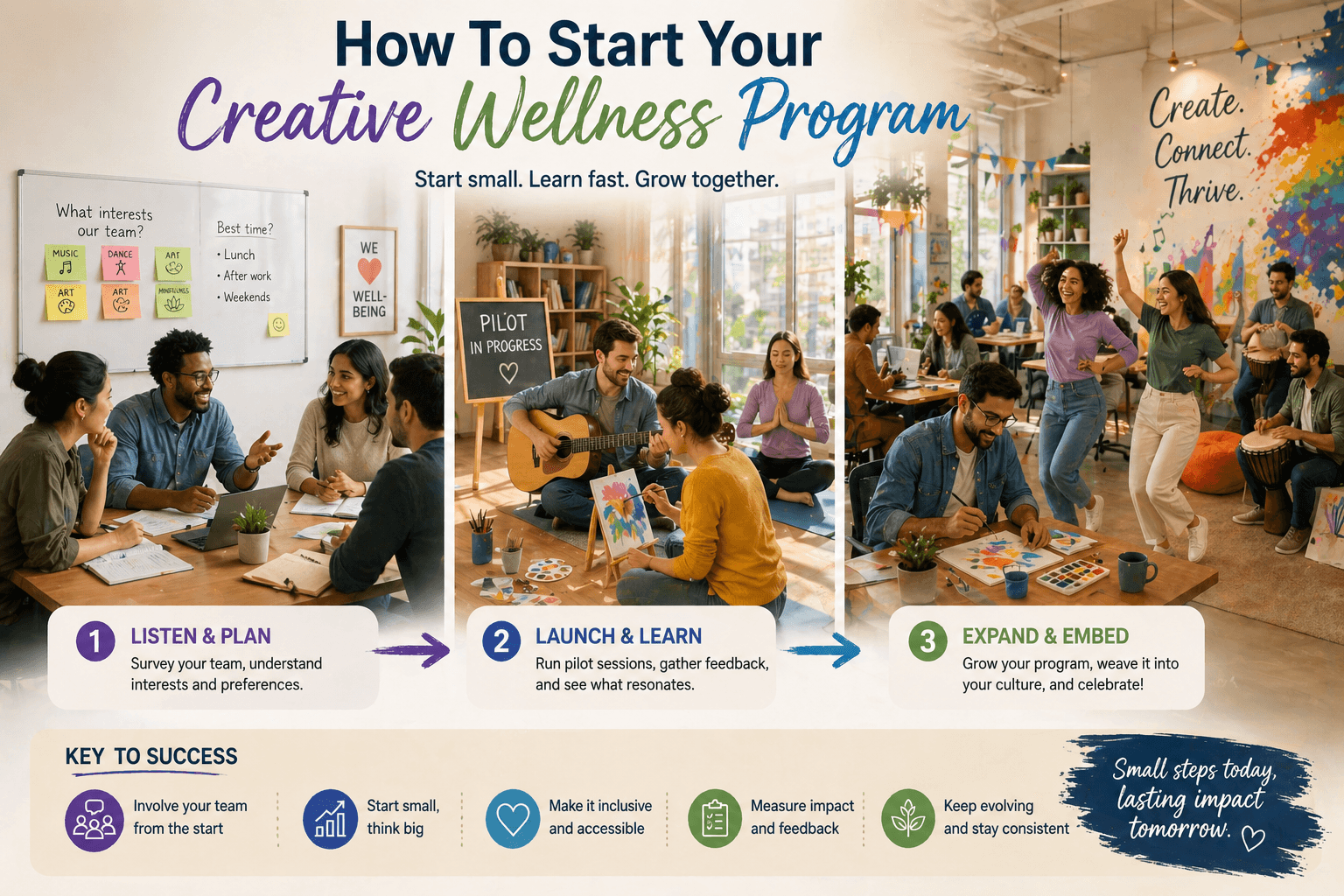 Don't try to build the perfect program from day one. Start small, measure results, and expand what works. Here's a practical roadmap:
Month 1: Listen and pilot. Survey your team about their interests. Do they want music programs? Dance sessions? Art workshops? What times work best? What format (in-person, virtual, hybrid)? Pick one or two activities to pilot with a small group.
Month 2: Launch and learn. Run your pilot programs. Track attendance and gather feedback. What worked? What flopped? What surprised you? Use this data to refine your approach.
Month 3: Expand and embed. Based on your learnings, add more activities. Start weaving wellness into your regular rhythms. Make creative sessions part of onboarding. Include wellness updates in company communications. Celebrate participation without making it mandatory.
Month 4 and beyond: Measure and grow. Track the metrics that matter. Are more candidates mentioning your wellness program in interviews? Is employee referral participation increasing? Are engagement scores rising? Are retention numbers improving? Use this data to make the case for expanding your program.
Partner with local artists, musicians, and wellness practitioners. Many are eager to work with companies and can offer group rates. You can also leverage digital platforms that provide pre-recorded sessions or virtual workshops.
Budget smartly. You don't need a huge investment to start. A few hundred dollars can cover a monthly workshop or subscription to a wellness app. As you demonstrate value, you can make the case for larger budgets.
How to Showcase Your Creative Wellness Program to Candidates
Having a great program means nothing if candidates don't know about it. You need to make creative wellness central to your employer brand.
Start with your careers page. Don't just list "wellness program" as a bullet point. Show it. Include photos of actual team members in music sessions, art workshops, or dance classes. Add employee testimonials about how these programs impact their lives. Create a dedicated section explaining your wellness philosophy and specific offerings.
Use social media strategically. Share behind-the-scenes moments from your creative wellness activities. Let employees post about their experiences. Create short video clips of your programs in action. This authentic content shows candidates what it's really like to work for you.
Include wellness in your interview process. When candidates ask about culture, talk about your creative wellness programs with specific examples. "Our team does a monthly music jam session. Last month, three people who'd never touched an instrument before joined in. It's that kind of space where it's safe to try new things." These concrete stories stick with candidates.
Empower your employees to be wellness ambassadors. When they're genuinely excited about programs, they'll naturally mention them to friends and in their networks. This word-of-mouth credibility is worth more than any recruitment ad.
Make sure your wellness program shows up in employer review sites. Encourage happy employees to mention it in their Glassdoor reviews. 70% of Glassdoor users say they're more likely to apply if the employer is active on Glassdoor.
The Future of Creative Wellness in Talent Attraction
The trend toward creative wellness isn't slowing down. Nearly half (48%) of HR professionals believe a focus on employee wellbeing will shape employer branding in the next two years. Companies that invest now are positioning themselves ahead of the curve.
We're seeing personalization become more important. Instead of one-size-fits-all wellness programs, employees now get budgets to spend on what matters most, whether that's music lessons, dance classes, or art supplies. This shift gives employees more control over their wellness journey.
Technology is making creative wellness more accessible. Virtual music lessons connect remote teams. Digital art platforms let employees create together from anywhere. Mindfulness apps provide on-demand support. But the core principle remains: people crave creative expression and human connection at work.
The companies winning the talent war will be those that recognize wellness as a competitive advantage, not a compliance checkbox. They'll invest in programs that genuinely support their employees' whole selves. They'll build cultures where creativity, connection, and wellbeing are as important as productivity.
Your creative wellness program can become your strongest recruitment tool. It demonstrates your values in action. It creates the kind of workplace culture that top talent seeks out. It builds the genuine employee happiness that fuels referrals, reduces turnover, and strengthens your employer brand.
The question isn't whether you can afford to invest in creative wellness. It's whether you can afford not to. Every day without these programs is a day you're losing ground to competitors who've figured out what today's talent really wants. Not just a job, but a workplace that nourishes their whole self.
Frequently Asked Questions
1. Do creative wellness programs actually impact hiring success?
Yes, significantly. 87% of employees consider health and wellness packages when choosing an employer, and companies with strong wellness programs are three times more likely to make quality hires. Creative wellness programs strengthen your employer brand, making you more attractive to top candidates. 54% of workers prioritize employer wellness benefits when choosing a new job, so having distinctive programs like music sessions or art workshops helps you stand out from competitors offering only traditional benefits.
2. How much should I budget for a creative wellness program?
Start small and scale based on results. Initial pilots can run on a few hundred dollars per month, covering guest instructors or digital platform subscriptions. As you demonstrate ROI, expand your investment. Companies see an average $3.80 return for every dollar spent on wellness programs, and 82% of CEOs report positive ROI. Consider that poor employer branding forces companies to pay 10% higher salaries, so even modest wellness investments can create significant savings through improved talent attraction.
3. What if my team isn't interested in music, dance, or art?
Survey your employees before launching programs. Not every team will love every activity, which is why variety matters. Some people connect through music, others through visual art, others through movement. The key is offering choices and making participation voluntary, not mandatory. Research shows that employees who receive input opportunities are more engaged. Start with pilot programs based on expressed interest, gather feedback, then expand what resonates. The goal is creative expression and connection, which can take many forms.
4. How do I measure the success of creative wellness programs?
Track both leading and lagging indicators. Leading indicators include program participation rates, employee feedback scores, and engagement in wellness activities. Lagging indicators include offer acceptance rates (do more candidates accept?), employee referral volume (are current employees recommending friends?), retention rates (are fewer people leaving?), and candidate quality scores. Companies with wellness programs see 22% increased employee engagement and 28% higher retention rates. Monitor these metrics quarterly to demonstrate program impact.
5. Can creative wellness programs work for remote teams?
Absolutely. Virtual music sessions, online art workshops, and digital mindfulness practices work beautifully for distributed teams. Many platforms offer remote-friendly creative wellness options. The key is creating shared experiences that build connection despite physical distance. Schedule sessions during overlapping work hours, use breakout rooms for small group activities, and create channels where team members can share their creative work. 56% of remote workers report higher engagement when companies provide proper support, and creative wellness programs adapted for remote work contribute to this engagement.
Ready to transform your talent attraction with creative wellness?
Book a free trial and discover how music, dance, and art programs can make your company the employer top talent chooses.