ChatGPT
 Google AI
 Grok
Grok Claude
Employer branding in India is broken. Not because companies are not investing in it, but because they are investing in the wrong things. The majority of Indian employer branding budgets in 2026 go toward careers page redesigns, LinkedIn banner campaigns, Great Place to Work certifications and employer branding videos that look remarkably similar regardless of which company produced them. The result is a talent market in which every major Indian employer looks approximately the same to the candidates who matter most.
The companies breaking through this sameness are not spending more on employer branding. They are doing something genuinely different inside the company that generates authentic employer brand content automatically. Creative programmes, specifically live music, dance and art sessions that employees participate in and share on social media, are among the most powerful available tools for generating this kind of authentic, distinctive employer brand content in the Indian market.
What Employer Branding Actually Is in 2026
 Employer branding is not what a company says about itself. It is what employees, candidates and the broader talent community say about the company when no HR person is in the room. In a market where Gen Z candidates research company culture through LinkedIn posts, Glassdoor reviews, AmbitionBox ratings and the Instagram Reels of current employees before making any engagement decision, authentic employee signals are infinitely more credible than any employer brand campaign.
This means the most effective employer branding strategy available to Indian companies in 2026 is not to invest more in telling candidates what the company is like. It is to create genuine experiences that employees want to share. Art Gharana's corporate programme is designed precisely for this: every group session is an experience that employees share, discuss and remember, generating authentic employer brand content as a natural by-product of genuine employee enjoyment.
The Creative Programme Employer Brand Flywheel
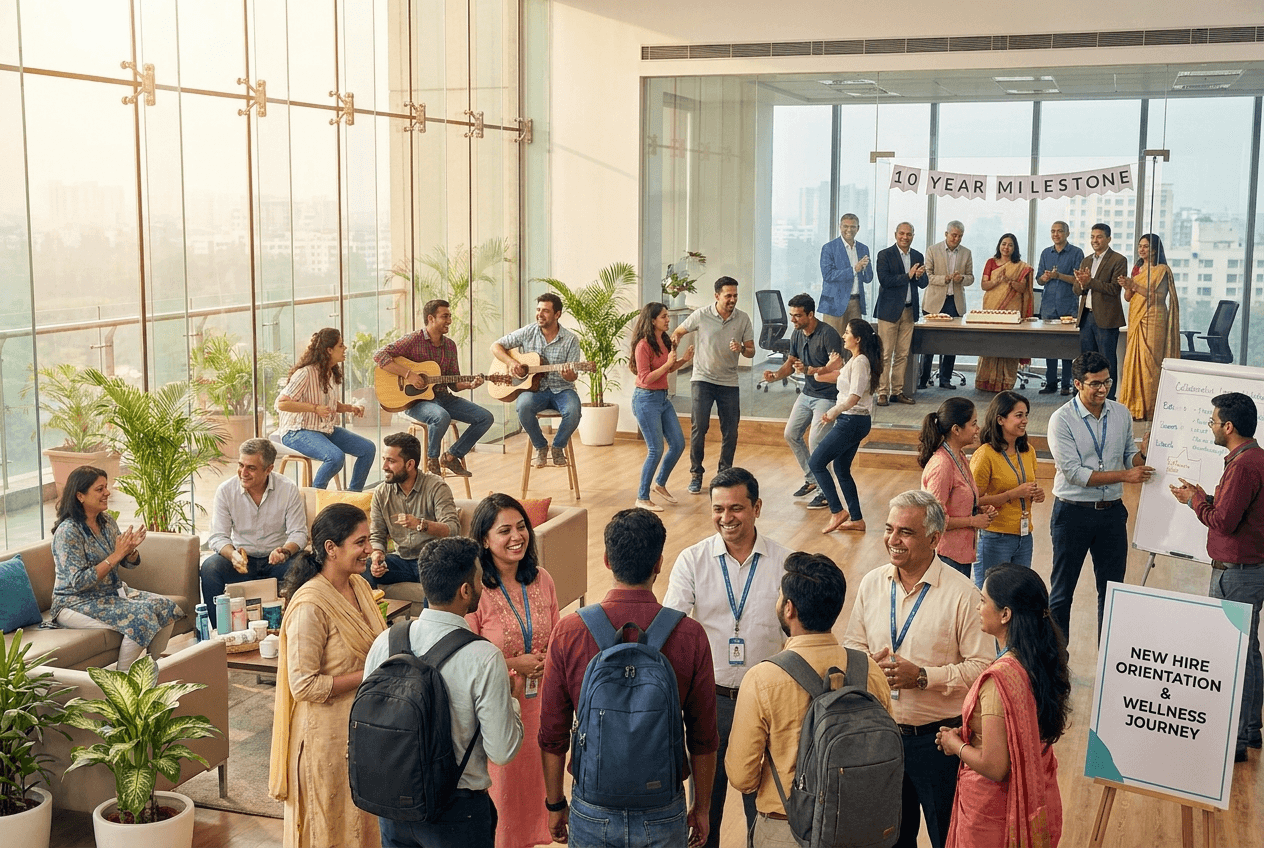 Creative wellness programmes generate employer brand content through a self-reinforcing flywheel. An employee participates in a live Art Gharana tabla session. They enjoy it genuinely and feel proud of their company. They post a short video on Instagram Reels or LinkedIn Stories. A candidate evaluating the company sees the post. Their impression of the company's culture is formed by what they see: a real employee having a genuinely good time in a company that provides something unexpectedly distinctive. The candidate applies. In the interview, they mention the tabla session specifically. The hiring team confirms it is real. The candidate accepts the offer.
This flywheel is not hypothetical. It is the documented experience of companies across India's IT and services sectors that have implemented creative wellness programmes and observed their employer brand impact. The social media generation of talent discovers companies through the authentic content of people they trust. Art Gharana sessions generate exactly this kind of authentic, shareable content.
The EVP Case for Creative Benefits
The Employer Value Proposition has three dimensions that matter most in the Indian talent market in 2026. Functional: salary, equity, growth and career development. Psychological: culture, belonging, recognition and purpose. Creative and cultural: the opportunity to grow as a complete human being, including in ways that have nothing to do with the job description. Most Indian employers have a well-developed functional EVP and an emerging psychological EVP. Almost none have a creative and cultural EVP. Art Gharana's corporate programme is designed to fill this gap precisely: a live, certified, culturally resonant creative wellness benefit that is unique in the Indian corporate market and that provides a genuinely distinctive pillar of the employer value proposition.
LinkedIn: The Primary Research Platform
LinkedIn is the primary research platform through which Indian knowledge worker candidates evaluate potential employers before applying. A company whose employees regularly post authentic, enthusiastic content about their creative workplace experiences, tabla workshops, Bollywood dance sessions, vocal training groups, stands out immediately in the LinkedIn feeds of potential candidates. The content mathematics are simple: a LinkedIn video of an employee participating in a live Art Gharana session generates more genuine employer brand value than any number of generic culture posts about collaborative environments.
Glassdoor and AmbitionBox: The Culture Review Platforms
For Gen Z and Millennial candidates in India, Glassdoor and AmbitionBox are essential research tools. Reviews that specifically mention positive cultural experiences, live music sessions, creative wellness programmes, cultural showcases, are among the most credible and influential content available to candidates evaluating a company. Unlike generic culture claims in job postings, review-based mentions of specific unusual benefits carry the credibility of unpaid employee testimony.
Companies that implement Art Gharana programmes consistently find that cultural reviews on these platforms improve, specifically in the categories of company culture, work-life balance and employee happiness. These review improvements feed back into the talent pipeline: better creative culture generates better reviews, better reviews attract more and better candidates, stronger teams generate better experiences and write better reviews.
The EVP Communication Strategy
Once a creative wellness programme is in place, ensure it is visible at every talent touchpoint. In job listings: include a specific mention of the Art Gharana programme, not a generic wellness claim. In offer letters: highlight it as a named benefit candidates can research. In onboarding: schedule the first session in the new employee's first week. In LinkedIn employer brand content: feature session clips and employee testimonials regularly. Book a branding-focused pilot session to begin generating the content that builds this employer brand advantage.
About Art Gharana
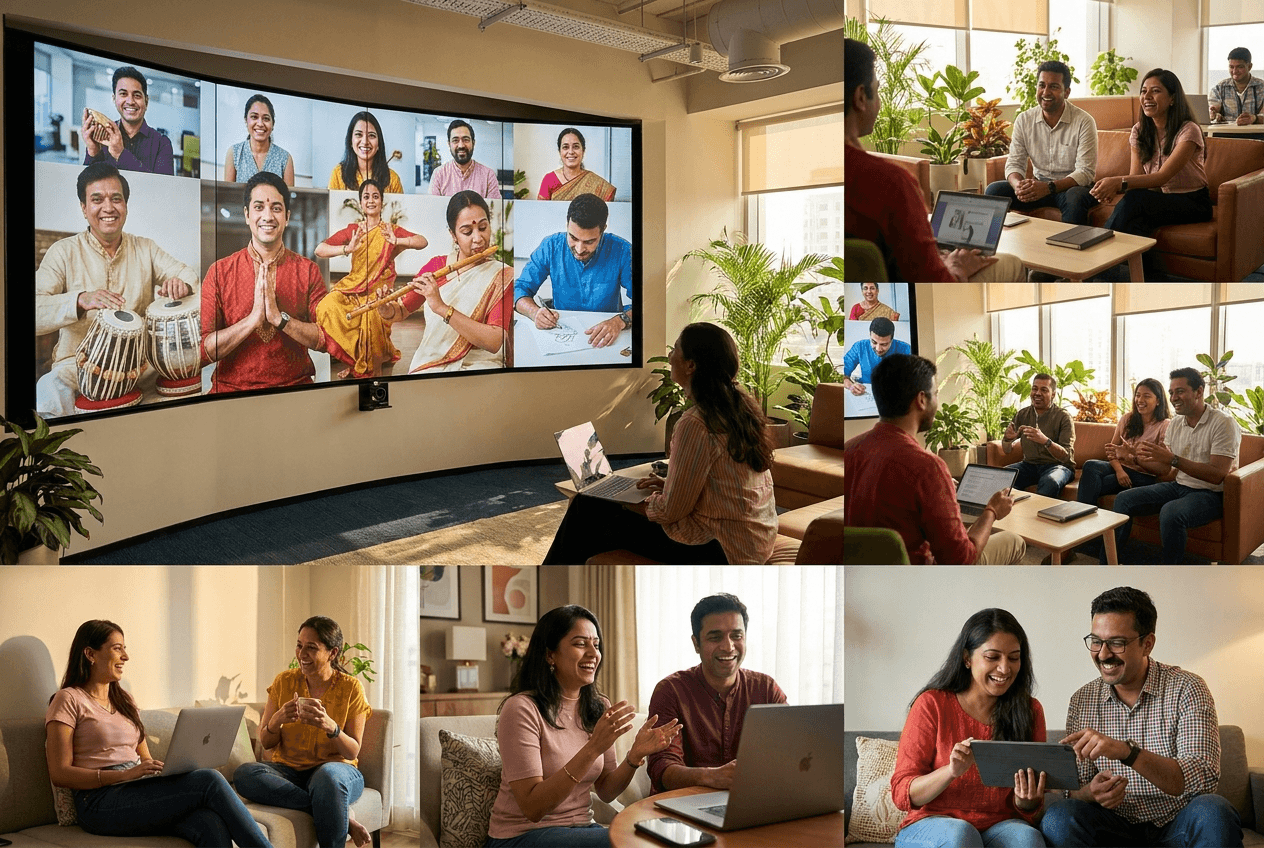 Art Gharana is the creative employer branding partner for forward-thinking Indian companies. Live music, dance, art and vocal sessions that generate authentic culture content, build genuine community and differentiate your employer brand in a market of sameness. View our instructor profiles, explore the full programme range and explore creative wellness for employer branding to design your differentiation strategy.
Frequently Asked Questions
1. How do creative programmes improve employer branding?
Creative programmes generate authentic, shareable employee content that builds genuine employer brand perception. When employees post about their tabla session or Bollywood dance class, they create employer brand content that no campaign can replicate for credibility or reach.
2. What makes a distinctive EVP in India in 2026?
A strong EVP combines competitive compensation with distinctive creative and cultural benefits that demonstrate genuine investment in employees as complete human beings, not just professional resources.
3. Can music and dance programmes improve Glassdoor ratings?
Yes. Company culture and workplace happiness are among the most frequently cited factors in Glassdoor reviews. Employees who experience genuine creative enrichment at work consistently rate culture and management higher than those at companies with only standard financial and fitness benefits.
Art Gharana | India B2B Blog Pack | Blog 7 of 8 | artgharana.com
The Employer Brand Crisis in Indian Tech
India's technology sector has an employer branding homogeneity problem that most HR leaders recognise but few have found an effective solution to. Walk through the careers pages of any ten major Indian IT companies and the same claims repeat: collaborative culture, continuous learning, flexible working, diverse and inclusive environment. Walk through their Glassdoor reviews and the same descriptions repeat. The sameness is striking, and it represents a genuine strategic risk for companies that need to differentiate their employer brand to attract and retain scarce talent. The solution is not better employer branding copywriting. The solution is doing something genuinely different inside the company that gives employees specific, authentic, shareable experiences that none of their former colleagues at other companies can match. Creative wellness programmes are the most direct and practical way to create this differentiation in the Indian IT market in 2026.
The EVP Communication Strategy
Once a creative wellness programme is in place, HR leaders should ensure it is visible at every talent touchpoint. In job listings: include a specific mention of the Art Gharana programme, not a generic wellness claim. The specific detail of live music or dance wellness is far more memorable and distinctive than any generic mention of a positive work environment. In offer letters: highlight the programme as a named benefit that candidates can research and anticipate. In onboarding: schedule new employees into their first Art Gharana session within the first week, so the culture experience is real before any other cultural friction has the opportunity to create doubt. In LinkedIn employer brand content: feature session clips, employee testimonials and showcase performance videos regularly. The goal is to make the creative wellness programme a specific, named, visible part of the employer brand that candidates encounter before they apply, that is confirmed in the hiring process and that is experienced exactly as promised in the first week of employment.
Creative Culture as a Competitive Moat
The final and most strategically important argument for investing in creative workplace culture is the competitive moat it creates over time. A company that has built a genuine, distinctive creative culture over three to five years has an employer brand asset that cannot be rapidly replicated by a competitor who decides to copy the approach. Culture is not a feature that can be launched in a quarter. It is a fabric of shared experiences, relationships, stories and norms that develops through years of consistent, genuine investment. The companies that begin building creative culture through Art Gharana's programme in 2026 are establishing a three to five year head start over competitors who have not yet recognised the opportunity. By the time those competitors begin their own creative culture programmes, the early movers will have built a creative community, a body of authentic employer brand content and a talent network of employees and alumni who are enthusiastic advocates. This compounding cultural advantage is the most powerful and most durable competitive advantage available to employers in India's talent market, and it begins with a decision to invest in genuine creative experience today.
Measuring the Employer Brand Impact
HR leaders who want to measure the employer brand impact of a creative wellness programme should track five metrics before and after implementation. Offer acceptance rate: if the programme is genuinely differentiating, acceptance rates should improve as candidates increasingly choose the company in part because of the creative culture signal. Time to fill roles: companies with stronger employer brands consistently fill roles faster, reducing the productivity cost of vacancy. Quality of hire: measured through first-year retention rates and performance ratings, which tend to be higher when candidates self-select based on culture fit. Referral application rate: employees who are proud of their employer's culture are significantly more likely to refer talented friends, and referral hires consistently outperform other sourcing channels. Glassdoor and AmbitionBox review scores: specifically in the culture, work-life balance and employee happiness categories where creative wellness programmes have the most direct impact. Together these metrics build a quantitative employer brand ROI case that can be presented to finance and leadership stakeholders alongside the qualitative cultural case.
Creative Programs as a First-Mover Advantage
The employer branding landscape in India is at a tipping point. The next wave of genuinely distinctive employer brands will not be built by better copywriting or better photography. They will be built by companies that have genuine, specific, shareable employee experiences that no amount of brand management can fabricate. Art Gharana's corporate programme is the most direct available investment in this kind of genuine employer brand substance. Every session is an experience employees share authentically. Every showcase is an event generating content no campaign budget can replicate for authenticity. Every employee who loves the programme becomes an organic brand ambassador whose testimony is more credible and more influential than any produced employer brand asset. The companies implementing Art Gharana's programme in 2026 will have a body of authentic employer brand content by 2027 that their competitors simply do not have and cannot quickly generate. This content advantage compounds year over year. The first-mover employer brand advantage of creative culture investment is available now, in this specific window, before the market catches up.
The Art Gharana Corporate Advantage
Art Gharana is the only platform combining live music, dance, art and vocal wellness specifically positioned for corporate teams in India. The programme covers seven disciplines: Bollywood dance, Kathak classical dance, Bharatanatyam classical dance, tabla Hindustani percussion, bansuri flute, Hindustani vocal and Carnatic vocal. All instructors are formally certified in their respective disciplines and have been specifically vetted for their ability to deliver engaging, effective sessions in the online corporate format. The programme is available to companies of any size, from five-person startups to enterprise organisations with thousands of employees across multiple Indian cities. Sessions are delivered entirely online, making the programme equally accessible to teams in Mumbai, Bangalore, Delhi, Chennai, Hyderabad, Pune, Ahmedabad, Jaipur, Lucknow, Chandigarh, Kochi, Coimbatore and every other Indian city, as well as to employees working from home in hybrid or fully remote arrangements. Session scheduling is fully flexible within IST, allowing HR leaders to slot sessions into working day schedules without disrupting core business hours. The corporate pilot programme is the recommended starting point: four to six weeks of weekly group sessions for a specific team of fifteen to fifty employees, generating direct engagement data, authentic employer brand content and a concrete business case for broader rollout. The pilot is completely free. The business case builds itself from the data generated in the first few sessions. Art Gharana is ready to begin today.
Key Takeaways for HR Leaders
The most important insights from this guide for HR leaders and CHROs considering creative wellness investment in India in 2026 can be summarised clearly. The global corporate wellness market is growing to $118.21 billion by 2034, driven by companies recognising that employee wellness has physical, mental and creative dimensions that the first generation of wellness programmes did not address. Indian companies that invest in the creative wellness pillar now, while it remains genuinely distinctive, will enjoy a talent attraction and retention advantage that compounds over the coming years. The scientific evidence for music and creative arts as workplace wellness interventions is robust and growing, with the 2025 BMC Complementary Medicine review providing the most recent and comprehensive confirmation. The retention ROI case is straightforward: preventing two to four additional departures per year from a team of fifty is typically sufficient to justify full programme cost. The employer brand ROI case is equally compelling: creative programmes generate authentic employee content that no budget can replicate for credibility or reach. And the Gen Z and Millennial alignment is direct: creative and cultural benefits address the specific values that drive the employment decisions of India's largest and most influential workforce cohorts. Art Gharana is ready to deliver all of this for your company. The pilot is free. Begin today.
Why Indian Companies Must Act Now on Creative Wellness
The window for first-mover advantage in creative corporate wellness in India is open right now. The global corporate wellness market is growing from $68.41 billion in 2025 to $118.21 billion by 2034, and the growth is being driven by companies recognising that the definition of employee wellness has expanded beyond fitness and meditation to include creative and cultural dimensions. Indian companies that position themselves at the forefront of this expanded definition now will have a multi-year head start over competitors who wait for the trend to become mainstream. The parallels with physical fitness benefits are instructive. In 2015, a company that offered a Cult.fit-style corporate fitness benefit was genuinely differentiating. By 2020, it was standard. By 2025, it was a hygiene factor that companies could not afford to omit but derived no competitive advantage from providing. The creative wellness trend is at exactly the 2015 stage in India in 2026. Companies that act now will enjoy the differentiation window. Companies that wait will enter the market as standard-setters rather than leaders, having missed the opportunity to build a genuine first-mover advantage in what is about to become a mainstream expectation.
Art Gharana's corporate programme is available immediately, with a pilot session that is completely free to experience. The programme has been designed specifically for corporate delivery in India, covering the disciplines that resonate most with Indian employees across all regional backgrounds, delivering in a live online format that works for teams in every Indian city and in hybrid and remote working arrangements, and providing the cultural authenticity that makes Indian corporate employees genuinely engage rather than merely tolerate. The business case for investing in creative wellness now rather than later is clear, the programme is ready to deliver, and the first-mover advantage is available to any Indian company willing to act on what its Gen Z and Millennial employees are already telling it they need. Art Gharana is ready to be that partner. The pilot is the first step. Begin today.
Summary: The Creative Wellness Investment for Indian HR Leaders
Indian HR leaders and CHROs who are evaluating creative wellness investment in 2026 are making a decision that will shape their company's talent position for the next five years. The evidence from the scientific literature, the economic research on attrition costs, the employer branding data from LinkedIn and Glassdoor, and the values research on Gen Z and Millennial workplace preferences all point to the same conclusion: creative and cultural wellness is the most underutilised and most value-generating employee benefits investment available to Indian companies in 2026. It is underutilised because it is newer than fitness and meditation benefits. It is value-generating because it is genuinely distinctive, generates authentic employer brand content, builds the community and belonging that reduce attrition, and directly addresses the values that drive the employment decisions of India's largest and most mobile workforce cohorts. Art Gharana is the programme that makes this investment real: live, certified, culturally resonant, online, flexible and beginning with a free pilot that generates its own business case from the first session.
The companies that implement Art Gharana's creative programme in India in 2026 will have a distinctive, authentic, employee-generated employer brand asset that their competitors cannot quickly replicate. The social media content generated by genuine employee participation in live music and dance sessions is the most credible form of employer brand content available: specific, authentic, enthusiastic and reaching precisely the right audience of other professionals who are evaluating their own employment options. This organic content, generated as a natural by-product of an engaging creative programme rather than as a deliberate employer brand investment, compounds over time as the creative community grows and more employees become organic advocates. The employer brand advantage of early adoption in creative wellness is real, it is measurable and it is available right now to any Indian company willing to make the investment. Art Gharana's programme is the vehicle. The pilot session is completely free and available immediately. The employer brand journey begins from the first session.
People Also Ask: Creative Programs and Employer Branding in India
What is employer branding and why does it matter in India in 2026?
Employer branding is the perception of a company as an employer, shaped by what employees, candidates and the talent community say about it. In India in 2026, employer branding matters because candidates research company culture extensively before applying or accepting offers. LinkedIn posts, Glassdoor reviews, AmbitionBox ratings and informal peer networks all create a transparent talent market where authentic employee signals are infinitely more influential than corporate claims. Companies with strong employer brands fill roles faster, attract better candidates, pay less for talent acquisition and retain employees at higher rates than companies with weak or generic employer brands.
How do music and dance programs improve employer branding in India?
Music and dance programs improve employer branding in India by generating authentic, shareable employee content that no marketing budget can replicate for credibility. When an employee posts a short video of their Art Gharana tabla session on LinkedIn with a genuine caption, they create employer brand content that reaches their professional network of candidates, is attributed to a real employee rather than HR, and communicates something specific and memorable about the company's culture. This organic content is more persuasive than any employer brand campaign because it comes from someone the candidate knows or follows, not from the company itself.
What is an employer value proposition (EVP) and how do creative benefits strengthen it?
An employer value proposition is the complete set of benefits and experiences an employer offers in exchange for an employee's time, talent and commitment. Creative benefits strengthen an EVP by adding a genuinely distinctive pillar that most employers lack: the creative and cultural dimension. A complete EVP in India in 2026 covers financial benefits, career development, flexible working, mental wellbeing and creative and cultural enrichment. Most Indian employers have the first four. Almost none have the fifth. Companies that add creative and cultural programming to their EVP own a category of employer brand differentiation that is not yet commoditised.
How can Indian companies use LinkedIn for employer branding in 2026?
Indian companies can use LinkedIn for employer branding in 2026 most effectively by creating conditions for genuine employee content rather than produced corporate content. Employees who participate in live Art Gharana sessions and post about them on LinkedIn create content that achieves higher organic reach, generates more meaningful candidate engagement and communicates culture more credibly than any employer-produced brand post. HR teams should encourage and amplify this employee content, provide easy content creation support through professional photography or video capture during sessions, and create a culture where employees feel genuinely proud to share their workplace creative experiences publicly.
What makes employer branding distinctive in a competitive Indian talent market?
Distinctive employer branding in the competitive Indian talent market in 2026 requires offering something specific, genuine and shareable that candidates cannot find at comparable employers. The most common employer brand claims, collaborative culture, continuous learning, inclusive environment, are so ubiquitous that they carry no differentiation value. Distinctive employer brands are built on specific experiences that employees describe in specific terms: not 'we have a great culture' but 'we have weekly Bollywood dance sessions with a certified instructor and I just performed at our company showcase.' This specificity is what converts passive brand awareness into active candidate interest.
What is the impact of creative benefits on Glassdoor ratings in India?
Creative benefits positively impact Glassdoor ratings in India by improving the culture and happiness dimensions that candidates weigh most heavily when researching employers. Employees who experience genuine creative enrichment at work, through live music and dance sessions, quarterly showcases and employer investment in their personal creative development, rate company culture, work-life balance and employee happiness significantly higher than those at companies with only standard financial and fitness benefits. These improved ratings attract better-fit candidates, improve offer acceptance rates and create a virtuous cycle of talent quality improvement.
How long does it take to see employer brand improvement from creative programs?
Employer brand improvement from creative programs in India typically becomes visible within three to six months of programme implementation. The first wave of authentic employee social content, Instagram Reels and LinkedIn posts about live sessions, generates improved brand perception among candidates in employees' professional networks. Glassdoor and AmbitionBox review improvements typically appear within the first six months as employees who are positively surprised by the programme share their experience publicly. Measurable improvements in offer acceptance rate and time-to-fill typically become visible at the six to twelve month mark, as the employer brand content has accumulated enough to influence candidate research. Art Gharana's corporate programme also covers Kathak classical dance classes, delivered live by certified instructors to corporate teams across India. Also available through Art Gharana: Hindustani classical vocal classes, delivered live by certified instructors to corporate teams across India. Also available through Art Gharana: bansuri flute classes, delivered live by certified instructors to corporate teams across India. Also available through Art Gharana: plans and pricing for companies, delivered live by certified instructors to corporate teams across India.