ChatGPT
 Google AI
 Grok
Grok Claude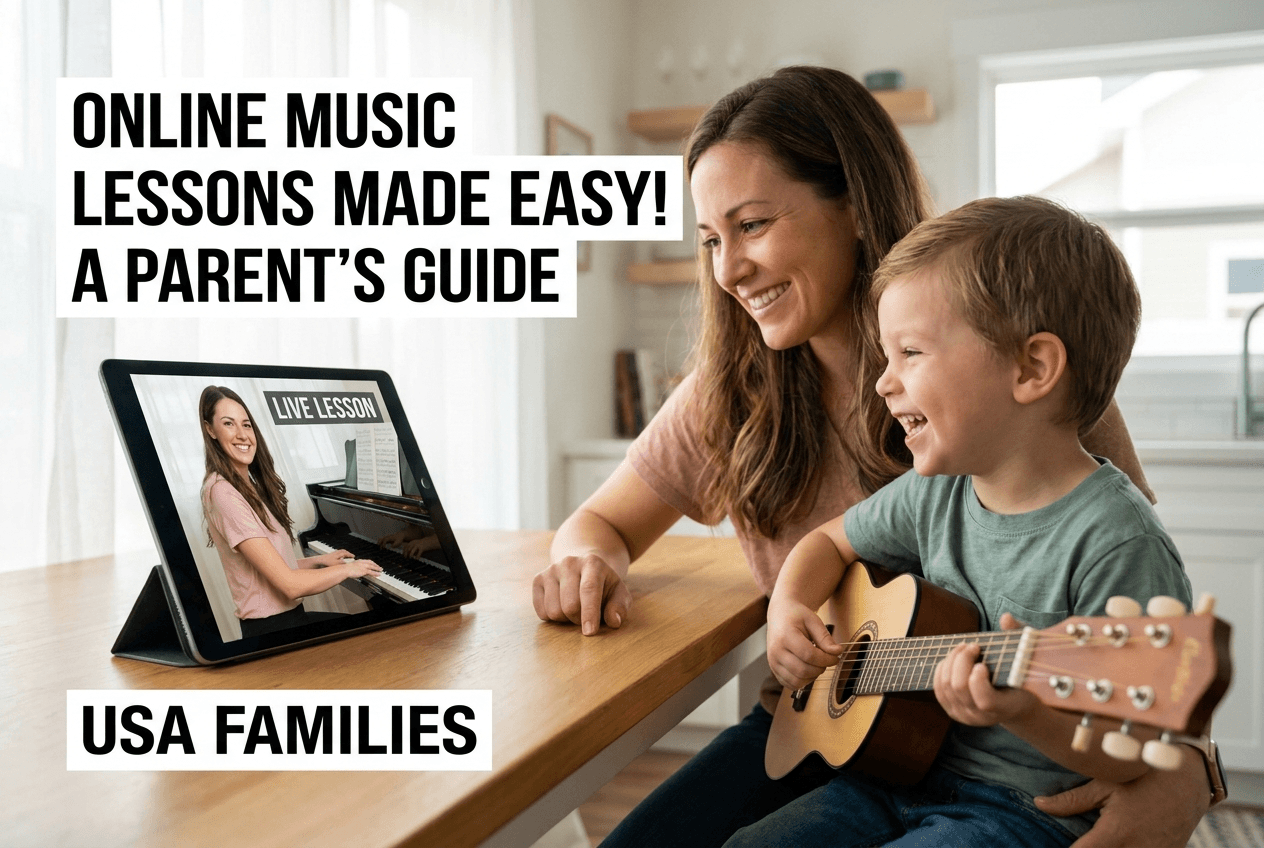
Learning music has never been more accessible for American families. Live online music lessons have quietly transformed how children develop musical skills, and millions of parents across the USA are making the switch from traditional in-person studios to virtual classrooms. Whether your child wants to strum a guitar, tickle the ivories, or sing their heart out, understanding how live online music lessons work helps you make smarter decisions for your family.
What Are Live Online Music Lessons and Why Do They Matter
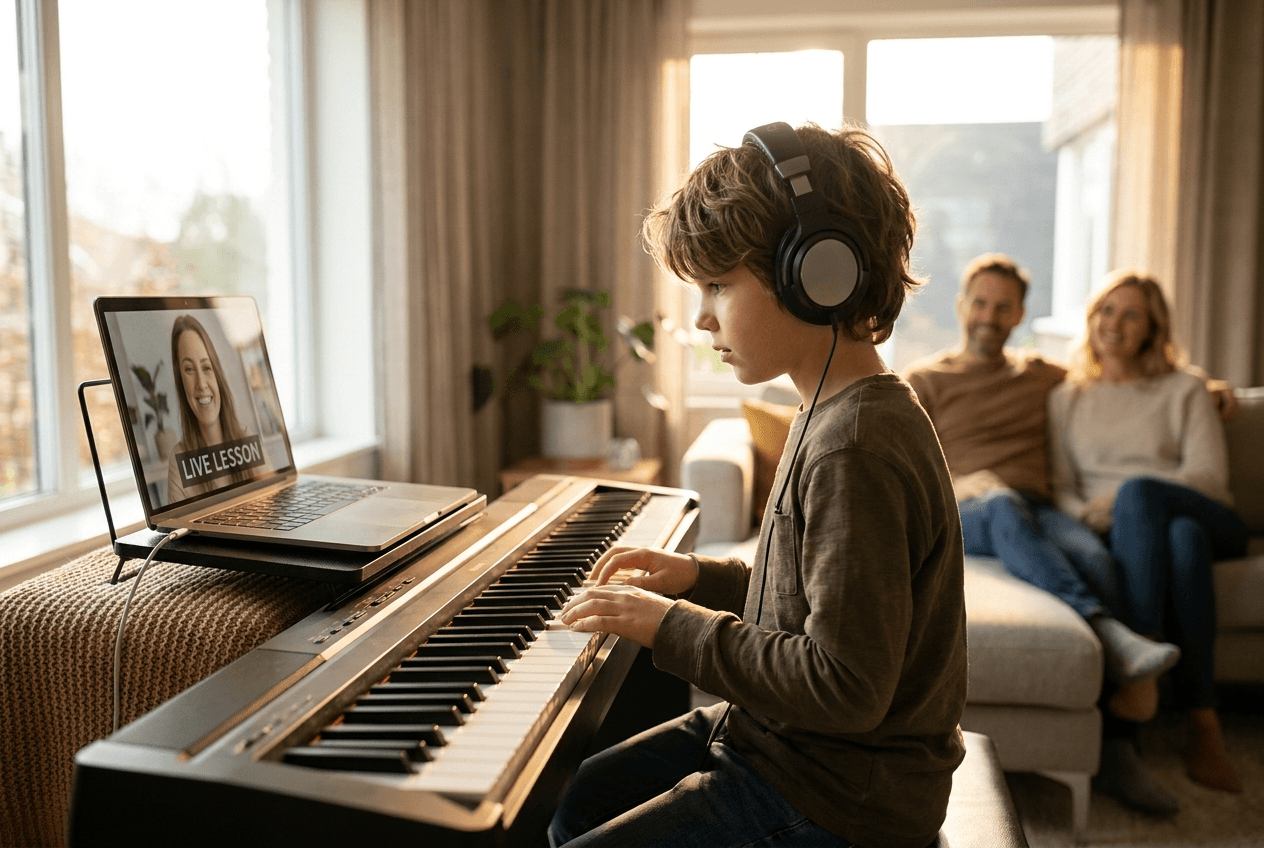 Live online music lessons are real-time, interactive sessions conducted over video platforms like Zoom, Skype, or specialized music education software. Unlike pre-recorded tutorial videos on YouTube, these lessons connect your child directly with a qualified music teacher who responds, corrects, encourages, and adapts the lesson in the moment. That live human element makes all the difference in a child's musical development.
Think of it like a traditional studio lesson but without the commute. Your child sits at their instrument, the teacher appears on screen, and the session unfolds exactly as it would in person. The teacher can hear every note, see your child's posture and hand positioning, and give immediate feedback. Modern internet speeds and high-quality audio settings have made the experience remarkably close to sitting in the same room.
For American families juggling school schedules, after-school activities, and long commutes, the convenience factor alone is compelling. No more racing across town on a Tuesday afternoon. No more weather cancellations. The lesson happens right in your living room, your child's bedroom, or wherever they feel most comfortable playing.
Beyond convenience, live online music lessons open up access to world-class instructors regardless of geography. A family in rural Montana can now study with a classical pianist based in New York City. A teenager in suburban Texas can take jazz guitar lessons from a musician who tours professionally. That kind of access simply didn't exist a decade ago.
How the Technology Behind Virtual Music Lessons Actually Works
Choosing the Right Platform for Your Child's Lessons
Most teachers and music schools use video conferencing tools to conduct live online music lessons. Zoom remains the most popular choice because of its stability, audio settings, and screen-sharing capabilities. Some specialized platforms like TakeLessons, Lessonface, and Tonara offer built-in scheduling, payment processing, and even digital sheet music integration.
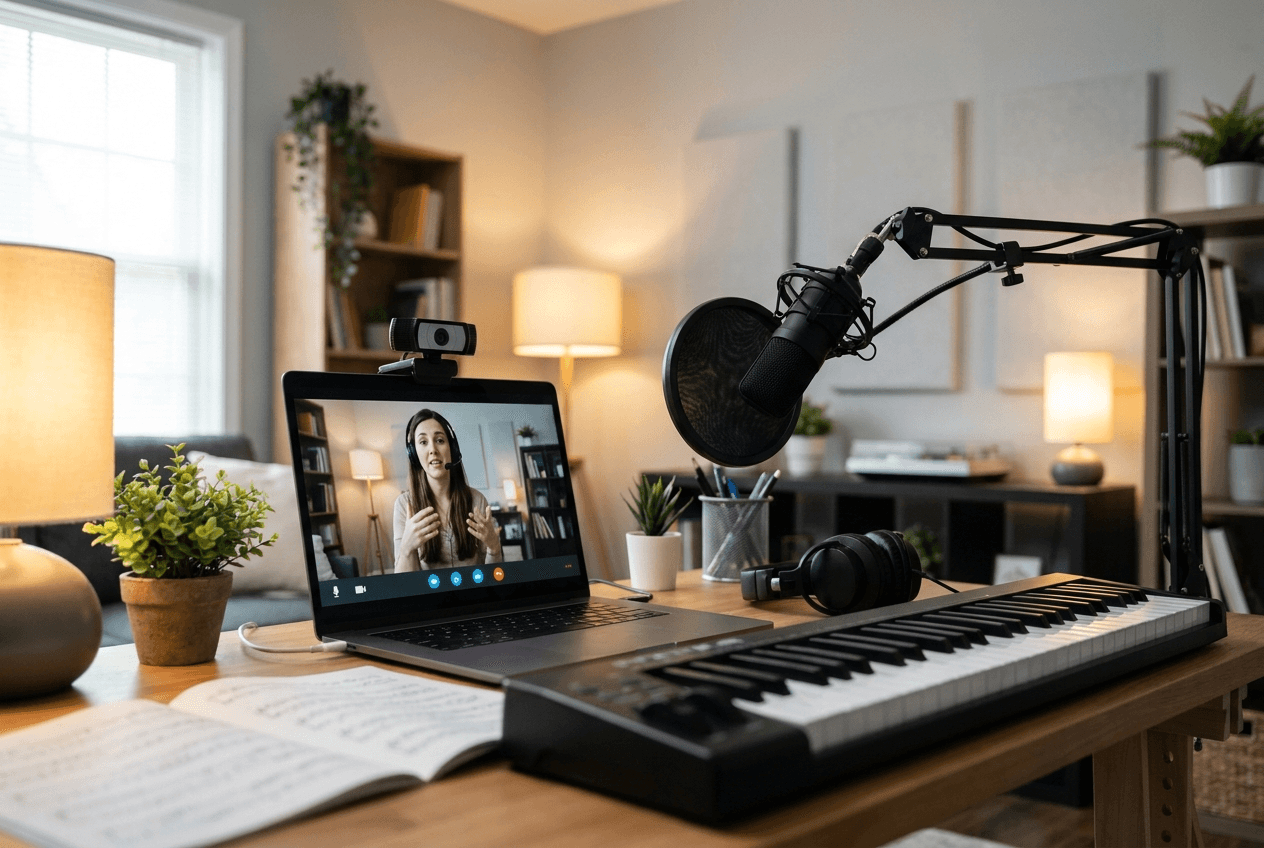
The platform your teacher uses will determine what you need to set up at home. Most require nothing more than a laptop, tablet, or desktop computer with a working camera and microphone. Dedicated music lesson platforms sometimes offer additional features like session recording, progress tracking, and direct messaging between parents and teachers.
Audio quality is the single most important technical factor in a successful virtual music lesson. Standard built-in laptop microphones often compress sound and strip away the nuance a teacher needs to hear. Investing in a basic USB condenser microphone makes a significant difference in how clearly the teacher hears your child's playing. Many experienced online music teachers will recommend specific microphone models during the onboarding process.
Video quality matters too, but not as much as audio. A 1080p webcam gives the teacher a clear view of hand positioning and instrument technique. Positioning the camera so the teacher can see both your child's hands and face simultaneously takes a little experimentation but becomes second nature within the first few sessions.
Setting Up Your Home for Successful Online Music Lessons
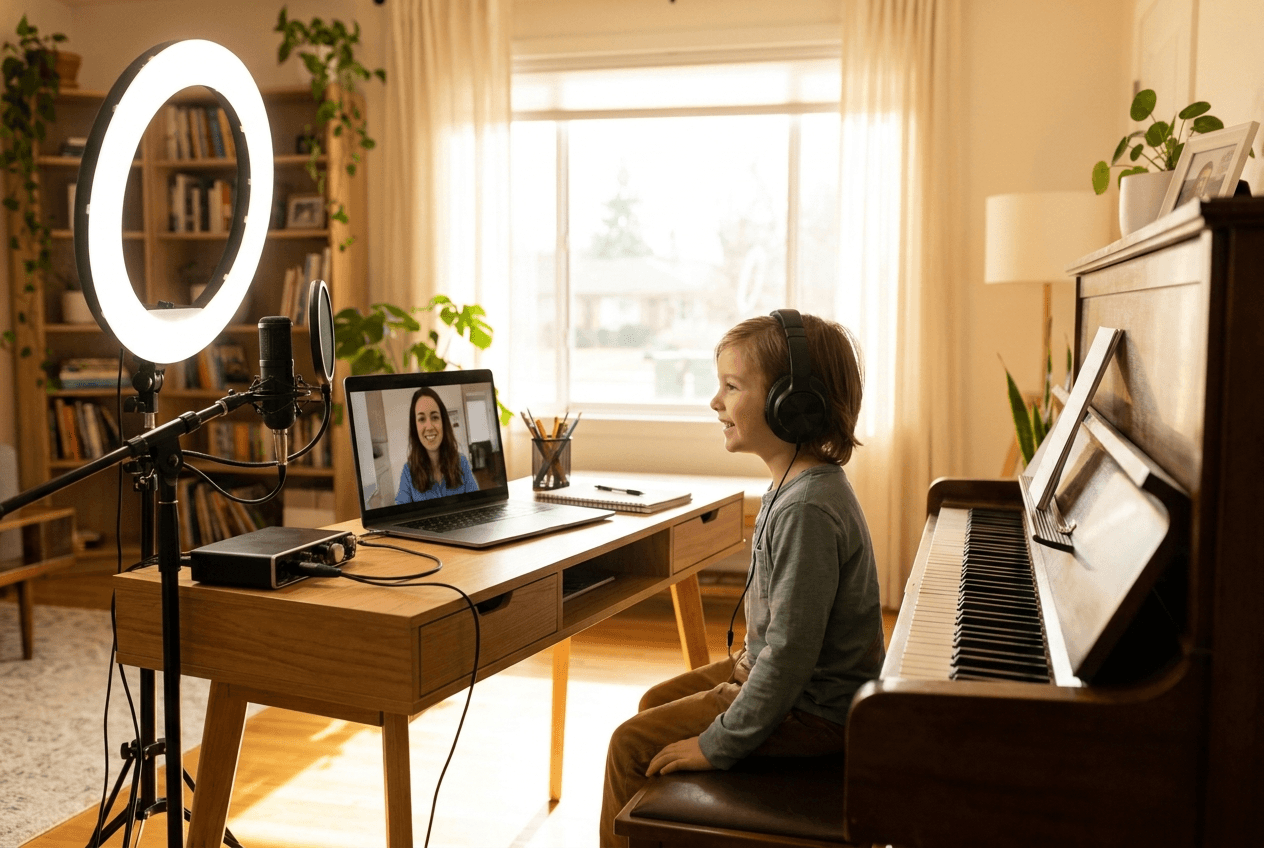 Creating the right environment at home dramatically improves the quality of live online music lessons. Start with a quiet, well-lit space where your child can focus without interruptions. Background noise from televisions, siblings, or kitchen appliances bleeds into the microphone and distracts both student and teacher.
Lighting deserves more attention than most parents give it. Natural light facing your child works beautifully, but a simple ring light or desk lamp positioned in front of them (not behind) keeps the teacher's view clear and professional. Poor lighting makes it difficult for the teacher to observe subtle finger placements or bow technique on string instruments.
The instrument itself needs to be properly positioned within the camera frame. For pianists, a wide-angle shot showing both hands on the keyboard works best. Guitarists benefit from a side angle that reveals fretting hand position clearly. Vocalists simply need a clean upper-body shot with good lighting. Spend five minutes before the first lesson adjusting the setup so neither your child nor the teacher wastes lesson time troubleshooting angles.
Internet connection speed matters more than most families expect. A stable connection of at least 10 Mbps upload and download speed handles video lessons comfortably. Wired ethernet connections outperform Wi-Fi in terms of stability and latency. If your home relies on Wi-Fi, positioning your router closer to the lesson space or investing in a Wi-Fi extender can eliminate frustrating dropouts mid-lesson.
What Happens During a Typical Live Online Music Lesson
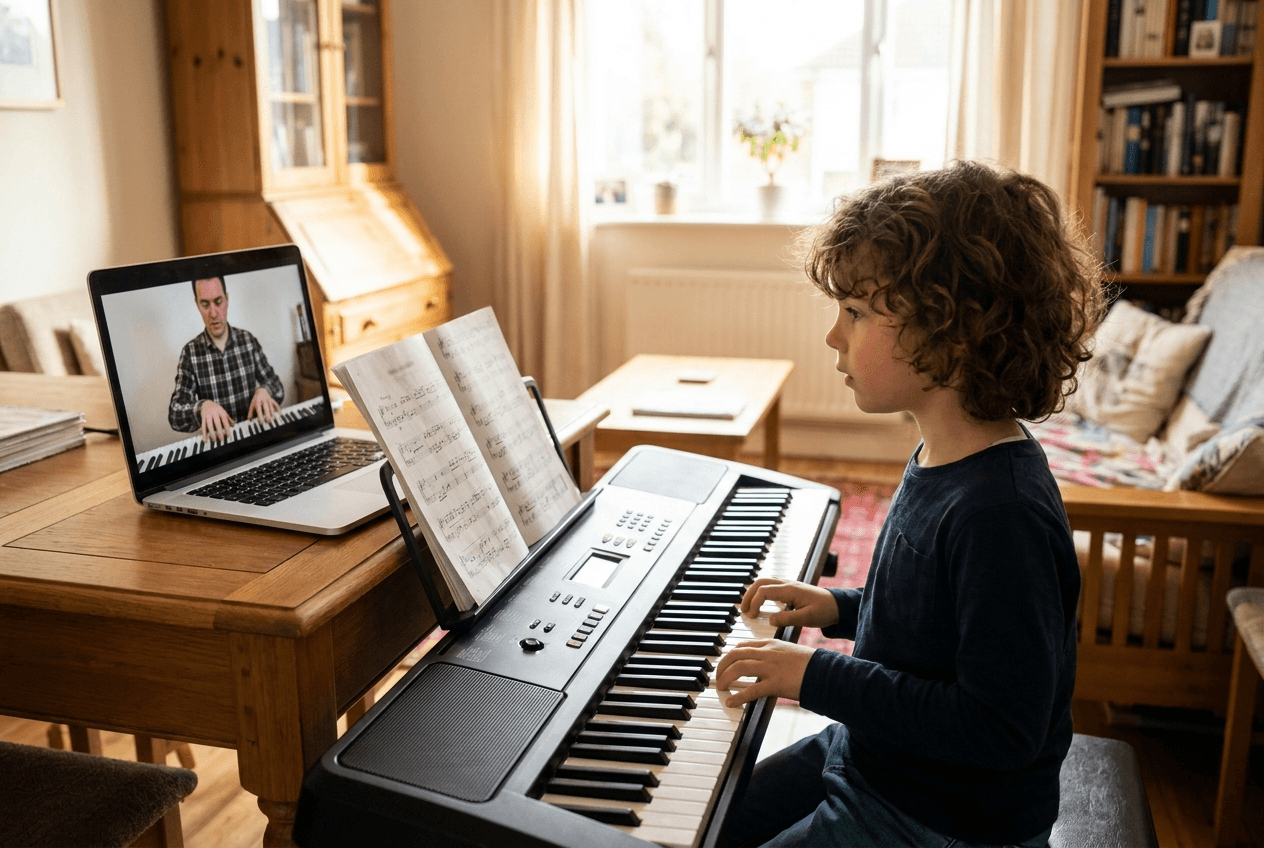 A standard live online music lesson follows a familiar rhythm that most children adapt to quickly. The session typically opens with a warm-up exercise tailored to the student's instrument and skill level. For pianists this might mean scales or arpeggios. For singers it could involve breathing exercises and vocal runs. This warm-up phase serves a dual purpose: it loosens the student's muscles and gives the teacher an immediate read on how the student is feeling that day.
After the warm-up, the teacher reviews material assigned during the previous lesson. This is where real progress gets measured. Your child plays through the piece or exercise they practiced during the week, and the teacher listens carefully for technical issues, rhythmic problems, or dynamic inconsistencies. Good online music teachers are remarkably skilled at identifying problems through a screen, often catching issues that even attentive parents miss at home.
The middle portion of the lesson introduces new material, techniques, or musical concepts. Skilled teachers use screen sharing to display sheet music, chord diagrams, or music theory visuals directly on your child's screen. Some teachers use digital annotation tools to mark up the sheet music in real time, circling problem areas or writing fingering suggestions directly onto the score.
Lessons typically wrap up with a clear practice assignment for the coming week. The best teachers send a written summary of the assignment via email or through the lesson platform immediately after the session ends. That written record helps parents support their child's practice routine at home without needing a music background themselves.
How to Find the Right Online Music Teacher for Your Child
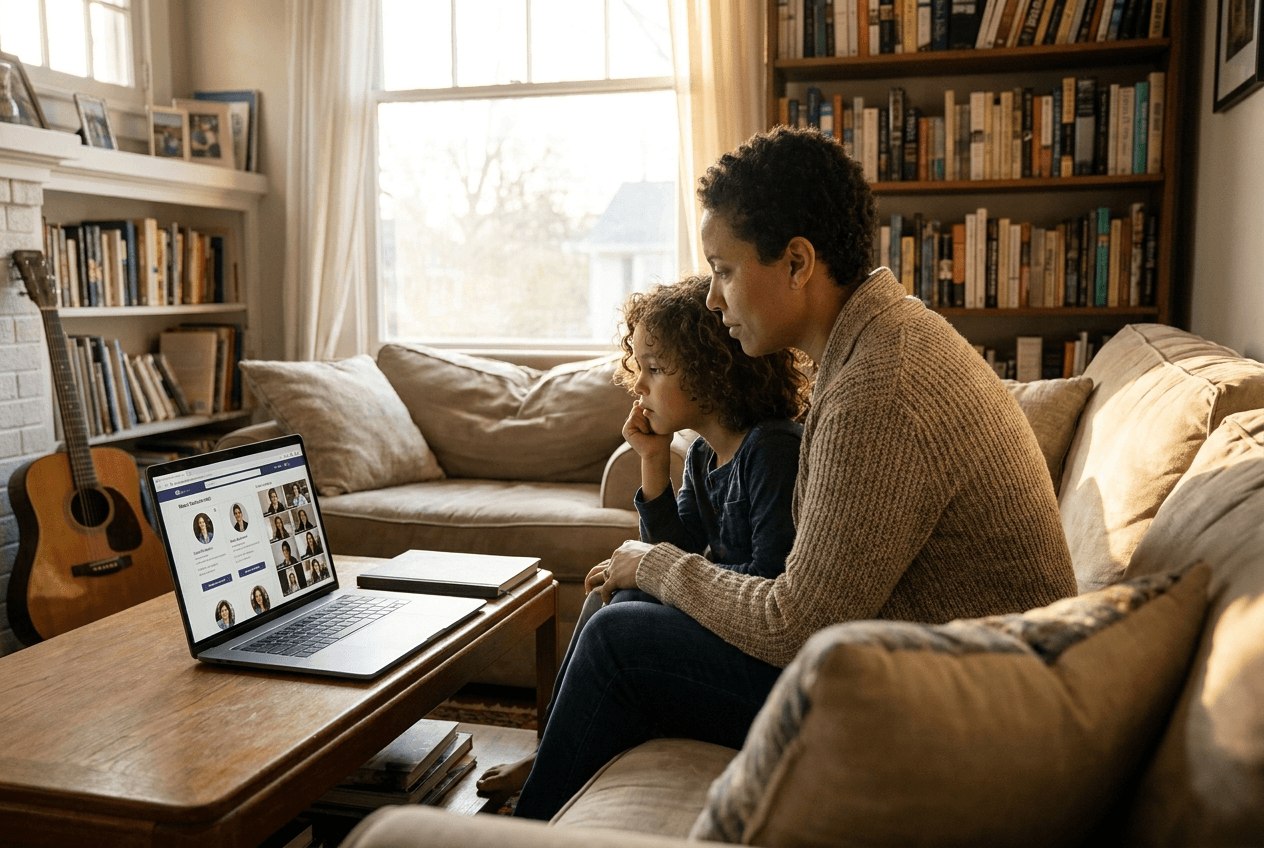 Finding the right teacher transforms the entire experience of live online music lessons. Start by identifying what your child actually wants to learn. Classical piano requires a very different teaching background than electric guitar or contemporary vocal performance. Genre matters enormously, and a teacher who specializes in jazz may not be the best fit for a child who dreams of playing country music.
Platforms like TakeLessons, Lessonface, and Superprof allow parents to browse teacher profiles, read verified reviews, and watch introductory videos before committing to a lesson. Most reputable teachers offer a trial lesson at a reduced rate or even free of charge. Always take advantage of trial lessons because chemistry between teacher and student is genuinely difficult to predict from a profile alone.
Credentials and teaching experience deserve serious consideration. A teacher with a music degree from an accredited institution brings theoretical depth and pedagogical training. However, a working professional musician with years of performance experience often brings practical knowledge and industry insight that formal education can't replicate. The best teachers frequently combine both.
Ask prospective teachers directly how they structure lessons for children your child's age. Teaching a six-year-old beginner demands completely different skills than working with a motivated fourteen-year-old who already plays at an intermediate level. Teachers who specialize in specific age groups tend to deliver more effective, age-appropriate instruction that keeps young students engaged and motivated over the long term.
Understanding Pricing for Live Online Music Lessons in the USA
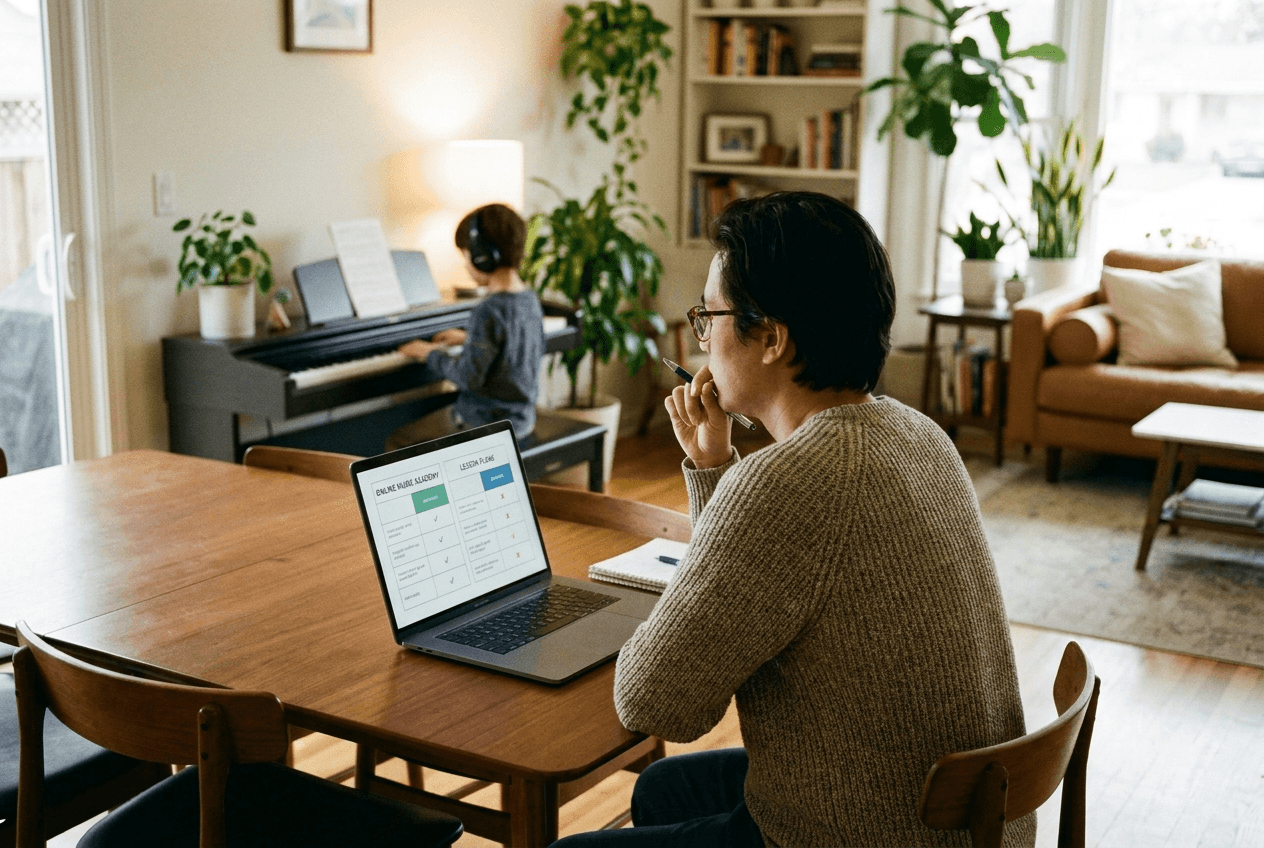 Pricing for live online music lessons varies widely depending on the teacher's credentials, the instrument, the lesson length, and the platform used. As a general benchmark, beginner-level teachers on marketplace platforms charge between $20 and $45 per 30-minute session. Intermediate instructors with solid credentials and positive reviews typically fall in the $45 to $75 range. Highly specialized or nationally recognized teachers can charge $100 or more per session.
Many platforms and independent teachers offer package deals that reduce the per-lesson cost when you purchase multiple sessions upfront. A package of ten lessons often works out 10% to 20% cheaper than paying individually. These packages also encourage consistency, which is one of the most important factors in a child's musical progress.
Lesson length is another variable worth understanding before you commit. Thirty-minute lessons suit young beginners well because their attention spans are naturally shorter. As children mature and their repertoire grows, 45-minute or 60-minute sessions become more productive. Most teachers offer multiple duration options, so you can scale up as your child's dedication and skill level develop.
Some music schools and non-profit organizations across the USA offer subsidized online music lessons for families with financial constraints. Organizations like VH1 Save The Music and various state arts councils provide grant-funded music education programs. Searching your local school district's website for music enrichment partnerships can also reveal free or low-cost options that many families don't know exist.
The Role of Practice Between Live Online Music Lessons
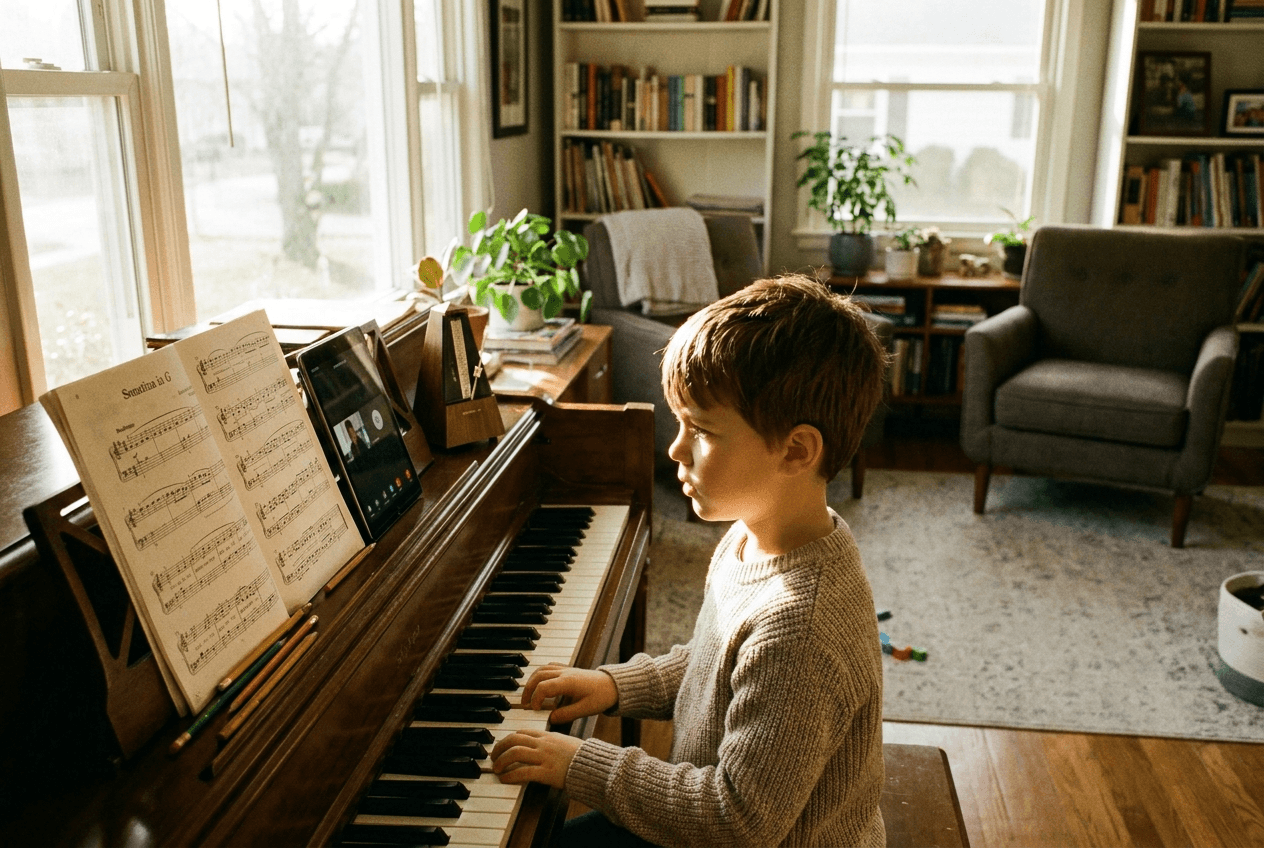 Practice is where real musical growth happens, and it deserves as much attention as the lessons themselves. A 30-minute weekly lesson plants the seeds but daily practice is what makes them grow. Most music educators recommend that beginners practice for 15 to 20 minutes every day rather than cramming an hour-long session the night before the next lesson. Consistency beats intensity every single time.
Creating a dedicated practice routine at home gives children the structure they need to make consistent progress. Set a specific time each day for practice, ideally at a moment when your child is alert and not already mentally exhausted from school. Many families find that practice right after an after-school snack works well because it bridges the school mindset into focused creative work.
Parents play a genuinely important supporting role in home practice, even without any musical background themselves. Sitting with your child during practice, asking them to play their assignment for you, and celebrating small improvements builds motivation and accountability. Children who feel their parents are genuinely interested in their musical progress tend to practice more consistently and advance more quickly.
Recording practice sessions on a smartphone and sharing the recordings with the teacher between lessons is a technique that many forward-thinking online music educators use actively. It allows the teacher to identify specific problem areas before the next live session, making lesson time more efficient and targeted. Some platforms have built-in recording features that streamline this process entirely.
How Live Online Music Lessons Compare to In-Person Instruction
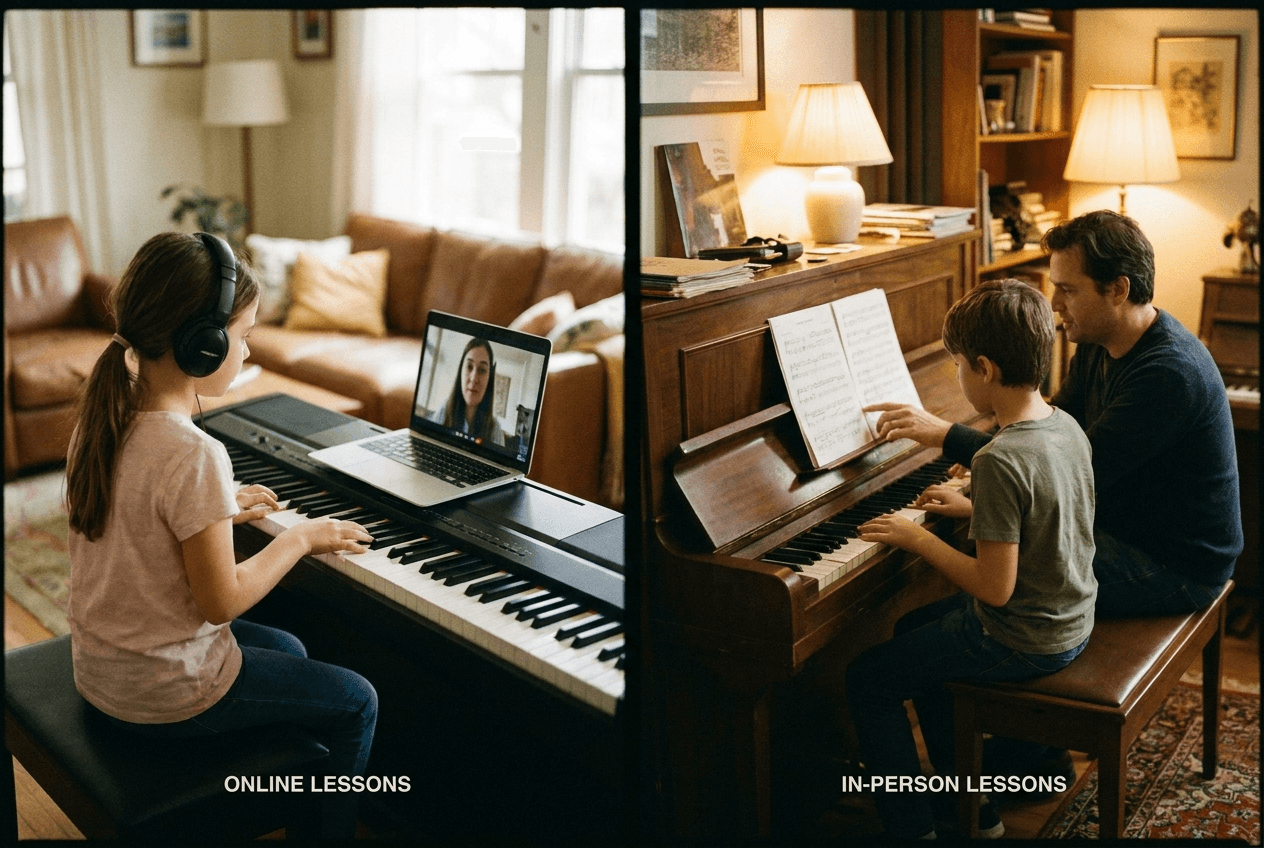 The debate between online and in-person music lessons is one that many American parents wrestle with before making a decision. Both formats have genuine strengths, and understanding the differences helps you choose the right fit for your child's personality, learning style, and musical goals.
Factor Live Online Lessons In-Person Lessons Convenience Very high, no travel required Requires commute to studio Teacher Selection Global pool of instructors Limited to local area Audio Quality Dependent on equipment setup Natural and unfiltered Cost Often lower due to competition Varies by local market Scheduling Flexibility Generally more flexible Fixed studio availability Technical Barriers Requires reliable internet No technology needed Ensemble Playing Difficult due to latency Easy and natural
For most instruments and most skill levels, live online music lessons deliver results that are genuinely comparable to in-person instruction. The main area where in-person lessons hold a clear advantage is ensemble playing, where two or more musicians need to play together in real time. Internet latency makes true simultaneous playing difficult online. For solo instrument study and vocal training, however, the virtual format works extremely well.
Many families ultimately use a hybrid approach, combining weekly online lessons with occasional in-person sessions for recitals, masterclasses, or ensemble rehearsals. This blended model captures the convenience and flexibility of online learning while preserving the irreplaceable experience of live musical collaboration.
Keeping Your Child Motivated Through Online Music Education
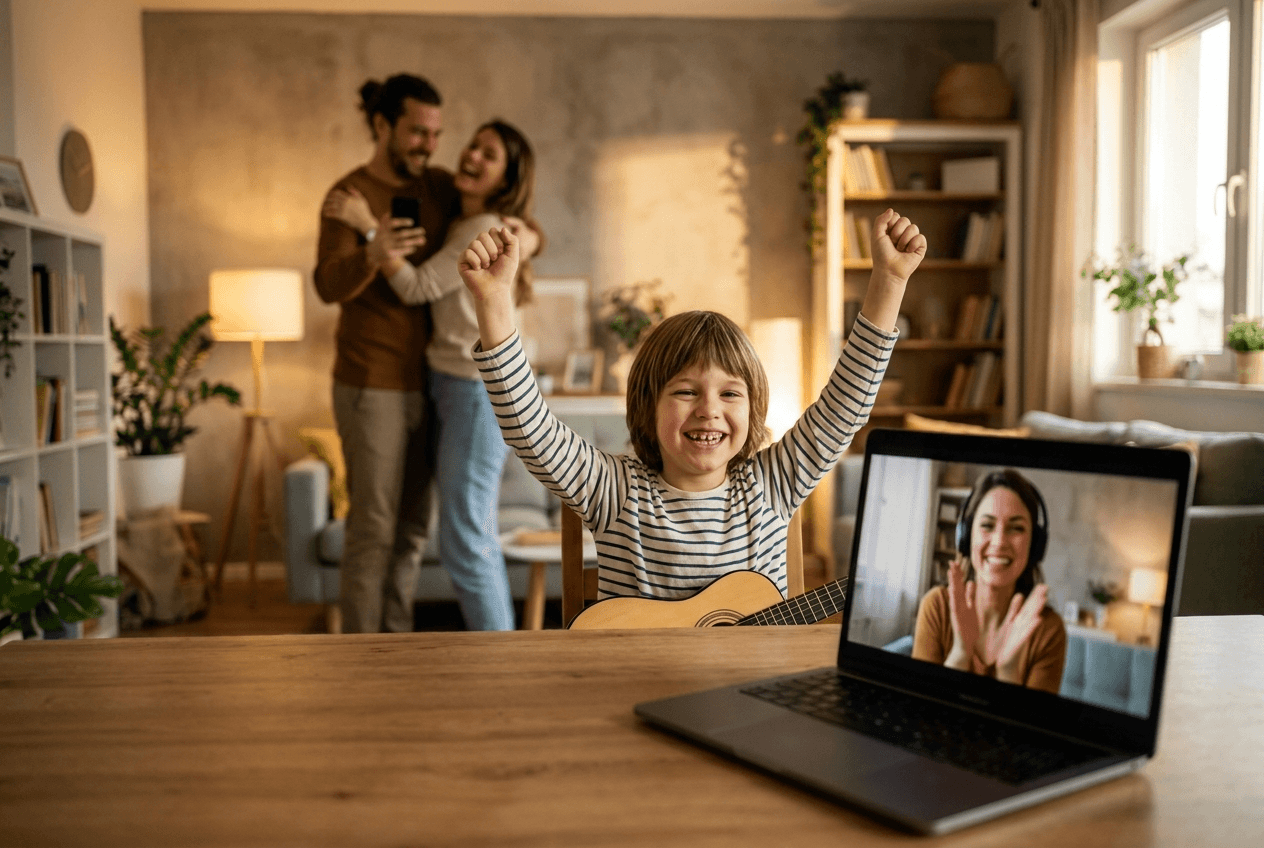 Motivation is the invisible engine behind musical progress, and keeping it running requires deliberate attention from both parents and teachers. Children learning through live online music lessons face a unique motivational challenge: the physical separation from the teacher means they miss out on the natural social energy of a shared space. Smart teachers and engaged parents compensate for this in several creative ways.
Setting short-term musical goals gives children a sense of forward momentum. Rather than aiming vaguely at "getting better," work with the teacher to define specific, achievable milestones like mastering a particular song by the end of the month or learning a new chord progression by the next lesson. Concrete goals create genuine excitement and give children something to work toward with real satisfaction at the finish line.
Virtual recitals have become a popular and effective motivational tool in the world of online music education. Many schools and independent teachers organize online recital events where students perform for each other via video conferencing. These events recreate the healthy performance pressure of a traditional recital and give children a meaningful audience for their hard work. The experience of performing, even virtually, accelerates musical development in ways that private lessons alone can't replicate.
Celebrating progress publicly matters more than most parents realize. Sharing a video of your child playing a song they've been working on with grandparents, family friends, or even on a private family social media group creates a genuine sense of accomplishment. Music becomes more meaningful when it connects people, and even a short video shared with grandma across the country transforms practice from a chore into a gift.
Special Considerations for Young Beginners Under Age Eight
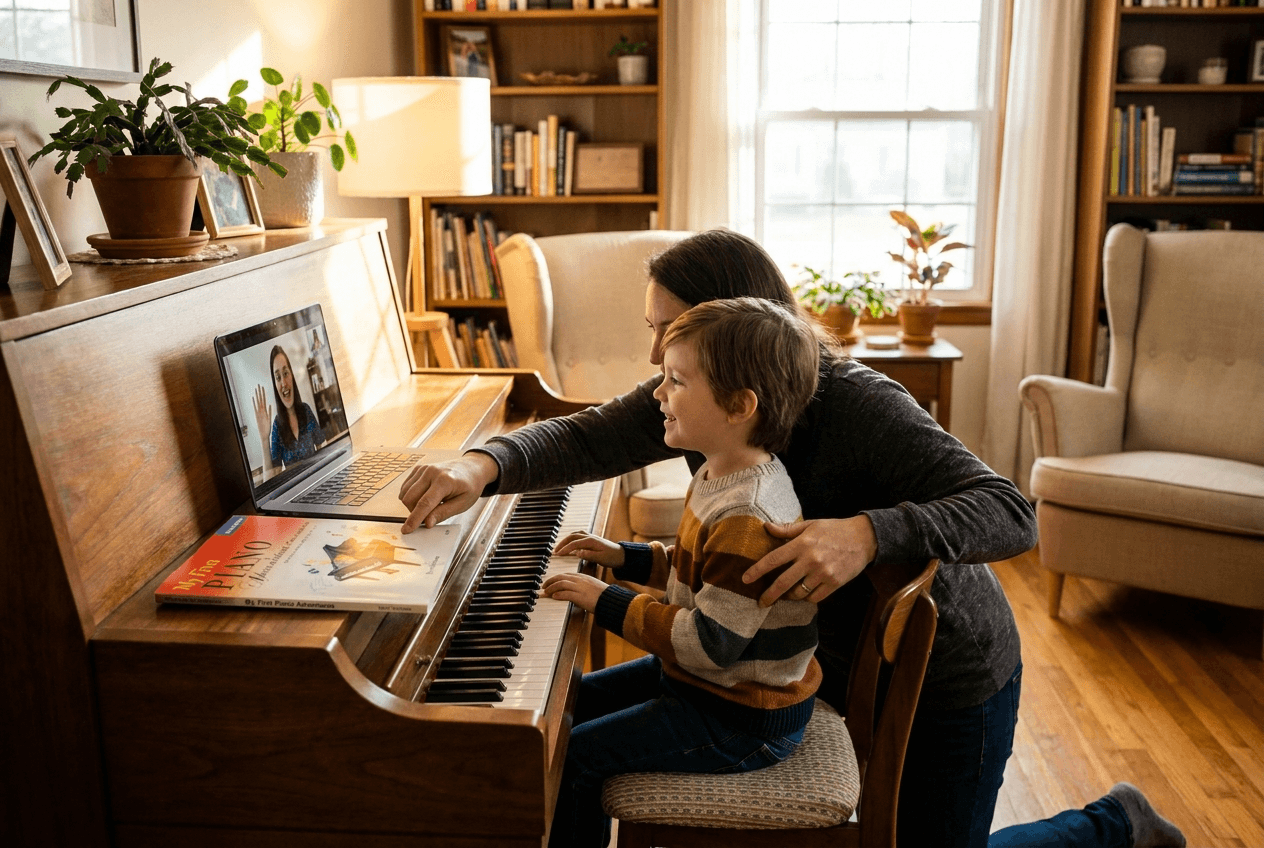 Young children under eight years old bring unique needs to live online music lessons that require thoughtful accommodation from both teachers and parents. Attention spans are shorter, frustration tolerance is lower, and the abstract concepts of music theory need to be presented through play, storytelling, and multisensory activities rather than traditional instruction.
The most effective online music teachers for young children use colorful visual aids, animated characters, games, and songs to make lessons feel like adventures rather than school. Platforms like Hoffman Academy and Simply Music have built entire curricula around this developmental understanding. When evaluating teachers for very young children, specifically ask how they keep five and six-year-olds engaged through a screen for 30 minutes.
Parental presence during lessons for young beginners is not just helpful but genuinely necessary. A parent sitting nearby can redirect attention, help small fingers find the right keys or strings, and reinforce the teacher's instructions in real time. Many online music teachers actively coach the parent alongside the child, turning the lesson into a collaborative three-way learning experience that extends naturally into home practice.
About Art Gharana
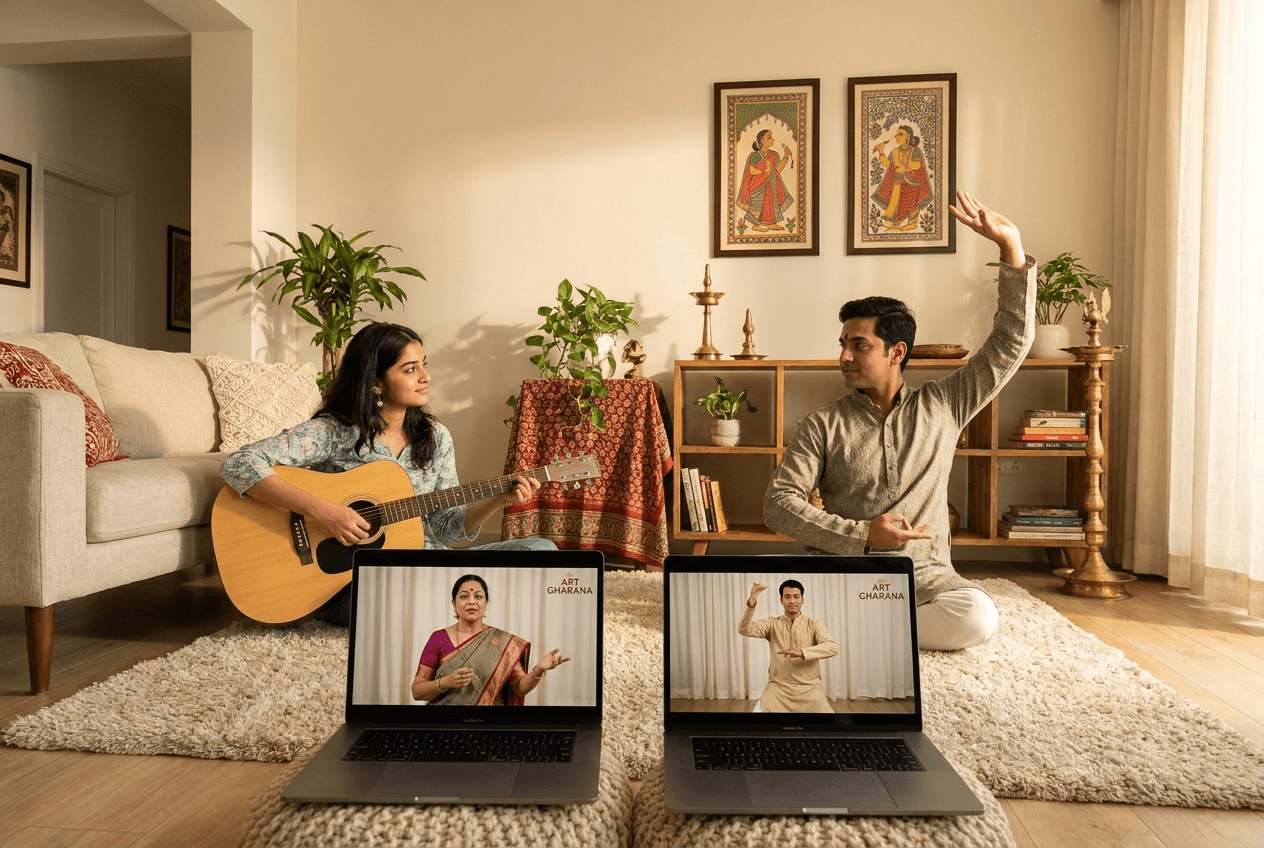 Art Gharana is a passionate online arts education platform dedicated to helping students across the USA discover and develop their creative potential. From music and dance to visual arts and performance, Art Gharana connects learners of all ages with experienced, inspiring instructors who teach live online lessons tailored to each student's unique journey. Whether your child is picking up an instrument for the very first time or refining advanced skills, Art Gharana offers a warm, structured, and deeply personalized learning environment that makes every session count. Explore their programs and find the perfect instructor for your family today.
Frequently Asked Questions
1. What age can children start live online music lessons?
Most music teachers begin working with children as young as four or five years old for introductory programs. Instruments like piano and ukulele are popular starting points for very young beginners. The key factor isn't age alone but the child's attention span, genuine interest, and ability to follow simple instructions during a structured session.
2. What equipment does my child need for online music lessons?
At a minimum, your child needs a computer, tablet, or smartphone with a working camera and microphone, a reliable internet connection, and their instrument. A USB microphone significantly improves audio quality. Good lighting and a quiet space also make lessons more productive and enjoyable for both the student and the teacher.
3. How do I know if an online music teacher is qualified?
Look for teachers with formal music education credentials, verifiable performance experience, and positive reviews from other parents. Most reputable platforms like Lessonface and TakeLessons verify teacher backgrounds and display student reviews publicly. Always request a trial lesson before committing to a package so you can assess the teacher's communication style and teaching approach firsthand.
4. Can online music lessons work for children with learning differences?
Absolutely. Many online music teachers have specific training in adaptive music instruction for children with ADHD, dyslexia, autism spectrum conditions, and other learning differences. The one-on-one nature of private online lessons actually benefits many neurodiverse learners because it eliminates the social distractions of group settings and allows the teacher to fully customize the pacing and teaching style.
5. How long before my child sees real progress with online music lessons?
Most children show noticeable progress within six to eight weeks of consistent weekly lessons combined with daily home practice. Progress depends heavily on practice consistency, the child's natural aptitude, and the quality of instruction. Families who actively support home practice routines and maintain lesson consistency typically see the fastest and most sustained musical development.
6. Are live online music lessons as effective as in-person lessons?
Research and widespread educator experience both confirm that live online music lessons produce results comparable to in-person instruction for most instruments and skill levels. The key variables are audio and video quality, a well-set-up practice space at home, and a teacher experienced in online instruction. Many students actually thrive in the familiar comfort of their home environment.
Conclusion
Live online music lessons have genuinely changed what's possible for American families who want their children to grow as musicians. The combination of flexible scheduling, access to exceptional teachers regardless of location, and the comfort of learning at home makes this format one of the smartest investments you can make in your child's creative development. Getting started is simpler than most parents expect, and the rewards extend far beyond musical ability into confidence, discipline, and creative expression. If you're ready to take the first step, explore the world-class online music programs at Art Gharana and find the perfect teacher for your child today.