ChatGPT
 Google AI
 Grok
Grok Claude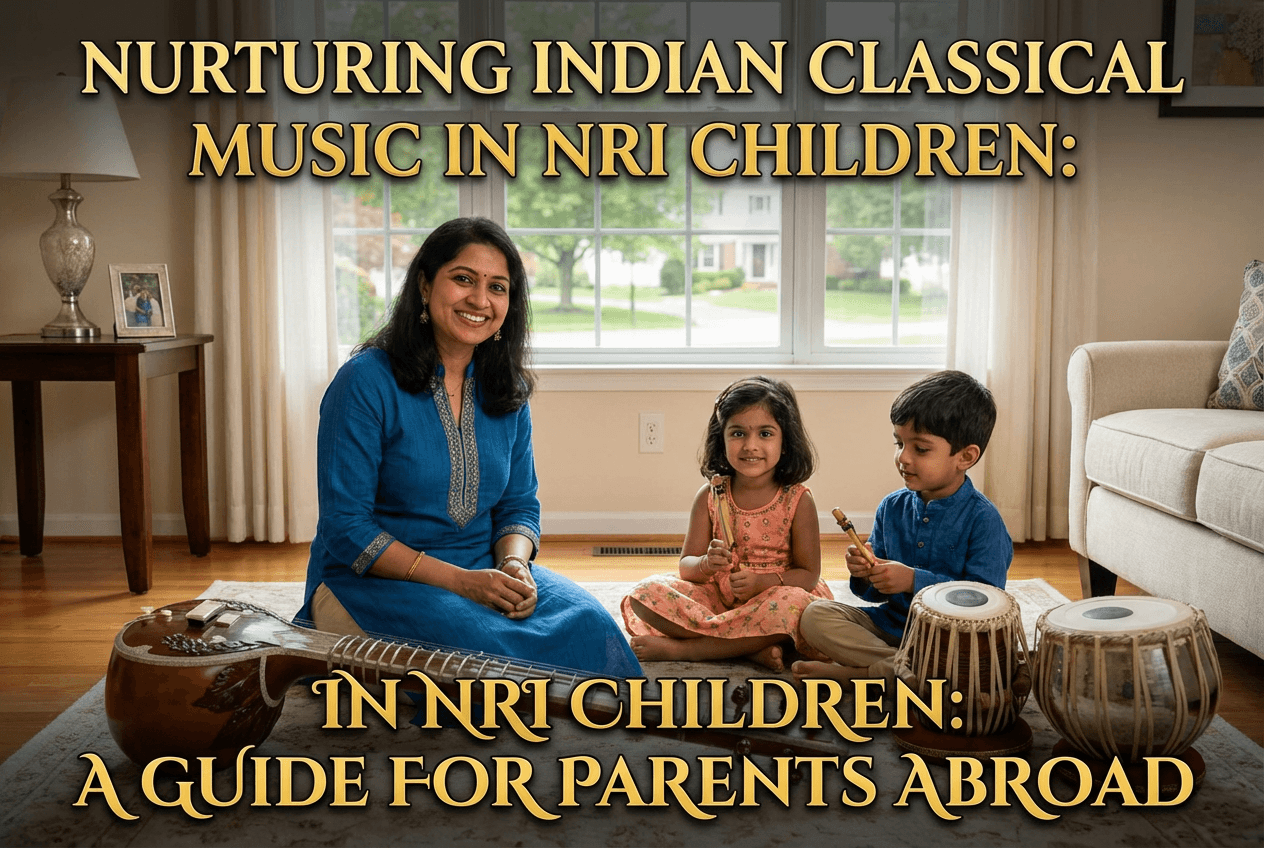
For NRI families, keeping Indian classical music alive in children is more than just teaching songs. It helps build a strong cultural identity for NRI children and creates an emotional connection to their roots. Children growing up abroad often face a blend of cultures. Learning Indian music abroad gives them a unique way to celebrate their heritage. It also strengthens family bonds as parents and children share music together.
Early exposure to Indian classical music for kids promotes both emotional and cognitive growth. Kids can connect to festivals and cultural events overseas, making traditions feel alive even when they are far from India. Music offers more than entertainment; it is a bridge between generations. By nurturing classical music, families can pass down the richness of Gharana traditions and instill a sense of pride in Indian cultural heritage for children.
What Makes Indian Classical Music Valuable for Children Growing Up Abroad?
 Cultural Identity and Emotional Roots
Indian music for NRI children plays a critical role in forming their cultural identity. When children sing Indian classical songs for kids, learn ragas and talas, or play instruments like the tabla or sitar, they feel connected to a heritage that spans centuries. Music provides emotional grounding, helping children understand their family’s history and traditions. It also builds confidence, as children learn to express emotions through melody and rhythm.
Benefits for Brain Development and Discipline
Learning classical music strengthens brain development and discipline. Structured practice routines improve concentration, memory, and analytical thinking. Children who regularly engage in practice habits for music learners develop patience and time management skills. Studies show that exposure to Hindustani classical music or Carnatic classical music from a young age enhances creativity and problem-solving abilities. Music also teaches resilience as children work through challenging bandish and compositions.
A Connection to Heritage Beyond Festivals
Indian classical music goes beyond festivals and occasional celebrations. By introducing kids to Indian music traditions overseas, parents help children experience culture daily. Songs, stories, and performances create a living connection to India. Even attending online music recitals or listening to recordings of famous artists keeps children immersed in Indian music for NRI children. This regular engagement makes heritage part of everyday life rather than an occasional ritual.
Exploring the Beauty and Depth of Indian Classical Music
 The Distinct Worlds of Hindustani and Carnatic Traditions
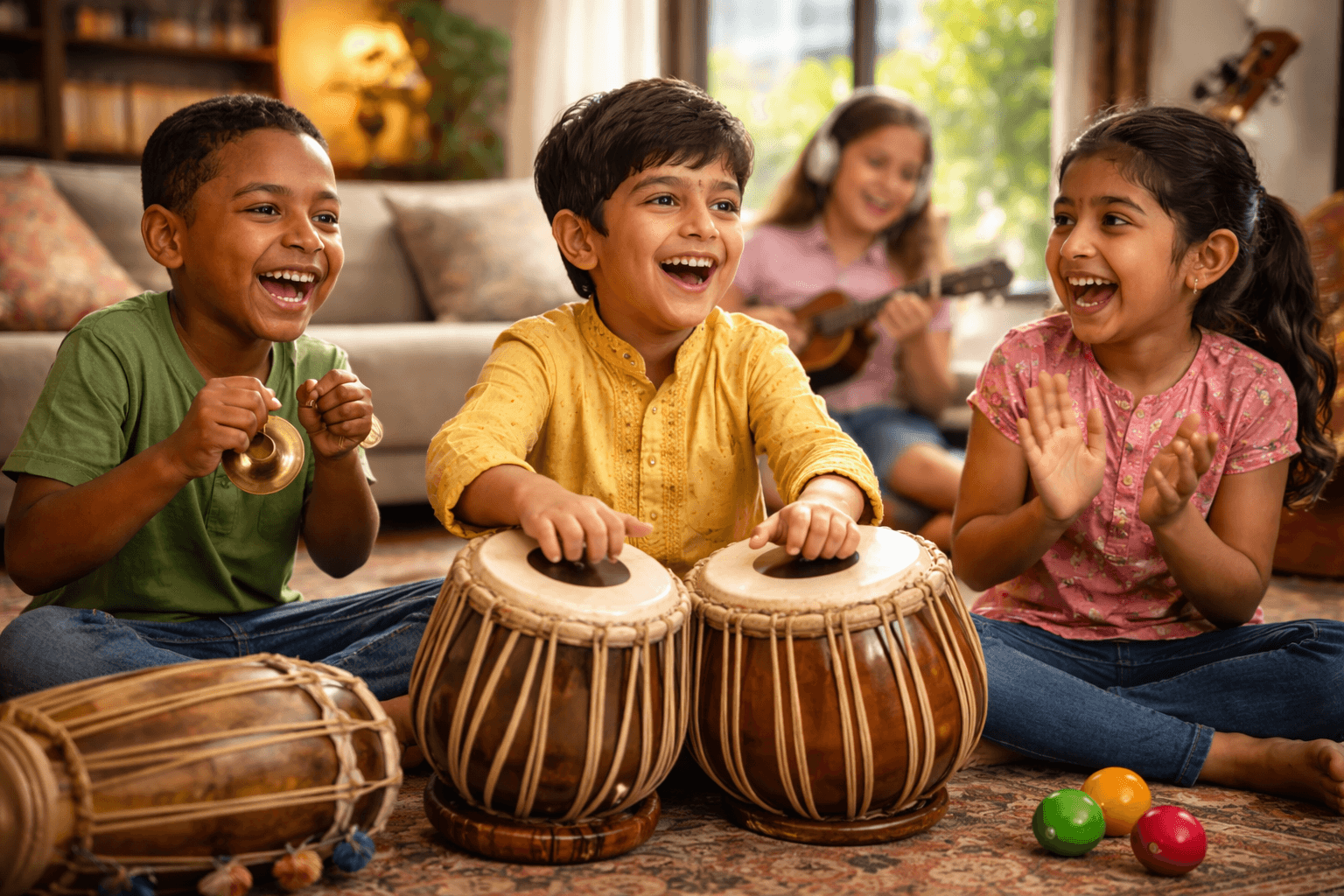
Hindustani classical music comes from North India, while Carnatic classical music originates in the South. Each style has its own instruments, ragas, talas, and improvisation techniques. Children can explore instruments like the flute, veena, and sitar in both traditions. Understanding these differences allows kids to appreciate the diversity of Indian music and its regional variations.
Key Elements: Ragas, Talas, and Improvisation
Ragas set the mood of the music, while talas provide rhythm. Improvisation allows children to create their own musical expressions within classical frameworks. Learning these concepts develops both creativity and analytical thinking. Children practicing ragas and talas can also recognize patterns, improving their memory and musical understanding. Beginners guide to ragas can help children start learning these foundational elements.
Element Purpose Example for Kids Raga Melody framework Raga Yaman for evening practice Tala Rhythmic cycle Teen Taal, 16-beat rhythm Bandish Fixed composition Simple compositions for beginners Improvisation Creative expression within raga Alap or sargam exercises
Why Classical Training Builds Strong Musical Foundations
Structured music learning gives children a deep understanding of melody, rhythm, and composition. Early exposure to classical music instruments for children strengthens hand coordination and listening skills. It also prepares them for any form of music later in life. Children who learn classical techniques develop discipline and a sense of achievement, making them more confident performers in recitals and school events.
Common Struggles NRI Parents Face in Passing Down Musical Heritage
 Lack of Local Teachers and Limited Exposure
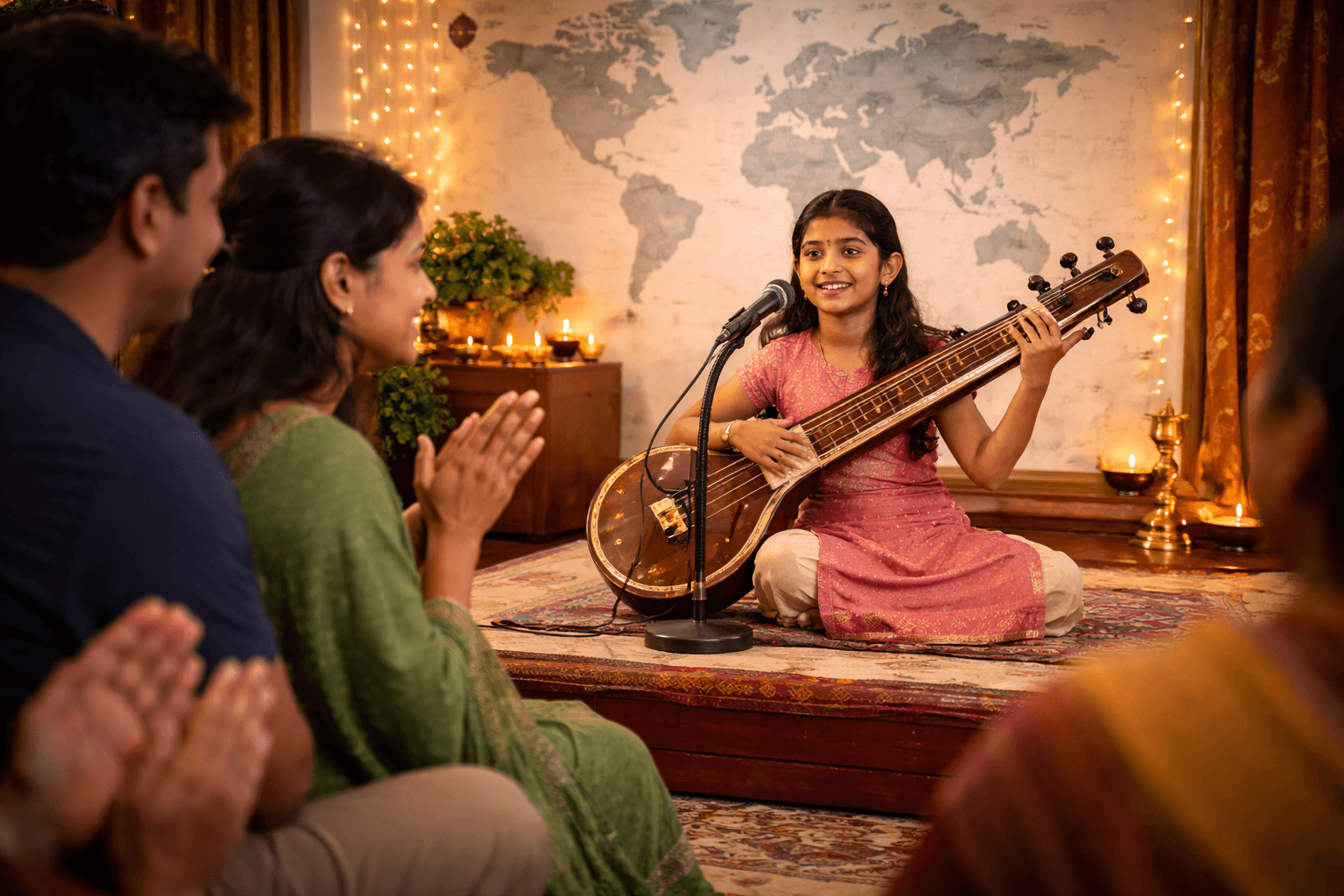
Many NRI families face difficulty finding skilled teachers for Indian music for NRI children. Local schools rarely offer Hindustani or Carnatic classical music, and live concerts are few and far between. Limited exposure can make children feel disconnected from the richness of Indian music traditions.
Busy Schedules and Academic Pressure on Kids
Children abroad often juggle school, sports, and other activities. Challenges for NRI parents include balancing academic priorities with music practice. Consistent learning is crucial, but time constraints can hinder progress. Parents must integrate music into daily life to ensure regular exposure.
Children Losing Interest in Cultural Activities
Western cultural influences can sometimes overshadow interest in traditional music. Children may see Indian classical music as difficult or less exciting. Finding innovative ways to teach music, such as through how to teach Indian classical music to kids or online resources, keeps kids motivated and engaged.
Language Barriers and Difficulty Understanding Lyrics
Indian classical songs often use Hindi, Sanskrit, or regional languages. Children may struggle with pronunciation or meaning. Parents can help by translating lyrics or using storytelling techniques to make compositions relatable. Understanding the stories behind songs enhances emotional development through music and strengthens cultural connection.
Actionable Ways NRIs Can Introduce Classical Music to Their Children
 Creating a Musical Environment at Home
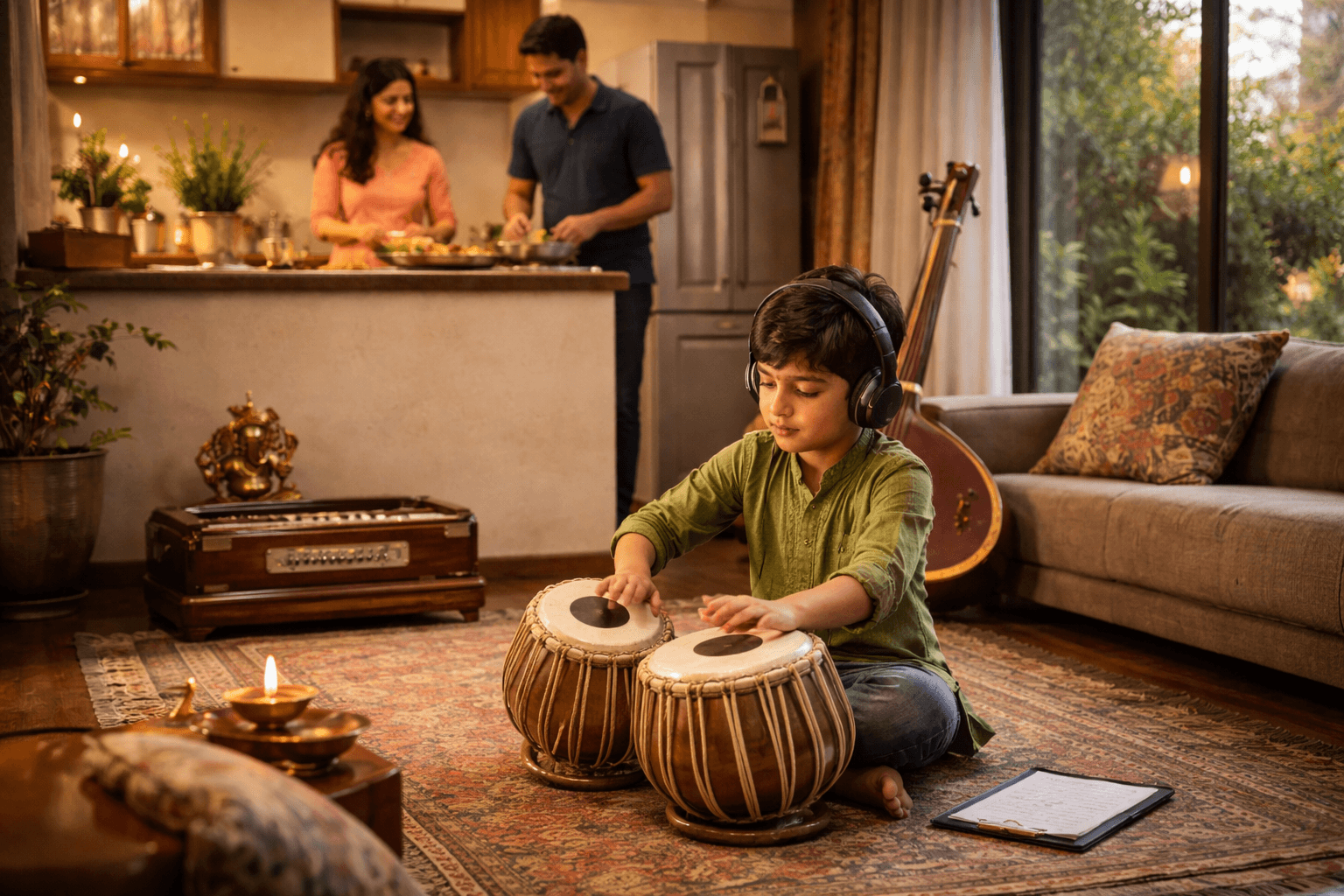
Creating a space filled with music helps children naturally engage with Indian classical music. Playing recordings of ragas, displaying classical music instruments for children, and encouraging participation in music sessions fosters consistent exposure. Daily listening during chores, bedtime, or family time makes music part of life.
Introducing Kids to Classical Performances and Artists
Attending live concerts, watching online performances, or connecting with local cultural groups can inspire children. Exposure to artists from different Gharana traditions demonstrates the variety and depth of Indian music. Watching skilled musicians perform also teaches children the importance of discipline and presentation.
Using Stories, Movies, and Simple Songs as Starters
Stories and age-appropriate movies can introduce concepts like ragas and talas. Starting with simple Indian classical songs for kids makes learning less intimidating. Children relate to narratives, helping them remember compositions and understand cultural significance.
Encouraging Consistent Listening Habits
Daily listening builds musical memory and ear training. Children can practice recognition of ragas, beats, and rhythms while enjoying music. Encouraging family participation strengthens interest and creates a supportive environment for learning Indian music for NRI children.
How to Make Classical Music Fun and Engaging for Kids Abroad
 Turning Ragas Into Games and Activities
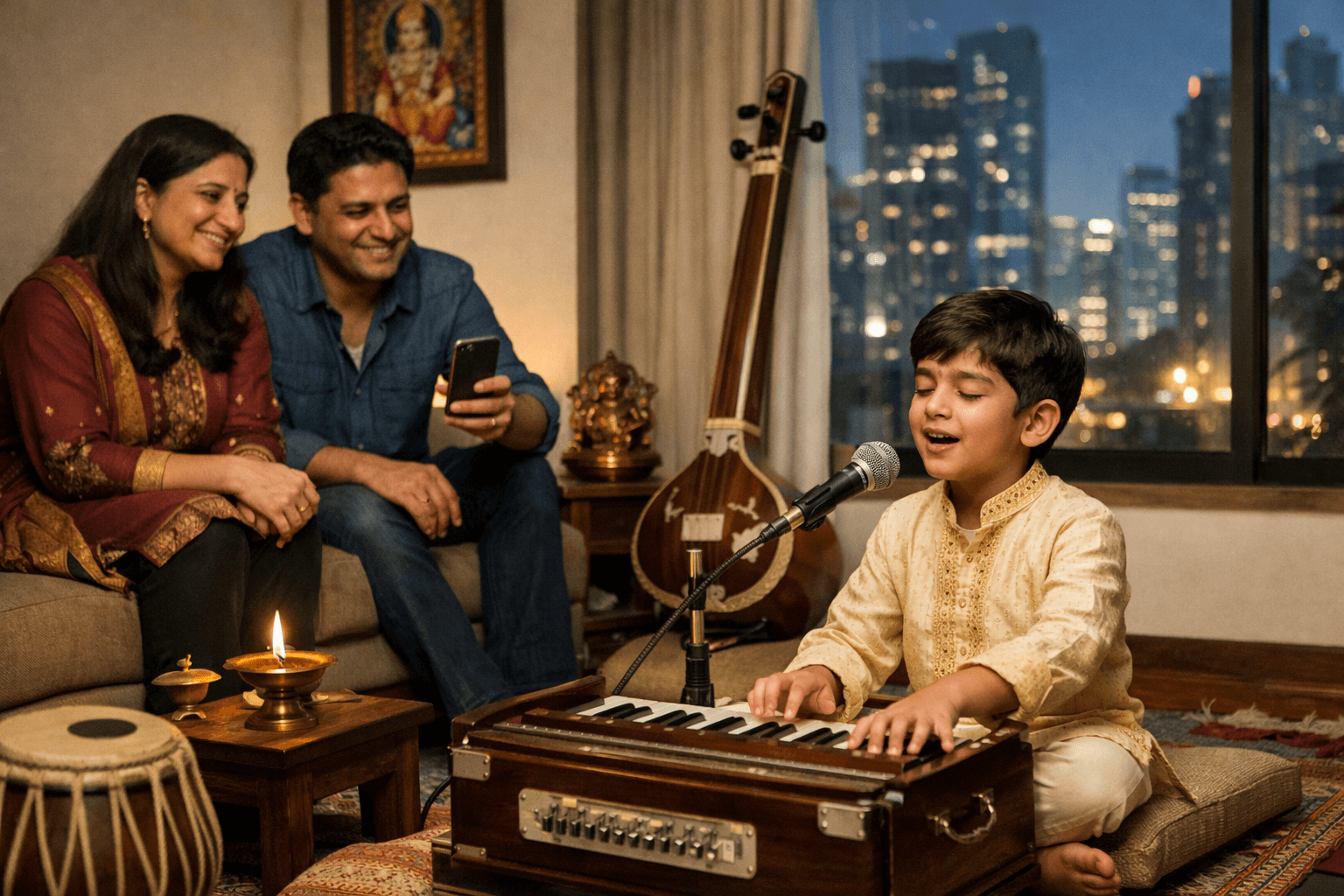
Learning can be gamified by clapping rhythms, matching melodies, or improvising mini-songs. These activities make introducing kids to classical music enjoyable. Games also reinforce structured learning for classical music and develop a sense of achievement.
Blending Classical Concepts with Modern Music
Combining elements of Western music with classical ragas helps children relate to traditions. Fusion exercises show how classical foundations can influence modern compositions. Kids learn to appreciate both genres while practicing improvisation creatively.
Using Apps, Short Lessons, and Bite-Sized Learning
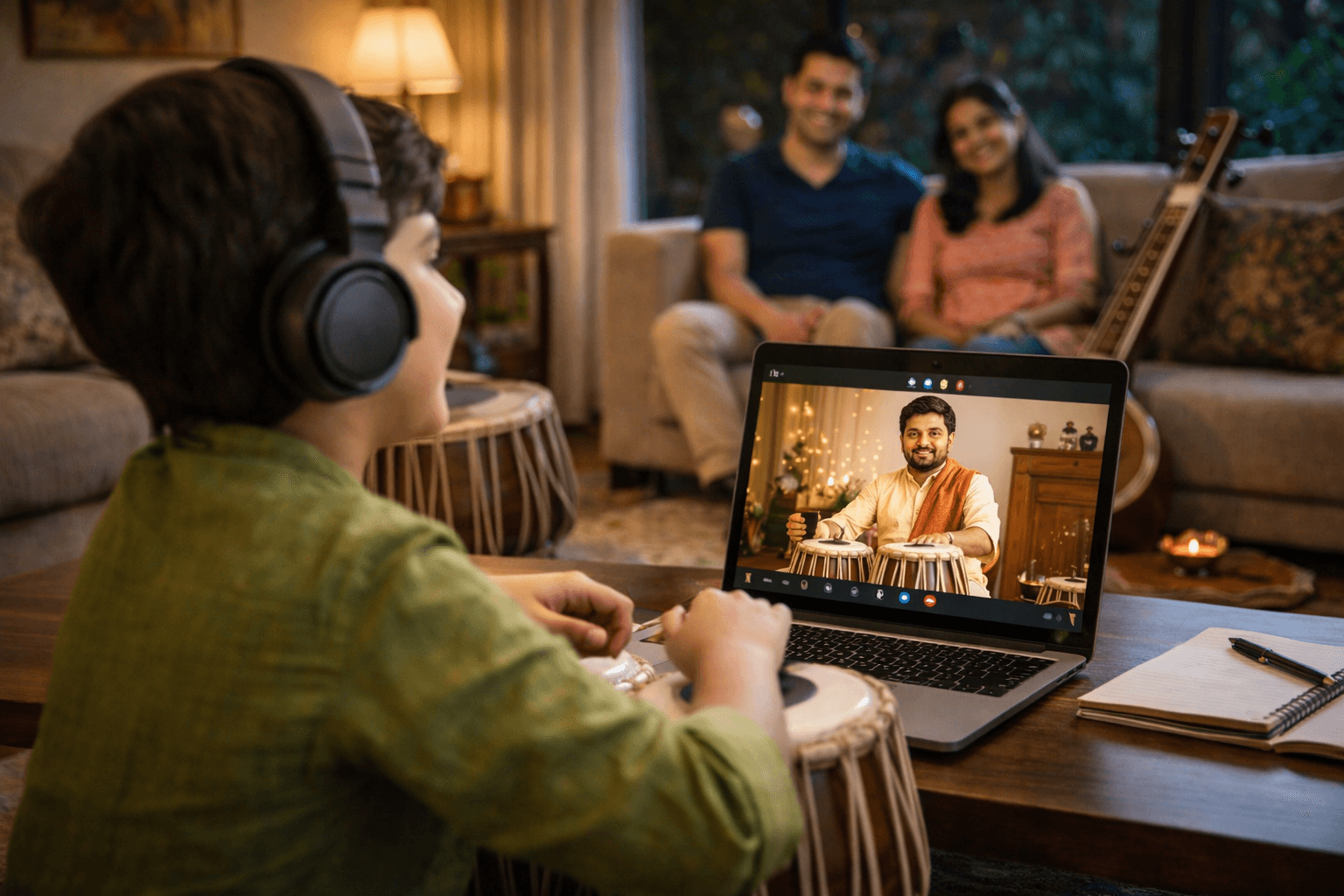
Digital tools offer structured guidance for children learning abroad. Online classical music classes for kids provide flexible schedules, interactive lessons, and visual aids. Short daily lessons maintain focus and prevent overwhelming young learners.
Motivating Kids with Rewards and Progress Tracking
Charts, badges, and small performances encourage children to continue learning. Recognizing milestones fosters discipline and pride. This approach combines practice habits for music learners with positive reinforcement for long-term engagement.
The Power of Parents and Community in Keeping Traditions Alive
 Building Local Groups, Clubs, and Cultural Circles
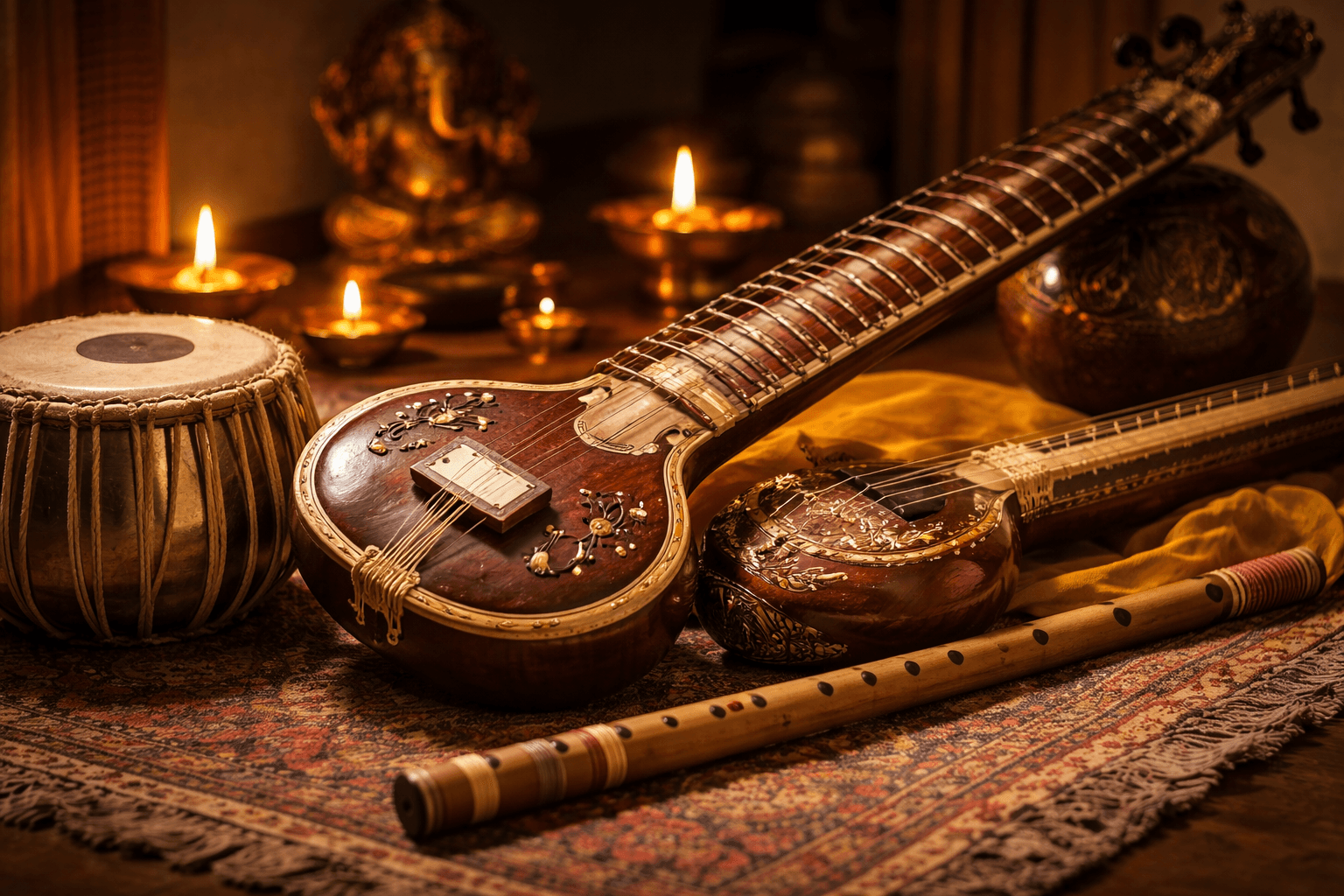
Parents can create or join music clubs and cultural circles. Peer interaction motivates children and provides opportunities to perform. Communities reinforce learning by sharing resources and Indian musical instruments (tabla, veena, sitar, flute).
** Participation in Music Festivals and Talent Events**
Encouraging children to participate in local or online music festivals builds confidence. Regular performances show the practical application of structured music learning and maintain connection to Indian festivals and cultural events abroad.
Encouraging Children to Perform for Family Gatherings
Small family performances allow kids to practice in a supportive environment. Sharing music at gatherings strengthens pride in heritage and develops confidence. Children learn to see music as a joyful part of family life rather than a task.
How Art Gharana Supports NRI Families with Structured Online Music Education
Expert-Led Hindustani and Carnatic Learning Paths
Art Gharana offers curated paths for both Hindustani and Carnatic music. Children learn ragas and talas, bandish and compositions, and gain exposure to authentic Gharana traditions from expert teachers.
Flexible Schedules for Global Time Zones
Families abroad benefit from lessons designed for their local schedules. Online classes allow consistent practice despite time differences, supporting kids learning traditional music abroad.
Child-Friendly Teaching Methods and Progressive Curriculum
Interactive lessons, games, and step-by-step learning help children engage effectively. Students develop practice habits for music learners while enjoying the process of learning.
Connecting Young Learners to India’s Musical Legacy
Art Gharana bridges the gap between children abroad and India’s musical heritage. Kids explore Indian musical instruments and participate in online recitals, keeping traditions alive and meaningful.
Keeping the Spirit of Indian Classical Music Alive Across the World
 The Role of Family Influence and Consistency
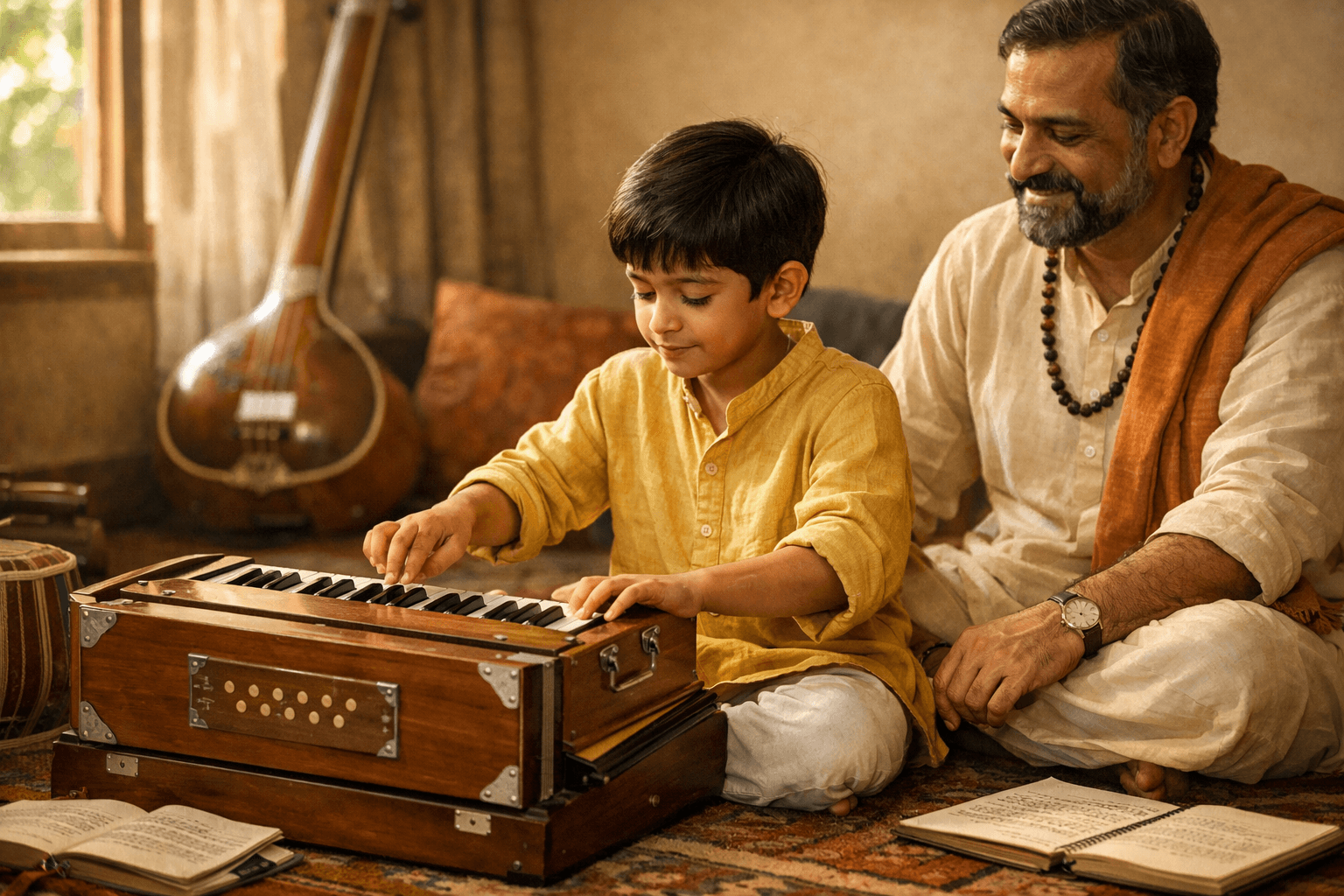
Parental involvement is key to long-term interest. Daily listening, supportive encouragement, and shared performances instill emotional and spiritual growth through music. Children who see music valued at home develop lifelong appreciation.
Encouraging Children to Treat Music as a Lifelong Companion
Music becomes part of daily life rather than a school subject. By seeing its role in family and community, children embrace Indian classical music for kids as a continuous journey. This habit encourages lifelong discipline, creativity, and cultural pride.
FAQs
1. Why is Indian classical music important for NRI children?
It builds cultural identity, emotional intelligence, and cognitive development. Children connect to heritage and gain confidence through performance.
2. What is the difference between Hindustani and Carnatic music?
Hindustani music focuses on improvisation and vocal stylings from North India, while Carnatic music emphasizes compositions and rhythmic complexity from South India.
3. What difficulties do NRI parents face while teaching music?
Parents often struggle with finding teachers, balancing schedules, and maintaining children’s interest while teaching songs in Hindi, Sanskrit, or regional languages.
4. How can parents abroad make classical music interesting for kids?
Parents can gamify lessons, blend classical with modern music, use apps, short lessons, and storytelling to engage children actively.
5. How can online classes support Indian music learning overseas?
Online classical music classes for kids provide flexibility, structured learning, expert guidance, and exposure to authentic compositions and instruments.
6. What is Art Gharana’s role in promoting Indian classical music globally?
Art Gharana offers structured online programs for Hindustani and Carnatic music, connecting children abroad to India’s rich musical heritage while making learning enjoyable and consistent.