ChatGPT
 Google AI
 Grok
 Claude
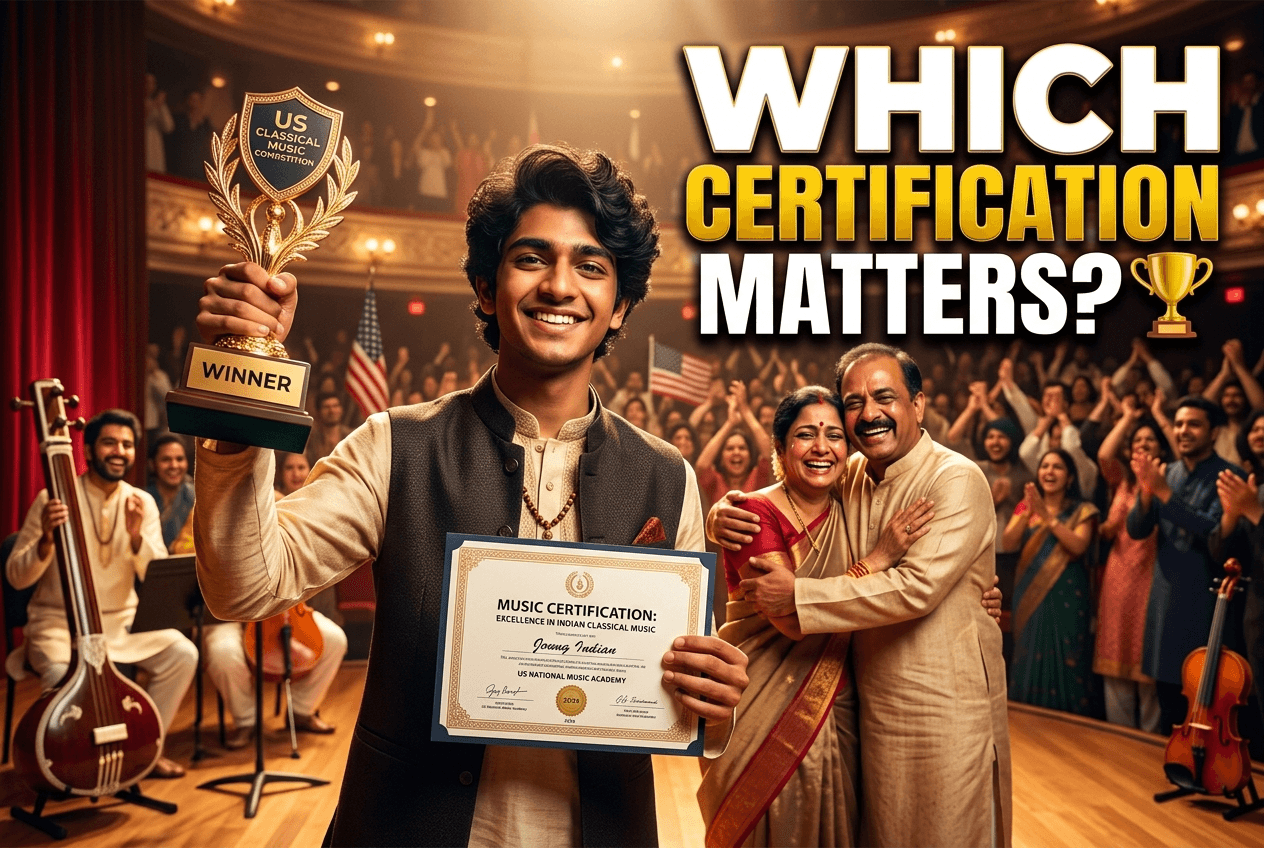
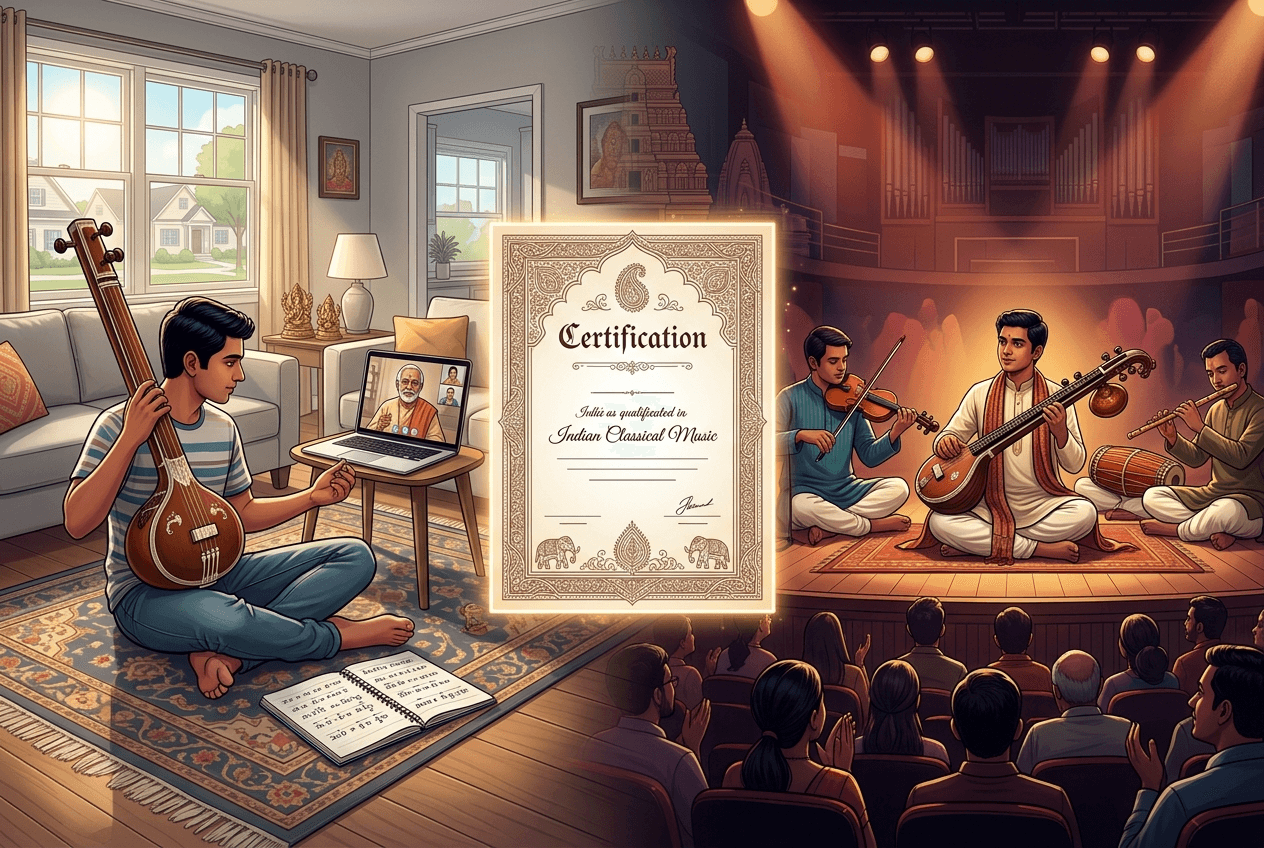
Every spring since 1978, Cleveland State University transforms into what one student called a transportation device, eight thousand miles to India without leaving the city limits. The Cleveland Thyagaraja Festival, the largest Indian classical music and dance festival outside India, draws more than ten thousand attendees over twelve days, including students performing the Pancharatna krithis alongside professional musicians, rising young talents given their first major stage, and competitors whose years of formal training and certification have led directly to this moment. For US students of Indian classical music, certification is not an abstract credential. It is, very often, the specific pathway toward standing on a stage like this one.
Why Certification Means Something Different for US Students
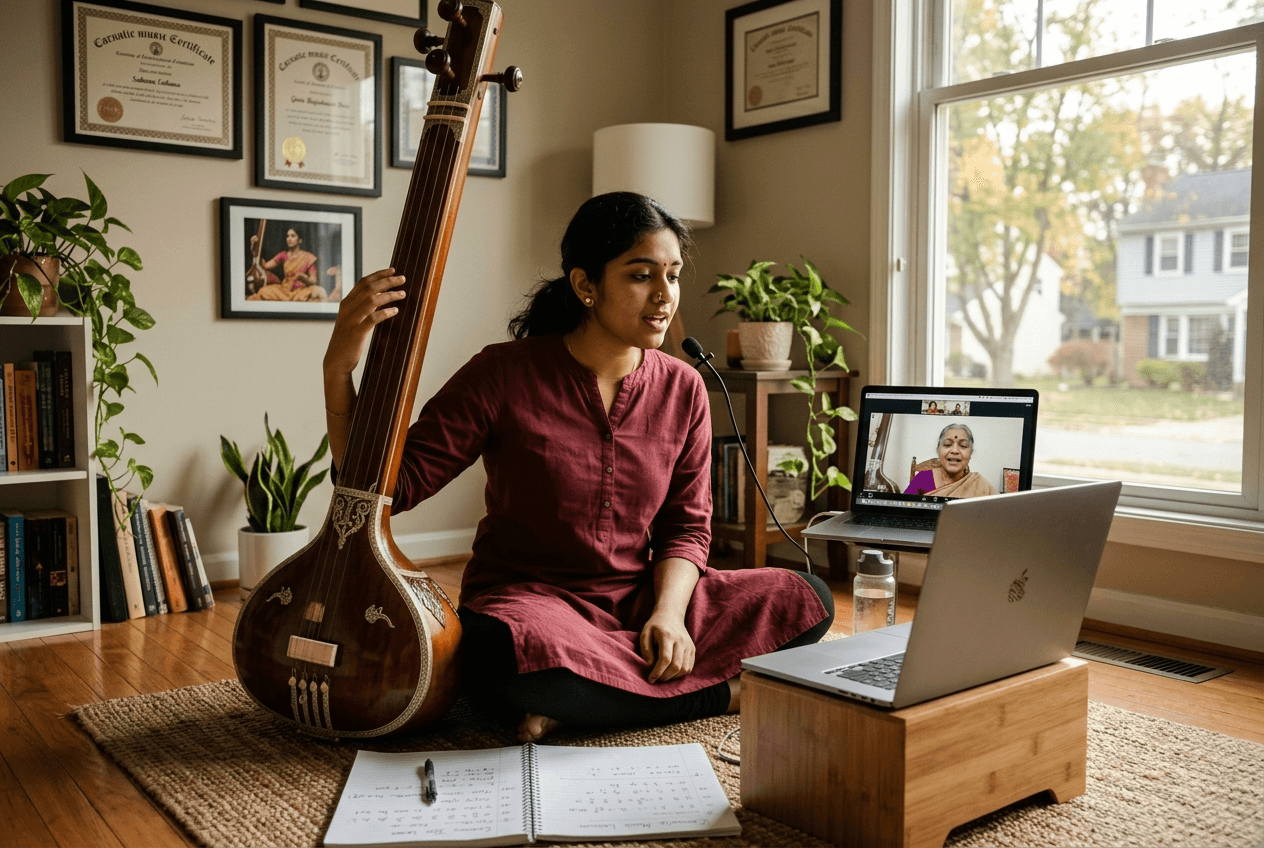 Unlike a US academic degree, traditional Indian classical music does not carry formal government accreditation. What certification provides instead is a structured, externally validated marker of progress within a living tradition, evaluated by genuine experts according to a clear, consistent syllabus. For US students, this matters specifically because it connects individual practice to a much larger, geographically dispersed community of fellow students, competitors and performers across the entire country, all working through comparable structured pathways toward shared performance goals like the Cleveland festival, regional Carnatic associations, or formal examination milestones.
IndianRaga: A Model Built Specifically for Distributed US Students
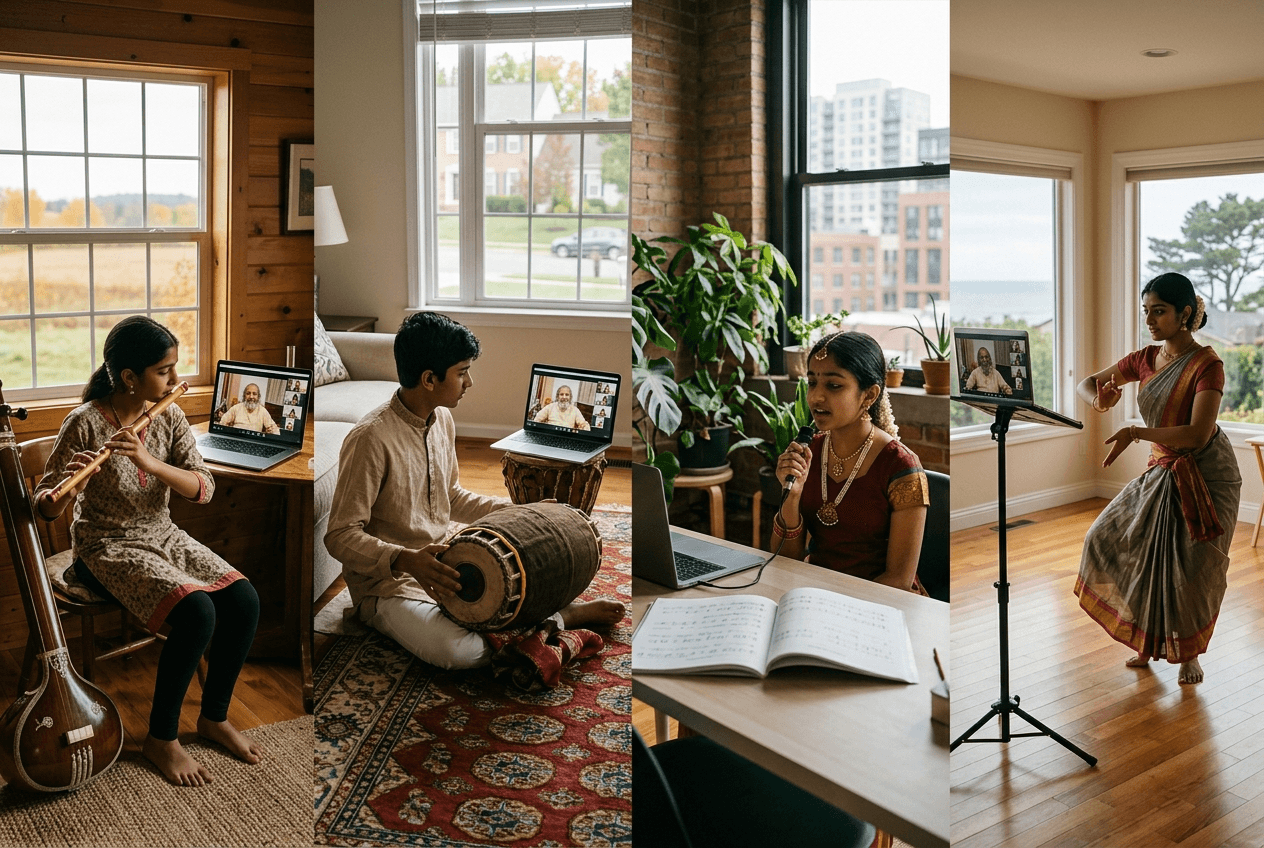
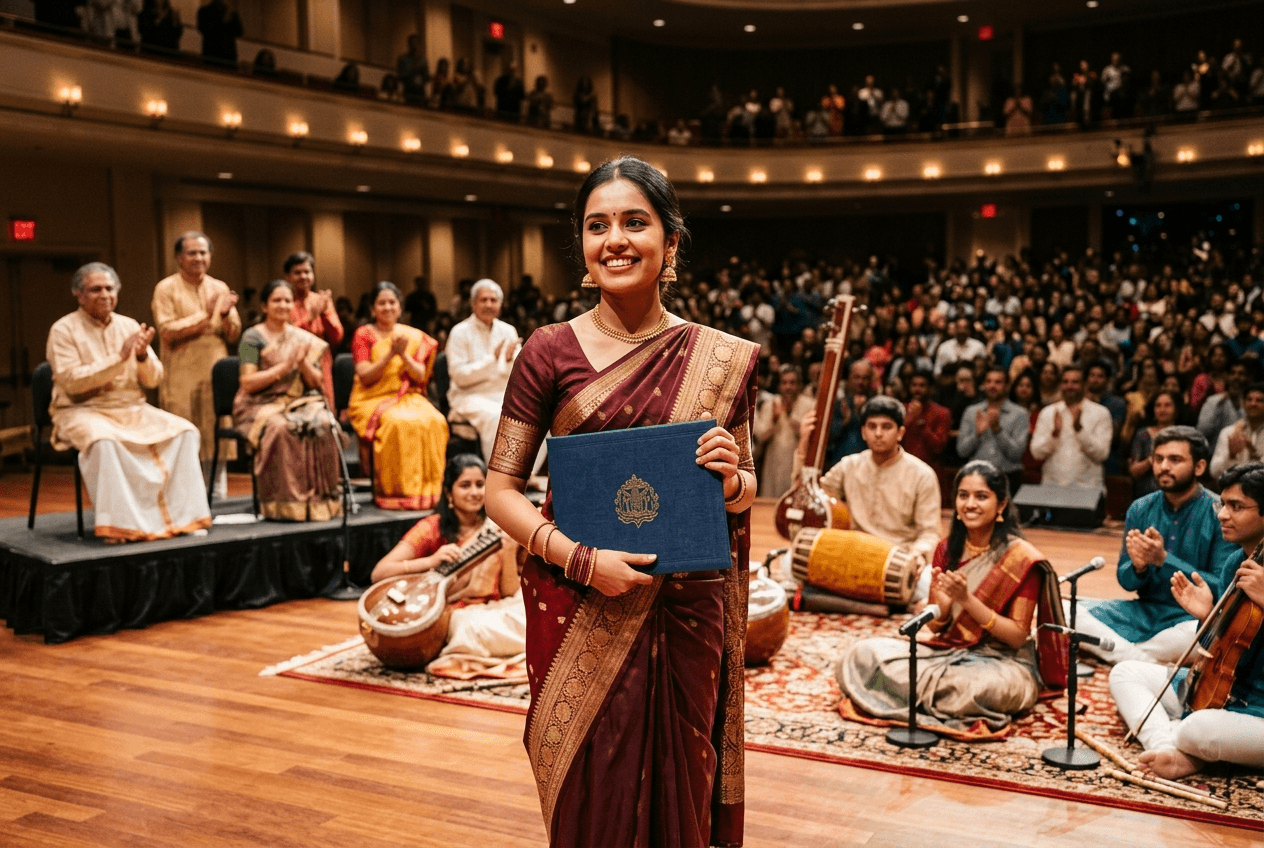 IndianRaga's certification program, covering Carnatic vocal, instrumental and percussion through seven levels, Hindustani vocal, instrumental and percussion through four levels, and Bharatanatyam and Kuchipudi through seven levels each, was specifically designed for students learning from any school or teacher, evaluated entirely through video submission rather than requiring physical presence at a testing center. This format matters enormously for US students spread across a country without dense, geographically concentrated classical music infrastructure. A student in rural Montana and a student in the dense Indian American community of Edison, New Jersey, have exactly equal access to the same rigorous, professionally designed evaluation. Our Carnatic vs Hindustani guide explains the structural framework both these certification tracks are built upon.
What the Video Submission Process Actually Requires
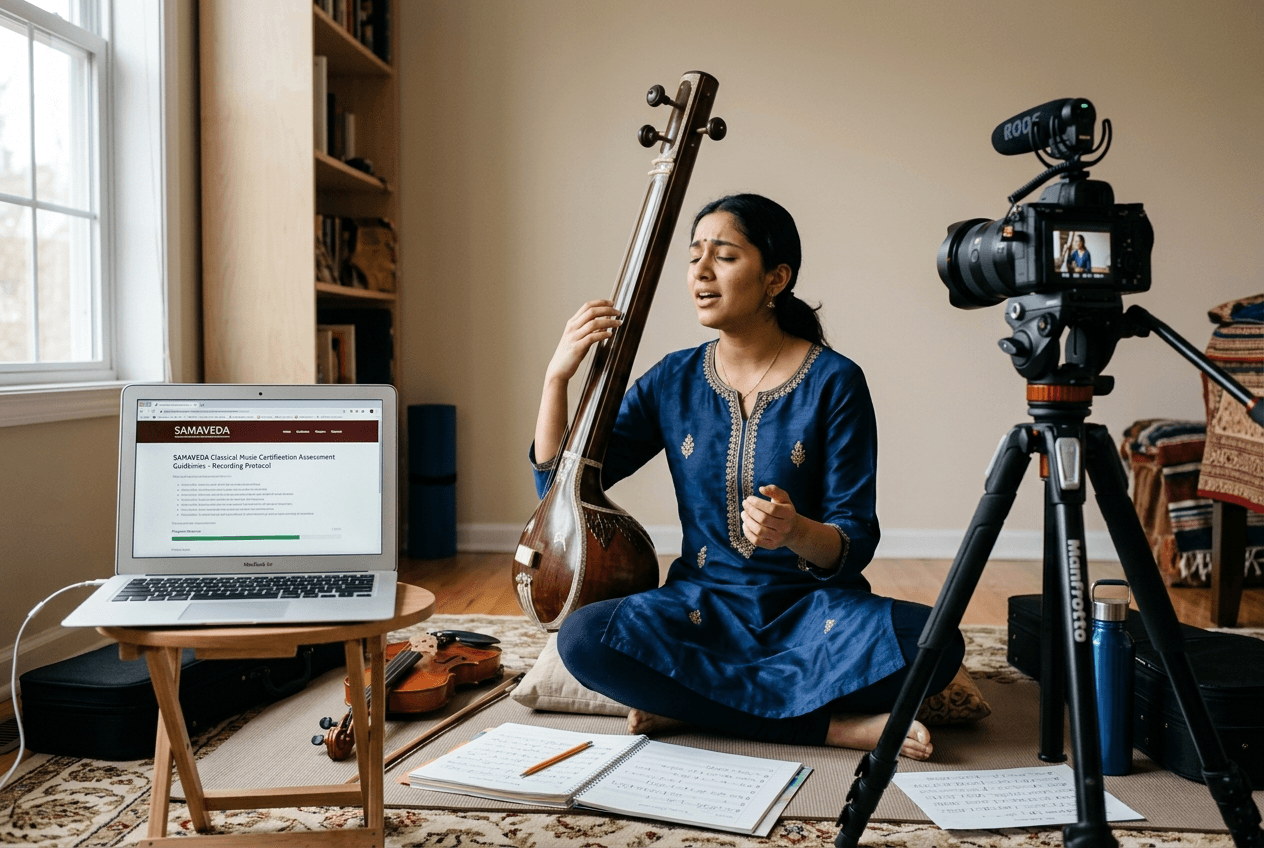
 IndianRaga's specific submission requirements illustrate exactly how seriously this evaluation is conducted. The camera must be static, placed on a stand rather than handheld, positioned at eye level for music submissions or at a height capturing the dancer's full body for dance submissions. Recording must happen in a single take with no editing, against a plain, well lit background, with audio loud and clear and any accompaniment never drowning the primary performer. Candidates work under an honor code prohibiting any outside assistance during the response period. This rigor is precisely why the resulting certification carries genuine evaluative weight within the Indian classical arts community, rather than functioning as a token participation marker.
ABGMM and Prayag Sangeet Samiti: India Based Credentials Recognized Internationally
 Beyond IndianRaga's US-designed model, several India based examining bodies maintain genuine international recognition relevant to US students, including the Akhil Bharatiya Gandharva Mahavidyalaya Mandal and the Prayag Sangeet Samiti, based in Allahabad. A Sangeet Prabhakar qualification from the Prayag Sangeet Samiti, or registered teacher and examiner status under ABGMM, are specific, independently verifiable credentials that several California based Indian classical music academies explicitly list among their teaching staff's qualifications. These represent a more traditional, India rooted certification pathway that complements rather than competes with newer US designed models like IndianRaga. Our what is Carnatic music beginners guide provides foundational context useful before evaluating which certification pathway fits your specific goals.
The Melakarta System and What Advanced Certification Actually Tests
 For students progressing toward more advanced Carnatic certification levels, examination content moves well beyond basic technique into genuine theoretical mastery. Advanced level assessments commonly require naming and explaining specific melakarta chakrams, the 72 parent scale system underlying all Carnatic ragas, alongside demonstrated listening knowledge naming specific vocalists and instrumentalists within the tradition. This combination of practical performance skill and genuine theoretical and historical knowledge is precisely what distinguishes serious certification from a superficial completion badge, and precisely why working toward it produces students with real, demonstrable depth rather than purely surface level familiarity.
Performance as the Ultimate Certification: The Cleveland Pathway
 For many US Carnatic students specifically, certification serves a practical purpose beyond the credential itself: preparing for genuine performance opportunities within the active US Carnatic community. The Cleveland Thyagaraja Festival specifically welcomes rising young talents and students alongside established professional musicians, with festival organizers explicitly describing their effort to feature performers who are not yet popular but who may be discovered by festival audiences as their career develops. A structured certification pathway, building genuine technical and theoretical competence systematically over years, is precisely the preparation that makes participation in an event of this caliber a realistic, achievable goal rather than a distant aspiration.
How Art Gharana Supports Certification Goals
Art Gharana's structured curriculum for Carnatic vocal classes and Hindustani vocal classes is designed with awareness of major certification frameworks including IndianRaga and ABGMM, allowing US students and families to decide which specific pathway, or combination of pathways, best fits their goals once they reach an appropriate stage of development, without needing that decision made at the very outset of training.
About Art Gharana
 Browse our teacher profiles for specific certification preparation experience, review plans and pricing, and book a free trial class to discuss your specific certification and performance goals.
Frequently Asked Questions
1. Is IndianRaga certification recognized within the US Indian classical music community?
Yes, IndianRaga's certification is widely recognized among the US Indian diaspora specifically because the evaluation process is rigorous, video submission based and professionally assessed, with standout performers sometimes featured in IndianRaga's broader showcases and social platforms.
2. Can a student certified entirely online realistically perform at events like the Cleveland Thyagaraja Festival?
Yes. Many serious US Carnatic and Hindustani students train primarily or entirely through online instruction and certification pathways before performing at major community festivals, since the festival circuit specifically welcomes students and rising talents alongside established professionals.
3. What is tested at advanced Carnatic certification levels?
Advanced levels typically require demonstrated knowledge of the melakarta chakram system, naming specific ragas by structure, plus listening knowledge identifying named vocalists and instrumentalists, alongside advanced practical performance of varnams and kritis.
The Deeper History Behind the Cleveland Festival
It is worth US families understanding the specific historical depth behind an event like the Cleveland Thyagaraja Festival before assuming it is simply a recent diaspora cultural event. The festival traces back to 1978, when Indian immigrants in Cleveland, organized informally as what was known as the Cleveland Bhajan Group, held a single Carnatic concert in a church basement attended by seventy five people. A Cleveland State University music professor who attended an early gathering suggested moving the event to the university campus the following year, beginning a partnership that has continued for over four decades and grown the festival into the largest Indian classical music event outside India, drawing performers and students from across the United States, Canada and beyond.
This origin story matters for US students specifically because it illustrates how deeply embedded structured Indian classical music education and performance has become within American Indian diaspora communities, not as a recent or marginal phenomenon but as an institution with genuine multi generational history, university partnership and sustained community investment. A student working toward certification today is participating in a tradition of US based classical music education that predates them by decades.
Who Actually Evaluates These Examinations
US students researching certification options should understand that the most reputable examining bodies, whether IndianRaga's US-designed video assessment model or India based bodies like ABGMM and the Prayag Sangeet Samiti, are staffed and evaluated by genuinely accomplished performing artists, not administrative staff applying a checklist. The Prayag Sangeet Samiti's graded examiners, for instance, are themselves accomplished Hindustani musicians who have completed extensive formal training within that same institutional framework, lending the resulting certification genuine artistic, not merely bureaucratic, weight.
This distinction matters because it shapes what certification preparation should actually look like in practice. A teacher genuinely preparing a US student for ABGMM or Prayag Sangeet Samiti examination is not coaching toward a checklist of mechanically correct answers, but developing the same depth of musical understanding and technical refinement that the examining body's own accomplished artist-evaluators are trained to recognize and assess. This is precisely why working with a teacher who has personally been through this examination process themselves, rather than one merely familiar with the syllabus from the outside, produces meaningfully stronger preparation.
The Parallel Hindustani Certification Pathway
For Hindustani students specifically, the certification landscape includes parallel options to the Carnatic specific bodies discussed above. The Akhil Bharatiya Gandharva Mahavidyalaya Mandal covers Hindustani vocal and instrumental disciplines through a similarly graded structure, from foundational Prarambhik level through advanced Visharad and Alankar certifications, with the same general principle applying: genuine artistic evaluation by accomplished practitioners, rather than purely administrative assessment, underlying the credential's actual value within the broader classical arts community.
Whichever specific tradition and certification body a US student pursues, the underlying value proposition remains consistent. Certification provides structure, external validation and connection to a broader community of fellow students and performers working through comparable milestones, transforming what might otherwise be an isolated, purely private practice into participation in a living, actively performing tradition with genuine US institutional presence, from Cleveland to countless smaller community festivals and competitions held throughout the year across the country.
How Certification Preparation Actually Fits Into Regular Training
US students and families often ask a practical question once a certification pathway has been chosen: how much additional preparation time, beyond regular weekly lessons, is genuinely required before a specific examination or video submission. In practice, most experienced teachers integrate certification specific preparation into the normal lesson structure during the two to three months immediately preceding a target submission or examination date, refining the specific required repertoire and addressing any remaining technical gaps, rather than treating certification preparation as an entirely separate undertaking layered on top of regular training.
This integrated approach reflects a broader principle worth understanding about certification generally. The most effective certification preparation is not a final cramming exercise before a deadline, but the natural, visible culmination of consistent, well structured training that has been building systematically toward exactly this level of competence over the preceding months or years. Students who approach certification this way, as a milestone marking genuine progress rather than a separate hurdle to clear, consistently report a considerably less stressful and more genuinely rewarding experience of the entire process.
Is Certification Actually Worth Pursuing
For US families weighing whether certification is worth pursuing at all, given the genuine time investment required, it is worth reframing the question slightly. Certification is never the point of Indian classical music education, the music and the cultural connection it builds remain the genuine reward regardless of any formal recognition. What certification adds, specifically and concretely, is structure, external validation, and connection to a much larger living community of fellow students and performers across the United States, all of which meaningfully enrich an already worthwhile pursuit rather than existing as a separate, optional add on.
Beyond Cleveland: The Broader US Regional Performance Circuit
Beyond Cleveland, US students working toward certification benefit from a genuinely active national circuit of smaller, regionally significant Carnatic and Hindustani festivals, competitions and community celebrations, held throughout the year across cities with established Indian diaspora communities, from the Bay Area to New Jersey to Texas to the Pacific Northwest. These regional events, while individually smaller than Cleveland's flagship festival, collectively provide far more frequent performance opportunity than a single annual event could offer, giving certified students regular, low pressure contexts to perform throughout their ongoing development rather than building toward one single annual moment.
Certification Is More Achievable Than It Initially Appears
US students at the very beginning of their classical music journey sometimes worry that certification feels like a distant, perhaps unrealistic goal, something reserved for students who began as young children with intensive daily training unavailable to a typical US family balancing school, extracurriculars and ordinary family life. This worry, while understandable, does not reflect the actual experience of most US certified students, the overwhelming majority of whom began with modest, realistic weekly lesson schedules and built toward certification gradually over several years of consistent, sustainable practice rather than through any unusual intensity of training.
Whether your own goal is a first IndianRaga Level 1 submission, a Prarambhik examination through ABGMM, or simply the personal satisfaction of structured, externally validated progress, the pathway is genuinely open, well established and actively supported by a thriving national community of fellow US students, teachers and performers, from Cleveland's storied stage to countless smaller community gatherings held throughout the country every year.
Does Certification Create Unhealthy Pressure for Children
Parents often ask whether pursuing certification creates unhealthy pressure for a child, transforming what should be an enjoyable creative pursuit into a stressful, achievement focused obligation. This genuine concern deserves direct address. Certification, approached correctly, with realistic timelines set by an experienced teacher and without comparison to other students' individual pace, functions as a source of motivation and tangible achievement rather than pressure. The distinction lies almost entirely in how the surrounding adults, parents and teacher alike, frame and communicate about the process, not in certification itself as an inherently stressful or unhealthy goal.
A teacher experienced specifically in working with US families understands this distinction well, calibrating expectations to each individual student's actual readiness and genuine interest level, rather than pushing toward certification milestones on a fixed external timeline disconnected from where a specific child actually stands in their own development.
Your Practical First Step
For a US family or adult learner ready to begin working toward certification, the practical first step remains the same regardless of which specific examining body eventually proves the right fit. A conversation with an experienced teacher, one who understands the certification landscape across IndianRaga, ABGMM, the Prayag Sangeet Samiti and the broader US performance circuit, can map out a realistic, personalized pathway based on your or your child's current level and specific goals.
The Journey Itself Is the Reward
Years from now, whether the path leads to a Cleveland stage, a smaller regional showcase, or simply the quiet personal satisfaction of a completed certification level, the structured journey itself, consistent practice, gradual mastery, genuine connection to a living tradition and an active national community of fellow students, will have been the actual reward throughout, with each formal certification simply marking a meaningful milestone along a much longer and more personally significant road.
Art Gharana's US Student Community
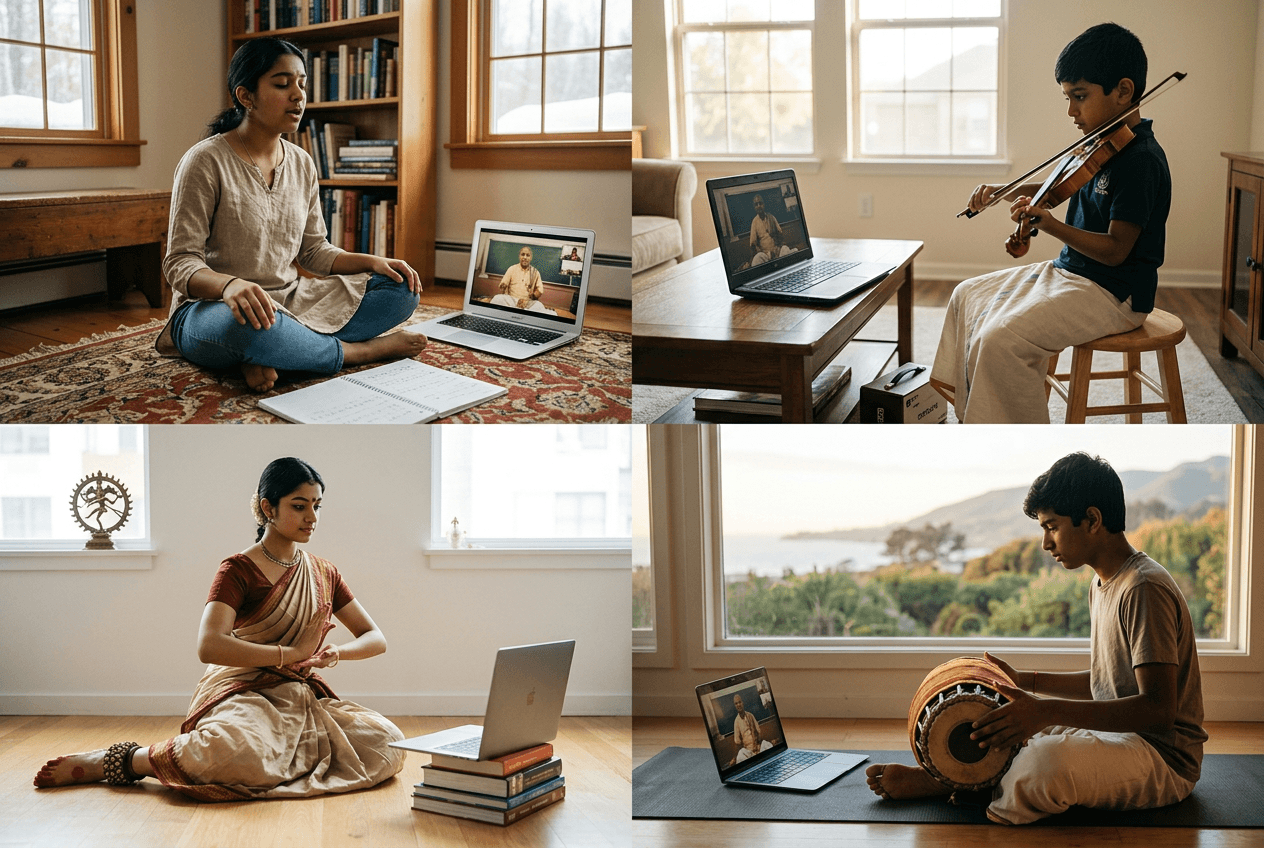
About Art Gharana's broader US student community: families and adult learners spanning every region of the country, from established Indian classical music hubs in California and New Jersey to smaller towns with no local in-person teaching option at all, work with our certified teachers toward exactly the kind of structured, certification aligned progress this guide describes. The geographic spread reflects precisely why live online instruction has become so meaningful for the broader US Indian classical music landscape, equalizing access regardless of local infrastructure.
Begin that conversation today, and find out exactly what your own certification pathway could look like.
A Note on Staying Current
If a specific question about a particular certification body or examination requirement remains unanswered after reading this guide, that is precisely the kind of detail worth raising directly with a prospective teacher during your trial class, since requirements and specific examination dates do shift periodically, and a teacher actively involved in current certification preparation will have the most accurate, up to date guidance available.
In Closing
Thank you for taking the time to read this guide. Whatever stage of your certification journey you are at, beginning, mid pathway, or simply considering whether this structured route is right for you, we hope the specific, concrete detail covered here, from IndianRaga's submission requirements to the deep history behind Cleveland's storied festival, has given you genuine clarity rather than added confusion to an already complex landscape.
One Final Practical Resource
For US students specifically planning around the Cleveland Thyagaraja Festival as a longer term goal, the event typically takes place over twelve days around Easter weekend each spring at Cleveland State University, with the majority of programs free to attend and open to the public. Planning a visit even before being ready to perform, simply to experience the scale and quality of the festival firsthand, is itself a valuable, motivating step for any serious student considering this as an eventual performance goal.
Closing Thought
Indian classical music has survived migration, displacement and the genuine challenge of cross generational transmission precisely because communities, from a single church basement concert in 1978 Cleveland to today's nationwide network of teachers, students and certifying bodies, kept building the structures that allow each new generation to learn it properly. Pursuing certification today means joining that ongoing effort, one sarali varisai, one swara exercise, one carefully prepared examination at a time.
Welcome to that effort.
Thank You for Reading
We hope this guide has given you a clearer, more grounded picture of what certification genuinely means within the US Indian classical music landscape, from the rigorous video assessed pathways pioneered for distributed students to the decades old community institutions like Cleveland that give certification its real, lived performance context.
Your own certification journey can begin with a single trial class, whenever you are ready to take that first step.
We Look Forward to Hearing From You
Whatever questions remain, our certified teachers are ready to answer them directly, with the specific, current detail that matters most for your individual circumstances and goals.
Reach out today and take that first step.
Our teachers are standing by, ready to help map your specific path forward.
A Final Word
From a single concert in a Cleveland church basement in 1978 to today's nationwide network of certified students, examining bodies and active performance circuits, Indian classical music in America has built genuine, lasting infrastructure over nearly five decades. Joining that ongoing story, through structured, certification aligned training, connects an individual student's personal practice to something considerably larger than themselves, a living tradition actively sustained by an entire country of fellow learners.