ChatGPT
 Google AI
 Grok
Grok Claude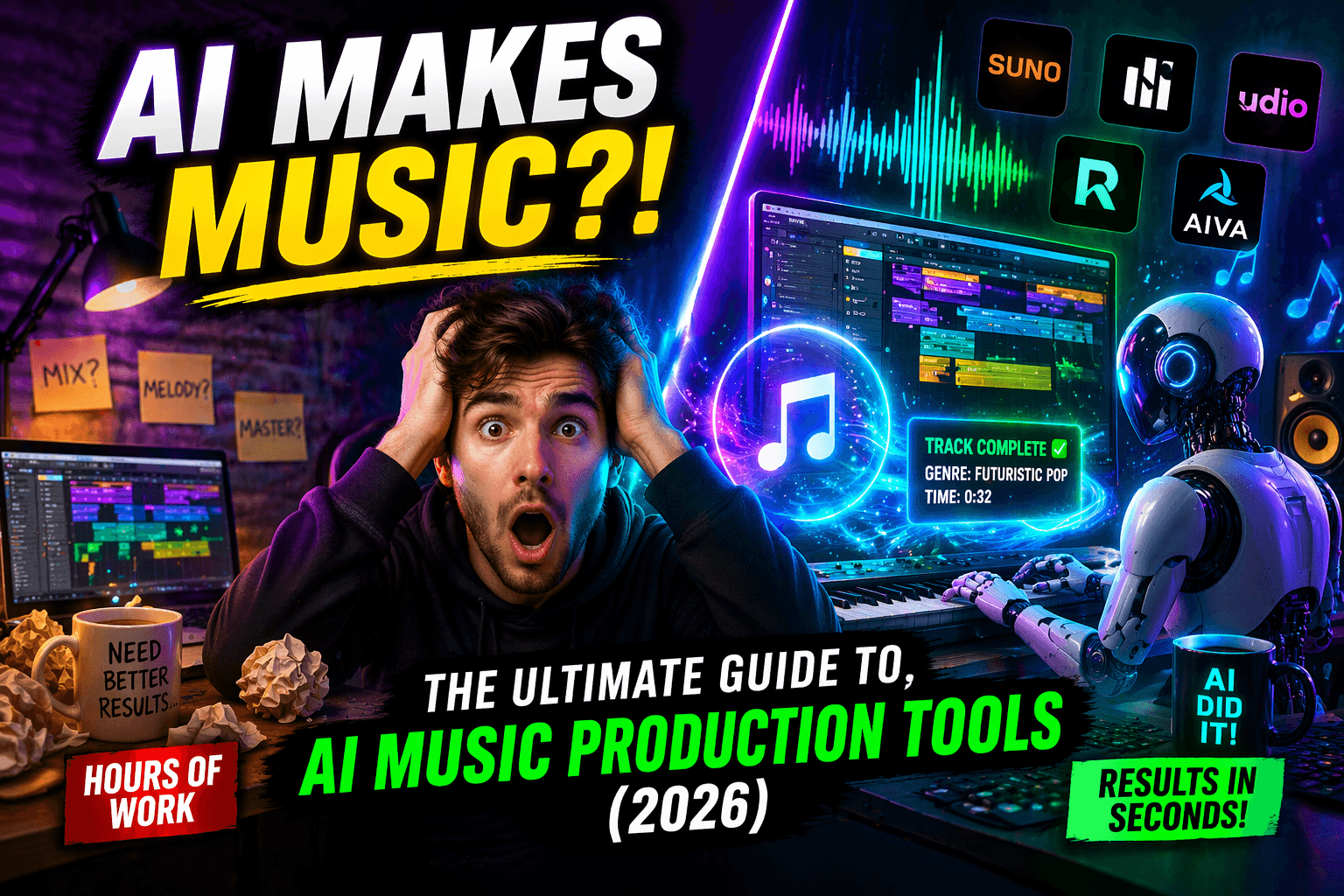
AI music production tools are revolutionizing the way songs are created, mixed, and mastered, offering both professionals and beginners a pathway to innovate faster. By leveraging artificial intelligence in music, producers can enhance creativity in music production while streamlining complex processes, increasing efficiency for music producers and independent musicians alike.
The rise of AI-assisted music production is evident across studios and online platforms, where algorithmic music composition and neural networks for music are reshaping traditional workflows. From AI-powered sound design to personalized music patterns, these tools are becoming essential in modern music creation, supporting both experimental AI music tools and mainstream production software.
A Brief History of AI in Music
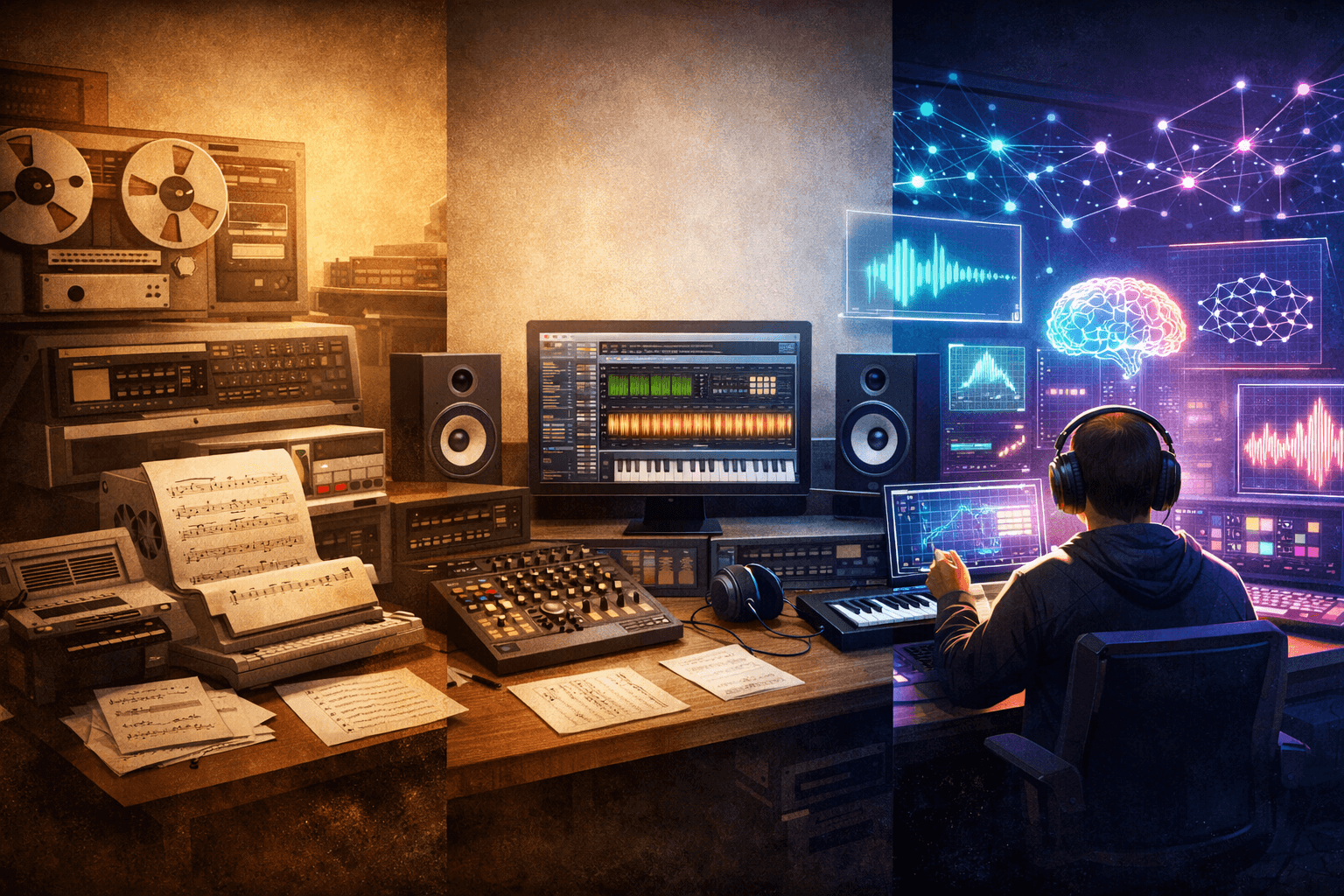 Artificial intelligence in music began with early algorithmic music composition experiments, gradually evolving into sophisticated AI-driven music generation systems. Milestones include IBM’s computer-generated symphonies and Google’s deep learning in music projects, laying the foundation for today’s generative AI music platforms.
The integration of machine learning music applications and AI-generated melodies into popular DAWs has transformed production, allowing producers to explore AI for melody and harmony generation while maintaining creative control. Over decades, AI has progressed from simple music composition software to adaptive music creation software capable of multi-track audio separation and AI-assisted mastering decisions.
The Role of AI in Music Production
Benefits of Using AI in Music Production
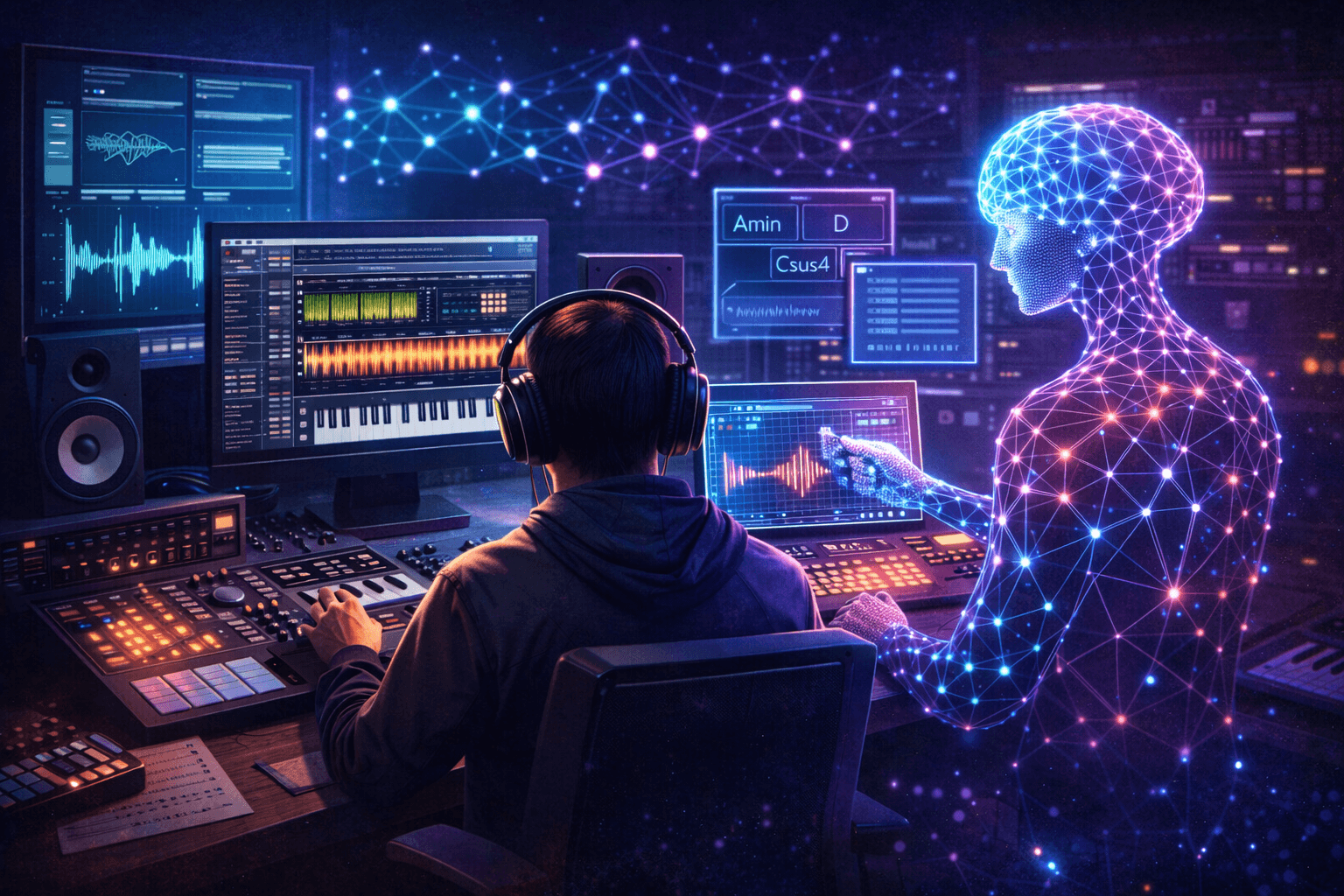
AI music production tools enhance creativity in music production by generating chord progressions, polyrhythm creation tools, and AI-generated orchestral arrangements that inspire human composers. They also increase efficiency for music producers by automating repetitive tasks like sample organization, stem separation technology, and audio restoration software, saving hours in the music production workflow.
Furthermore, AI-assisted music production simplifies complex processes, enabling producers to implement AI mastering tools, AI-driven drum patterns, and virtual instruments effortlessly. By combining music theory assistance with AI-powered sample organization, these tools act as a creative collaborator while offering adaptive music creation software features, fostering music production innovation.
How AI Enhances Sound Quality and Composition
AI in sound quality improvement allows musicians to optimize tracks using automated mixing software and AI-assisted mastering decisions, ensuring professional results even for beginners. AI-generated melodies, stem separation technology, and sample library organization enhance composition while enabling text-to-audio music generation and generative AI music platforms for experimental arrangements.
The incorporation of AI-powered sound design and AI for melody and harmony generation supports collaborative music production with AI, producing personalized music patterns and music production plugins that refine the workflow. These advancements encourage music creation automation while maintaining artistic authenticity, proving AI as a creative collaborator in both electronic music production and orchestral arrangements.
Popular AI Music Production Tools in 2026

LANDR – Master Your Tracks Effortlessly
LANDR leverages AI mastering tools and automated music composition to provide professional-grade mastering, enhancing sound quality without requiring in-depth technical knowledge. It integrates seamlessly with DAWs, offering music production for beginners and professionals alike, ensuring royalty-free music creation and AI-assisted mastering decisions.
AIVA – AI Composer for Cinematic Music
AIVA excels in AI-generated orchestral arrangements, enabling composers to create cinematic scores with personalized music patterns and generative AI music platforms. Its AI-assisted music production features allow adaptive music creation software to craft melodies, harmonies, and polyrhythms for media projects, experimental AI music tools, and classical compositions.
Amper Music – Fast and Royalty-Free Compositions
Amper Music empowers creators with royalty-free music creation, using AI for melody and harmony generation and automated mixing software. This tool supports collaborative music production with AI, text-to-audio music generation, and AI-powered sample organization, making music production workflows more efficient while retaining creative control for beginners and professionals.
Orb Producer Suite – Melodic and Harmonic Genius
Orb Producer Suite utilizes chord progression generators, AI-generated melodies, and music theory assistance to provide harmonic and melodic inspiration. Its AI-assisted music production allows producers to explore adaptive music creation software while generating personalized music patterns, enhancing creativity in music production and offering AI as a creative collaborator.
Magenta Studio (by Google) – Experimental Machine Learning Fun
Magenta Studio uses deep learning in music to offer experimental AI music tools and AI music production trends 2025–2026. It supports AI in electronic music production, multi-track audio separation, and music generation using neural networks, encouraging innovative music production workflows for producers seeking exploratory compositions and AI-powered sound design.
Other Key Tools for Composition, Stem Separation, and Sample Management
Beyond mainstream platforms, AI music production tools offer advanced music licensing solutions, AI-powered sample organization, and stem separation technology. These tools enhance music creation automation, AI-driven drum patterns, and collaborative music production with AI, streamlining complex production workflows and supporting music production innovation for both beginners and professionals.
Advanced AI Applications in Music
Automated Mixing and Mastering Software
Automated mixing software and AI-assisted mastering decisions transform production by delivering professional-level audio quality, multi-track audio separation, and adaptive music creation software functionalities. These AI music production tools improve sound quality, streamline the music production workflow, and allow producers to focus on AI-generated melodies and music composition software innovation.
Generative AI Platforms for Music Creation
Generative AI music platforms employ neural networks for music and machine learning music applications to produce complete compositions from text-to-audio prompts or partial tracks. These tools enable AI-powered sound design, personalized music patterns, and AI-assisted music production, offering music creation automation and AI as a creative collaborator in electronic music production.
2026 Trends in AI Music Production Technology
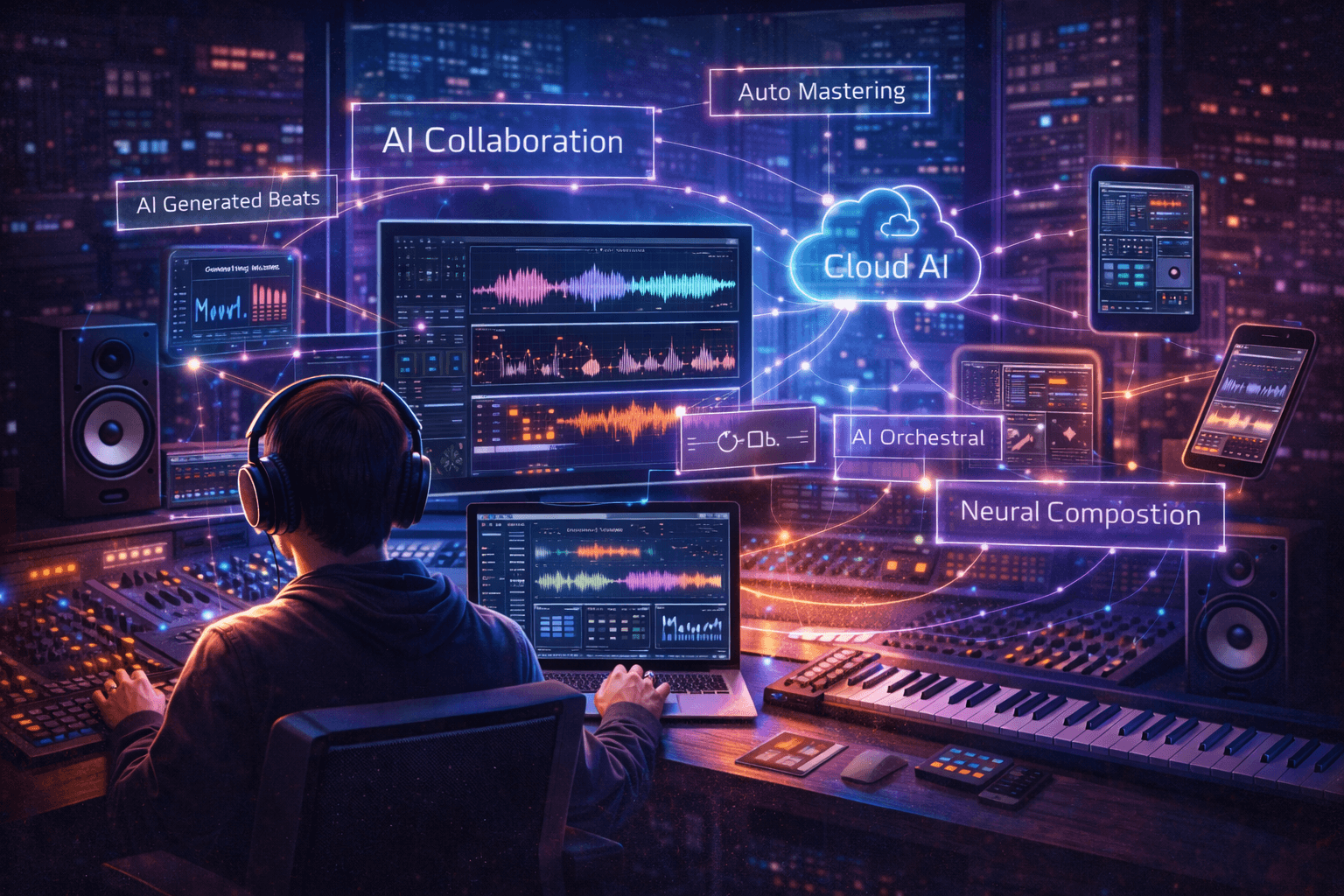 Emerging AI features include adaptive music creation software, AI in sound quality improvement, and AI-generated orchestral arrangements for cinematic music. Collaborative music production with AI is expanding, integrating DAW (Digital Audio Workstation) integration, AI-driven drum patterns, and AI-powered sample organization to optimize the music production workflow.
Industry adoption rates show increasing acceptance of AI music production tools among independent musicians, recording studios, and online platforms. Experimental AI music tools, music generation using neural networks, and AI-assisted mastering decisions are setting the pace for music production trends 2025–2026, ensuring AI-driven creativity and efficiency for producers across genres.
Tips for Using AI Tools Without Losing Your Musical Voice
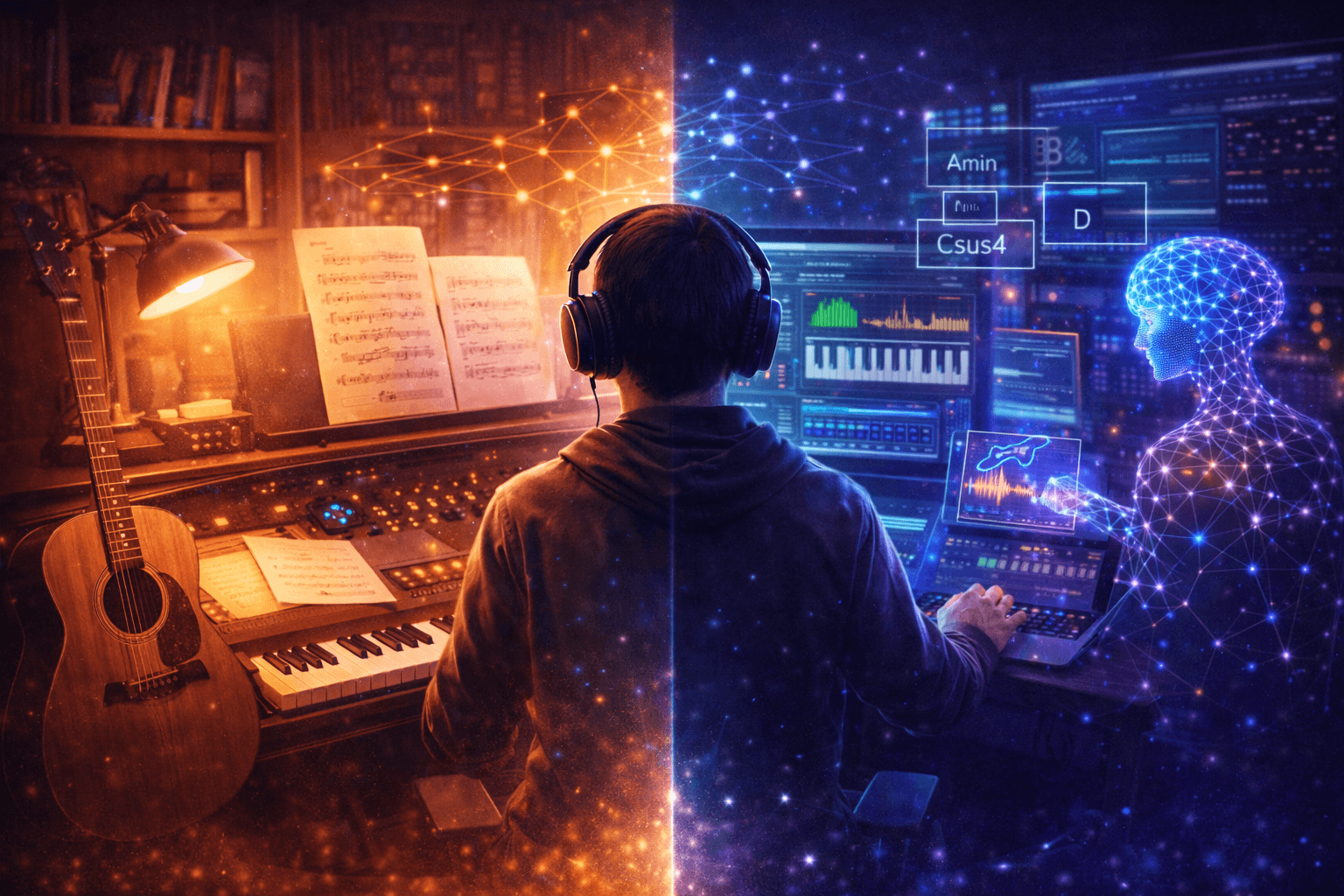 Balancing human creativity with AI-assisted music production ensures artists retain originality while leveraging AI-powered sound design and automated mixing software. Producers should avoid over-reliance on generative AI music platforms and use adaptive music creation software as a creative collaborator rather than a replacement for their musical intuition.
Integrating AI music production tools like AI for melody and harmony generation, stem separation technology, and AI-driven drum patterns enhances music creation automation without compromising authenticity. Following these guidelines allows for music production innovation while retaining personal expression, fostering a productive and inspiring workflow for beginners and seasoned musicians alike.
The Future of AI in the Music Industry
AI as a creative collaborator is increasingly influencing music production innovation, offering AI-generated melodies, AI-assisted mastering decisions, and experimental AI music tools. While AI will not fully replace human creativity, it will continue to enhance sound quality, music theory assistance, and collaborative music production with AI.
Experts predict that music generation using neural networks and AI-powered sample organization will become standard, supporting royalty-free music creation and music licensing solutions. The integration of AI in electronic music production, text-to-audio music generation, and generative AI music platforms will shape the next decade of music production trends 2025–2026.
Why Art Gharana Is a Leading Choice for Online Music Classes
 Art Gharana provides AI-assisted music production insights, personalized music patterns, and virtual instruments integration for online students in the USA. Its curriculum covers AI music production tools, music composition software, and music theory assistance, empowering learners to experiment with AI-generated melodies and AI-powered sound design while developing authentic musical skills.
By combining adaptive music creation software, collaborative music production with AI, and experimental AI music tools, Art Gharana supports students in mastering both AI and traditional music techniques. The platform also guides beginners on how to learn music at home, ensuring a modern, accessible approach to music education.
Conclusion
AI music production tools offer unparalleled advantages, from AI-assisted music production and automated mixing software to AI-generated melodies and stem separation technology. While challenges like over-reliance on AI exist, the benefits—enhanced creativity in music production, increased efficiency for music producers, and music production innovation—make AI indispensable.
The integration of AI in electronic music production, adaptive music creation software, and collaborative music production with AI demonstrates a future where AI complements rather than replaces human artistry. Musicians can explore music production trends and AI music production tools to create professional-quality compositions while retaining their unique musical voice.
Frequently Asked Questions
Q1: What are AI music production tools?
AI music production tools are software platforms that use artificial intelligence to assist in composing, mixing, mastering, and arranging music.
Q2: How do AI tools enhance music creation?
They enhance creativity in music production, automate repetitive tasks, and improve sound quality with AI-driven processes.
Q3: Can beginners use AI music production tools?
Yes, AI tools simplify music production for beginners while providing advanced features for professionals.
Q4: Are AI-generated tracks royalty-free?
Many AI music platforms offer royalty-free music creation, making tracks usable for commercial projects.
Q5: Will AI replace human music producers?
AI acts as a creative collaborator, improving efficiency without replacing the artistic intuition of musicians.