ChatGPT
 Google AI
 Grok
Grok Claude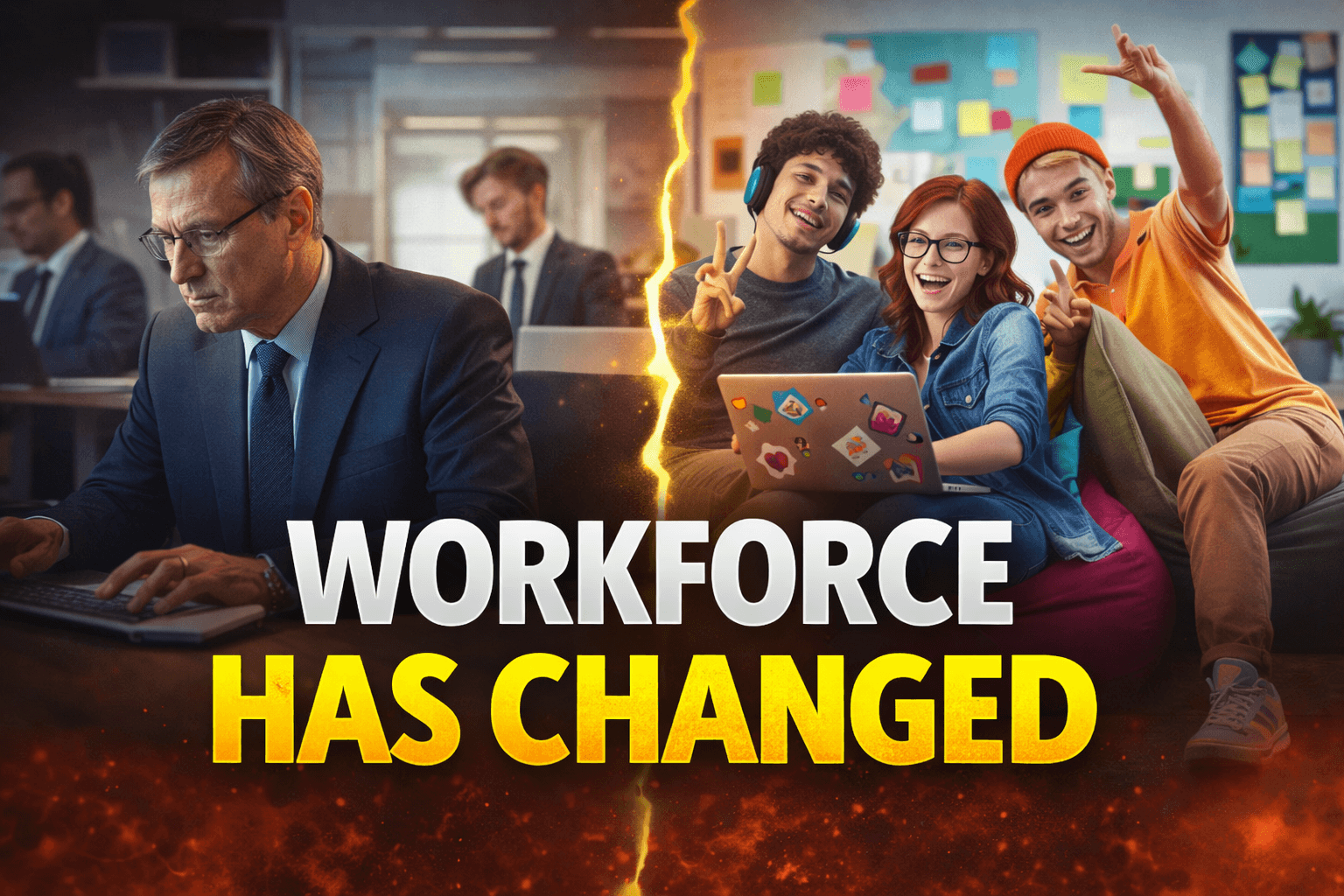
Work is no longer just a transaction. It never really was but now employees are saying it out loud. Across industries and continents, the next generation workforce is pushing companies to rethink what it means to build a great workplace. Creative wellness sits at the heart of this shift and the companies paying attention are pulling ahead.
Why the Next Generation Workforce Is Redefining Work Culture
 Something fundamental has changed. Employees today don't just want a salary. They want meaning, flexibility, creative freedom, and genuine care for their wellbeing. This isn't a passing trend. It's a full-scale workplace transformation driven by generational values and companies that miss this signal are already losing talent to competitors who haven't.
The data is striking. The global corporate wellness market was valued at $68.4 billion in 2024 and is projected to reach $118 billion by 2034. Meanwhile, 76% of Gen Z candidates say a company's commitment to wellness directly influences where they choose to work. These numbers represent real decisions made by real people every single day.
Shift from Salary to Experience-Driven Workplaces
Money still matters but it's no longer the deciding factor. Today's workforce, especially Millennials and Gen Z, chooses companies that offer compelling experiences. Think learning opportunities, creative outlets, cultural inclusion, and mental health support at work. A pay raise might retain someone for six months. A genuinely enriching workplace keeps them for years.
Why Millennials and Gen Z Prioritize Wellbeing and Creativity
Millennials grew up witnessing burnout firsthand. Gen Z came of age during a global pandemic. Both generations entered the workforce asking hard questions: does this job support my mental health? Does my employer see me as a whole person? Do I get to bring creativity here? For these employees, wellbeing isn't a perk. It's a baseline expectation that shapes every career decision they make.
The Growing Demand for Mental Wellness at Work
Burnout prevention strategies have moved from the fringes of HR policy to the center of corporate agendas. Workplace stress costs U.S. employers over $300 billion annually in lost productivity and healthcare costs. Mental health support at work is no longer optional. It's a strategic imperative for any organization serious about employee retention and long-term performance.
How Workplace Culture Impacts Talent Attraction and Retention
Culture is the new currency in talent markets. Glassdoor research shows that 77% of job seekers evaluate a company's culture before applying. Poor workplace culture costs U.S. businesses an estimated $223 billion in turnover every five years. A strong, creative, and inclusive culture isn't just good for employees. It's measurably good for the bottom line.
Understanding Generational Expectations in the Modern Workplace
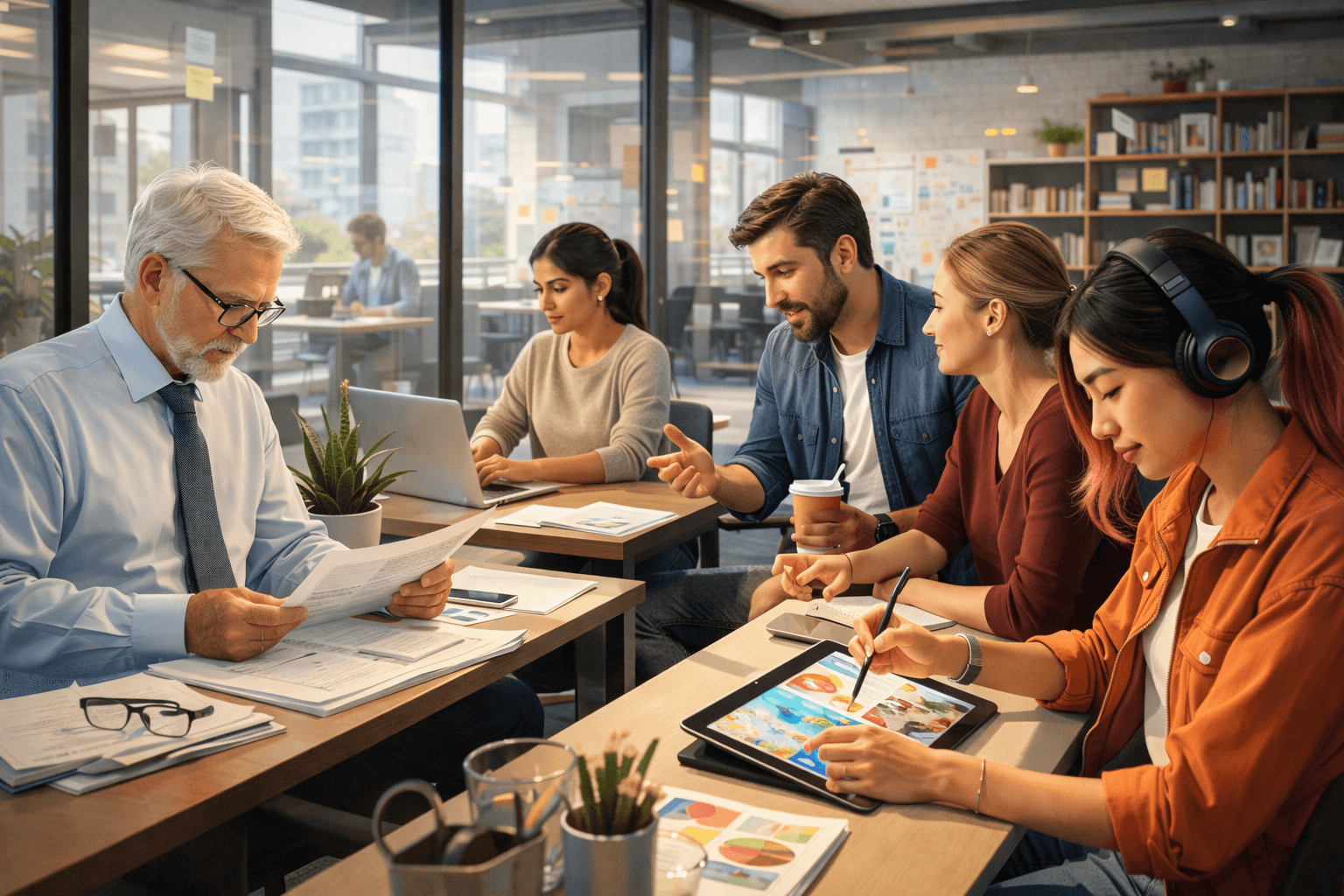 Managing a multigenerational workforce isn't about stereotyping people based on birth year. It's about understanding the lived experiences that shaped each generation's relationship with work. When you get this right, you can build employee engagement strategies that resonate meaningfully across every age group simultaneously.
Today's workforce often spans four generations working side by side. Each brings distinct values, communication styles, and definitions of a great workplace. Here's a clear breakdown of what each generation actually needs from their employer to feel genuinely engaged and supported.
Baby Boomers (Born 1946-1964)
Preference for Stability and Structured Work
Baby Boomers built their careers on the belief that hard work and loyalty are rewarded with stability. They tend to prefer clear organizational hierarchies, predictable workflows, and structured feedback processes. Don't mistake this for rigidity. Boomers are highly adaptable and simply value knowing the rules of the game before playing it.
Traditional Views on Workplace Benefits
For Boomers, a strong benefits package means comprehensive health insurance, retirement plans, and paid leave. They're less drawn to quirky office perks and more appreciative of tangible, long-term security. Recognizing their contributions publicly also matters enormously to this generation.
Generation X (Born 1965-1980)
Work-Life Balance and Flexibility
Gen X is arguably the original work-life balance generation. They watched their Boomer parents sacrifice family time for career advancement and quietly decided to do things differently. Flexible schedules, remote work options, and the autonomy to manage their own time rank extremely high on their list of evolving workplace expectations.
Value of Independence and Career Growth
Gen X employees are self-sufficient problem-solvers who don't need or want micromanagement. What keeps them engaged is clear growth opportunities, meaningful work, and the freedom to operate independently. Offer them a challenge with adequate resources and they deliver consistently.
Millennials (Born 1981-1996)
Focus on Purpose, Learning, and Engagement
Millennials are purpose-driven in a way that's reshaping corporate culture from the inside out. According to Deloitte's Global Millennial Survey, 55% of Millennials would take a pay cut to work for a company that aligns with their values. Job engagement for this group is deeply tied to mission, mentorship, and continuous learning rather than just compensation packages.
Preference for Experiential Benefits Over Monetary Perks
Offer a Millennial a bonus or a week of creative workshops and many would genuinely prefer the workshops. Experiential benefits including learning programs, arts classes, and cultural experiences generate personal growth and memorable experiences that money alone can't replicate. This is diverse workforce management in action: meeting employees where they actually are.
Interest in Creative and Cultural Activities
Millennials are culturally curious and creatively hungry. They thrive in modern workplace cultures that encourage artistic expression, celebrate diverse backgrounds, and build community through shared experiences. Music, dance, art therapy. These aren't fringe benefits for Millennials. They're exactly what keeps this generation engaged, present, and passionate about their work.
Generation Z (Born 1997-2012)
Expectation of Mental Health Support
Gen Z is the most mentally health-aware generation in history and the most candid about it. A McKinsey study found that Gen Z is significantly more likely than older generations to report poor mental health and seek support. Companies that fail to offer genuine mental health support at work will find Gen Z voting with their feet without hesitation.
Desire for Creativity and Self-Expression
For Gen Z, creativity isn't just a nice-to-have. It's how they process the world. They gravitate toward workplaces that give them space to express their identities, experiment with ideas, and bring their full selves to work. Creative wellness programs that include music, dance, and visual arts resonate deeply with Gen Z's need for authentic self-expression in everything they do.
Need for Interactive and Social Work Environments
Despite being stereotyped as screen-obsessed loners, Gen Z actually craves real human connection and collaborative energy. They want interactive experiences, not passive ones. Team-based creative sessions, social wellness activities, and shared cultural programs are far more motivating to Gen Z than a gym membership they'll never use.
Why Traditional Wellness Programs Are No Longer Enough
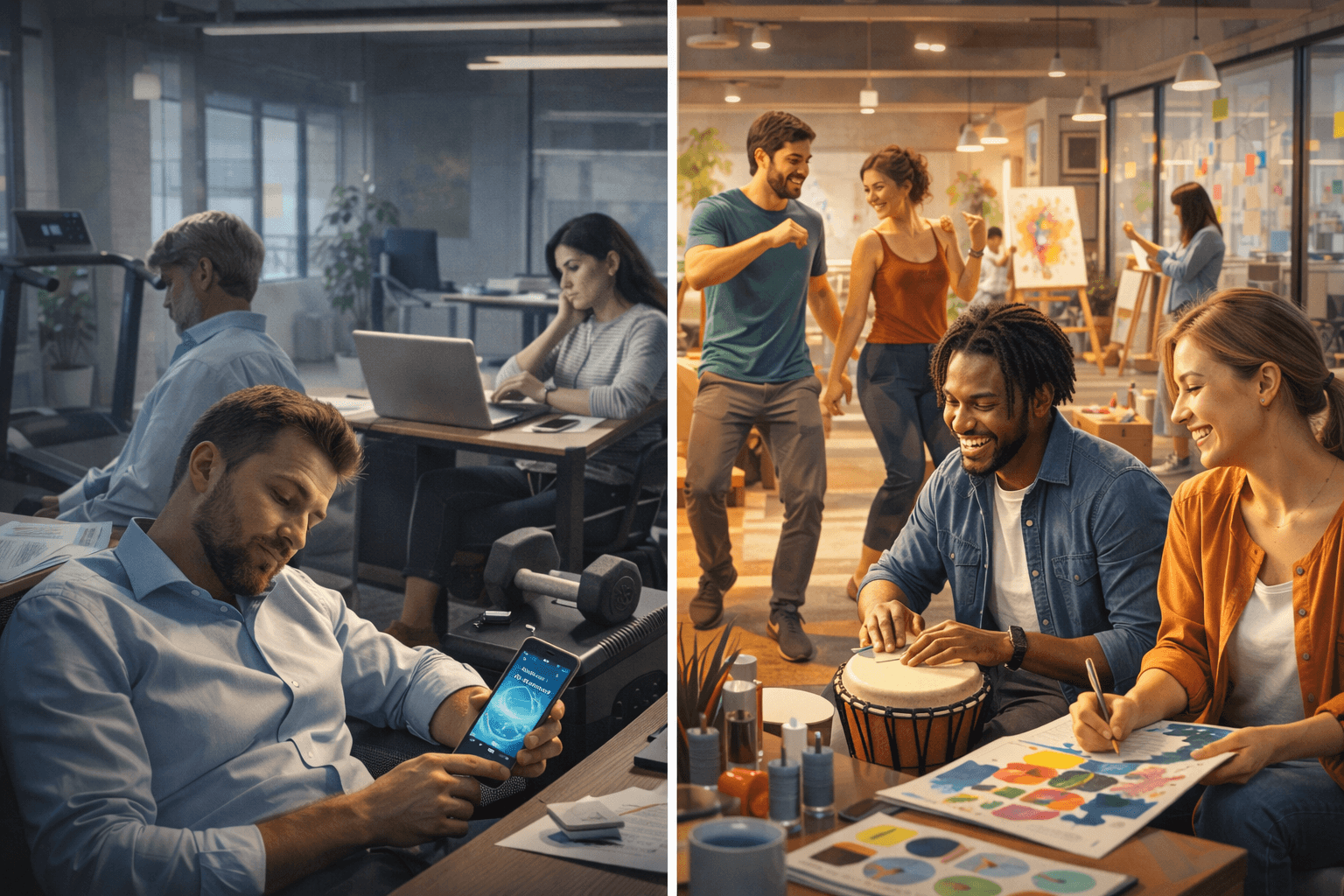 Corporate wellness has traditionally meant step-count challenges, healthy snack vending machines, and the occasional lunchtime yoga session. These programs aren't bad. They're just incomplete. The modern multigenerational workforce needs significantly more than a pedometer and a smoothie to feel genuinely supported at work and performing at their best.
Employee expectations in the workplace have evolved far beyond physical health. Emotional wellbeing, creative stimulation, social connection, and cultural belonging are now core components of what employees call feeling well at work. Companies still running fitness-only programs are filling the ocean with a teaspoon.
Limitations of Fitness-Only Wellness Programs
Here's the uncomfortable truth about gym memberships as a corporate wellness strategy: only about 20% of employees actually use them. Fitness programs serve a specific subset of the workforce while leaving everyone else behind. They do nothing for emotional wellbeing, rarely build team cohesion, and don't address the root causes of workplace stress and disengagement.
Passive Wellness vs Interactive Engagement
Giving employees access to a meditation app is passive wellness. Running a live drum circle workshop where the whole team participates together is interactive engagement. The difference matters enormously. Interactive programs create shared memories, reduce workplace stress through genuine enjoyment, and strengthen team collaboration in ways that passive wellness tools simply cannot replicate.
Why Employees Seek Emotional and Creative Outlets
Burnout doesn't happen because people are physically tired. It happens because they're emotionally depleted and creatively starved. When employees have no outlet for creative expression, stress accumulates without release. Art, music, and dance provide exactly the kind of emotional decompression that rebuilds cognitive resilience, improves job engagement, and significantly reduces absenteeism over time.
The Gap in Current Corporate Wellness Strategies
Most corporate wellness platforms focus almost exclusively on physical health metrics. They'll track your steps, calories, and sleep cycles. What they won't do is teach you to play the sitar, help your team find rhythm in a Bollywood dance session, or guide employees through the meditative focus of Indian classical music. That gap is enormous and it's precisely where creative wellness steps in to fill what fitness-first platforms leave behind.
The Rise of Creative Wellness in Modern Workplaces
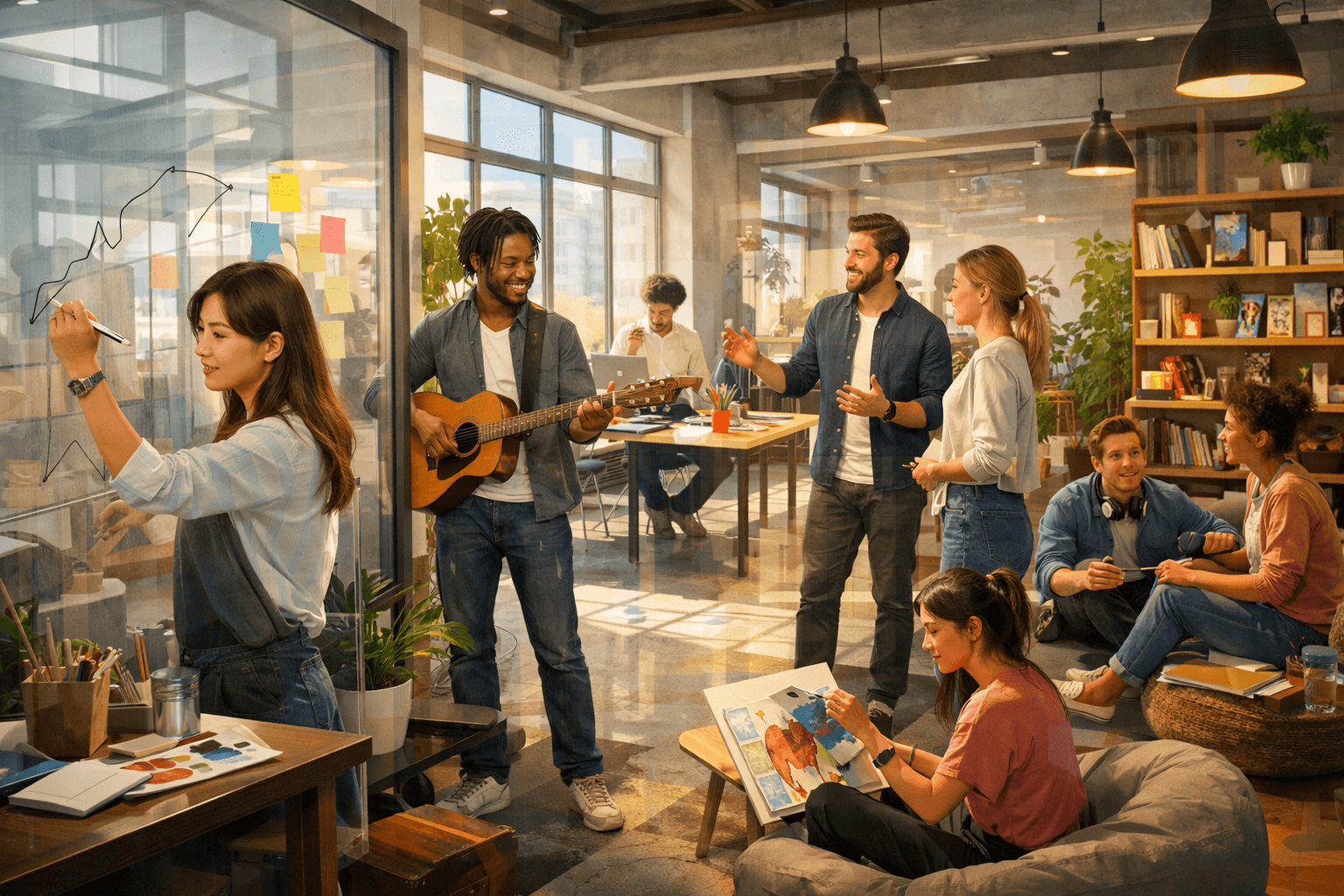
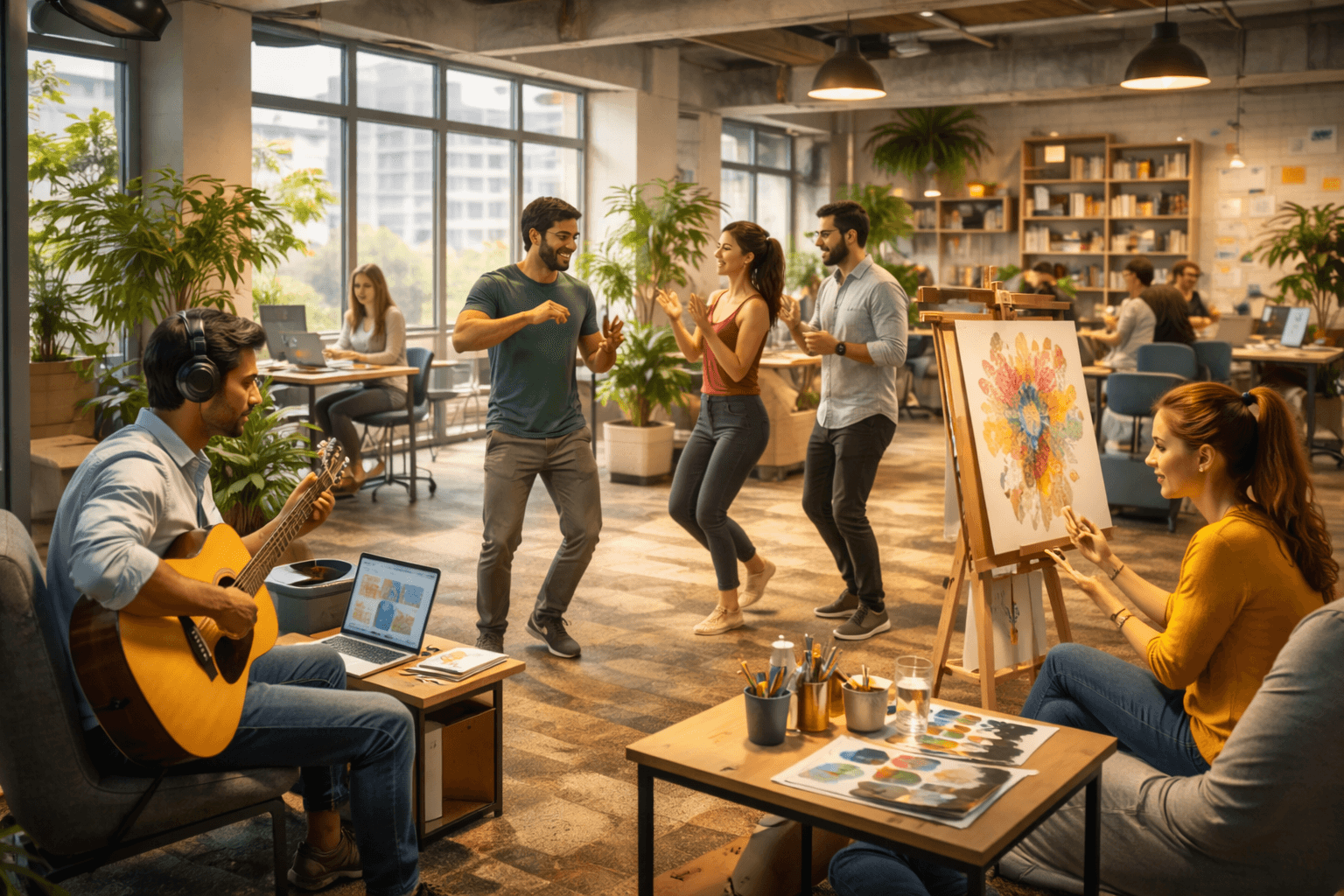 Creative wellness is emerging as the missing pillar in corporate health strategy. While physical and mental wellness programs address the body and mind, creative wellness nourishes the soul. The part of a person that needs expression, beauty, rhythm, and artistic connection to feel truly alive at work and genuinely present in their professional life.
Forward-thinking companies across the US, UK, India, Australia, and Canada are discovering that music, dance, and art programs deliver measurable improvements in employee satisfaction, team morale, and workplace culture. This isn't just intuition. The science backs it up comprehensively and the outcomes are trackable.
What Is Creative Corporate Wellness?
Creative corporate wellness refers to structured programs that use artistic and cultural experiences including music lessons, dance sessions, art therapy, and craft workshops as tools for improving employee wellbeing. Unlike passive wellness tools, creative wellness is participatory, skill-building, and deeply personal. It gives employees something genuinely valuable: a skill, an outlet, and a sense of belonging that extends beyond their job function.
How Music, Dance, and Art Improve Employee Wellbeing
The benefits go far beyond enjoyment. Research published in the Journal of Applied Psychology found that employees who engage in creative activities are more focused, more productive, and more innovative during working hours. Music activates the brain's reward pathways. Dance builds embodied awareness and reduces anxiety. Art creates psychological distance from stress, allowing the mind to recover and reset effectively.
Science Behind Music Therapy and Stress Reduction
Impact on Cortisol and Stress Levels
Cortisol is the body's primary stress hormone and chronic overexposure to it damages both mental and physical health. Studies from the University of Helsinki confirm that active music participation including learning an instrument, singing, or drumming reduces cortisol levels significantly faster than passive listening. For employees under deadline pressure, regular music sessions can measurably reduce workplace stress and build long-term resilience.
Boost in Mood and Productivity
Music stimulates dopamine release, the brain's feel-good neurotransmitter. A study from the British Academy of Sound Therapy found that 89% of participants reported improved mood after engaging in group music-making. When employees feel better, they perform better. The connection between improved employee productivity and creative wellness programs is direct, well-documented, and increasingly impossible to ignore.
Improvement in Employee Engagement
Disengaged employees cost the global economy $8.8 trillion annually according to Gallup. Creative wellness programs counter disengagement by making work feel alive again. When employees have access to live 1:1 music lessons, dance workshops, or art sessions as part of their benefits package, they feel genuinely seen and valued. That emotional investment translates directly into higher job engagement and stronger organizational loyalty.
Why Creative Activities Build Stronger Teams
There's something uniquely bonding about making music or dancing together. These activities require listening, synchronization, vulnerability, and trust. The same skills that make teams effective in the boardroom. When a team learns Bollywood choreography together or jams on percussion instruments in a group session, they build the kind of psychological safety and mutual respect that no team-building PowerPoint can manufacture.
Rethinking Diversity and Inclusion Through Creativity
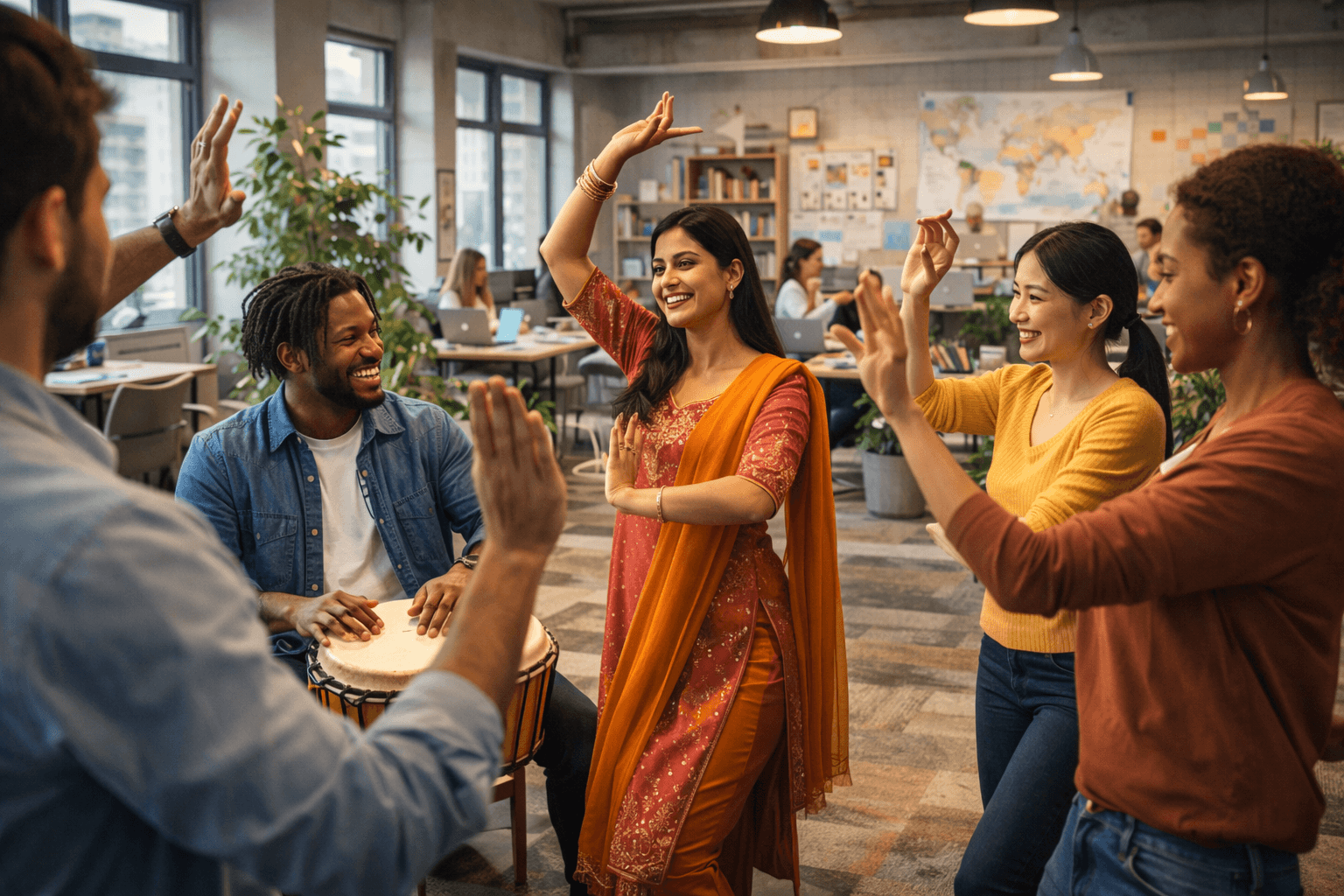 Most DEI programs live in policies and training manuals. They're important but they rarely change culture at the felt level. Creative wellness programs do something different. They create actual shared experiences across cultural backgrounds, letting people learn from and celebrate each other's artistic traditions in real time rather than theoretical frameworks.
When a team in a Chicago tech company learns Kathak together, or a Bengaluru startup explores Western percussion as a group, something shifts. Not just skills but understanding. That's workforce diversity and inclusion made tangible, felt, and genuinely lasting rather than just theoretical.
Moving Beyond Policies to Real Cultural Experiences
Diversity pledges and unconscious bias training are starting points, not endpoints. Real cultural fluency comes from experience. From listening to Carnatic music with genuine curiosity, from learning the grammar of Bharatanatyam, from sharing the universal language of rhythm across boundaries of language and background. Creative programs create the conditions for this kind of organic, lasting inclusion that policies alone cannot generate.
How Arts and Culture Strengthen Workplace Inclusion
Art has always been humanity's shared language. When workplaces integrate arts and cultural programs into their wellness strategy, they give every employee regardless of nationality, age, or background a space where they belong. A Hindustani vocal workshop doesn't require any prior knowledge. It simply requires showing up and being curious. That accessibility is the foundation of genuine inclusion.
Creating Cross-Cultural Connections Through Music and Dance
Music and dance are uniquely cross-cultural in ways that almost no other professional activity can match. A tabla workshop in a global team call brings Indian classical tradition to employees in London, Singapore, and Toronto simultaneously. These moments of shared cultural discovery build genuine affection and respect between colleagues who might otherwise never find meaningful common ground.
Building Inclusive Workspaces Through Shared Experiences
Shared experiences create shared identity. When employees across different departments, seniority levels, and cultural backgrounds participate in the same creative wellness programs, they form connections that transcend org charts. These bonds improve team collaboration, reduce interpersonal conflict, and create the kind of inclusive workplace morale that makes diverse workforce management genuinely effective rather than performative.
Demonstrating Authentic Commitment to Employee Wellbeing
Employees can tell the difference between a wellness program that exists to check an HR box and one that reflects genuine organizational care. The difference shows up not just in the quality of programs offered but in how leadership communicates about wellbeing, how feedback is acted upon, and whether creative expression is actually celebrated or quietly treated as a distraction from 'real work'.
Authentic commitment to employee wellbeing requires structural change, not just a new vendor contract. It means weaving creative wellness into the fabric of how your organization operates, evaluates success, and talks about its people at every level of the business.
Assessing Employee Engagement and Wellness Needs
Before launching any new wellness initiative, survey your team comprehensively. Ask about stress levels, creative interests, current benefit usage, and what they actually wish the company offered. Employee satisfaction data gathered honestly and acted upon visibly communicates more about organizational culture than any mission statement ever will. Managing generational differences starts with listening to what each generation actually says it needs.
Addressing Burnout and Mental Health Challenges
Burnout is a systemic problem, not a personal failing. Companies serious about burnout prevention strategies need to examine workload distribution, meeting culture, always-on communication norms, and the availability of genuine creative recovery time. Offering a music lesson program while simultaneously demanding 60-hour weeks sends a contradictory message that employees read immediately and clearly.
Showcasing a Culture of Creativity and Innovation
The best way to attract creative talent is to be a genuinely creative organization. When employees see their company investing in music, dance, and art programs and when leadership actually participates in these programs, it signals something profound: creativity is valued here. That signal travels fast. It shows up in Glassdoor reviews, LinkedIn posts, and the conversations candidates have with their networks before deciding whether to apply.
Empowering Employees Through Creative Expression
Creative expression is a form of agency. When employees can choose their own art form, whether tabla, Bollywood dance, watercolour, or Western vocals, and learn it through personalized 1:1 sessions, they experience a form of autonomy that standard corporate benefits rarely offer. This empowerment spills over into their professional work, fueling the creative confidence and risk-taking that drives genuine organizational innovation.
Holding Leadership Accountable for Workplace Culture
Culture is set at the top and lived at every level. When leaders participate in creative wellness programs, encourage their teams to use them, and openly discuss the importance of mental health and creative recovery, it normalizes wellbeing across the entire organization. Leadership accountability for workplace culture isn't a soft ideal. It's a concrete management responsibility with measurable impact on employee retention.
How Creative Workplaces Attract Millennials and Gen Z Talent
The employer-employee relationship has shifted from a feudal structure to something closer to a genuine partnership. Millennials and Gen Z have options and they know it. They research companies deeply before applying, consult employee reviews obsessively, and make career decisions based on culture fit as much as compensation. Creative, inclusive workplaces win this competition consistently and convincingly.
Companies that offer creative wellness programs don't just retain talent better. They attract a higher caliber of applicants in the first place. The signal a music and art wellness program sends to prospective employees is powerful: this organization invests in the whole human, not just the productive employee.
Why Employees Prefer Companies with Wellness Programs
According to the Society for Human Resource Management, 56% of employees say wellness programs are a significant factor in deciding whether to accept a job offer. For Millennials and Gen Z, creative wellness programs carry even more weight than standard gym subsidies or health insurance upgrades. Talent attraction in a competitive market increasingly depends on the distinctiveness and authenticity of your wellness offering.
The Role of Creative Engagement in Employer Branding
Employer branding is the story your organization tells prospective employees. Creative wellness programs give you genuinely compelling story material. An employee who learned guitar through their company's wellness benefit and performed at the annual showcase will share that story enthusiastically, on LinkedIn, at family dinners, and with friends who are job-hunting. That authentic advocacy is worth more than any recruitment advertising campaign.
How Workplace Creativity Improves Job Satisfaction
Job satisfaction isn't built on salary alone. It's built on feeling respected, challenged, creative, and connected. Creative wellness programs address all four dimensions simultaneously. Employees who engage regularly in music, dance, or art programs at work report higher levels of overall job satisfaction, stronger team relationships, and lower intention to leave even when offered competitive external opportunities.
Why Creative Benefits Influence Career Decisions
The next generation workforce is making career decisions with sophistication that older HR playbooks don't account for. They ask: does this company help me grow as a human being, not just a professional? Will I be creatively stimulated here? Does the culture reflect values I care about? Creative wellness programs answer these questions directly and affirmatively. In a talent market this competitive, that answer can be the deciding factor.
Strategies to Manage Diverse Workforce Expectations Effectively
There's no single playbook for managing a multigenerational workforce. But there are proven principles that work across generational lines and create inclusive, respectful, and creatively energizing workplaces for everyone from Baby Boomers to the youngest Gen Z hires entering the organization.
The key is moving from one-size-fits-all thinking to genuinely personalized approaches. Diverse workforce management done well looks less like enforcing uniform policies and more like creating flexible frameworks that respect individual needs while maintaining organizational coherence and shared purpose.
Prioritize Transparent and Open Communication
Every generation responds better to honesty than to corporate spin. Transparent communication about organizational goals, wellness investments, and cultural priorities builds the trust that makes everything else possible. Regular town halls, manager training on open communication, and clear channels for employee feedback all contribute to a culture where people feel safe enough to engage fully.
Treat Employees as Individuals with Unique Needs
Avoid the trap of treating Millennials or Gen Z as monolithic groups with identical preferences. Within every generation, individuals vary enormously. The best approach is offering a curated menu of wellness options including music, dance, art, and sport and letting employees choose what resonates personally. This personalization signals genuine respect for the individual behind the job title.
Encourage Feedback and Participation
Employees who feel heard are employees who stay. Create regular opportunities for feedback on wellness programs, team culture, and management practices and visibly act on what you hear. Participation in program design builds ownership. When employees help shape their creative wellness offering, they become enthusiastic ambassadors for it rather than passive recipients who quietly ignore it.
Create Flexible and Inclusive Workplace Policies
Flexibility is the great equalizer across generations. Flexible working hours accommodate parents, caregivers, and employees managing health conditions. Remote and hybrid options remove geographical limitations on talent attraction. Inclusive policies including mental health days and cultural observance flexibility tell employees from every background that they're genuinely welcome here in every sense.
Promote Continuous Learning and Creativity
Learning never stops and the most engaged employees are those who feel they're constantly growing. Build learning into the fabric of your culture by subsidizing skill development, creating internal knowledge-sharing platforms, and integrating creative wellness programs that teach real, transferable artistic skills. When learning is continuous and enjoyable, employees stay curious, engaged, and remarkably loyal.
Integrate Creative Wellness Programs into HR Strategy
Creative wellness can't live as a standalone perk disconnected from the broader HR strategy. It should be woven into onboarding, performance management, employee recognition, and retention planning. When you budget for creative wellness with the same rigor you bring to health insurance and retirement plans, you signal that employee engagement strategies are genuinely a top organizational priority.
Practical Ideas to Build a Creative and Inclusive Workplace
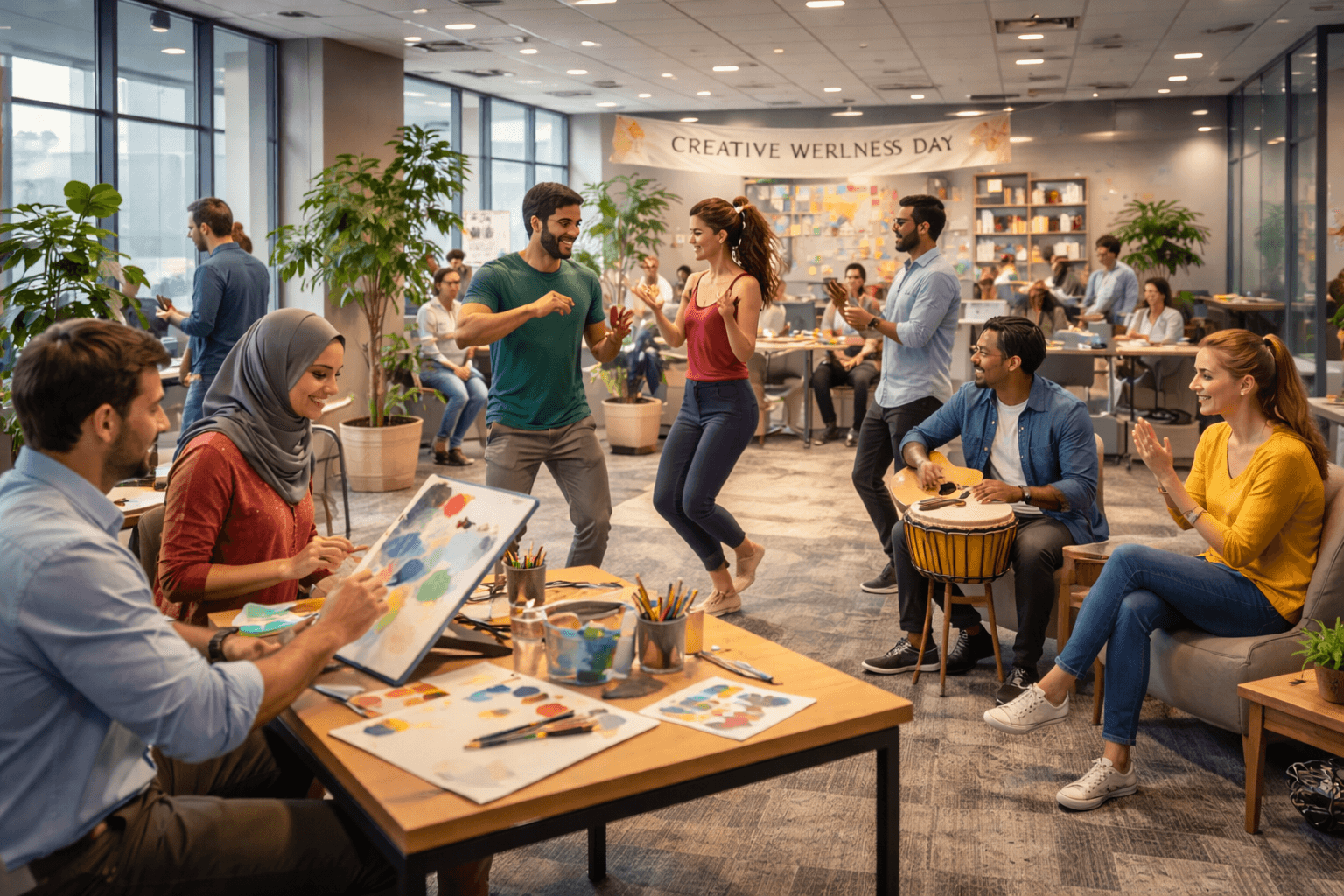 Theory is valuable but what actually changes culture is action. Specific, well-designed programs that employees experience as genuinely enriching rather than obligatory. Here are practical creative wellness ideas that organizations across the US, India, UK, Australia, and Canada are deploying to extraordinary and measurable effect.
The beauty of these programs is their radical accessibility. You don't need to be musically talented to benefit from a drum circle. You don't need dance training to enjoy a Bollywood session. Creative wellness works precisely because it meets people exactly where they are and invites them to explore something genuinely new together.
Music-Based Wellness Sessions for Stress Relief
Live music instruction, whether individual or group, is one of the most evidence-backed interventions for reducing workplace stress. Weekly guitar lessons, tabla workshops, or Hindustani vocal classes give employees a structured 30-minute escape from screen fatigue, deadline anxiety, and digital overload. The skill progression element adds an additional layer of deep satisfaction: employees aren't just relaxing, they're mastering something new every single week.
Dance Workshops for Team Engagement
Dance sessions rank among the most effective team-building tools available because they require listening, synchronization, and mutual support. The same ingredients that make high-performing teams work in every other context. Bollywood dance workshops are particularly powerful in diverse, multicultural teams: joyful, accessible, and culturally rich. Bharatanatyam sessions introduce employees to the precision and storytelling tradition of South Indian classical dance, creating genuine cultural appreciation and team collaboration simultaneously.
Art Therapy for Employee Creativity
Art therapy in a corporate context means giving employees time and space to create without judgment or productivity pressure. Painting workshops, mandala drawing sessions, and sketching breaks activate different neural pathways than analytical work, refreshing cognitive capacity and reducing accumulated emotional tension. Companies offering regular art sessions report notable improvements in creative problem-solving and interpersonal empathy among participating employees.
Cultural Programs for Global Teams
Global teams benefit enormously from structured cultural exchange programs. A monthly Cultural Creativity Session where employees from different countries introduce colleagues to their musical traditions, dance forms, or artistic practices builds genuine cross-cultural fluency. It transforms workplace diversity from an organizational talking point into a lived, celebrated reality that employees genuinely value and discuss with pride.
Creative Team Building Activities
For organizations ready to take creative wellness seriously, Art Gharana Corporate offers a purpose-built platform for exactly this need. With live 1:1 sessions taught by globally accredited instructors, employees choose from music, dance, and art programs tailored to individual interests and schedules. The trial-first model removes any risk for HR teams: employees experience a session before the company commits to a subscription. From online guitar lessons for remote teams in the US to Bharatanatyam programs for Indian corporate campuses, Art Gharana Corporate delivers authentic, expert-led creative wellness to any organization ready to invest in their people at this level.
The Future of Work Is Creative, Inclusive, and Experience-Driven
The workplace of 2030 will look dramatically different from the workplace of 2010. Physical office spaces, if they exist, will be designed for creative collaboration rather than heads-down individual work. Benefits packages will be curated and deeply personalized rather than standardized. The companies that lead this evolution will be those who recognized early that human creativity is not a luxury. It's the engine of organizational resilience and sustained competitive advantage.
Evolving workplace expectations point in one clear direction: employees want to feel whole at work, not just productive. They want companies that invest in their artistic development, cultural identity, and emotional health with the same seriousness applied to professional growth. The organizations that answer this call will build the workplaces the next generation workforce is actively searching for right now.
The Shift Toward Human-Centric Workplaces
Human-centric workplace design puts the employee experience at the centre of every organizational decision. It asks not just what does the company need from this person but what does this person need to genuinely thrive here? Creative wellness programs are a direct expression of this philosophy. They exist because employees are human beings with artistic instincts, emotional depth, and creative potential that deserve nurturing.
Why Creativity Will Be a Core Workplace Skill
The World Economic Forum consistently ranks creativity among the top skills employers will need through 2030 and beyond. As automation absorbs routine analytical tasks, human creativity becomes the primary differentiator. Companies that build creative wellness programs aren't just improving employee satisfaction. They're developing the creative muscle that will drive innovation, adaptability, and competitive advantage in an increasingly automated global economy.
The Role of Wellness in the Future of Work
Wellness will be inseparable from performance in tomorrow's workplace. Organizations will track wellbeing metrics alongside productivity data, recognizing that one directly drives the other. Mental health support at work will include creative recovery time as a standard feature of the working week. The companies that invested in building creative wellness infrastructure today will find themselves years ahead of competitors scrambling to catch up.
How Companies Can Stay Ahead of Workforce Expectations
Staying ahead of workforce expectations requires genuine curiosity about what employees actually need, not just what HR literature says they should need. Survey your teams. Pilot creative programs with small groups. Measure engagement, mood, and retention outcomes. Iterate based on what you learn. Partner with specialists who bring deep expertise in creative wellness delivery so the quality of the employee experience matches the ambition of your organizational vision.
Conclusion: Building Workplaces That Employees Truly Value
The next generation workforce isn't asking companies to transform overnight. But it is asking them to listen carefully, respond authentically, and invest meaningfully in the elements of workplace life that make the difference between a job employees tolerate and a culture they genuinely love. Creative wellness is one of those elements and perhaps the most underutilized competitive advantage available to HR leaders today.
The companies that will win the talent wars of the coming decade are building workplaces where Millennials feel purposefully challenged, Gen Z feels creatively expressed, Gen X feels autonomously trusted, and Baby Boomers feel genuinely valued. That's not four different workplaces. That's one brilliant, inclusive, human-centric culture and creative wellness is a cornerstone of how you build it.
Aligning Business Goals with Employee Wellbeing
Employee wellbeing and business performance are not competing priorities. Research consistently shows that organizations with high wellbeing scores outperform their peers on productivity, innovation, and profitability. When you invest in creative wellness programs, you're not choosing between your employees' happiness and your company's success. You're recognizing that one enables the other in every meaningful measure.
Creating a Culture That Attracts and Retains Talent
Culture is ultimately the sum of daily experiences. The daily experience of a company that offers live music lessons, Bollywood dance workshops, and art sessions as part of its benefits package is fundamentally different from one that offers a gym discount and calls it done. Diverse workforce management excellence starts with creating an environment where every employee, regardless of generation or background, finds something that feels genuinely made for them.
Why Creative Wellness Is the Next Competitive Advantage
The corporate wellness industry is crowded with fitness apps, meditation platforms, and step challenges. Creative wellness including music, dance, and art is not yet crowded. The organizations that move now to integrate genuine creative wellness into their employee experience will build a differentiated employer brand that competitors will struggle to replicate. This is a real first-mover advantage: visible, memorable, and deeply valued by the workforce defining the next decade of business.
Call to Action: Transform Your Workplace with Creative Wellness Programs
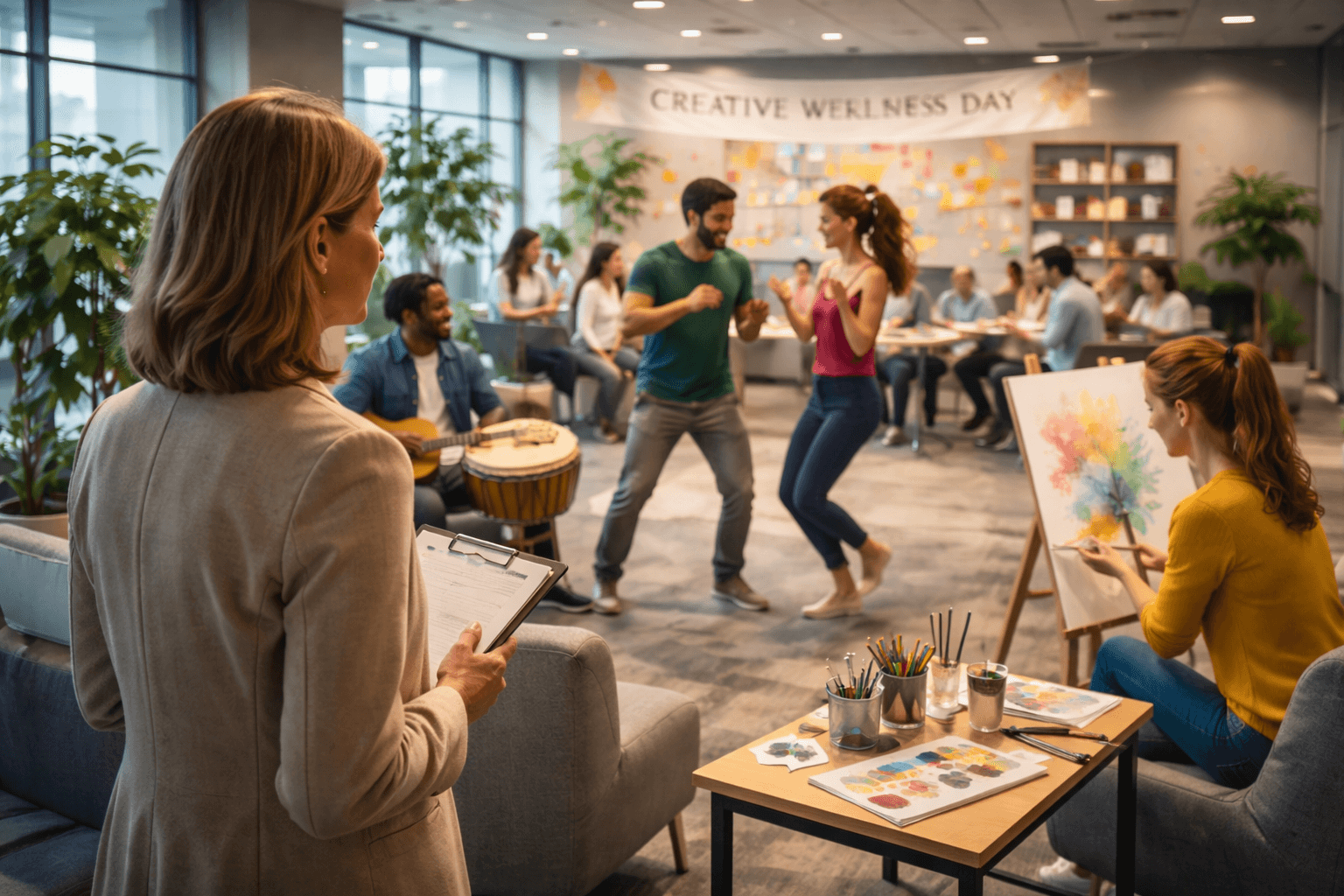
Transform Your Workplace with Creative Wellness Programs
Your employees are ready for something genuinely different. They're ready for a benefit that teaches them something meaningful, connects them to their own creativity, and builds culture in ways a gym subsidy never could. The next generation workforce is telling you exactly what it needs and creative wellness is a central part of the answer.
Book a Free Trial Session for Your Team
The easiest way to understand what creative wellness can do for your organization is to experience it firsthand. Art Gharana Corporate offers free trial sessions for corporate teams with no commitment required and no risk attached. Let your employees try a live 1:1 guitar lesson, a Bollywood dance session, or a Carnatic vocal class before your organization decides to invest. The trial speaks louder than any case study or sales presentation ever could.
Discover How Music, Dance, and Art Can Improve Employee Engagement
Whether your team is based in New York, Bengaluru, London, Sydney, or Toronto, Art Gharana Corporate brings globally accredited instructors directly to your employees, live, 1:1, and deeply personalized. With programs spanning Hindustani vocals, Bollywood dance, tabla, guitar, piano, Bharatanatyam, and more, every employee finds something that genuinely speaks to them. This is creative wellness built for the diverse workforce management challenges of the modern era. Book your free trial today and discover what your workplace can look and feel like when creativity sits at the center of your culture.