If you are an Indian parent raising children in the United Kingdom, you will almost certainly have asked yourself this question at some point: how do I make sure my children grow up knowing who they are, where they come from and what their heritage means, while also thriving as young people in the country they were born in?
It is one of the defining challenges of NRI family life, and there is no single perfect answer. But there are approaches that consistently work, ways of weaving cultural identity into a child's everyday life so naturally and joyfully that it never feels like a burden or an obligation. Music and dance are among the most powerful of these approaches, and this article explores why, alongside a range of other practical strategies for keeping Indian culture alive for your children in the UK.
Why Cultural Identity Matters More Than You Might Think
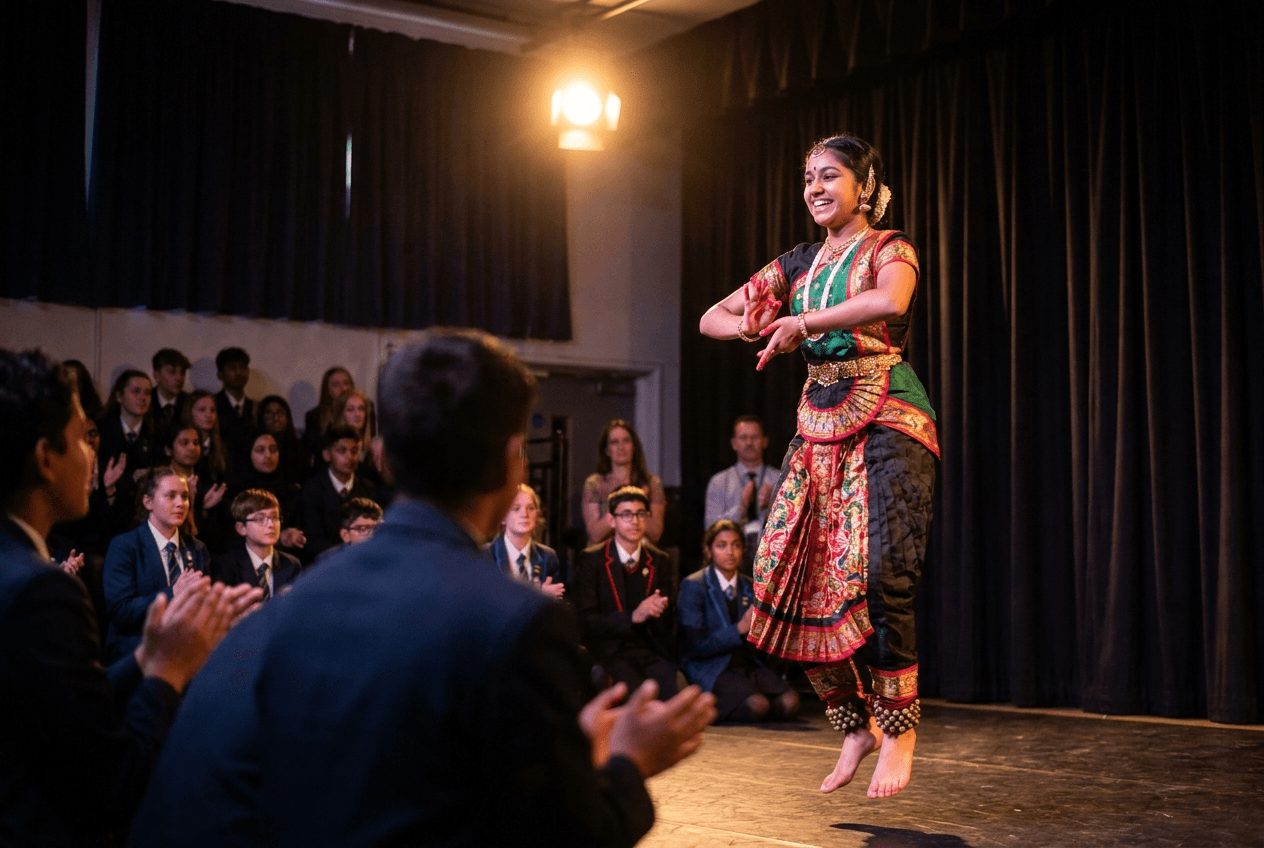 Research on children from diaspora families consistently shows that children who have a strong, positive sense of their cultural identity are more emotionally resilient, more academically motivated and better equipped to navigate complex social environments than children who lack that grounding. Cultural identity is not in competition with a British identity. It complements and enriches it.
Children who grow up knowing their heritage, who can speak a few words of their grandparents' language, who know the stories behind the festivals they celebrate, who have felt the discipline and joy of learning a classical art form, carry a profound internal resource with them throughout their lives. They know who they are. Research tells us consistently that this self-knowledge is one of the most protective factors available against the identity confusion and social pressure that many young people experience in their teenage years.
The Challenge for UK Indian Families
The challenge is real and most Indian parents in the UK know it intimately. Your child goes to a school where most of their classmates share none of their cultural background. They watch the same films, follow the same social media trends and speak with the same accent as every other child in their year group. The gravitational pull of mainstream British culture is powerful and relentless, and it is entirely natural for children to want to fit in.
The danger is not that children will become too British. British values of tolerance, fairness, creativity and openness are wonderful values. The danger is that children will grow up feeling that their Indian heritage is somehow separate from their real life, something their parents care about but that has no living presence in their own world. This disconnection, when it happens, tends to be felt most acutely in early adulthood, when young people struggle to answer the question of who they really are.
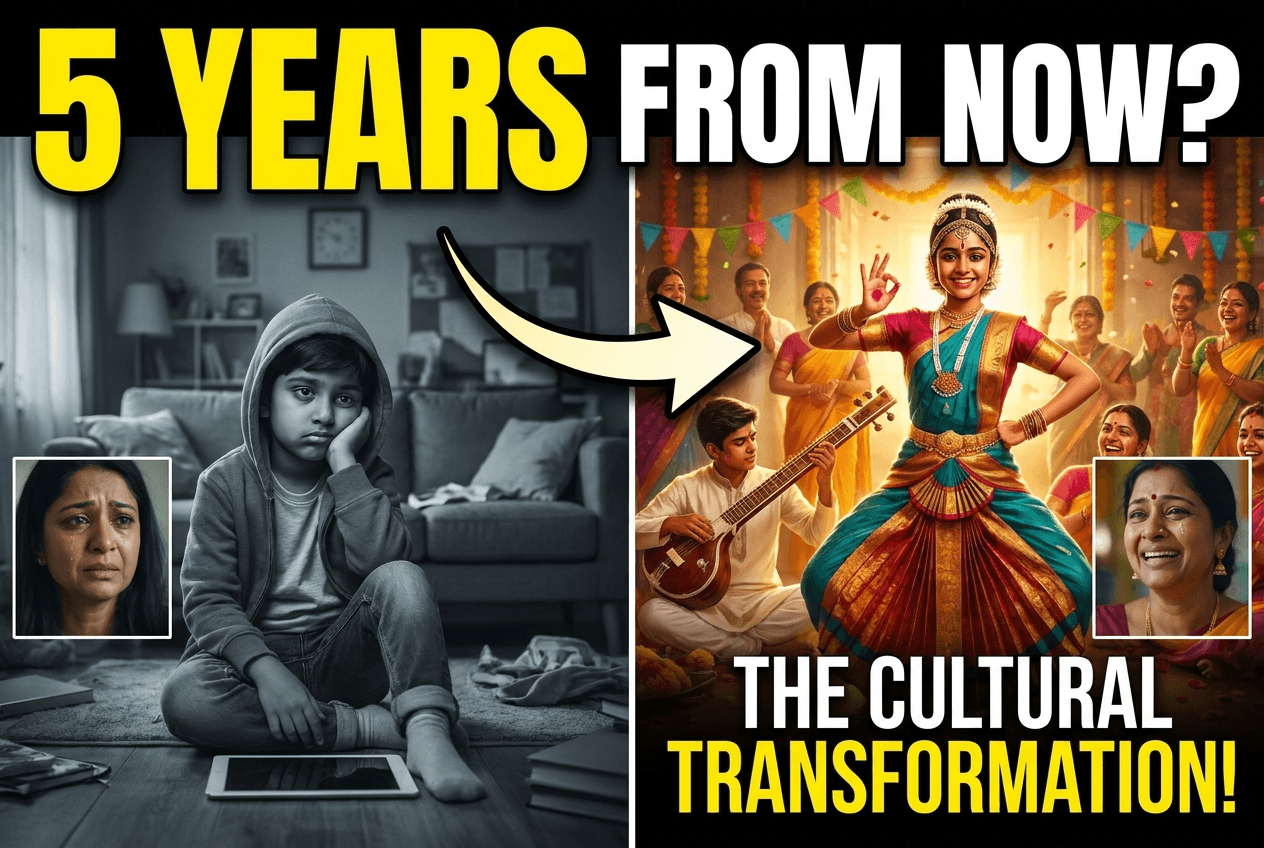
The solution is to make cultural engagement a natural, enjoyable and regular part of family life from an early age, not a special occasion that comes around once a year at Diwali, but a living, breathing presence in the everyday.
Music and Dance: The Most Powerful Cultural Bridge
Of all the ways to keep Indian culture alive for children in the UK, music and dance stand out as uniquely effective for three reasons.
First, they are active and embodied. Unlike reading about Indian history or watching documentaries, learning to dance or play an instrument requires your child to physically inhabit the culture, to move to its rhythms, to breathe its melodies, to feel in their hands and feet and voice what it means to be part of this tradition. That physical engagement creates a depth of connection that passive learning simply cannot match.
Second, they build skills that create genuine pride and confidence. A child who can perform a Bharatanatyam piece at the school talent show, or who can play a tabla composition for their grandparents over a video call, has something concrete and impressive to show for their cultural engagement. That pride in their own ability is a powerful anchor for cultural identity.
Third, they create community. Dance and music classes connect your child with other Indian children in the UK who share their background. The friendships that form in these classes are often among the most meaningful of a child's social life, precisely because they are grounded in a shared cultural experience not available in the mainstream school environment.
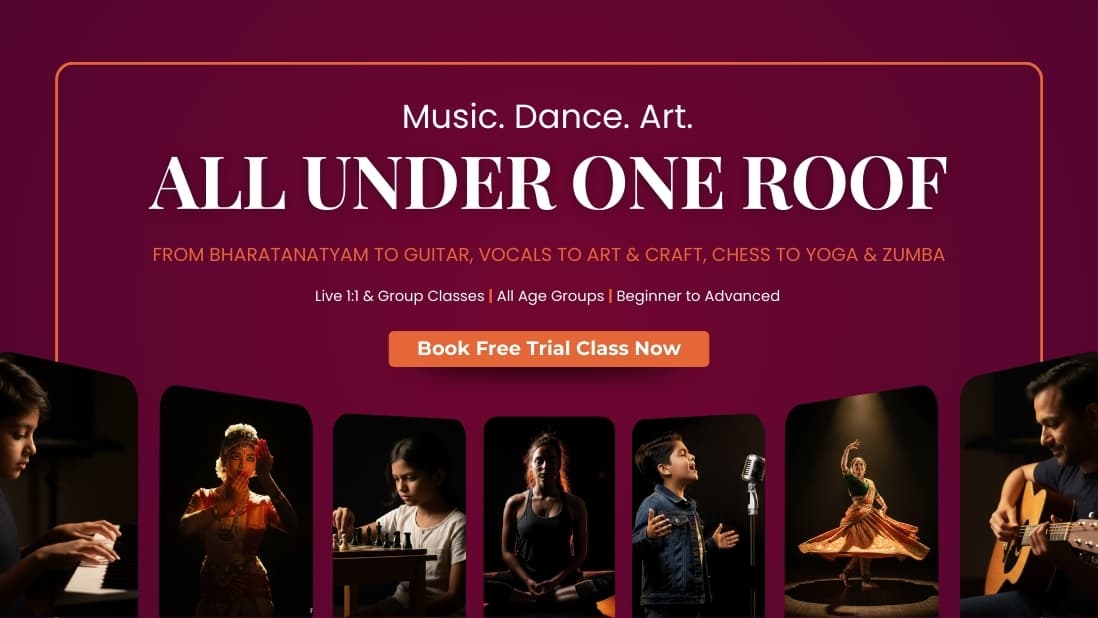
Art Gharana offers live online classes in Bollywood dance classes, Kathak classes, Bharatanatyam classes, tabla classes, Carnatic vocal classes and many more, all delivered in UK time zones by certified Indian teachers. For many NRI families in the UK, Art Gharana has become the single most important source of structured cultural education for their children.
Seven Practical Ways to Keep Indian Culture Alive at Home
Enrol Your Child in Indian Music or Dance Classes
This is the single most impactful step you can take. Regular, structured engagement with an Indian art form under a qualified teacher gives cultural education a depth and continuity that nothing else provides. Even one class per week, sustained over years, creates a profound and lasting connection. Start with a free trial class to find the right art form for your child's personality and interests.
Speak Your Mother Tongue at Home
Language is the deepest carrier of culture. If you speak Tamil, Telugu, Hindi, Gujarati, Punjabi or any other Indian language, make a conscious effort to use it at home. Children who grow up bilingual have demonstrable cognitive advantages, and the language itself carries cultural knowledge in the form of idioms, proverbs and ways of addressing people that cannot be translated. It does not matter if your child responds in English at first. Consistent exposure is what builds the foundation.
Celebrate Indian Festivals With Meaning
The Indian calendar is rich with festivals, and each one is an opportunity for cultural transmission. The key is to celebrate with meaning rather than merely going through the motions. Tell your children the stories behind the festivals. Explain what the lights of Diwali represent, why Navratri involves nine nights of dance, what Pongal celebrates and why Holi signals the arrival of spring. When children understand the meaning behind a celebration, it becomes something they genuinely cherish rather than a set of tasks to be completed.
Cook Indian Food Together
Food is one of the most immediate and sensory connections to cultural heritage. Cooking together, making dal, preparing idli batter, rolling roti, is an educational experience that engages all the senses and creates powerful memories. Children who grow up cooking Indian food with their parents or grandparents carry those skills and those memories for life, and return to them as adults with a warmth and gratitude that is difficult to replicate through any other means.
Connect Regularly With India
Video calls with grandparents, cousins and family friends in India are a simple but powerful tool for cultural continuity. Encourage your children to talk to extended family regularly, not just on festivals and birthdays but as a normal part of weekly life. When children have real, ongoing relationships with people in India, India becomes a living reality rather than an abstract concept.
Engage With Your Local Indian Community
Most UK cities with significant Indian populations have temples, cultural associations, community centres and festival organisations that bring families together. Children who grow up as part of an Indian community, who know other families, who participate in cultural events and who feel part of something larger than their nuclear family, develop a much stronger and more resilient sense of cultural identity than those who engage with Indian culture only at home.
Fill Your Home With Indian Art and Music
The visual and sonic environment of a home shapes children's sense of identity in ways that are easy to underestimate. Playing Indian classical music in the background during family time, displaying art and objects from India, having Indian books and films available, all of these small choices accumulate into a cultural environment that tells your child every single day that their heritage is something beautiful and worth celebrating.
When to Start
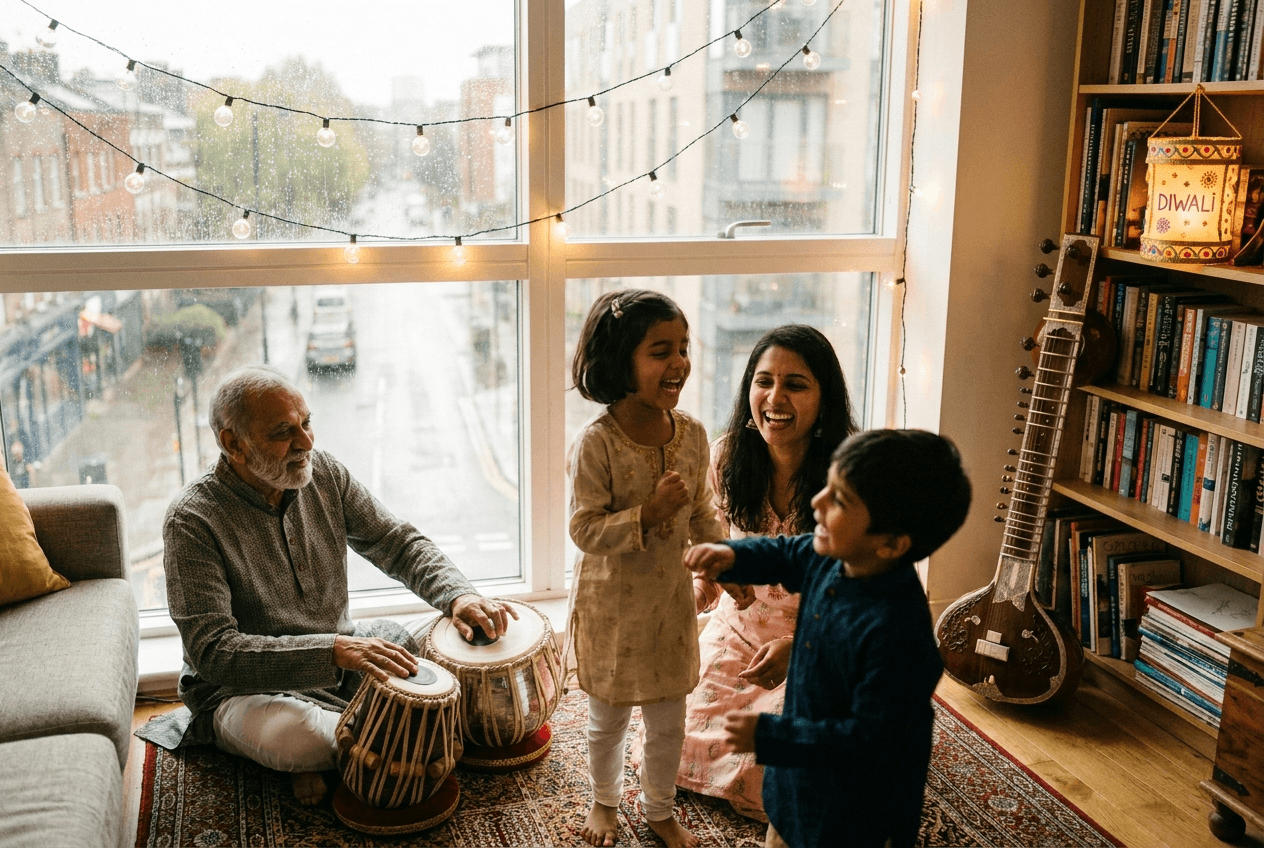 The most common question parents ask is when to start formal cultural education for their children. The answer is as early as possible. Children between the ages of 4 and 8 are in a developmental window of extraordinary openness and receptivity. They absorb language, movement, music and cultural knowledge with an ease that diminishes significantly as they get older. Starting early means that cultural engagement becomes part of who they are, not something added on top of an already established identity.
Art Gharana offers free trial classes across all our disciplines so you can explore what resonates with your child before making any commitment. Browse our full range of courses to see everything available, and read about our teaching approach on our teacher profiles page.
The Role of the Teacher in Cultural Transmission
 One aspect of Indian arts education that is easy to overlook in discussions of curriculum and scheduling is the human dimension of what a great teacher provides. When your child sits in front of an Art Gharana tabla or Kathak or Bharatanatyam teacher, they are not just learning technique. They are forming a relationship with someone who carries the tradition in their body and in their memory, someone who can tell them why a particular movement has the shape it has, what story it tells, what emotion it was designed to evoke, and how it connects to the thousands of years of practice and devotion that produced it.
This is the guru-shishya parampara, the teacher-student lineage that has carried Indian classical arts from generation to generation. It is not merely a teaching method. It is a form of cultural transmission in which the teacher passes on not just knowledge but attitude, not just technique but values. A child who learns Kathak from a teacher trained in the Lucknow gharana is receiving something that connects them to a living chain of artistic inheritance stretching back centuries. That connection is irreplaceable, and it is something that a pre-recorded video or a generic online course simply cannot provide.
Building a Cultural Practice That Lasts
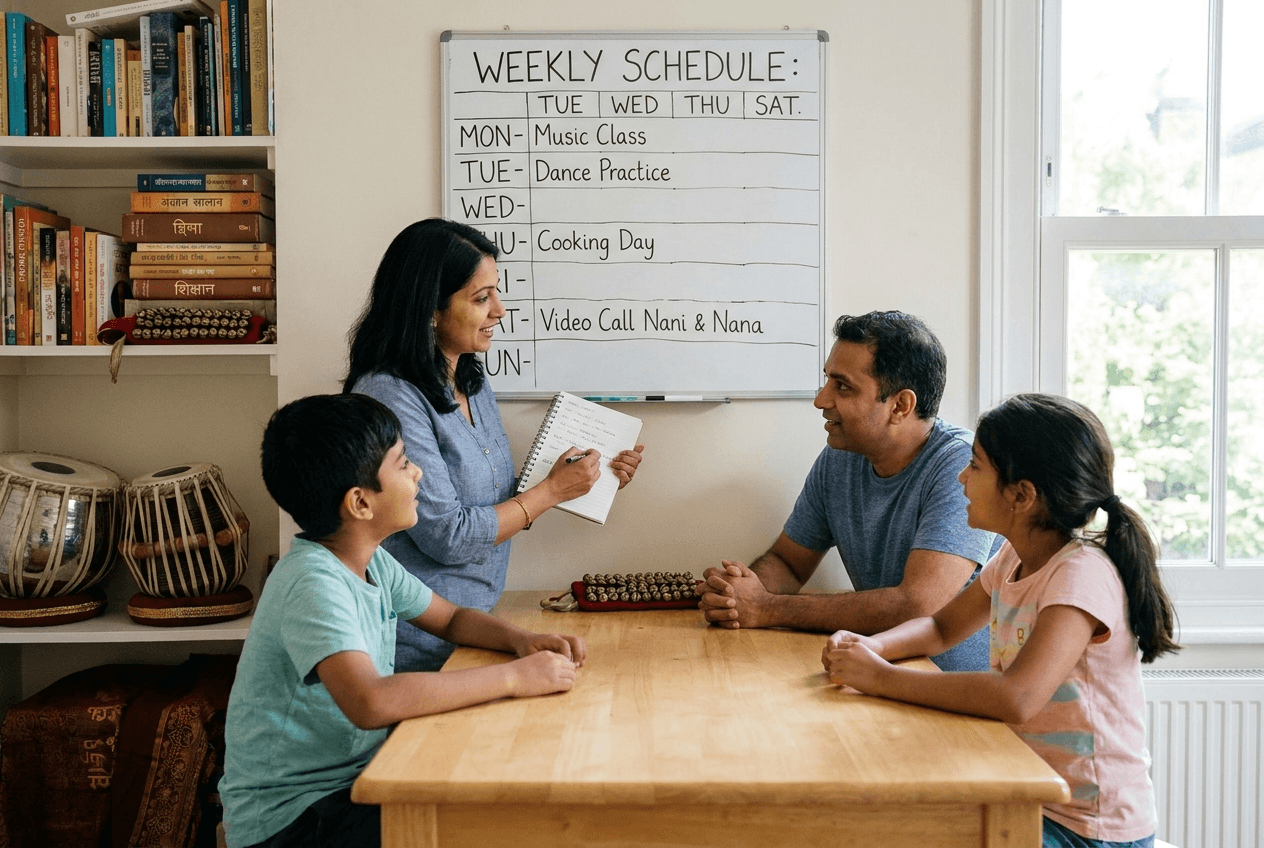
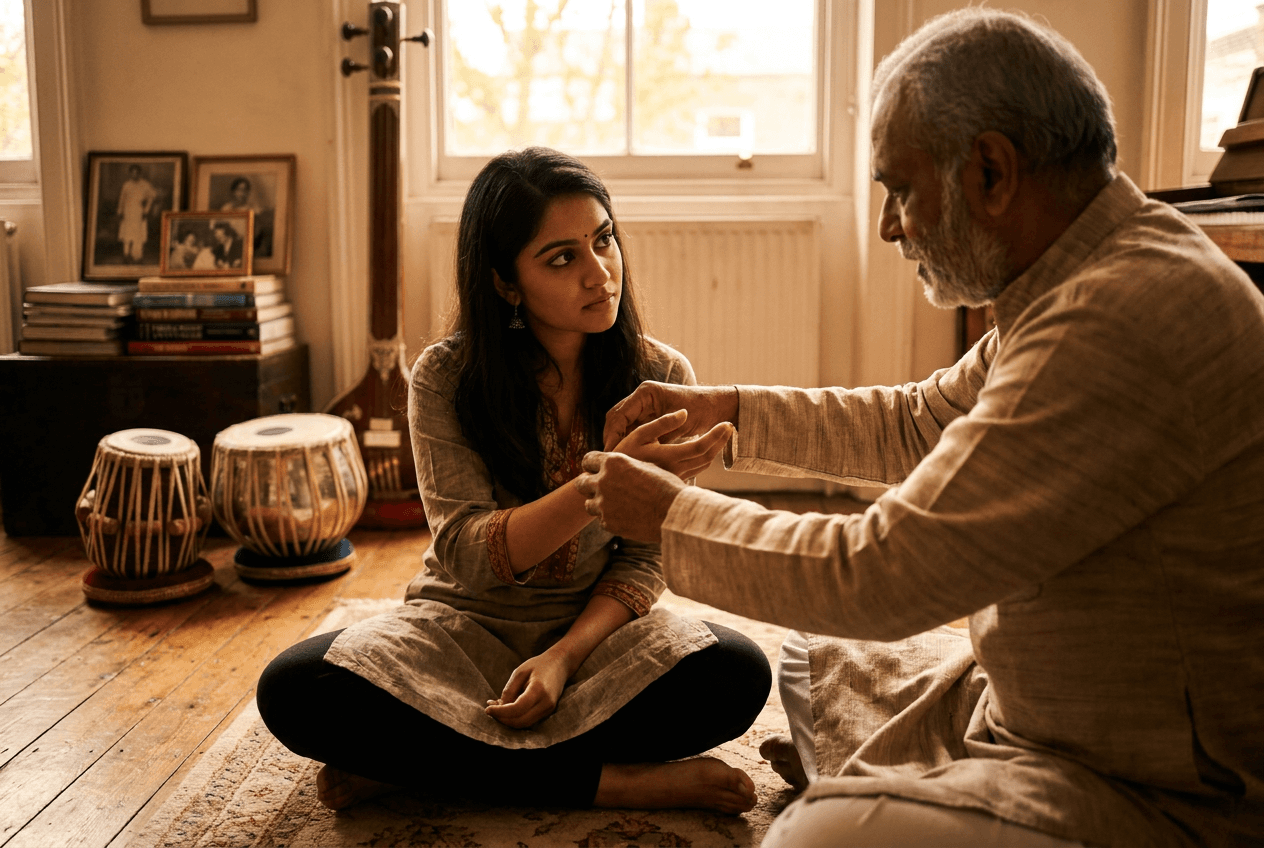 The families we see succeed most consistently at keeping Indian culture alive for their children in the UK are those who build cultural practice into the structure of weekly life rather than treating it as an occasional special event. A tabla lesson every Tuesday. A Kathak class every Saturday morning. Sunday cooking of a regional recipe from the family's home state. A video call with grandparents every week without exception. These small, regular commitments accumulate over years into a deep and authentic cultural identity that no amount of special occasions can replicate.
The arts play a particularly important role in this structure because they provide a weekly touchpoint with cultural heritage that is active, physical and enjoyable rather than passive or dutiful. Your child does not just remember that they have Indian heritage. They practise it, embody it, and bring it alive through their hands and their voice and their movement, every single week.
Many Art Gharana families tell us that the weekly class has become one of the anchors of their children's week, a moment they look forward to and return to with genuine enthusiasm across years of consistent attendance. That kind of sustained engagement is what cultural education requires, and it is what a genuinely good teacher, in a genuinely good programme, consistently delivers.
A Note on Screen Time and Online Learning
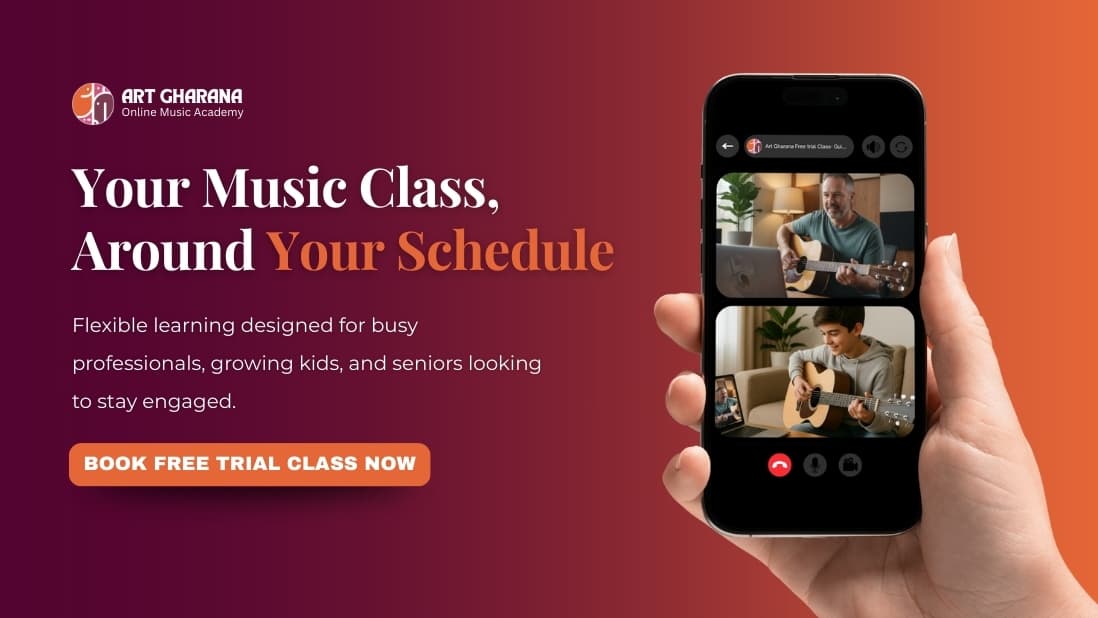
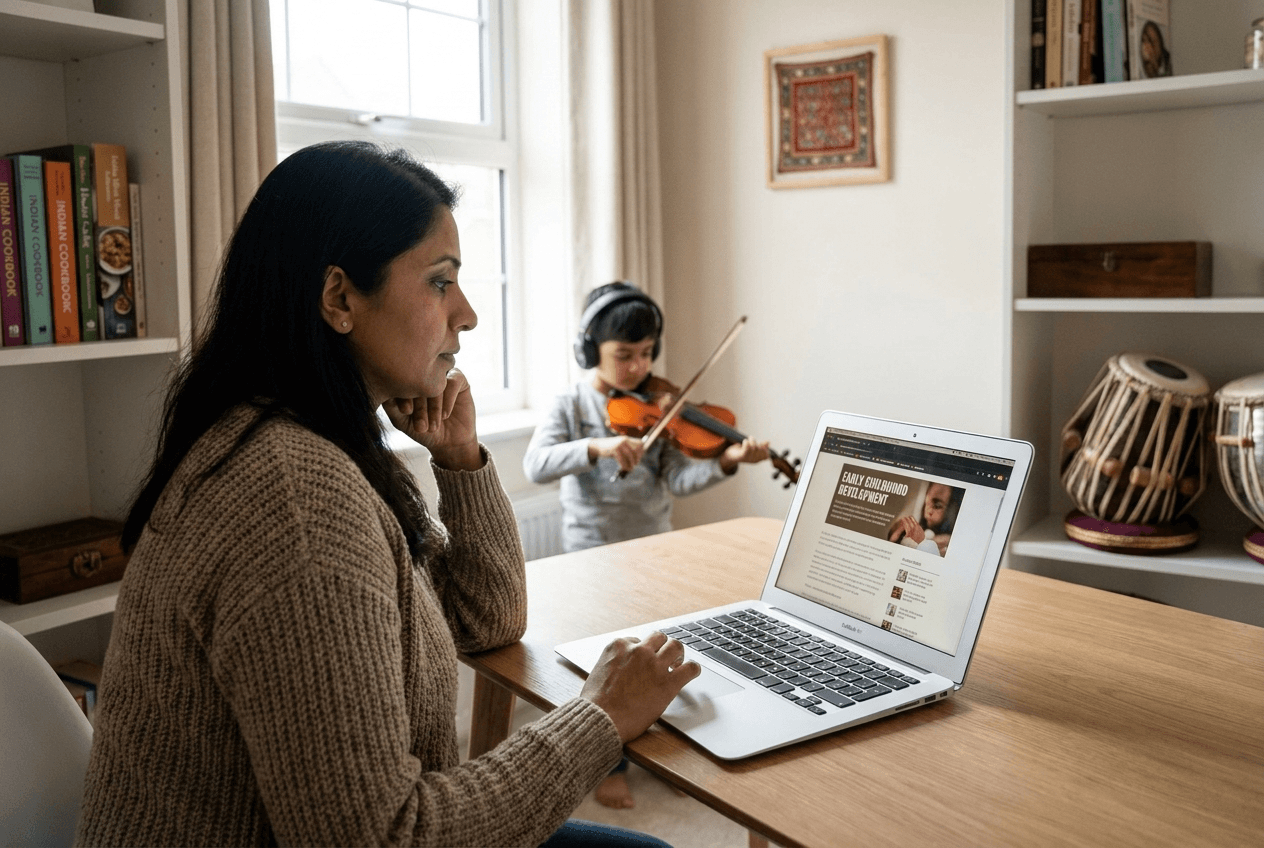
Many parents express concern about adding another screen-based activity to their child's week. This is a completely understandable concern in an era when children are already spending significant time in front of screens for school, entertainment and social connection. The important distinction to make is between passive screen use, such as watching videos or playing games, and active, structured screen use, such as a live lesson with a qualified teacher who is watching, correcting and engaging with your child in real time.
A live Art Gharana music or dance class involves your child's full physical body, their voice, their memory, their concentration and their creative expression. The screen is simply the medium through which their teacher is present. The learning that happens is no less physical, no less creative and no less meaningful than it would be in a physical studio. For the purposes of thinking about screen time, a live music or dance class is in an entirely different category from passive media consumption.
Frequently Asked Questions
1. How can I help my child stay connected to Indian culture in the UK?
The most effective approaches are enrolling children in Indian music or dance classes, speaking an Indian language at home, celebrating festivals with genuine understanding of their meaning, cooking Indian food together, connecting regularly with family in India and engaging with your local Indian community.
2. At what age should I start music or dance classes for my child?
As early as possible. Children from age 4 can begin Bollywood dance or basic vocal training. Classical forms like Kathak and Bharatanatyam suit children from age 5. Starting young means cultural connection becomes a deeply embedded, natural part of a child's identity rather than something they have to work to discover later.
3. Can online Indian arts classes really keep children culturally connected?
Yes, very effectively. Live online classes with certified Indian teachers provide not just musical or dance training but cultural context, language exposure and a direct human connection with someone who genuinely understands and shares the child's heritage. Many Art Gharana students tell us that their relationship with their teacher is itself a meaningful cultural bond.
4. What is the best Indian art form for my child to learn?
The best choice depends on your child's temperament and interests. Bollywood dance is the most immediately engaging for most children. Kathak and Bharatanatyam provide deeper classical and cultural grounding. Tabla, flute and vocal classes suit children drawn to music rather than movement. Many families book free trial classes in more than one discipline before making a final decision, which is exactly what we encourage.
The Gift That Lasts a Lifetime
The effort you put into keeping Indian culture alive for your children in the UK is one of the most lasting gifts you can give them. The skills they develop, the connections they form and the pride they take in their heritage will sustain them through the challenges of growing up between two cultures, and will enrich their lives in ways that only become fully apparent as they reach adulthood.
Art Gharana is here to support your family on that journey. With live online classes in Indian dance, music and vocal training, certified teachers and a completely free trial class, we make it easy to take the first step. Head to our book a free trial class page and begin today.
A Note on Screen Time and Online Learning
Many parents express concern about adding another screen-based activity to their child's week. The important distinction is between passive screen use, such as watching videos or playing games, and active structured screen use such as a live lesson with a qualified teacher who is watching, correcting and engaging with your child in real time throughout. A live Art Gharana music or dance class involves your child's full physical body, their voice, their memory, their concentration and their creative expression. The screen is simply the medium through which their teacher is present in the room. For the purposes of evaluating screen time, a live music or dance class is in an entirely different category from passive entertainment.