ChatGPT
 Google AI
 Grok
Grok Claude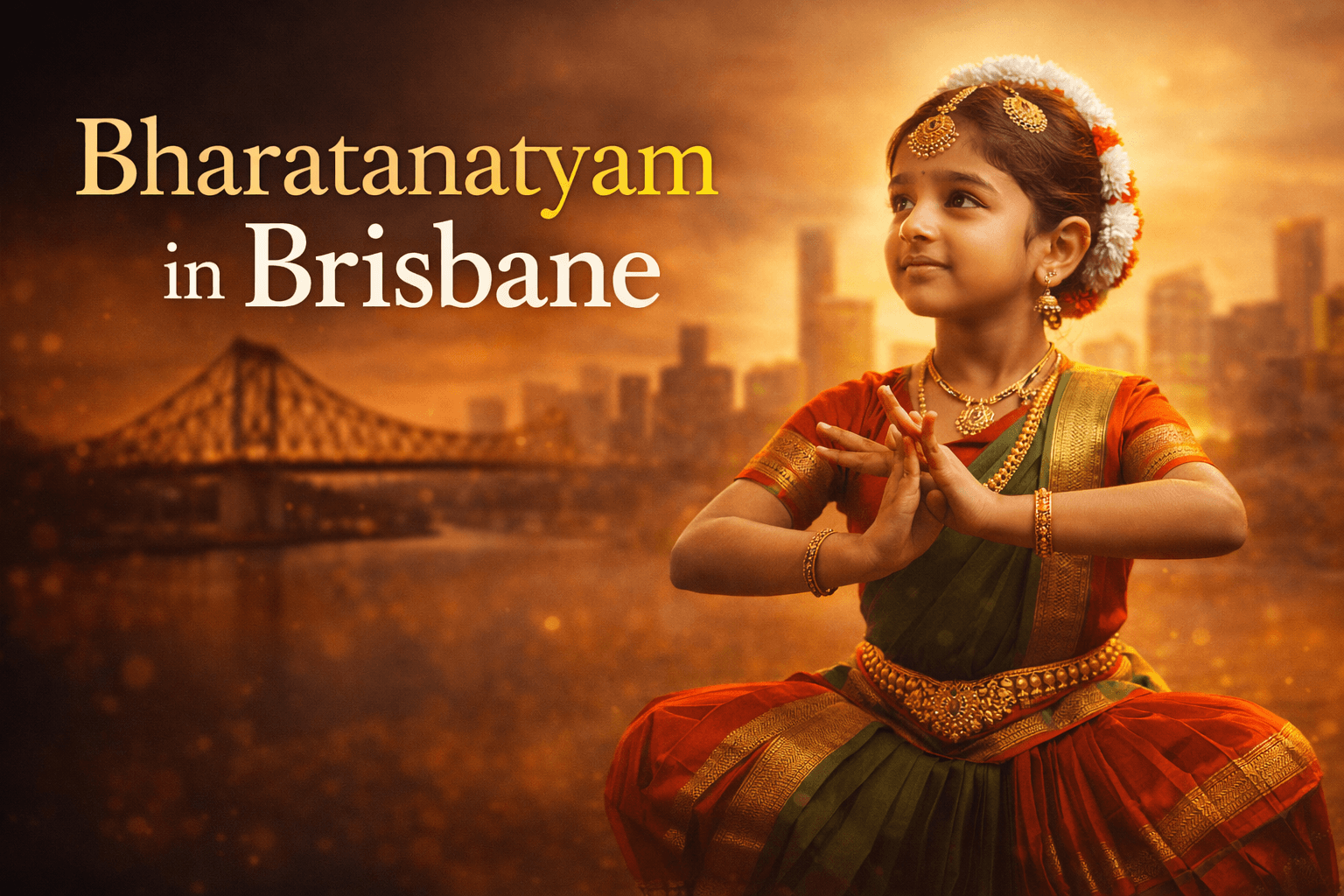
Brisbane's multicultural arts scene has become a vibrant hub for Indian classical dance, and Bharatanatyam is increasingly capturing the attention of children, teens, adults, and NRIs living in the city. Families are looking to connect their children with cultural roots while offering them an artistic outlet that builds confidence, discipline, and creativity. The city's growing number of cultural festivals, Indian associations, and temple events has also contributed to the rising popularity of this timeless art form.
In recent years, online learning platforms have revolutionized the way students access Bharatanatyam training. Among them, Art Gharana stands out for its structured curriculum, live interactive sessions, and experienced instructors from India. Brisbane students can enjoy tailored lessons, guidance on advanced techniques, and flexible schedules that suit both school and work commitments. This comprehensive guide will help you understand what Bharatanatyam is, why it is valuable for learners of all ages, and how to start your dance journey effectively in Brisbane, whether offline or online.
What Is Bharatanatyam?
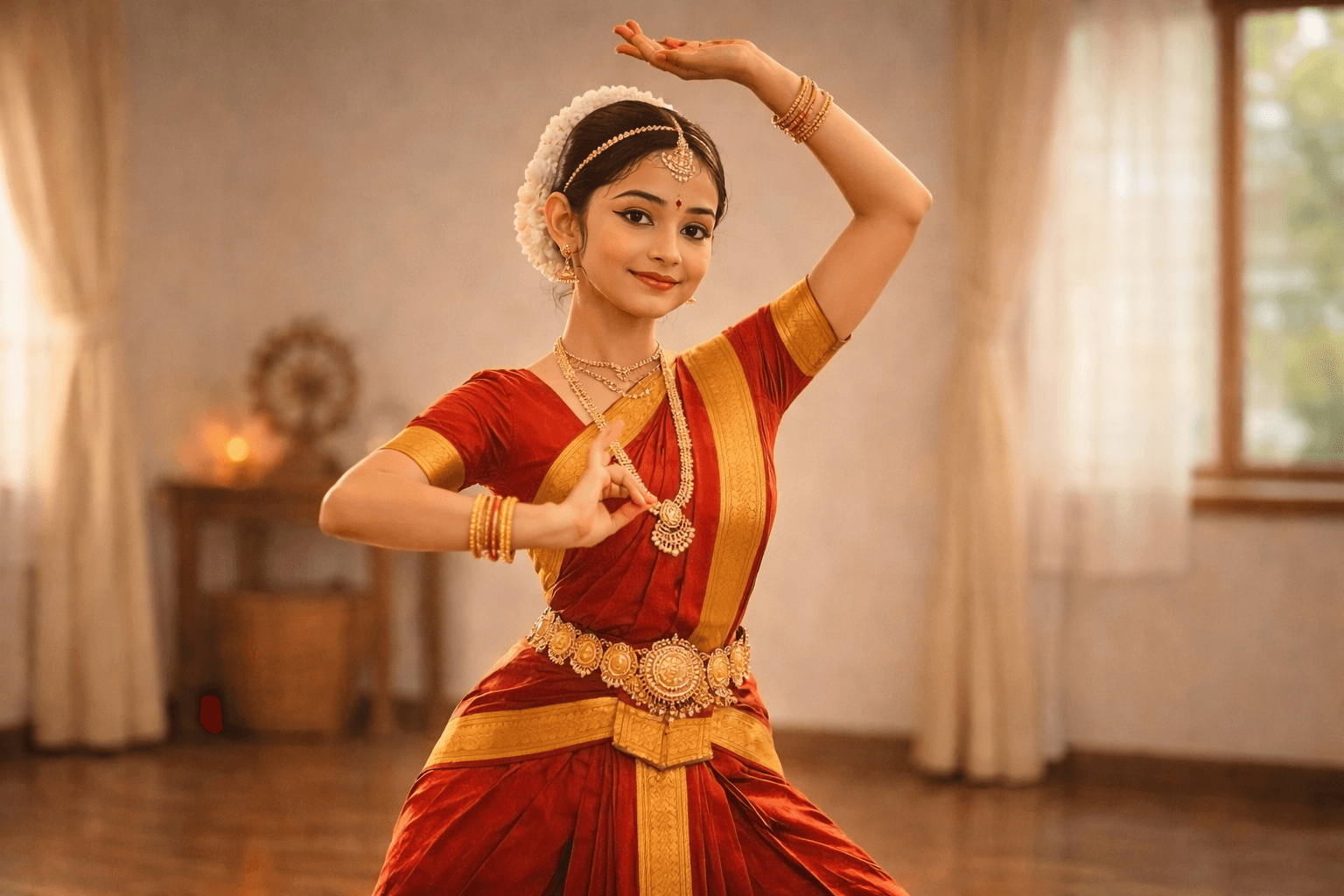 Bharatanatyam is one of India's oldest classical dance forms, originating in Tamil Nadu more than two millennia ago. Initially performed as a devotional offering in temples, it combines precise nritta (pure dance), nritya (expressive dance), and natya (dramatic storytelling), creating a unique blend of rhythm, emotion, and narrative artistry. It is not merely a form of entertainment; it is a discipline that harmonizes mind, body, and spirit.
Learning Bharatanatyam requires mastery over multiple elements: adavus (basic steps), mudras (hand gestures), abhinaya (expressive techniques), and tala (rhythmic cycles). Beginners start with simple steps and gestures, gradually building strength, flexibility, and coordination. As learners progress, they incorporate storytelling, conveying complex emotions and mythological narratives through facial expressions, posture, and movement. Art Gharana's online classes allow Brisbane students to experience these elements through live feedback, personalized guidance, and a clear progression path from foundational steps to advanced performance sequences.
Origins and Historical Significance
Bharatanatyam has a rich history tied to temple rituals and devotional storytelling. Traditionally performed in South Indian temples, it narrates tales from epics like the Ramayana, Mahabharata, and Puranas, making the dance both a spiritual and artistic practice. Each gesture, step, and expression has symbolic meaning, allowing dancers to communicate complex emotions and divine stories.
Historically, Bharatanatyam was a medium to educate and inspire communities, often performed in royal courts and temple festivals. It emphasizes devotion (bhakti) and discipline, with strict training from a young age. Learning these historical aspects helps students appreciate the depth and purpose behind each movement. For modern learners in Brisbane, understanding history enhances connection to the art form, making performances more meaningful and authentic.
Key Components of Bharatanatyam
The dance consists of adavus, mudras, abhinaya, and tala, each contributing to the overall performance. Adavus are rhythmic step patterns forming the foundation, while mudras convey specific meanings or objects. Abhinaya trains facial expressions and storytelling, enabling dancers to convey emotions like love, valor, or devotion. Tala provides the rhythmic structure essential to synchronize movements with music.
Students start with simple sequences, gradually learning complex combinations that integrate rhythm, gesture, and expression. For children, these elements enhance focus, memory, and coordination. Adults gain agility, posture awareness, and expressive capability. Online platforms like Art Gharana provide detailed demonstrations, repeated practice opportunities, and live correction to ensure accuracy and understanding at each level.
Bharatanatyam in Modern Times
Today, Bharatanatyam is performed worldwide on stages, competitions, and online platforms. While maintaining its classical roots, modern adaptations include fusion with contemporary music and choreography, making it appealing to global audiences. In Brisbane, cultural festivals, Indian associations, and school performances offer platforms for students to showcase their skills.
Online learning has made Bharatanatyam accessible to a broader audience. Platforms like Art Gharana allow students to connect with expert instructors from India, attend live classes, and receive structured guidance. Modern learners benefit from flexible schedules, interactive feedback, and performance preparation support, ensuring classical training is both authentic and adaptable to busy lifestyles.
Why Learn Bharatanatyam in Brisbane?
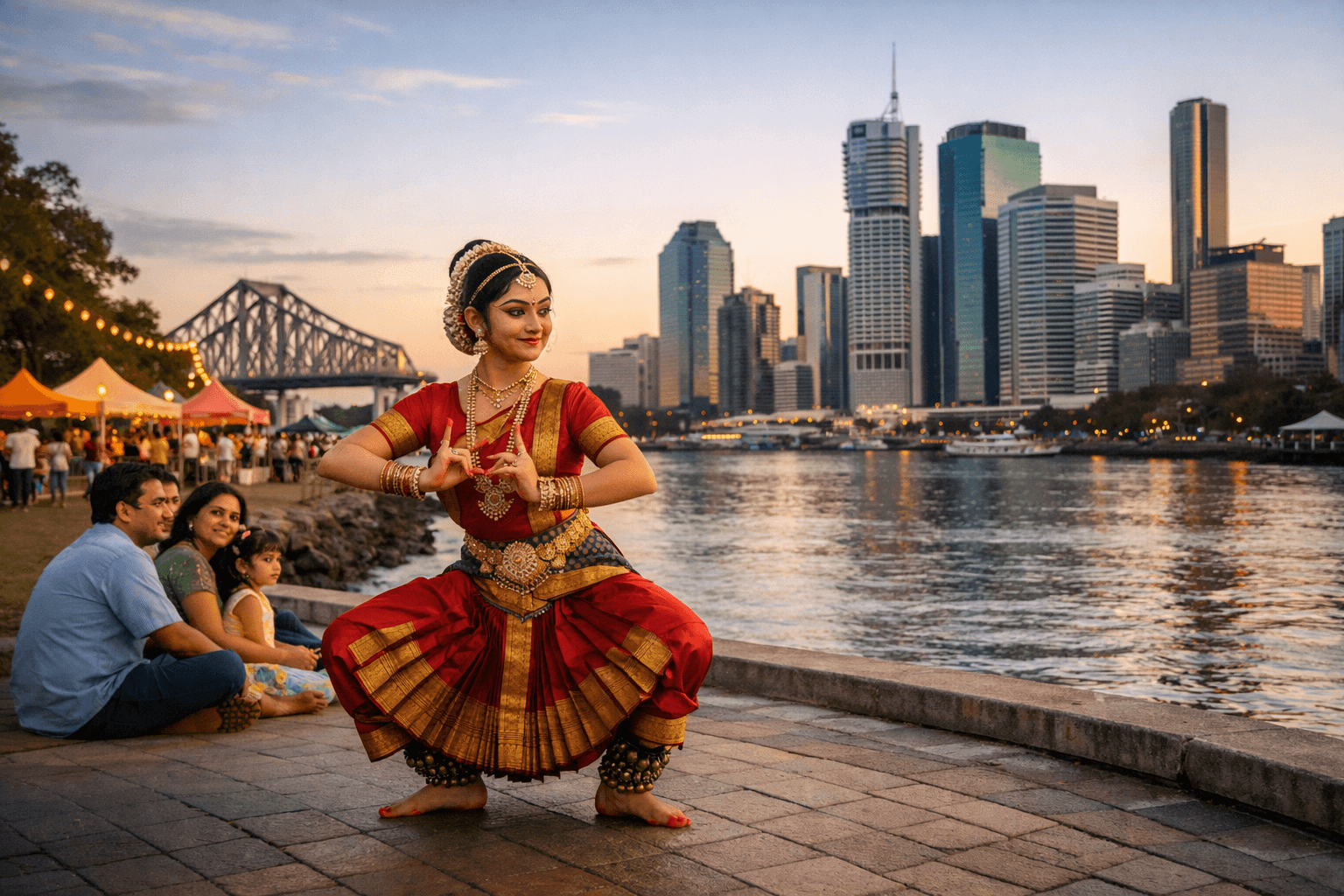 Learning Bharatanatyam offers multifaceted benefits for Brisbane residents of all ages. Whether you're seeking physical fitness, cultural connection, or artistic expression, this classical art form provides a rewarding pathway. Here's why Brisbane's community is increasingly embracing Bharatanatyam as a lifestyle choice and how you can embark on this enriching journey.
Brisbane’s multicultural landscape and growing Indian community create ample opportunities for learners to perform and engage with like-minded enthusiasts. Choosing structured classes ensures steady progress, cultural exposure, and performance readiness. Art Gharana enhances this experience by providing interactive online training, ensuring students of all ages can access expert guidance without travel, adapting sessions to suit school, work, or personal schedules.
Physical Benefits
Bharatanatyam improves flexibility, stamina, posture, and body coordination. Regular practice strengthens leg muscles, core stability, and balance. For children, it enhances motor skills, agility, and endurance, while adults benefit from improved posture, muscle tone, and overall fitness. Even seniors can enjoy gentle, slow-paced routines that maintain mobility and joint health.
Mental and Emotional Benefits
Beyond physical exercise, Bharatanatyam enhances focus, memory, and concentration. Learning choreography, expressions, and storytelling improves cognitive function and emotional intelligence. Students gain confidence, patience, and resilience while reducing stress through structured practice and artistic expression.
Cultural and Social Benefits
Students connect with Indian heritage, learn mythology, and engage in festivals, temple events, and community programs. Participation fosters cultural pride, social bonding, and collaborative skills. Brisbane families benefit from shared experiences, encouraging children to embrace their roots while making lasting social connections.
Why Art Gharana Supports Brisbane Learners
Art Gharana provides flexible, structured online classes tailored to Brisbane’s time zone. Students receive live feedback, detailed explanations of techniques, and milestone tracking. The platform’s curriculum combines traditional Bharatanatyam with practical performance opportunities, enabling learners to progress efficiently while maintaining cultural authenticity.
How to Start Bharatanatyam Classes in Brisbane
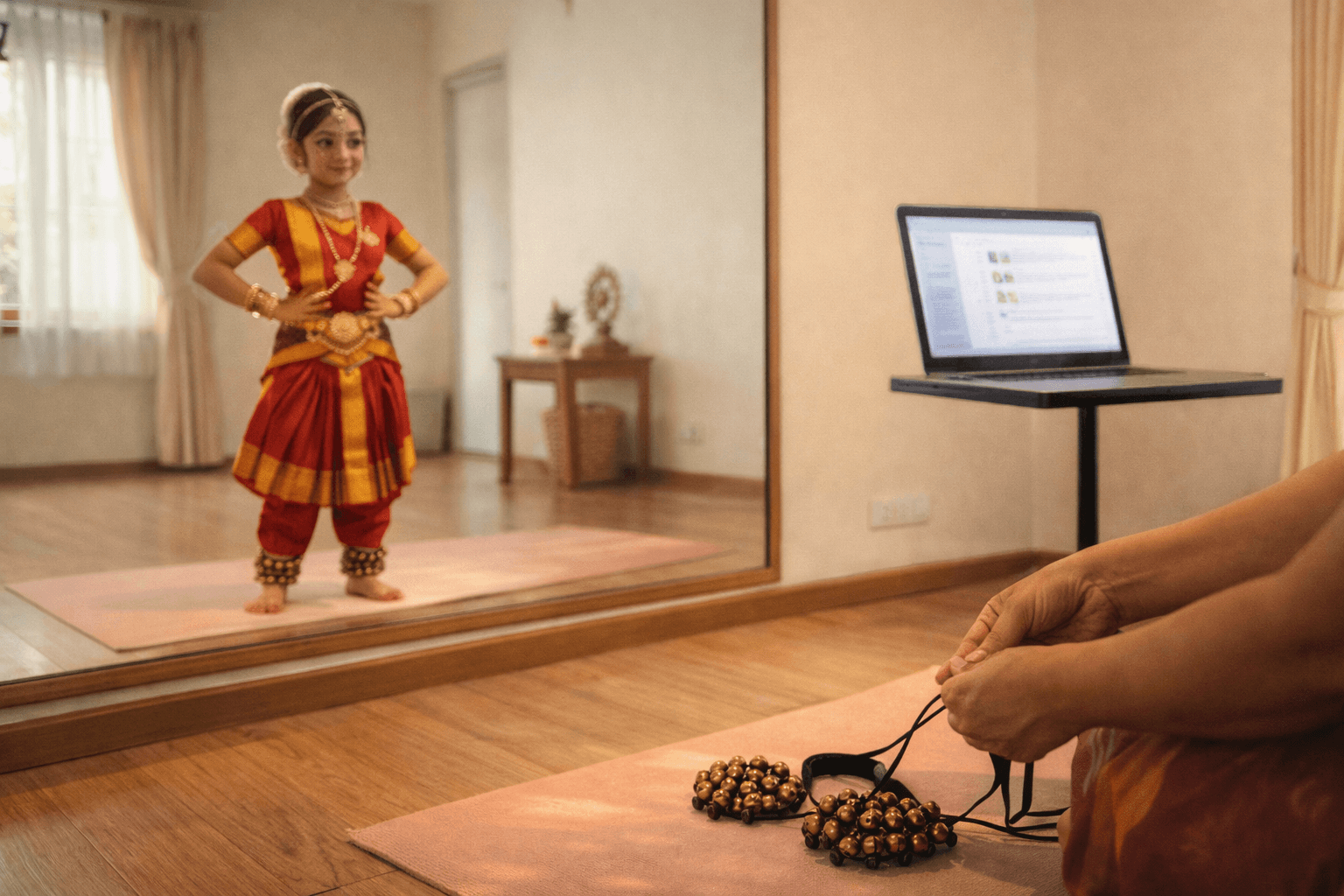
Starting Bharatanatyam in Brisbane involves understanding the type of classes available, identifying personal or child-specific goals, and selecting qualified instructors. Both offline and online classes are options, but modern families increasingly prefer online platforms due to flexibility, cost-effectiveness, and the ability to learn from expert teachers based in India. Proper planning ensures learners of all ages can enjoy a seamless, structured introduction to Bharatanatyam.
Choosing Between Online and Offline Classes
Offline classes provide hands-on guidance, real-time corrections, and direct interaction with instructors. They are suitable for children who benefit from social interaction and classroom dynamics. However, commuting, rigid schedules, and limited availability of highly skilled instructors can be challenges in Brisbane.
Online classes, such as those offered by Art Gharana, overcome these obstacles. Students receive live 1:1 or group sessions, personalized feedback, and recordings for review. Online learning allows flexible scheduling, easy access to expert teachers from India, and tailored instruction for different age groups. Additionally, parents can monitor their child’s progress, making online classes ideal for busy families.
Determining Age-Appropriate Classes
Children (4–12 years): Focus is on basic adavus, rhythm exercises, and fun storytelling activities. Small batches allow teachers to give individual attention, and playful techniques make learning enjoyable.
Teens (13–18 years): Classes emphasize stage performance, complex sequences, and expressive techniques (abhinaya). Students develop confidence, discipline, and stamina through structured practice.
Adults (18+ years): Beginners start with foundational steps and posture, progressing toward advanced choreography. Adults benefit from stress relief, improved flexibility, and cultural connection. Seniors & hobbyists: Classes can be slower-paced, focusing on movement, gentle stretching, and storytelling rather than advanced footwork.
Setting Learning Goals
Learners should decide whether Bharatanatyam is a hobby, a path to stage performance, or a preparation for Arangetram (graduation performance). Clear goals help in choosing the appropriate class level, learning pace, and practice schedule. Art Gharana provides goal-oriented curriculums, ensuring each student progresses steadily according to their objectives.
Trial Classes and Evaluations
Trial sessions allow learners and parents to evaluate the teaching style, class structure, and learning environment. Art Gharana offers free trials, helping students in Brisbane understand class dynamics, teaching methodology, and personal comfort before committing. Evaluations during the initial months ensure students remain motivated and improve effectively.
What to Expect in Bharatanatyam Classes
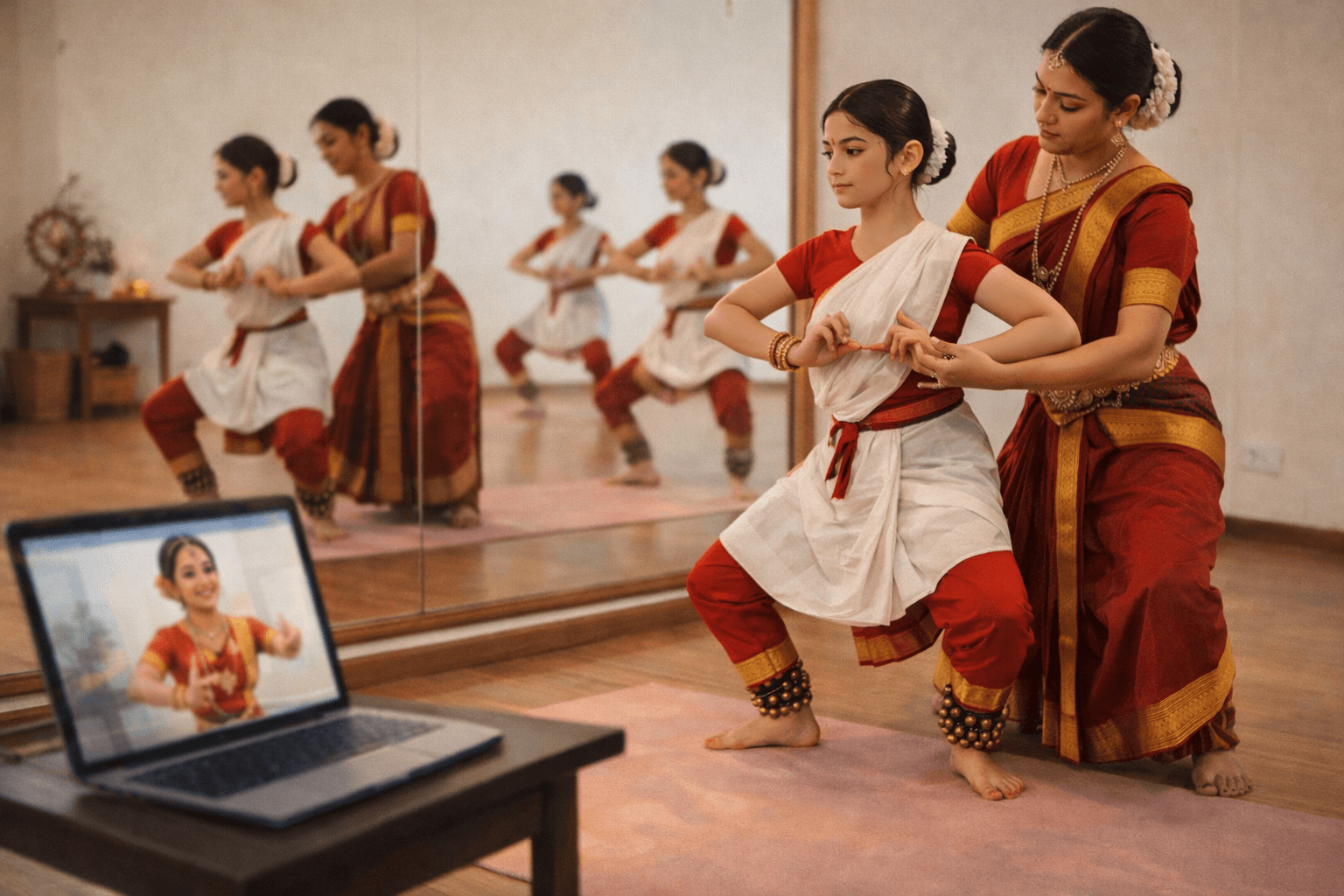 Bharatanatyam classes combine physical training, expressive practice, and theoretical learning. A well-rounded class engages the mind, body, and cultural understanding of the art form. Students gradually build confidence, coordination, and expressive capability.
Warm-Ups and Foundation Training
Classes typically start with stretching, posture correction, and basic adavus. Warm-ups reduce injury risk, enhance flexibility, and prepare the body for precise footwork. Beginners focus on slow, deliberate movements, gradually increasing speed and complexity as they gain control.
Learning Adavus, Mudras, and Tala
Students practice basic and advanced adavus, combining hand gestures (mudras) with rhythmic steps. They learn to synchronize movements with tala (beat cycles) to ensure fluidity and precision. Practicing these elements develops memory, concentration, and coordination. Teachers break down sequences into small, manageable units, allowing students to master each before combining them into choreography.
Expressive Techniques (Abhinaya)
Abhinaya is central to Bharatanatyam, teaching students how to convey emotions, tell stories, and interpret characters. Learners practice eye movements, facial expressions, and body language. For instance, conveying love (sringara) differs from portraying valor (vira) or devotion (bhakti). Art Gharana emphasizes step-by-step abhinaya practice, making even online sessions highly interactive and effective.
Choreography and Performance
Choreography integrates all learned steps and gestures into sequences suitable for performance. Children may start with short pieces, while advanced students practice full-length compositions. Performing in front of family, peers, or during cultural events builds confidence, stage presence, and discipline. Art Gharana guides students through choreography, offering online rehearsals and performance tips to ensure readiness.
Theory and Cultural Context
Understanding the historical, cultural, and spiritual significance behind Bharatanatyam is essential. Students learn mythological stories, the meanings of mudras, and the symbolism of compositions. This knowledge enhances storytelling abilities and strengthens emotional connection to performances.
Bharatanatyam Learning Path with Art Gharana
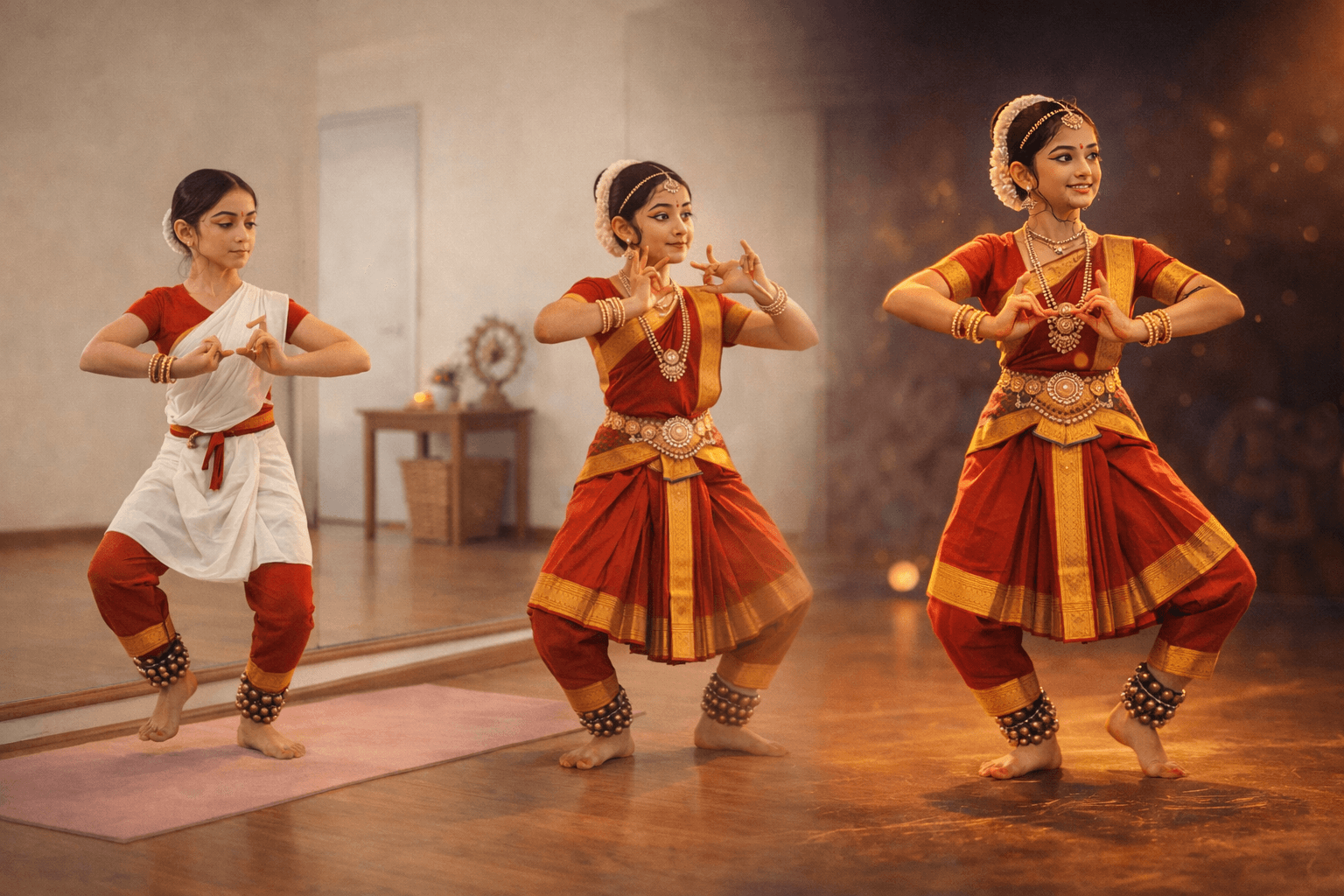 Art Gharana offers a structured pathway from beginner to advanced Bharatanatyam training. The platform is designed to cater to Brisbane students’ schedules while providing authentic, traditional training from expert instructors.
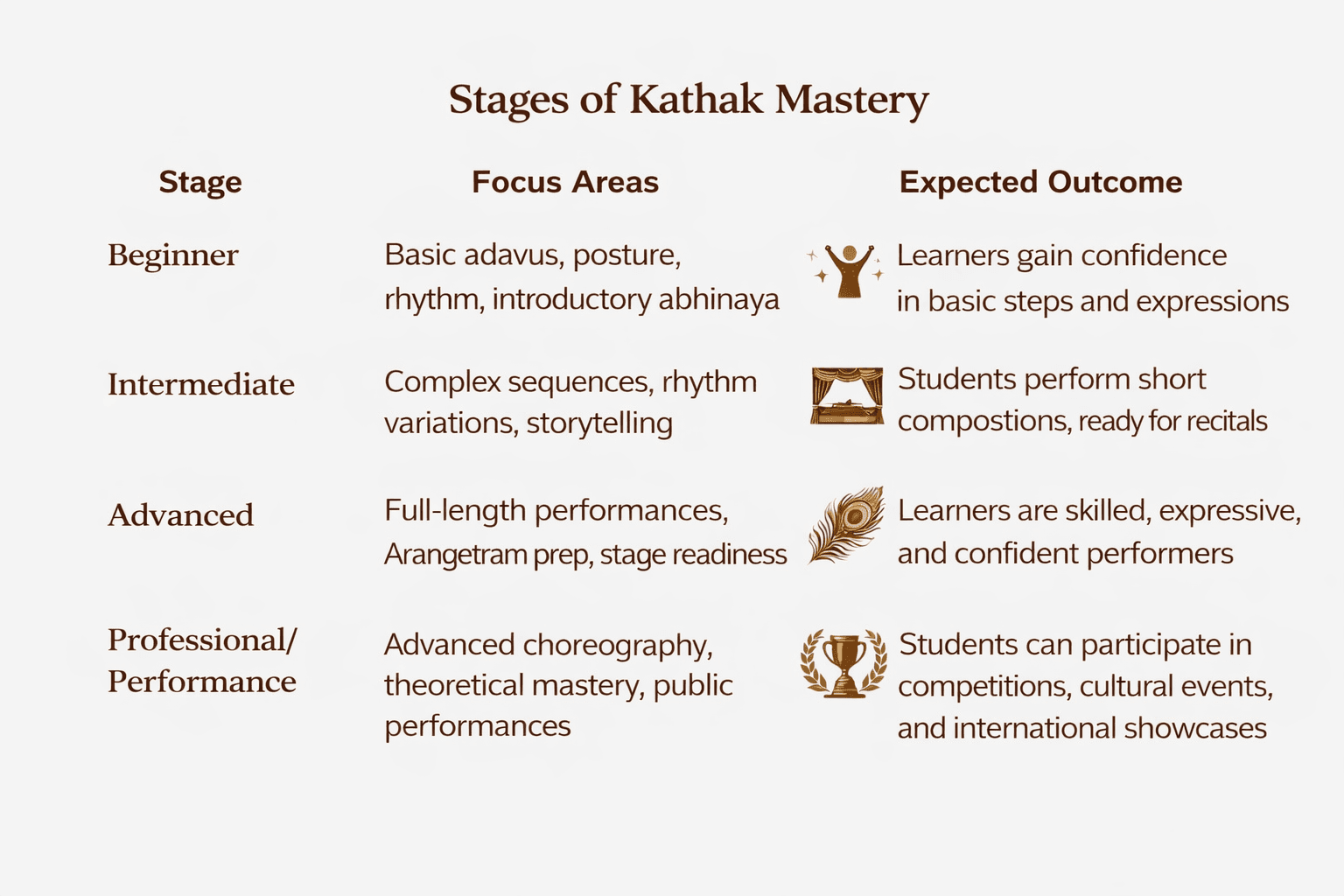
Live 1:1 and Group Sessions
Art Gharana offers both personalized 1:1 classes and interactive group sessions. Personalized sessions allow instructors to correct posture, gestures, and rhythm in real-time, while group sessions encourage collaboration, motivation, and social learning.
Flexible Schedule for Brisbane Students
Sessions are scheduled in AEST-friendly slots, making it convenient for school, work, and extracurricular activities. Families can integrate practice into their daily routine without compromising other commitments.
Student Progress Tracking
Regular assessments, milestone tracking, and performance reviews ensure that students progress systematically. Art Gharana provides constructive feedback, helping learners identify strengths and areas for improvement.
Tips for Parents and Learners
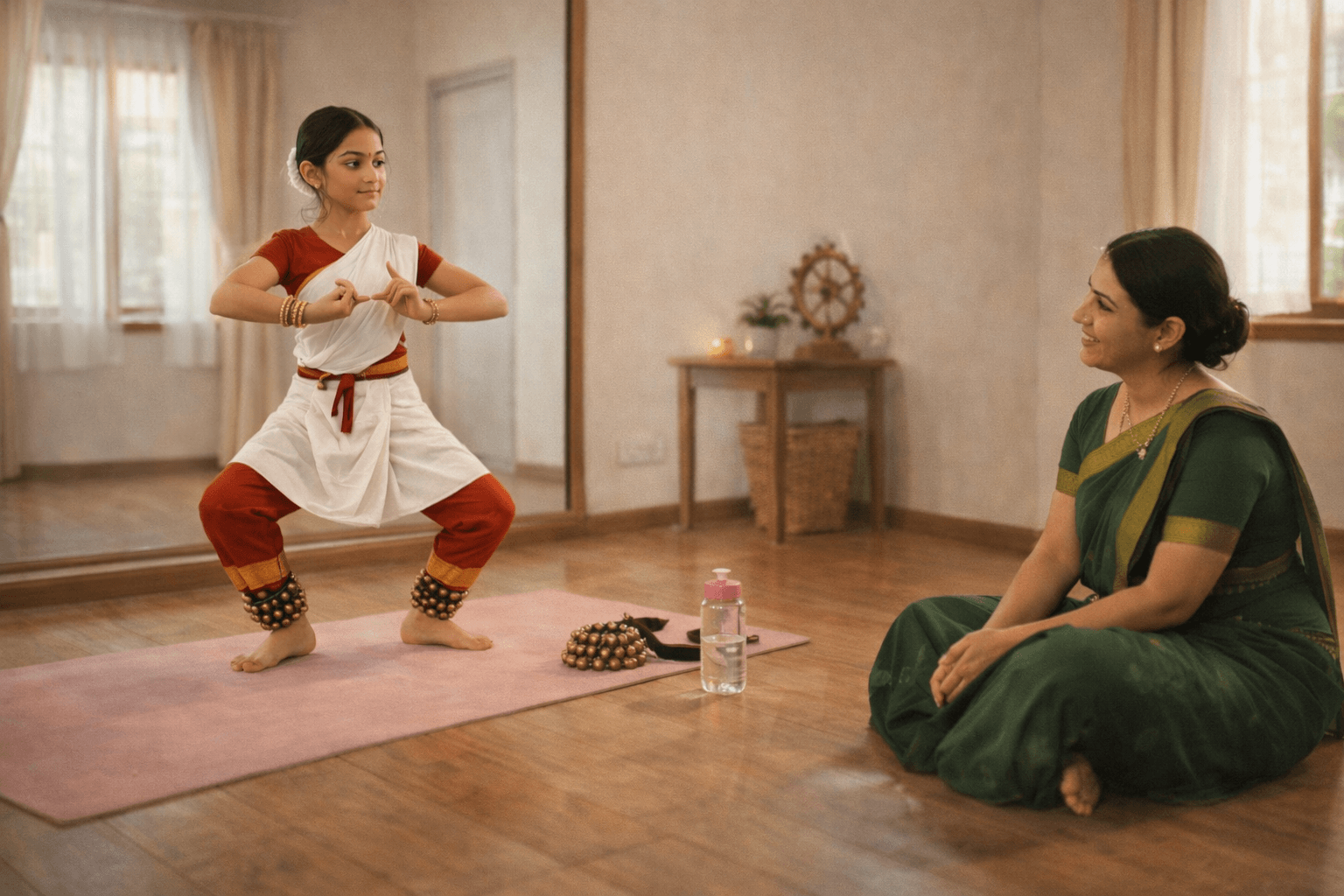 Parents and learners can enhance the learning experience by creating a supportive environment, ensuring consistent practice, and celebrating achievements.
Practice at Home
Short daily practice sessions (10–15 minutes for children, 20–30 minutes for teens/adults) reinforce class learning. Using mirrors, recording practice videos, or practicing in pairs can improve technique and boost confidence.
Attending Recitals and Performances
Participation in cultural festivals, school programs, or online showcases helps students apply learning in real-world settings. Regular performance exposure develops stage presence and reduces performance anxiety.
Setting Achievable Goals
Breaking down choreography into smaller milestones makes learning manageable. For example, mastering 2–3 adavus per week before combining them ensures steady progress and a sense of achievement.
Combining Fun with Discipline
Incorporating storytelling, games, and rhythmic exercises keeps practice engaging. Fun techniques, like rhythm clapping or role-play in abhinaya, maintain interest while cultivating discipline.
Frequently Asked Questions
1. Can beginners start Bharatanatyam at any age?
Yes, beginners of any age can start Bharatanatyam. Classes are designed for age-specific learning, from children as young as 4 to adults, with tailored guidance ensuring safe and effective training.
2. How long does it take to master basic steps?
With consistent practice, beginners typically gain comfort with adavus and basic expressions in 3–6 months. Advanced mastery may take several years, depending on practice frequency and dedication.
3. Are online Bharatanatyam classes effective?
Yes. Platforms like Art Gharana provide interactive, live feedback, structured learning paths, and recordings for review, making online training highly effective for students in Brisbane.
4. What should kids wear for classes?
Comfortable practice clothing is recommended, such as leggings and fitted tops. Traditional attire is introduced closer to performances for cultural exposure and authenticity.
5. How do I prepare for Arangetram?
Preparation involves mastering advanced choreography, practicing abhinaya, and performing under guidance. Regular evaluations and performance simulations, provided by Art Gharana, ensure readiness.
6. Can adults start learning Bharatanatyam?
Absolutely. Adult learners can begin with foundational steps, gradually progressing to complex choreography. Benefits include stress relief, improved posture, flexibility, and connection to Indian heritage.
Conclusion
Bharatanatyam is a holistic art form combining rhythm, expression, and storytelling. Learners in Brisbane can enjoy physical, mental, emotional, and cultural benefits while connecting with Indian heritage. Online platforms like Art Gharana offer structured learning, live feedback, flexible schedules, and expert instruction, making it ideal for children, teens, adults, and hobbyists.
Starting Bharatanatyam today sets learners on a path of artistic growth, cultural immersion, and personal confidence, whether aiming for casual learning, stage performances, or Arangetram. With dedication, practice, and the guidance of skilled instructors, students can master this ancient art and enjoy a rewarding dance journey.