ChatGPT
 Google AI
 Grok
Grok Claude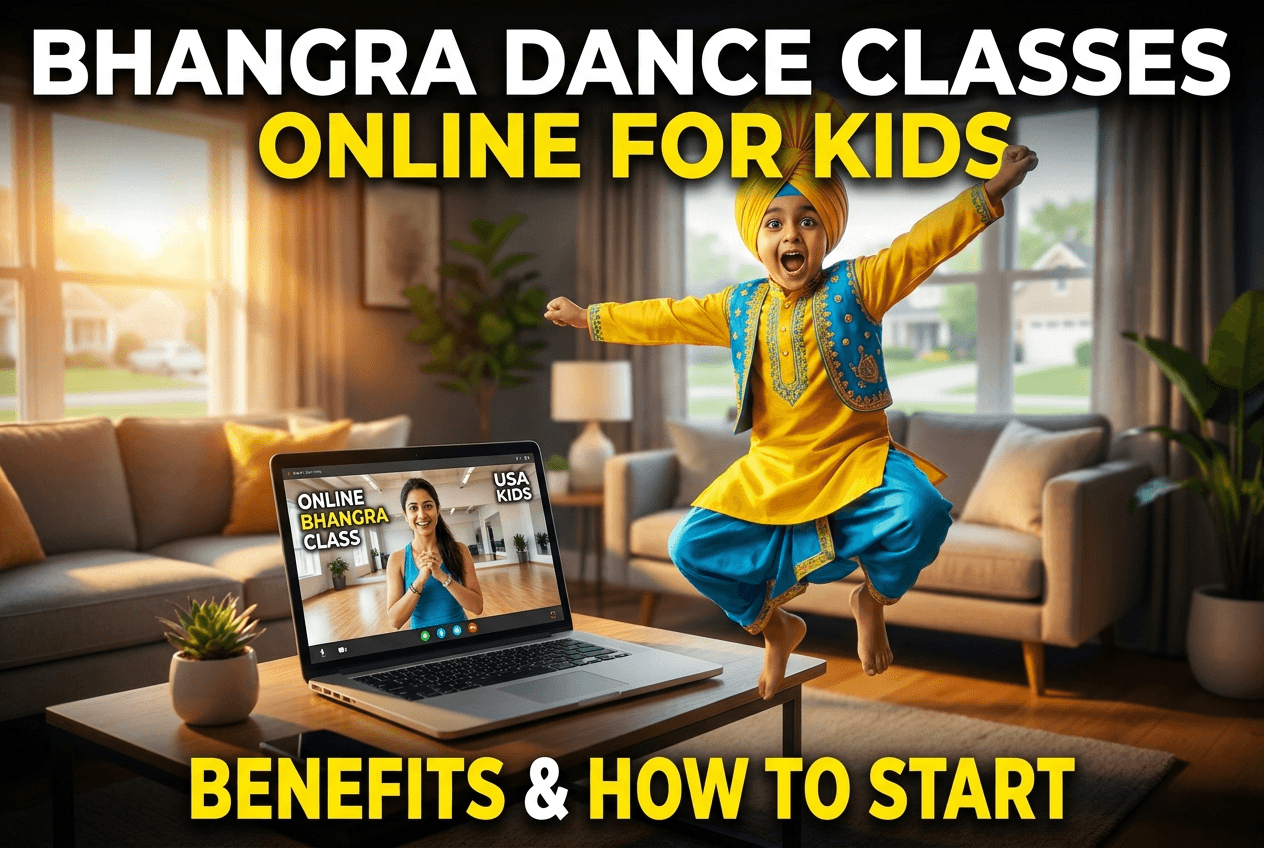
Something extraordinary happens when a child first hears the thundering beat of a dhol drum. Their feet start moving before their brain catches up. Bhangra, the electrifying folk dance tradition born in the Punjab region of South Asia, carries that irresistible energy in every step, jump, and arm movement. For Indian-American families and culturally curious households across the USA, bhangra dance classes online for kids have opened a vibrant new doorway to cultural connection, physical fitness, and pure joyful expression.
What Is Bhangra and Why Are American Kids Falling in Love With It
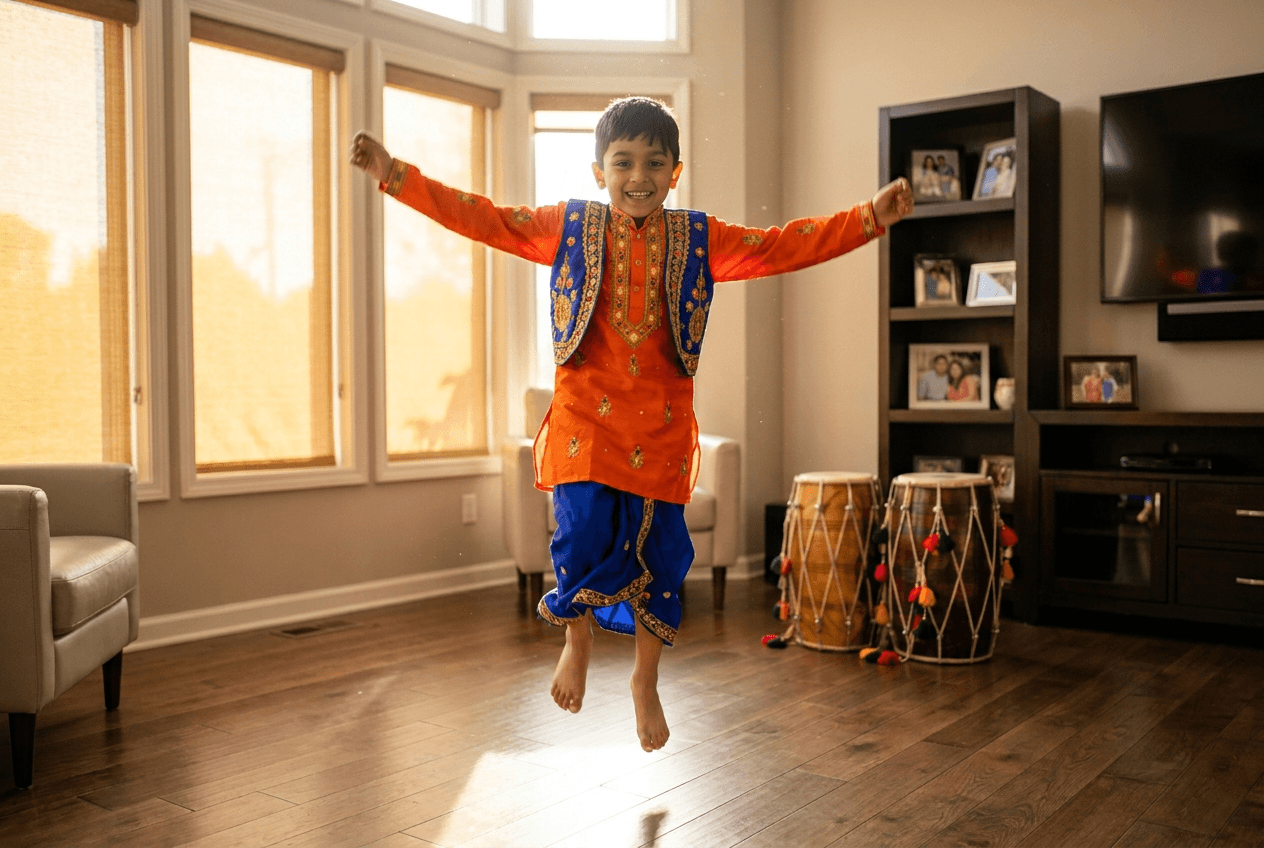 Bhangra originated centuries ago among farming communities in the Punjab region, which today spans parts of northwestern India and eastern Pakistan. Farmers performed this exuberant dance during the spring harvest festival of Vaisakhi, celebrating abundance, community, and the rhythms of agricultural life. The dance evolved over generations, absorbing influences from various Punjabi folk traditions and eventually becoming one of the most recognizable and beloved dance forms across South Asia and the global diaspora.
The defining characteristics of bhangra make it immediately compelling for children. Big, expressive arm movements sweep dramatically overhead. Energetic footwork demands coordination and rhythmic precision. Joyful facial expressions are not optional in bhangra but genuinely integral to the performance aesthetic. Unlike classical dance forms that demand years of technical groundwork before students taste real expressive freedom, bhangra delivers immediate visceral excitement from the very first lesson.
In the USA, bhangra has grown far beyond the South Asian community. University bhangra teams compete in national championships drawing audiences of thousands. Bhangra elements appear in mainstream pop music videos and fitness classes. Cultural festivals from New York to California feature bhangra performances that draw diverse, enthusiastic crowds. This mainstream visibility has sparked curiosity among American families of all backgrounds who recognize bhangra as a dynamic, athletic, and genuinely fun art form worth exploring.
For Indian-American families specifically, bhangra dance classes online for kids represent something even deeper than physical activity or artistic training. They represent a living thread connecting second-generation children to a cultural heritage that can feel distant when daily life unfolds entirely within American mainstream culture. Dancing bhangra, wearing the traditional phulkari-embroidered costume, and understanding the Punjabi lyrics of traditional giddha songs gives children an embodied sense of cultural identity that no classroom lesson about heritage can fully replicate.
The Remarkable Benefits of Bhangra Dance Classes for Kids
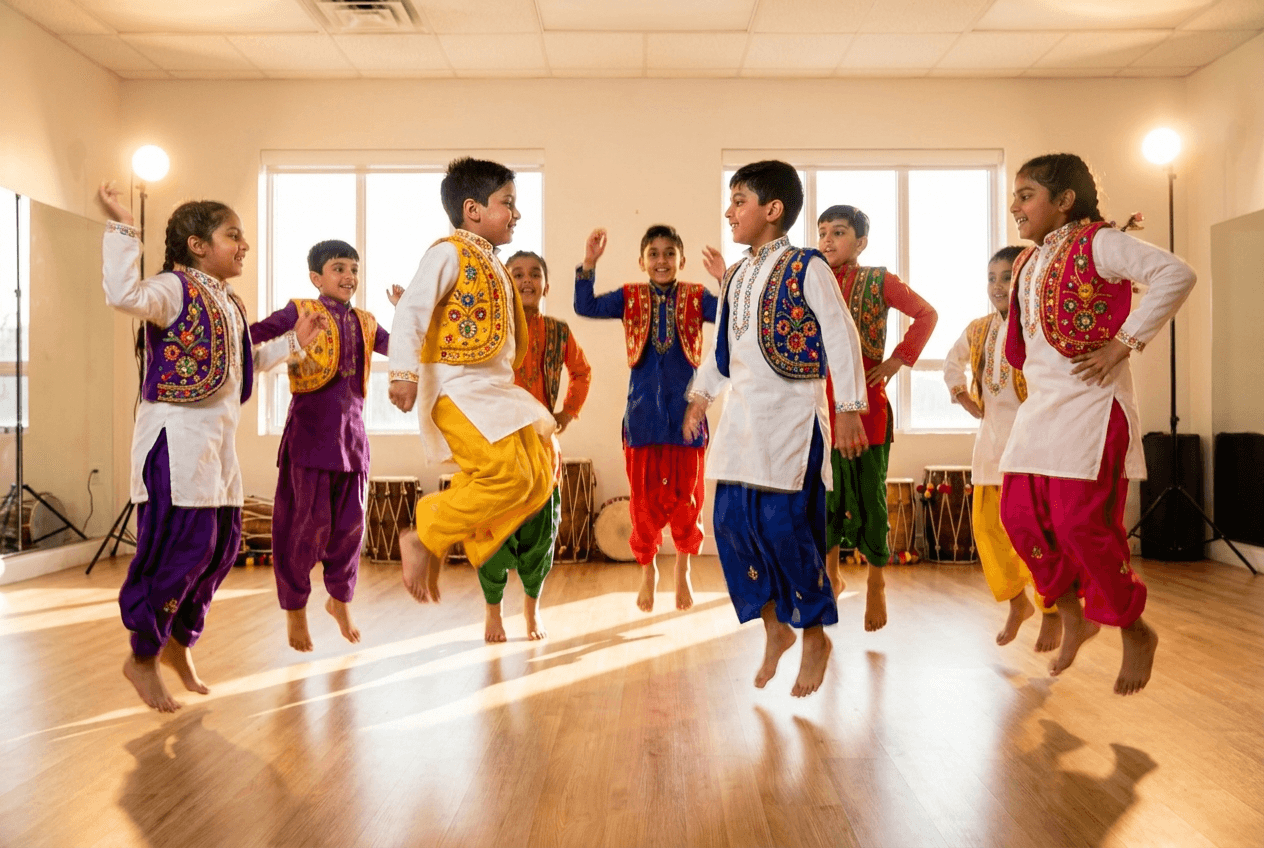 Physical fitness sits at the very top of the benefits list for good reason. Bhangra is genuinely demanding cardiovascular exercise disguised as pure fun. A single 30-minute bhangra class burns approximately 300 to 500 calories depending on intensity, making it one of the most effective aerobic activities available to children. The dynamic jumping, spinning, and vigorous arm choreography develops cardiovascular endurance, muscular strength, and flexibility simultaneously. Children who attend regular bhangra classes develop noticeably improved stamina, coordination, and overall physical confidence.
Beyond raw fitness, bhangra develops a specific quality of kinesthetic intelligence that benefits children across multiple domains of their lives. Kinesthetic intelligence, the ability to control bodily movement with precision and grace, underpins athletic performance, fine motor skills, and even academic focus. Children who develop strong body awareness through dance consistently demonstrate better concentration in classroom settings, improved spatial reasoning abilities, and greater physical confidence in social situations. Bhangra's combination of complex footwork, synchronized arm movements, and rhythmic coordination makes it a particularly rich training ground for kinesthetic development.
Cultural pride and identity formation represent benefits that go far beyond the physical. Psychologists who study the development of ethnic identity in second-generation immigrant children consistently emphasize the importance of meaningful cultural engagement during childhood and adolescence. Bhangra provides exactly this kind of meaningful engagement. When a child learns the history behind a particular dance sequence, understands the Punjabi words of a traditional song, and masters movements that their grandparents' generation performed at harvest festivals, they build a personal connection to their heritage that shapes their sense of self in powerfully positive ways.
Social development flourishes in the group learning environment of bhangra classes, even when those classes happen online. Children in virtual bhangra classes interact with peers who share similar cultural backgrounds or curiosity, building friendships across geographic boundaries. The collaborative nature of group choreography teaches children how to synchronize their movements with others, developing listening skills, spatial awareness, and the generous spirit of genuine teamwork. These social competencies transfer directly to school environments, team sports, and eventually professional life.
How Online Bhangra Classes Work for Kids in the USA
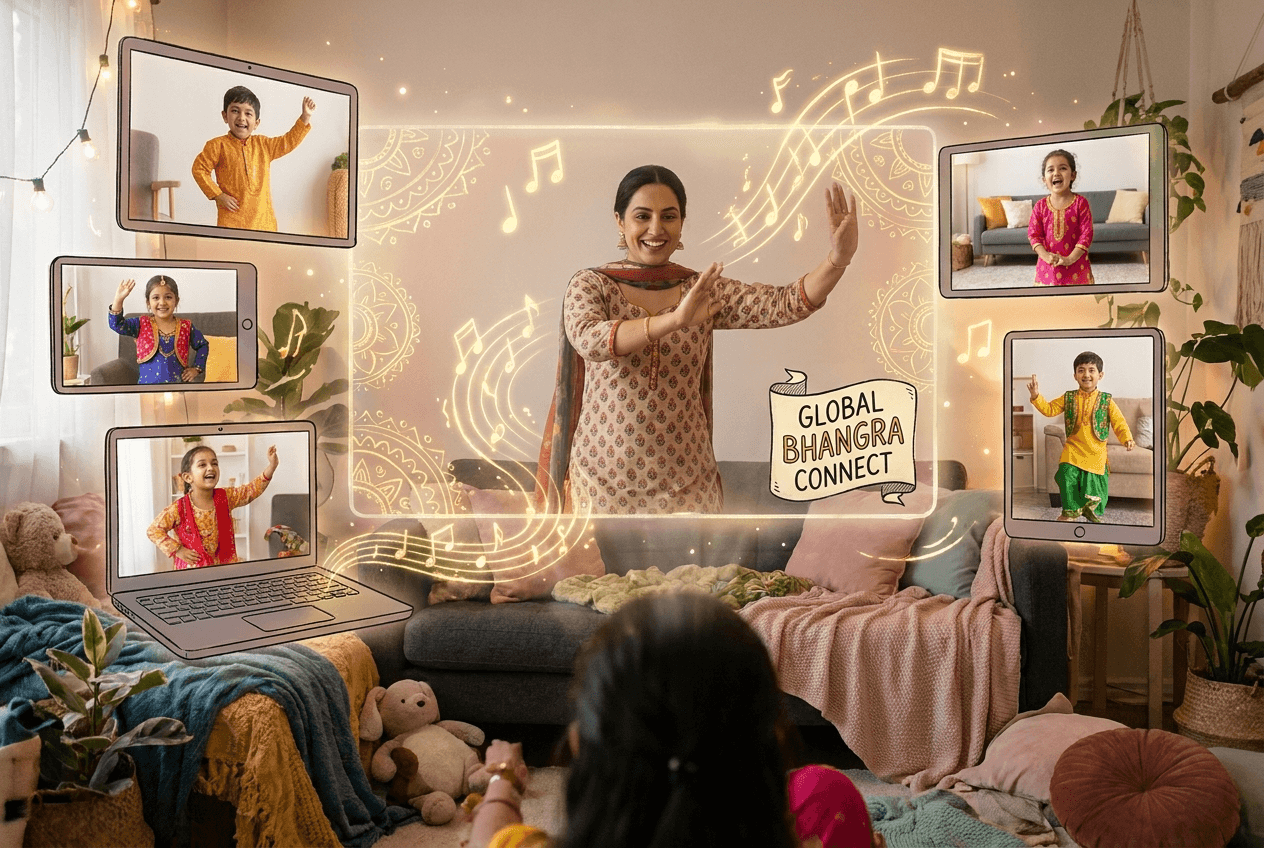
What a Typical Online Bhangra Session Looks Like
Understanding the structure of online bhangra classes helps parents set realistic expectations and prepare their children for a positive first experience. Most online bhangra classes for kids follow a consistent format that mirrors the structure of in-person studio classes adapted thoughtfully for the virtual environment. Sessions typically run between 45 and 60 minutes and accommodate groups of four to fifteen students depending on the teacher's preference and the platform's capabilities.
A well-structured online bhangra class opens with a dynamic warm-up sequence designed to prepare young bodies for vigorous movement. This warm-up phase typically includes light stretching, basic rhythmic exercises, and simple footwork patterns that simultaneously introduce foundational bhangra movements. Skilled bhangra instructors use this warm-up period to assess each student's energy level, comfort with movement, and current technical understanding before introducing more demanding choreography.
The core teaching portion of the class introduces new choreographic sequences or builds upon movements learned in previous sessions. Effective online bhangra teachers use clear verbal cues, exaggerated demonstrations, and strategic camera positioning to ensure every student can see the full body movement clearly. Many teachers use a wide-angle camera setup that captures their entire body from head to toe, giving students an unobstructed view of footwork patterns, arm trajectories, and the subtle weight shifts that give bhangra its characteristic energy and bounce.
Classes typically conclude with a run-through of the complete choreography learned so far, giving students the satisfying experience of performing an integrated sequence rather than isolated movements. This performance run-through builds confidence, reinforces muscle memory, and creates the kind of joyful momentum that motivates children to practice between sessions. Many online bhangra teachers record this final run-through and share it with parents so families can support practice at home effectively.
Top Benefits of Learning Bhangra Online Versus In a Physical Studio
The online format delivers specific advantages for bhangra education that parents across the USA are discovering with genuine enthusiasm. Geographic access stands as the most transformative benefit. Authentic, high-quality bhangra instruction from teachers trained in the Punjab tradition was previously available only in cities with substantial South Asian communities like Chicago, New Jersey, Fremont, and Houston. Families in smaller cities, suburban areas, and rural regions simply had no access. Online classes have dissolved that geographic barrier entirely.
The home learning environment also offers practical advantages for bhangra specifically. Children learn new choreography in the space where they'll practice it daily, which accelerates the formation of spatial muscle memory. There's no adjustment period when transitioning from a studio floor to a home practice space because the environments are identical. Parents can observe lessons directly, understand the choreography being taught, and actively support practice sessions without needing any dance background themselves.
Cultural immersion opportunities expand dramatically in the online format. A child in Ohio can study with a bhangra master teacher based in Amritsar, Punjab who brings authentic regional style, traditional musical knowledge, and direct cultural lineage to every lesson. That level of cultural authenticity simply wasn't accessible to most American families before online education made geography irrelevant. The richness of learning from a teacher who grew up performing bhangra at actual Vaisakhi celebrations and community festivals adds layers of cultural depth that even excellent diaspora teachers sometimes can't fully replicate.
Scheduling flexibility particularly benefits families with children involved in multiple activities. Most online bhangra platforms offer classes across multiple time slots including weekend mornings, after-school weekday slots, and even early evening options that traditional dance studios rarely provide. This flexibility means bhangra doesn't have to compete with soccer practice, violin lessons, or academic tutoring. It fits around everything else rather than forcing difficult choices between meaningful activities.
What to Look for When Choosing an Online Bhangra Class for Your Child
Selecting the right online bhangra class requires evaluating several factors that go beyond simply finding the most affordable option. Teacher credentials and cultural authenticity deserve your first and most careful attention. Look for instructors who trained directly under established bhangra masters or who come from families with deep roots in Punjabi folk dance tradition. Teachers affiliated with recognized cultural organizations, competitive bhangra teams, or classical dance academies in India bring a level of authenticity and technical rigor that self-taught instructors often can't match.
Age-appropriate teaching methodology matters enormously for young students. Bhangra instruction designed for adults or teenagers translates poorly to classes for children aged five through twelve. The best children's bhangra teachers understand child development, use playful teaching strategies, incorporate storytelling and cultural context into their choreography instruction, and structure classes with the shorter attention spans of young learners in mind. Always ask specifically about a teacher's experience with your child's age group before enrolling.
Class size directly affects the quality of individual attention your child receives. Online group classes with more than fifteen students make it difficult for the teacher to observe individual students' technique, offer personalized corrections, or notice when a child falls behind the group. Classes of six to twelve students represent a productive sweet spot that balances the social energy of group learning with enough individual attention to ensure genuine technical development.
Trial classes are your most powerful evaluation tool. Virtually every reputable online bhangra program offers at least one trial session at a reduced rate or free of charge. Use that trial class to assess the teacher's communication style, the class structure, the technical content of the instruction, and most importantly your child's enthusiasm at the end of the session. A child who bounces off the walls with excitement after a trial bhangra class has given you all the information you need.
The Cultural Significance of Bhangra for Indian-American Families
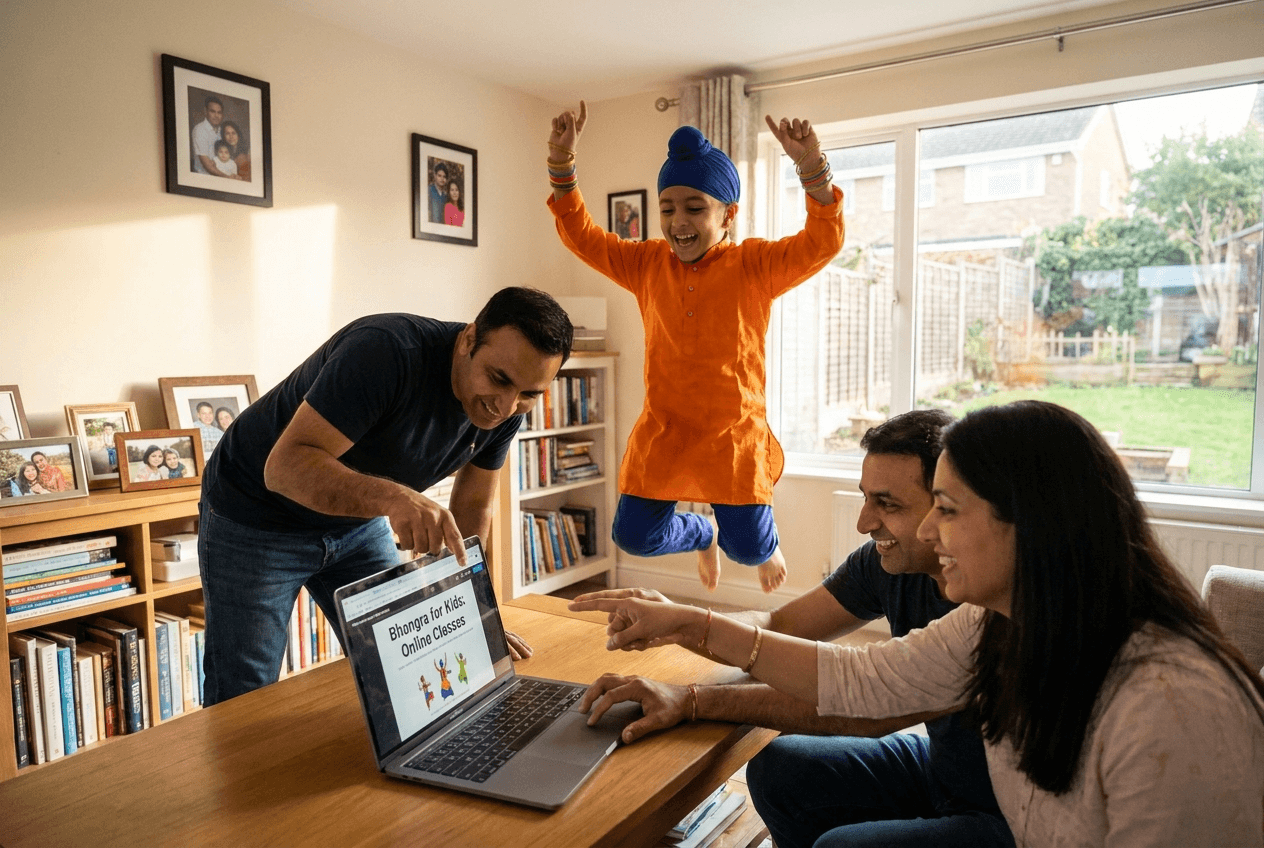 For the approximately four million Indian-Americans living across the USA, bhangra carries cultural weight that transcends entertainment or fitness. It represents a living connection to a specific geographic and historical heritage, the fertile plains of Punjab, the rhythms of agricultural life, the communal spirit of harvest celebration, and the musical traditions of a culture that has maintained its vitality across centuries of political change and global migration.
Second-generation Indian-American children navigate a complex dual identity that researchers in multicultural psychology describe as the bicultural experience. These children live fully within American mainstream culture at school, with friends, and through media consumption while simultaneously inheriting a rich South Asian heritage at home. Bhangra provides a uniquely powerful bridge between these two worlds because it is simultaneously deeply traditional and explosively contemporary.
The global bhangra movement has transformed this ancient folk dance into a dynamic modern art form that resonates powerfully with young people. Contemporary bhangra incorporates elements of hip-hop, Bollywood choreography, and electronic music production while maintaining its Punjabi folk roots. This fusion quality makes bhangra feel genuinely relevant and exciting to American-born children rather than something they engage with purely out of cultural obligation. When a child discovers that the same dance their grandparents performed at harvest festivals now appears in chart-topping music videos and international competitions, bhangra transforms from heritage into identity.
Families who aren't of South Asian background but enroll their children in bhangra classes contribute to something equally valuable: genuine cross-cultural appreciation and understanding. Learning the history, music, costume traditions, and communal values embedded in bhangra develops cultural empathy and global awareness that benefits children throughout their lives. In an increasingly diverse American society, the ability to genuinely appreciate and respectfully engage with cultures beyond one's own represents a meaningful form of social intelligence.
Practical Setup Tips for Online Bhangra Classes at Home
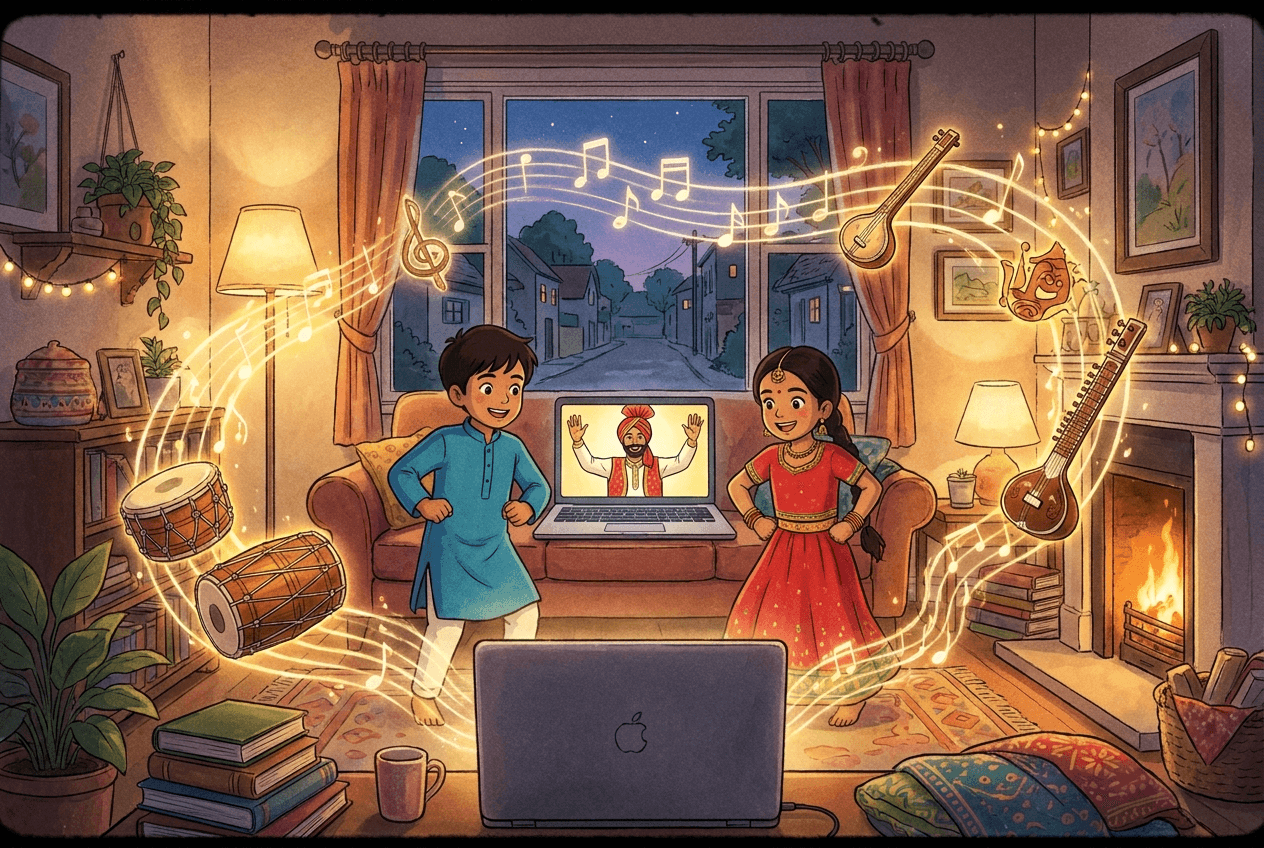 Creating the right home environment for online bhangra classes sets your child up for immediate success and long-term enjoyment. Space is the most fundamental requirement. Bhangra involves large sweeping arm movements, energetic jumping, and dynamic lateral footwork that demand significantly more floor space than seated activities like piano or art. Clear a minimum area of eight feet by eight feet, removing furniture, rugs with edges that could cause tripping, and any fragile objects within range of enthusiastic arm movements.
Flooring deserves careful attention for safety and performance quality. Hardwood or laminate floors provide the ideal surface for bhangra footwork, offering enough grip for controlled movements while allowing the smooth weight transfers and spinning elements that characterize the dance style. Thick carpet creates resistance that interferes with footwork and can strain ankles during vigorous movement. If your practice space has thick carpet, consider purchasing an inexpensive hardwood-finish foam mat to create a better dancing surface.
Traditional bhangra is performed in specific attire that enhances both the aesthetic and the psychological experience of the dance. For boys, the traditional kurta pajama with a colorful turban creates the visual frame that makes bhangra movements read correctly. For girls, the salwar kameez with phulkari embroidery and a vibrant dupatta scarf adds the flowing visual elements that make female bhangra movements particularly striking. While full traditional costume isn't necessary for every practice session, having proper attire for special performances and recitals deepens children's connection to the cultural tradition they're learning.
Audio quality makes a surprising difference in the bhangra learning experience. The dhol drum rhythms and melodic folk instruments that drive bhangra music carry their full energy only through speakers with decent bass response. A basic Bluetooth speaker in the $30 to $60 range transforms the experience compared to laptop speakers alone. When children hear the dhol's resonant boom filling the room, their bodies respond with the authentic energy that makes bhangra so thrilling to watch and perform.
How Bhangra Builds Confidence and Stage Presence in Children
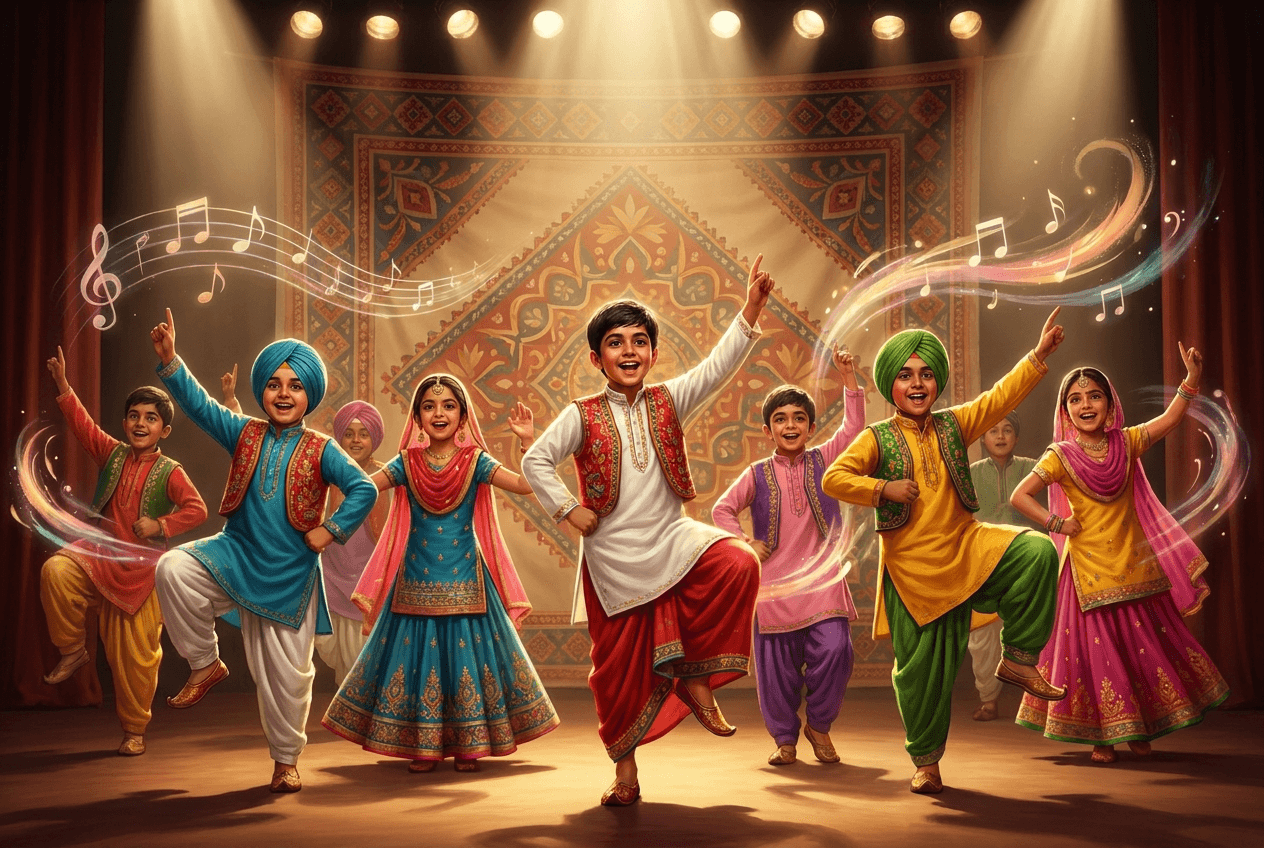 Stage presence, the magnetic quality that makes performers impossible to look away from, develops through experience and cannot be taught purely through technical instruction. Bhangra accelerates the development of stage presence in children more effectively than most other performing arts because it demands full commitment to expression from the very first lesson. There is no subtle or restrained bhangra. The dance requires children to occupy space boldly, project energy outward, and communicate pure joy through every fiber of their body.
Children who study bhangra regularly develop what performance psychologists call expressive confidence, the ability to project internal emotional states outward through physical expression without self-consciousness or inhibition. This quality extends far beyond the dance floor. Children with strong expressive confidence communicate more effectively, present more persuasively in school settings, and navigate social situations with greater ease and natural authority. The uninhibited joy that bhangra demands in performance becomes a learned emotional vocabulary that serves children throughout their lives.
Virtual recitals organized by online bhangra schools give students meaningful performance experience that builds confidence systematically. These events, conducted over video platforms with audiences of family members and fellow students, recreate the healthy pressure of live performance in a supportive, low-stakes environment. The experience of preparing a polished routine, performing it for a real audience, and receiving genuine applause teaches children that preparation and practice lead to pride and recognition. That lesson, absorbed physically through dance, shapes a child's relationship with challenge and achievement in profoundly lasting ways.
About Art Gharana
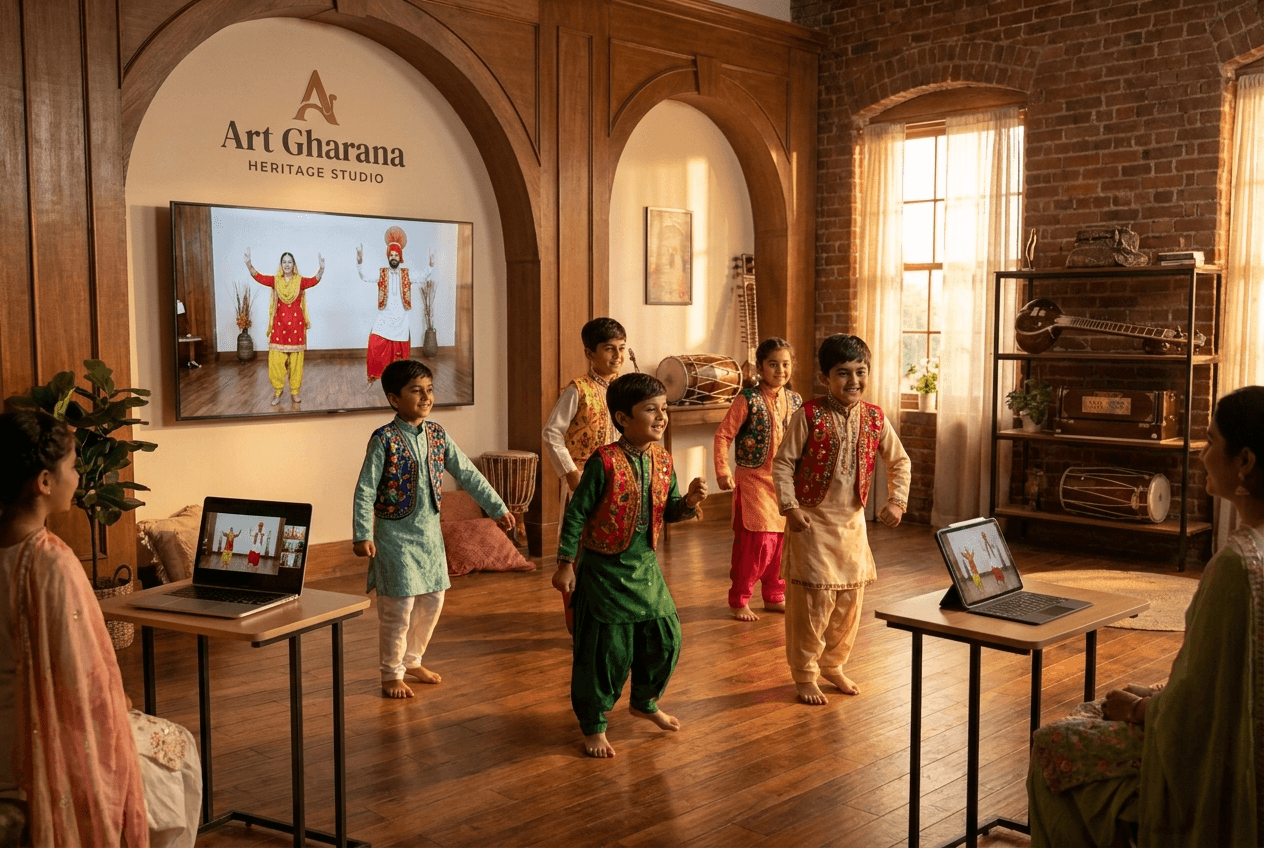 Art Gharana stands as one of the most passionate and culturally rooted online arts education platforms serving families across the USA. With a deep commitment to authentic Indian performing arts, Art Gharana connects students with experienced, highly qualified instructors in bhangra, classical Indian dance, music, and more. Their bhangra program for kids brings the full energy, cultural richness, and technical rigor of this magnificent folk tradition directly into your home through live, interactive online classes designed specifically for young American learners. Whether your child is stepping into bhangra for the first time or building on existing dance experience, Art Gharana creates a warm, structured, and genuinely exciting learning environment. Explore their bhangra programs for kids at Art Gharana and let the dhol beat begin.
Frequently Asked Questions
1. What age can children start bhangra dance classes online?
Most online bhangra programs welcome children as young as four or five years old in introductory classes designed specifically for early learners. At this age, classes focus on basic rhythmic awareness, simple arm movements, and cultural storytelling rather than complex choreography. Children aged seven and above typically join standard beginner classes and progress through choreography at a faster pace with greater technical focus and sustained concentration.
2. Does my child need any prior dance experience to join online bhangra classes?
Absolutely no prior dance experience is necessary. Bhangra is genuinely welcoming to complete beginners at any age, and most online bhangra programs offer structured beginner tracks that start from the most fundamental movements and build progressively. The infectious energy of bhangra music tends to dissolve self-consciousness quickly, making it one of the most accessible dance forms for children who have never studied dance before.
3. What should my child wear for online bhangra classes?
For regular practice sessions, comfortable athletic wear that allows full range of movement works perfectly well. Loose pants or leggings and a comfortable top give children the freedom to execute big arm movements and vigorous footwork without restriction. Bare feet or thin dance shoes work best on hard floors. Traditional bhangra costume including kurta pajama for boys and salwar kameez for girls is wonderful for special performances and recital events.
4. How much space do we need at home for online bhangra classes?
A minimum clear floor space of approximately eight feet by eight feet gives children enough room to execute the sweeping arm movements, lateral stepping, and gentle jumping that characterize bhangra choreography safely. More space is always better. Hardwood or laminate floors work best for footwork. Remove any rugs with raised edges, fragile furniture, or low-hanging objects before your child's first session to create a safe and open movement environment.
5. How do online bhangra teachers give individual feedback through a screen?
Skilled online bhangra instructors develop highly effective verbal cueing and visual demonstration techniques that compensate for the absence of physical proximity. Teachers use precise directional language, count systems, and mirroring demonstrations to communicate corrections clearly. Many teachers pause group instruction momentarily to address individual students, ask students to perform a sequence while others watch, or use the camera's zoom function to observe footwork details more closely. Parents can also record practice sessions and share videos with the teacher for additional feedback between classes.
6. Are online bhangra classes only for children from Indian or Punjabi backgrounds?
Not at all. Bhangra's joyful energy, athletic demands, and vibrant music welcome students from every cultural background. Many online bhangra programs across the USA serve beautifully diverse student communities where children of South Asian, African-American, Latino, and European backgrounds learn side by side. Teachers in quality programs always provide cultural context and historical background so all students develop genuine appreciation and understanding of the tradition they're learning regardless of their own heritage.
Conclusion
Bhangra dance classes online for kids in the USA offer something genuinely rare in children's education: a single activity that simultaneously builds physical fitness, cultural identity, social confidence, artistic expression, and pure uninhibited joy. The online format has made this magnificent Punjabi folk tradition accessible to families in every corner of America, from downtown Manhattan to rural Montana, regardless of proximity to South Asian cultural centers. Getting started is simpler than most parents expect, and the transformation in your child's confidence, coordination, and cultural pride begins from the very first dhol beat. Take that first step today and explore the vibrant bhangra programs for kids at Art Gharana, where authentic tradition meets modern online learning in the most joyful way possible.