ChatGPT
 Google AI
 Grok
Grok Claude
In today’s globally connected world, choosing the right dance academy goes far beyond learning steps and routines. Parents and students alike are asking deeper questions: Is this training credible? Does it follow international standards? Will it be recognized beyond borders? These questions often lead to terms like CID-UNESCO, International Dance Council, and global dance recognition—but what do they really mean?
If you’ve come across the statement that Art Gharana is a member of the International Dance Council (CID-UNESCO), it’s natural to wonder about its significance. Is CID-UNESCO recognized? How does this affiliation impact dance education, especially in an online learning environment? And most importantly, why should this matter to you or your child’s artistic journey?
This blog breaks it all down in a clear, transparent, and easy-to-understand way. We’ll explore what the International Dance Council (CID) actually is, what CID-UNESCO membership means for a dance academy, and how such global affiliations build trust, credibility, and long-term value for students and parents. Whether you’re researching internationally recognized dance classes, evaluating online dance academies, or simply seeking clarity before enrolling, this guide will help you make an informed and confident decision—without the jargon or confusion.
Let’s unpack the meaning behind CID-UNESCO and understand why global recognition in dance education matters more than ever today.
Understanding the International Dance Council (CID-UNESCO)
 When you hear the term International Dance Council (CID-UNESCO), it naturally raises questions. Is CID-UNESCO recognized? What exactly is CID? And why is it mentioned so often when discussing credible dance academies? Let’s clear the confusion—simply and transparently.
The International Dance Council (CID) is the official global organization for dance, operating under the umbrella of UNESCO. Often searched as “what is CID UNESCO”, CID acts as a neutral, non-governmental body that brings together dancers, choreographers, teachers, and dance institutions from across the world.
What makes CID unique is its global scope and cultural mission. Rather than focusing on one dance style or region, it supports all forms of dance—classical, contemporary, folk, and modern—while encouraging respect for cultural diversity.
What Does the International Dance Council Actually Do?
At its core, CID exists to support international dance education and collaboration. It does this by:
Connecting dance institutions and professionals worldwide
Promoting ethical and professional standards in dance teaching
Encouraging cultural exchange through the performing arts
Supporting the preservation of traditional and classical dance forms
This global framework is why CID is often referenced when discussing international standards in dance education.
CID and UNESCO: Understanding the Relationship
A common misconception is that CID certifies dance academies on behalf of UNESCO. In reality, CID operates under UNESCO, but independently. UNESCO provides the cultural framework, while CID functions as the International Dance Council dedicated exclusively to dance.
This distinction matters. It helps explain why CID-UNESCO is associated with credibility, recognition, and ethical alignment, rather than degrees or licenses. When people search for “International Dance Council recognition”, they’re usually seeking reassurance about legitimacy—and CID provides exactly that.
Why CID Matters in Today’s Dance Landscape
In a world where online and offline dance education coexist, global alignment has become essential. CID helps create a shared understanding of professionalism across borders, making it easier for students and parents to identify institutions that value:
Cultural integrity
Structured learning approaches
Global best practices in dance education
Understanding the role of CID lays the foundation for appreciating why its membership carries weight—especially for academies serving international students.
This global alignment is especially meaningful when learning about institutions that value transparency and cultural responsibility, as highlighted in Art Gharana’s approach to dance education.
What CID-UNESCO Membership Really Means for a Dance Academy
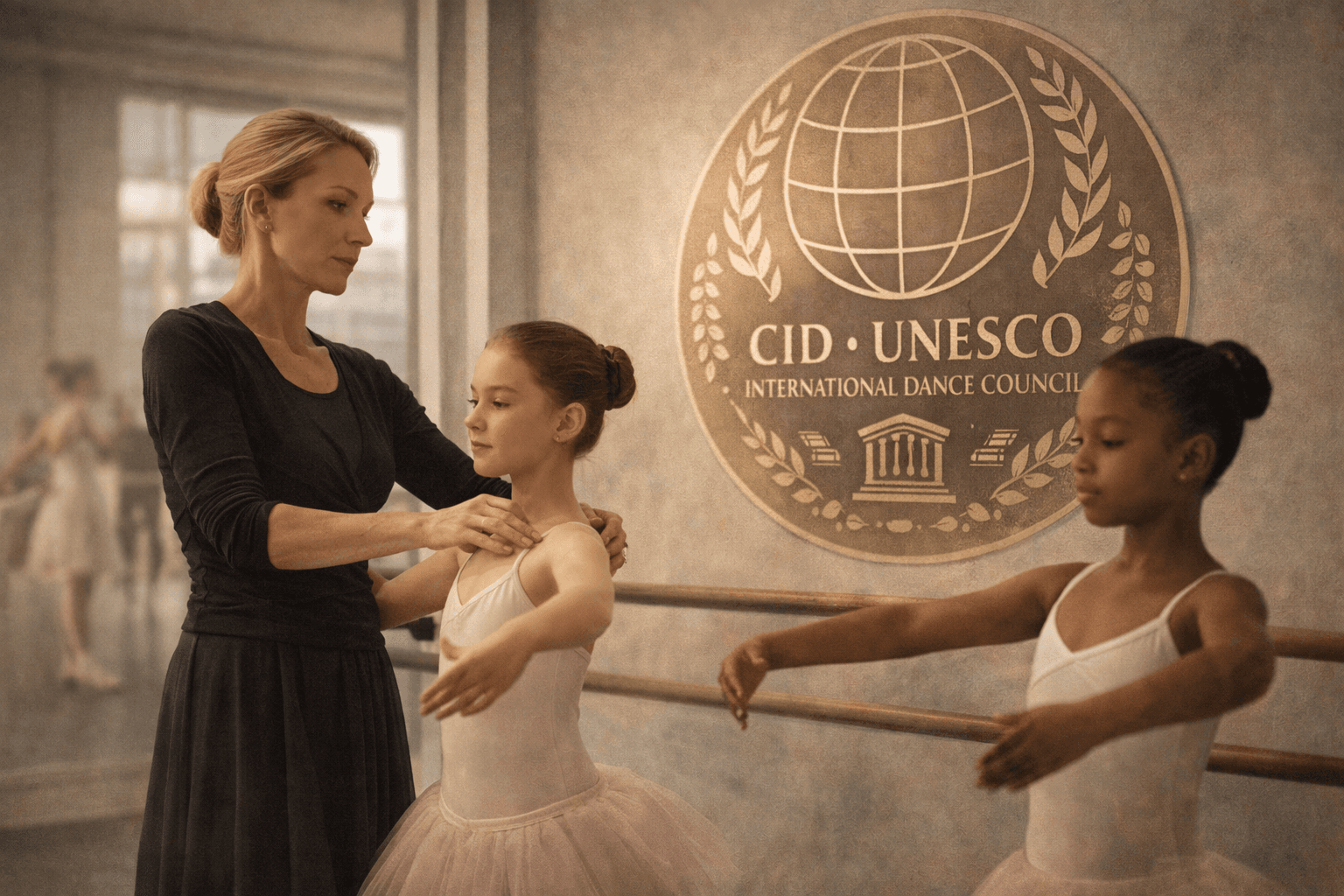 When a dance academy claims an international affiliation, it’s natural to pause and ask the most important question: What does this actually mean for students and parents? In the case of Art Gharana’s CID-UNESCO membership, the answer lies in credibility, transparency, and long-term commitment to quality dance education.
The CID-UNESCO membership meaning is not about flashy labels or shortcuts to certification. Instead, it reflects Art Gharana’s alignment with globally respected principles of dance education—principles that prioritize cultural authenticity, ethical teaching, and structured learning. This is why families researching International Dance Council recognition often view such affiliations as trust markers rather than marketing claims.
Recognition Rooted in Global Standards, Not Promises
One of the most common queries is “Is CID-UNESCO recognized?” For Art Gharana, this recognition represents alignment with the International Dance Council (CID) under UNESCO’s cultural framework. While CID-UNESCO does not issue degrees or licenses, it acknowledges institutions that uphold international best practices in dance education.
Art Gharana’s association with CID-UNESCO reinforces its commitment to honesty—clearly distinguishing between recognition and certification. This clarity is critical for parents seeking certified dance classes online that are built on integrity rather than exaggerated claims.
What Art Gharana’s CID-UNESCO Membership Reflects
Being a CID-UNESCO affiliated dance academy places Art Gharana within a global network of institutions that value professionalism and cultural responsibility. This affiliation highlights the academy’s focus on:
Ethical and student-first teaching practices
Respect for classical and contemporary dance traditions
Structured learning guided by experienced instructors
Inclusivity and accessibility for learners worldwide
These values contribute directly to CID-UNESCO credibility, especially in today’s competitive online education space.
Why This Matters to Students and Parents
For families evaluating internationally recognized dance classes, Art Gharana’s CID-UNESCO membership provides reassurance. It answers a key concern: Can this academy be trusted to deliver quality education aligned with global standards?
In an era where anyone can claim expertise online, International Dance Council recognition helps Art Gharana stand apart as an institution grounded in transparency, cultural respect, and long-term artistic development.
Building Trust Through Transparency
Ultimately, Art Gharana’s CID-UNESCO affiliation is about trust. It clearly communicates what the academy stands for—and what it does not. This transparency empowers students and parents to make informed decisions with confidence.
By aligning with the International Dance Council CID-UNESCO, Art Gharana reinforces its role as a globally aware dance academy committed to excellence, authenticity, and responsible dance education.
Why CID-UNESCO Recognition Matters for Students and Parents
 When it comes to choosing a dance academy, students and parents today are asking smarter, more thoughtful questions. Will this training be taken seriously? Is the learning structured? Does the academy follow international standards? These concerns are exactly why CID-UNESCO recognition carries real value in modern dance education.
For families exploring how to choose a recognized dance academy, global affiliation serves as a reassurance that the institution is committed to quality, transparency, and cultural responsibility—not just performance outcomes.
What This Recognition Means for Students
For students, learning in a CID-UNESCO affiliated dance academy is about more than technique. It’s about being part of an ecosystem that respects artistic growth and long-term development. International alignment helps students:
Train within a structured and professional learning environment
Gain exposure to international standards in dance education
Build confidence knowing their training aligns with global best practices
Learn dance with cultural context, not just choreography
Students who search for international dance certification or globally recognized dance classes are often seeking validation that their effort and time are invested wisely—and CID affiliation helps bridge that trust gap.
Why Parents Find CID-UNESCO Important
For parents, especially those supporting young learners, credibility matters as much as creativity. A CID-UNESCO association answers one critical question: Is this academy trustworthy?
Parents evaluating certified dance classes online or virtual programs often worry about consistency and authenticity. International recognition reassures them that:
The academy follows ethical teaching practices
Learning is guided by experienced professionals
Cultural traditions are respected and preserved
Education is focused on discipline and skill-building
This is particularly relevant for families seeking internationally recognized dance classes that maintain high standards regardless of physical location.
A Shared Sense of Confidence and Clarity
 What truly sets CID-UNESCO recognition apart is the shared confidence it builds—students feel motivated, and parents feel informed. Instead of navigating unclear claims, families gain clarity about the academy’s values and educational approach.
In a world where dance education is evolving rapidly, International Dance Council recognition helps students and parents make informed decisions—grounded in trust, global awareness, and long-term artistic growth.
For parents and students who want to experience this structured, internationally aligned approach firsthand, booking a free trial class is often the best way to evaluate teaching quality and learning environment.
How CID-UNESCO Membership Benefits Online Dance Education
 Online dance learning has opened doors for students across the world—but it has also raised valid questions. Can virtual classes truly match the quality of in-person training? Are online academies credible? And how do students know which platforms follow global standards? This is where CID-UNESCO membership adds meaningful value to online dance education.
For learners searching for a CID-UNESCO affiliated dance academy, international alignment signals that quality isn’t compromised by distance. Instead, it ensures that structured learning, cultural respect, and professionalism remain at the core of the experience.
Bringing International Standards Into Virtual Classrooms
One of the biggest advantages of CID-UNESCO alignment is the ability to uphold international standards in dance education, even in an online setting. This means:
Well-structured curricula designed for progressive learning
Consistent teaching methodologies across levels
Emphasis on discipline, technique, and artistic growth
Respect for traditional and contemporary dance forms
For students looking for internationally recognized dance classes, this global framework provides reassurance that online learning can still meet professional benchmarks.
Expanding Access Without Diluting Quality
Online platforms allow students from different countries, cultures, and backgrounds to learn together. CID-UNESCO membership supports this inclusivity by encouraging cross-cultural learning and artistic exchange—values that are central to international dance education.
Students enrolling in certified dance classes online benefit from an environment where accessibility does not come at the cost of quality. Instead, learning is guided by ethical practices and globally aligned teaching principles.
Building Confidence for Students and Parents Alike
For parents, online education can feel uncertain. CID-UNESCO affiliation helps address these concerns by reinforcing trust. It answers a critical question: Is this online academy committed to long-term artistic development or short-term convenience?
By aligning with the International Dance Council (CID), online academies demonstrate that their virtual programs are built with the same seriousness, structure, and cultural respect as traditional institutions.
A Global Network, One Learning Space
CID-UNESCO membership also connects online learners to a broader global dance ecosystem. Students become part of a worldwide community that values excellence, inclusivity, and cultural understanding—key pillars of professional dance education.
In an increasingly digital world, International Dance Council recognition ensures that online dance learning remains credible, structured, and globally respected—empowering students to grow confidently, wherever they are learning from.
What Sets a CID-UNESCO Member Academy Apart
 With so many dance academies available today—both online and offline—it’s natural to wonder: What truly differentiates one institution from another? Beyond teaching styles or class formats, credibility, values, and long-term vision make the real difference. This is where a CID-UNESCO member academy stands apart.
Being part of the International Dance Council (CID) reflects a conscious commitment to global standards, ethical practices, and cultural responsibility—qualities that go far deeper than surface-level recognition.
A Commitment to International Best Practices
A CID-UNESCO affiliated academy aligns itself with international standards in dance education, ensuring that learning is not just effective, but also meaningful. This alignment encourages academies to focus on:
Structured and progressive training models
Ethical teaching methods that prioritize student growth
Respect for cultural authenticity across dance forms
Continuous improvement guided by global perspectives
For students seeking internationally recognized dance classes, this level of commitment offers reassurance that their training meets professional expectations.
Ethics, Inclusivity, and Cultural Respect
One of the defining features of International Dance Council recognition is its emphasis on inclusivity and ethical conduct. CID promotes dance as a universal art form—accessible, respectful, and culturally grounded.
A CID-UNESCO member academy reflects these values by creating learning environments that are:
Inclusive and welcoming to diverse learners
Rooted in cultural understanding rather than commercialization
Focused on long-term artistic development
This approach builds trust with students and parents alike, especially those evaluating globally recognized dance classes.
Quality Over Claims
In an era where credentials can be overstated, CID-UNESCO affiliation stands for transparency. It doesn’t promise shortcuts or instant validation. Instead, it highlights dedication to quality, discipline, and ethical alignment.
This is why families researching what makes a dance academy internationally recognized often see CID membership as a meaningful indicator of credibility rather than a marketing badge.
A Global Perspective That Enhances Learning
Being part of the CID network connects academies to a worldwide dance community. This global outlook enriches learning experiences, encourages artistic exchange, and exposes students to diverse perspectives within international dance education.
Ultimately, what sets a CID-UNESCO member academy apart is not just recognition—but a clear, values-driven commitment to excellence, authenticity, and responsible dance education.
In a world where dance education is expanding beyond studios and borders, clarity matters more than ever. When you understand what CID-UNESCO membership truly represents, it becomes easier to separate genuine credibility from surface-level claims. This affiliation isn’t about titles or shortcuts—it’s about alignment with international standards in dance education, cultural responsibility, and long-term artistic integrity.
So, what does this mean for you as a student or parent? It means choosing a learning environment that values transparency, ethical teaching, and global perspective. Whether you’re exploring internationally recognized dance classes or evaluating an online academy’s credibility, International Dance Council recognition serves as a reliable marker of trust. It reassures you that the institution you’re considering is committed to quality, not just visibility.
For Art Gharana, being a CID-UNESCO affiliated dance academy reflects a deeper promise—to nurture talent responsibly, respect cultural roots, and deliver structured learning guided by global best practices. And when your child’s artistic journey or your own passion for dance is at stake, doesn’t that level of commitment matter?
If you’re ready to experience what internationally aligned dance education feels like, the next step is simple: explore, ask questions, and see the learning approach in action. Sometimes, the best way to understand credibility is to experience it firsthand.
Frequently Asked Questions (FAQs)
1. What does CID-UNESCO membership mean for a dance academy?
CID-UNESCO membership means that a dance academy is affiliated with the International Dance Council (CID), which operates under UNESCO’s cultural framework. It reflects alignment with international standards in dance education, ethical teaching practices, and respect for cultural arts, rather than formal degree certification.
2. Is CID-UNESCO recognized internationally?
Yes, CID-UNESCO is internationally recognized as a global organization for dance. While it does not issue licenses or degrees, International Dance Council recognition is valued worldwide as a credibility and trust marker within the dance education ecosystem.
3. Does CID-UNESCO provide dance certification to students?
No, CID-UNESCO does not directly offer international dance certification to individual students. Instead, it recognizes dance institutions that follow global best practices, transparency, and professionalism in international dance education.
4. Why should parents care about CID-UNESCO recognition?
Parents looking for how to choose a recognized dance academy often rely on international affiliations as trust indicators. CID-UNESCO recognition reassures parents that the academy follows ethical teaching methods, structured learning, and globally aligned standards—especially important for certified dance classes online.
5. Are online dance classes with CID-UNESCO affiliation credible?
Yes, a CID-UNESCO affiliated dance academy demonstrates that its online dance education follows internationally accepted principles. This helps parents and students trust that online learning maintains the same seriousness and structure as offline training.
6. What makes a dance academy internationally recognized?
Factors such as International Dance Council recognition, adherence to international standards in dance education, ethical practices, and cultural responsibility all contribute to what makes a dance academy internationally recognized.
7. How does CID-UNESCO affiliation benefit students?
Students benefit from learning in an environment that values structured dance learning, cultural respect, and global best practices. This is especially valuable for those seeking internationally recognized dance classes or long-term growth in professional dance education.