ChatGPT
 Google AI
 Grok
Grok Claude
India's Gen Z workforce is the most culturally aware, digitally native and experience-driven generation of employees the Indian corporate sector has encountered. Born between 1997 and 2012, this cohort enters the workforce with values shaped by social media, the pandemic and a deep awareness that time and creative energy are finite resources worth spending wisely. Understanding what Gen Z wants from an employer is no longer a nice-to-have for Indian HR leaders. It is a strategic necessity.
The short answer is: culture. Gen Z employees in India, particularly in IT, consulting and startup sectors, consistently report that workplace culture is a primary factor in their decision to join and stay. Not at the expense of fair compensation, but consistently ranked alongside salary increments, title progression and remote work flexibility in every survey of this cohort conducted in the last three years.
What Gen Z Means by Work Culture
 When Gen Z says they want better work culture, they are describing four specific things that Indian corporate environments have historically been poor at providing.
Experiences Over Transactions
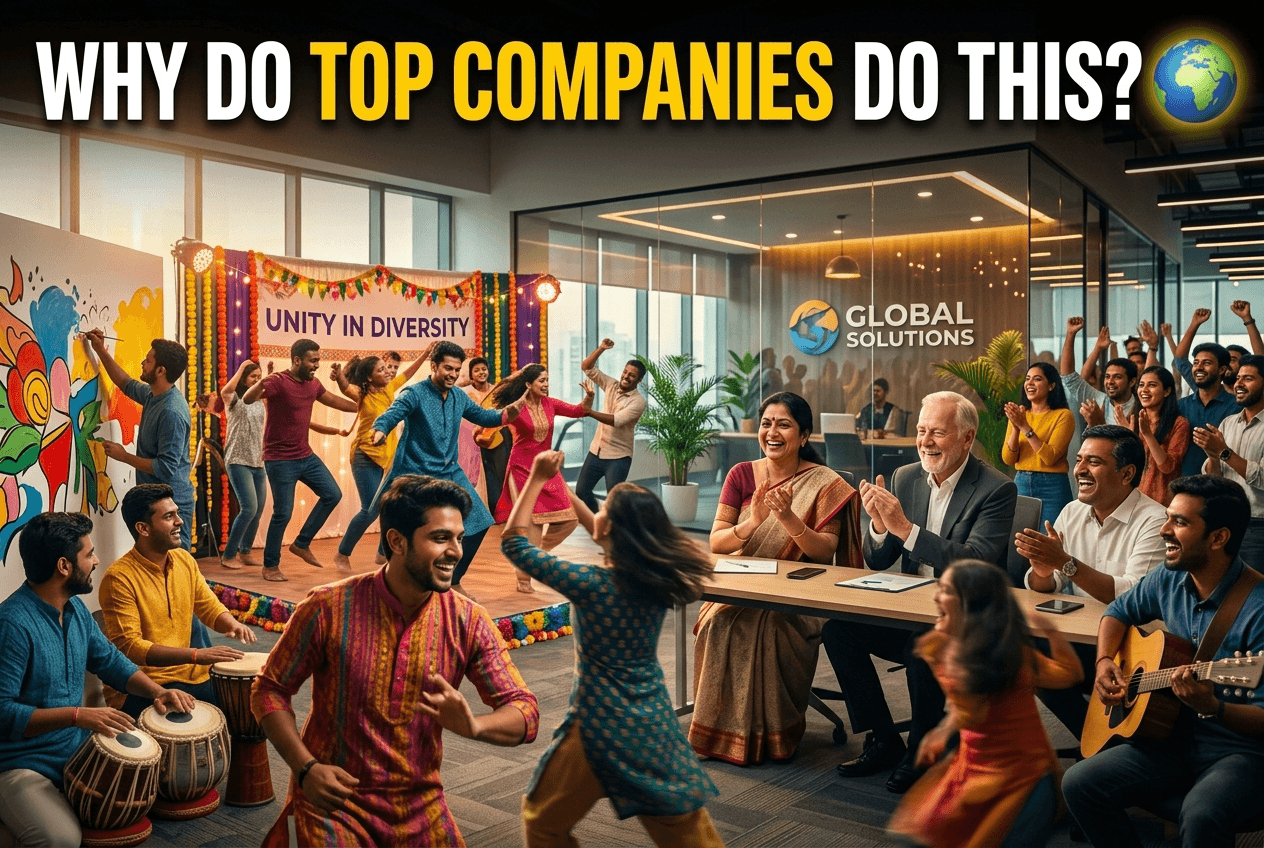
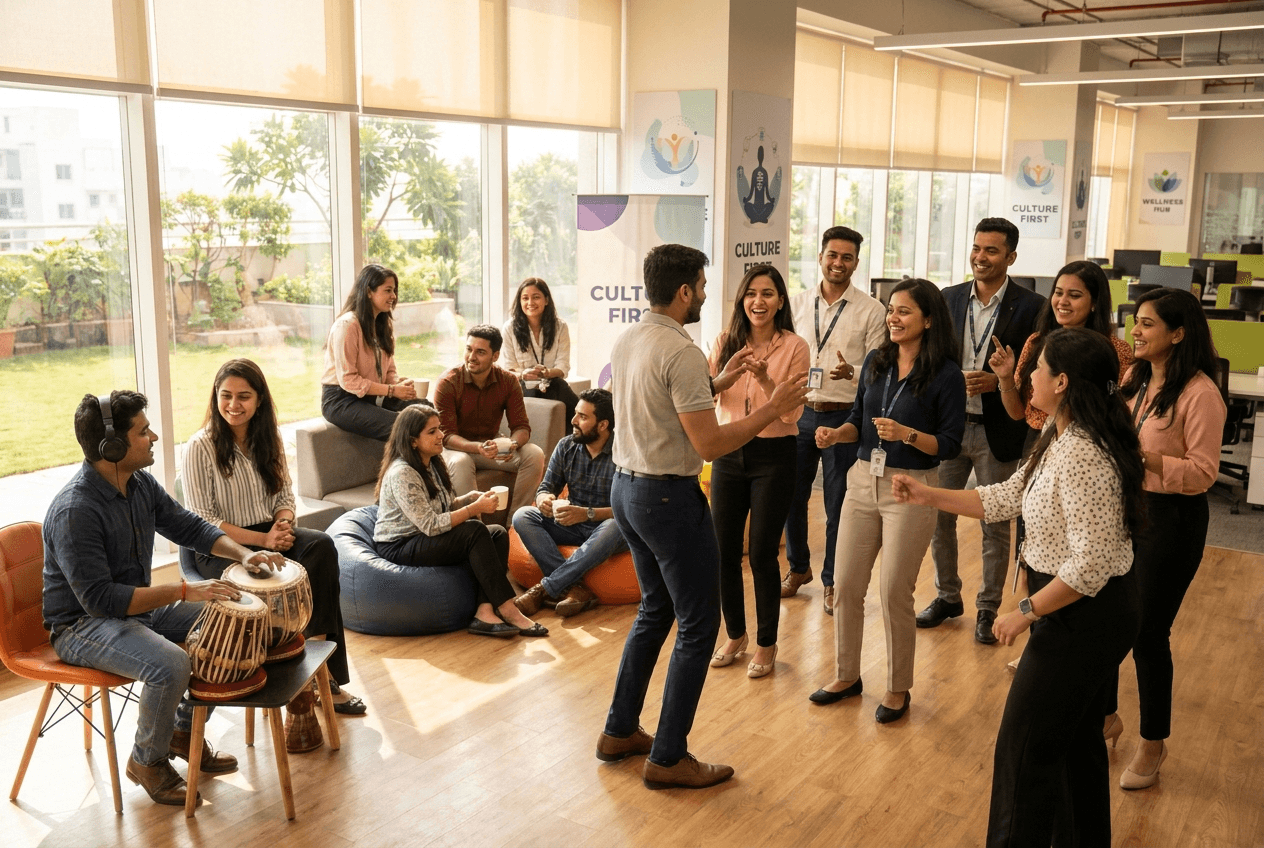
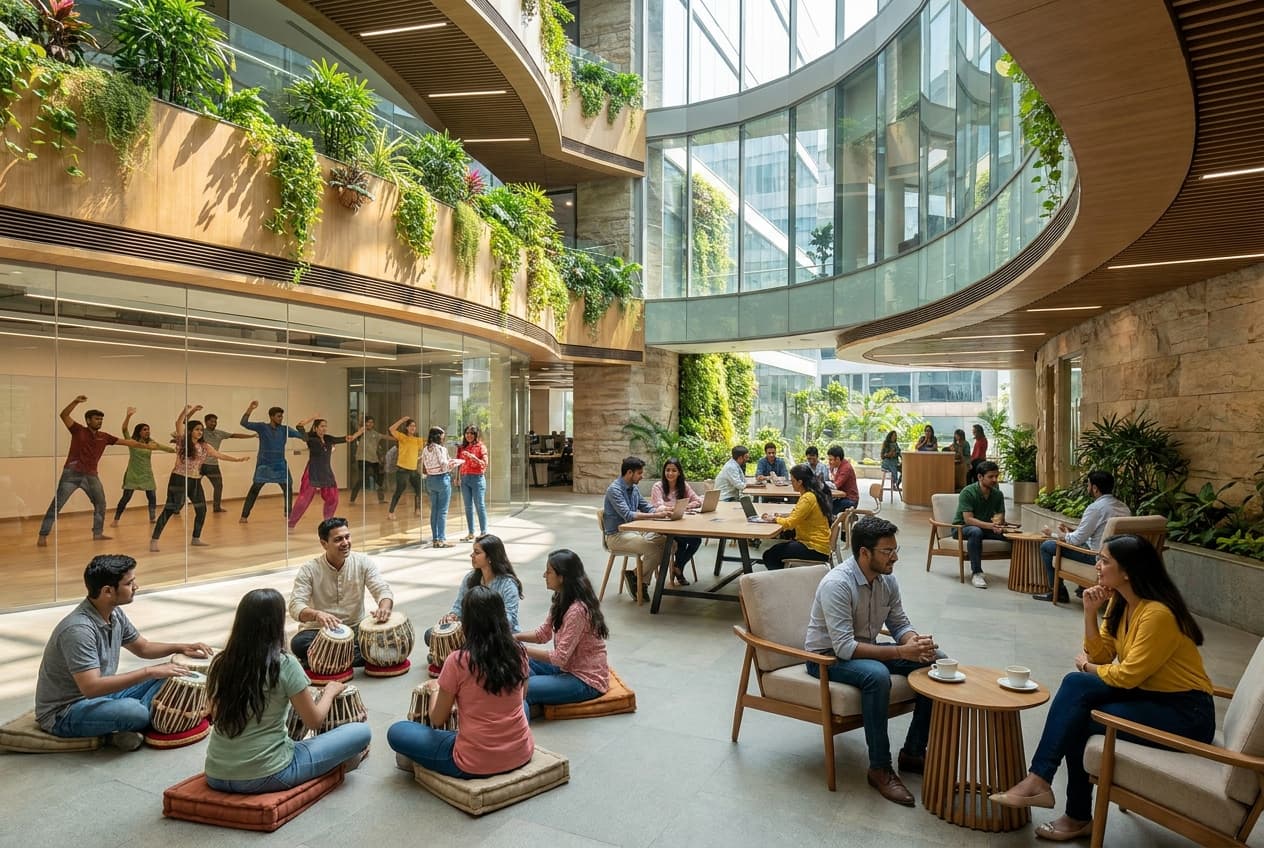
Gen Z values experiences more than benefits. An experience is something that happens to them, with other people, that creates a memory and a story they can share. A transaction is a financial exchange. A live Bollywood dance session with colleagues, a shared tabla workshop, a creative talent show where employees perform what they have learned: these are experiences, not transactions. They are the fabric of a culture people want to be part of.
Creative and Cultural Space
Gen Z is the most creatively oriented workforce generation in India's modern corporate history. They grew up making YouTube videos, creating Instagram Reels and exploring music through streaming platforms. They want employers who recognise and celebrate this creative dimension of their identity, not just their professional productivity. A company that provides live Indian classical arts or Bollywood dance sessions is acknowledging the full person, not just the professional resource.
Community and Belonging
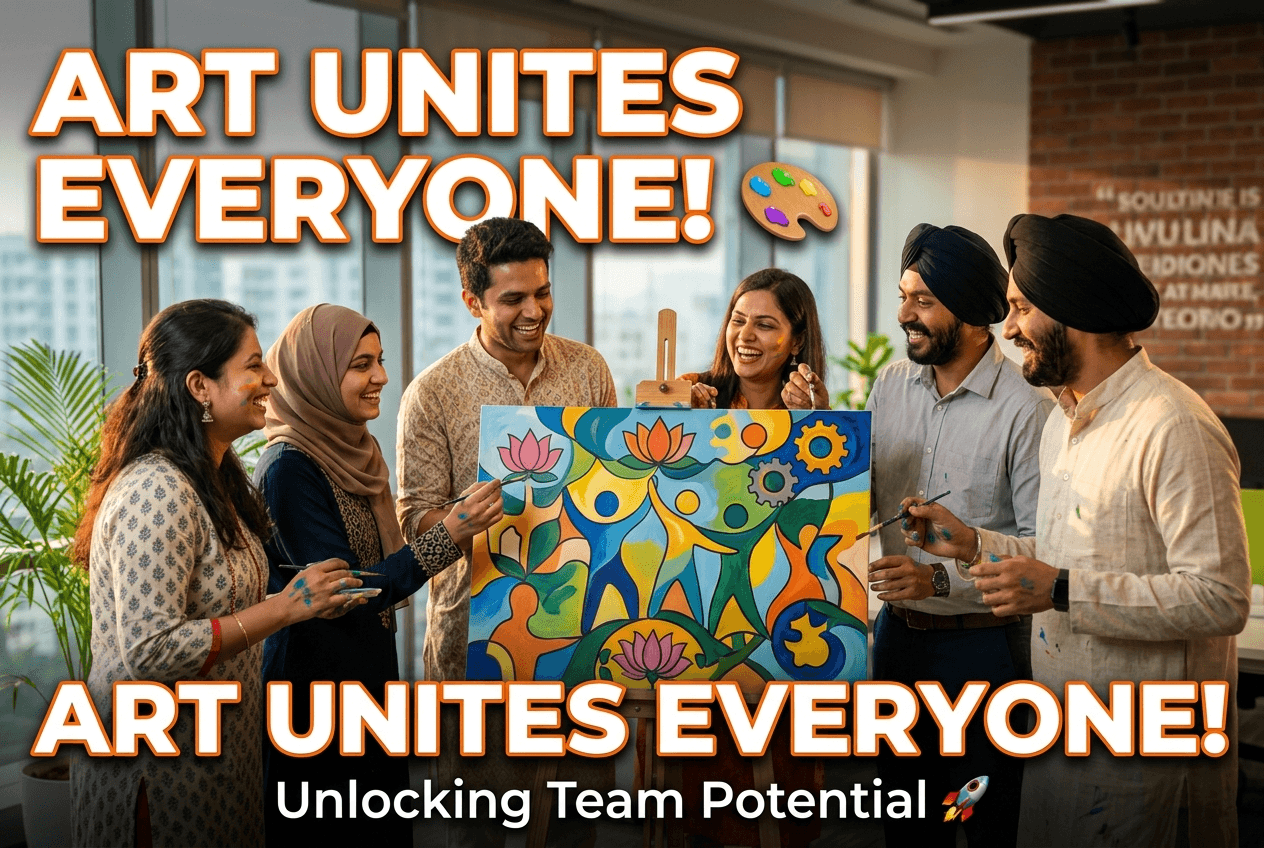
The pandemic generation entered the workforce having experienced profound social isolation. Gen Z employees are acutely aware of the value of genuine human connection at work. They want to belong to something, not just work for something. Shared creative experiences, the kind that Art Gharana's live group sessions deliver, are among the most powerful tools available for building genuine community in corporate teams.
Genuine Investment in Their Development
Gen Z responds positively to employers who invest in their growth as complete human beings, not just as professional resources. A company that offers a certified tabla learning journey or a Bharatanatyam beginner programme as an employee benefit is saying something significant: we believe you are more than your job description, and we are willing to invest in the person you are becoming.
The Culture Signal Problem
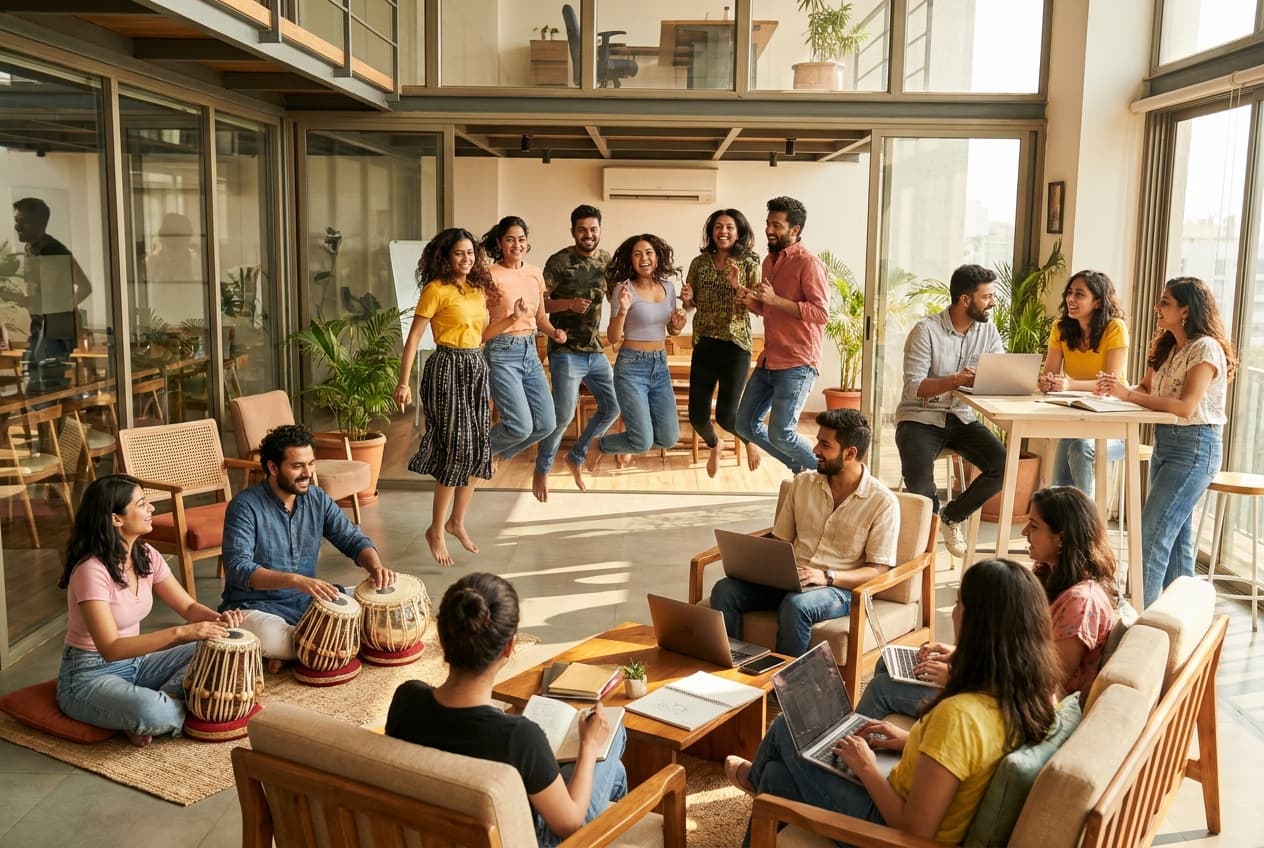 Gen Z is exceptionally good at detecting performative culture. They read Glassdoor reviews, AmbitionBox ratings and LinkedIn employee posts with a researcher's eye for authenticity. A company that claims a people-first culture but whose employees' social media posts show nothing but work deliverables sends a clear signal that the claims are not backed by reality. Creative wellness programmes generate authentic culture content automatically. An employee who posts a video of their Art Gharana session with the caption 'Best part of my workday' produces employer brand content of a quality that no HR campaign budget can purchase. Explore music and dance wellness sessions for teams to understand what this content-generating experience looks like.
The Data on Gen Z Workplace Priorities in India
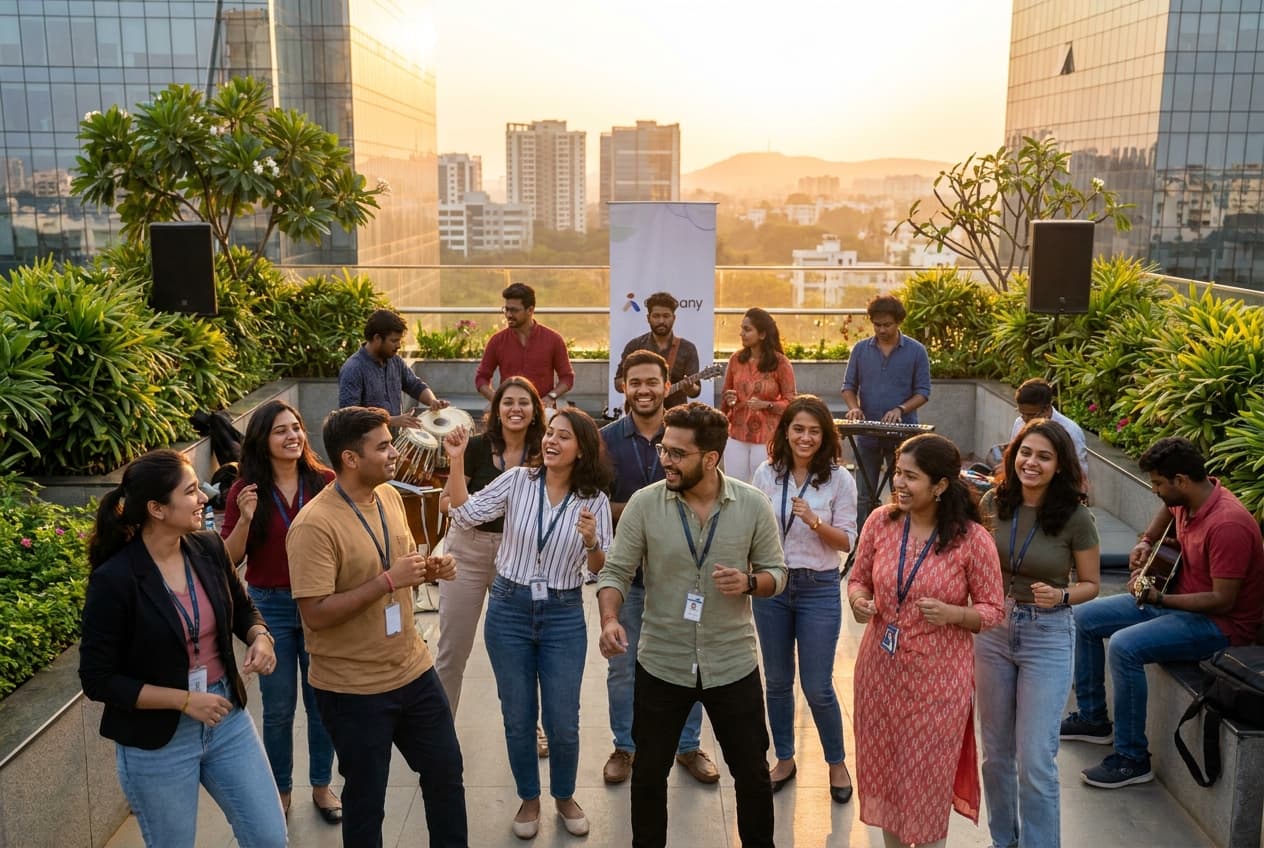 Multiple surveys of Gen Z employees in India's IT, consulting and startup sectors in 2024 and 2025 show a consistent picture. Culture and values of the organisation consistently rank in the top three factors Gen Z cites when explaining why they joined or stayed. Salary ranks high but is described as a threshold rather than a differentiator: Gen Z wants to be fairly paid, but will not stay with a company they find culturally unfulfilling simply because the salary is competitive.
Career growth opportunity is the factor that most consistently overrides culture when the two conflict. A company with strong culture but limited career trajectory loses Gen Z talent to companies with clear progression paths. But a company with strong career development and a distinctive creative culture is in an extremely strong retention position, satisfying both the growth and belonging needs that drive Gen Z's employment decisions simultaneously.
India's Gen Z IT Workforce: A Specific Profile
 India's Gen Z knowledge workers defy the stereotypes sometimes applied to them by older HR professionals. They are not entitled. They are demanding in the most positive sense: demanding genuine investment, genuine culture and genuine respect for their creativity. They bring a creator's mindset to the workplace and want employers who can channel and celebrate it rather than suppress it.
The Indian Gen Z employee who participates in an Art Gharana Bollywood dance or group tabla workshop is not doing something frivolous. They are experiencing creative engagement that speaks directly to the creator identity they carry. When they share that experience on Instagram or LinkedIn, they express pride in their employer's investment in their creative self. This expression is employer brand gold, and it costs nothing beyond the investment in the programme.
What Gen Z Will Not Accept
 Understanding what Gen Z wants requires equally understanding what they reject. Performative wellness programmes that exist on paper but generate no genuine engagement. Rigid hierarchies that prevent creative contribution. Work environments where the only shared experiences are delivery milestones and performance reviews. Benefit packages identical to every competitor in the market, signalling that the company has not thought seriously about what its employees actually value.
The cost of getting this wrong is high. Gen Z employees in India's IT sector have among the shortest average tenures of any workforce group. Many leave their first employer within twelve to eighteen months. The cost of replacing a Gen Z software engineer typically exceeds eight to twelve lakh rupees. Across a team of fifty engineers with a Gen Z attrition rate of 30 percent annually, this represents a replacement spend of well over one crore rupees per year. Against this cost, the investment in genuine creative culture is not a nice-to-have. It is a cost reduction strategy.
Implementing a Gen Z-Resonant Culture Programme
Weekly Creative Sessions
A weekly forty-five minute group session, rotating between disciplines, gives Gen Z a consistent creative touchpoint. Rotate between a Bollywood dance session, a Hindustani raga introduction, a tabla rhythm workshop. The rotation keeps it fresh and introduces employees to disciplines they might not have chosen individually.
Internal Creative Showcases
Quarterly showcases where employees perform pieces they have been working on are among the most culturally powerful events a company can organise. The courage and joy of watching a software engineer perform a Kathak piece or a product manager lead a Bollywood dance routine is the most authentic expression of company culture possible.
Feature It in Hiring
Make the Art Gharana programme explicitly visible in job listings, interview conversations and onboarding materials. Book a corporate pilot session to generate the first wave of authentic content that will begin the employer brand flywheel.
About Art Gharana
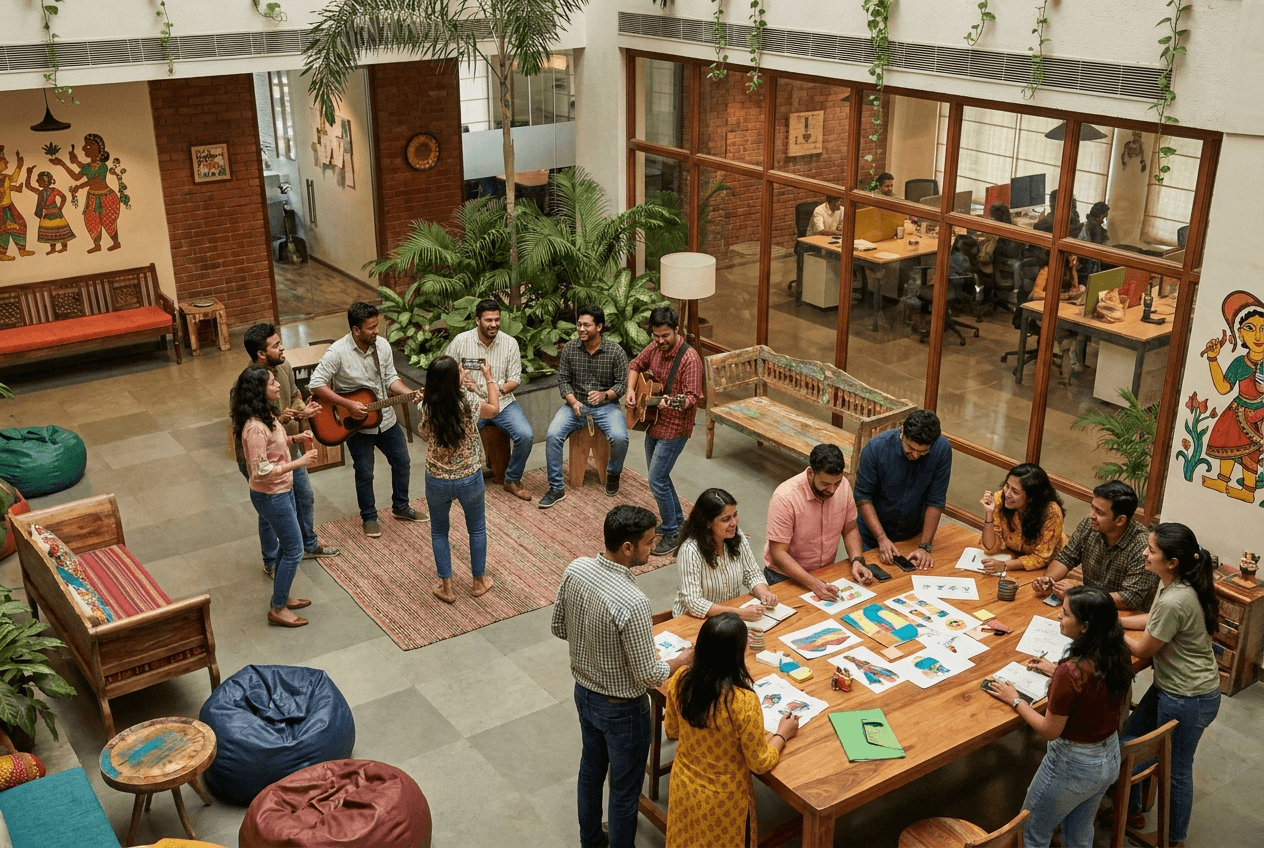 Art Gharana offers live music, dance, art and vocal sessions for corporate teams across India. Certified instructors, online delivery, full IST scheduling flexibility. View instructor profiles and explore all wellness course options to design your Gen Z culture programme.
Frequently Asked Questions
1. What does Gen Z want from employers in India in 2026?
Gen Z employees in India prioritise genuine creative and cultural experiences, community and belonging, personal development beyond professional skills, and employers who invest in them as complete human beings. Culture consistently ranks alongside salary in Gen Z workplace preference research.
2. How can companies attract Gen Z talent through culture?
Offer distinctive creative benefits that address Gen Z's specific values: live music or dance sessions, cultural programmes, creative skill development and community-building experiences that are shareable and socially meaningful.
3. How is creative culture different from standard team building?
Standard team building is a periodic event. Creative culture is a regular programme that builds skill, community and identity over time. It is the difference between a one-off bowling evening and a weekly tabla workshop that employees develop genuine skill in and look forward to every week.
The Research on Gen Z Workplace Values in India
Multiple surveys of Gen Z employees in India's IT, consulting and startup sectors in 2024 and 2025 show a consistent picture. Culture and values of the organisation consistently rank in the top three factors Gen Z cites when explaining their employer choice. Salary ranks high but as a threshold rather than a differentiator: Gen Z wants to be fairly paid but will not stay with a company it finds culturally unfulfilling simply because the salary is competitive. Career growth is the factor that most consistently overrides culture when the two conflict. But a company with both strong career development and a distinctive creative culture occupies the strongest possible retention position, satisfying both the growth and belonging needs that drive Gen Z's employment decisions.
What Creative Culture Actually Looks Like to Gen Z
For HR leaders who want to understand how Gen Z perceives creative culture, the most useful frame is: what would this employee post about this company on Instagram or LinkedIn? An employee who posts about their Bollywood dance session or their first tabla class has had an experience that is simultaneously personally meaningful, publicly shareable and specifically attributable to the company that provided it. The company benefits from the organic employer brand content. The employee feels seen and invested in. The candidate who encounters that content has a specific, credible, authentic signal about what the company's culture actually feels like. This virtuous cycle, genuine creative experience generating authentic social content generating talent attraction, is the most direct and lowest-cost employer brand investment available to Indian companies in 2026.
The Cost of Getting Gen Z Culture Wrong
The cost of failing to address Gen Z culture requirements is high and specific. Gen Z employees in India's IT sector have among the shortest average tenures of any workforce group. Many leave their first employer within twelve to eighteen months. The cost of replacing a Gen Z software engineer typically exceeds eight to twelve lakh rupees. Across a team of fifty engineers with a Gen Z attrition rate of 30 percent annually, this represents a replacement spend of well over one crore rupees per year. Against this cost, the investment in a genuine, distinctive culture programme that addresses what Gen Z actually values is not a nice-to-have. It is a cost reduction strategy. Companies that invest in creative culture because they understand what Gen Z wants are simultaneously investing in their culture, their employer brand and their retention economics. The three outcomes reinforce each other, creating a compounding advantage that grows over time relative to competitors still trying to solve Gen Z retention through salary increments alone.
Implementation: A Twelve-Month Roadmap for Gen Z Culture
Building a genuine Gen Z culture destination requires consistent action over time. In months one to three, implement a pilot creative wellness programme for a specific team of twenty to forty employees. Run weekly sessions, rotate disciplines and document engagement carefully. Use the content generated to begin building employer brand visibility on LinkedIn and Instagram. In months four to six, expand the programme to additional teams based on pilot data. Launch an internal showcase event where pilot participants share what they have learned. Feature the showcase on company social media. In months seven to nine, integrate the programme explicitly into the talent attraction process. Update job listings to mention the programme. Brief recruiters on how to discuss it with candidates. Create a dedicated section on the careers page featuring employee testimonials and session content. In months ten to twelve, review the full year's impact data: engagement scores, attrition rates, offer acceptance rates, Glassdoor review content and social media employer brand metrics. Use this data to build the internal case for permanent programme investment and expansion.
Building the Gen Z Employer Brand Flywheel
The most effective Gen Z employer branding strategy does not start with a campaign. It starts with an experience. An employee who participates in a live Art Gharana tabla session and shares a short video on Instagram with the caption 'Wednesday afternoon at work' creates employer brand content of a quality and authenticity that no HR campaign budget can purchase. When a Gen Z candidate in their network sees that post, they see a specific, credible, authentic signal about what the company's culture actually feels like. That signal converts. The flywheel, genuine experience generating authentic content generating candidate interest generating applications, is the most direct and lowest-cost employer brand investment available to Indian companies in 2026. Art Gharana sessions are designed to generate exactly this kind of content as a natural by-product of genuine employee enjoyment.
The content mathematics are simple. A LinkedIn video of an employee participating in a live Art Gharana Bollywood dance session generates more genuine employer brand value than any number of generic culture posts about collaborative environments or inclusive workplaces. It is specific, visual, emotionally resonant and genuinely unusual. It tells Gen Z candidates something concrete and memorable about the company: this is a place where the specific creative experience you are seeing actually happens, regularly, as a normal part of working life. That specificity and authenticity is what converts passive brand awareness into active job applications. No employer brand campaign can replicate this for credibility or cost-effectiveness.
The Network Effect of Creative Community
Creative culture has a network effect most HR leaders underestimate. The positive retention and attraction impact of each additional employee who participates in the programme grows with the size of the creative community. An employee who knows one colleague participates in Art Gharana sessions has one social connection through the programme. An employee who knows twenty colleagues participate has twenty social connections, twenty shared experiences and twenty relationships that would be lost by leaving the company. The retention value of the programme grows non-linearly with participation rate. This means the ROI of creative culture investment compounds over time as participation grows. The first year of a creative wellness programme builds a small creative community with moderate retention benefit. The third year, when the programme has become established with broad participation, the retention benefit is significantly larger because the social network value of the programme is significantly larger. This compounding dynamic is one of the strongest arguments for beginning creative culture investment early and maintaining it consistently.
The Art Gharana Corporate Advantage
Art Gharana is the only platform combining live music, dance, art and vocal wellness specifically positioned for corporate teams in India. The programme covers seven disciplines: Bollywood dance, Kathak classical dance, Bharatanatyam classical dance, tabla Hindustani percussion, bansuri flute, Hindustani vocal and Carnatic vocal. All instructors are formally certified in their respective disciplines and have been specifically vetted for their ability to deliver engaging, effective sessions in the online corporate format. The programme is available to companies of any size, from five-person startups to enterprise organisations with thousands of employees across multiple Indian cities. Sessions are delivered entirely online, making the programme equally accessible to teams in Mumbai, Bangalore, Delhi, Chennai, Hyderabad, Pune, Ahmedabad, Jaipur, Lucknow, Chandigarh, Kochi, Coimbatore and every other Indian city, as well as to employees working from home in hybrid or fully remote arrangements. Session scheduling is fully flexible within IST, allowing HR leaders to slot sessions into working day schedules without disrupting core business hours. The corporate pilot programme is the recommended starting point: four to six weeks of weekly group sessions for a specific team of fifteen to fifty employees, generating direct engagement data, authentic employer brand content and a concrete business case for broader rollout. The pilot is completely free. The business case builds itself from the data generated in the first few sessions. Art Gharana is ready to begin today.
Key Takeaways for HR Leaders
The most important insights from this guide for HR leaders and CHROs considering creative wellness investment in India in 2026 can be summarised clearly. The global corporate wellness market is growing to $118.21 billion by 2034, driven by companies recognising that employee wellness has physical, mental and creative dimensions that the first generation of wellness programmes did not address. Indian companies that invest in the creative wellness pillar now, while it remains genuinely distinctive, will enjoy a talent attraction and retention advantage that compounds over the coming years. The scientific evidence for music and creative arts as workplace wellness interventions is robust and growing, with the 2025 BMC Complementary Medicine review providing the most recent and comprehensive confirmation. The retention ROI case is straightforward: preventing two to four additional departures per year from a team of fifty is typically sufficient to justify full programme cost. The employer brand ROI case is equally compelling: creative programmes generate authentic employee content that no budget can replicate for credibility or reach. And the Gen Z and Millennial alignment is direct: creative and cultural benefits address the specific values that drive the employment decisions of India's largest and most influential workforce cohorts. Art Gharana is ready to deliver all of this for your company. The pilot is free. Begin today.
Why Indian Companies Must Act Now on Creative Wellness
The window for first-mover advantage in creative corporate wellness in India is open right now. The global corporate wellness market is growing from $68.41 billion in 2025 to $118.21 billion by 2034, and the growth is being driven by companies recognising that the definition of employee wellness has expanded beyond fitness and meditation to include creative and cultural dimensions. Indian companies that position themselves at the forefront of this expanded definition now will have a multi-year head start over competitors who wait for the trend to become mainstream. The parallels with physical fitness benefits are instructive. In 2015, a company that offered a Cult.fit-style corporate fitness benefit was genuinely differentiating. By 2020, it was standard. By 2025, it was a hygiene factor that companies could not afford to omit but derived no competitive advantage from providing. The creative wellness trend is at exactly the 2015 stage in India in 2026. Companies that act now will enjoy the differentiation window. Companies that wait will enter the market as standard-setters rather than leaders, having missed the opportunity to build a genuine first-mover advantage in what is about to become a mainstream expectation.
Art Gharana's corporate programme is available immediately, with a pilot session that is completely free to experience. The programme has been designed specifically for corporate delivery in India, covering the disciplines that resonate most with Indian employees across all regional backgrounds, delivering in a live online format that works for teams in every Indian city and in hybrid and remote working arrangements, and providing the cultural authenticity that makes Indian corporate employees genuinely engage rather than merely tolerate. The business case for investing in creative wellness now rather than later is clear, the programme is ready to deliver, and the first-mover advantage is available to any Indian company willing to act on what its Gen Z and Millennial employees are already telling it they need. Art Gharana is ready to be that partner. The pilot is the first step. Begin today.
Summary: The Creative Wellness Investment for Indian HR Leaders
Indian HR leaders and CHROs who are evaluating creative wellness investment in 2026 are making a decision that will shape their company's talent position for the next five years. The evidence from the scientific literature, the economic research on attrition costs, the employer branding data from LinkedIn and Glassdoor, and the values research on Gen Z and Millennial workplace preferences all point to the same conclusion: creative and cultural wellness is the most underutilised and most value-generating employee benefits investment available to Indian companies in 2026. It is underutilised because it is newer than fitness and meditation benefits. It is value-generating because it is genuinely distinctive, generates authentic employer brand content, builds the community and belonging that reduce attrition, and directly addresses the values that drive the employment decisions of India's largest and most mobile workforce cohorts. Art Gharana is the programme that makes this investment real: live, certified, culturally resonant, online, flexible and beginning with a free pilot that generates its own business case from the first session.
People Also Ask: Gen Z and Work Culture in India
hat does Gen Z look for in a workplace in India?
Gen Z employees in India look for five things above all else in a workplace: genuine creative and cultural experiences, authentic community and belonging, personal development beyond professional skills, flexible working arrangements, and an employer who treats them as a complete human being rather than a professional resource. Research from 2024 and 2025 surveys of Indian IT and startup sector Gen Z employees consistently shows that culture and values of the organisation rank in the top three factors influencing their choice of employer, alongside competitive compensation and career growth opportunity.
Is salary more important than culture for Gen Z employees in India?
No, salary is not more important than culture for Gen Z employees in India once compensation reaches a market-fair threshold. Gen Z treats salary as a threshold requirement rather than a differentiator: they want to be fairly paid, but will not stay with a company they find culturally unfulfilling simply because the salary is competitive. Multiple surveys of Gen Z professionals in India's IT and consulting sectors confirm that culture, creative opportunities and community rank as highly as compensation in their employment decisions.
How can Indian companies attract Gen Z talent in 2026?
Indian companies can attract Gen Z talent in 2026 by offering genuine creative and cultural experiences that Gen Z employees share on social media, providing authentic community through shared activities rather than professional networking, investing in personal development that goes beyond the job description, and signalling a people-first culture through concrete actions rather than marketing language. The most effective single investment for Gen Z talent attraction in India in 2026 is a live creative wellness programme, such as Art Gharana's corporate sessions, which generates authentic employer brand content through genuine employee participation.
Why does Gen Z value work culture over salary in India?
Gen Z values work culture because they have grown up understanding that time and creative energy are finite and that how work feels matters as much as what it pays. Born between 1997 and 2012, they saw the pandemic demonstrate that companies were willing to sacrifice employee wellbeing for operational continuity, and they responded by placing greater weight on employers who demonstrate genuine care for them as people. In India specifically, Gen Z has also grown up as content creators, valuing the ability to express and share experiences, which makes culturally rich workplace environments particularly resonant.
What is the cost of Gen Z attrition for Indian IT companies?
The cost of Gen Z attrition for Indian IT companies is substantial. Gen Z employees in India's IT sector have among the shortest average tenures of any workforce group, with many leaving their first employer within 12 to 18 months. Replacing a junior to mid-level Gen Z software engineer typically costs eight to twelve lakh rupees when recruitment fees, onboarding time and productivity ramp are factored in. For a team of 50 engineers with a 30 percent annual attrition rate, the annual replacement spend exceeds one crore rupees. Creative culture investment that reduces this attrition delivers ROI exceeding programme cost by a significant multiple.
How do creative wellness programs specifically appeal to Gen Z?
Creative wellness programs appeal specifically to Gen Z because they deliver experiences rather than transactions, which is the defining preference of this generation. Gen Z wants to participate in something memorable and shareable, not receive a passive benefit. A live Bollywood dance session or tabla workshop is an experience that Gen Z employees post about on Instagram Reels and LinkedIn, generating authentic employer brand content. This social media dimension is particularly powerful: Gen Z talent discovers company cultures through the content of their peers, and creative wellness sessions generate exactly this kind of authentic, specific, memorable content.
What is the difference between Gen Z and Millennial workplace preferences in India?
Gen Z and Millennials share many workplace preferences in India but differ in emphasis. Both value work culture, creative experiences and personal development. Gen Z places relatively higher emphasis on experiences, social connection and authentic community, and is more social-media-native in how they research and evaluate employers. Millennials place relatively higher emphasis on learning and development credentials, hybrid work flexibility and cultural connection to their heritage. Both cohorts respond positively to creative wellness programmes, with Gen Z particularly valuing the shareable, community-building dimensions and Millennials particularly valuing the skill development and cultural connection dimensions. Art Gharana's corporate programme also covers plans and pricing for companies, delivered live by certified instructors to corporate teams across India. Also available through Art Gharana: Carnatic vocal classes, delivered live by certified instructors to corporate teams across India. Also available through Art Gharana: bansuri flute classes, delivered live by certified instructors to corporate teams across India. Also available through Art Gharana: Kathak classical dance classes, delivered live by certified instructors to corporate teams across India.