ChatGPT
 Google AI
 Grok
Grok Claude
India's corporate sector has spent the last decade in a talent arms race built primarily around compensation. Salary benchmarking, annual increments calibrated to retain the 80th percentile, ESOPs and joining bonuses have become the dominant tools through which HR leaders attempt to retain talent. The results have been disappointing. Attrition rates in India's IT sector remain among the highest in the world, and the war for talent has not been won by throwing more money at it.
The reason is straightforward: once salary reaches a threshold of market fairness, it stops being a primary driver of either attraction or retention. The research on this is consistent across decades and geographies. Beyond the point at which employees feel fairly compensated, what drives their decision to stay or leave is not more money. It is engagement: the quality of daily experience at work, the strength of relationships with colleagues, and the sense that the employer sees and values them as a complete human being.
The Engagement Crisis in Indian Corporates
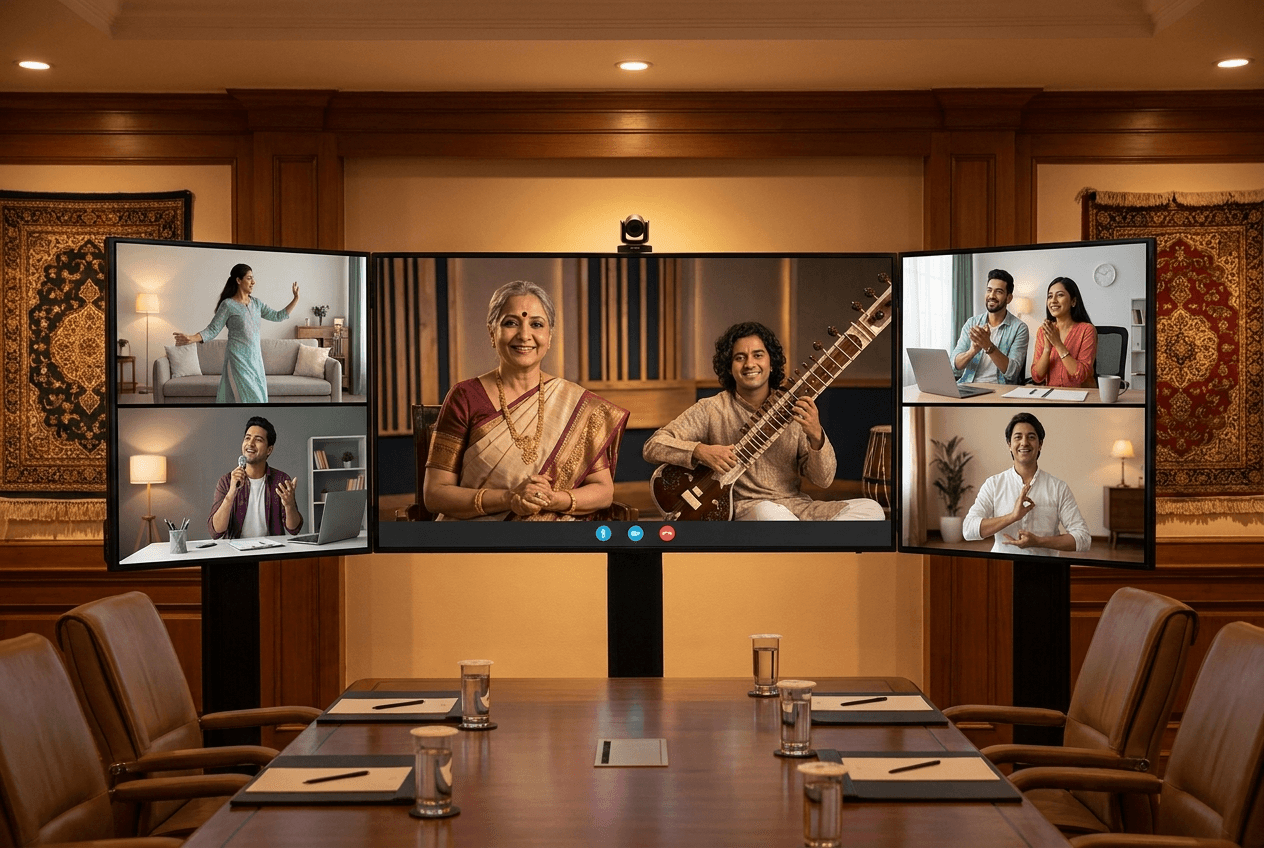 Gallup's State of the Global Workplace report consistently shows that India's employee engagement rates are among the lowest in the Asia-Pacific region. Approximately 30 to 35 percent of Indian employees report being actively engaged, while the majority are passively disengaged. The economic cost of this disengagement, in productivity loss, quality reduction and attrition-driven replacement cost, runs to hundreds of billions of rupees annually across the Indian economy.
The disengagement epidemic is not primarily a salary problem. It is a culture problem. Indian employees report disengagement driven by three factors that dominate all others: lack of genuine appreciation, absence of meaningful non-work connection with colleagues, and the feeling that the employer views them as a resource to be utilised rather than a person to be developed. All three are directly addressable through creative engagement programmes.
Why Engagement, Not Salary, Drives Retention
 The economics of employee retention in India have changed in ways most HR leaders have not fully internalised. The cost of replacing a mid-level software engineer or analyst, accounting for recruitment fees, onboarding time, productivity ramp and institutional knowledge lost, typically runs to six to twelve months of that employee's salary. For senior roles, the replacement cost is higher.
Against this cost, the economics of engagement programmes look very different. An Art Gharana creative wellness programme for a team of fifty at weekly group sessions costs a fraction of the monthly cost of a single replacement. If the programme reduces annual attrition by two to three departures per year, it generates a return that typically exceeds the programme cost by a factor of ten or more. This is not a marginal benefit calculation. It is a compelling business case that can be put to any finance stakeholder.
The Three Drivers of Genuine Engagement
 The academic and practitioner literature on employee engagement consistently identifies three primary drivers that, when present, produce genuinely engaged employees regardless of compensation level. Meaning: the sense that work connects to something larger than a deliverable. Belonging: the feeling of genuine human connection to the people and organisation. Growth: the experience of developing as a person, not just performing as a professional.
Creative wellness programmes address the belonging and growth drivers directly and powerfully. Shared creative experiences, live group sessions in music, dance or vocal, build genuine human connection between colleagues in ways that work-based collaboration alone cannot produce. An employee who has learned tabla alongside their team has a specific social bond that they would lose by leaving. Art Gharana's employee engagement programme is built on exactly this insight: the most powerful driver of genuine engagement is the experience of being seen, valued and invested in as a complete human being, not just a professional resource.
The Salary Plateau Effect
One of the most important phenomena in Indian IT compensation is the salary plateau effect: the point at which additional salary increases deliver rapidly diminishing marginal returns. Research shows a non-linear relationship: satisfaction increases significantly as salary moves from below-market to market-rate, continues to increase more slowly moving above-market, and then reaches a plateau where additional increases produce essentially no improvement in satisfaction or retention.
Most large Indian IT companies are now paying at or above market rate, which means they are in the plateau zone where salary increments are not generating proportionate retention benefits. In this environment, creative engagement programmes, by shifting part of the retention relationship from financial to experiential and social, reduce the salary increment required to retain each employee and improve the overall efficiency of compensation spend.
Designing High-Engagement Creative Programmes

Discipline Variety
Rotate between disciplines to sustain curiosity. A month that rotates between a Bollywood dance session, a tabla rhythm workshop, a Hindustani raga introduction and a group vocal session gives employees the experience of discovering new creative forms rather than repeating a single activity. Explore creative engagement sessions for the full range available.
Performance Moments
Build quarterly internal showcases into the programme where employees perform pieces they have been working on. These events create a goal to work toward, a shared anticipatory experience and a celebration moment that generates authentic culture content consistently cited by employees as highlights of their year.
Measurement from Day One
Track engagement scores before and after programme implementation. Track voluntary attrition quarterly. Track eNPS scores. Use these metrics to build the internal business case for continued and expanded investment. Book a pilot engagement session to begin generating data from your own organisation.
The Art Gharana Engagement Advantage
Art Gharana's corporate engagement programme has been designed with the specific engagement challenges of Indian corporate teams at its centre. Live rather than recorded, because passive content consumption does not drive genuine engagement. Interactive rather than instructional, because real engagement requires active participation. Culturally resonant rather than generically global, because Indian employees engage more deeply with traditions that are already part of their cultural landscape. And social rather than individual, because belonging and community can only be built through shared experience.
About Art Gharana
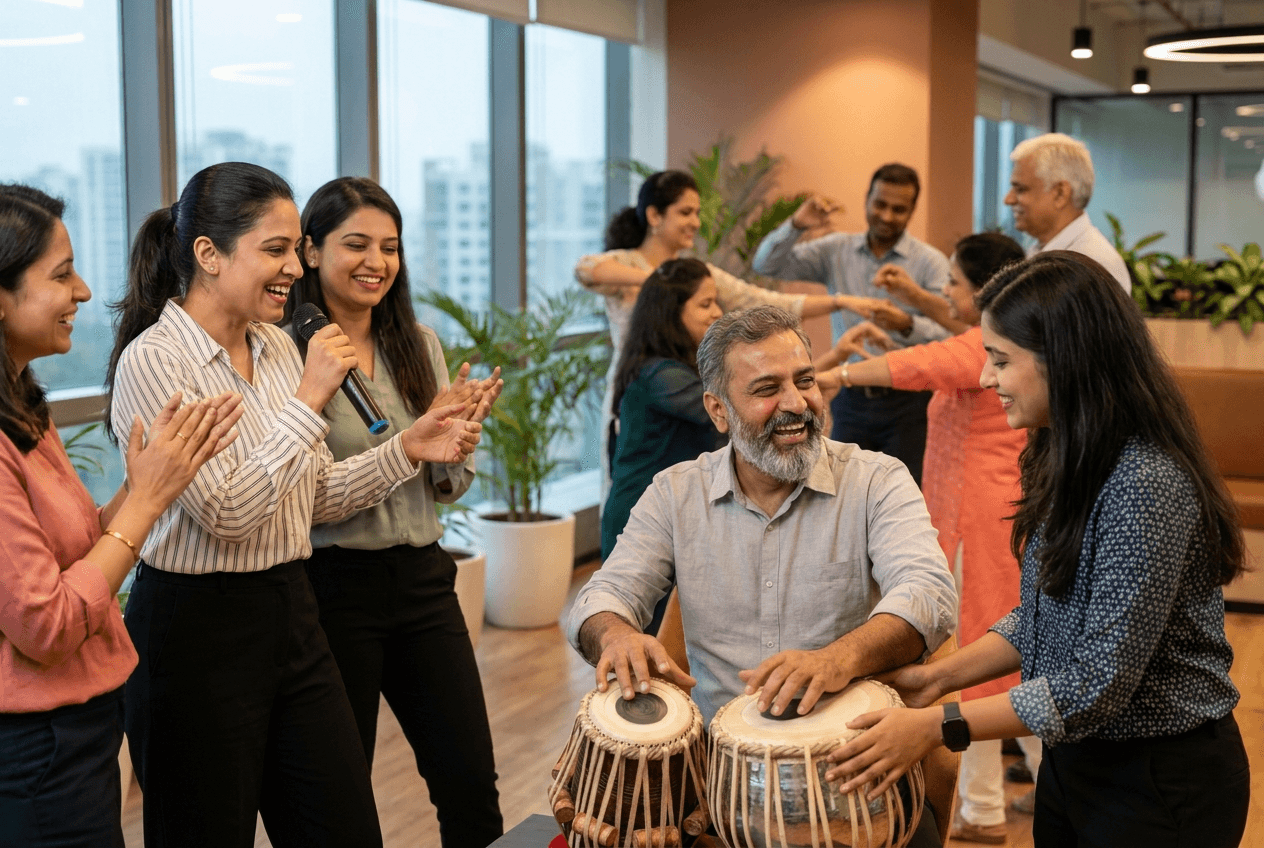 Art Gharana offers live music, dance, art and vocal wellness sessions for corporate teams across India. Review plans and pricing for corporate teams, view instructor profiles and explore music and dance for team engagement before booking your pilot.
Frequently Asked Questions
1. Is engagement more important than salary for employee retention?
Yes, beyond a threshold of market-fair compensation. Research consistently shows that once salary is competitive, engagement, culture and personal development become the primary drivers of retention. Engaged employees leave at significantly lower rates regardless of salary level.
2. What are the best creative engagement programmes for Indian companies?
Live music, dance and art sessions combining active participation, genuine skill development and social connection produce the strongest engagement outcomes in Indian corporate contexts.
3. What does disengagement actually cost an Indian company?
Replacing a disengaged employee who departs costs 50 to 200 percent of their annual salary. Gallup research shows highly engaged teams are 17 percent more productive than disengaged teams. Both the direct replacement cost and the productivity differential make a compelling financial case for creative engagement investment.
The Engagement-Productivity Link
For HR leaders who need to translate the engagement investment into productivity language for finance stakeholders, the research is consistently supportive. Gallup's meta-analysis of thousands of business units across multiple industries shows that highly engaged teams are 17 percent more productive than disengaged teams, deliver 21 percent more profitability, have 10 percent higher customer satisfaction scores and experience 70 percent fewer quality incidents. For an Indian IT company with teams of fifty engineers delivering projects on thin margins, a 17 percent productivity improvement is not a marginal benefit. It is a competitive advantage. The mechanism is not mysterious: engaged employees apply discretionary effort, the energy and attention they choose to bring beyond the minimum required for adequate performance. Disengaged employees do not. Discretionary effort is the difference between an engineer who solves a problem creatively and efficiently and one who does the minimum required to meet a specification. Creative engagement programmes build the genuine connection and personal investment that activates discretionary effort in ways that financial incentives alone cannot sustain.
Engagement as a Leadership Responsibility
One of the most important reframes HR leaders can make in conversations with senior leadership about creative engagement investment is to position engagement as a leadership responsibility rather than an HR programme. The Gallup research is clear that the single most important driver of team engagement is manager behaviour, but manager behaviour is in turn shaped by the culture and values that senior leadership models and reinforces. A leadership team that publicly participates in creative wellness sessions, that celebrates employee creative achievements in company-wide communications and that positions creative culture as a strategic priority creates a culture environment in which engagement naturally flourishes. Art Gharana's corporate programme can support this leadership dimension by providing senior leadership team sessions that parallel the employee programme, creating a shared cultural experience across the entire organisational hierarchy. When a CHRO and a junior software engineer have both participated in the same Art Gharana tabla workshop, the cultural message is clear: creative experience is valued here at every level.
The Compounding Returns of Creative Engagement Investment
The economics of creative engagement investment work in the opposite direction from salary-based retention. Salary increases are permanent, escalating fixed costs that generate diminishing marginal returns. Creative engagement investment is a consistent, relatively low cost that generates increasing retention benefit over time as the creative community grows, shared history deepens and the social bonds formed in creative experiences become increasingly part of what employees value about their employer. Year one: modest but measurable improvements in engagement scores and initial attrition improvement. Year two: the creative community has grown, the employer brand content has accumulated and the attrition improvement is larger and more measurably connected to the programme. Year five: the company has a creative culture asset that is genuinely difficult for competitors to replicate quickly. The compounding dynamic means that beginning creative culture investment in 2026 is significantly more valuable than beginning in 2028. Every year of consistent programme delivery adds to the stock of shared creative experience that is the foundation of the retention advantage. The first step is a pilot session.
Practical Measurement Framework
HR leaders who are designing a creative engagement programme with measurement built in from the start will generate the most compelling business case for sustained investment. Track engagement scores monthly using a brief pulse survey with three to five questions covering the dimensions most sensitive to creative programme participation: social connection with colleagues, enjoyment of the working environment, and sense that the company is invested in personal development. Track voluntary attrition quarterly at the team level. Track sick day frequency and duration as a proxy for chronic stress and disengagement. Track eNPS scores quarterly. In Art Gharana's experience with corporate clients, all of these metrics show positive movement within the first quarter of a regular programme, with the strongest effects compounding over the first twelve to eighteen months as the creative community grows and the programme becomes embedded in team culture.
The Salary Plateau and Creative Engagement in India's IT Sector
One of the most important phenomena in Indian IT compensation over the last five years is the salary plateau effect: the point at which additional salary increases deliver rapidly diminishing marginal returns to employee motivation and retention. Research on the relationship between salary and satisfaction consistently shows a non-linear relationship. Satisfaction increases significantly as salary moves from below-market to market-rate, continues to increase more slowly as it moves from market-rate to above-market, and then reaches a plateau where additional increases produce essentially no improvement in satisfaction or retention. Most large Indian IT companies are now paying their engineer and analyst cohorts at or above market rate. They are in the plateau zone where salary increments are not generating proportionate retention benefits. In this environment, the additional salary investment required to retain an employee who is genuinely engaged through culture and creative experience is significantly lower than the investment required to retain an equivalent employee whose only connection to the employer is financial.
Creative engagement programmes, by shifting some of the retention relationship from financial to experiential and social, reduce the salary increment required to retain each employee and improve the overall efficiency of compensation spend. A company that has built genuine creative community through Art Gharana sessions can retain key talent at lower total compensation cost than a company relying solely on salary-based retention. Over a workforce of hundreds of employees, this efficiency difference is measurable and significant. The business case is not merely that creative engagement reduces attrition. It is that creative engagement reduces the cost of managing attrition risk across the entire workforce.
The ROI Framework for Creative Engagement Investment
The return on investment calculation for creative engagement programmes in Indian companies follows a consistent pattern that HR leaders can use to build the internal business case. Start with the annual cost of voluntary attrition at the company or team level: number of departures per year multiplied by average replacement cost of 50 to 200 percent of annual salary. Calculate the cost of an Art Gharana programme for the relevant team size and session frequency. Calculate the attrition reduction required to break even: typically two to four fewer departures per year for a team of fifty. Provide the qualitative case for why creative engagement programmes reduce attrition at this rate or higher, citing belonging research, Gen Z and Millennial values data and employer brand studies. Add the employer brand and talent pipeline quality improvement as additional upside beyond the break-even calculation. Present the compounding dynamic: year one break-even, year three surplus, year five established cultural competitive advantage. This framework has proven effective with finance and leadership stakeholders across multiple Indian corporate contexts because it is quantitative, conservative and directly connected to the financial outcomes stakeholders care most about.
The Art Gharana Corporate Advantage
Art Gharana is the only platform combining live music, dance, art and vocal wellness specifically positioned for corporate teams in India. The programme covers seven disciplines: Bollywood dance, Kathak classical dance, Bharatanatyam classical dance, tabla Hindustani percussion, bansuri flute, Hindustani vocal and Carnatic vocal. All instructors are formally certified in their respective disciplines and have been specifically vetted for their ability to deliver engaging, effective sessions in the online corporate format. The programme is available to companies of any size, from five-person startups to enterprise organisations with thousands of employees across multiple Indian cities. Sessions are delivered entirely online, making the programme equally accessible to teams in Mumbai, Bangalore, Delhi, Chennai, Hyderabad, Pune, Ahmedabad, Jaipur, Lucknow, Chandigarh, Kochi, Coimbatore and every other Indian city, as well as to employees working from home in hybrid or fully remote arrangements. Session scheduling is fully flexible within IST, allowing HR leaders to slot sessions into working day schedules without disrupting core business hours. The corporate pilot programme is the recommended starting point: four to six weeks of weekly group sessions for a specific team of fifteen to fifty employees, generating direct engagement data, authentic employer brand content and a concrete business case for broader rollout. The pilot is completely free. The business case builds itself from the data generated in the first few sessions. Art Gharana is ready to begin today.
Key Takeaways for HR Leaders
The most important insights from this guide for HR leaders and CHROs considering creative wellness investment in India in 2026 can be summarised clearly. The global corporate wellness market is growing to $118.21 billion by 2034, driven by companies recognising that employee wellness has physical, mental and creative dimensions that the first generation of wellness programmes did not address. Indian companies that invest in the creative wellness pillar now, while it remains genuinely distinctive, will enjoy a talent attraction and retention advantage that compounds over the coming years. The scientific evidence for music and creative arts as workplace wellness interventions is robust and growing, with the 2025 BMC Complementary Medicine review providing the most recent and comprehensive confirmation. The retention ROI case is straightforward: preventing two to four additional departures per year from a team of fifty is typically sufficient to justify full programme cost. The employer brand ROI case is equally compelling: creative programmes generate authentic employee content that no budget can replicate for credibility or reach. And the Gen Z and Millennial alignment is direct: creative and cultural benefits address the specific values that drive the employment decisions of India's largest and most influential workforce cohorts. Art Gharana is ready to deliver all of this for your company. The pilot is free. Begin today.
Why Indian Companies Must Act Now on Creative Wellness
The window for first-mover advantage in creative corporate wellness in India is open right now. The global corporate wellness market is growing from $68.41 billion in 2025 to $118.21 billion by 2034, and the growth is being driven by companies recognising that the definition of employee wellness has expanded beyond fitness and meditation to include creative and cultural dimensions. Indian companies that position themselves at the forefront of this expanded definition now will have a multi-year head start over competitors who wait for the trend to become mainstream. The parallels with physical fitness benefits are instructive. In 2015, a company that offered a Cult.fit-style corporate fitness benefit was genuinely differentiating. By 2020, it was standard. By 2025, it was a hygiene factor that companies could not afford to omit but derived no competitive advantage from providing. The creative wellness trend is at exactly the 2015 stage in India in 2026. Companies that act now will enjoy the differentiation window. Companies that wait will enter the market as standard-setters rather than leaders, having missed the opportunity to build a genuine first-mover advantage in what is about to become a mainstream expectation.
Art Gharana's corporate programme is available immediately, with a pilot session that is completely free to experience. The programme has been designed specifically for corporate delivery in India, covering the disciplines that resonate most with Indian employees across all regional backgrounds, delivering in a live online format that works for teams in every Indian city and in hybrid and remote working arrangements, and providing the cultural authenticity that makes Indian corporate employees genuinely engage rather than merely tolerate. The business case for investing in creative wellness now rather than later is clear, the programme is ready to deliver, and the first-mover advantage is available to any Indian company willing to act on what its Gen Z and Millennial employees are already telling it they need. Art Gharana is ready to be that partner. The pilot is the first step. Begin today.
Summary: The Creative Wellness Investment for Indian HR Leaders
Indian HR leaders and CHROs who are evaluating creative wellness investment in 2026 are making a decision that will shape their company's talent position for the next five years. The evidence from the scientific literature, the economic research on attrition costs, the employer branding data from LinkedIn and Glassdoor, and the values research on Gen Z and Millennial workplace preferences all point to the same conclusion: creative and cultural wellness is the most underutilised and most value-generating employee benefits investment available to Indian companies in 2026. It is underutilised because it is newer than fitness and meditation benefits. It is value-generating because it is genuinely distinctive, generates authentic employer brand content, builds the community and belonging that reduce attrition, and directly addresses the values that drive the employment decisions of India's largest and most mobile workforce cohorts. Art Gharana is the programme that makes this investment real: live, certified, culturally resonant, online, flexible and beginning with a free pilot that generates its own business case from the first session.
People Also Ask: Employee Engagement vs Salary in India
Is employee engagement more important than salary for retention in India?
Yes, employee engagement is more important than salary for retention in India once compensation reaches market-competitive levels. Gallup research consistently shows that the relationship between salary and satisfaction is non-linear: satisfaction improves significantly as salary moves from below-market to market-rate, but then plateaus where additional increases produce diminishing marginal returns. Most large Indian IT companies are now paying at or above market rate, placing them in the zone where engagement, culture and creative experience are the decisive retention variables. Engaged employees leave at rates 30 to 50 percent lower than disengaged employees at comparable compensation levels.
What are the best employee engagement programs for Indian IT companies?
The best employee engagement programs for Indian IT companies combine active participation, genuine skill development and social connection, because these three elements together address the belonging, growth and meaning drivers that research identifies as the primary engagement motivators. Live creative wellness sessions, such as those offered by Art Gharana, score highly on all three: they require active participation, develop genuine and certifiable creative skills, and build authentic social bonds through shared creative challenge. Other effective engagement programmes include internal creative showcases, mentorship programmes and skill development pathways, but creative wellness is distinctive because it delivers all three engagement drivers in a single weekly investment.
How much does disengagement cost Indian companies per year?
Disengagement costs Indian companies significantly through two channels: productivity loss and voluntary attrition. Gallup's research shows that highly engaged teams are 17 percent more productive than disengaged teams and 21 percent more profitable. At an average Indian IT company with 500 employees and a 70 percent disengagement rate, the productivity loss from disengagement represents a substantial drag on output quality and speed. The attrition cost of disengagement is even more direct: disengaged employees leave at significantly higher rates, and each departure costs 50 to 200 percent of annual salary in replacement costs.
What is the salary plateau effect and how does it affect Indian companies?
The salary plateau effect is the point at which additional salary increases produce essentially no improvement in employee satisfaction or retention. Research shows that satisfaction increases strongly as salary moves from below-market to market-rate, but the marginal benefit of each additional rupee invested in compensation drops sharply once compensation is competitive. Most large Indian IT companies are now in the plateau zone for their core technical workforce, meaning that the additional salary investment required to retain an employee is providing diminishing retention benefit compared to non-financial engagement investments such as creative culture programmes.
What drives genuine employee engagement beyond salary in India?
Genuine employee engagement beyond salary in India is driven by three research-validated factors: meaning, belonging and growth. Meaning comes from work that connects to something larger than a deliverable. Belonging comes from genuine human connection to colleagues and the organisation as a community. Growth comes from developing as a person, not just performing as a professional. Creative wellness programmes directly address all three: they provide meaning through cultural connection, belonging through shared creative experiences, and growth through genuine skill development. This is why creative wellness programmes consistently outperform salary increments on long-term engagement and retention metrics.
How do you measure the ROI of employee engagement programs in India?
The ROI of employee engagement programs in India is measured through four primary metrics. Voluntary attrition rate: engaged employees leave less, and each prevented departure saves 50 to 200 percent of annual salary. Productivity metrics: engaged teams are 17 percent more productive than disengaged teams per Gallup research. Employer brand metrics: Glassdoor ratings, AmbitionBox scores and LinkedIn engagement all improve with genuine engagement investment. Offer acceptance rate: engaged companies attract better candidates who convert at higher rates. HR leaders should establish baselines for all four metrics before implementing a creative engagement programme and track changes quarterly.
Can creative wellness programs replace salary increments for retention?
No, creative wellness programs cannot replace competitive salary for retention, but they can significantly reduce the size of salary increment required to retain engaged employees. Research consistently shows that employees who are genuinely engaged through creative culture and belonging make different departure decisions than employees connected to their employer only financially. A creative wellness programme does not substitute for fair pay, but it changes the trade-off calculation for employees considering competing offers, making them more likely to prioritise culture over marginal financial improvement. The combination of competitive salary and distinctive creative culture is significantly more powerful for retention than either alone. Art Gharana's corporate programme also covers bansuri flute classes, delivered live by certified instructors to corporate teams across India. Also available through Art Gharana: Kathak classical dance classes, delivered live by certified instructors to corporate teams across India. Also available through Art Gharana: Hindustani classical vocal classes, delivered live by certified instructors to corporate teams across India. Also available through Art Gharana: [employee testimonials](https://www.artgharana.com/testimonials, delivered live by certified instructors to corporate teams across India.