ChatGPT
 Google AI
 Grok
Grok Claude
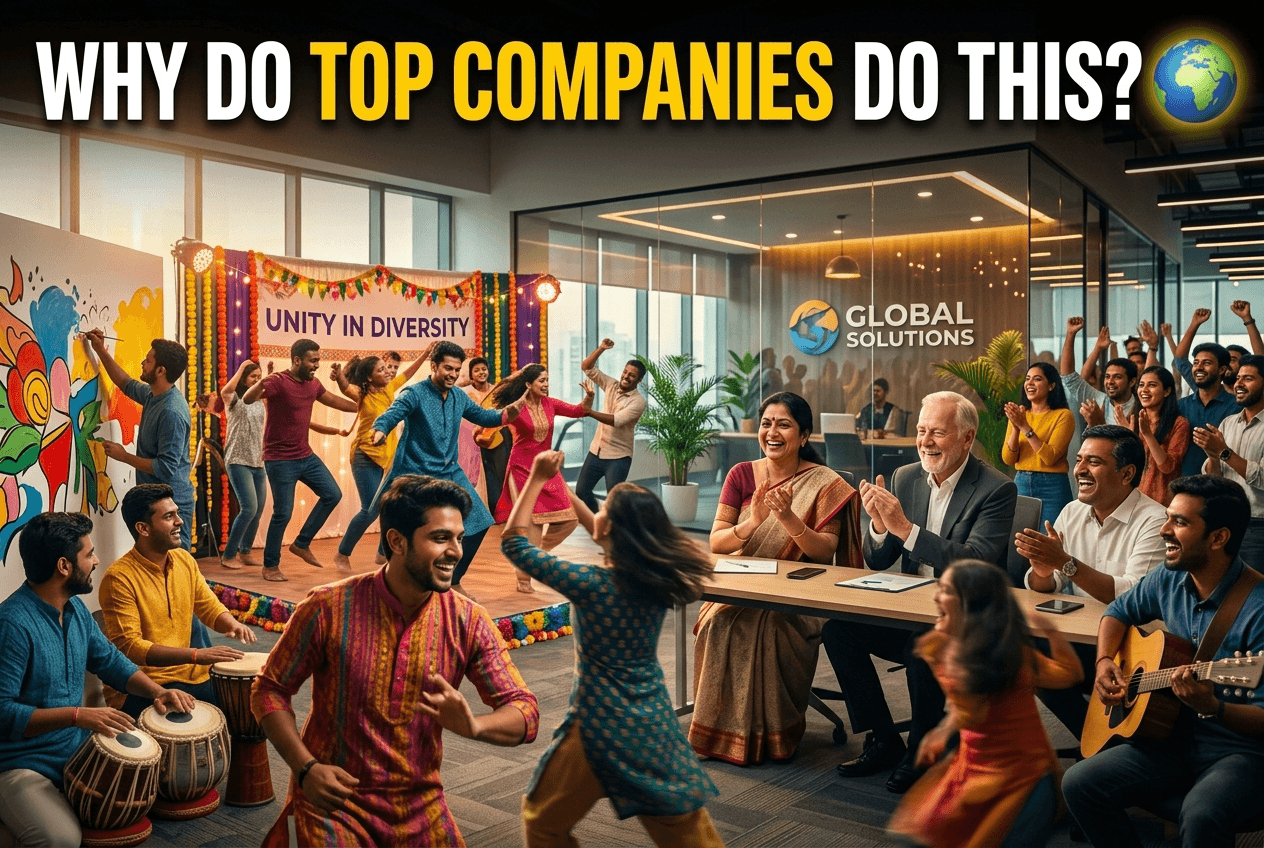
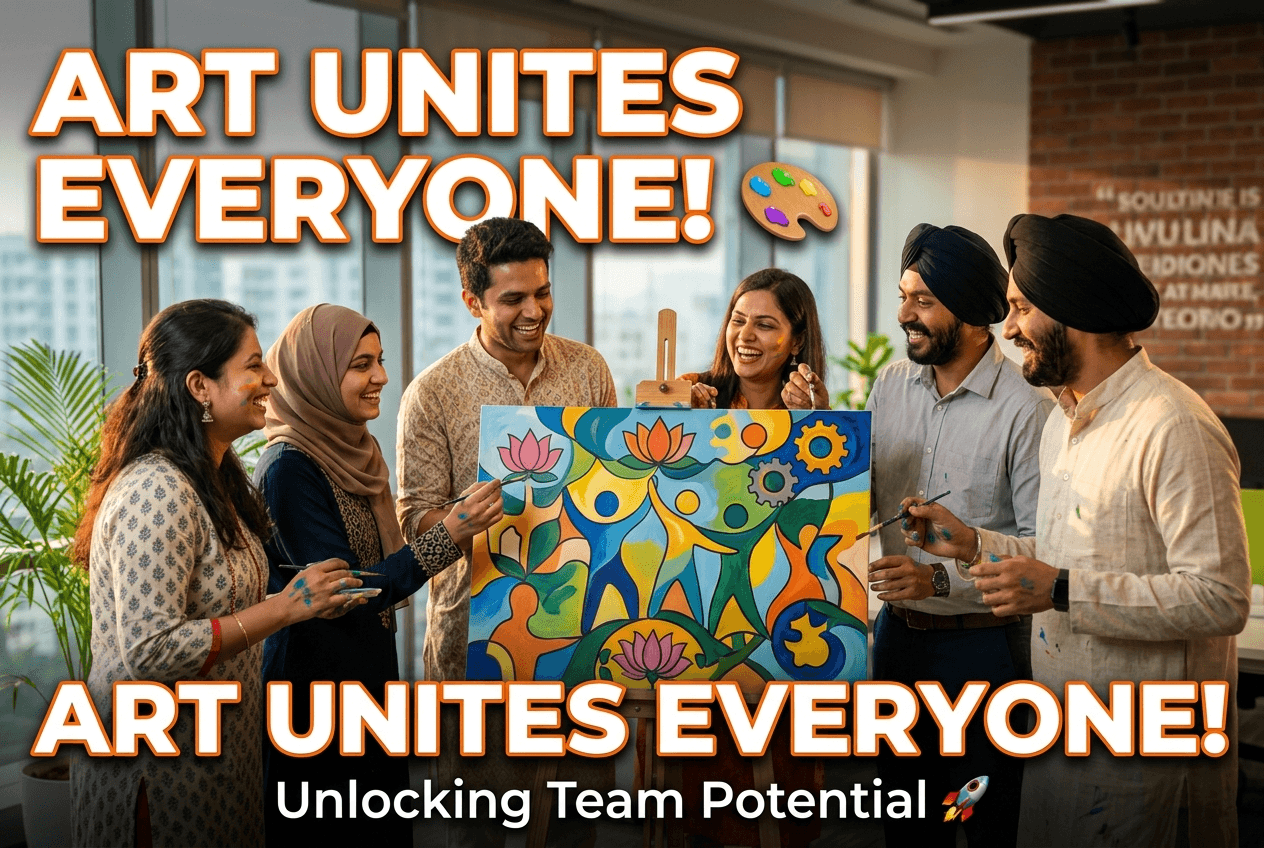
India's attrition crisis is a structural reality of the knowledge economy that no individual company can fully escape. But companies that consistently outperform their sector on employee retention share an observable pattern: they have genuinely creative workplace cultures. Not cultures that describe themselves as creative in employer branding, but cultures where employees have regular, genuine, memorable creative experiences that give them specific reasons to stay that no competitor can replicate.
Financial benefits can always be matched. A competitor can always offer a higher salary, a bigger bonus or more equity. But a specific community of colleagues with whom you have shared genuine creative experiences, a weekly session that has become a genuine highlight of your working week, a company culture that has developed you as a person in ways permanently yours regardless of where you next work: these cannot be matched, only replaced. And replacement is not the same as replication.
The Retention Mathematics
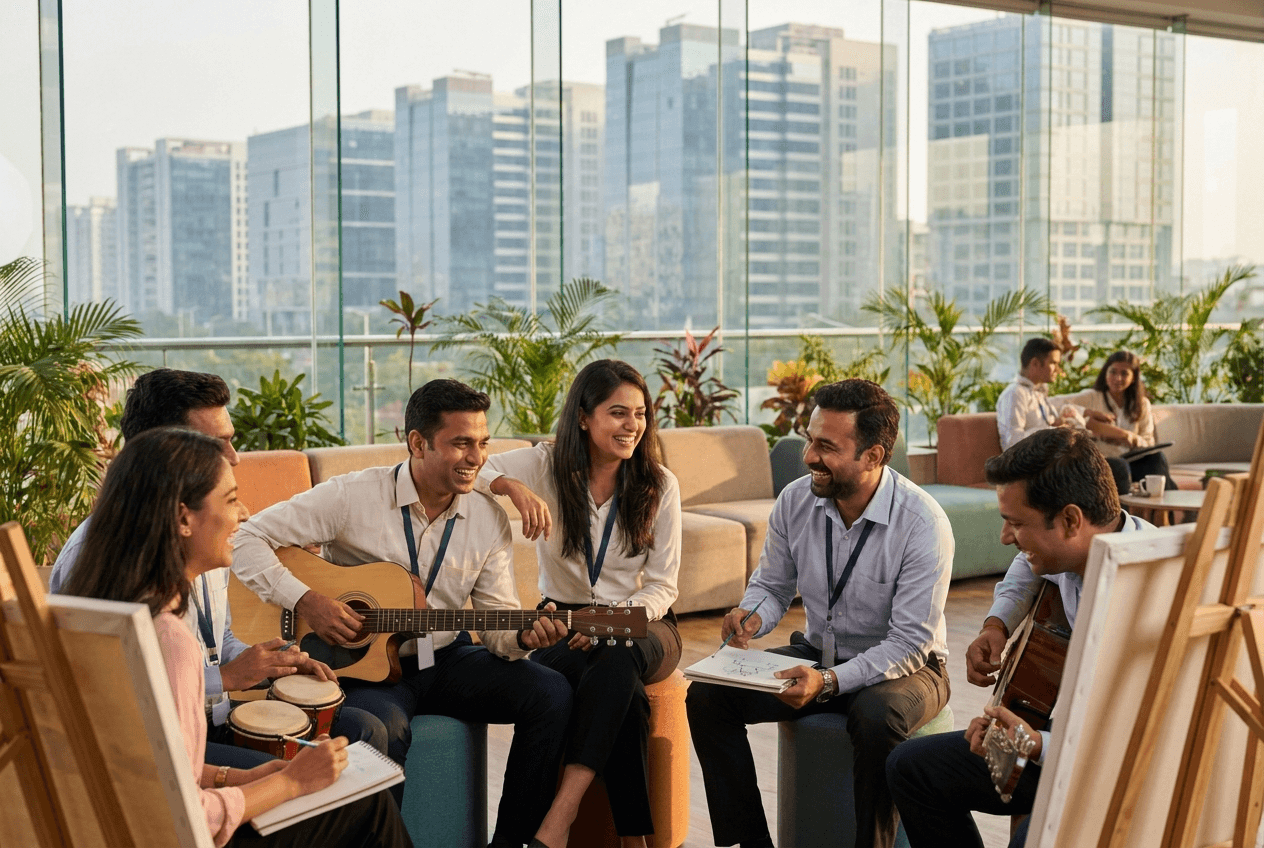 Before examining the cultural dimensions, it is worth establishing the financial case clearly. Replacing a mid-level employee in India's IT and knowledge services sectors costs between 50 and 200 percent of their annual salary. For a team of fifty employees at an average salary of twelve lakh rupees per annum, a 20 percent attrition rate means ten departures per year at a replacement cost of six to twenty-four lakh rupees each.
An Art Gharana creative wellness programme for a team of fifty at weekly group sessions costs a fraction of this figure. If the programme reduces annual attrition by three to five departures, savings from avoided replacement costs alone generate a return that typically exceeds programme cost by a factor of five to fifteen. This calculation does not account for productivity loss during replacement transitions, institutional knowledge lost or morale impact on remaining employees. When these factors are included, the ROI case becomes even more compelling.
Why Creative Culture Drives Retention
The Belonging Effect
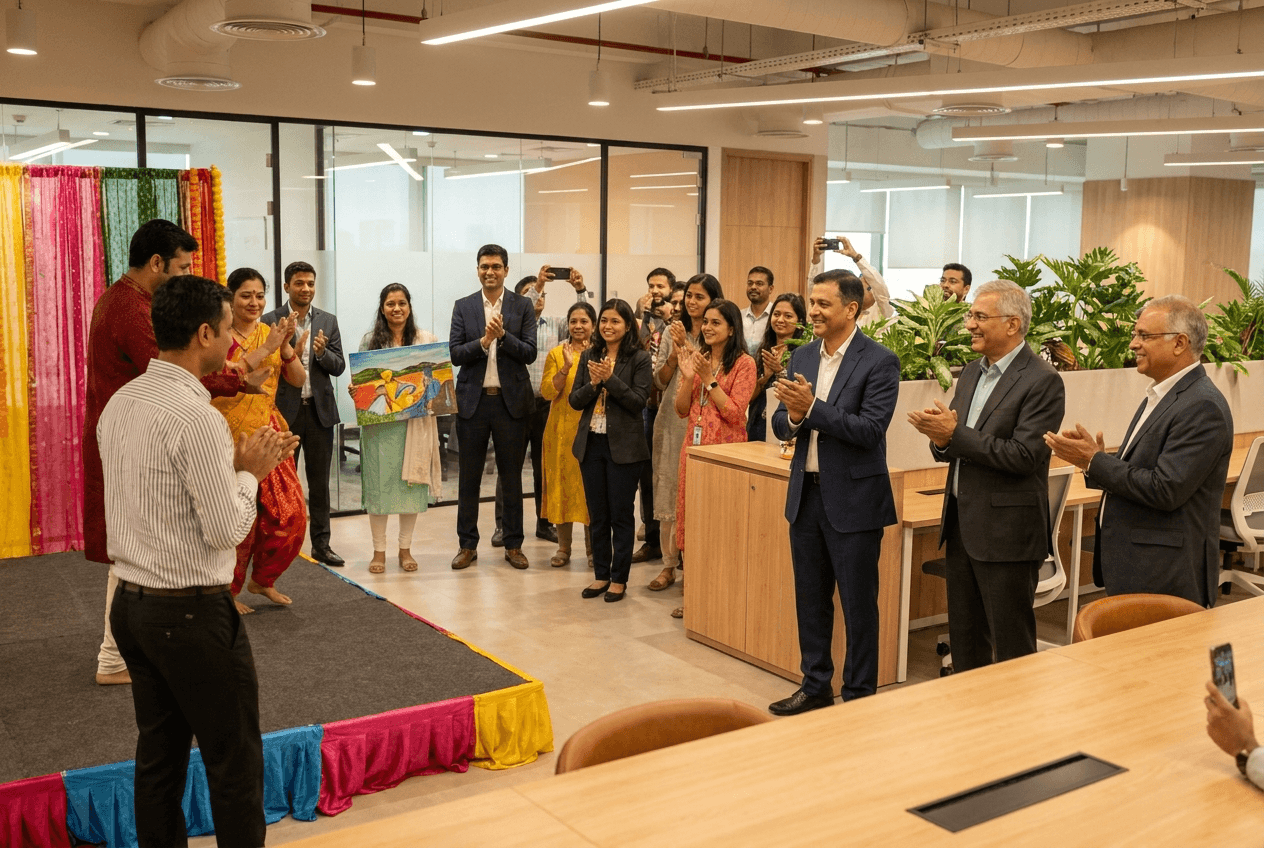
Genuine belonging is the most powerful retention factor available to employers and the most difficult to replicate through financial means. Employees who genuinely belong to a community at work, who have specific people and specific shared experiences that would be genuinely lost if they left, make different departure decisions than employees whose workplace relationships are purely professional. Art Gharana's creative workplace programme builds this kind of belonging through shared creative vulnerability and achievement: two colleagues who have struggled through the same tabla composition together have a relationship that does not form through work collaboration alone.
The Investment Signal
When a company invests in an employee's creative development, it sends a signal qualitatively different from paying a salary or providing health insurance. It says: we are investing in who you are becoming, not just what you are producing. This signal of genuine personal investment is one of the strongest loyalty-building experiences available, and it is particularly powerful for Gen Z and Millennial employees who are sensitive to the difference between employers who see them as resources and those who see them as people.
The Irreplaceability Factor
The most powerful practical retention mechanism of creative culture is irreplaceability: the sense that what you have at this company, the specific community, the specific experiences, the specific creative journey, cannot be found anywhere else. A company that has built genuine creative culture is not just providing a benefit. It is building a community asset that both parties would lose if the relationship ended.
The Network Effect of Creative Culture
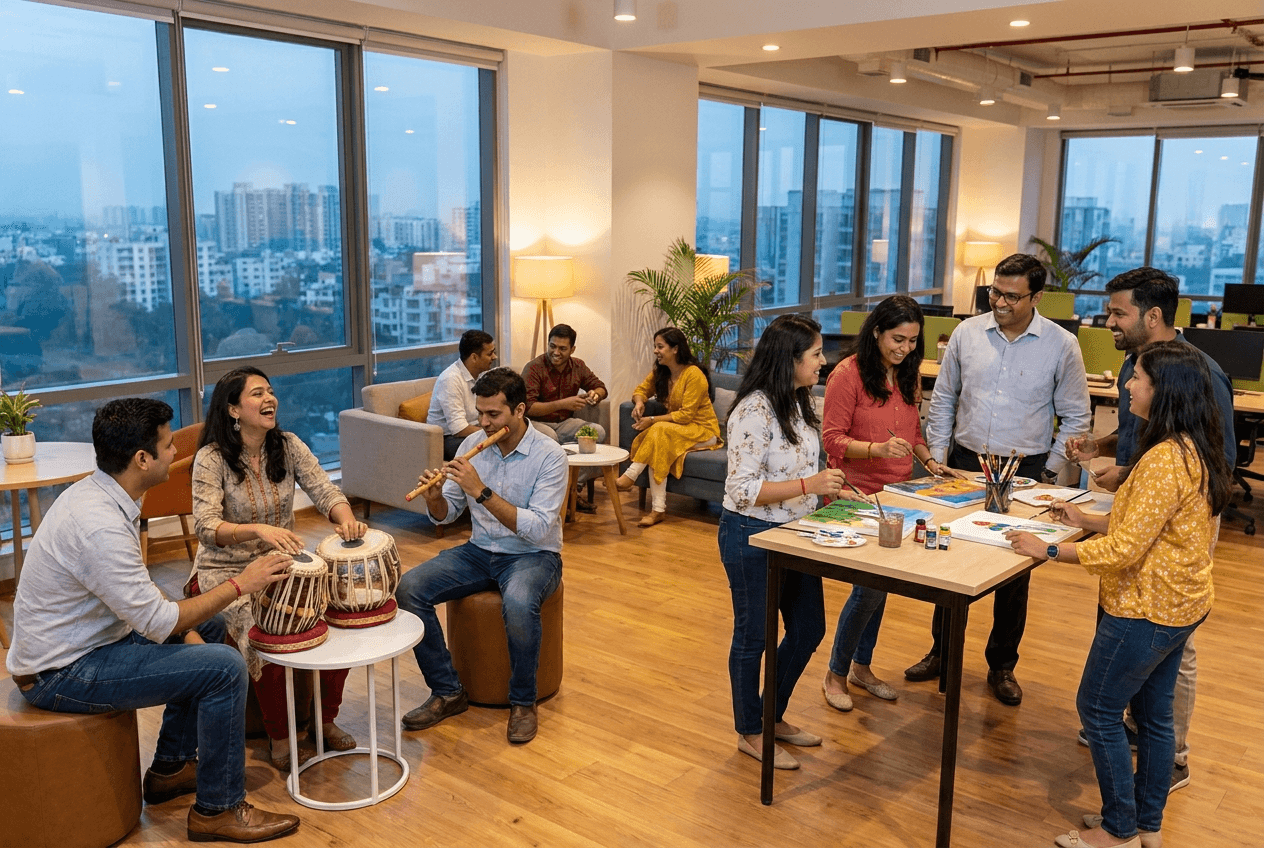 Creative culture has a network effect most HR leaders underestimate: the positive retention impact of each additional employee who participates grows with the size of the creative community. An employee who knows one colleague participates has one social connection through the programme. An employee who knows twenty colleagues participate has twenty social connections, twenty shared experiences and twenty relationships that would be lost by leaving. The retention value of the programme grows non-linearly with participation rate.
This means the ROI of creative culture investment compounds over time as participation grows. The first year builds a small creative community with moderate retention benefit. By the third year, the programme has become embedded in company culture with broad participation, and the retention benefit is significantly larger. Investing early and maintaining consistently generates compounding returns.
Case for Action: What HR Leaders Should Do Now

Audit Your Current Retention Drivers
Before designing a creative retention programme, understand why your best employees currently stay. If the answer is primarily financial, you are in a precarious position because financial retention is vulnerable to any competitor who decides to outbid you. If the answer includes culture and community, you have identified your most defensible retention asset and should invest in strengthening it deliberately.
Design for Regularity and Depth
The most effective creative retention programmes are regular rather than occasional, and progressively deepening rather than one-off experiences. A programme providing weekly sessions over an extended period, watching participants develop genuine skill and become invested in their own artistic development, is qualitatively different from an occasional cultural event. Explore Art Gharana's creative wellness sessions to understand the depth available.
Celebrate and Amplify
Amplify the retention benefit by celebrating employee creative achievements within the company. A quarterly showcase, company newsletter features, a LinkedIn post celebrating a team tabla workshop: all amplify the belonging and pride that make creative culture sticky. Book a retention-focused pilot session to begin building the evidence base for your organisation.
About Art Gharana
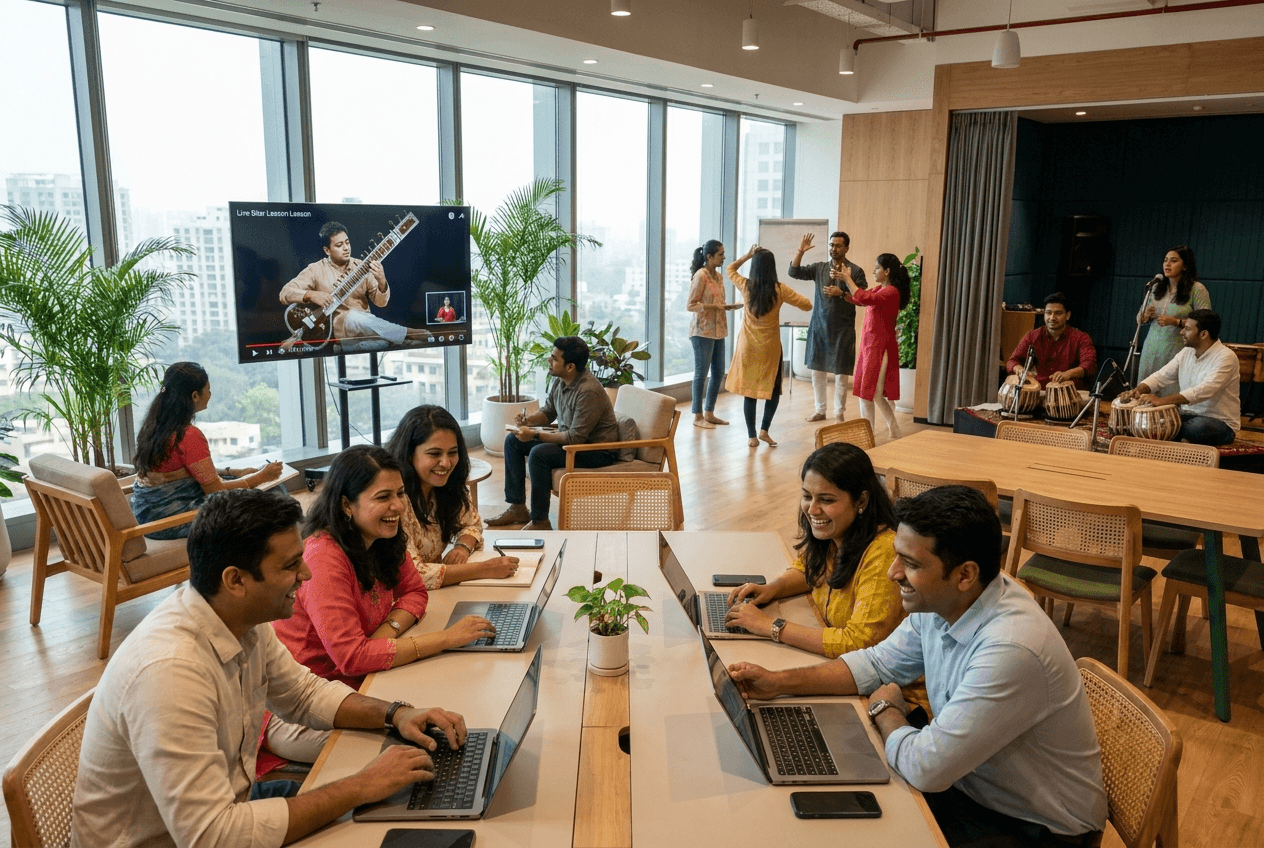 Art Gharana offers live music, dance, art and vocal sessions for corporate teams. Programmes are designed for regular, sustained engagement rather than one-off events. Review our plans and pricing for corporates, view our certified instructor profiles, and read what teams say about the impact of our programmes.
Frequently Asked Questions
1. Does workplace culture significantly affect employee retention?
Yes. Research consistently shows that employees who feel strong belonging, creative engagement and genuine personal investment from their employer leave at substantially lower rates than those retained purely through financial means.
2. What is the ROI of creative retention programmes for Indian companies?
Creative programmes typically cost a fraction of the cost of a single employee replacement. A programme preventing three to five departures per year in a team of fifty typically generates a return exceeding programme cost by five to fifteen times, before accounting for productivity and knowledge loss.
3. How long does it take to see retention benefits from a creative wellness programme?
Initial engagement improvements are visible within the first month. Measurable retention improvements typically become visible at the six-month mark, with the strongest effects compounding over twelve to eighteen months as the creative community grows and social bonds deepen.
Art Gharana | India B2B Blog Pack | Blog 6 of 8 | artgharana.com
India's Attrition Crisis: The Scale of the Problem
India's IT sector has consistently had among the highest voluntary attrition rates in the global knowledge economy. Even in the post-hiring-spree moderation of 2024 and 2025, voluntary attrition in Indian IT companies remains above 15 percent annually, and in high-demand specialisations like AI, cloud and cybersecurity, it is significantly higher. The BFSI sector has seen attrition accelerate as fintech startups compete aggressively for the same talent. The consulting sector sees attrition rates of 20 percent or higher among associate and analyst cohorts. The aggregate cost to the Indian corporate sector of this attrition is enormous. Replacement costs, productivity gaps during transition periods, knowledge loss and the morale impact on remaining employees compound to represent a drag on corporate performance that most companies have accepted as an industry norm rather than a manageable variable. The companies that have recognised attrition as a manageable variable and invested specifically in its reduction are building sustainable competitive advantages in talent deployment.
The Long-Term Vision: Creative Culture as Infrastructure
The most sophisticated way for HR leaders to think about creative retention programmes is as infrastructure investment rather than benefit expenditure. Infrastructure is evaluated on the cumulative value it enables over time, not on a per-use cost basis. A company's technology infrastructure, its office space, its learning and development platforms are evaluated on their long-term enabling value, not their per-session cost. Creative culture infrastructure should be evaluated the same way. Art Gharana's corporate programme, maintained consistently over three to five years, builds a cultural infrastructure of shared experiences, social relationships and creative achievements that is as valuable as any other organisational asset. The employees who have been through three years of the programme together have a shared creative history that bonds them to each other and to the organisation in ways that are genuinely irreplaceable. The company that has built this infrastructure has a retention asset that compounds over time, becoming more valuable with each passing year of consistent investment. This is the long-term vision for creative culture investment: not a wellness benefit, but a cultural infrastructure that supports every other dimension of employee experience.
Integrating Creative Culture with the Employee Journey
The most sophisticated approach to creative culture as a retention tool is to integrate it explicitly into the employee journey at every stage. At the recruitment stage: feature creative culture content prominently in employer brand materials. At the offer stage: include the Art Gharana programme as a named benefit with specific detail. At onboarding: schedule the new employee's first Art Gharana session in their first week, making the culture experience real before any other friction has the opportunity to create doubt. At the six-month review: include a question about creative programme participation in the review conversation. At the exit interview: specifically ask whether the creative wellness programme was a factor in the decision to stay or leave. By making creative culture an explicit, measured, continuously managed dimension of the employee journey, HR leaders can both maximise its retention benefit and continuously improve the programme based on employee feedback. The companies that do this systematically build the strongest and most distinctive creative workplace cultures in their sectors over time.
What Employees Say About Creative Culture and Retention
The most compelling evidence for the effectiveness of creative workplace culture in retaining employees comes from what employees themselves say when asked about their employment decisions. In survey after survey and qualitative interview study after study, employees who work at companies with genuine creative culture programmes cite them as significant factors in both their decision to join and their decision to stay. The language they use is revealing: it shows the company cares about who I am, not just what I do. I look forward to the sessions every week. It is the one thing I mention to every friend who asks me where they should work. These are not the responses of employees who are indifferent to their benefit. They are the responses of employees who have been genuinely surprised and moved by an employer's investment in their creative identity. Creating this kind of response is not complicated. It requires providing genuine creative experiences with genuine certified instructors at a genuine regular frequency. Art Gharana delivers all three elements. The employee response, when the programme is genuinely delivered, follows as predictably as the neuroscience of creativity predicts it should.
The Recognition Dimension of Creative Culture
Recognition of creative achievements within the company amplifies the retention benefits of creative programmes significantly. An employee whose progress in Art Gharana tabla sessions is acknowledged in a company all-hands, whose performance at a quarterly showcase is celebrated on the company LinkedIn page, who receives a personal message from a senior leader acknowledging their creative development, has experienced a form of recognition qualitatively different from a salary increment or a performance rating. They have been seen as a person, not evaluated as a professional, and the experience of being seen as a person by the company they work for is one of the most powerful loyalty-building experiences available. Building recognition of creative achievements into the company's regular rhythms of appreciation and celebration requires very little additional effort once the creative programme is in place. The content is there: employee session videos, performance clips from showcases, personal progress stories. The only additional ingredient required is intentionality: the decision to celebrate creative achievement as seriously as professional achievement. Companies that make this decision find that the cultural message it sends, we value you as a complete human being, is heard clearly and responded to with genuine loyalty.
Creative Culture and the Replacement Cost Calculation
The retention mathematics of creative culture investment are particularly clear when presented as a replacement cost calculation. Take a team of fifty mid-level software engineers in Bangalore at an average cost to company of fifteen lakh rupees annually. With a 20 percent voluntary attrition rate, this team experiences ten departures per year. At a replacement cost of one times annual salary, that is one and a half crore rupees per year in replacement spend. A creative wellness programme from Art Gharana for this team of fifty at weekly group sessions costs a fraction of this figure annually. If the programme reduces attrition by even three additional departures per year, the avoided replacement cost savings alone exceed the programme cost by a multiple. This is not a marginal benefit. It is a compelling financial case that can be presented to any CFO or finance committee in clear, quantitative terms that do not require any assumption about the softer benefits of creative culture to make the numbers work.
The Art Gharana Corporate Advantage
Art Gharana is the only platform combining live music, dance, art and vocal wellness specifically positioned for corporate teams in India. The programme covers seven disciplines: Bollywood dance, Kathak classical dance, Bharatanatyam classical dance, tabla Hindustani percussion, bansuri flute, Hindustani vocal and Carnatic vocal. All instructors are formally certified in their respective disciplines and have been specifically vetted for their ability to deliver engaging, effective sessions in the online corporate format. The programme is available to companies of any size, from five-person startups to enterprise organisations with thousands of employees across multiple Indian cities. Sessions are delivered entirely online, making the programme equally accessible to teams in Mumbai, Bangalore, Delhi, Chennai, Hyderabad, Pune, Ahmedabad, Jaipur, Lucknow, Chandigarh, Kochi, Coimbatore and every other Indian city, as well as to employees working from home in hybrid or fully remote arrangements. Session scheduling is fully flexible within IST, allowing HR leaders to slot sessions into working day schedules without disrupting core business hours. The corporate pilot programme is the recommended starting point: four to six weeks of weekly group sessions for a specific team of fifteen to fifty employees, generating direct engagement data, authentic employer brand content and a concrete business case for broader rollout. The pilot is completely free. The business case builds itself from the data generated in the first few sessions. Art Gharana is ready to begin today.
Key Takeaways for HR Leaders
The most important insights from this guide for HR leaders and CHROs considering creative wellness investment in India in 2026 can be summarised clearly. The global corporate wellness market is growing to $118.21 billion by 2034, driven by companies recognising that employee wellness has physical, mental and creative dimensions that the first generation of wellness programmes did not address. Indian companies that invest in the creative wellness pillar now, while it remains genuinely distinctive, will enjoy a talent attraction and retention advantage that compounds over the coming years. The scientific evidence for music and creative arts as workplace wellness interventions is robust and growing, with the 2025 BMC Complementary Medicine review providing the most recent and comprehensive confirmation. The retention ROI case is straightforward: preventing two to four additional departures per year from a team of fifty is typically sufficient to justify full programme cost. The employer brand ROI case is equally compelling: creative programmes generate authentic employee content that no budget can replicate for credibility or reach. And the Gen Z and Millennial alignment is direct: creative and cultural benefits address the specific values that drive the employment decisions of India's largest and most influential workforce cohorts. Art Gharana is ready to deliver all of this for your company. The pilot is free. Begin today.
Why Indian Companies Must Act Now on Creative Wellness
The window for first-mover advantage in creative corporate wellness in India is open right now. The global corporate wellness market is growing from $68.41 billion in 2025 to $118.21 billion by 2034, and the growth is being driven by companies recognising that the definition of employee wellness has expanded beyond fitness and meditation to include creative and cultural dimensions. Indian companies that position themselves at the forefront of this expanded definition now will have a multi-year head start over competitors who wait for the trend to become mainstream. The parallels with physical fitness benefits are instructive. In 2015, a company that offered a Cult.fit-style corporate fitness benefit was genuinely differentiating. By 2020, it was standard. By 2025, it was a hygiene factor that companies could not afford to omit but derived no competitive advantage from providing. The creative wellness trend is at exactly the 2015 stage in India in 2026. Companies that act now will enjoy the differentiation window. Companies that wait will enter the market as standard-setters rather than leaders, having missed the opportunity to build a genuine first-mover advantage in what is about to become a mainstream expectation.
Art Gharana's corporate programme is available immediately, with a pilot session that is completely free to experience. The programme has been designed specifically for corporate delivery in India, covering the disciplines that resonate most with Indian employees across all regional backgrounds, delivering in a live online format that works for teams in every Indian city and in hybrid and remote working arrangements, and providing the cultural authenticity that makes Indian corporate employees genuinely engage rather than merely tolerate. The business case for investing in creative wellness now rather than later is clear, the programme is ready to deliver, and the first-mover advantage is available to any Indian company willing to act on what its Gen Z and Millennial employees are already telling it they need. Art Gharana is ready to be that partner. The pilot is the first step. Begin today.
Summary: The Creative Wellness Investment for Indian HR Leaders
Indian HR leaders and CHROs who are evaluating creative wellness investment in 2026 are making a decision that will shape their company's talent position for the next five years. The evidence from the scientific literature, the economic research on attrition costs, the employer branding data from LinkedIn and Glassdoor, and the values research on Gen Z and Millennial workplace preferences all point to the same conclusion: creative and cultural wellness is the most underutilised and most value-generating employee benefits investment available to Indian companies in 2026. It is underutilised because it is newer than fitness and meditation benefits. It is value-generating because it is genuinely distinctive, generates authentic employer brand content, builds the community and belonging that reduce attrition, and directly addresses the values that drive the employment decisions of India's largest and most mobile workforce cohorts. Art Gharana is the programme that makes this investment real: live, certified, culturally resonant, online, flexible and beginning with a free pilot that generates its own business case from the first session.
People Also Ask: Creative Workplaces and Employee Retention in India
Why do creative workplaces retain employees longer?
Creative workplaces retain employees longer because they build the three retention factors most difficult to replicate through financial means: genuine belonging, personal investment and community irreplaceability. Employees who have shared creative experiences with colleagues have social bonds that would be specifically lost by leaving. Employees who have received employer investment in their creative development have experienced a signal of genuine personal care that salary increments cannot match. And employees who are part of a growing creative community have something at their current company that cannot be transferred to a new employer.
What is the attrition rate in Indian IT companies in 2026?
Voluntary attrition in Indian IT companies remains above 15 percent annually in 2026, even after the post-hiring-spree moderation of 2024 and 2025. In high-demand specialisations such as AI engineering, cloud architecture and cybersecurity, attrition rates are significantly higher. The BFSI sector has seen attrition accelerate as fintech startups compete for the same talent. The consulting sector reports attrition rates of 20 percent or higher among associate and analyst cohorts. The aggregate replacement cost of this attrition across the Indian knowledge economy runs to hundreds of billions of rupees annually.
How much does it cost to replace an employee in India?
Replacing an employee in India's IT and knowledge services sectors costs between 50 and 200 percent of that employee's annual salary, depending on seniority, specialisation and market conditions. For a mid-level software engineer at 15 lakh rupees per annum, the replacement cost ranges from 7.5 to 30 lakh rupees when recruitment fees, onboarding, productivity ramp and institutional knowledge loss are factored in. For senior roles, the replacement cost as a percentage of salary is even higher. This is why creative retention programmes that prevent even a few additional departures per year deliver ROI significantly exceeding their cost.
What is belonging at work and why does it reduce attrition?
Belonging at work is the experience of feeling genuinely connected to colleagues and organisation as a community rather than merely as a contractual relationship. Research consistently shows that employees who report strong workplace belonging leave at rates 30 to 50 percent lower than those who do not, even controlling for compensation levels. Belonging is built through shared experiences, genuine recognition and the sense that the employer sees and values the employee as a complete person. Creative wellness programmes build belonging through all three mechanisms simultaneously: shared creative experiences, recognition of creative achievement and employer investment in the employee's creative identity.
How do shared creative experiences build team cohesion in Indian companies?
Shared creative experiences build team cohesion in Indian companies because they create a form of social bond that professional collaboration alone cannot produce. When colleagues participate together in a live tabla workshop or Bollywood dance session, they experience a shared vulnerability, a shared challenge and a shared achievement that creates genuine human connection. Two colleagues who have struggled through the same Kathak composition together have a specific relationship, with specific memories and a specific shared story, that is qualitatively different from their professional relationship. This creative social bond is a genuine cohesion asset that reduces the social cost of departure.
Can a creative wellness program really reduce voluntary attrition in India?
Yes, creative wellness programs can measurably reduce voluntary attrition in Indian companies by addressing the root causes of departure that salary increments cannot resolve. The most common real reasons for voluntary attrition in Indian IT, beneath the salary justifications given in exit interviews, are feeling undervalued as a person, lacking genuine social connection with colleagues and sensing that the company does not see them as more than a professional resource. Creative wellness programmes directly address all three root causes: they signal personal investment, build genuine social community and demonstrate that the employer values the employee's complete human identity.
What is the network effect of creative culture in a company?
The network effect of creative culture means that the retention and attraction value of a creative wellness programme grows non-linearly as more employees participate. An employee who knows one colleague is in an Art Gharana programme has one social connection through the programme. An employee who knows twenty colleagues participate has twenty social connections and twenty relationships that would be lost by leaving. As participation grows, the creative community becomes increasingly valuable as a retention asset, and the employer brand generated by employee social content increases in reach and credibility. This compounding network effect means early investment in creative culture generates increasing returns over time. Art Gharana's corporate programme also covers Bollywood dance classes, delivered live by certified instructors to corporate teams across India. Also available through Art Gharana: Carnatic vocal classes, delivered live by certified instructors to corporate teams across India. Also available through Art Gharana: bansuri flute classes, delivered live by certified instructors to corporate teams across India. Also available through Art Gharana: Hindustani classical vocal classes, delivered live by certified instructors to corporate teams across India.