ChatGPT
 Google AI
 Grok
Grok Claude
Millennials, born between 1981 and 1996, are now the largest single cohort in India's corporate workforce. They are the team leads, senior engineers, managers and functional heads who carry institutional knowledge. Retaining them is a business continuity imperative. And retaining them requires understanding what they actually want from an employer in 2026, which is significantly different from what the previous generation wanted and from what most Indian companies are currently providing.
The short version: Millennials want to be seen, developed and enriched as people, not just compensated as professionals. They want flexible, meaningful work. They want genuine community. They want benefits that reflect who they are. And increasingly, they want creative and cultural experiences as part of their working life, not something they have to seek entirely outside work hours.
The Millennial Benefit Hierarchy in 2026
Flexible Working Arrangements
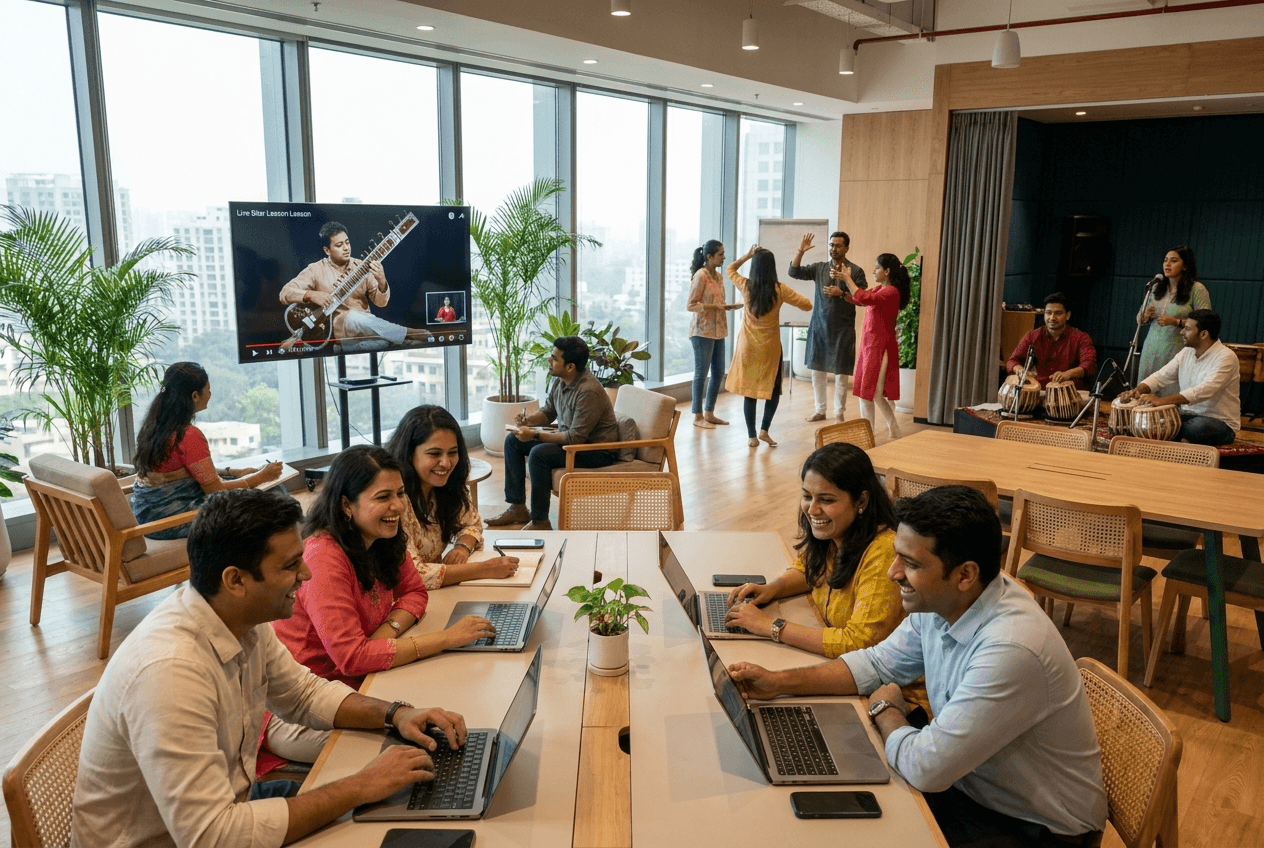
Flexibility consistently ranks first or second in Millennial workplace benefit surveys across India. After years of successful hybrid and remote working, Millennials have established they can be effective from home, and most are unwilling to accept rigid in-office mandates. Companies without genuinely flexible working policies are starting from a structural disadvantage in the Millennial talent market.
Learning and Development Opportunities
Millennials are India's most credentialing-focused workforce generation. They want employers who invest in their growth, not just their performance. Learning programmes that develop skills beyond the immediate professional context, including creative skills like music and dance, are particularly valued because they signal genuine investment in the employee as a whole person rather than a professional resource.
Mental Health and Wellbeing Support
India's Millennial workforce has been uniquely affected by the mental health consequences of the pandemic and the pressure of supporting families while managing demanding careers. Mental health support, wellbeing programmes and work-life integration benefits rank consistently highly in Millennial benefit preference surveys across Indian metros and Tier-2 cities.
Creative and Cultural Benefits
The benefit category most Indian companies are missing, and that represents the most significant differentiating opportunity, is creative and cultural benefits. Millennials grew up with Bollywood, discovered international music through Spotify and YouTube, and follow classical arts artists on Instagram. A company that offers live music and dance sessions as a workplace benefit is speaking directly to this dimension of Millennial identity. Explore Art Gharana's creative wellness and cultural sessions for the full range of options.
The Benefits That No Longer Work for Millennials
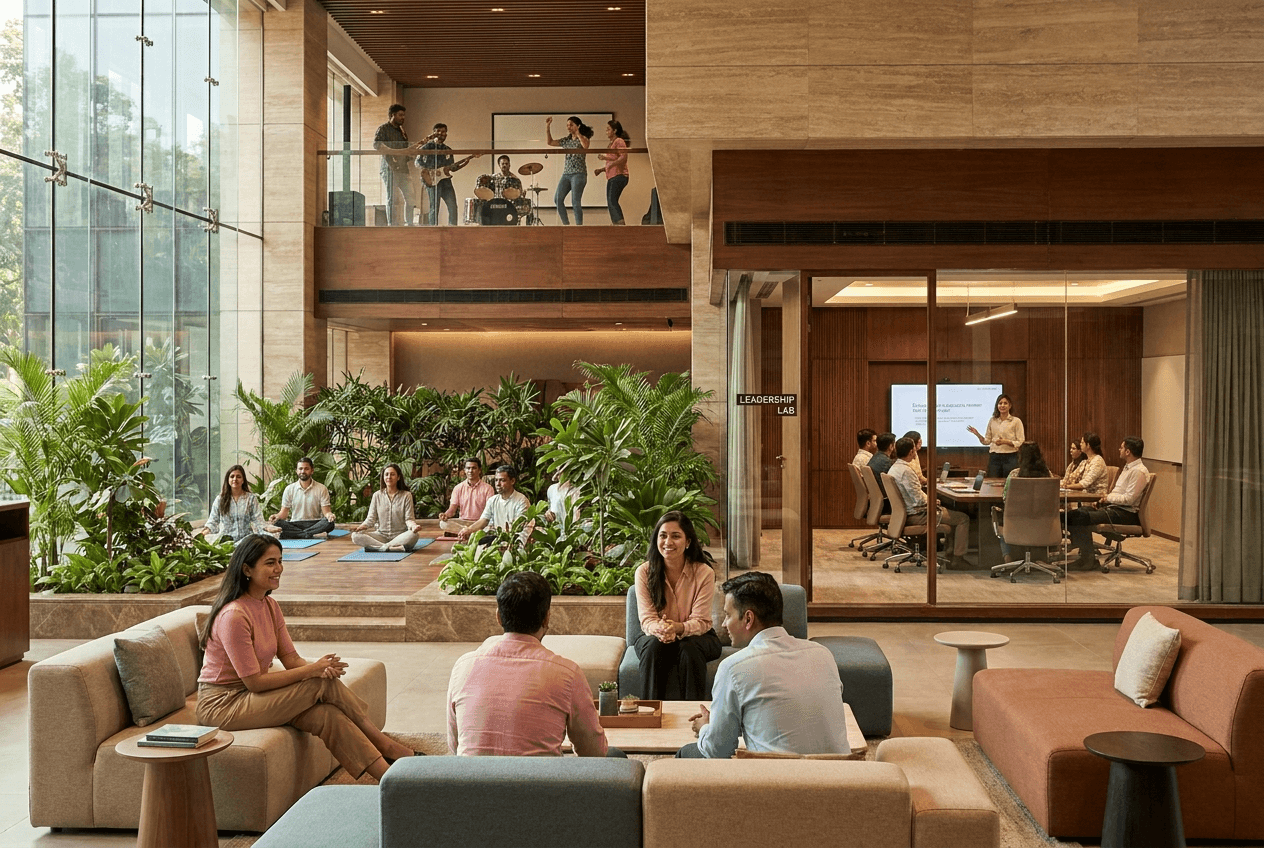 Catered lunches and office snacks were differentiating perks in 2015. They are baseline expectations in 2026 and merit no mention in talent attraction. Table tennis and pool tables are now associated with companies that invest in furniture rather than people. Free gym memberships and yoga apps have become so ubiquitous across Indian corporate benefits packages that they carry no differentiation value.
The companies that attract the best Millennial talent in 2026 are those offering something genuinely different: something that reflects a thoughtful understanding of what Millennial employees actually value. The first-mover window for creative wellness differentiation is open now. It will close as more companies recognise the opportunity.
Why Creative Benefits Resonate Specifically with Millennials
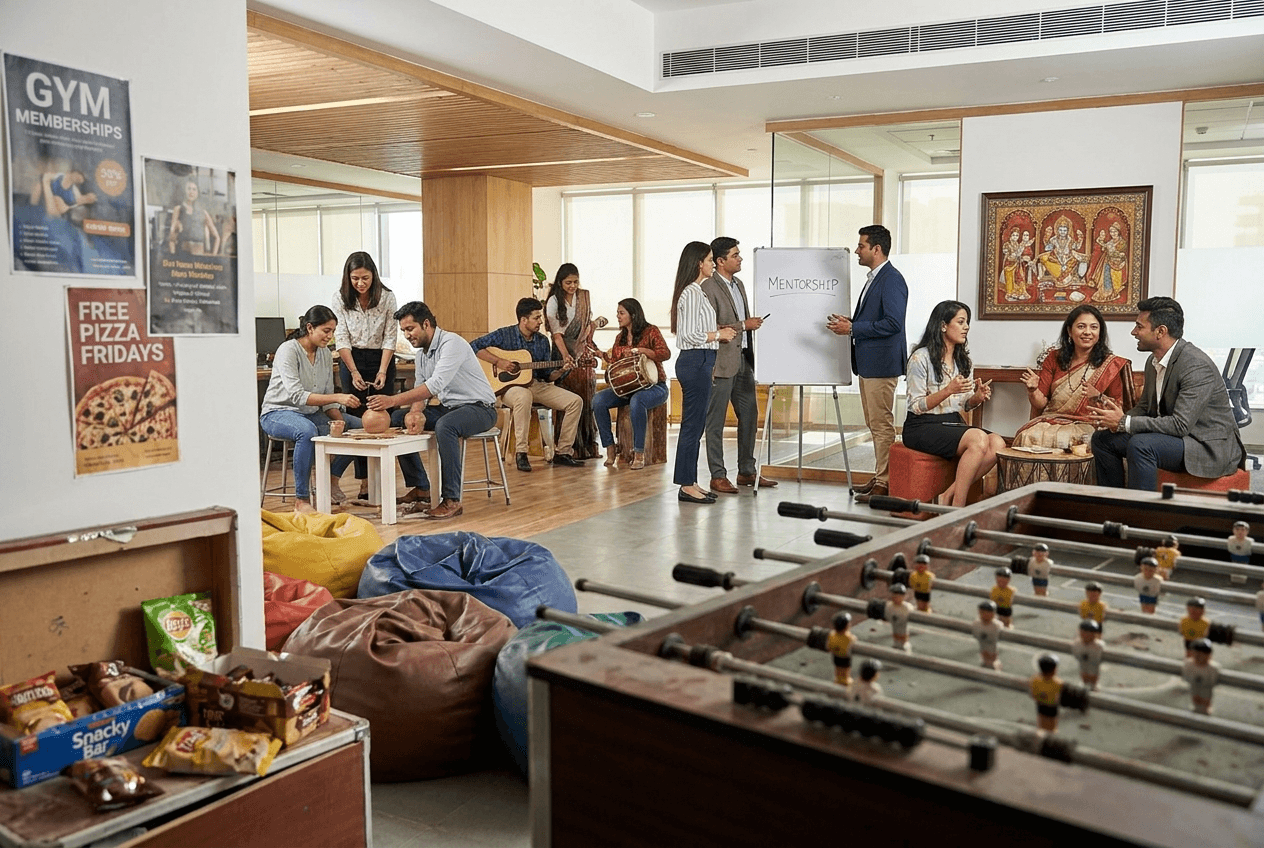 Creative benefits resonate with Millennials for four specific reasons. First, identity expression: Millennials have their personal and professional identities simultaneously visible on social media. A company providing creative benefits enables employees to express a dimension of their identity publicly in ways that reinforce their sense of the company as a place that understands who they are. A post about a tabla session or Bollywood dance class is simultaneously personal content and employer brand content.
Second, genuine skill development. Unlike a gym membership, a music or dance programme develops a new skill that did not exist before. Millennials value genuine personal development, the experience of becoming better at something meaningful to them, and employer-sponsored creative learning delivers this in a way few other benefits can.
Third, shared experience. Millennials who learn the same tabla composition or Bollywood dance sequence together build social bonds that are qualitatively different from those formed through work collaboration alone. These creative friendships are among the strongest retention factors available.
Fourth, cultural connection. Many Indian Millennials feel a degree of disconnection from classical arts and cultural traditions, having grown up in environments that prioritised professional and academic achievement over cultural education. A company that provides access to live Hindustani vocal classes or Kathak training is offering something that resonates with a genuine cultural interest many Millennials have never had the opportunity to pursue seriously.
The Hybrid Work Dimension
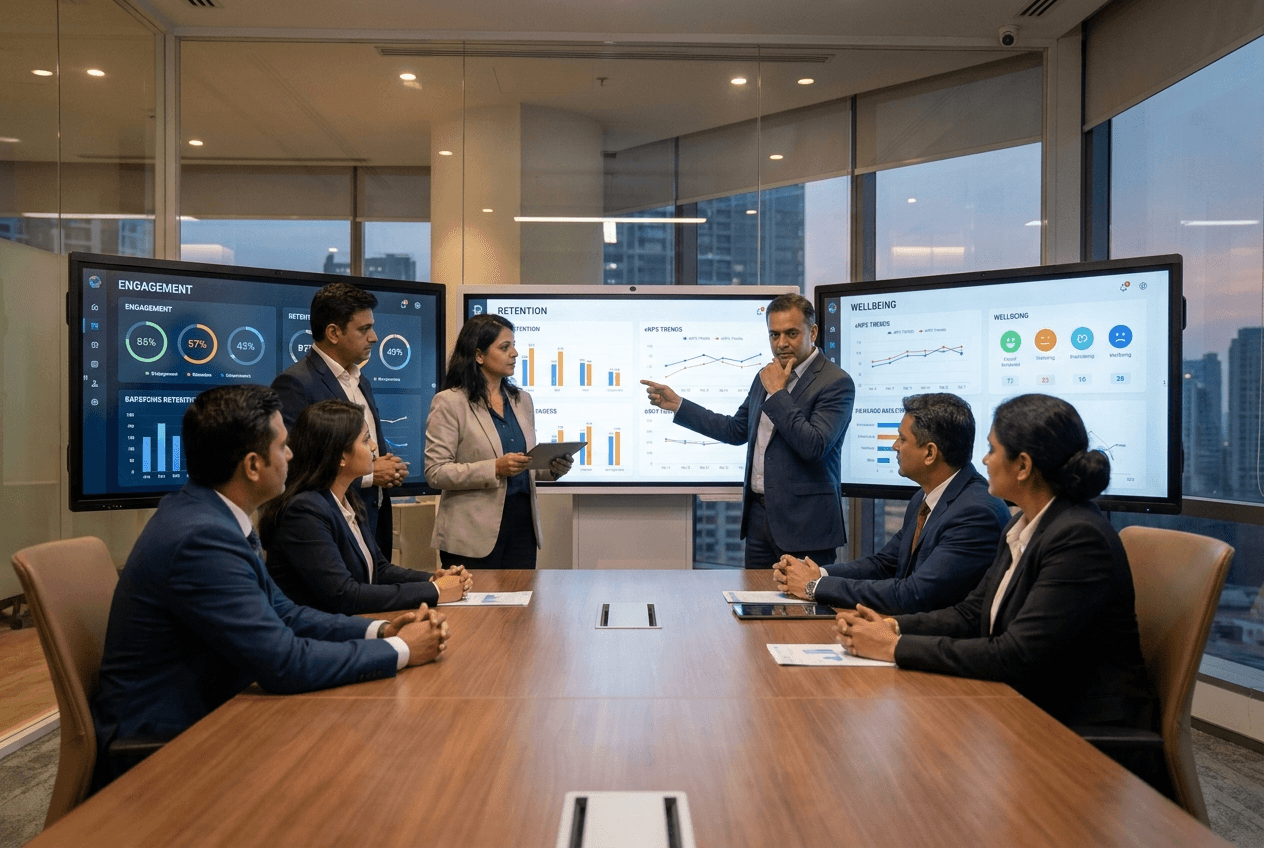 Millennial employees are the primary drivers of the hybrid work preference that has fundamentally changed the Indian corporate landscape. Benefits that fit the hybrid model, accessible regardless of whether the employee is in the office or at home on a given day, are valued significantly more highly than benefits requiring physical presence. Art Gharana's online live session format is natively hybrid, equally accessible to every employee regardless of location. This is not a minor technical feature. It is a fundamental design advantage.
Designing the Millennial Benefits Stack
The most effective Millennial-focused benefits stack in India in 2026 combines flexible working policies, clear L&D investment, mental health support and a genuinely distinctive creative benefit. Understand your specific Millennial employee community: is your team predominantly North Indian, with strong affinity for Hindustani vocal or Kathak? Is there a significant South Indian community that would respond enthusiastically to Carnatic vocal or Bharatanatyam? Is your team primarily digitally fluent Millennials who would love a Bollywood dance session? Use this understanding to customise your programme design. Explore our full programme range and book a Millennial-focused pilot session to generate the first wave of data.
About Art Gharana
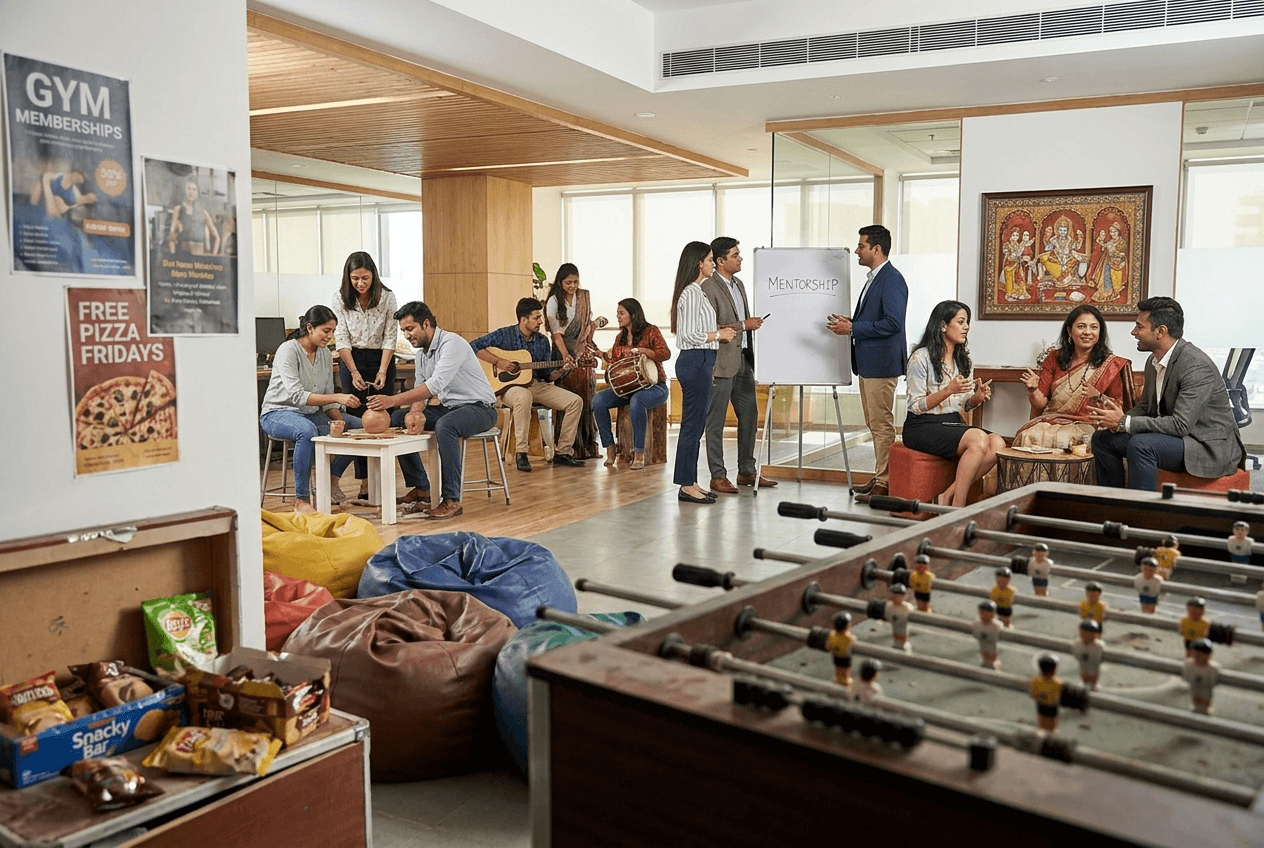 Art Gharana offers live music, dance, art and vocal sessions for corporate teams across India. Certified instructors, customisable programmes, online delivery for hybrid and remote teams. Review plans and pricing and explore music and dance wellness for teams to design a creative benefit Millennial employees will genuinely value.
Frequently Asked Questions
1. What do Millennial employees want from employers in India in 2026?
Flexibility, genuine L&D investment, mental health support and distinctive creative and cultural benefits that reflect who they are as people, not just what they produce as professionals.
2. Why are creative benefits good for Millennial retention?
Creative benefits provide genuine skill development, shared experiences that build social bonds, cultural connection and identity expression opportunities. They address the specific values that drive Millennial retention more effectively than financial benefits.
3. How does Art Gharana's programme fit into a Millennial benefits strategy?
Art Gharana provides the creative and cultural pillar of a complete Millennial benefits stack: live interactive sessions that develop genuine skill, build team community and generate the kind of authentic employer brand content that Millennial employees share naturally on social media.
Art Gharana | India B2B Blog Pack | Blog 5 of 8 | artgharana.com
The L&D Dimension of Creative Benefits
One of the most important and underappreciated aspects of Art Gharana's corporate programme for Millennial employees is its genuine learning and development dimension. This is not only a wellness benefit that provides relaxation or stress relief, though it delivers both. It is a learning benefit that develops genuine, certifiable skills in classical and popular arts traditions. A Millennial employee who completes six months of Art Gharana tabla classes has developed a real skill, demonstrable on their own profile, that belongs to them permanently regardless of where they next work. This L&D dimension of creative benefits is significant because it addresses one of the primary Millennial benefit priorities, genuine investment in their personal development, in a way that standard wellness programmes cannot. The difference between offering a gym membership, which maintains an existing physical capability, and offering a tabla or Carnatic vocal learning programme, which develops a completely new creative capability, is the difference between a consumption benefit and a development investment. Millennials understand and value this distinction, and employers who offer genuine creative learning development are communicating something more powerful about their relationship with their employees than any standard benefits package can express.
The Social Media Dimension
Millennial employees are the generation that first made professional life publicly visible on LinkedIn and personal life visible on Instagram. The social media dimension of creative benefits is particularly significant for this cohort because their professional identity and creative identity are publicly intertwined in ways that were not true for previous generations. A Millennial employee whose company provides live Art Gharana sessions does not experience this benefit in isolation. They experience it as part of a publicly visible professional identity narrative: this is the kind of company I work for, this is the kind of person my company enables me to be. The content that Millennial employees generate about their creative workplace experiences, Instagram Reels of Bollywood dance sessions, LinkedIn posts about tabla progress, casual mentions in professional discussions of their company's music programme, is among the highest-quality employer brand content available. It is authentic, specific, genuinely enthusiastic and reaching precisely the right audience: other Millennial professionals who are evaluating their own employment options. The employer brand value of this organic social content is clearly substantial, and it is generated automatically, at no additional cost, as a natural by-product of an engaging creative programme.
Why Now Is the Right Time for Millennial-Focused Creative Benefits
The window for first-mover advantage in creative corporate wellness in India is open right now and will not remain open indefinitely. The corporate wellness market is growing at a rate that means what is distinctive in 2026 will be standard in 2028. Companies that establish their creative wellness programme now, build the employer brand content, develop the internal creative community and generate the retention and engagement data, will be in a fundamentally different competitive position than companies that wait until creative wellness has become a commodity. The parallels with physical fitness benefits are instructive. In 2015, a company that offered a Cult.fit-style corporate fitness benefit was genuinely differentiating. By 2020, it was standard. By 2025, it was a hygiene factor. Companies that got ahead of the fitness wellness wave in 2015 enjoyed years of genuine employer brand differentiation that late adopters could not replicate. The creative wellness wave is at exactly this stage in India in 2026. Art Gharana is ready to partner with the companies that want to be the first movers. The pilot session is completely free. The competitive advantage of early adoption is real and compounding.
Millennials and the Indian Cultural Heritage
Many Indian Millennials feel a degree of disconnection from classical arts and cultural traditions, having grown up in environments that prioritised professional and academic achievement over cultural education. A company that provides access to live [Hindustani vocal classes], Kathak training or tabla instruction is offering something that resonates with a genuine cultural interest many Millennials have never had the opportunity to pursue seriously. The employee who begins tabla classes at twenty-eight, supported by their employer, is having an experience that is simultaneously personally enriching, culturally connecting and professionally differentiating. They are developing a skill that earns genuine admiration from parents and grandparents who grew up with these traditions. They are building a cultural identity that is authentically their own, not inherited or performed for social approval. And they are doing it through an experience provided by their employer, which creates a specific and lasting loyalty to that employer that no salary increment can replicate. This cultural dimension of Art Gharana's corporate programme is among its most distinctive and most powerful features in the Indian market.
Designing the Millennial Benefits Stack
The most effective Millennial benefits stack in India in 2026 is not the most expensive one. It is the most thoughtfully designed one: the package that addresses Millennial values specifically and completely, that provides flexibility as the foundation, genuine development as the superstructure and distinctive creative and cultural experience as the differentiating capstone. A company that has designed this package has built a talent magnet that generates applications, improves offer acceptance rates, extends average tenure and builds a talent pipeline of referred high performers. The investment required to build this package is proportionate to the impact. Flexible working policies are primarily organisational rather than financial investments. Mental health support adds a modest per-employee cost. Creative wellness through Art Gharana adds a further modest per-employee cost but delivers the highest employer brand and retention ROI of any element in the stack precisely because it is genuinely distinctive in a market where everything else has been commoditised.
How to Start: The Millennial Culture Pilot
The simplest path to implementing a Millennial-resonant creative culture programme is a structured pilot of four to six weeks with a specific team. Art Gharana recommends beginning with a team of twenty to fifty employees who are predominantly Millennial, scheduling weekly group sessions in disciplines identified as most likely to resonate with that specific team's cultural backgrounds and interests, and building measurement of engagement, participation and social content generation into the pilot from the start. The pilot generates engagement data, employee feedback, employer brand content and a concrete business case for broader rollout. It also generates the most compelling possible evidence for the internal business case: the lived experience of actual Millennial employees genuinely enjoying a distinctive creative experience, in their own words, on their own social media channels, with no HR mediation required. Book a Millennial-focused pilot session to begin today.
The Art Gharana Corporate Advantage
Art Gharana is the only platform combining live music, dance, art and vocal wellness specifically positioned for corporate teams in India. The programme covers seven disciplines: Bollywood dance, Kathak classical dance, Bharatanatyam classical dance, tabla Hindustani percussion, bansuri flute, Hindustani vocal and Carnatic vocal. All instructors are formally certified in their respective disciplines and have been specifically vetted for their ability to deliver engaging, effective sessions in the online corporate format. The programme is available to companies of any size, from five-person startups to enterprise organisations with thousands of employees across multiple Indian cities. Sessions are delivered entirely online, making the programme equally accessible to teams in Mumbai, Bangalore, Delhi, Chennai, Hyderabad, Pune, Ahmedabad, Jaipur, Lucknow, Chandigarh, Kochi, Coimbatore and every other Indian city, as well as to employees working from home in hybrid or fully remote arrangements. Session scheduling is fully flexible within IST, allowing HR leaders to slot sessions into working day schedules without disrupting core business hours. The corporate pilot programme is the recommended starting point: four to six weeks of weekly group sessions for a specific team of fifteen to fifty employees, generating direct engagement data, authentic employer brand content and a concrete business case for broader rollout. The pilot is completely free. The business case builds itself from the data generated in the first few sessions. Art Gharana is ready to begin today.
Key Takeaways for HR Leaders
The most important insights from this guide for HR leaders and CHROs considering creative wellness investment in India in 2026 can be summarised clearly. The global corporate wellness market is growing to $118.21 billion by 2034, driven by companies recognising that employee wellness has physical, mental and creative dimensions that the first generation of wellness programmes did not address. Indian companies that invest in the creative wellness pillar now, while it remains genuinely distinctive, will enjoy a talent attraction and retention advantage that compounds over the coming years. The scientific evidence for music and creative arts as workplace wellness interventions is robust and growing, with the 2025 BMC Complementary Medicine review providing the most recent and comprehensive confirmation. The retention ROI case is straightforward: preventing two to four additional departures per year from a team of fifty is typically sufficient to justify full programme cost. The employer brand ROI case is equally compelling: creative programmes generate authentic employee content that no budget can replicate for credibility or reach. And the Gen Z and Millennial alignment is direct: creative and cultural benefits address the specific values that drive the employment decisions of India's largest and most influential workforce cohorts. Art Gharana is ready to deliver all of this for your company. The pilot is free. Begin today.
Why Indian Companies Must Act Now on Creative Wellness
The window for first-mover advantage in creative corporate wellness in India is open right now. The global corporate wellness market is growing from $68.41 billion in 2025 to $118.21 billion by 2034, and the growth is being driven by companies recognising that the definition of employee wellness has expanded beyond fitness and meditation to include creative and cultural dimensions. Indian companies that position themselves at the forefront of this expanded definition now will have a multi-year head start over competitors who wait for the trend to become mainstream. The parallels with physical fitness benefits are instructive. In 2015, a company that offered a Cult.fit-style corporate fitness benefit was genuinely differentiating. By 2020, it was standard. By 2025, it was a hygiene factor that companies could not afford to omit but derived no competitive advantage from providing. The creative wellness trend is at exactly the 2015 stage in India in 2026. Companies that act now will enjoy the differentiation window. Companies that wait will enter the market as standard-setters rather than leaders, having missed the opportunity to build a genuine first-mover advantage in what is about to become a mainstream expectation.
Art Gharana's corporate programme is available immediately, with a pilot session that is completely free to experience. The programme has been designed specifically for corporate delivery in India, covering the disciplines that resonate most with Indian employees across all regional backgrounds, delivering in a live online format that works for teams in every Indian city and in hybrid and remote working arrangements, and providing the cultural authenticity that makes Indian corporate employees genuinely engage rather than merely tolerate. The business case for investing in creative wellness now rather than later is clear, the programme is ready to deliver, and the first-mover advantage is available to any Indian company willing to act on what its Gen Z and Millennial employees are already telling it they need. Art Gharana is ready to be that partner. The pilot is the first step. Begin today.
Summary: The Creative Wellness Investment for Indian HR Leaders
Indian HR leaders and CHROs who are evaluating creative wellness investment in 2026 are making a decision that will shape their company's talent position for the next five years. The evidence from the scientific literature, the economic research on attrition costs, the employer branding data from LinkedIn and Glassdoor, and the values research on Gen Z and Millennial workplace preferences all point to the same conclusion: creative and cultural wellness is the most underutilised and most value-generating employee benefits investment available to Indian companies in 2026. It is underutilised because it is newer than fitness and meditation benefits. It is value-generating because it is genuinely distinctive, generates authentic employer brand content, builds the community and belonging that reduce attrition, and directly addresses the values that drive the employment decisions of India's largest and most mobile workforce cohorts. Art Gharana is the programme that makes this investment real: live, certified, culturally resonant, online, flexible and beginning with a free pilot that generates its own business case from the first session.
People Also Ask: Workplace Benefits for Millennials in India
What are the top workplace benefits Millennials in India want in 2026?
The top workplace benefits Millennials in India want in 2026 are: flexible working arrangements, genuine learning and development investment, mental health and wellbeing support, distinctive creative and cultural experiences, and clear career growth pathways. Research from 2024 and 2025 surveys of Indian Millennial professionals consistently shows that these five categories rank above additional financial compensation in influencing their decision to join or stay with an employer. Creative and cultural benefits, the most underrepresented category in current Indian corporate benefits packages, generate among the highest positive responses when Millennial employees are asked what would most increase their job satisfaction.
Are gym memberships still a good employee benefit for Millennials in India?
No, gym memberships are no longer a differentiating employee benefit for Millennials in India in 2026. Gym memberships and yoga subscriptions have become so ubiquitous across Indian corporate benefits packages that they carry essentially no differentiation value. Millennials expect physical wellness benefits as a hygiene factor but do not cite them as factors in their employer choice. The benefits that actually differentiate employers for Millennials in 2026 are distinctive creative and cultural experiences, genuine L&D investment and flexible working policies that go beyond the minimum.
How do creative benefits help retain Millennial employees in India?
Creative benefits retain Millennial employees in India through four specific mechanisms: identity expression, through publicly shareable creative experiences that reflect who they are; genuine skill development, which delivers the personal growth Millennials actively prioritise; shared experience, which builds the social bonds that make leaving a company genuinely costly; and cultural connection, which satisfies the interest in Indian classical and popular arts that many Millennials have never had the opportunity to pursue seriously. Together, these mechanisms create a form of loyalty that financial benefits cannot replicate.
What is the average tenure of Millennial employees in Indian IT companies?
The average tenure of Millennial employees in Indian IT companies varies by seniority and company type, but research consistently shows that Millennial voluntary attrition rates in Indian IT exceed 15 percent annually, with many mid-level professionals changing employers every two to three years. Companies that have invested in distinctive creative culture and genuine L&D programmes consistently report above-average Millennial tenure, suggesting that these investments produce measurable loyalty effects beyond what compensation alone can achieve.
Do Millennial employees in India prefer remote work or in-office work?
Millennial employees in India predominantly prefer hybrid working arrangements over either fully remote or fully in-office models. Most Indian Millennial knowledge workers have settled into a pattern of two to three days per week in the office and two to three days remote, and they have designed their professional and personal lives around this flexibility. Benefits that work in both contexts, accessible regardless of whether the employee is in the office or at home, are valued significantly more highly than benefits requiring physical presence. Art Gharana's online live creative wellness sessions are natively hybrid, equally accessible to every employee regardless of their working location on a given day.
What role do cultural programs play in Millennial employee retention in India?
Cultural programs play a significant role in Millennial employee retention in India because they address dimensions of identity, belonging and personal enrichment that standard benefits cannot satisfy. Many Indian Millennials feel a degree of disconnection from their classical arts and cultural heritage, and employers who provide access to live Indian classical music, dance or vocal instruction reconnect them to traditions that are genuinely meaningful to them. This cultural reconnection through employer investment creates a specific and lasting loyalty that is qualitatively different from salary-based retention and significantly more durable.
How much should Indian companies budget for creative wellness benefits?
Indian companies should budget for creative wellness benefits relative to the cost of attrition in their specific workforce. As a rule of thumb, a creative wellness budget of one to two percent of total annual compensation for a team is sufficient to fund a comprehensive Art Gharana programme at weekly group session frequency. At typical Indian IT attrition rates and replacement costs, preventing two to three additional departures per year through creative wellness investment is sufficient to deliver a positive ROI from this budget allocation, before accounting for employer brand improvement and offer acceptance rate uplift. Art Gharana's corporate programme also covers Carnatic vocal classes, delivered live by certified instructors to corporate teams across India. Also available through Art Gharana: bansuri flute classes, delivered live by certified instructors to corporate teams across India. Also available through Art Gharana: our certified instructor profiles, delivered live by certified instructors to corporate teams across India. Also available through Art Gharana: employee testimonials, delivered live by certified instructors to corporate teams across India.