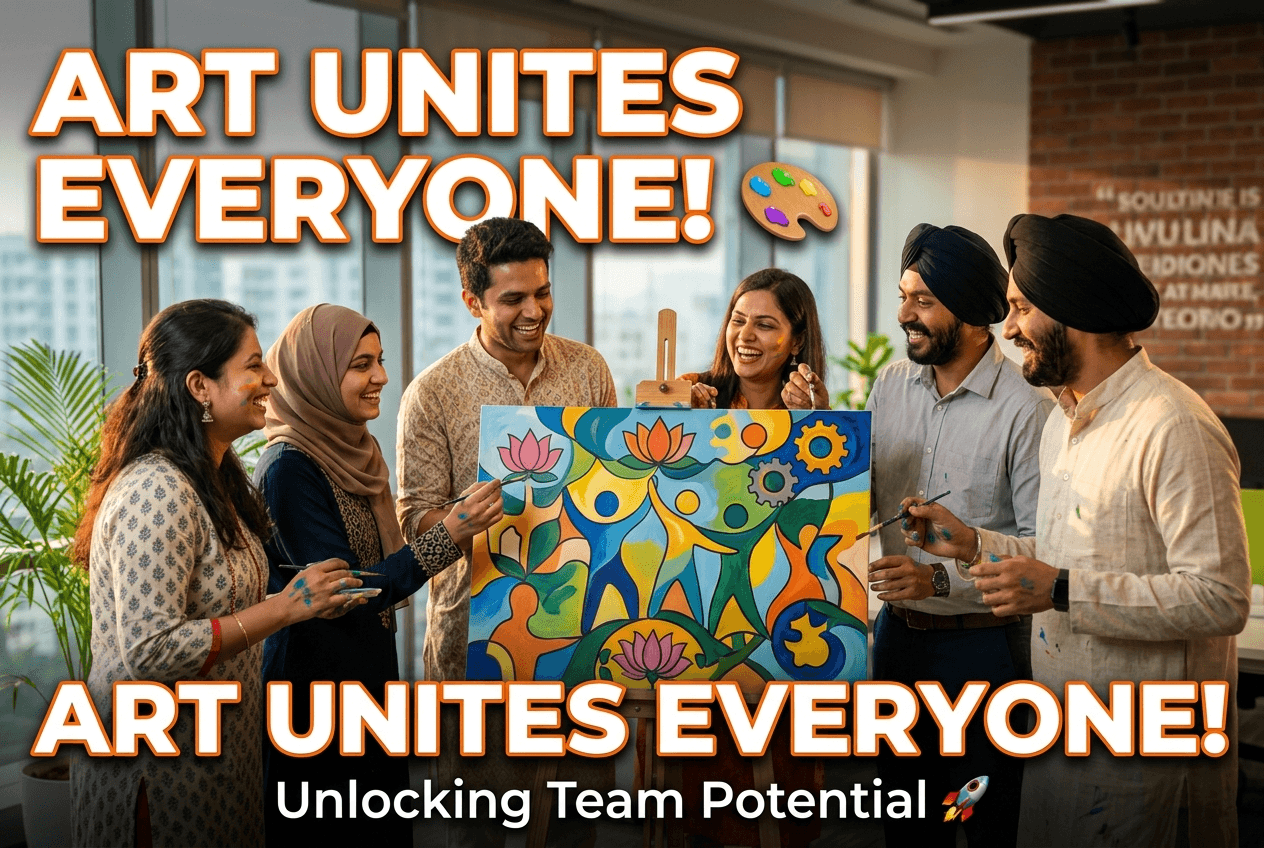
ChatGPT
 Google AI
 Grok
Grok Claude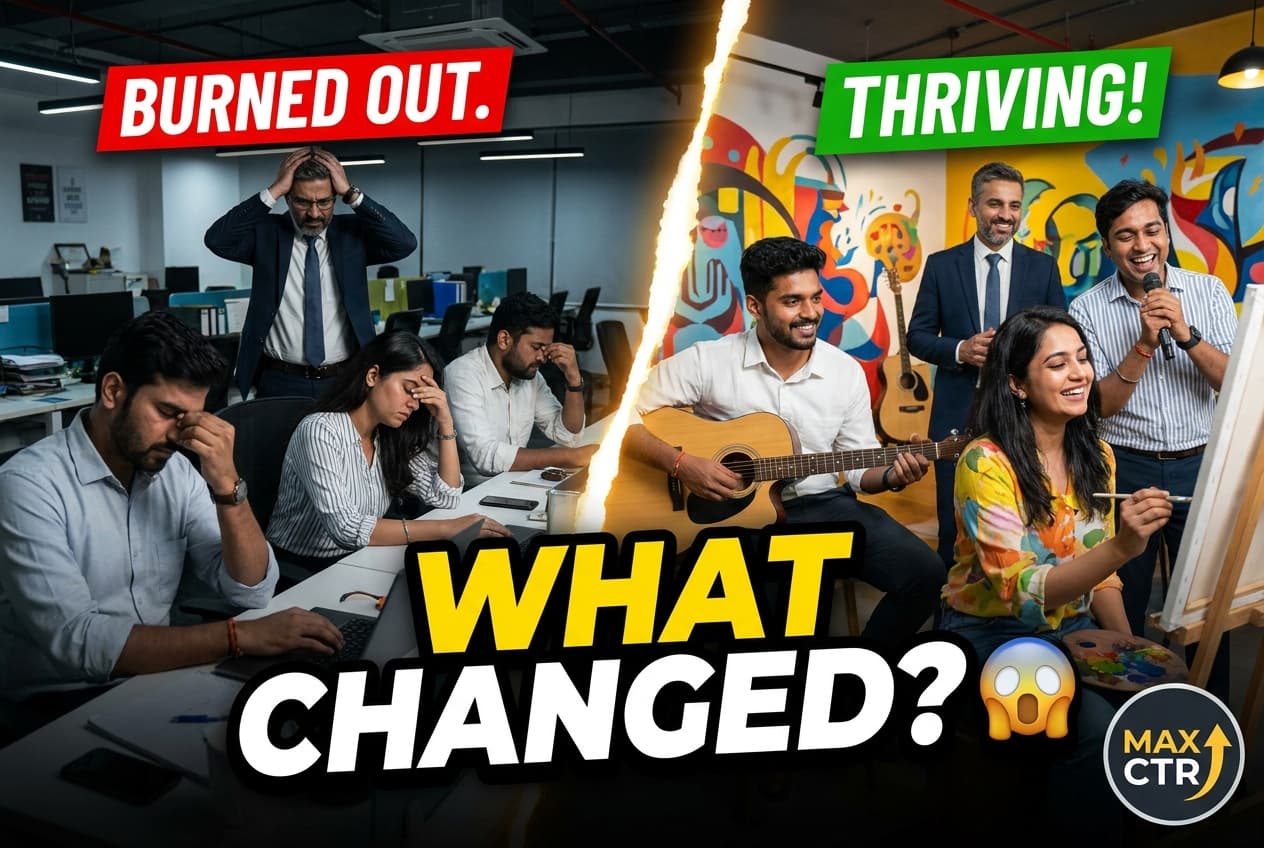
Workplace happiness in India is in crisis. Multiple surveys across IT, BFSI, consulting and manufacturing sectors consistently show declining employee satisfaction scores despite significant salary inflation. More money is not solving the problem, because the drivers of workplace happiness are not primarily financial. They are experiential, relational and creative.
The science on this point is clearer than most HR leaders realise. A 2025 scoping review published in BMC Complementary Medicine confirmed that music-based interventions in workplaces show meaningful benefits for employee mood, stress levels and overall job satisfaction. Music reduces cortisol, lowers blood pressure and stimulates endorphin release. Active music-making amplifies these effects significantly. These are not soft benefits. They are measurable physiological outcomes with direct relevance to employee performance.
The Neuroscience of Music and Happiness
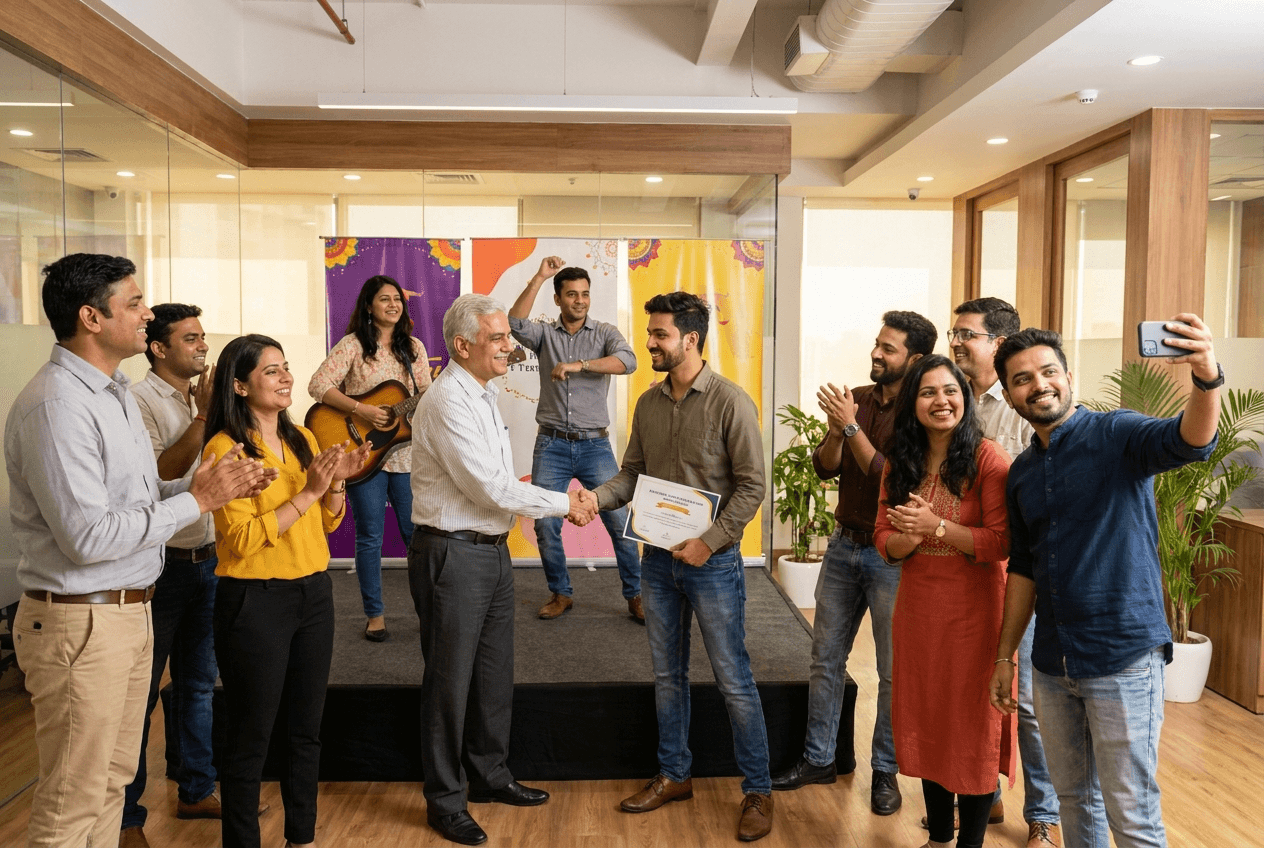 Music activates the brain's reward system, releasing dopamine in ways comparable to the effects of food and social connection. Music also suppresses the amygdala's stress response, reducing the experience of threat and urgency that creates the chronic background stress most knowledge workers in India carry throughout their working day.
Active music-making, as opposed to passive listening, amplifies these effects significantly. When an employee is actively producing music, whether singing a raga phrase, striking a tabla bol or moving through a Bollywood dance sequence, the brain is simultaneously processing rhythm, pitch, body movement and social connection. This multidimensional engagement produces a quality of positive affect, a genuine feeling of joy and vitality, that is qualitatively different from the mild positive mood produced by background music or a meditation app.
What the 2025 BMC Research Shows for Indian Workplaces
The BMC Complementary Medicine 2025 scoping review examined music-based interventions across multiple workplace contexts and found consistent positive effects across three dimensions most relevant to HR leaders. Employee mood improvement: participants in live music sessions reported significantly improved mood states immediately after sessions, with effects lasting several hours into the working day. Stress reduction: cortisol levels showed consistent reduction, particularly in high-stress work environments. Job satisfaction: employees in companies with regular music-based wellness programmes reported higher job satisfaction scores in aggregate surveys, even controlling for compensation differences.
These findings are particularly relevant for the Indian corporate context, where deadline pressure, long working hours and the physical and social isolation of hybrid and remote working have combined to create a workplace mental health challenge that fitness and meditation apps are demonstrably failing to address at scale.
The Indian Cultural Advantage
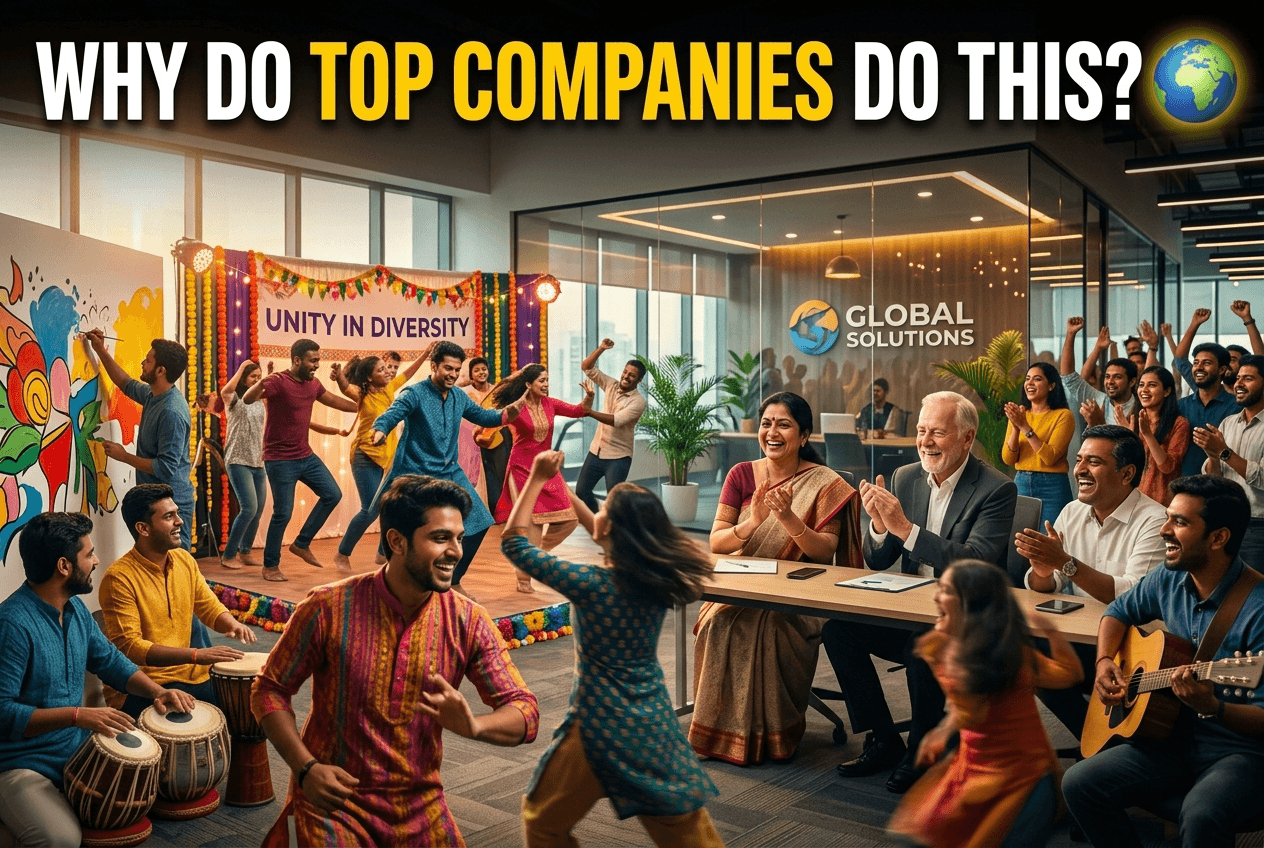
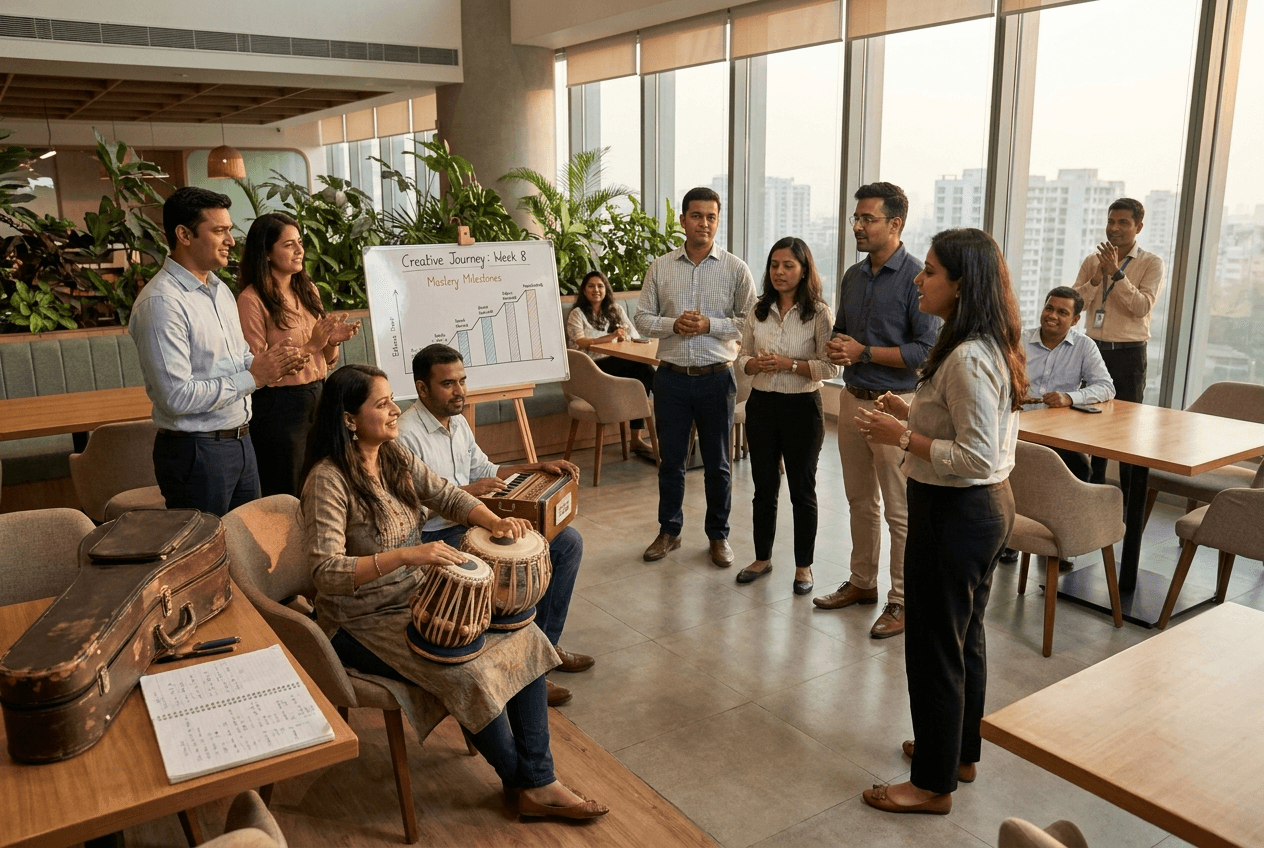 Art Gharana's programme uses Indian classical and popular arts traditions, Bollywood dance, Hindustani and Carnatic vocal, tabla, bansuri flute and Kathak dance, that are deeply familiar and emotionally resonant for Indian employees in a way that Western wellness formats simply are not. When an Indian employee participates in a Bollywood dance session, they engage with music and movement that has been part of their cultural environment since childhood. This cultural familiarity dramatically lowers the activation barrier for participation, which is one of the primary reasons most corporate wellness programmes fail: too many employees never start because the activity feels disconnected from who they are.
Active vs Passive Wellness: The Critical Distinction
The most important and underappreciated distinction in corporate wellness is between passive and active interventions. A meditation app is passive: the employee consumes content. Art Gharana's live corporate wellness sessions are active: the employee produces something, in real time, with a certified instructor. The neurological and psychological mechanisms activated by active creative production are significantly more powerful than those activated by passive content consumption. The employee who has just produced their first coherent tabla composition experiences a quality of accomplishment, joy and energised relaxation that is qualitatively different from the employee who has just listened to a guided meditation. This is why active creative sessions consistently outperform passive wellness benefits on every engagement metric.
Happiness vs Engagement: The HR Distinction
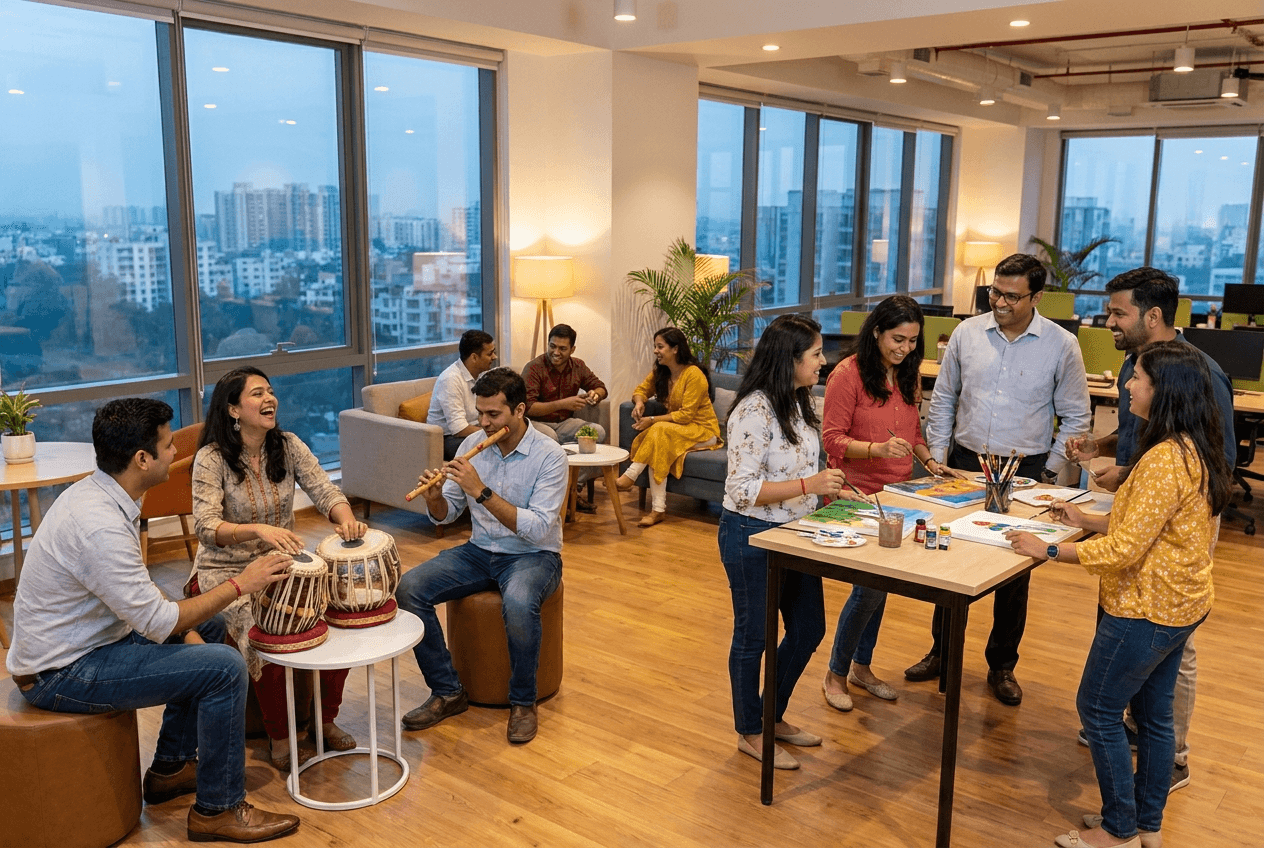 HR leaders sometimes conflate happiness with engagement. They are distinct constructs with different drivers. Engagement is primarily driven by the quality of work itself: challenging tasks, autonomy, recognition and clear purpose. Happiness is driven by the quality of the overall employee experience: relationships, environment and the sense that work is a place where you can be fully yourself.
Creative wellness programmes primarily drive happiness, and happiness is the precondition for sustained engagement. An employee who is stressed, isolated and creatively starved cannot be consistently engaged, regardless of how interesting their work is. Providing regular creative wellness experiences creates the emotional foundation on which genuine engagement can be sustained over time.
Art Therapy: The Parallel Evidence Base
Visual art and movement-based wellness interventions have a parallel evidence base to music research. Art therapy in workplace contexts has been shown to reduce occupational burnout, improve emotional regulation and increase employees' sense of personal efficacy. Dance and movement therapy has a particularly strong evidence base for reducing anxiety and improving social connection in group settings.
These effects extend to non-clinical populations. Multiple studies in occupational health have found that non-clinical creative expression activities, including group dance sessions and visual art workshops, produce meaningful positive outcomes for healthy working adults under normal occupational stress.
Designing a Music and Art Wellness Programme
Session Frequency and Format
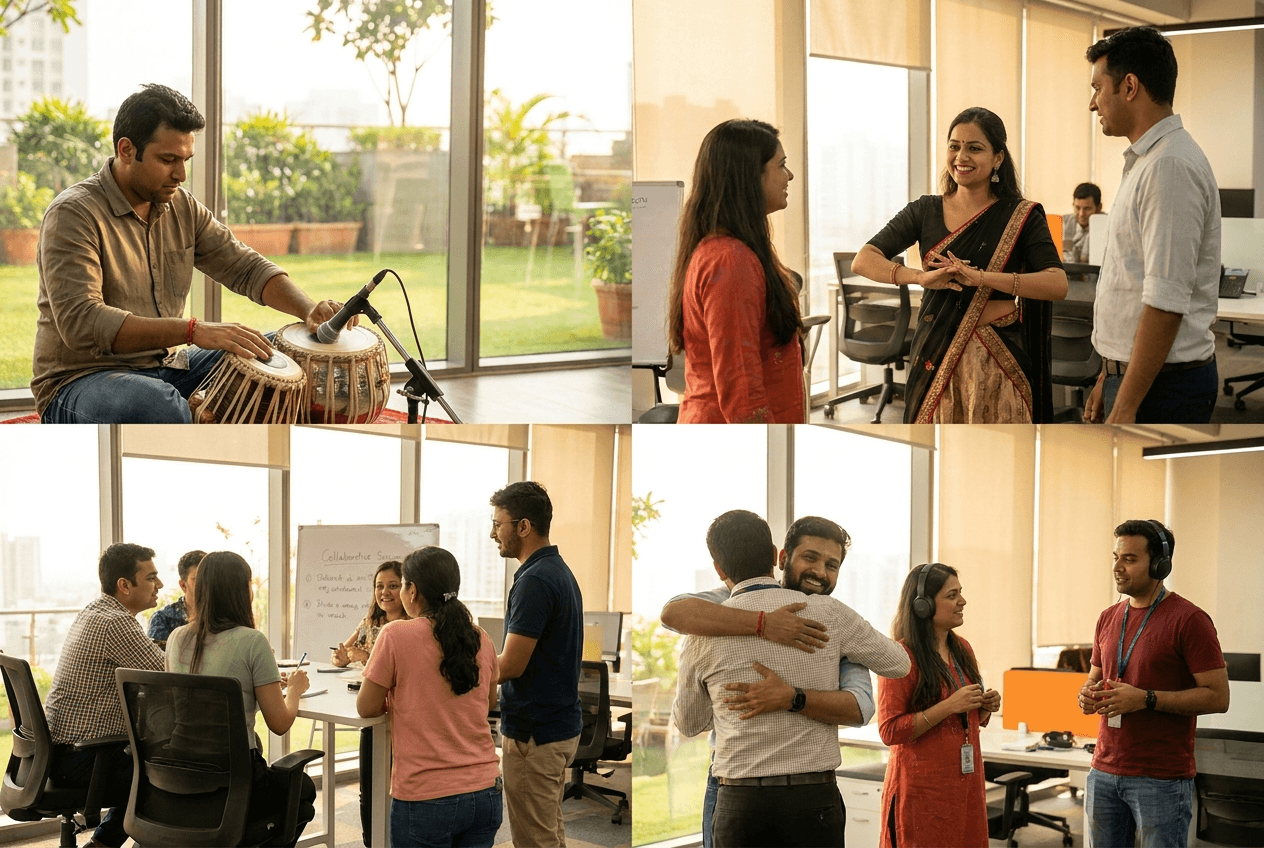
The most effective programmes operate at a frequency of at least once per week. A weekly forty-five minute group session, whether a Bollywood dance break, a Hindustani vocal riyaz or a tabla rhythm workshop, creates a consistent positive touchpoint. Explore our music and vocal wellness programmes and dance and movement sessions for teams for a full picture of available session types.
Measuring the Impact
Track three metrics before and after implementation: employee happiness and satisfaction scores from quarterly pulse surveys, voluntary attrition rate, and sick day frequency and duration as proxies for employee stress and disengagement. In Art Gharana's corporate client experience, all three metrics show positive movement within the first quarter of a regular programme.
Start with a Pilot
Book a pilot session for your team to experience the engagement directly. View our certified instructor profiles to understand the quality and range of teachers available.
The Corporate Happiness Investment Framework
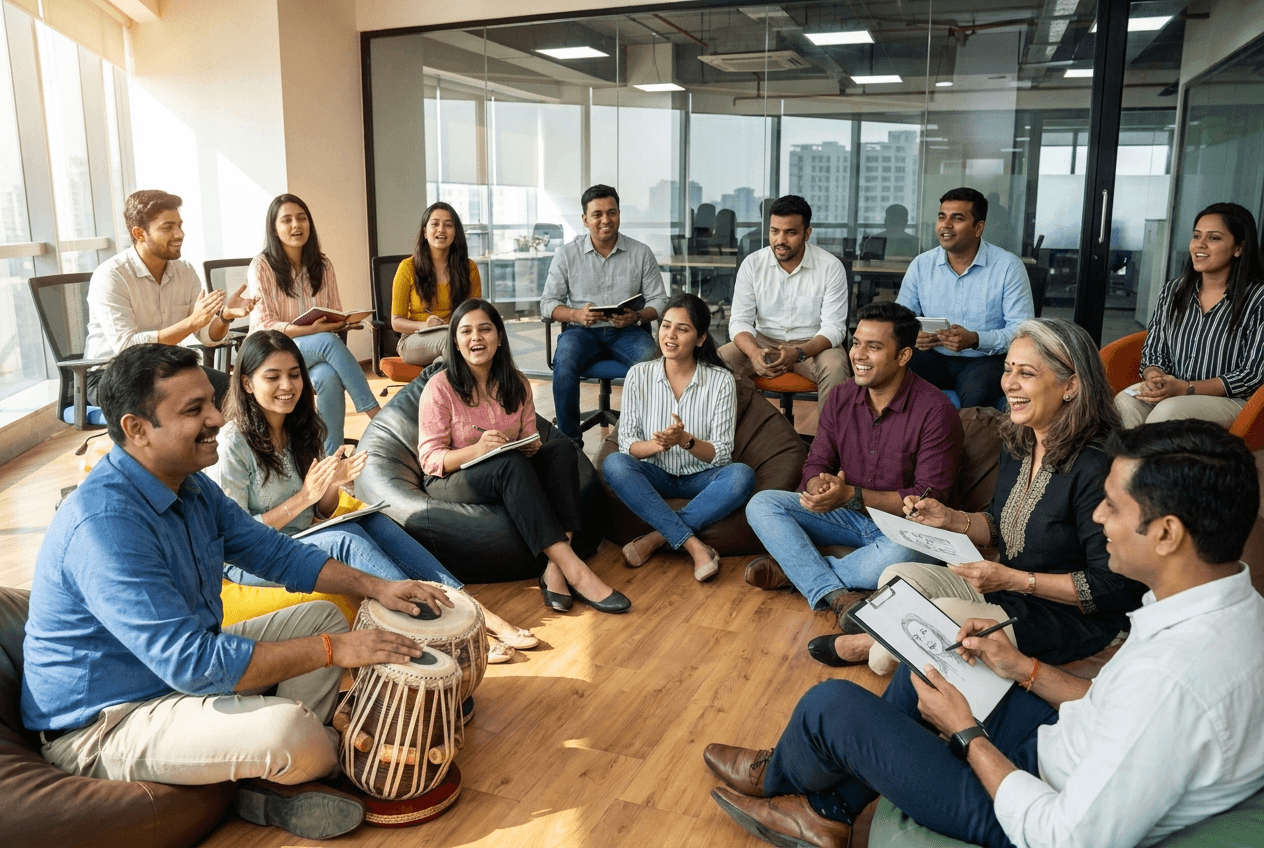 For HR leaders making the internal case for music and art wellness investment, the most effective argument combines the scientific case, the BMC Complementary Medicine research, with the retention economics: calculate the attrition cost at your company and the break-even attrition reduction required to justify programme investment. In most Indian corporate contexts, preventing two to three departures per year is sufficient to justify the cost. Add the employer brand upside as additional ROI, and the case becomes compelling.
Art Gharana's corporate programme is the most practical available expression of this investment. Review our plans and pricing for full transparency on investment levels, and begin with a pilot session that generates company-specific happiness and engagement data from the first week.
Frequently Asked Questions
1. Does music actually reduce workplace stress?
Yes. A 2025 scoping review in BMC Complementary Medicine confirmed that music-based workplace interventions show meaningful benefits for employee mood, stress levels and job satisfaction. Music reduces cortisol, lowers blood pressure and stimulates endorphin release.
2. What kind of music and art programmes work best in Indian workplaces?
Live, interactive sessions that engage employees actively produce the strongest outcomes. Group Bollywood dance sessions, tabla rhythm workshops, Hindustani vocal sessions and cultural art workshops generate high engagement in Indian corporate contexts because they draw on culturally familiar and emotionally resonant traditions.
3. How is Art Gharana different from a meditation app or fitness platform?
Art Gharana provides active creative experiences, not passive content. Employees are producing something, with a real certified instructor, in real time. The neurological engagement of active creative production generates significantly stronger stress relief, mood improvement and community-building effects than passive wellness content consumption.
Art Gharana | India B2B Blog Pack | Blog 3 of 8 | artgharana.com
Implementing Music and Art Wellness at Scale
For HR leaders who want to implement music and art wellness at corporate scale, the practical design choices matter significantly. The most effective programmes operate at a consistent weekly frequency rather than as occasional events. A weekly forty-five minute group session creates a consistent positive touchpoint in the working week that employees anticipate and plan around, generating the habit of creative engagement that produces the strongest long-term wellbeing benefits. Session rotation across disciplines, a tabla rhythm workshop one week, a Bollywood dance session the next, a Hindustani vocal introduction the week after, sustains novelty and curiosity, preventing the participation decay that affects single-discipline programmes over time.
The Happiness Investment: Making the Case to Leadership
For HR leaders who need to make the case for music and art wellness investment to senior leadership and finance stakeholders, the most effective argument combines three elements. First, the scientific case: cite the BMC Complementary Medicine 2025 research on music-based workplace interventions. This establishes the credibility of the category with evidence-based language that resonates with analytically minded leadership teams. Second, the retention economics: calculate the attrition cost at your company and the break-even attrition reduction required to justify programme investment. In most Indian corporate contexts, preventing two to three departures per year is sufficient to justify the cost. Third, the employer brand upside: show LinkedIn engagement rates on authentic employee content versus produced employer brand content, and make the case that creative wellness sessions generate the former automatically. Together, these three elements build a case that is scientifically credible, financially compelling and strategically aligned.
Music Wellness and Productivity: The Research Link
Beyond mood and stress, the research on music and cognitive performance is directly relevant to the business case for music wellness programmes in Indian corporate environments. Multiple studies show that musical training improves working memory, executive function, sustained attention and emotional regulation, all directly relevant to the performance of knowledge workers in India's IT, finance and consulting sectors. Employees who participate in regular music sessions, even at the amateur level of a corporate wellness programme, show measurable improvements in the cognitive capabilities that determine their professional effectiveness. The mechanism is understood: rhythmic practice exercises the neural networks responsible for timing, sequential processing and predictive cognition that underlie many of the tasks knowledge workers perform. A software engineer who practises tabla rhythms weekly is exercising the same neural networks that support code debugging and algorithmic thinking. The cognitive benefit transfers across domains in ways that make music wellness a genuinely productivity-enhancing investment, not merely a wellbeing perk.
Building a Culture of Happiness: The Long Game
Workplace happiness is not built through a single programme or a one-off event. It is built through the accumulation of regular, positive, genuine shared experiences that give employees specific memories, relationships and stories that define their experience of the company. A company that has been running weekly Art Gharana sessions for three years has built something that a company introducing the programme today will not yet have: a culture of creative experience embedded in the company's story, celebrated in its internal communications and visible to every candidate who researches the company before applying. This long-game dimension of happiness investment is important for HR leaders to communicate to leadership stakeholders. The primary benefit in the first quarter is engagement improvement and authentic employer brand content generation. The benefit at the end of year two is a genuine culture asset embedded in the employer brand that reduces the cost of talent attraction and retention by a meaningful degree. Investing in workplace happiness through creative programmes is an investment in a compounding cultural asset, not a one-time expense.
Happiness and Productivity: The Direct Link
The relationship between employee happiness and productivity is one of the most robust findings in organisational behaviour research. Happy employees are more productive, more creative, more willing to help colleagues, more likely to stay, and more likely to go beyond their job description when the situation calls for it. The mechanism is well understood: positive affect broadens the scope of attention and cognition, making happy employees better problem-solvers, more innovative and more socially effective than their unhappy peers. For Indian companies in the IT and knowledge services sectors, where the primary competitive asset is the cognitive and creative capability of the workforce, the relationship between happiness and productivity is not a soft consideration. It is a core business driver.
Music and art wellness programmes are among the most direct and efficiently delivered drivers of employee happiness available in the Indian corporate benefits landscape. They are active rather than passive, so they generate the deeper neurological engagement that produces lasting positive affect rather than temporary mood improvement. They are social rather than individual, so they build the relational bonds that are among the most durable drivers of happiness at work. They are culturally resonant for Indian employees, so they engage rather than alienate. And they develop genuine personal capability over time, so they deliver the sense of personal growth that is among the strongest drivers of sustained positive affect in adult working life. Art Gharana's corporate programme delivers all four of these happiness drivers simultaneously, in a single weekly session, at a cost that is a fraction of its impact on the metrics that matter most.
From Wellness to Culture: The Strategic Framing
The most sophisticated way to understand Art Gharana's corporate programme is not as a wellness benefit but as a culture investment. The distinction matters because it changes the business case framework. A wellness investment is evaluated against health and productivity metrics. A culture investment is evaluated against talent attraction, engagement, retention and employer brand metrics. Art Gharana's programme generates returns across both frameworks simultaneously, which means it has a broader base of business case support than any single-category benefit. For HR leaders who want to communicate this breadth of value to leadership stakeholders, the most effective framing is to present the programme as creative culture infrastructure: the recurring, live, interactive creative experiences that form the foundation of genuine workplace happiness, genuine employee belonging and genuine employer brand differentiation. This framing positions the programme not as a periodic expense but as a permanent infrastructure investment in the company's most important competitive asset: its people and its culture.
The Art Gharana Corporate Advantage
Art Gharana is the only platform combining live music, dance, art and vocal wellness specifically positioned for corporate teams in India. The programme covers seven disciplines: Bollywood dance, Kathak classical dance, Bharatanatyam classical dance, tabla Hindustani percussion, bansuri flute, Hindustani vocal and Carnatic vocal. All instructors are formally certified in their respective disciplines and have been specifically vetted for their ability to deliver engaging, effective sessions in the online corporate format. The programme is available to companies of any size, from five-person startups to enterprise organisations with thousands of employees across multiple Indian cities. Sessions are delivered entirely online, making the programme equally accessible to teams in Mumbai, Bangalore, Delhi, Chennai, Hyderabad, Pune, Ahmedabad, Jaipur, Lucknow, Chandigarh, Kochi, Coimbatore and every other Indian city, as well as to employees working from home in hybrid or fully remote arrangements. Session scheduling is fully flexible within IST, allowing HR leaders to slot sessions into working day schedules without disrupting core business hours. The corporate pilot programme is the recommended starting point: four to six weeks of weekly group sessions for a specific team of fifteen to fifty employees, generating direct engagement data, authentic employer brand content and a concrete business case for broader rollout. The pilot is completely free. The business case builds itself from the data generated in the first few sessions. Art Gharana is ready to begin today.
Key Takeaways for HR Leaders
The most important insights from this guide for HR leaders and CHROs considering creative wellness investment in India in 2026 can be summarised clearly. The global corporate wellness market is growing to $118.21 billion by 2034, driven by companies recognising that employee wellness has physical, mental and creative dimensions that the first generation of wellness programmes did not address. Indian companies that invest in the creative wellness pillar now, while it remains genuinely distinctive, will enjoy a talent attraction and retention advantage that compounds over the coming years. The scientific evidence for music and creative arts as workplace wellness interventions is robust and growing, with the 2025 BMC Complementary Medicine review providing the most recent and comprehensive confirmation. The retention ROI case is straightforward: preventing two to four additional departures per year from a team of fifty is typically sufficient to justify full programme cost. The employer brand ROI case is equally compelling: creative programmes generate authentic employee content that no budget can replicate for credibility or reach. And the Gen Z and Millennial alignment is direct: creative and cultural benefits address the specific values that drive the employment decisions of India's largest and most influential workforce cohorts. Art Gharana is ready to deliver all of this for your company. The pilot is free. Begin today.
Why Indian Companies Must Act Now on Creative Wellness
The window for first-mover advantage in creative corporate wellness in India is open right now. The global corporate wellness market is growing from $68.41 billion in 2025 to $118.21 billion by 2034, and the growth is being driven by companies recognising that the definition of employee wellness has expanded beyond fitness and meditation to include creative and cultural dimensions. Indian companies that position themselves at the forefront of this expanded definition now will have a multi-year head start over competitors who wait for the trend to become mainstream. The parallels with physical fitness benefits are instructive. In 2015, a company that offered a Cult.fit-style corporate fitness benefit was genuinely differentiating. By 2020, it was standard. By 2025, it was a hygiene factor that companies could not afford to omit but derived no competitive advantage from providing. The creative wellness trend is at exactly the 2015 stage in India in 2026. Companies that act now will enjoy the differentiation window. Companies that wait will enter the market as standard-setters rather than leaders, having missed the opportunity to build a genuine first-mover advantage in what is about to become a mainstream expectation.
Art Gharana's corporate programme is available immediately, with a pilot session that is completely free to experience. The programme has been designed specifically for corporate delivery in India, covering the disciplines that resonate most with Indian employees across all regional backgrounds, delivering in a live online format that works for teams in every Indian city and in hybrid and remote working arrangements, and providing the cultural authenticity that makes Indian corporate employees genuinely engage rather than merely tolerate. The business case for investing in creative wellness now rather than later is clear, the programme is ready to deliver, and the first-mover advantage is available to any Indian company willing to act on what its Gen Z and Millennial employees are already telling it they need. Art Gharana is ready to be that partner. The pilot is the first step. Begin today.
Summary: The Creative Wellness Investment for Indian HR Leaders
Indian HR leaders and CHROs who are evaluating creative wellness investment in 2026 are making a decision that will shape their company's talent position for the next five years. The evidence from the scientific literature, the economic research on attrition costs, the employer branding data from LinkedIn and Glassdoor, and the values research on Gen Z and Millennial workplace preferences all point to the same conclusion: creative and cultural wellness is the most underutilised and most value-generating employee benefits investment available to Indian companies in 2026. It is underutilised because it is newer than fitness and meditation benefits. It is value-generating because it is genuinely distinctive, generates authentic employer brand content, builds the community and belonging that reduce attrition, and directly addresses the values that drive the employment decisions of India's largest and most mobile workforce cohorts. Art Gharana is the programme that makes this investment real: live, certified, culturally resonant, online, flexible and beginning with a free pilot that generates its own business case from the first session.
People Also Ask: Music, Art and Workplace Happiness in India
Does music really improve workplace happiness?
Yes, music measurably improves workplace happiness, and the evidence is well-established. A 2025 scoping review published in BMC Complementary Medicine confirmed that music-based interventions in workplaces show meaningful benefits for employee mood, stress levels and overall job satisfaction. The mechanism is well understood: music reduces cortisol, lowers blood pressure, and stimulates endorphin and dopamine release. Active music-making, singing, playing an instrument or moving to music in a dance session, produces stronger effects than passive listening because it engages the brain's reward system, motor system and social connection circuits simultaneously.
What does the research say about music therapy in the workplace?
The research on music therapy in the workplace is consistently positive. The landmark 2025 BMC Complementary Medicine scoping review found that music-based workplace interventions show meaningful benefits for employee mood, stress reduction and job satisfaction. Earlier research has shown that musical training improves working memory, executive function and sustained attention in adult populations. Studies specific to Indian corporate environments show that culturally resonant music, particularly Indian classical and Bollywood traditions, generates higher engagement and participation rates than Western wellness formats, making it particularly effective in Indian workplaces.
How do art therapy programs reduce employee stress in Indian companies?
Art therapy programs reduce employee stress in Indian companies through three mechanisms: active creative expression that releases tension through productive physical and mental engagement; social connection through shared creative experiences that build genuine colleague relationships; and personal achievement through skill development that creates positive affect and self-efficacy. The most effective art therapy programmes in Indian corporate settings are live and interactive rather than self-directed, involve a certified instructor who provides guidance and encouragement, and use culturally familiar traditions such as Indian classical dance or music that lower the barrier to participation.
What is the difference between passive and active wellness programs?
Passive wellness programs ask employees to consume content: watch a meditation video, listen to a guided relaxation, track steps on a fitness app. Active wellness programs ask employees to create something: sing a raga phrase, strike a tabla bol, move through a Bollywood dance sequence. The distinction matters because active creative engagement produces significantly stronger neurological effects than passive consumption. Active engagement activates the brain's reward system, motor cortex, social circuits and attention networks simultaneously, producing the quality of positive affect, genuine joy and energised relaxation, that passive content consumption cannot match.
Which is better for employee wellbeing: yoga or music sessions?
Music and creative arts sessions deliver different and in some ways stronger wellbeing benefits than yoga for many employees. Yoga primarily addresses the physical body and nervous system, producing relaxation through movement and breath. Music sessions address the emotional, social and cognitive dimensions simultaneously, producing joy through creative expression, connection through shared participation and cognitive stimulation through active musical engagement. For employees who find yoga inaccessible, intimidating or culturally unfamiliar, live music and dance wellness sessions typically generate much higher engagement and continued participation rates, making their long-term wellbeing impact significantly greater.
How often should companies run music wellness sessions for employees?
Companies should run music wellness sessions at least once per week to generate meaningful wellbeing improvements. Weekly sessions create a consistent positive touchpoint in the working week that employees anticipate and plan around, generating the habit of creative engagement that produces the strongest long-term wellbeing benefits. Session rotation across disciplines, tabla one week, Bollywood dance the next, Hindustani vocal the week after, sustains novelty and prevents the participation decay that affects single-discipline programmes. Art Gharana's corporate programme is designed for weekly delivery with rotating disciplines as the standard format.
Can music wellness programs reduce employee burnout in India?
Yes, music wellness programs can meaningfully reduce employee burnout in India. Burnout is defined by three components: emotional exhaustion, depersonalisation and reduced personal accomplishment. Live music and creative arts sessions address all three: they restore emotional energy through positive creative expression, rebuild genuine colleague relationships that counteract the social withdrawal of depersonalisation, and provide experiences of genuine personal achievement through skill development that counter the reduced efficacy dimension of burnout. In India's high-pressure IT and BFSI sectors, where burnout rates are among the highest in the world, regular creative wellness sessions provide a distinctive and evidence-based intervention that passive wellness apps cannot deliver. Art Gharana's corporate programme also covers Carnatic vocal classes, delivered live by certified instructors to corporate teams across India. Also available through Art Gharana: Kathak classical dance classes, delivered live by certified instructors to corporate teams across India. Also available through Art Gharana: employee testimonials, delivered live by certified instructors to corporate teams across India.