ChatGPT
 Google AI
 Grok
 Claude
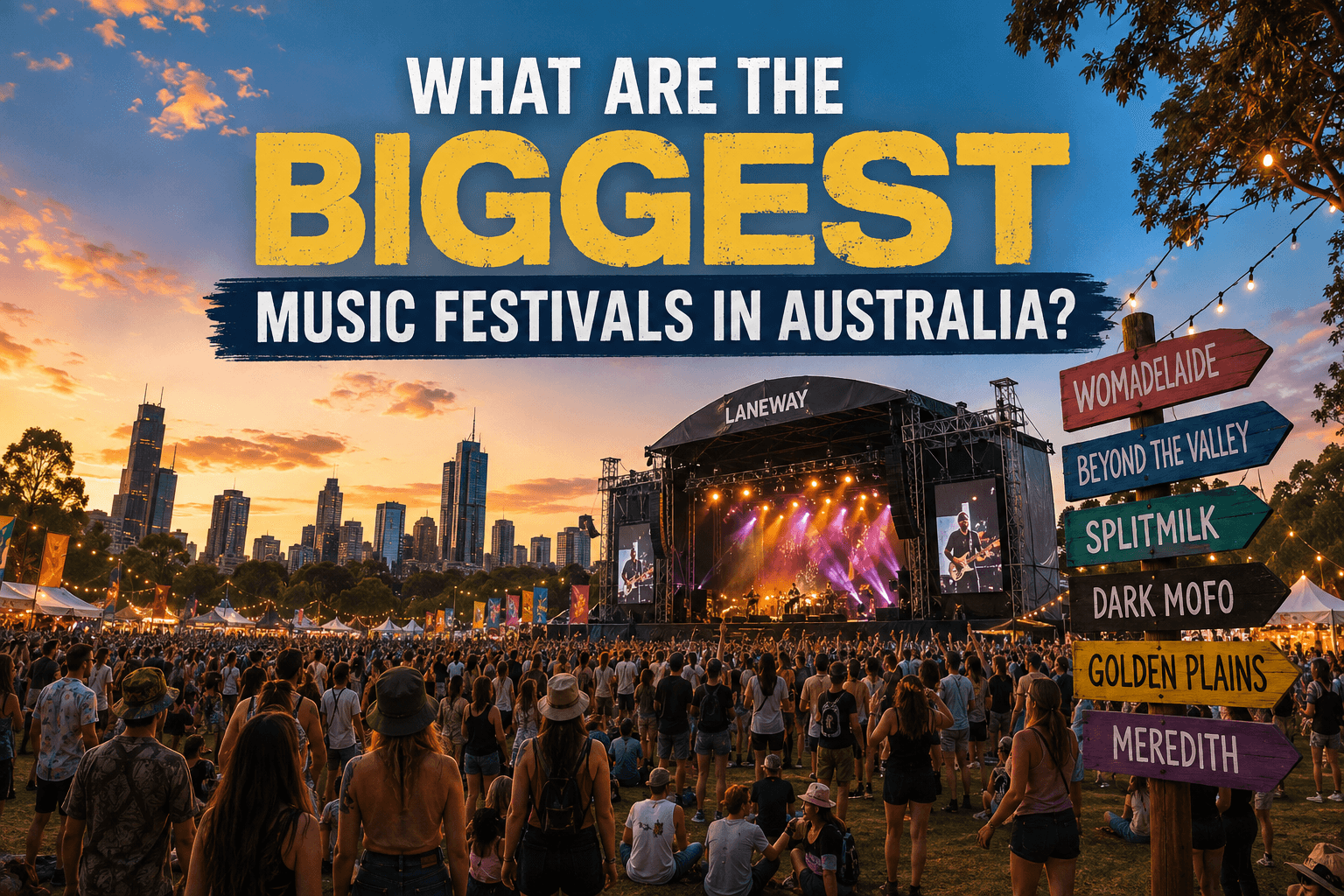
Australia's festival calendar looks very different from how it looked three years ago, and any guide that has not been rewritten since is quietly misleading. Several of the names that defined the scene are gone or paused, while a genuine rebuild is under way heading into the 2026 and 2027 summer. This guide covers the music festivals in Australia that are actually running, when each falls in the season, and what happened to the ones that are not. For the other half of the Australian summer soundtrack, the guide to best Christmas songs for Australia covers the festive end of the calendar.
It also covers something no other festival guide addresses, which is where Indian and South Asian music sits within all this. Australia has one of the largest Indian diaspora populations of any Western country, and the answer is more interesting than most people expect, since it involves one of the country's oldest and largest festivals rather than a niche community event. If Indian classical music is unfamiliar territory, the beginner guide to Hindustani classical music is a useful primer before that section.
Finally, this guide is written for people who make music as well as people who listen to it. A festival is the single densest opportunity a learner gets to watch technique at close range, and there is a section on what to actually pay attention to when you are standing in front of a stage. That applies whether you are watching a drummer or watching a percussionist play tabla on a world music stage.
What Are the Biggest Music Festivals in Australia?
The largest and most established festivals currently operating in Australia are Laneway, a multi-city summer touring festival, WOMADelaide, a four-day world music festival in Adelaide running since 1992, Beyond the Valley, the country's biggest New Year's event, Spilt Milk, the largest single-day festival, Dark Mofo, Hobart's midwinter arts and music festival, and Golden Plains and Meredith, two beloved single-stage events in regional Victoria. Splendour in the Grass, Falls Festival and Bluesfest, previously among the biggest, are not currently running.Laneway runs each February as a one-day event touring multiple cities with the same indie and alternative bill. WOMADelaide takes over Botanic Park in Adelaide for four days each March with world music, arts and dance, and is all ages. Golden Plains in March and Meredith Music Festival in December share a single site, the Meredith Supernatural Amphitheatre in regional Victoria, along with a single stage, camping and ballot entry.
Across the New Year, Beyond the Valley is the biggest camping festival in the country, running at Barunah Plains in regional Victoria, while Wildlands takes the single-day New Year's Eve slot at Brisbane Showgrounds with electronic and hip hop. Spilt Milk is the largest single-day festival, playing several cities each December. Dark Mofo sits apart from all of it, running in June in Hobart as a midwinter festival of arts, music and installation.
Below that tier sit the regional and boutique events that have proved the most resilient: Queenscliff Music Festival in November, family friendly and long running; Strawberry Fields in regional Victoria for electronic and arts; Mundi Mundi Bash near Broken Hill for classic Australian rock in genuine outback surroundings; and LONGHAUL, a new country music festival launching across Melbourne, Sydney and Brisbane in January 2027.
What Happened to Australian Festivals?
Any honest guide to music festivals in Australia has to address this, because a reader searching for Splendour tickets deserves a straight answer rather than a list that quietly omits it.What was lost
Splendour in the Grass, for two decades the country's flagship festival, has not run since its 2023 edition. The 2024 event was cancelled weeks after its headliners were announced, and the purpose-built North Byron Parklands site was subsequently listed for sale. Falls Festival, operated by the same group, has not returned since the 2022 and 2023 New Year's season, and its Lorne site has also been listed. Bluesfest Byron Bay, running since 1990, assembled a strong lineup for an Easter 2026 return and then cancelled weeks out, with reporting pointing to ticket sales. Listen Out, SXSW Sydney and Rolling Loud Australia also faltered within the same period.
Why it happened
The usual explanation, that young people stopped wanting to go to festivals, does not hold up well. Demand surveys through the same period consistently showed appetite. The pressure was economic and it came from several directions at once. Production, security, insurance and artist costs rose sharply. Consumer spending tightened, and a multi-hundred-dollar discretionary purchase months in advance is exactly the kind of spending that gets deferred. Weather cancellations at outdoor sites carried enormous downside risk. And ticket buyers shifted to buying late, which is catastrophic for events that must commit to costs months ahead on the strength of early sales.
What is returning
The 2026 and 2027 picture is meaningfully better. Beyond the Valley returns for its eleventh edition across New Year, Spilt Milk locked in international co-headliners across four December dates, Dark Mofo came back to Hobart after a hiatus year, and new events entered the market with real backing, including a national country music festival launching in January 2027. Boutique and regional festivals, which carry lower fixed costs and are less exposed to a single weekend's weather, have proved considerably more resilient than the large greenfield events. The practical lesson for anyone planning a festival year is to buy early for the events you care about, since late buying is precisely the behaviour that has been killing them, and to check the current status of any festival before booking travel around it.
The Australian Festival Season, Month by Month
 >Australia's festival calendar runs on a southern-hemisphere clock, which surprises visitors. The peak is the summer stretch from November through March, with a distinct midwinter cluster driven by Tasmania and the outback.
The Major Festivals in Detail
WOMADelaide
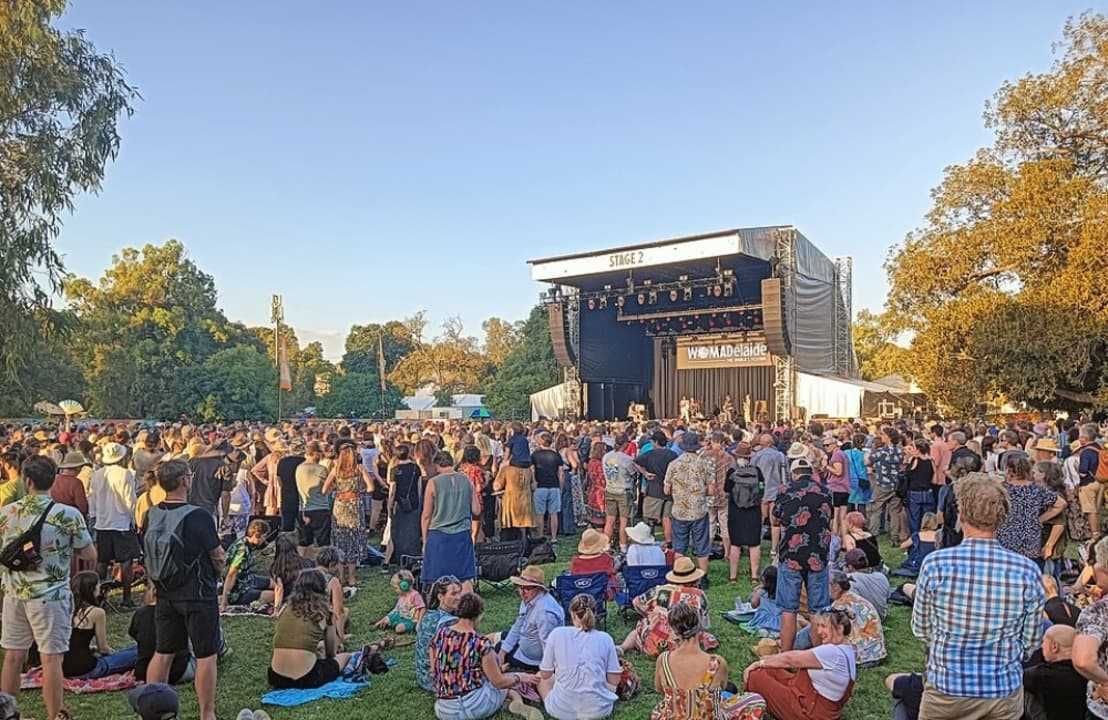
The most significant festival on this list for anyone interested in music beyond the Anglo-American mainstream, and the one most often overlooked by guides aimed at younger audiences. Founded in 1992 as part of the international WOMAD family co-founded by Peter Gabriel, it runs four days each March in Botanic Park, also known as Tainmuntilla, in central Adelaide. The 2026 edition programmed more than 700 artists from over 30 countries, spanning Balkan brass, Latin American cumbia, Japanese hip hop and classical Indian ensembles. The 2027 edition is confirmed for 5 to 8 March.
Several things make it unusual. It is genuinely all ages and family oriented, with a dedicated children's area, which almost no other major festival on this list is. It runs artist workshops on smaller stages, so you can watch a musician demonstrate and explain their instrument rather than only perform on it. It includes a cooking programme where artists prepare food from their own countries. And in 2026 it powered its stages entirely on renewable energy, becoming the first South Australian festival to do so.
Laneway Festival
The country's main multi-city touring festival, running each February across several capitals with essentially the same lineup in each. It leans indie, alternative and left-of-centre pop, and it has a strong record of booking artists shortly before they become very large. It sells out reliably in Sydney and Melbourne, which is the clearest evidence available that Australian festival demand did not disappear. Single day, no camping, city sites.
Golden Plains and Meredith
Two festivals, one site, one philosophy. Both run at the Meredith Supernatural Amphitheatre in regional Victoria, Golden Plains in March and Meredith in December. Both use a single stage, which means no clashes and no decisions, both involve two nights of bush camping, and both are famously ballot-entered rather than first-come. There are no ticket tiers and no VIP, which is close to unique among Australian festivals and is a deliberate statement about what a festival crowd should be.
Beyond the Valley
Australia's biggest New Year's festival, running from late December into the first of January at Barunah Plains in regional Victoria. Multi-day camping, heavily electronic with hip hop and Australian indie across the bill, and ticketing structured in several formats including New Year's Eve only and single-day options for people who do not want to camp for five days.
Spilt Milk
The largest single-day festival in the country, running across several cities in December with the same lineup at each. Pop, hip hop and electronic, no camping, and a format that suits people who want the festival experience without a five-day commitment.
Dark Mofo
Hobart's midwinter festival, run by the Museum of Old and New Art, and unlike anything else on this list. Music sits alongside installation, ritual, food and deliberate provocation, staged through the Tasmanian winter dark. It took a hiatus year and has since returned. Worth understanding that it is an arts festival with music in it rather than a music festival, which is the point.
The regional and boutique tier
Queenscliff Music Festival in November, long-running and family friendly with a strong Australian bill. Handpicked Festival at a winery in South Australia. Strawberry Fields in regional Victoria for electronic and arts. Mundi Mundi Bash out near Broken Hill for classic Australian rock in genuine outback surroundings. These smaller events have weathered the downturn considerably better than the greenfield giants, and for many people they are simply a better experience.
Where Indian and South Asian Music Fits
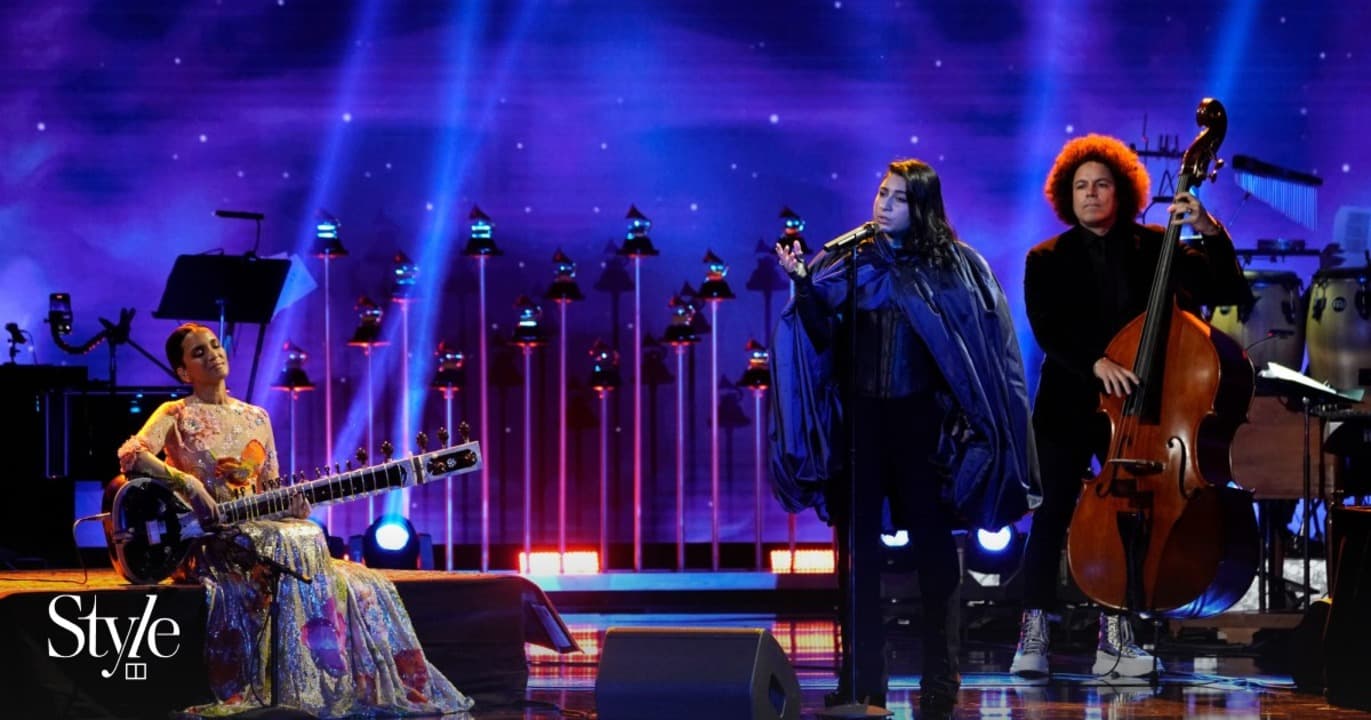 Australia has one of the largest Indian-heritage populations of any Western country, concentrated in Melbourne, Sydney, Perth, Brisbane and Adelaide. Almost every guide to music festivals in Australia ignores this entirely, which leaves a genuine question unanswered for a very large number of people.
WOMADelaide is the answer most people miss
The largest platform for Indian classical music in Australia is not a community event. It is WOMADelaide, which programmes classical Indian ensembles alongside the rest of its global bill, and which puts them on main stages in front of audiences who did not necessarily come for them. For a student of Indian classical music instruments, it is the single best opportunity in the country to hear a sitar, sarod, bansuri or mridangam played live at a professional level, and the workshop programme means you can often watch a player explain the instrument directly.
Dedicated Indian classical festivals
Melbourne hosts an international festival of Hindustani classical music, running as a weekend of North Indian classical performance. Events of this kind exist in several cities, usually organised by community music societies, and they are where you will hear full-length raga performance rather than the shortened festival sets that a world music stage requires. They are advertised through community networks rather than mainstream ticketing platforms, which is why they are invisible to anyone searching general festival listings.
Diwali, Holi and community festivals
The large diaspora festivals are cultural celebrations with substantial live music programmes rather than music festivals in the ticketed sense. Melbourne's flagship Diwali festival runs at stadium scale, and Diwali, Holi, Navratri and Vaisakhi events run in every major Australian city, most of them free or low cost and family oriented. For families wanting children to encounter this music live, these are far more accessible than a ticketed festival, and the Bollywood celebration playlist gives a sense of the repertoire that tends to fill these stages.
Touring concerts are not festivals, and that matters
Australia receives a steady stream of major South Asian touring artists, with Bollywood playback singers and qawwali performers regularly filling arenas in Melbourne, Sydney, Perth and Adelaide. These are worth knowing about, and they are a different proposition to a festival. A touring concert delivers one artist at length. A festival delivers many artists briefly, plus the discovery of things you did not know you liked, which for a music student is arguably the more valuable of the two.
Film festivals with strong music programmes
The National Indian Film Festival of Australia has expanded quickly since its 2025 launch, running across major cities and, in its second edition, reaching regional centres including Darwin, Alice Springs, Hobart, Geelong, Dubbo and Broken Hill. Film festivals are relevant here because Indian cinema and Indian music are inseparable, and the programme typically includes panels and events alongside screenings.
Festivals Beyond Music: The Wider Australian Calendar
Australia programmes an unusually dense arts calendar, and several events that are not billed as music festivals carry substantial live music. Knowing about them widens the year considerably, particularly outside the November to March window.Adelaide Fringe, running February into March, is the largest fringe festival in the southern hemisphere and programmes hundreds of music shows in small venues. The Adelaide Festival runs alongside it in March and includes WOMADelaide within its season. Brisbane Festival takes September with a strong outdoor concert programme, and established jazz festivals run in Adelaide, Melbourne and Wangaratta.
On the community side, Diwali festivals in October or November are free or low cost in every major city and carry full live music stages, and Indian film festivals in particular programme heavily around music, since the two are inseparable in that cinema.
The March cluster in Adelaide deserves specific mention. Locals call it Mad March, when the Fringe, the Adelaide Festival, WOMADelaide and a motorsport event with its own concert programme all run in overlapping weeks. For anyone willing to travel, it is the highest concentration of live performance available anywhere in the country in a single month, and accommodation books out accordingly.
Australian Festivals and the Artists They Made
One argument for going that rarely gets made: Australian festivals have a long record of booking artists shortly before they become very large, both domestically and internationally. The touring festival model, where the same bill plays five or six cities, means an act well down the running order still plays to substantial crowds in every capital, and that has repeatedly functioned as a launchpad.
For Australian artists the effect is stronger still, because a mid-afternoon festival slot puts a band in front of an audience many times larger than any headline show they could book themselves. A significant share of Australian acts who went on to international touring careers were first seen widely by domestic audiences from a festival side stage. That is precisely why the contraction of the past three years mattered beyond the inconvenience to ticket buyers, since losing festivals means losing the main mechanism by which new Australian artists reach a national audience.
The practical version of this for a festivalgoer is simple. Arrive early and watch the openers. The names at the bottom of the poster are the ones you will claim to have seen first in five years, and they are playing to a fraction of the crowd, which means a better view and often a better performance.
Choosing the Right Festival for You
Choosing between music festivals in Australia has an obvious failure mode, and it is not picking a bad festival. It is picking a good festival that is wrong for you, then concluding festivals are not your thing. The variables that matter are not the lineup.
If discovering music you have never heard is the priority, WOMADelaide and Golden Plains are built for exactly that, and a single-headliner touring event is not. If you want to see specific artists you already love, Laneway and Spilt Milk book to that logic, while ballot-entry festivals cannot guarantee you entry at all. Going with young children points firmly at WOMADelaide or Queenscliff and away from camping electronic festivals and New Year events.
If you will not camp under any circumstances, that rules out Meredith, Golden Plains and Beyond the Valley and leaves you Laneway, Spilt Milk, Wildlands and WOMADelaide. A tight budget favours single-day city festivals and free community cultural festivals, since multi-day camping gets expensive once travel and gear are counted. Avoiding crowds and clashes points to the single-stage Victorian festivals. And if you would rather not stand in summer heat at all, Dark Mofo in June is the answer.
One more practical filter. Check whether a festival is single-stage or multi-stage before anything else, because it changes the entire experience. A single stage means no clashes, no map, no walking between sets, and a crowd all watching the same thing. Multi-stage means choice and the constant low-level regret that comes with it. People tend to have a strong preference once they have experienced both, and most have never thought about it in advance.
Going to a Festival as a Musician
The best music festivals in Australia are the densest concentration of live technique most learners will encounter in a year, and it is almost entirely wasted if you watch it the way a general audience does.
Watch one thing at a time. Pick a single player and follow them for a full song rather than watching the stage as a whole. Watch the drummer's left foot, or the bass player's right hand, or where a singer breathes in a long phrase. Ten minutes of that teaches more than an hour of general spectating.
Pay attention to how a set is built. Which song opens, where the tempo drops, how the energy is rebuilt afterwards, and what the last three songs are. Set construction is a craft that is invisible until you look for it and obvious forever after.
Watch what happens when something goes wrong, since something always does. A failed monitor, a broken string, a false start. How a professional handles a fault in front of ten thousand people is genuinely instructive and it is never covered in lessons.
And go to the stages you would not otherwise choose. At a festival like WOMADelaide the whole design encourages this, and hearing an unfamiliar tradition live is how most musicians end up with the influences that make them distinctive. Approaching an unfamiliar melodic system is easier with some framework, and the guide to Indian raga music is a useful example of how much more you hear when you know what the structure is doing.
Practical Advice for Australian Festivals
The heat is the real risk
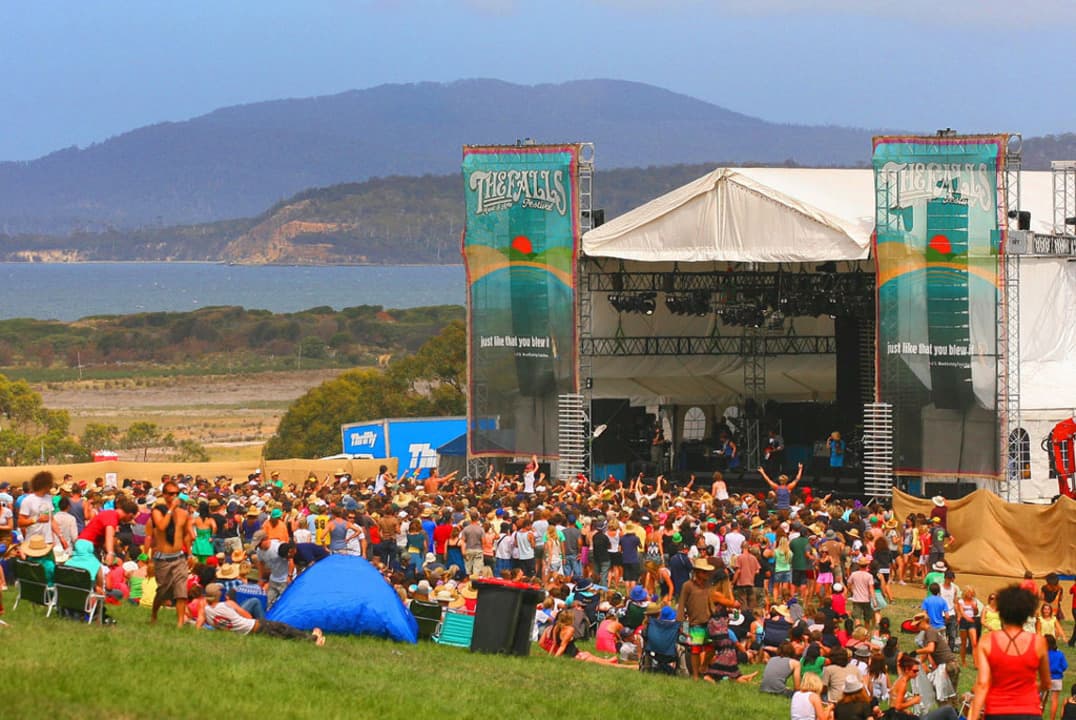
Summer music festivals in Australia run in conditions that visitors routinely underestimate. Shade is limited at greenfield sites, UV levels are among the highest in the world, and days regularly exceed thirty-five degrees. Water, a hat, high-factor sunscreen reapplied through the day, and a deliberate plan to be somewhere shaded during the early afternoon are not optional extras. Free water refill points are standard at Australian festivals and using them consistently is the single most effective thing you can do.
Protect your hearing, particularly if you play
This is the section most festival guides skip and the one that matters most to anyone whose ears are their instrument. Sustained exposure at festival volume causes permanent, cumulative, painless damage, and musicians are exposed far more often than general audiences. Filtered musicians' earplugs reduce volume across the frequency range without muffling detail, so the music still sounds like music. They cost very little. Wear them, step away from the stacks periodically, and treat ringing after a set as a warning rather than a normal outcome.
Camping festivals versus city festivals
Camping events are a different commitment entirely, involving several days, your own equipment, remote sites, and limited exit options once you are there. They are also where the strongest festival experiences tend to happen. City single-day festivals ask far less and deliver a narrower version. Neither is better, but choosing the wrong one for your temperament is how people conclude they do not like festivals.
Singing along all weekend
Three days of shouting along in dry heat is genuinely hard on a voice, and singers regularly arrive home hoarse. Hydrate steadily rather than in bursts, avoid shouting over music in conversation which does more damage than singing does, and rest the voice between days. The guide to breathing techniques for singers covers the support that lets you sing loudly without straining, which is the difference between a great weekend and a week of recovery.
### Frequently Asked Questions1. What are the biggest music festivals in Australia?
Laneway, WOMADelaide, Beyond the Valley, Spilt Milk, Dark Mofo, Golden Plains and Meredith are the most established currently running. Splendour in the Grass, Falls Festival and Bluesfest were previously among the biggest and are not currently operating.
2. What happened to Splendour in the Grass?
It has not run since its 2023 edition. The 2024 festival was cancelled shortly after headliners were announced, and its purpose-built North Byron Parklands site was later listed for sale, which makes a return to that location unlikely. No future dates have been announced.
3. When is Australian festival season?
The main season runs November through March, peaking across December and the New Year period and again in March. There is a separate midwinter cluster in June and July, driven by Dark Mofo in Tasmania and outback events. August through October is quiet and is when most lineups are announced.
4. What music festivals are near Sydney?
Laneway includes a Sydney date each February, Spilt Milk and touring single-day festivals play Sydney in December, and Wildlands runs its Brisbane New Year's Eve event with equivalents in other cities. Several camping festivals are within driving distance in regional New South Wales and Victoria.
5. Are there Indian music festivals in Australia?
Yes. WOMADelaide in Adelaide programmes classical Indian ensembles within its global bill and is the largest platform for this music in the country. Melbourne hosts a dedicated international festival of Hindustani classical music, and Diwali, Holi, Navratri and Vaisakhi celebrations across every major city include substantial live music programmes.
6. Which Australian festival is best for families?
WOMADelaide is the clearest choice, being genuinely all ages with a dedicated children's programme, daytime scheduling and a park setting. Queenscliff Music Festival is also long established as family friendly. Most camping and electronic festivals are not designed with children in mind.
7. How much do Australian music festivals cost?
Single-day city festivals typically sit in the low to mid hundreds, with VIP tiers above that. Multi-day camping festivals cost more and include camping. Some festivals use a flat single price with no tiers at all. Budget separately for travel, camping equipment and food.
8. Do Australian festivals sell out?
The major ones frequently do, particularly Laneway in Sydney and Melbourne, and the ballot-entry Victorian camping festivals. Buying early matters more than it used to, because late ticket buying has been a significant factor in recent festival cancellations.
9. What should I take to an Australian summer festival?
Water bottle for the free refill points, hat, high-factor sunscreen, filtered earplugs, comfortable closed shoes, and a plan for shade in the early afternoon. For camping events add a tent, sleeping equipment and everything you will need for several days at a remote site.
10. Is WOMADelaide worth it if I do not know the artists?
That is arguably the ideal way to attend it. The festival is built around discovery, most audiences will not know a majority of the bill, and the workshop and food programmes give you ways into unfamiliar traditions beyond simply standing and listening.
Final Thoughts
The story of music festivals in Australia over the past three years is a real contraction followed by a real rebuild, and the practical consequence for a festivalgoer is simply to check what is running before making plans and to buy early for anything you care about.
If you take one recommendation from this guide, make it WOMADelaide. Four days, hundreds of artists from dozens of countries, workshops where musicians explain their instruments, and a bill that includes Indian classical ensembles alongside everything else. It is the closest thing Australia has to a music education you can attend. And if watching it makes you want to play something, Art Gharana teaches voice, Indian instruments and Western instruments live and one-to-one across Australian time zones, with a free first lesson.